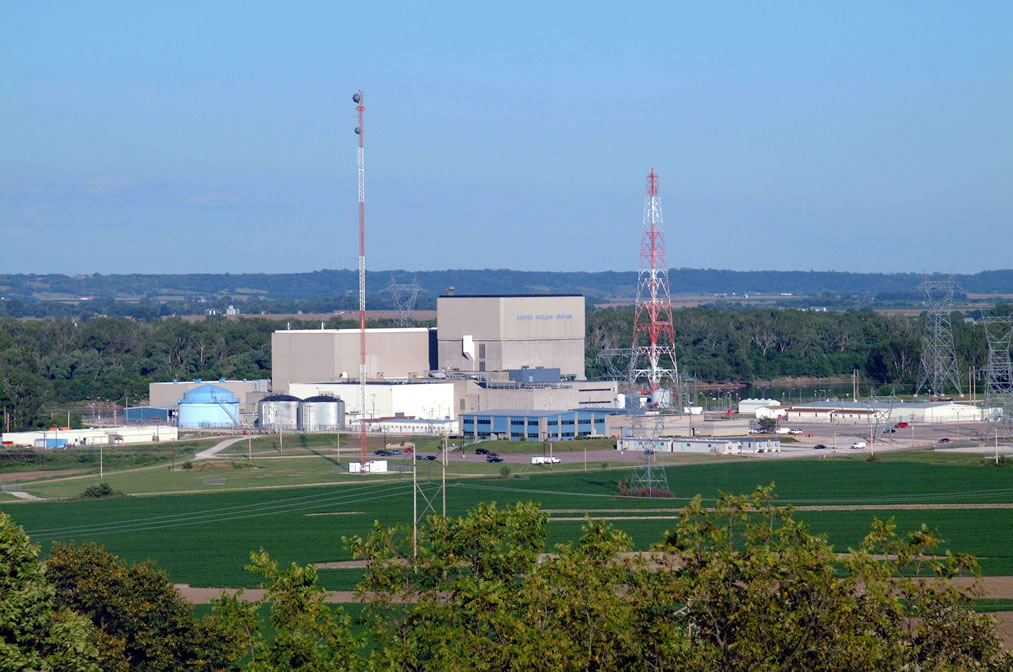
Nebraska Public Power District’s Cooper nuclear power plant. (Photo: NPPD)
Studies, regulatory control, and legislation are among the items Nebraska, Minnesota, Indiana, and North Carolina tackled in the month of May regarding nuclear energy.
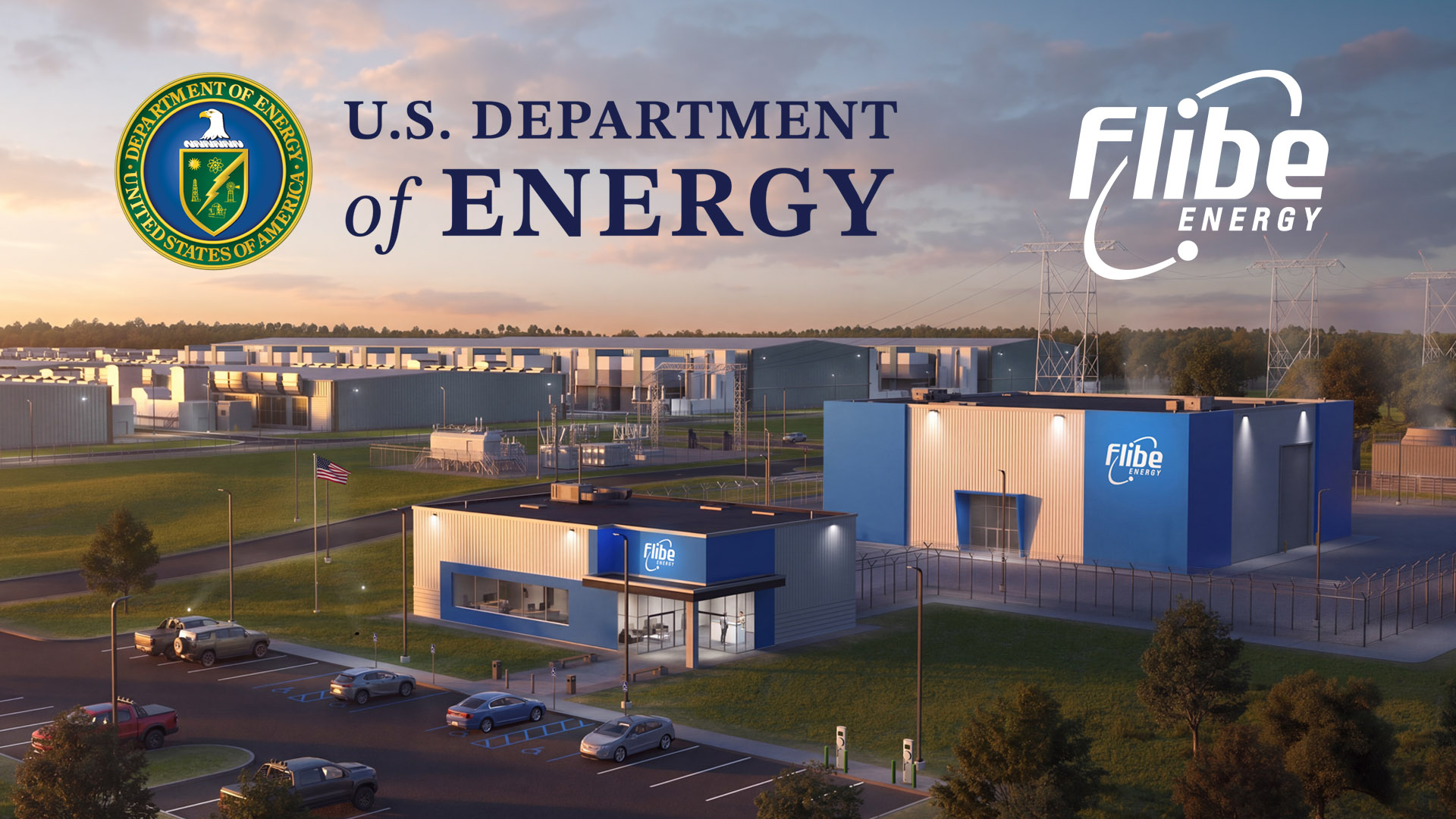
Flibe Energy is one of five companies selected by the DOE for advanced negotiations under the Surplus Plutonium Utilization Program. (Image: Flibe)
Nuclear start-ups Oklo and Flibe Energy both announced this week that they have been selected by the Department of Energy for advanced negotiations under the department’s Surplus Plutonium Utilization Program, which aims to make surplus U.S. plutonium available to the nuclear industry for advanced reactor fuels.
According to multiple reports, three other companies—Exodys Energy, Shine Technologies, and Standard Nuclear—have also been selected for advanced negotiations under the program, which is being led by the DOE’s Office of Nuclear Energy.
The USS Gerald R. Ford. (Photo: USS Gerald R. Ford-CVN 78)
Later this year, the U.S. Navy will test the power-generating capabilities of one of its crown jewels, the nuclear-powered USS Gerald R. Ford—aiming to demonstrate its ability to provide electricity to installations on shore.
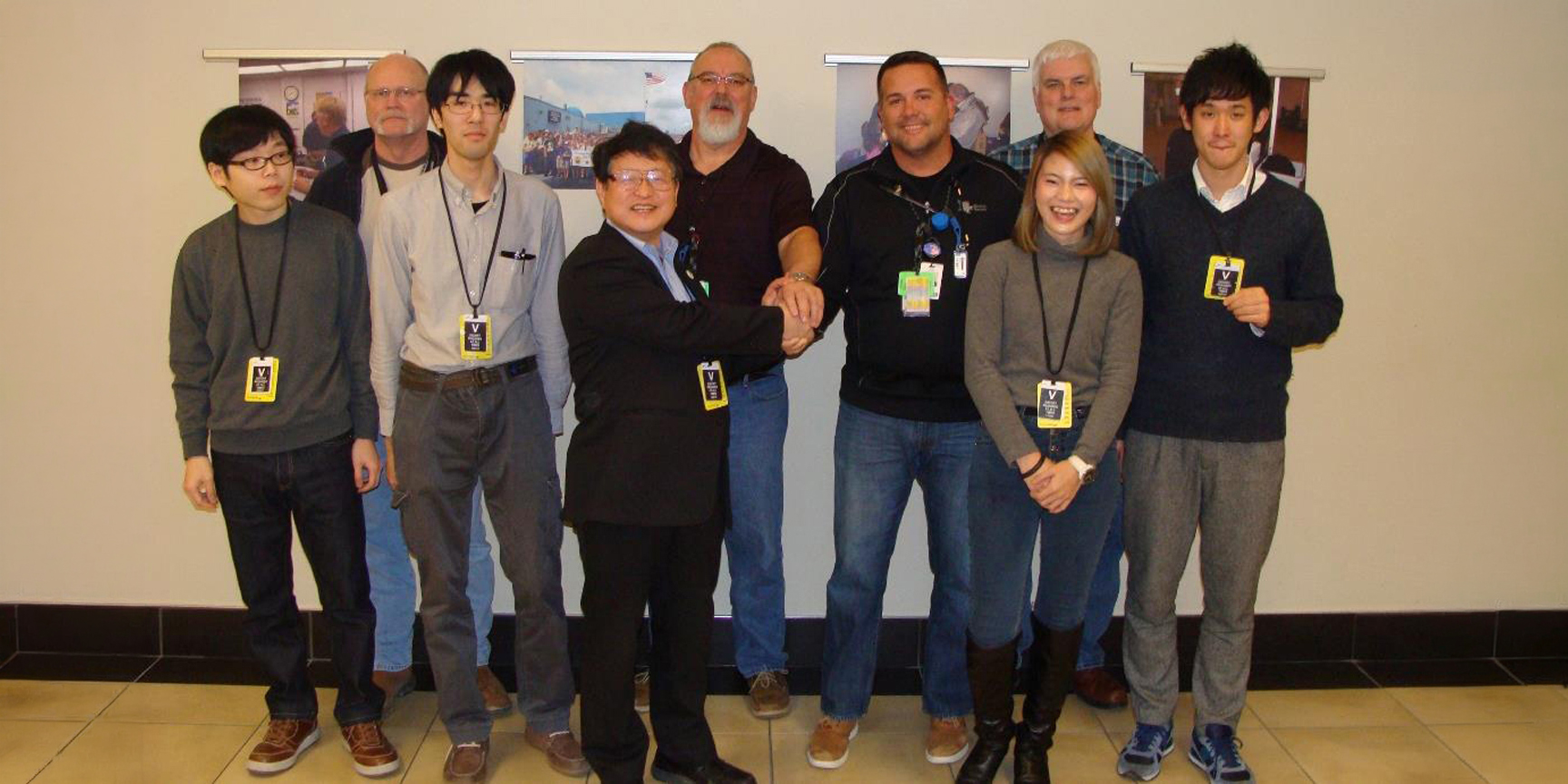
May 27, 2026, 12:26PMUpdated May 27, 2026, 12:23PMNuclear News Super Engineer Project founder and leader Tadashi Narabayashi (fourth from left) and his Super Engineers tour Clinton nuclear power plant in 2017. (Photo: Thanataon Pornphatdetaudom)
Before the Fukushima Daiichi accident in March 2011, nuclear power from 54 reactors provided about 30 percent of Japan’s electricity. In the wake of the disaster, Japan shut down every one of its reactors.
Recently, the country has been restarting its nuclear power plants. Among its current fleet of 33 operable reactors, fewer than half have been restarted. Nuclear power is currently providing about 8.5 percent of Japan’s electricity (with natural gas and coal accounting for more than 60 percent).
The Japanese government’s present energy plan, announced last year, calls for nuclear power to meet 20 percent of the country’s electricity needs by 2040. While the government views nuclear as a crucial asset toward meeting its goal of net zero emissions by 2050, public support for nuclear energy also continues to increase. A 2012 Pew Research poll—conducted one year after the Fukushima Daiichi disaster—indicated that 70 percent of the public opposed nuclear power. However, a 2022 poll by Nikkei Business Publications suggests that now, more than 50 percent of the public supports nuclear power—if safety can be ensured.
Contributing their expertise to these restarts in recent years are young nuclear industry professionals who were trained a decade ago in a mentorship/training program involving U.S. institutions.
This “Super Engineer Project” was sponsored by Japan’s Ministry of Economy, Trade, and Industry and Hokkaido University from 2015 to 2017. METI sponsored the project to improve the Japanese nuclear safety culture by learning from the U.S. safety culture.
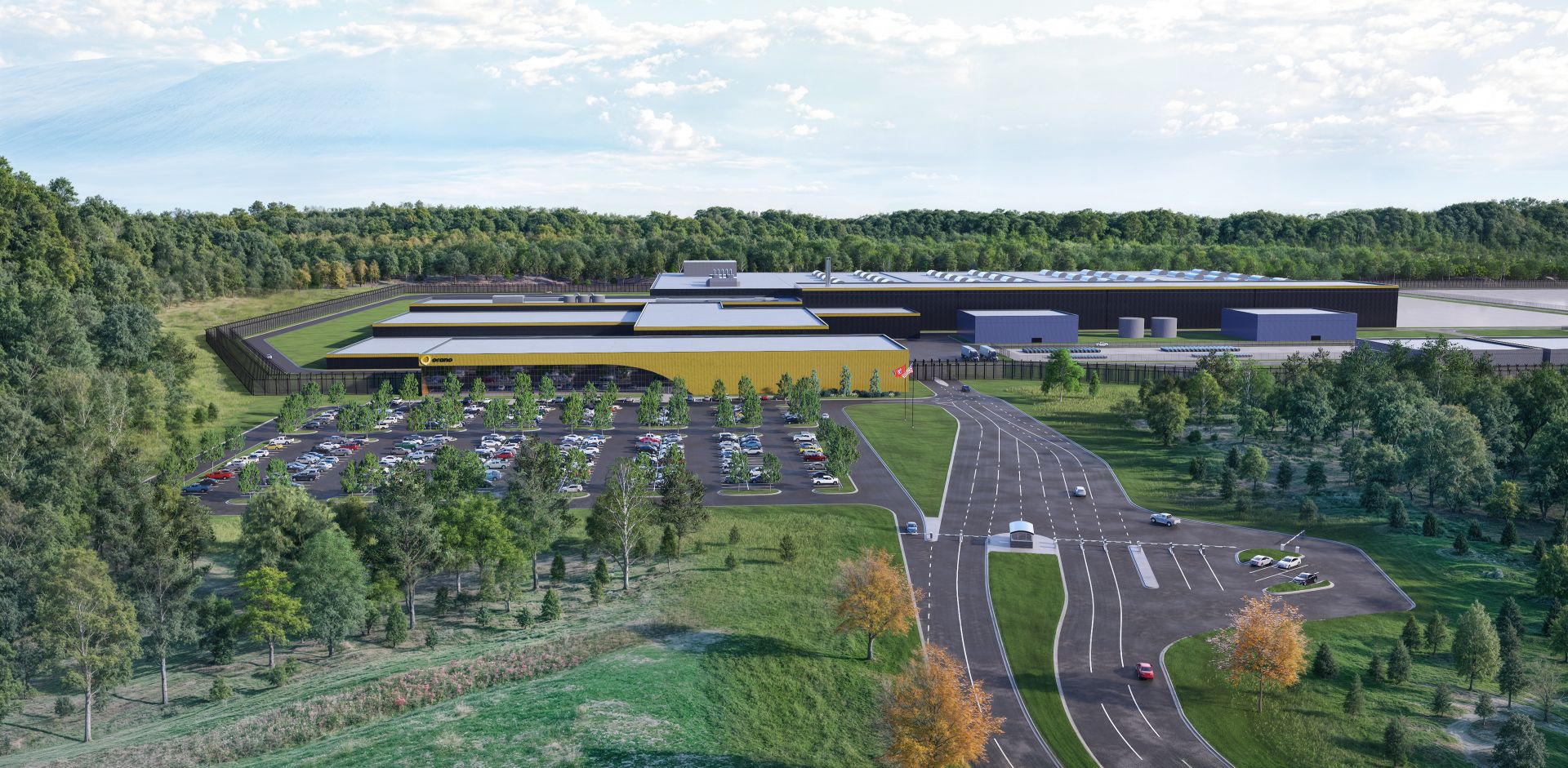
Concept art of Orano’s planned Project Ike facility in Oak Ridge, Tenn. (Image: Orano)
The Nuclear Regulatory Commission said it intends to complete its review of Orano Enrichment’s license application to build and operate a new uranium enrichment facility near Oak Ridge, Tenn., in 12 months. Orano submitted its application for the multibillion-dollar facility, named Project Ike, in March.
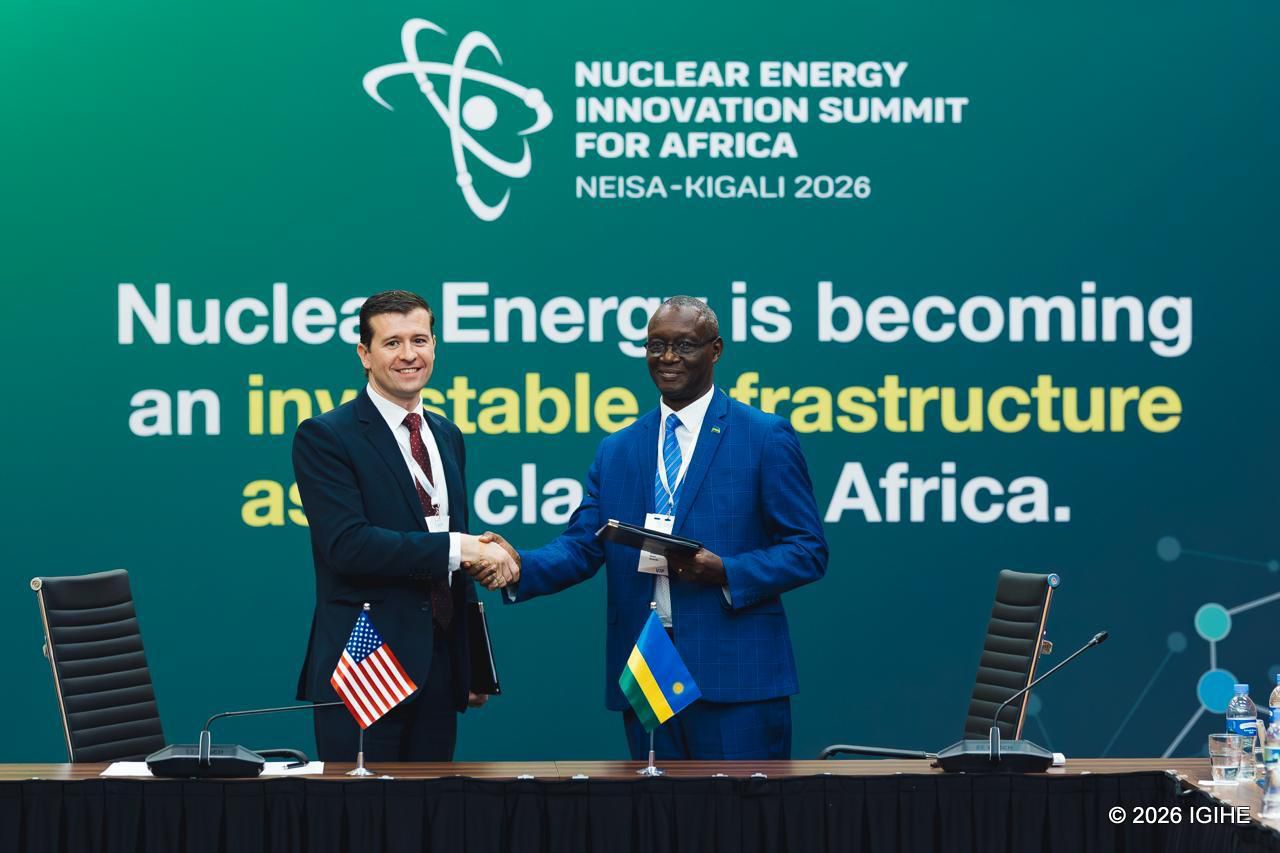
Holtec Europe’s Rafael Marin and the RAEB’s Fidele Ndahayo signed an agreement to deploy SMR-300 reactors in Rwanda. (Photo: Holtec International)
SMR-300 deployments, power plant names, trade missions, agreements between neighboring countries, and renewed interest in nuclear energy are among the notable developments that occurred internationally in the month of May.
President Trump signing one of the nuclear EOs last year. (Photo: Official White House Photo)
This Saturday, May 23, will mark one year since President Trump issued four executive orders (EOs) that sought to implement sweeping changes across the U.S. nuclear industry. From regulatory reform at the Nuclear Regulatory Commission to new authorization projects at the Departments of Energy and Defense, the orders sent ripples throughout the industry.
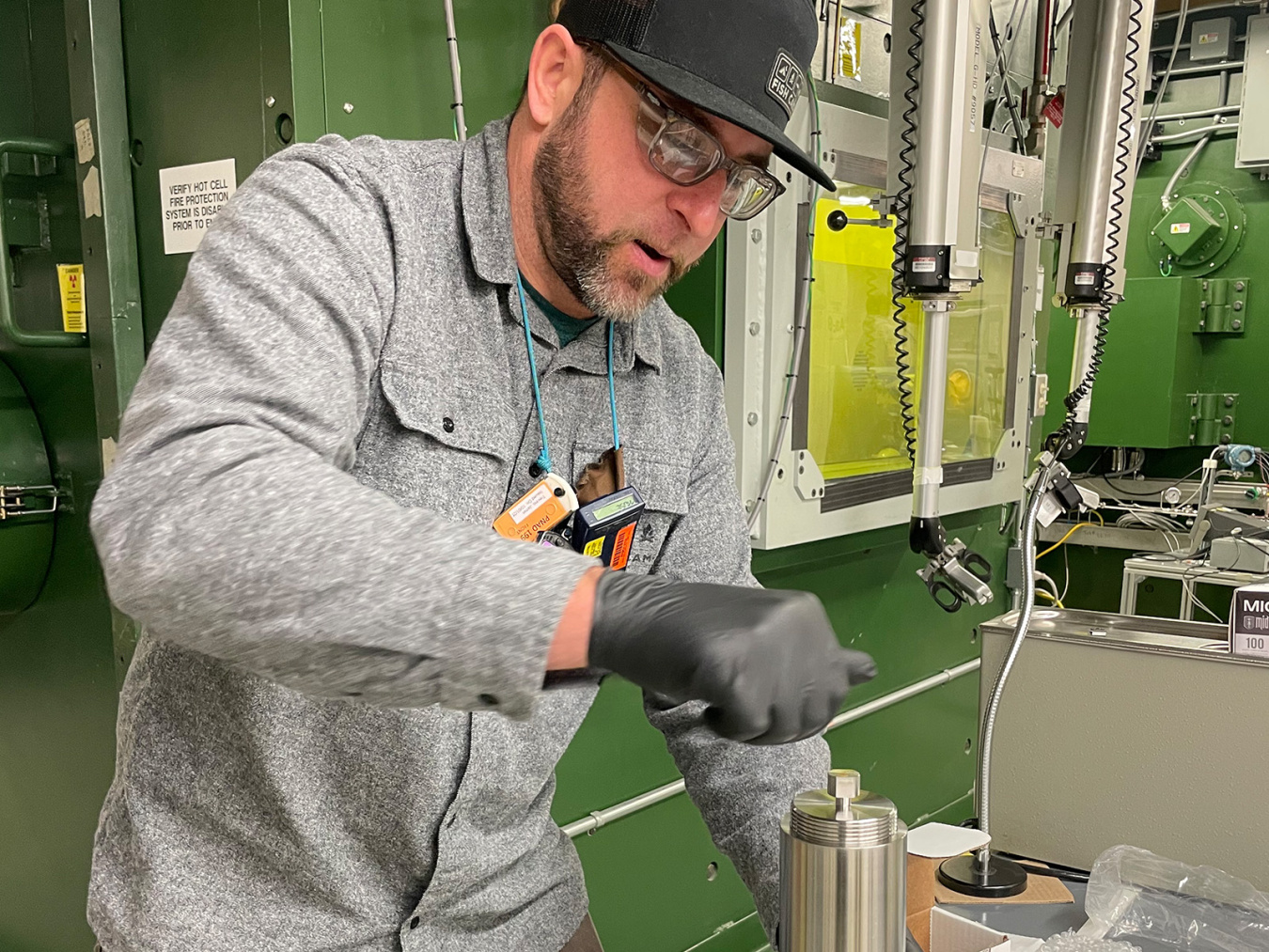
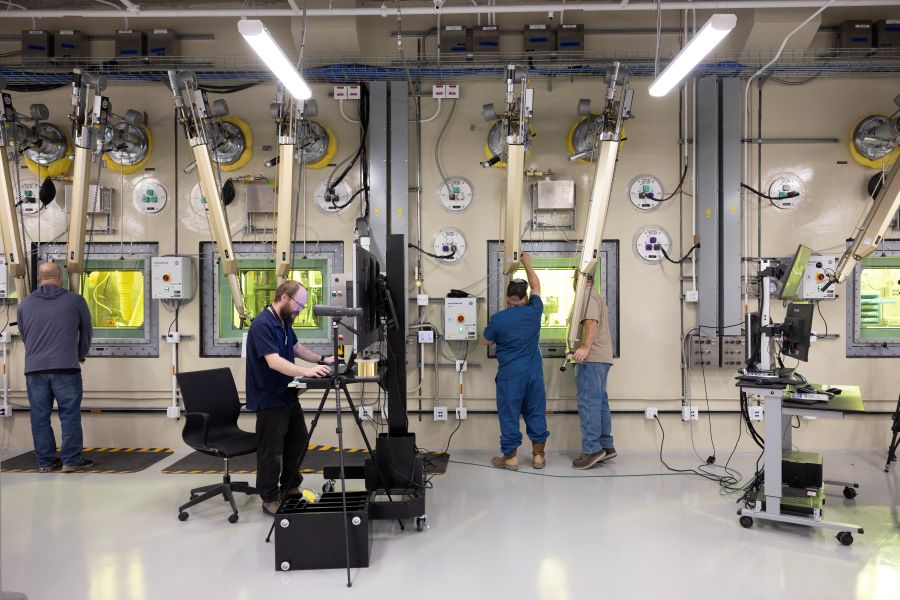
The SPL’s hot cell, seen here, has both manually operated and robotic manipulators for the safe handling of irradiated material. (Photo: INL)
Earlier this week, Idaho National Laboratory announced that its Structural Properties Laboratory (SPL) has been fully operational since January. Located at INL’s Materials and Fuels Complex, the SPL houses the lab’s first new hot cell in 50 years.
Honeybees drinking water. (Photo: Jackie Fabian)
Of the many and varied uses of nuclear science and technology, few may be aware of its applications in the detection of food adulteration. Also known as food fraud, food adulteration is the intentional altering of food products through dilution, substitution, mislabeling, or other fraudulent actions for financial gain.
Attendees at the Pathways to Trade Summit meet with representatives from the Tennessee Nuclear Network and Oak Ridge Associated Universities in Oak Ridge, Tenn., on May 14. (Photo: ORAU)
Oak Ridge Associated Universities (ORAU) hosted the Pathways to Trade Summit on Thursday, May 14, at the organization’s Pollard Center in Oak Ridge, Tenn. The focus of the gathering was the building of a skilled nuclear workforce capable of meeting the current and future challenges of unprecedented industry growth. Along with ORAU, the event was cosponsored by North America’s Building Trades Unions and the Tennessee Nuclear Network.
(Image: McMaster University)
The Canadian Medical Isotope Ecosystem, which is backed by the Canadian federal government’s Strategic Innovation Fund, has announced funding for a collaboration between Promation, Astral Systems, and McMaster University to establish a proof-of-concept approach for a fusion reaction–based copper-67 production process with automated postirradiation isotope separation and purification.
The proposed Blykalla SMR site in Norrsundet, Sweden. (Image: Blykalla)
Sweden-based advanced reactor developer Blykalla has applied to build a site in its home country that would feature six lead-cooled small modular reactors. The 330-MWe facility would house a half-dozen 55-MWe Sealer reactors, which the company said are designed for hyperscalers and energy-intensive industries.
Xe-100 Dow Seadrift concept art. (Image: X-energy)
At the end of April, TerraPower announced that it had officially begun construction on its Natrium power plant in Kemmerer, Wyo.—one of the two full-scale demonstration projects in the Department of Energy’s Advanced Reactor Demonstration Program.
Now, the second ARDP-backed demonstration project, which aims to see the deployment of X-energy’s Xe-100 at a Dow chemical facility, has reached a new milestone of its own. On May 18, X-energy announced that the Nuclear Regulatory Commission has completed its environmental assessment of the proposed Long Mott Generating Facility and issued a finding of no significant impact (FONSI).


_Page_06_Image_0001 copy 2x1.jpg)