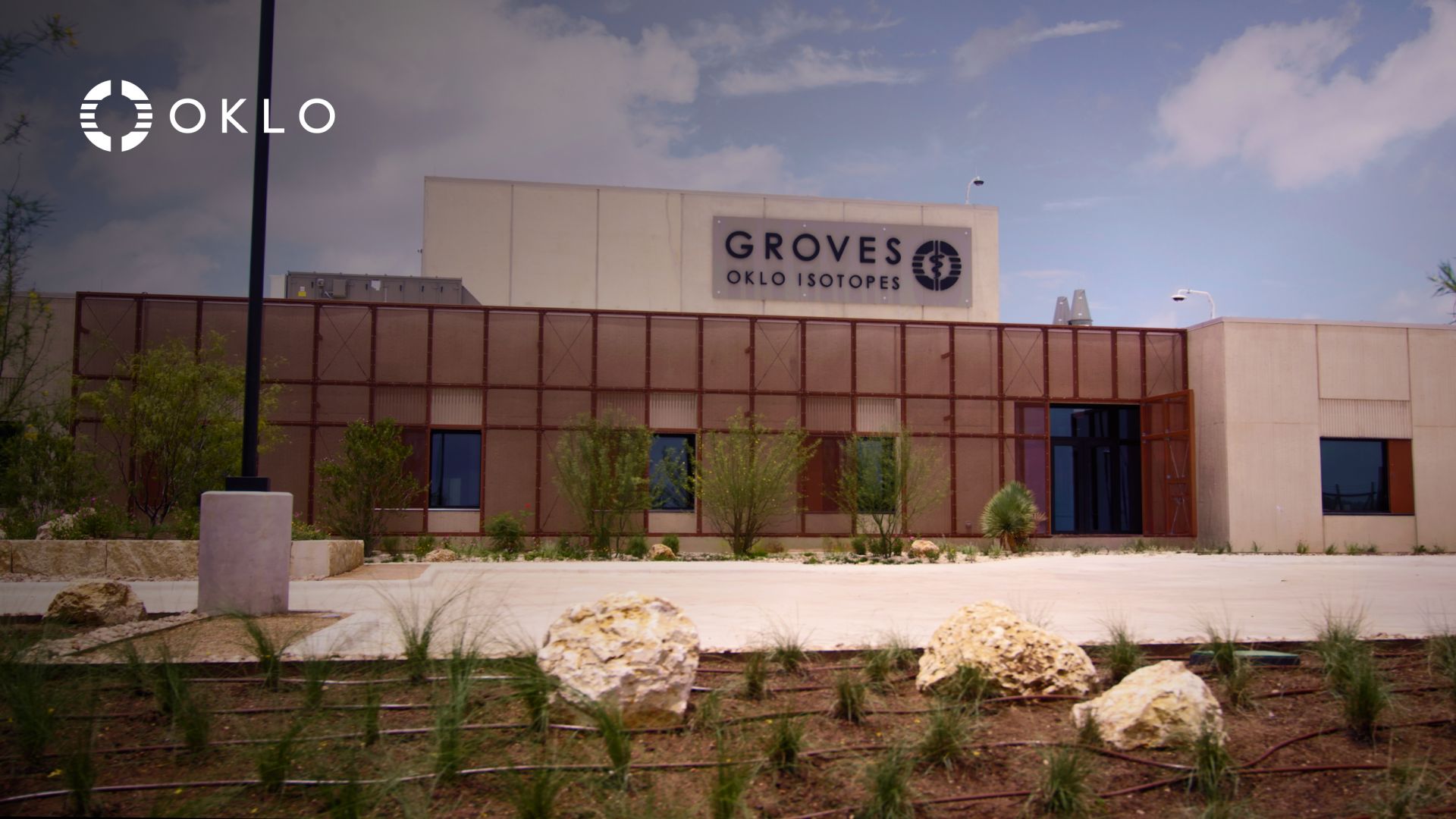
Oklo’s Groves Isotope Test Reactor facility. (Photo: Oklo)
Oklo’s Groves Isotope Test Reactor became the fifth Department of Energy–authorized reactor to achieve criticality under the agency’s authorization process, it was announced earlier today.
Criticality was reached at 9:19 p.m. (EDT) on Wednesday at the company’s Groves facility in Lockhart, Texas, according to the DOE.
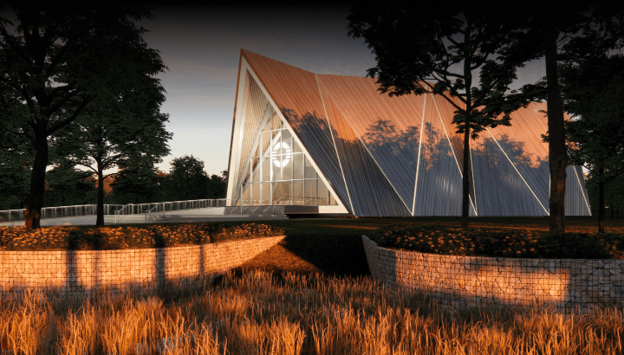
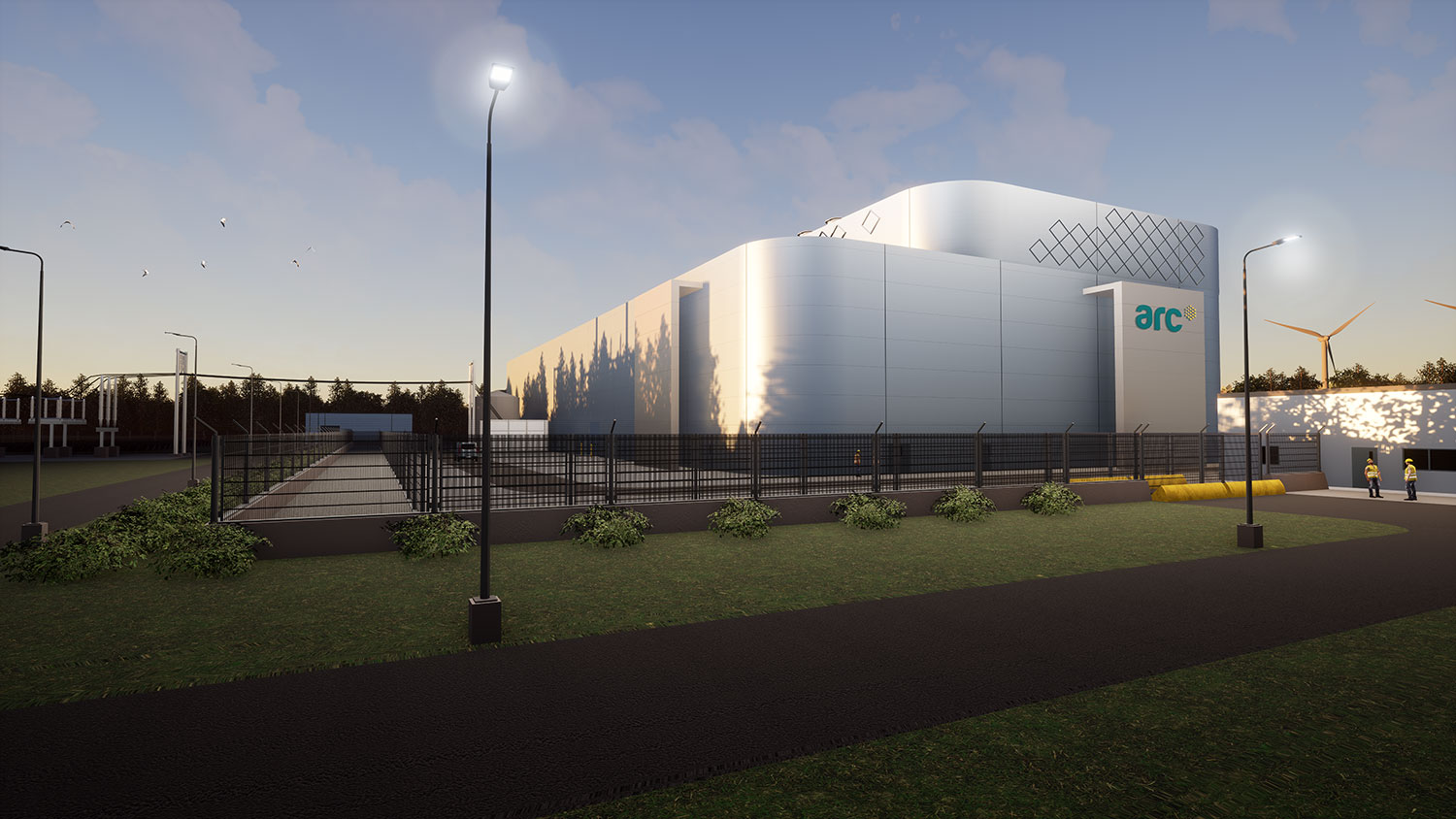
Concept art of an ARC-100 facility, which is planned to house a 100-MWe sodium fast reactor. (Image: ARC)
Earlier this week, ARC Clean Technology announced that it has entered into a Strategic Partnership Project agreement with Battelle Energy Alliance—the management and operating contractor of Idaho National Laboratory.
That agreement establishes a multiyear framework for ARC and INL to collaborate on the design, demonstration, and first deployment of the company’s ARC-100, a 100-MWe sodium-cooled fast reactor.
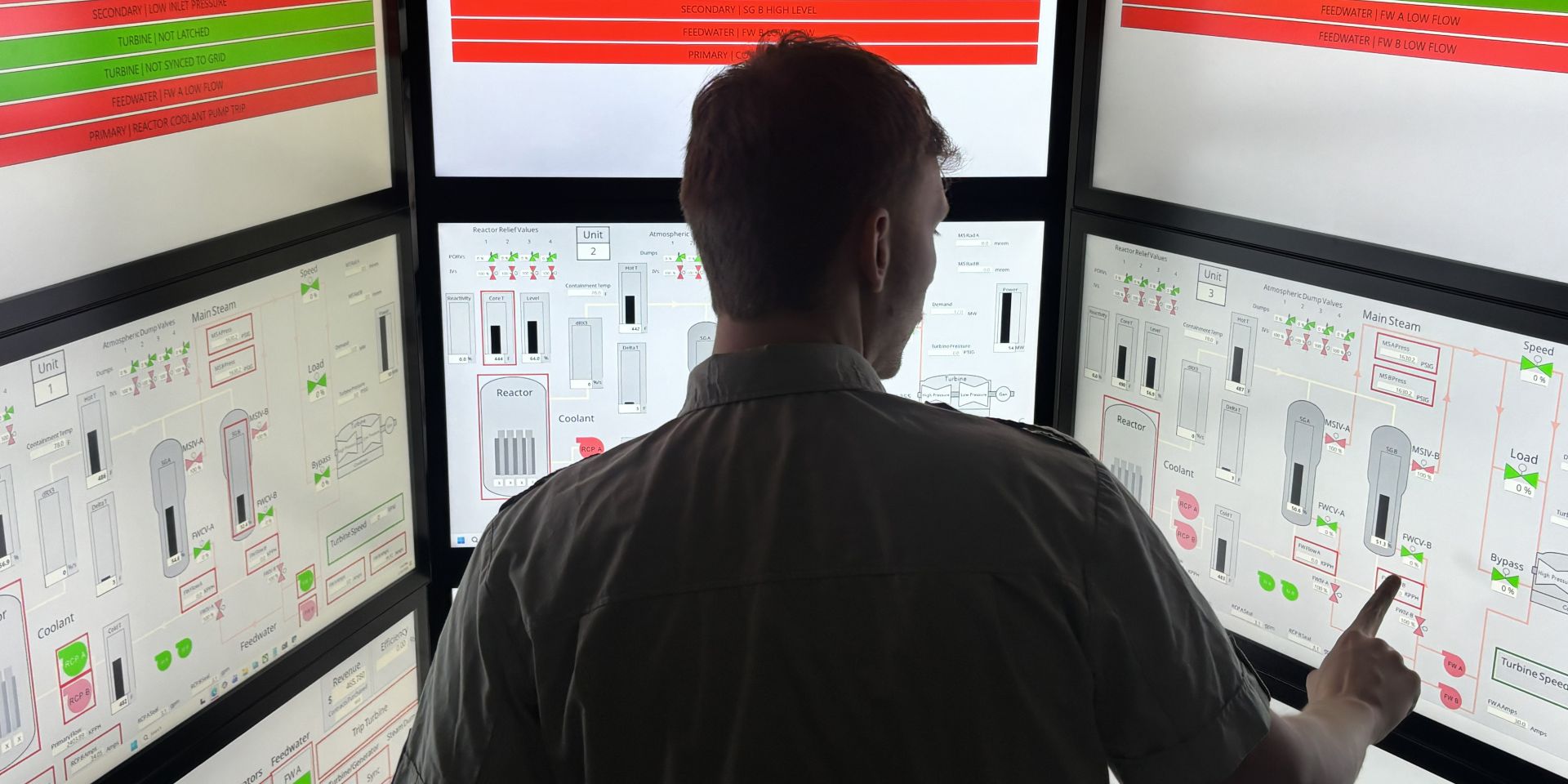
July 17, 2026, 4:17PMNuclear NewsStephanie Morrow and Niav Hughes Green Multipanel touchscreen displays showing reactor system indicators and alarms used for human factors research. (Photo: NRC)
As human factors specialists working at the intersection of human performance and nuclear operations, we are witnessing one of the nuclear sector’s most significant transitions in decades. The emergence of small modular reactors, microreactors, and other advanced designs is reshaping the industry’s landscape. Digital instrumentation and controls, passive safety systems, and increased automation are creating opportunities for greater safety margins and more flexible operation. These same features also fundamentally redefine what it means to “operate” a nuclear plant. Interactions among human roles, automation, and passive systems shape how people maintain awareness, exercise judgment, and intervene when necessary. These developments affect both operational realities and the regulatory foundations on which nuclear safety is built.
Purdue’s PUR-1 research reactor. (Photo: Purdue University)
The remote, automatic, real-time adjustment of a research reactor’s power by a geographically distributed control system has been reported by researchers from Idaho National Laboratory, the Grainger College of Engineering at the University of Illinois–Urbana-Champaign, and Purdue University. The investigators first used an automatic adjustment “digital control loop” system to demonstrate remote adjustments of Purdue’s PUR-1 research reactor. They then applied a reinforcement learning model that simulates the interaction of physical forces inside the reactor, making the loop system more autonomous.
Peters, president and CEO of MITRE, is responsible for governance and oversight of the company’s diverse markets. (Photo: MITRE)
Summer at the American Nuclear Society carries with it a sense of renewed momentum as the incoming president takes office and starts making plans for the year ahead. This has been particularly true in the last few years, as nuclear energy moves into a new era marked by broader public interest, stronger policy support, and a growing sense of possibility across the field. Mark Peters, the Society’s 72nd president, shares that optimism—and he is focused on turning it into results.
The Idaho Nuclear Technology and Engineering Center. (Photo: DOE)
The quest of the Department of Energy’s Office of Environmental Management to find a private-sector partner to design, build, and operate a commercial-scale facility to recycle defense-related used fuel at Idaho National Laboratory has transitioned to the review and selection phase, the DOE said July 7. Responses to a request for applications were due on June 19.
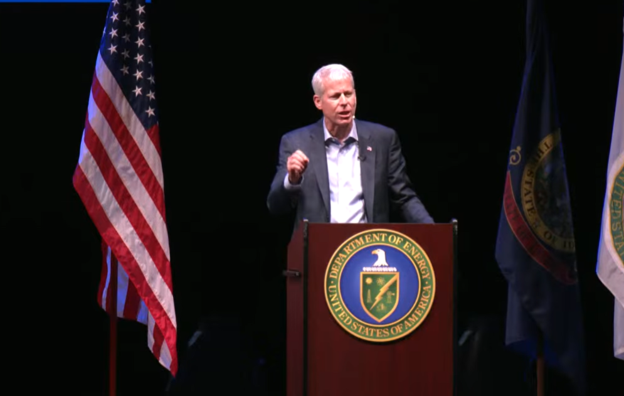
DOE Secretary Chris Wright speaks at Idaho National Laboratory on June 25. (Photo: DOE)
For just over a year, President Trump’s Executive Order 14301, “Reforming Nuclear Reactor Testing at the Department of Energy,” has loomed large because it pegged a stretch goal to a significant date: July 4, 2026. Will there be at least three participants in the Department of Energy’s Reactor Pilot Program whose reactors achieve criticality by Saturday’s deadline?
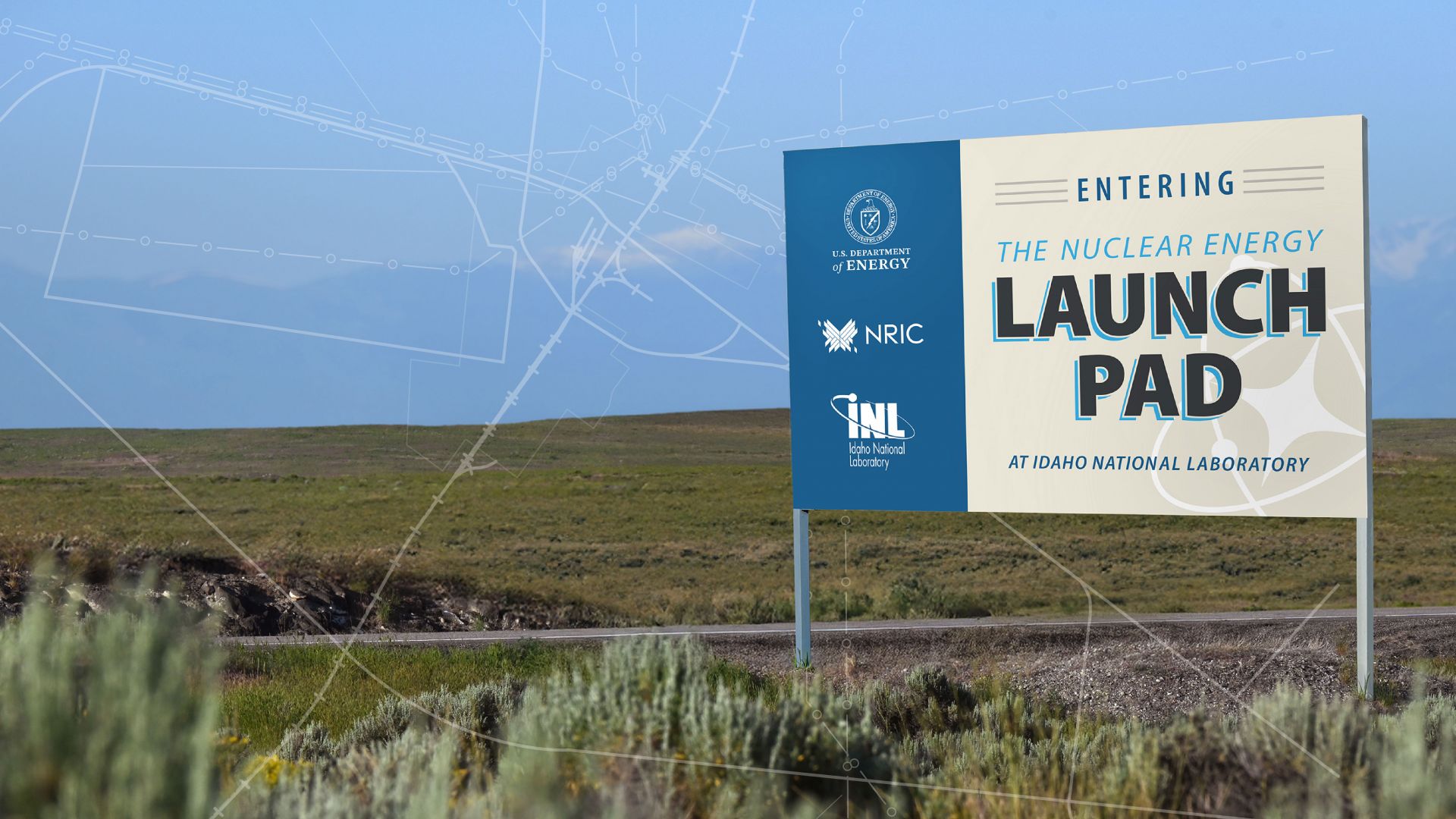
A sign along U.S. Route 20 on Idaho National Laboratory land marking the boundary of NRIC’s new Nuclear Energy Launch Pad INL. (Photo: NRIC)
In June 2025, the Department of Energy announced the Reactor Pilot Program, an authorization pathway that allowed reactor developers to partner with the DOE to get first-of-a-kind (FOAK) reactors built and tested. Soon after, the DOE rolled out a complementary Fuel Line Pilot Program, which aimed to fast-track fuel projects. In all, 20 projects were accepted into the new programs.
Unless otherwise noted, all photos are courtesy of Idaho National Laboratory.
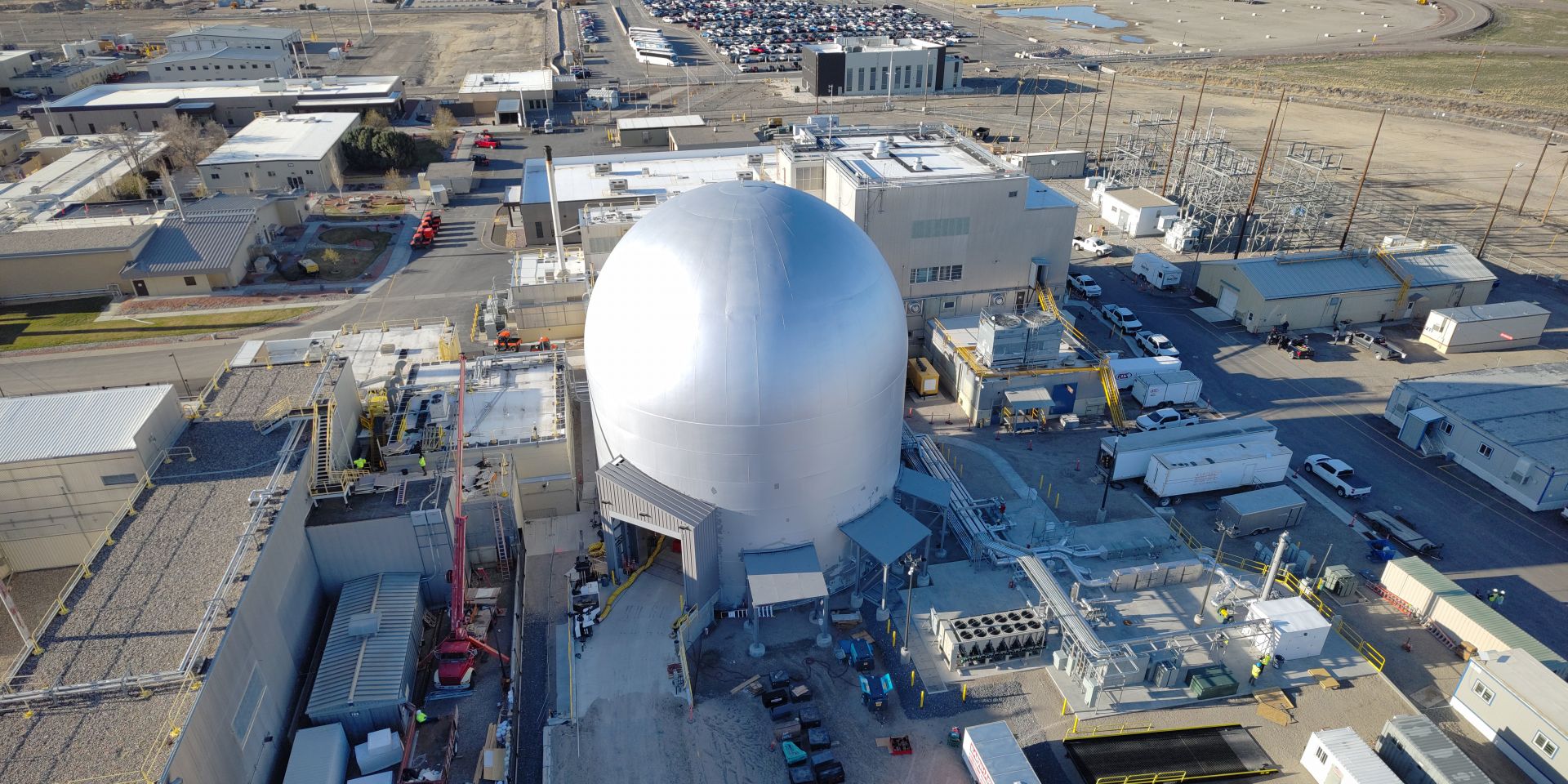
In 2019, a familiar landmark at Idaho National Laboratory was scheduled for demolition. Though striking for both its physical presence and its significance to nuclear history, the containment dome that once housed Experimental Breeder Reactor-II sat unused—that is, until INL realized its potential as a reactor testing facility.
Concept art of Oklo’s Aurora Powerhouse. (Image: Oklo)
On Thursday, Oklo announced that the Department of Energy’s Idaho Operations Office had approved the preliminary documented safety analysis (PDSA) for the company’s first deployment of its Aurora Powerhouse, which is currently under construction at Idaho National Laboratory.
It is the most recent in a long series of announcements from the 10 companies participating in the Reactor Pilot Program, which has a fast-approaching criticality deadline of July 4.
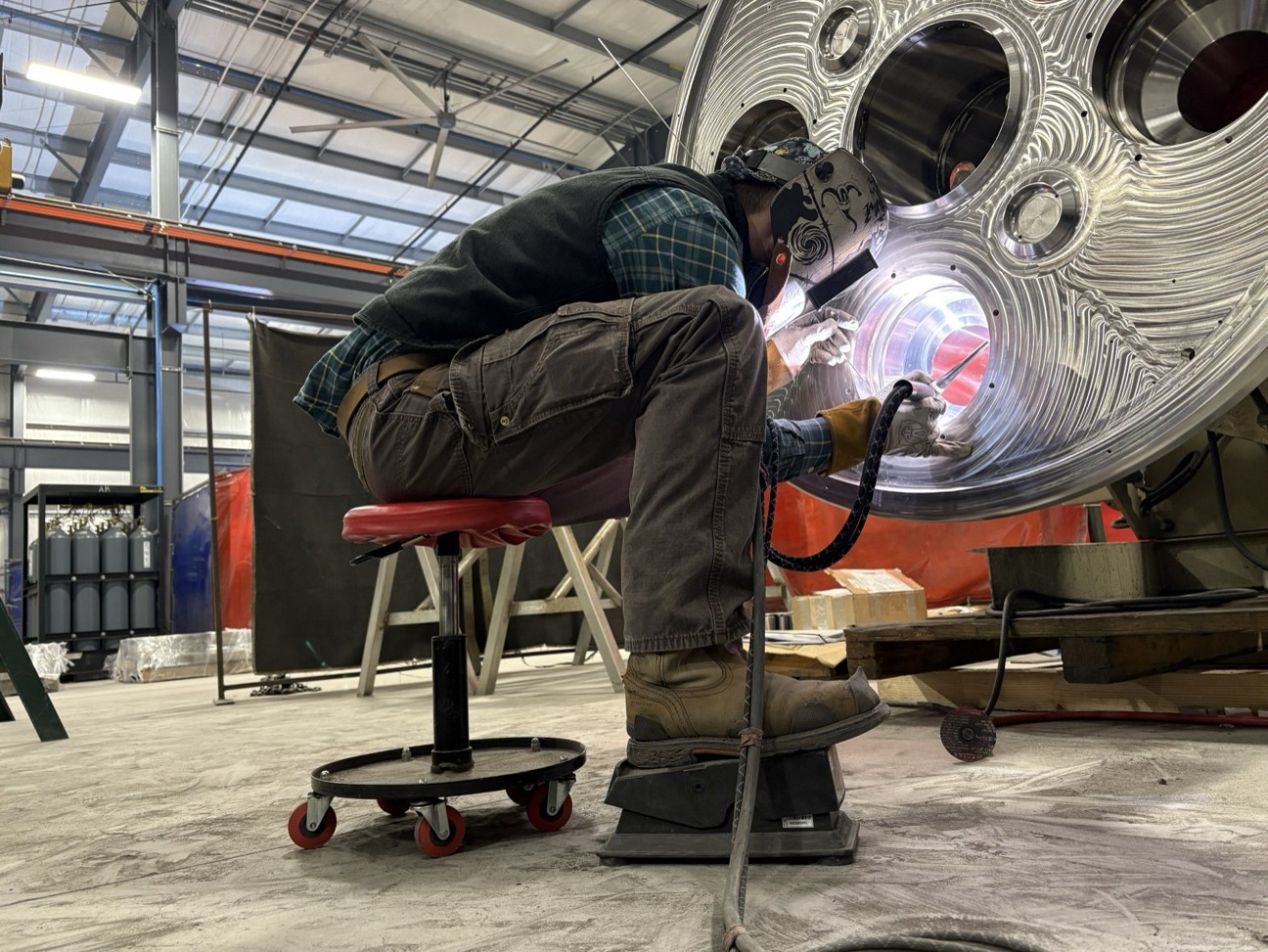
The MARVEL reactor upper plenum getting welded. (Photo: INL)
On June 1 at the American Nuclear Society’s Annual Conference in Denver, Colo., a team from Idaho National Laboratory presented a session titled “Lessons Learned from MARVEL Reactor Fabrication.” The presentation highlighted challenges that arose as they moved from design to manufacturing and assembly, with a focus on reactor part fabrication, Stirling engine implementation, and reactivity control system development.
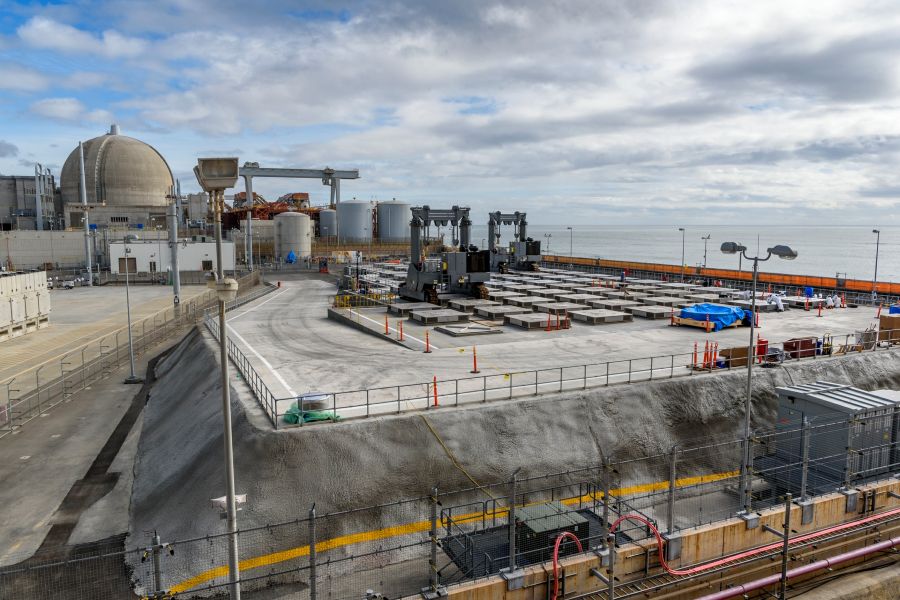
The ISFSI at SONGS. (Photo: Southern California Edison)
Two companies specializing in ultrasonic nondestructive testing and structural health monitoring are to advance to the final phase of a selection process to demonstrate acoustic emission technologies for the automated monitoring of spent nuclear fuel dry storage canisters.
ANS CEO Craig Piercy and incoming ANS President Mark Peters at the ANS Annual Conference.
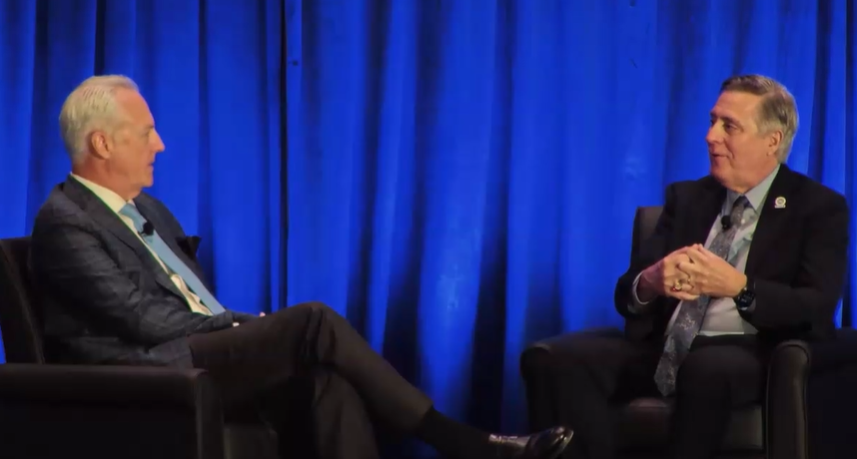
On Tuesday, during Mark Peters’s last days as the American Nuclear Society’s vice president/president-elect before assuming the presidency on June 4, he sat down with ANS CEO Craig Piercy for a Fireside Chat at the Annual Conference.
The MITRE CEO weighed in on his career path, what excites and worries him about the resurgence of nuclear energy, and juggling work-life balance with his new duties as ANS’s 72nd president.
“It’s going to be a lot of fun. It’s an important year,” he told Piercy.
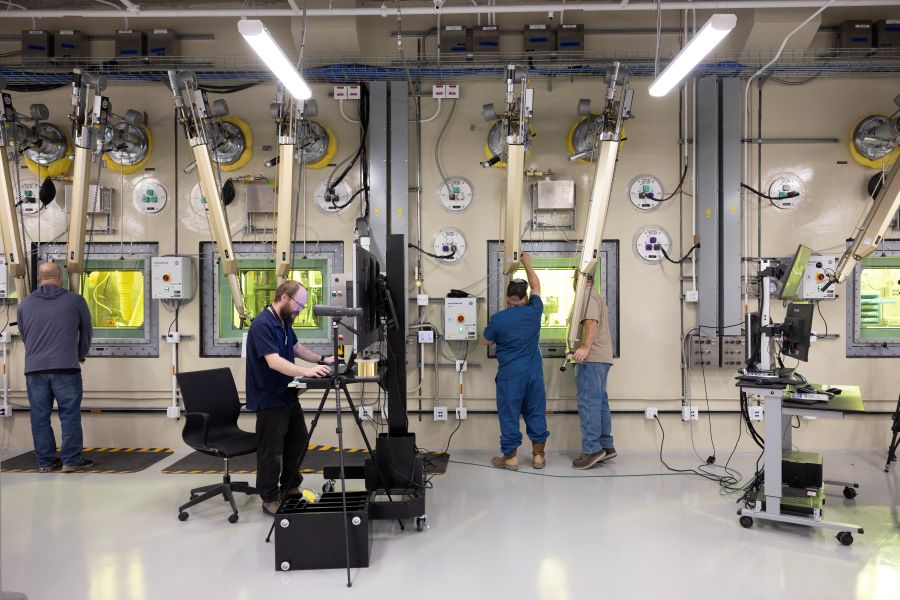
The SPL’s hot cell, seen here, has both manually operated and robotic manipulators for the safe handling of irradiated material. (Photo: INL)
Earlier this week, Idaho National Laboratory announced that its Structural Properties Laboratory (SPL) has been fully operational since January. Located at INL’s Materials and Fuels Complex, the SPL houses the lab’s first new hot cell in 50 years.


.jpg)