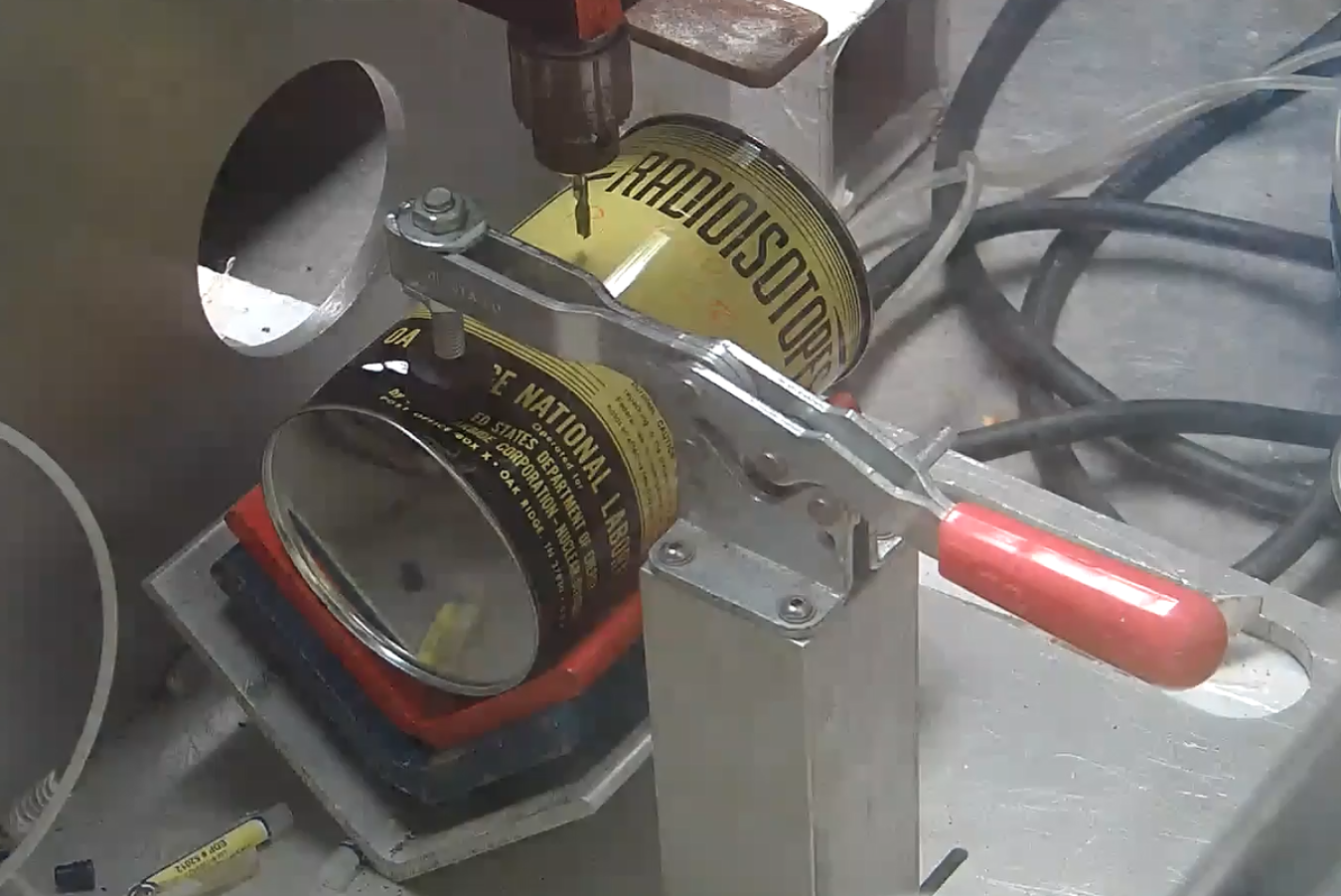
A canister of legacy oxide waste generated from previous research and development activities at ORNL is vented in a glovebox prior to being packaged for disposal. (Photo: DOE)
The Department of Energy’s Oak Ridge Office of Environmental Management and cleanup contractor United Cleanup Oak Ridge have surpassed their first-year target for processing legacy oxide waste at the site’s Transuranic Waste Processing Center (TWPC), reaching the milestone four months ahead of schedule.
The material, generated more than 50 years ago during radiochemical and isotope development work at Oak Ridge National Laboratory, contains finely divided radioactive particles and powders. It had remained in secure storage containers for decades while officials evaluated a safe path for removal and disposal.
Workers began planning for the effort in 2018 and received authorization to process the oxide waste in August 2025. To handle the material safely, crews are using gloveboxes and a remotely operated hot cell to vent containers, control airborne hazards, and package the waste for permanent disposal.
The project: According to OREM, the project required facility modifications, updated procedures, and readiness reviews because it is the first time this type of waste has been processed at the TWPC. The initial goal was to process 6.4 cubic meters in the first year.
The accelerated pace is expected to reduce environmental risk sooner while supporting the broader effort to remove legacy waste from the Oak Ridge Reservation. OREM and UCOR will continue processing approximately 31 cubic meters of the oxide waste before shipping it to the Waste Isolation Pilot Plant in New Mexico for final disposal.
Last year, OREM and UCOR reestablished full production capacity at the TWPC when they replaced a 900-pound waste-drum crusher used to size-reduce waste drums prior to disposal.
Quote: “For decades, this waste has been in storage without a path forward,” said Michael Griswold, TWPC federal project manager. “Through proactive and successful planning, we are successfully advancing work that is facilitating its removal, and we are beating the pace established in our goals.”