U.S. Navy to power Norfolk base using aircraft carrier
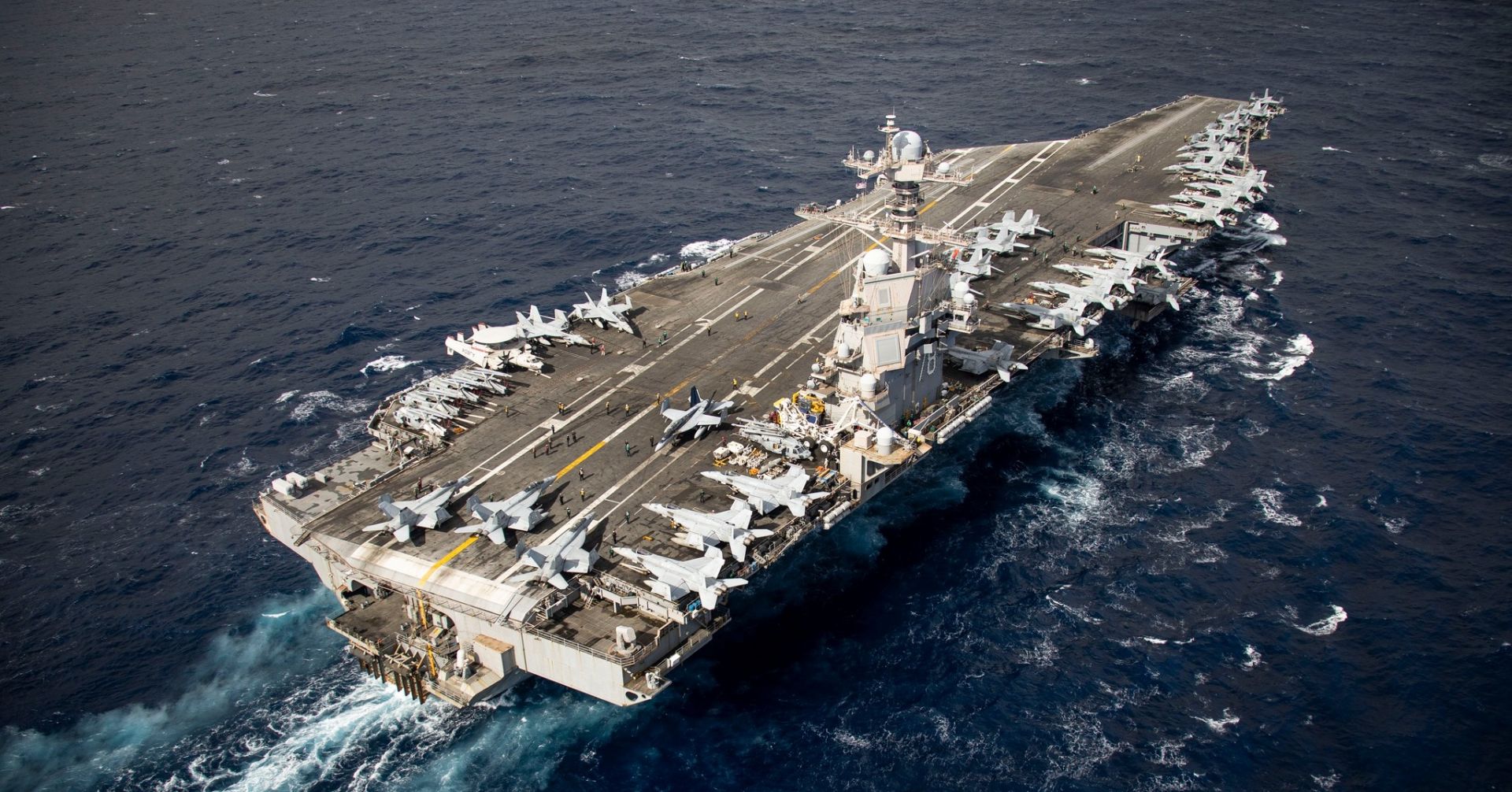
Later this year, the U.S. Navy will test the power-generating capabilities of one of its crown jewels, the nuclear-powered USS Gerald R. Ford—aiming to demonstrate its ability to provide electricity to installations on shore.
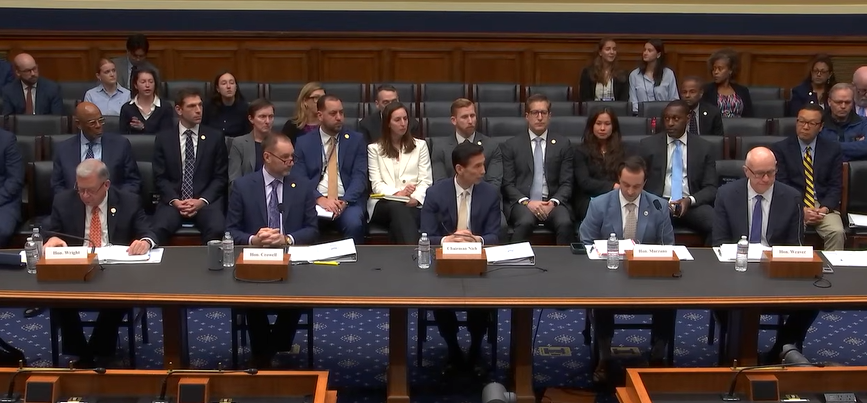
In a May 14 U.S. House Armed Services Committee hearing to discuss the Navy’s fiscal year 2027 budget request, questions broached the topic of onshore nuclear power generation. Acting Secretary of the Navy Hung Cao revealed that this summer, Naval Station Norfolk in Virginia “is going to be powered from an aircraft carrier. We're going to export the energy from the aircraft carrier to the base.”
A Navy spokesperson confirmed Tuesday that an initial test of this capability will take place at Norfolk later this year.
“The Department of the Navy is executing a multipronged strategy to ensure the delivery of firm, baseload power to our installations for energy resilience and mission assurance,” the spokesperson said in a statement to Nuclear News. “One line of effort in the strategy is to deliver power from a Ford-class nuclear-powered aircraft carrier to a compatible shore installation to demonstrate the capability to meet emergent, mission-critical needs.”
While neither the spokesperson nor Cao explicitly named Ford, the carrier is the only one in its class currently commissioned. A second Ford-class carrier, the USS John F. Kennedy, won’t be delivered until 2027.
About the Ford reactors: Two A1B pressurized water reactors power the USS Gerald R. Ford. The name “A1B” lets people know a few things about these reactors:
- “A” corresponds to the type of vessel—in this case, an aircraft carrier.
- “1” corresponds to the generation number of the reactor core design.
- “B” corresponds to the engineer and constructor—in this case, Bechtel. BWX Technologies manufactured the reactor core and fuel, as well as other nuclear components.
The Ford class and its A1B reactors are in the process of replacing the Nimitz class of aircraft carriers and its A4W reactors to meet future needs. According to the Department of Energy, the A1B design provides a 25 percent increase in operational availability and in reactor energy, requires fewer personnel to maintain and operate, and reduces total maintenance and ownership costs.
The Ford just recently returned to Naval Station Norfolk after being deployed for a record 326 days.
The potential: At the committee hearing, Cao told lawmakers to imagine the military or civilian purposes this type of power generation could serve. The power could be used to fix military bases or to supply fresh, potable water to drought-stricken places.
Chief of Naval Operations Daryl Caudle suggested a Navy reactor pilot program akin to the programs already established with the Army and Air Force.
“While the Army may be tapped to be the overall lead for it, I see no world in which the Navy is not going to be part of that discussion and bring our expertise through our long-established naval reactors, deep understanding of reactor physics, and understanding safe operation,” he said. “But we need to get a pilot established and a target date and get one going.”