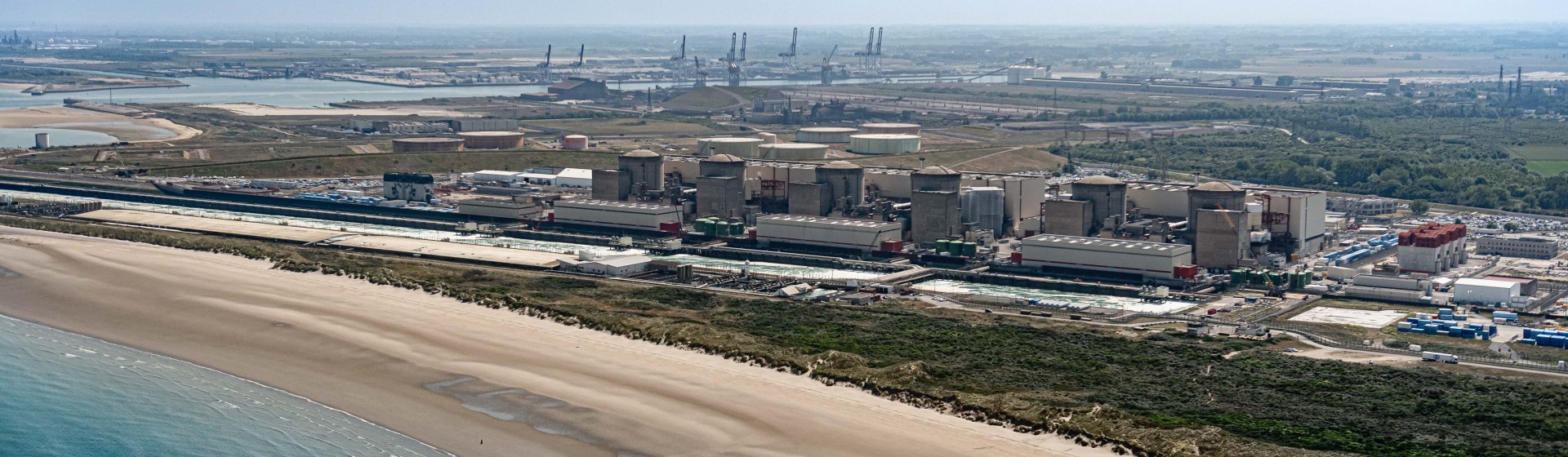
Gravelines nuclear power plant in France. (Photo: EDF)
With August in the rearview mirror, here is a roundup of some international news out of Europe and Africa you may have missed toward the end of last month.
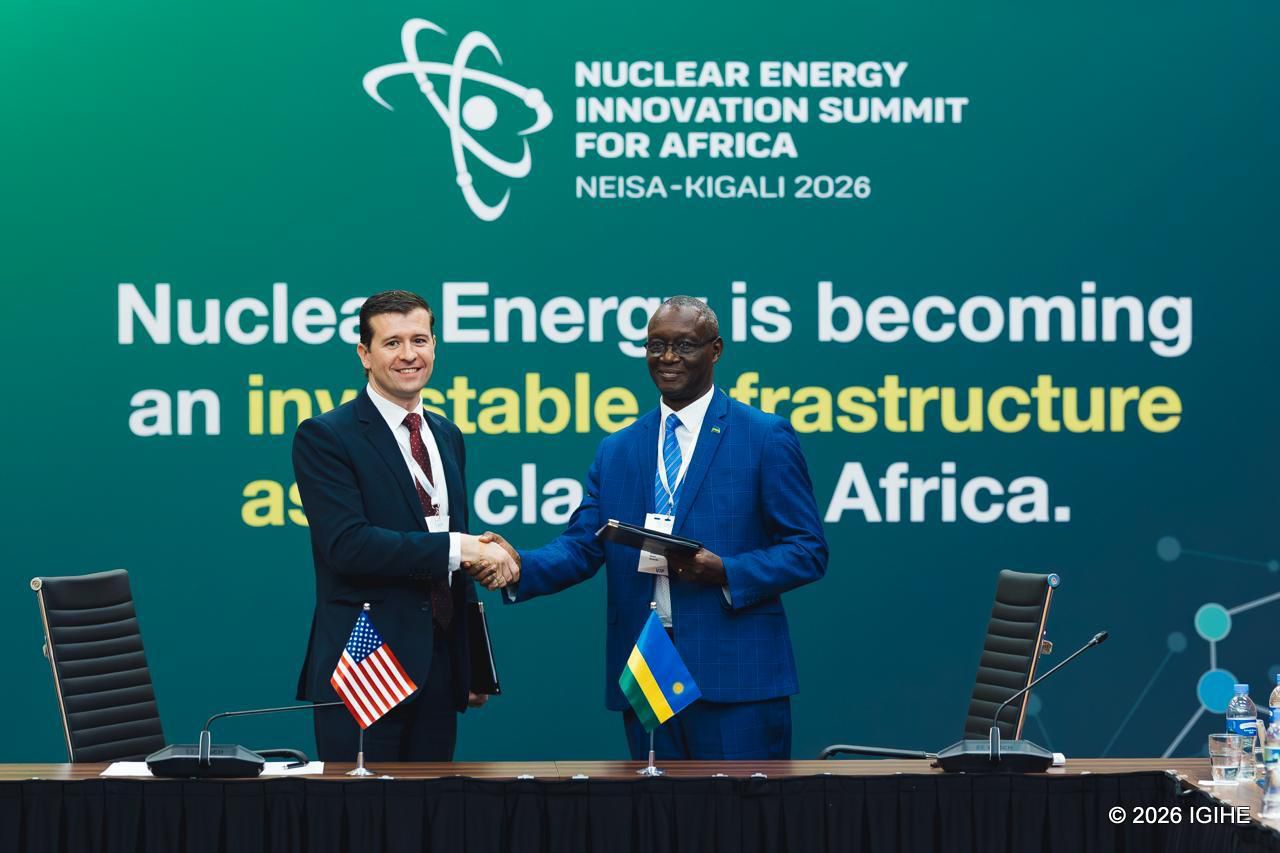
Holtec Europe’s Rafael Marin and the RAEB’s Fidele Ndahayo signed an agreement to deploy SMR-300 reactors in Rwanda. (Photo: Holtec International)
SMR-300 deployments, power plant names, trade missions, agreements between neighboring countries, and renewed interest in nuclear energy are among the notable developments that occurred internationally in the month of May.
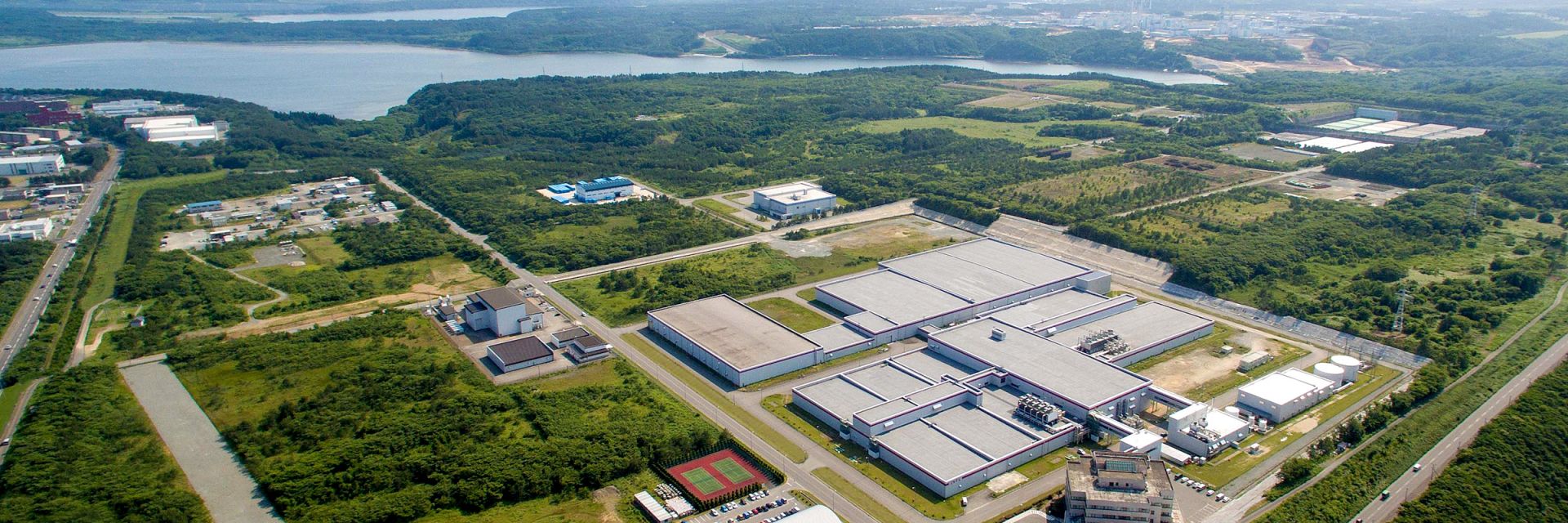
JNFL’s Rokkasho uranium enrichment plant. (Photo: JNFL)
President Trump is in Japan today, with a visit with new Prime Minister Sanae Takaichi on the agenda. Takaichi, who took office just last week as Japan’s first female prime minister, has already spoken in favor of nuclear energy and of accelerating the restart of Japan’s long-shuttered power reactors, as Reuters and others have reported. Much of the uranium to power those reactors will be enriched at Japan’s lone enrichment facility—part of Japan Nuclear Fuel Ltd.’s Rokkasho fuel complex—which accepted its first delivery of fresh uranium hexafluoride (UF₆) in 11 years earlier this month.
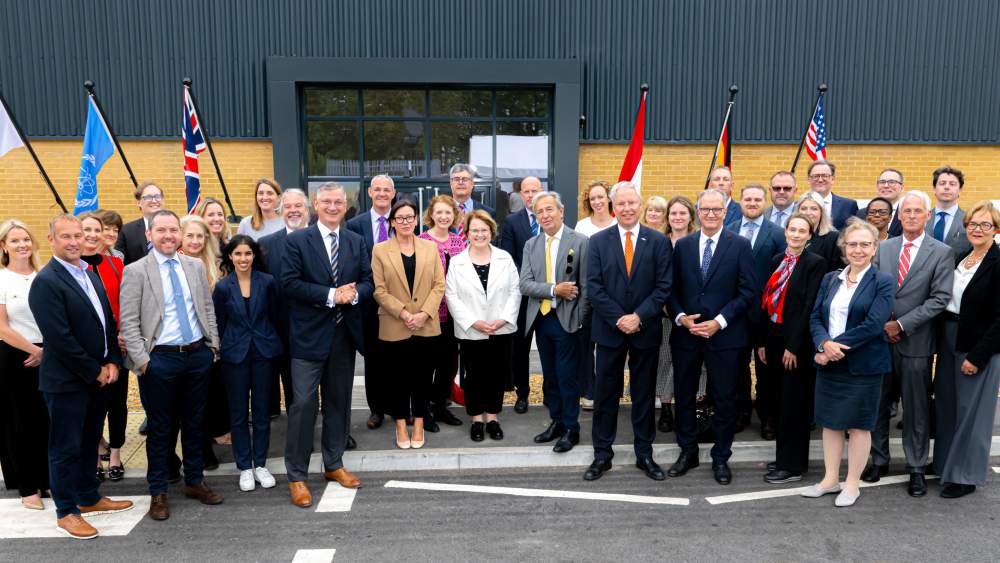
Representatives of Urenco, the United Kingdom, the United States, Germany, the Netherlands, and the IAEA gathered at Urenco’s Capenhurst site. (Photo: Urenco)
Uranium enricher Urenco welcomed representatives from the International Atomic Energy Agency to an August 19 event to mark the creation of an IAEA Centre of Excellence for Safeguards and Non-Proliferation at its Capenhurst, England, site. Representatives of the three nations with ownership stakes in Urenco—the United Kingdom, the Netherlands, and Germany—were joined by representatives from the United States, where Urenco also operates an enrichment plant. Urenco expects the new center to be fully operational in 2025.
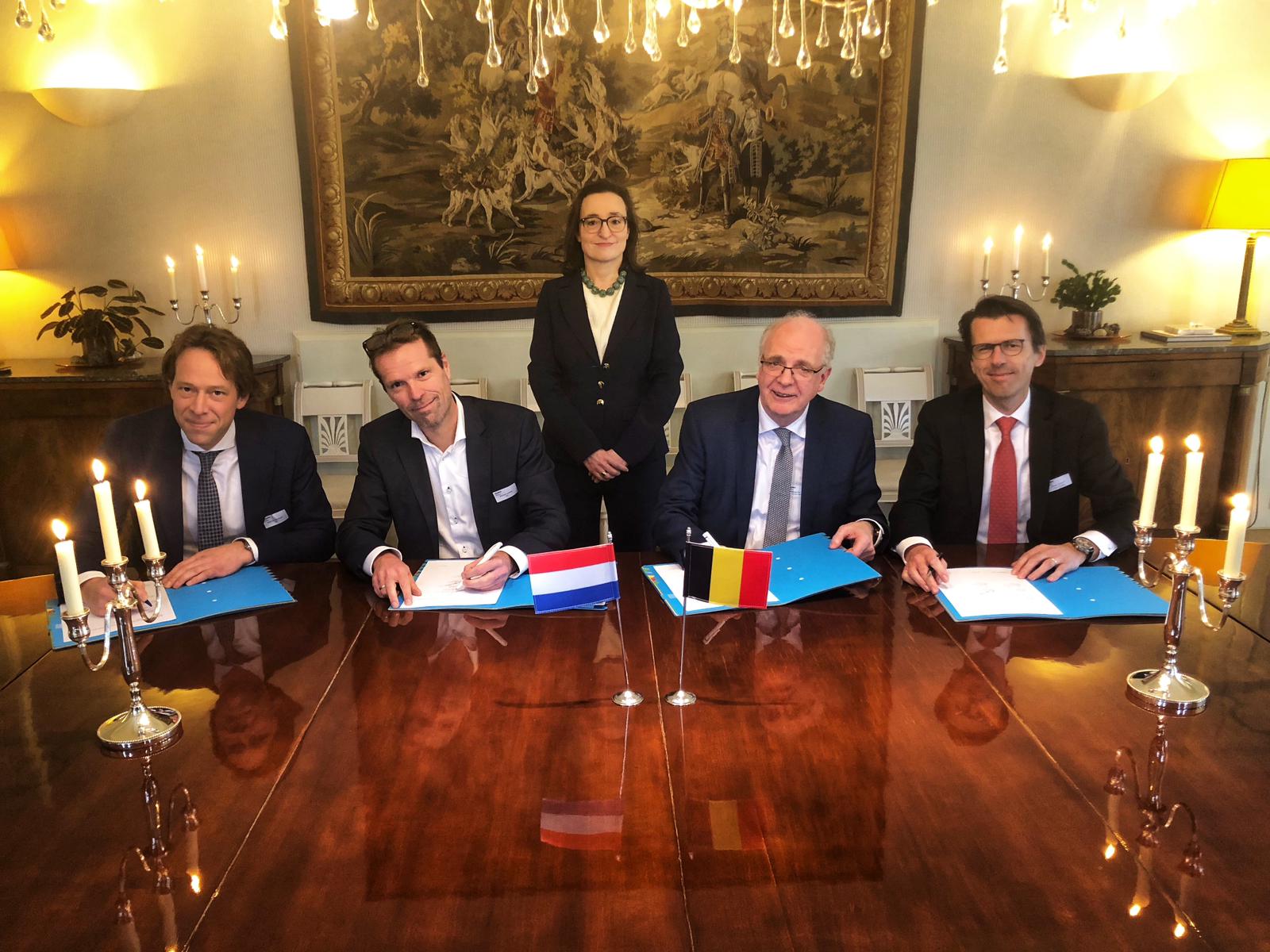
Present at the MOU signing ceremony were, from left, Joost van den Broek and Bertholt Leeftink of NRG Pallas, Belgian ambassador Anick van Calste, and Philippe Van Troeye and Denis Dumont of Tractebel. (Photo: Tractebel)
Belgium-based engineering firm Tractebel and the Netherlands’ NRG Pallas have signed a memorandum of understanding to provide engineering services in support of new reactor construction at the Borssele nuclear power plant, located near the village of Borssele in the Dutch province of Zeeland.
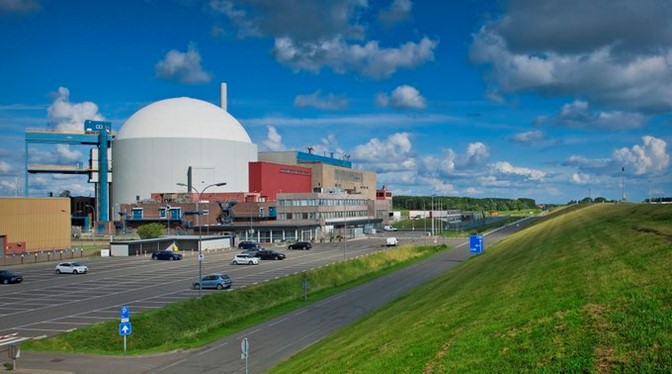
Borssele nuclear power station in the Netherlands. (Photo: EPZ)
While it currently has the lowest installed nuclear capacity of any nuclear-powered nation in Europe with one 482-MWe pressurized water reactor at Borssele, the Netherlands has in recent years been looking to move up in the rankings.
Artistic rendering of a Rolls-Royce SMR plant. (Image: Rolls-Royce)
Just one week after entering into an exclusive agreement with a Dutch nuclear development company to deploy small modular reactors in the Netherlands, U.K.-based Rolls-Royce SMR has announced the signing of a memorandum of understanding with Škoda JS to explore “areas of collaboration” for SMR deployment in both the Czech Republic and elsewhere in Central Europe.
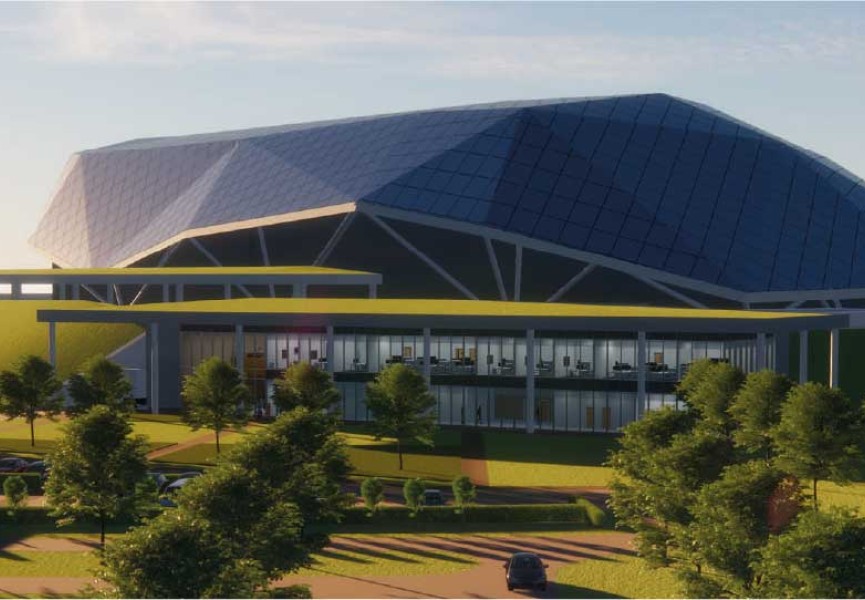
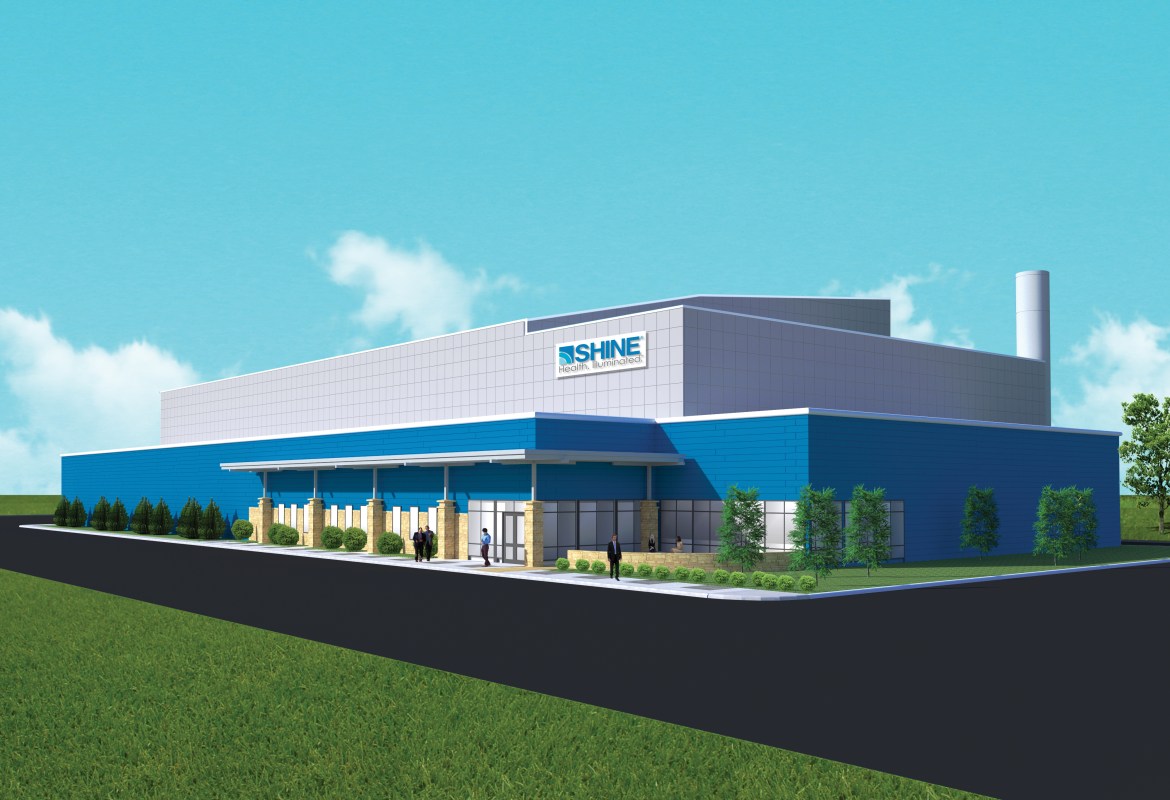
A rendering of the SHINE medical isotope production facility planned for construction in Veendam, the Netherlands. (Image: Shine)
SHINE Medical Technologies plans to locate its European medical isotope production facility in the Netherlands after a yearlong search and a review of more than 50 proposals from sites across Europe. The company announced on May 20 that construction at the site should begin in 2023 with commercial production starting in late 2025.