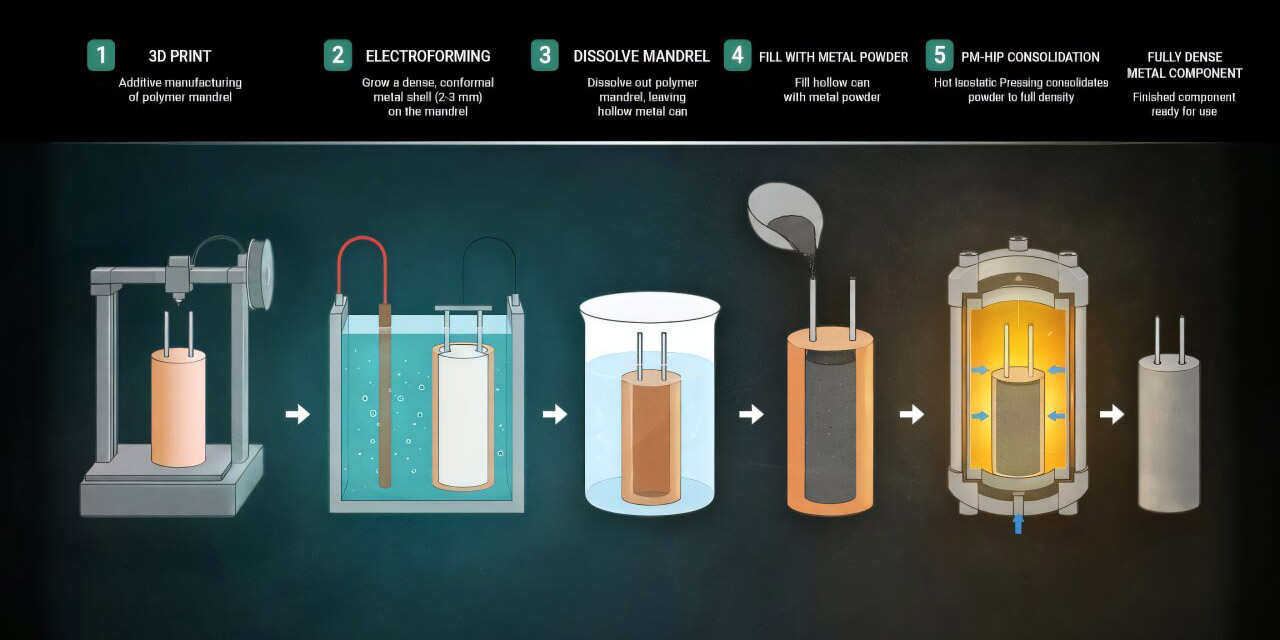
A hybrid manufacturing process combines 3D printing, electroforming, and hot isostatic pressing to produce critical components for advanced nuclear reactors and other energy and defense applications. (Image: Morgan Manning, Brett Hopwood/ORNL)
Oak Ridge National Laboratory scientists have collaborated with A.J. Tuck Company to develop a new manufacturing approach for use with the hot isostatic pressing (HIP) technique. The hybrid approach combines 3D printing and electroforming to produce so-called HIP cans used to form metal parts from powder materials, aiming to simplify the production of critical reactor components.
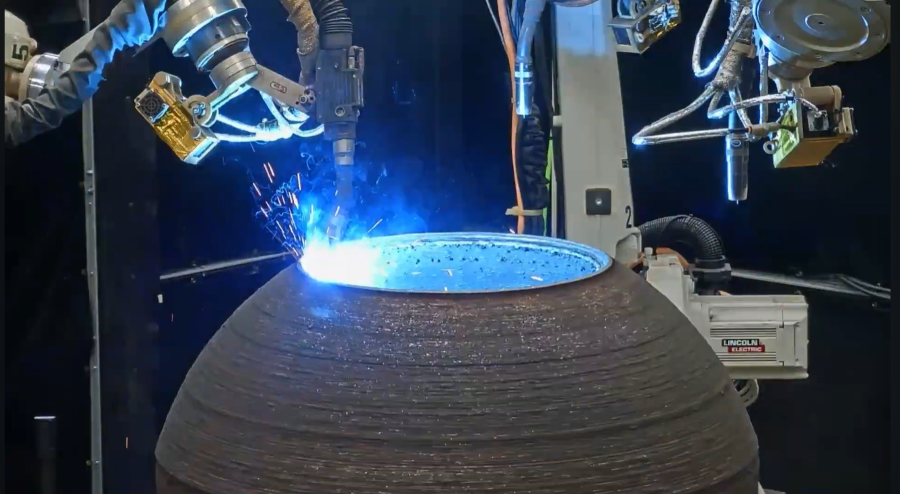
A model pressure vessel being printed at ORNL, showing that a nuclear-appropriate metal alloy can be formed into a complex domed shape. (Photo: ORNL)
Oak Ridge National Laboratory and Idaho National Laboratory have announced they will collaborate to help industry develop a process for wire arc 3D printing of industrial pressure vessels used for nuclear energy and chemical processing.
“By working with industry to demonstrate, validate, and qualify advanced manufacturing technologies, we can reduce risk, accelerate deployment, and strengthen the domestic supply chains essential to America’s energy future,” said Robert Wagner, ORNL associate laboratory director for energy science and technology.
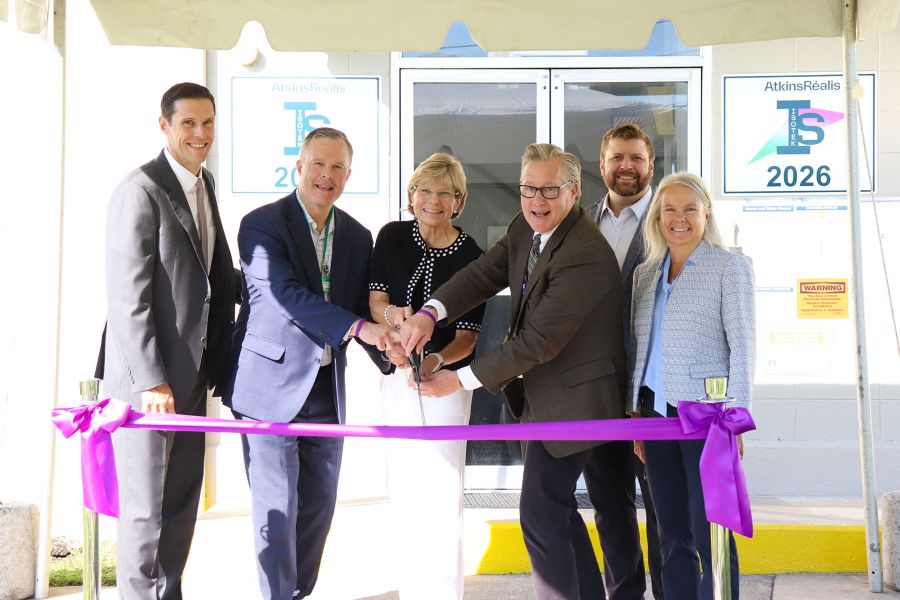
The ribbon is cut for the new analytical lab in ORNL’s Building 2026 by, from left, AtkinsRéalis’s Jeff Kendall, TerraPower Isotopes’ Scott Claunch, Isotek Systems’ Sarah Schaefer, OREM’s Erik Olds, TerraPower Isotopes’ Ben Goodrich, and OREM’s Teresa Robbins. (Photo: DOE Oak Ridge Office of Environmental Management)
A new analytical laboratory at Oak Ridge National Laboratory has been officially opened by the Department of Energy’s Oak Ridge Office of Environmental Management and its contractor Isotek Systems. The state-of-the-art lab, located in Building 2026, is being used to speed up the high-priority cleanup of ORNL’s uranium-233 inventory and accelerate the delivery of actinium-225 to facilities that use the radioisotope in research and for potential treatment of patients with cancer.
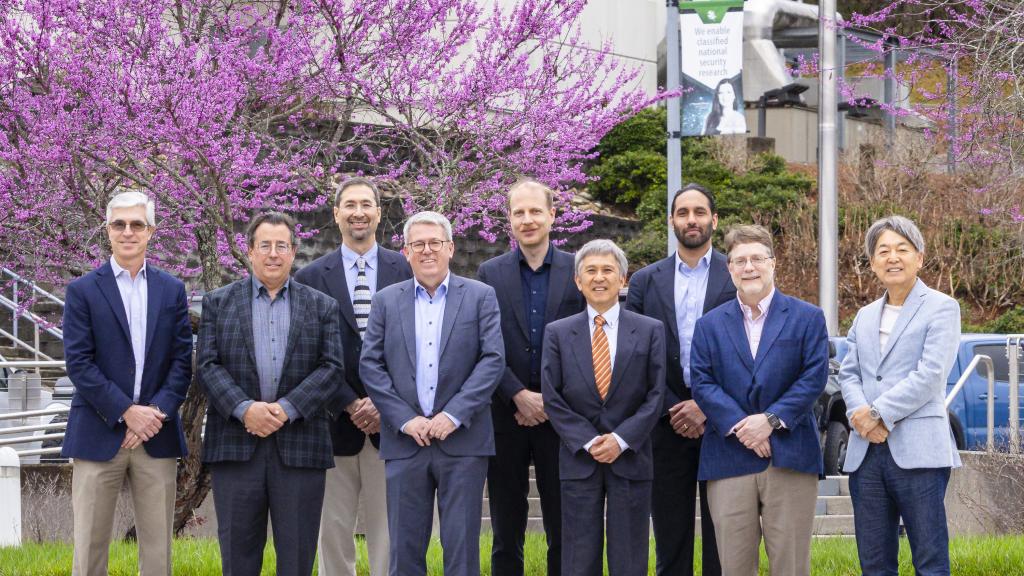
From left, Shaun Gleason, ORNL partnerships office director; Joe Hoagland, FFESD associate laboratory director; Arnie Lumsdaine, fusion private-public partnerships lead; Christian Day, KF senior vice president of plant technology; Colin Baus, KF vice president of research and commercialization; Satoshi Konishi, KF cofounder, CEO, and chief fusioneer; Bibake Uppal, president of Kyoto Fusioneering America; Stephen Streiffer, ORNL director; and Takashi Imai, KF director and chief corporate management officer. (Photo: Carlos Jones/ORNL)
Yesterday, Oak Ridge National Laboratory announced that the Department of Energy has committed funding to develop a fusion breeding blanket test facility at the lab in partnership with Kyoto Fusioneering, and the company announced it will be relocating its U.S. headquarters to Oak Ridge, Tenn., with support from the state of Tennessee’s Nuclear Energy Supply Chain Investment Fund.
In a future tokamak, neutrons released from the plasma during fusion could bombard the surrounding molten salt blanket to create tritium. (Image: IBM)
Researchers have reported using a combination of quantum and classical computing to calculate chemistry connected to tritium speciation in a FLiBe—lithium fluoride and beryllium fluoride—molten salt blanket, demonstrating a promising direction for unlocking tritium breeding in fusion machines.
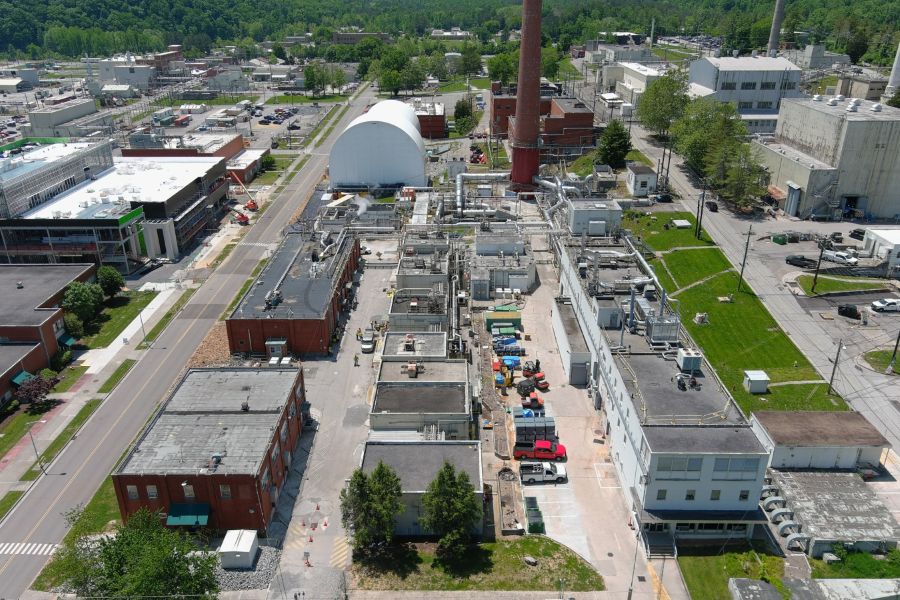
An aerial view of the 10 facilities of Isotope Row, located in the heart of ORNL. (Photo: DOE)
Having completed deactivation work, the Oak Ridge Office of Environmental Management (OREM) is set to begin demolition in July of a cluster of highly contaminated buildings at Oak Ridge National Laboratory in Tennessee, the Department of Energy’s Office of Environmental Management announced this week.
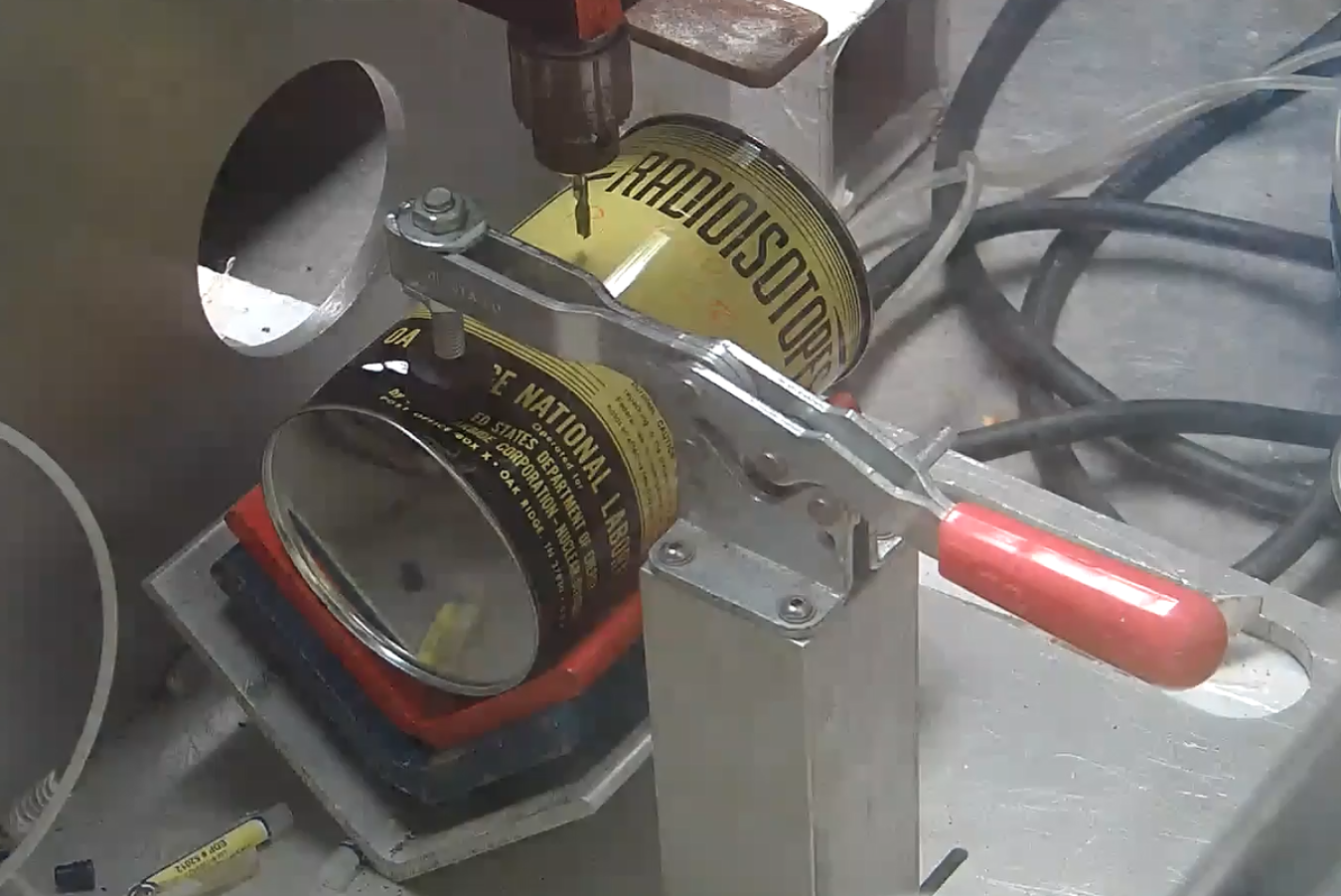
A canister of legacy oxide waste generated from previous research and development activities at ORNL is vented in a glovebox prior to being packaged for disposal. (Photo: DOE)
The Department of Energy’s Oak Ridge Office of Environmental Management and cleanup contractor United Cleanup Oak Ridge have surpassed their first-year target for processing legacy oxide waste at the site’s Transuranic Waste Processing Center (TWPC), reaching the milestone four months ahead of schedule.
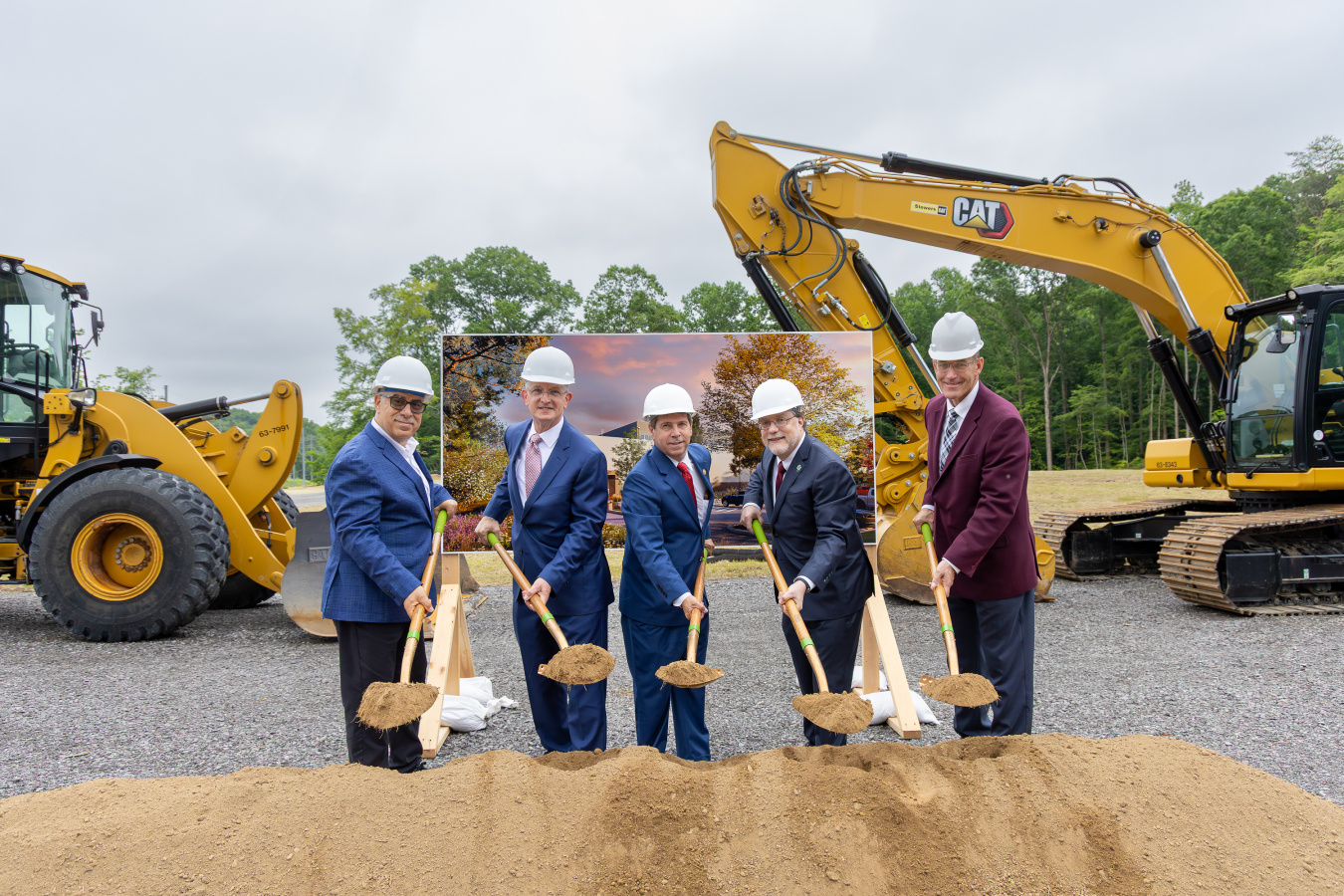
From left, Moe Khaleel, ORNL associate laboratory director; NNSA Administrator Brandon Williams; U.S. Rep. Chuck Fleischmann; ORNL Director Stephen Streiffer; and William Wheeler, ORNL site office manager at the ATOLL ground-breaking ceremony.
On June 3, Brandon Williams, administrator of the National Nuclear Security Administration, was at Oak Ridge National Laboratory to break ground on the Advanced Testbed and Operations Learning Laboratory (ATOLL).
The planned 21,000-square-foot facility, which is scheduled to be completed in mid-2028, will play an important role in the development of workforce expertise and capabilities aimed at monitoring foreign weapons-grade uranium production activities.
ANS CEO Craig Piercy and incoming ANS President Mark Peters at the ANS Annual Conference.
On Tuesday, during Mark Peters’s last days as the American Nuclear Society’s vice president/president-elect before assuming the presidency on June 4, he sat down with ANS CEO Craig Piercy for a Fireside Chat at the Annual Conference.
The MITRE CEO weighed in on his career path, what excites and worries him about the resurgence of nuclear energy, and juggling work-life balance with his new duties as ANS’s 72nd president.
“It’s going to be a lot of fun. It’s an important year,” he told Piercy.
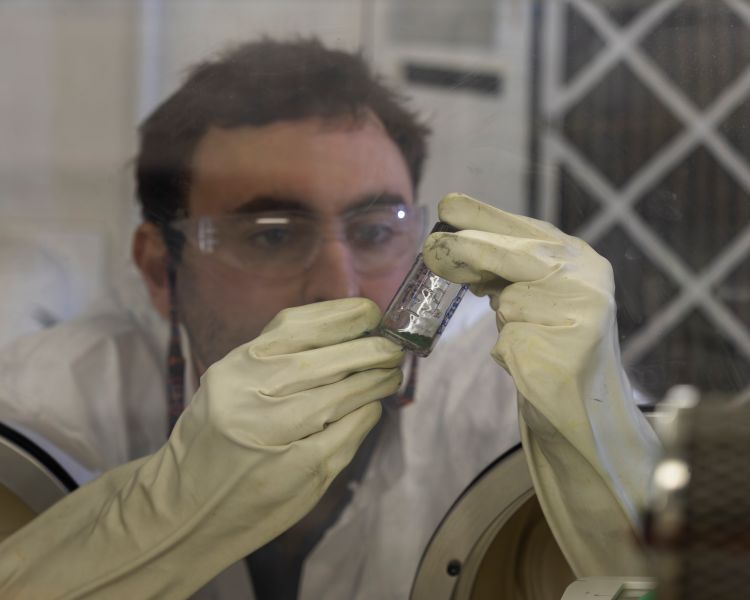
Ryan Chesser, an R&D associate in the Nuclear and Extreme Environment Measurements Group, inspects a fresh uranium salt sample before installing it in ORNL’s experimental equipment. (Photo: Carlos Jones, ORNL/DOE)
Oak Ridge National Laboratory announced the completion of a set of experiments measuring the viscosity and thermal conductivity of several uranium-bearing molten salts, filling in gaps that could help with the development of molten salt reactors.
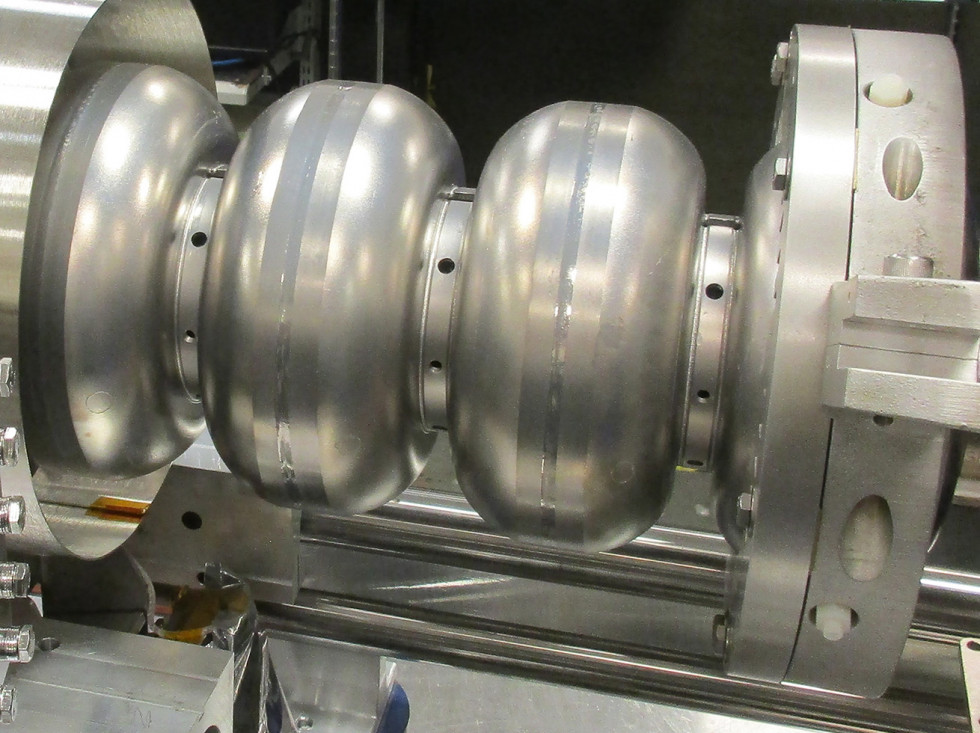
Particle accelerator technologies, such as this niobium-tin particle accelerator cavity, may lead to advancements in nuclear waste transmutation. (Photo: Jefferson Lab)
The Thomas Jefferson National Accelerator Facility is leading research supported by two Department of Energy Advanced Research Projects Agency–Energy (ARPA-E) grants aimed at developing accelerator technology to enable nuclear waste recycling, decreasing the half-life of spent nuclear fuel.
Both grants, totaling $8.17 million in combined funding, were awarded through the Nuclear Energy Waste Transmutation Optimized Now (NEWTON) program, which aims to enable the transmutation of nuclear fuels by funding novel technologies for improving the performance of particle generation systems.
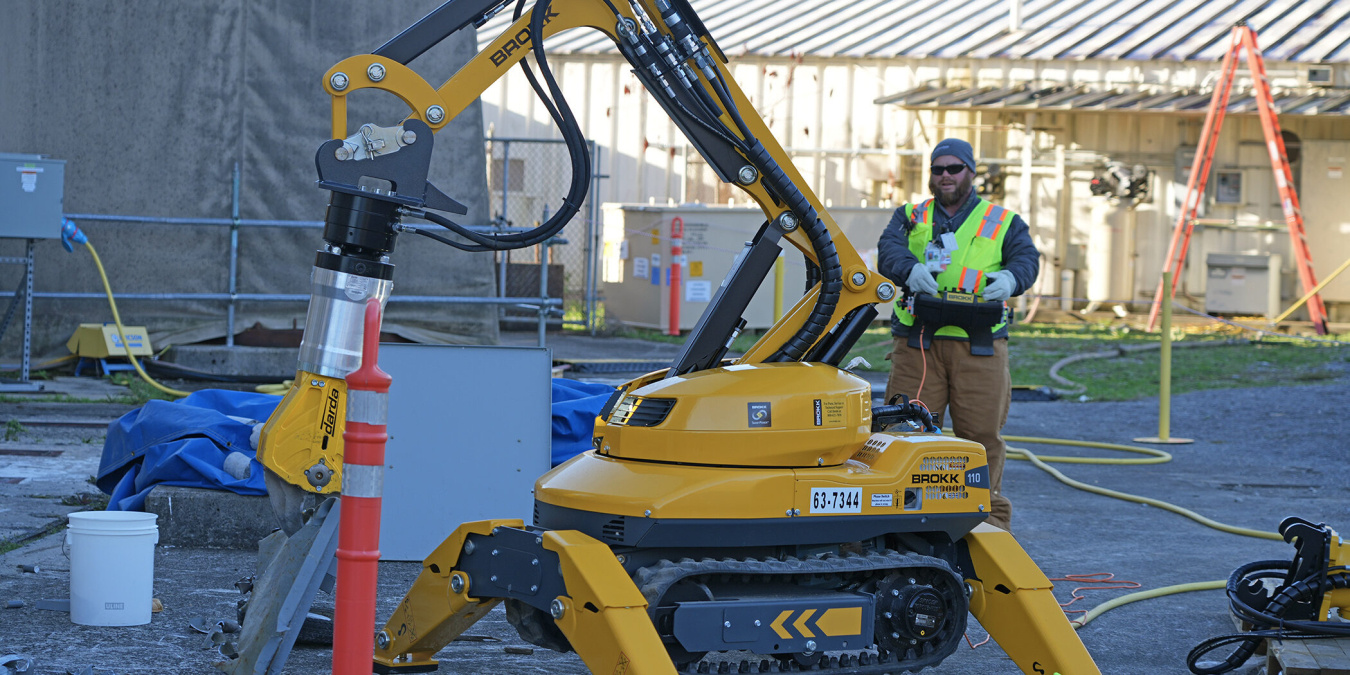
Oak Ridge crews practice using the remote equipment during mock-ups prior to use in cleanup areas. (Photo: DOE)
The Department of Energy’s Office of Environmental Management said it has transferred four robotic demolition machines from the department’s Portsmouth Site in Ohio to Oak Ridge, Tenn., saving the office more than $1.7 million by avoiding the purchase of new equipment.