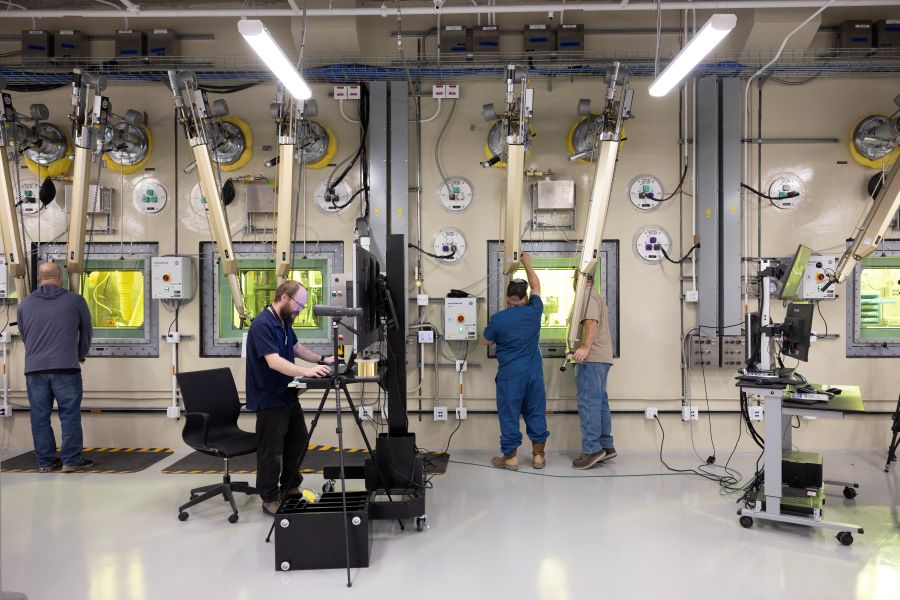
The SPL’s hot cell, seen here, has both manually operated and robotic manipulators for the safe handling of irradiated material. (Photo: INL)
Earlier this week, Idaho National Laboratory announced that its Structural Properties Laboratory (SPL) has been fully operational since January. Located at INL’s Materials and Fuels Complex, the SPL houses the lab’s first new hot cell in 50 years.
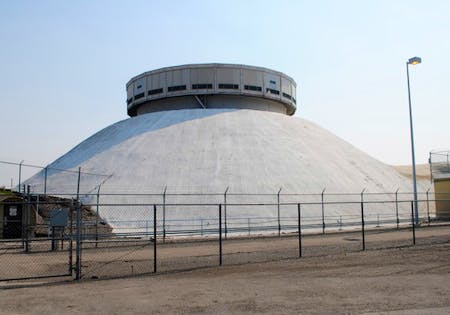
MCRE could be built inside the ZPPR cell (shown here) at INL’s Materials and Fuels Complex. (Photo: INL)
A tiny 200-kWt reactor the Department of Energy says would be the first critical fast-spectrum circulating fuel reactor and the first fast-spectrum molten salt reactor (MSR) could be built and operated inside the Zero Power Physics Reactor (ZPPR) cell at Idaho National Laboratory’s Materials and Fuels Center (MFC). Details included in the Molten Chloride Reactor Experiment (MCRE) draft environmental assessment (EA)—released on March 16 for two weeks of public comment (later extended to four weeks, through April 14)—covered the potential environmental impacts associated with the development, construction, operation, and decommissioning of MCRE at INL, facilitated by the National Reactor Innovation Center (NRIC).
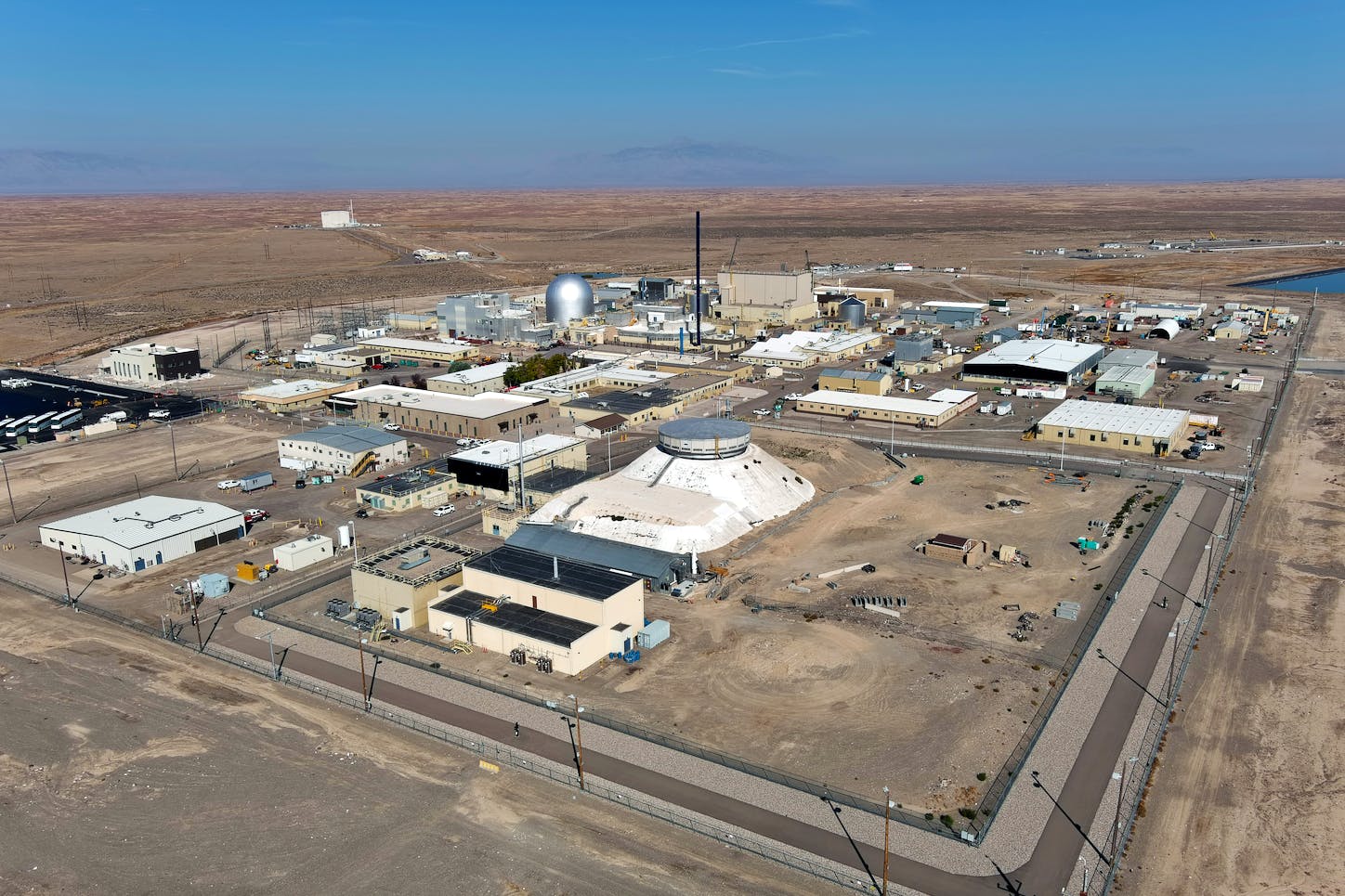
INL’s Materials and Fuels Complex. (Photo: INL)
The Department of Energy announced $150 million in Inflation Reduction Act funding on October 25 for infrastructure improvements at Idaho National Laboratory. According to the DOE, the funding will support nearly a dozen projects at INL’s Advanced Test Reactor (ATR) and Materials Fuels Complex (MFC), both of which have operated for more than 50 years. The investments in existing infrastructure assets mean support for nuclear energy research and development, including fuel testing, bolstering the near-term supply of high-assay low-enriched uranium (HALEU), and reactor demonstrations.