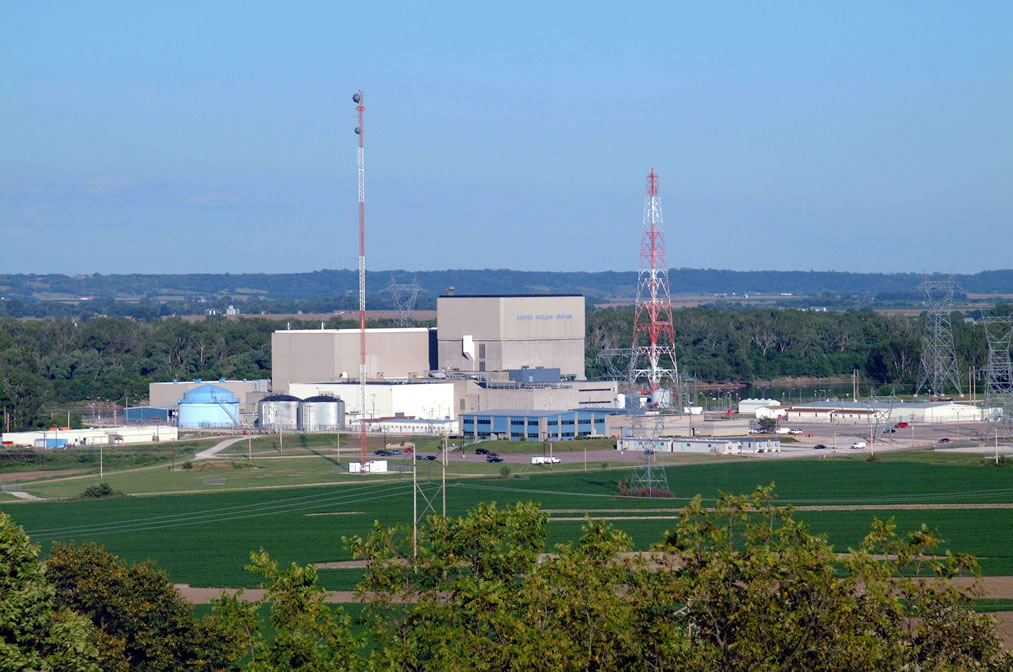
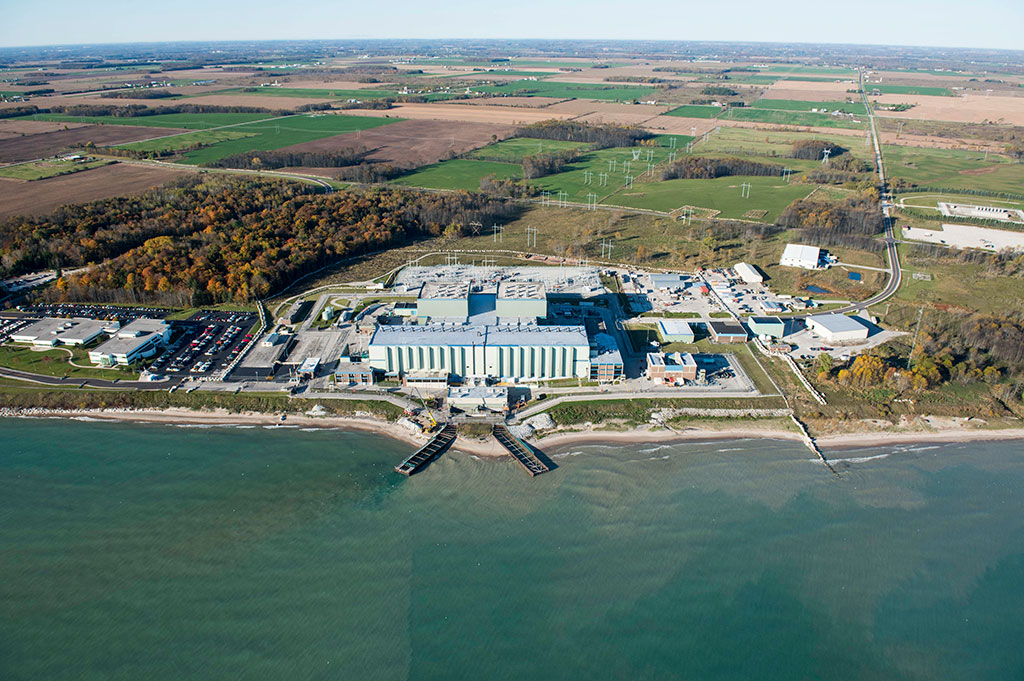
State news: Nebraska, Minnesota assess potential nuclear construction

Studies, regulatory control, and legislation are among the items Nebraska, Minnesota, Indiana, and North Carolina tackled in the month of May regarding nuclear energy.
HSB Global Inspection and Engineering Services – We provide specialized inspection and certification services for boilers, pressure vessels, nuclear components, and power plants worldwide. Wherever your business takes you, we’re at your side. Global reach. Local presence.

Studies, regulatory control, and legislation are among the items Nebraska, Minnesota, Indiana, and North Carolina tackled in the month of May regarding nuclear energy.

Eight companies will collectively receive more than $94 million in cost-share funding to expedite the near-term deployment of small light water modular reactors, the Department of Energy announced Thursday.

Indianapolis-based reactor development start-up First American Nuclear (FANCO) announced on May 13 that it has entered into a strategic alliance with Montreal-based nuclear engineering company AtkinsRéalis.
Together, the companies now plan to jointly develop, test, and license FANCO’s EAGL-1 reactor design. For FANCO, the agreement comes as a chance to bring in a partner with decades of experience in nuclear project development. For AtkinsRéalis, the partnership provides the opportunity to establish a presence in Indiana.
Indiana Gov. Mike Braun has signed a nonbinding letter of intent that will see the state’s Office of Energy Development (OED) and Indiana-based pharmaceutical company Eli Lilly collaborate to explore potential nuclear projects.
The focus of these projects—perhaps surprisingly—is not connected to medical radioisotope production. Rather, it will focus on “small modular reactors and other advanced nuclear technologies” that could provide “baseload power for industrial, research, and community uses,” according to the LOI.

In the past week, two pieces of nuclear legislation moved forward in two Midwestern states.
In Wisconsin, a bill to create new tax credits for new power plants passed through the state Assembly and went to the Senate, while in Indiana, a bill to simplify the state approval process for new plants passed through the state Senate and went to the House.

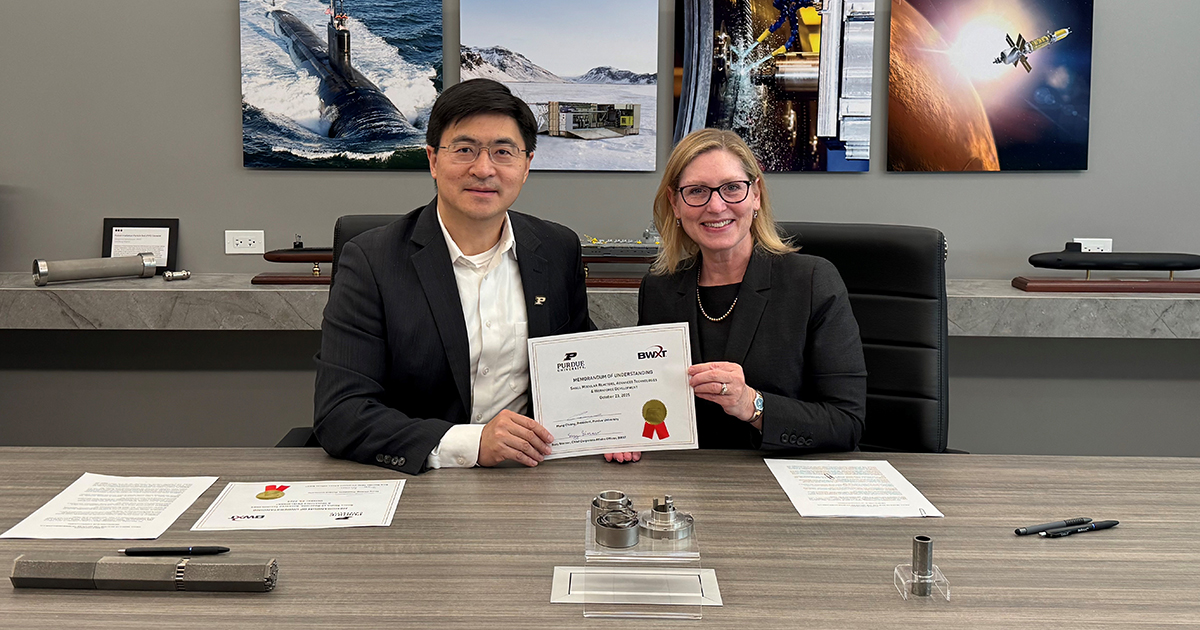
BWX Technologies and Purdue University have signed a memorandum of understanding to collaborate on research focused on next-generation nuclear technologies, including small modular reactors and microreactors.

The final passage of Senate Bill 424 from Indiana’s House of Representatives last week sent a key piece of pronuclear legislation to Gov. Mike Braun for final approval.
The legislation offers public utilities that want to develop small modular reactors in the Hoosier State to recover preconstruction costs from their customers before the project even begins. The company would have to petition the Indiana Utility Regulatory Commission and, if approved, would have the opportunity to establish a new rate that reflects the cost of the project.
From lifting moratoriums to launching studies to labeling it as clean, state lawmakers are exploring ways to give nuclear energy a boost in 2025. Here’s a look at some of the pronuclear legislation under review.
“SMRs present a viable opportunity for Indiana to transition to a cleaner, resilient, and diversified energy future. Successful deployment of SMR technology requires a careful balance of economic, regulatory and social considerations along with development of the technology.” Those are among the conclusions of a comprehensive study conducted on small modular reactors primarily by researchers at Purdue University and funded by the Indiana Office of Energy Development.

Purdue University and Duke Energy released an interim report on May 10 that documents the first year of an ongoing feasibility study, first announced in April 2022, that could help bring nuclear power to the state of Indiana. No technology has been selected and no decision to build a new nuclear plant has been made at Purdue University or elsewhere in the state, but in the Small Modular Reactor and Advanced Reactor Feasibility Study Interim Report the study participants conclude that “small modular reactors and advanced reactors are a viable option that warrant continued exploration to meet the future carbon-free energy needs of Purdue University and Duke Energy Indiana.”

Purdue University and Duke Energy have announced that they plan to jointly explore the feasibility of using advanced nuclear energy to meet the university’s long-term energy needs, “a move that may be unprecedented for a college campus.” A small modular reactor could meet the current and future needs for Purdue’s West Lafayette, Ind., campus, as well as provide excess power to the state’s electric grid, according to a joint press release.

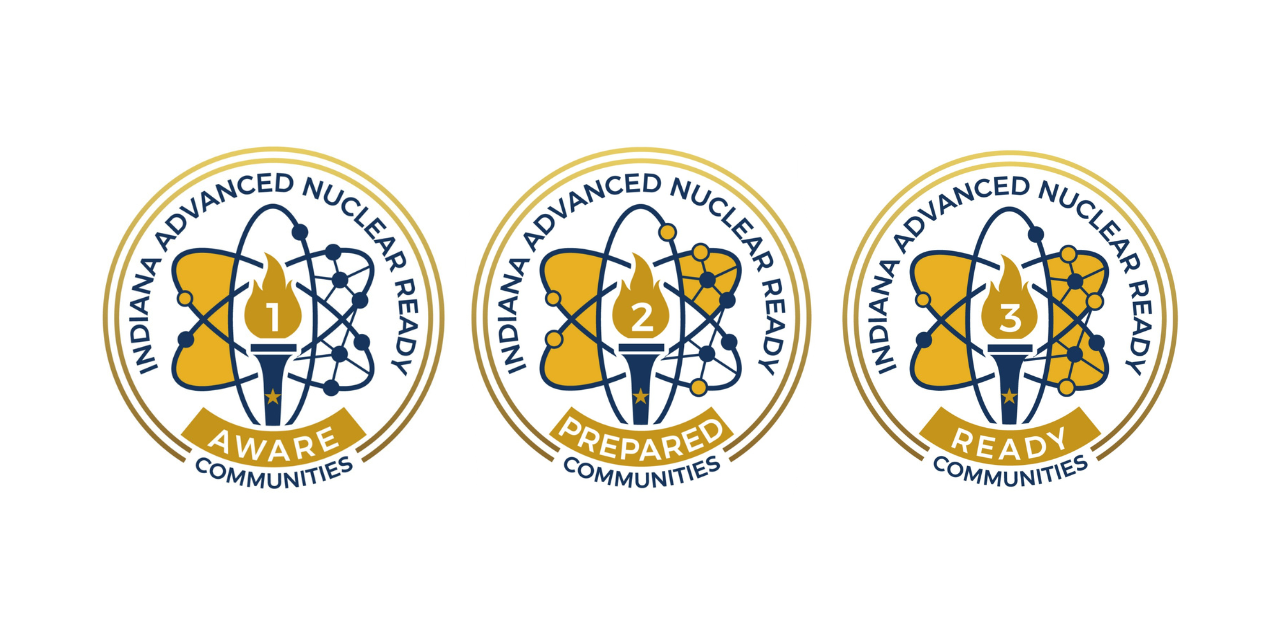
Holcomb
Indiana has joined the growing list of states looking into small modular reactors for future energy production as their coal-fired plants are retired.
Gov. Eric Holcomb on March 18 signed into law S. 271, which allows and incentivizes the construction of SMRs in Indiana. Introduced on January 10 and sponsored by state Sens. Eric Koch (R., Bedford) and Blake Doriot (R., Goshen), S. 271 passed in the Senate on February 1 in a 39–9 vote and in the House on February 22 by a vote of 70 to 22.
Specifics: S. 271 requires the Indiana Utility Regulatory Commission (IURC), in consultation with the state’s Department of Environmental Management, to adopt rules concerning the granting of certificates of public convenience for the construction, purchase, or lease of SMRs, defined as reactors with a rated electric generating capacity of not more than 350 MW. The rules are to be adopted by July 1, 2023.

This year has been a good one so far regarding interest from state legislatures in the potential of nuclear energy. Examples reported by Nuclear Newswire include, in January, an Indiana bill to incentivize the construction of small modular reactors, and this month, West Virginia’s repeal of its ban on new nuclear plant construction and legislation in Illinois aimed at achieving the same end in that state. Slipping under our radar until now, however, is a measure in Oklahoma introduced earlier this month that would create a feasibility study to examine the possibility of nuclear power in the Sooner State.

Doriot

Koch
A new bill in the Indiana state Senate creates guidelines for state regulators to consider small modular reactors should utilities want to build them. Senate Bill 271 was sponsored by Sen. Eric Koch (R., Bedford), chair of the Senate Utilities Committee, and Sen. Blake Doriot (R., Goshen). Supporters of the bill said that SMRs could replace retiring coal plants and would supplement renewables.
The Indy Star reported on January 24 that the utilities committee passed the bill by a vote of eight to two and that it now heads to the full Senate.