Wolf Creek powers Kansas—and its students
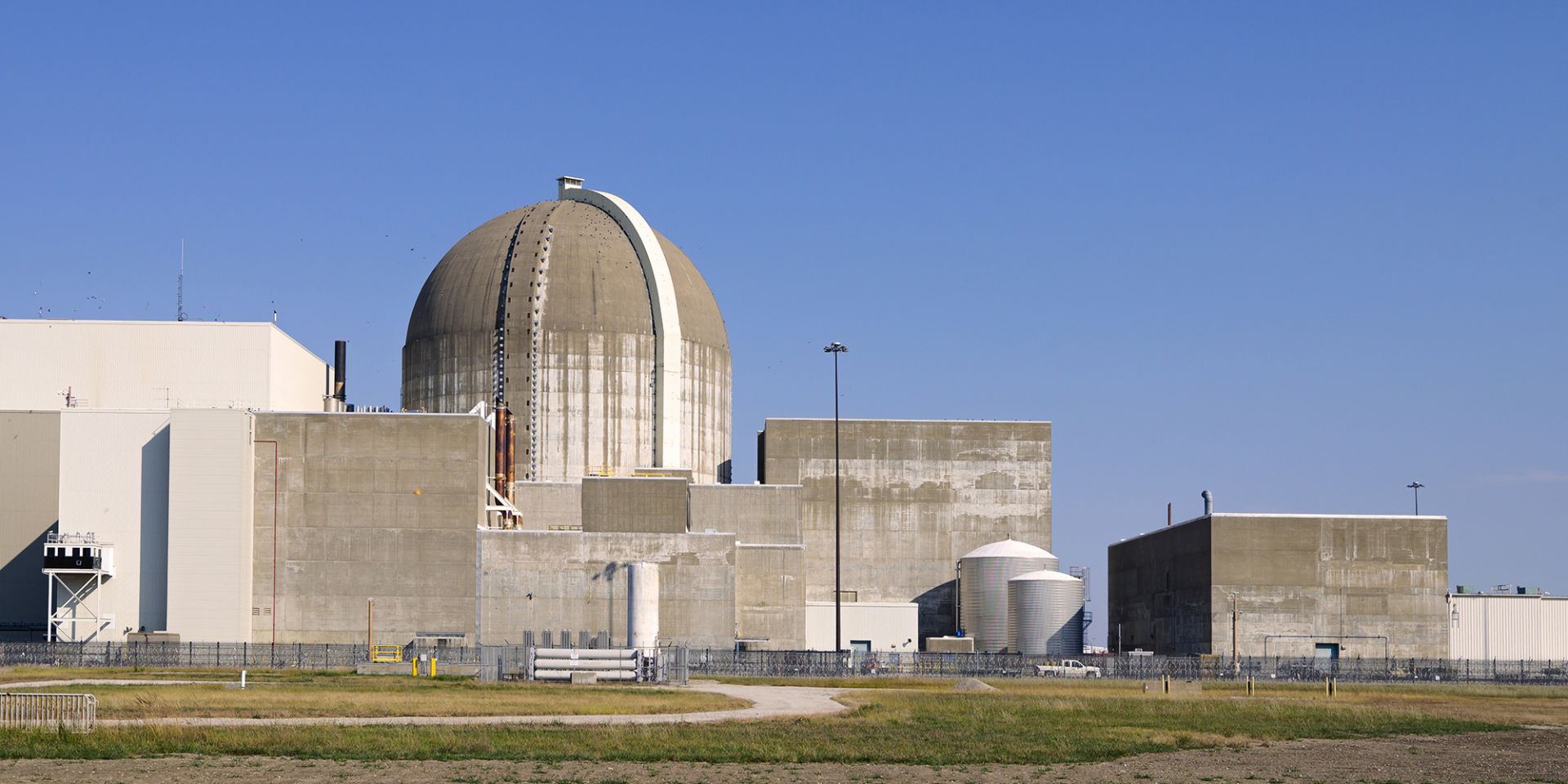
Evergy’s Wolf Creek Generating Station, near Burlington, is the only nuclear power plant in Kansas. In addition to generating 20 percent of the state’s electricity—enough to power 800,000 homes—it has been generating educational opportunities by providing internships and co-op employment to nuclear engineering students from universities around the Midwest for 35 years.
Interns work at Wolf Creek during the summer, while co-op students can take a semester away from school to work at the plant for eight months. Both interns and co-op students are introduced to substations, transmission and distribution system operation centers, other power plants, service events in the Evergy community, and networking events with employees and executives. Interns are also eligible for scholarships.
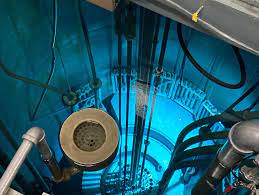
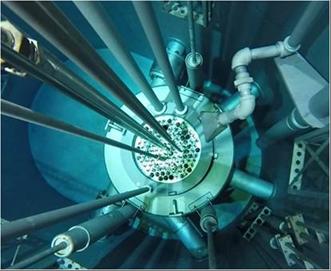
Many of the students who take advantage of internship and co-op opportunities are enrolled in the Carl R. Ice College of Engineering at Kansas State University. In addition to gaining real-world experience via Wolf Creek’s Westinghouse 1,200-MWe, four-loop pressurized water reactor, they also have the opportunity to work with K-State’s TRIGA Mark II research reactor. One of 25 university-operated research reactors in the United States, the TRIGA Mark II is used in reactor operation and radiation detection courses, as well as in faculty research, industrial services, and community outreach.
An integral part of the K-State nuclear engineering program, the TRIGA Mark II reactor is licensed to operate at thermal power levels as high as 1.25 MW. Its research capabilities include the use of neutron beams for detector testing, internal imaging with neutron radiography and tomography, tracer isotope production, trace element analysis, and generation of medical radioisotopes. The reactor facility is staffed mostly by undergraduate students who have become licensed operators.
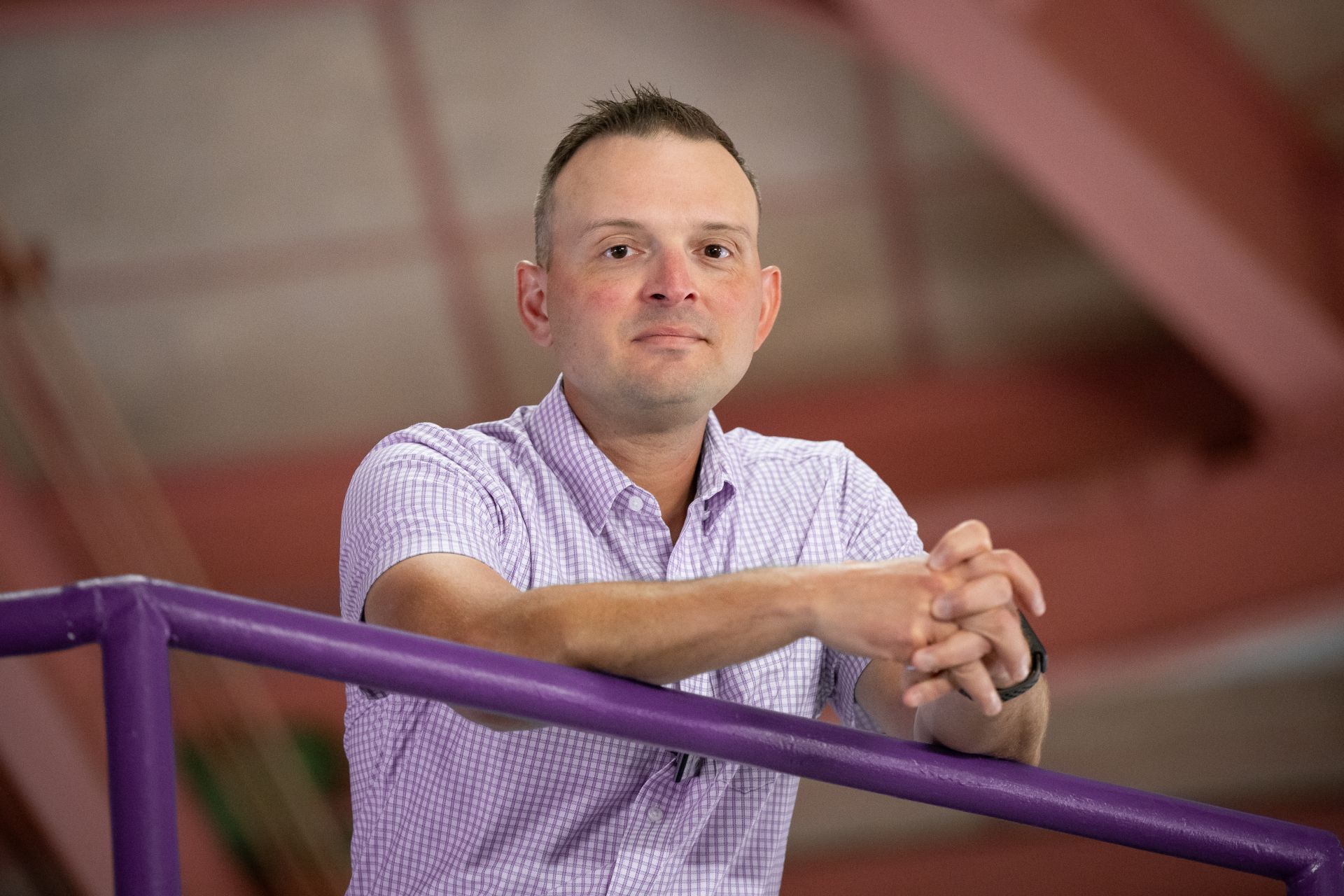
Amir Bahadori. (Photo: Jeff Moore/Kansas State University)
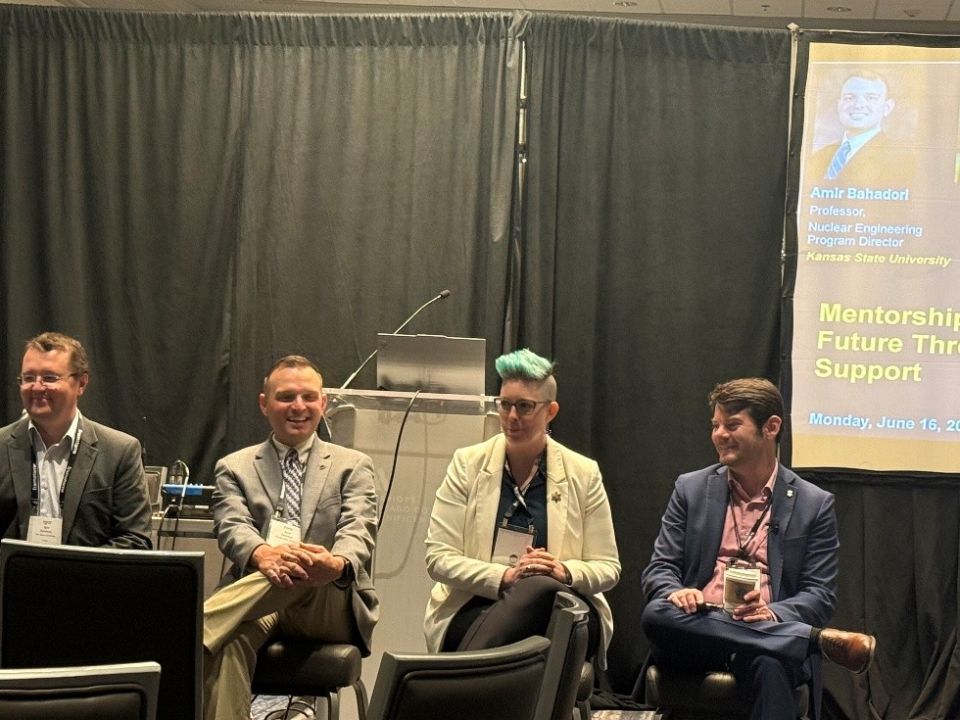
Research with the TRIGA Mark II reactor can be applicable to a variety of industrial sectors, including energy, health care, agriculture, and manufacturing. Amir Bahadori, the university’s program director of nuclear engineering, uses the TRIGA Mark II for his radiation protection–focused research. He pointed out that the reactor is an excellent resource for industry partners.
“We’ve had discussions with companies that want to use the reactor as a resource to help educate their employees, giving them hands-on experience that they haven’t had in their engineering career. Or there are some that need an initial introduction into nuclear, given the fact that there’s this huge workforce increase required to expand nuclear power to meet our energy needs,” he said.
Nuclear engineering at K-State
Bahadori has been with K-State’s Department of Mechanical and Nuclear Engineering since 2015. He previously worked in the Space Radiation Analysis Group at NASA, calculating astronaut risk from ionizing radiation, coordinating astronaut radiation-risk reporting, and serving as principal scientist for the Advanced Exploration Systems RadWorks project, which developed the active radiation monitoring system for the Artemis program.
In addition to being director of K-State’s nuclear engineering program, Bahadori is the director of the Radiological Engineering Analysis Laboratory. He also established the Institute for Radiation Health Studies in 2024 as a central resource for radiation expertise and biological irradiation for K-State and the broader community.
K-State restarted its bachelor’s degree program in nuclear engineering this past fall after a hiatus of nearly 30 years, during which time it was offered as a “subplan” in the mechanical engineering curriculum. The newly revitalized program provides students with a foundational understanding of nuclear energy, reactor design and operations, radiation shielding, radiological regulations, and radiation sensing and instrumentation.
Bahadori said that the program was reinstated due to student feedback, increasing interest, industry advisory council, and support from the university administration. “We are seeing remarkable demand for the nuclear engineering undergraduate major. We already had a nuclear engineering option, which was a concentration within the mechanical engineering major, and we designed the new B.S. nuclear engineering curriculum to facilitate transfer in from the option students. We started with about 50 majors last fall, and we expect to have over 100 majors this fall.”
Despite the undergraduate program’s rocky road, K-State has always maintained its graduate and doctorate programs in nuclear engineering. “This allowed us to maintain expertise within the university and set us up well for restarting the B.S. NE program last fall,” Bahadori said. “Former graduate students have gone on to contribute greatly to the field of nuclear engineering.” K-State also offers an accelerated master’s program that gives students the opportunity to earn their bachelor’s and master’s degrees in mechanical or nuclear engineering in five years.
Internship and co-op programs
The internship program with Evergy is among several corporate and national laboratory internships that K-State students have the opportunity to explore. “We highly encourage students to participate in applied learning experiences outside of the standard curriculum, in large part so they can experience first-hand how the knowledge gained in the classroom is put into action as a member of the nuclear workforce,” Bahadori said.
Katie Patten is Evergy’s internship program lead and senior recruiter. In the February 2026 article “Wildcats at Wolf Creek” by Malorie Sougéy, she is quoted as saying, “An internship has the potential to be a first step in a career with Evergy or at Wolf Creek, specifically because we use our internship program as the number one pipeline for entry-level talent.”
Patten told Nuclear News, “Students interning at Wolf Creek gain hands-on, real-world exposure as part of Evergy’s broader internship program, which supports engineering, IT, and business students across the company. Interns are embedded within teams and contribute to meaningful work that helps them apply classroom learning to practical challenges, while gaining a clearer understanding of how a large, regulated utility operates.”
In 2024 and 2025, nine K-State nuclear engineering students interned or worked co-op at Wolf Creek. Last year, 30 percent of all Evergy interns were from K-State. This summer, there are 15 K-State students interning with Evergy, including two at Wolf Creek. Other Evergy facilities where students intern include the corporate headquarters in Topeka, Kan., and Kansas City, Mo., service and operations centers, and emergency response centers.
In 2025, the Carl R. Ice College of Engineering named Evergy Company of the Year in recognition of its commitment to engineering education, professional excellence, and community engagement, including its internship and scholarship programs.
Mitchell Van Erdewyk, the system engineering manager at Wolf Creek, has supervised many interns over the years. “Since Wolf Creek started its internship program more than 35 years ago, we have had more than 150 students, and more than 40 have become full-time engineers,” he said.
Interns and co-op students come to Evergy from schools around the United States, including Iowa, Arkansas, Kansas, and Missouri. At Wolf Creek, students get to tackle real-world projects and problems together with full-time employees at the plant. Van Erdewyk said, “Wolf Creek’s goal is to provide experiences for interns and co-ops that prepare them for a career in the nuclear industry or in other engineering disciplines. We do this by allowing students to take on tasks that address real scenarios in the plant, which encourages them to step outside their comfort zone and seek help. When they do this, they build relationships with individuals from maintenance, operations, chemistry, radiation protection, and training. This is how they learn more about our processes. In addition to their main duties, interns and co-ops shadow groups like operations to learn about the daily responsibilities of an operator.”
Students also have the opportunity to support the local community through service projects and explore the company’s various departments through tours and “day-in-the-life” events. “These activities foster connections among all Evergy interns,” Van Erdewyk explained.
The Wolf Creek internship program “emphasizes professional growth, community engagement, and relationship building,” Patten noted. In addition to getting a broad view of the energy industry and company culture, “interns participate in professional development sessions focused on leveraging their strengths, career readiness, and leadership skills.”
Evergy offers student interns scholarships worth $5,000 per semester, renewable for as many as four semesters. According to Patten, a “limited number of merit-based scholarships are awarded annually to students completing Evergy’s internship program. Strong consideration is given to candidates living in an Evergy service area who are interested in a possible future career with us, especially students pursuing degrees in engineering, computer science, or similar fields.”
Since the scholarship program began in the summer of 2023, Patten said, Evergy has awarded scholarships to 30 students, seven of whom interned at Wolf Creek and went on to have further internships or careers at the plant.
Nuclear Wildcats
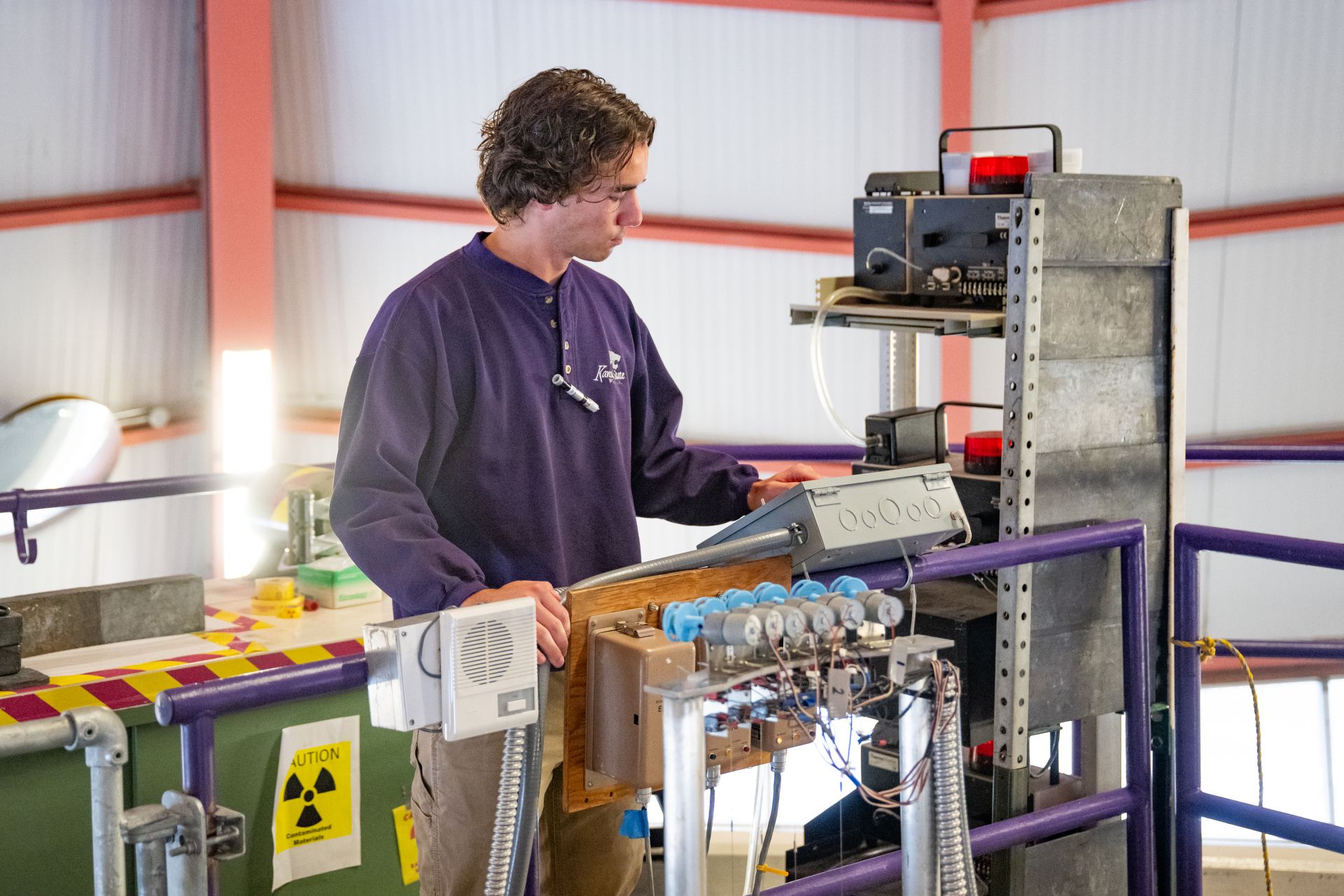
Aiden Butcher works with Kansas State’s TRIGA Mark II research reactor. (Photo: Jeff Moore/Kansas State University)
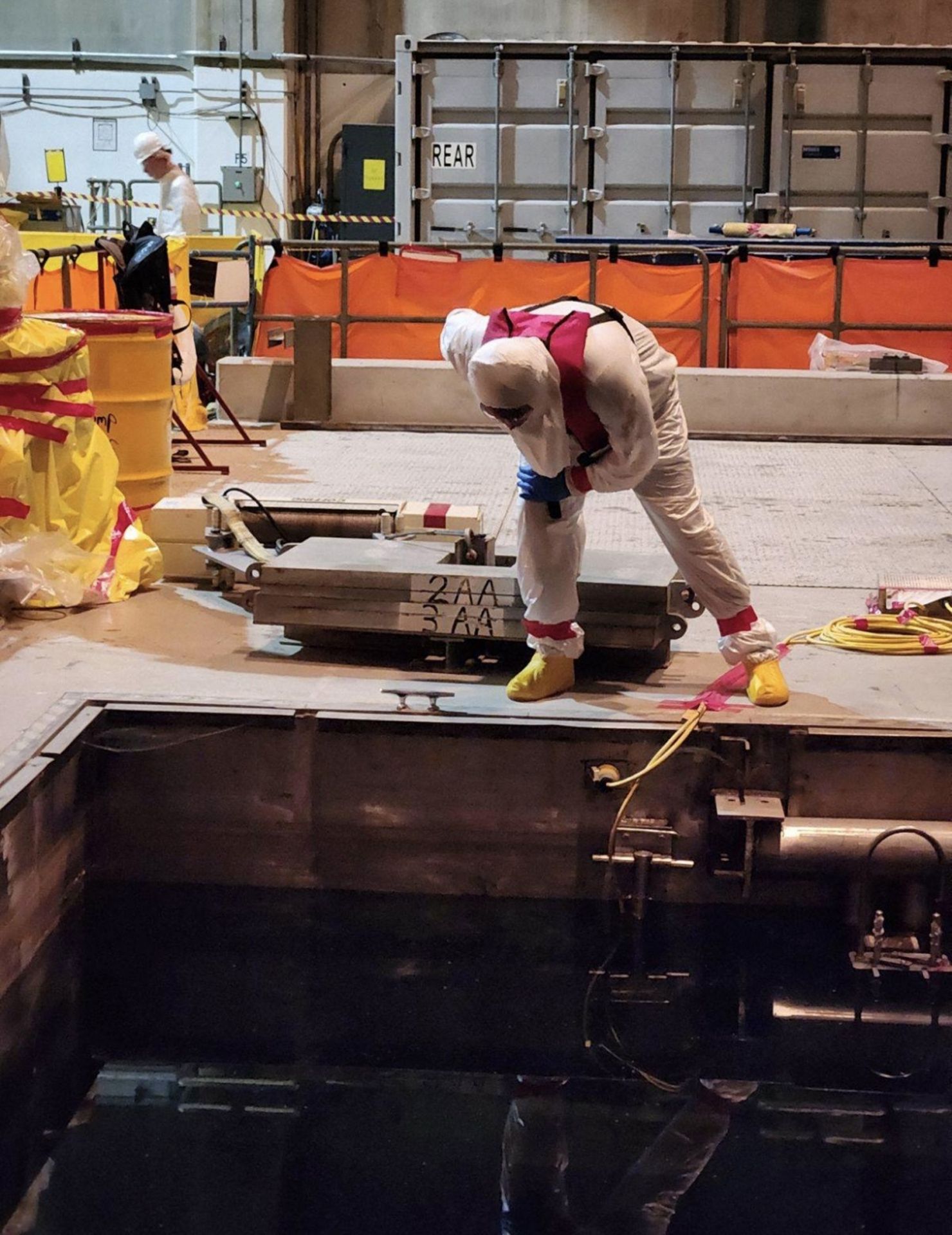
Alex Higbee inside the fuel building at Wolf Creek during his 2024 internship. (Photo: Evergy)
Aiden Butcher, a senior planning to pursue his master’s degree through K-State’s accelerated nuclear engineering master’s program, was featured in the “Wildcats at Wolf Creek” article. As an undergrad, he completed two internships at the power plant.
In Butcher’s first internship, he worked with the Wolf Creek license renewal and fire protection teams to help bring the facility’s fire protection lines up to code. In his second internship, he worked with the reactor engineering team to receive and offload fuel for the reactor’s refueling, and he also developed a training video on safe fuel handling.
“Helping with the new fuel was amazing,” he is quoted as saying in the article. “They let me put on the gloves and rotate it around, which is an experience not many people get. They didn’t have to ask me to help, but they chose to, because they knew I wanted the experience. . . . My internship experience has definitely shaped my confidence in knowing that I’ll have a job. They talk about all the time how much nuclear is booming right now, and how much it’s going to keep increasing in the next 10 years or so, until there’s a huge fleet of new plants. Knowing that the job market is growing so rapidly for this particular degree has been very comforting.”
Alex Higbee, who is now an operations apprentice at Wolf Creek, was another intern who featured in the K-State article. During his two internships at Wolf Creek, in 2023 and 2024, he designed a bracket system for fuel inspection cameras and helped to improve an online “engineering desktop simulator” that helps engineers learn how the power plant functions.
Passion for the future
Van Erdewyk has observed that students from K-State have been among the most enthusiastic of Wolf Creek’s interns. “When I think about some of the K-Staters at the plant, they stand out because of their ownership and the responsibilities that they take on,” he said. “They recognize the importance of this plant and want to achieve good things for it. They’re very passionate about their jobs.”
Between the internship and co-op experiences gained at Wolf Creek and the educational and research opportunities available on campus and with the TRIGA Mark II reactor, K-State nuclear engineering students are well prepared to meet future professional challenges.