Students attending a past Utility Working Conference in Florida.
The American Nuclear Society's 2023 Utility Working Conference and Vendor Technology Expo is accepting applications for knowledge managers to work during the meeting. The UWC, which will have a theme of “Building Resiliency in a Rapidly Changing World,” will be held at the JW Marriott Marco Island Beach Resort on Marco Island, Fla., on August 6–9, 2023.
The ANS Operations and Power Division will pay the conference registration fee for up to six knowledge managers, who also will receive three complimentary nights of housing at the Marriott resort.
Further details on the conference are available online.
A rendering of Oklo’s Aurora Powerhouse. (Image: Oklo)
Santa Clara, Calif.–based Oklo is planning to build its second and third commercial Aurora Powerhouse nuclear plants in southern Ohio, the company announced yesterday. The advanced reactor developer received a site permit in December 2019 from the Department of Energy to build its initial Aurora facility at Idaho National Laboratory.
According to the announcement, Oklo has signed an agreement with the Southern Ohio Diversification Initiative (SODI), a community-reuse organization, to deploy two 15-MWe plants on land owned by SODI at the Portsmouth site near Piketon, Ohio. The DOE began transferring parcels of the Portsmouth site—home to the Portsmouth Gaseous Diffusion Plant, now undergoing decontamination and decommissioning—to SODI in June 2018 for economic development.
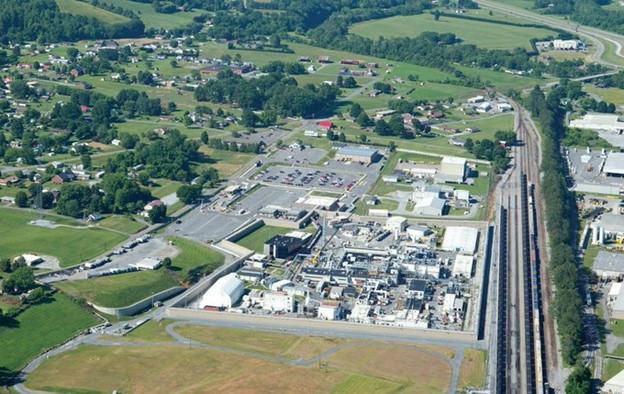
Nuclear Fuel Services in Erwin, Tenn. (Photo: BWX Technologies)
BWX Technologies announced on April 10 that its Nuclear Fuel Services subsidiary in Erwin, Tenn., has been awarded a five-year, $428 million contract from the National Nuclear Security Administration to purify and convert high-enriched uranium (HEU) from an oxide to a metal. The Phase II contract follows the successful completion by NFS of a $57.5 million contract awarded two years ago for a process line design and pilot demonstration.
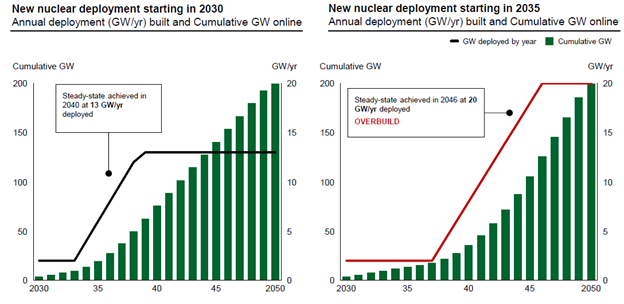
These graphs illustrate how rapidly scaling the nuclear industrial base would enable nearer-term decarbonization and increase capital efficiency, versus a five-year delay to reach the same 200 GW deployment by 2050. (Source: DOE, Pathways to Commercial Liftoff: Advanced Nuclear, Fig. 1)
The Department of Energy released Pathways to Commercial Liftoff: Advanced Nuclear earlier this month. It is one of the first in a series of reports on clean energy technologies and the private and public investments needed to overcome hurdles to full-scale deployment. The report makes a clear case for investment in nuclear power and challenges potential investors and operators to move beyond the current “wait and see” stalemate and generate “a committed orderbook . . . for 5–10 deployments of at least one reactor design by 2025.”
The U.S. Capitol building.
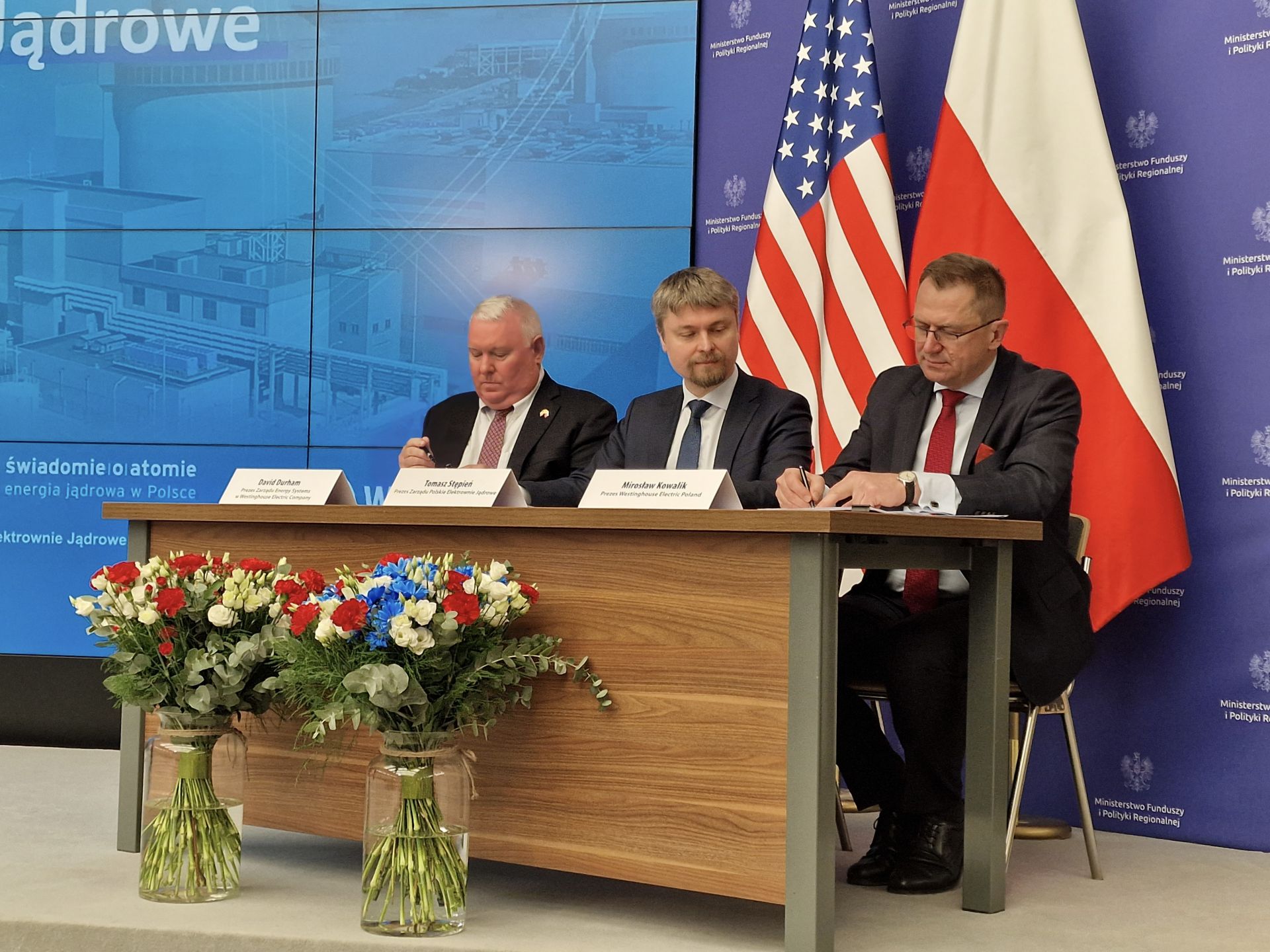
From left, Westinghouse Energy Systems president David Durham, Polskie Elektrownie Jądrowe president Tomasz Stępień, and Westinghouse Poland president Mirosław Kowalik sign a contract on February 22 to advance Poland’s nascent nuclear energy program. (Photo: Westinghouse Electric Company)
State-owned Polish utility Polskie Electrownie Jądrowe and U.S.-based Westinghouse on February 22 moved a step closer to their end goal—the deployment of multiple AP1000 reactors in Poland—with the signing of a contract covering front-end engineering, early procurement work, and program development.
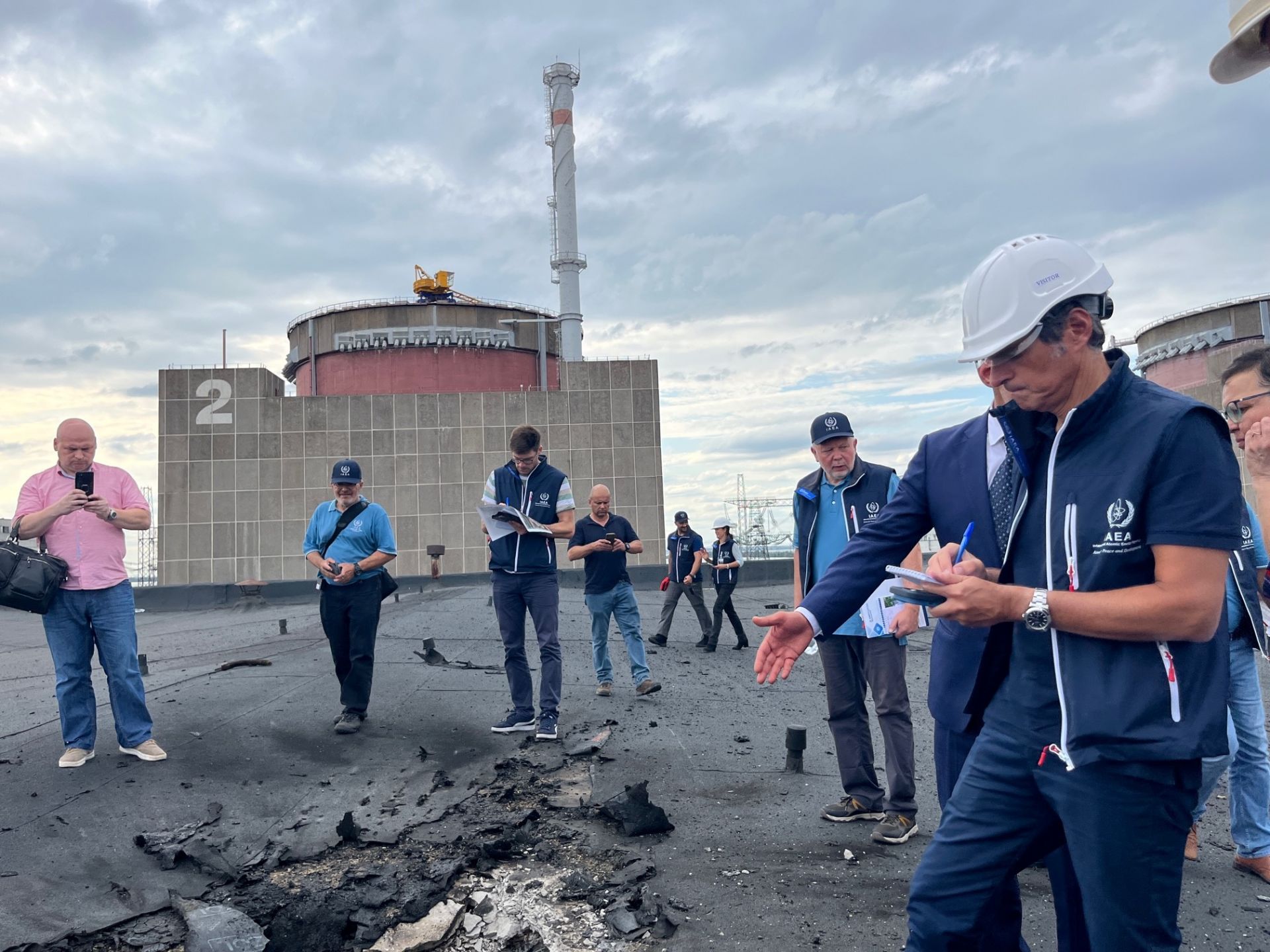
The IAEA team of of nuclear safety, security, and safeguards experts inspecting damage last year at the Zaporizhzhia nuclear power plant. (Photo: Dean Calma/IAEA)
As the war in Ukraine enters its second year, the International Atomic Energy Agency has released Nuclear Safety, Security and Safeguards in Ukraine, an overview of the conflict’s impact on the beleaguered nation’s nuclear facilities and of the agency’s actions to lessen the likelihood of a nuclear accident.
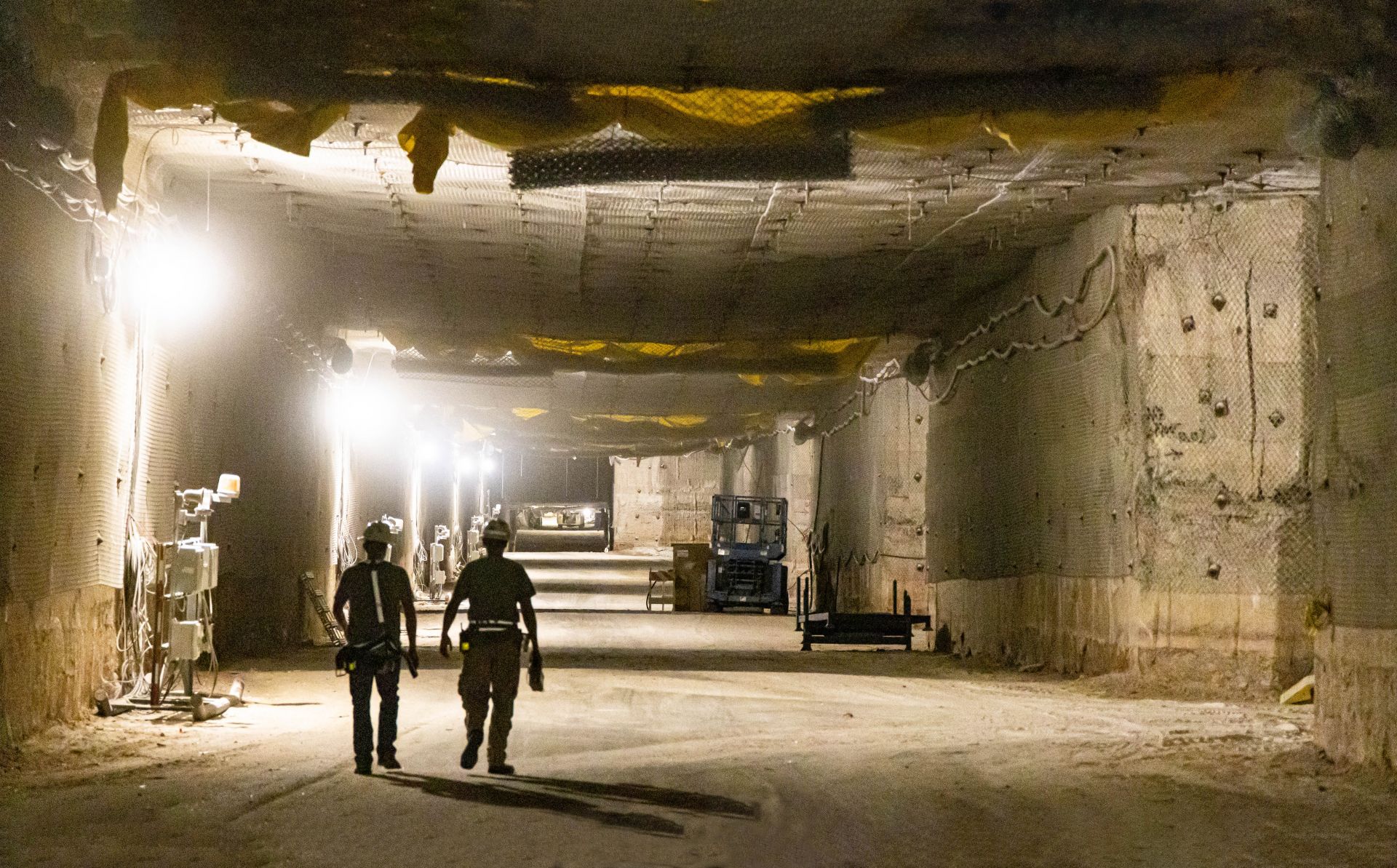
Two workers walk down an underground passageway at the Waste Isolation Pilot Plant transuranic waste repository in New Mexico. (Photo: DOE)
While still lacking a deep geological repository for the permanent disposal of its commercial used nuclear fuel and high-level radioactive waste, the United States does have regulatory standards for geological nuclear waste disposal.
Having been written nearly 40 years ago, however, those standards are outmoded and lack transparency, according to a special committee of the American Nuclear Society, which has released draft recommendations on revising public health and safety standards for future geological repository projects in the United States.
Comments due April 14 for draft report aimed at revisiting EPA regulations
LA GRANGE PARK, Illinois – Today, the American Nuclear Society (ANS) released draft recommendations on updating public health and safety standards for the permanent disposal of commercial used nuclear fuel and high-level radioactive waste at future geological repository projects in the United States. The draft report provides a recommended framework for revisiting U.S. Environmental Protection Agency (EPA) geologic repository standards.







_(52340771440).jpg)