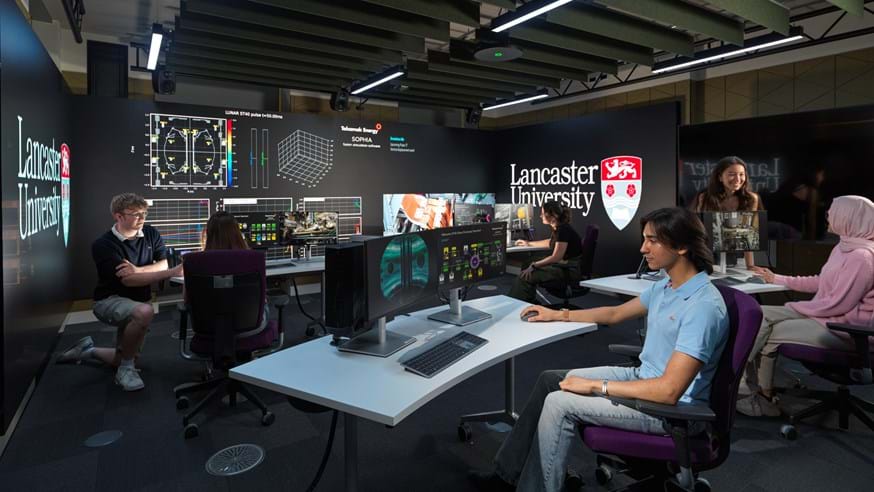
The Lancaster University Nuclear Operations Simulator. (Photo: Lancaster University)
Lancaster University in England is the home of an unusual nuclear power simulator that can be used for both fusion and fission education.
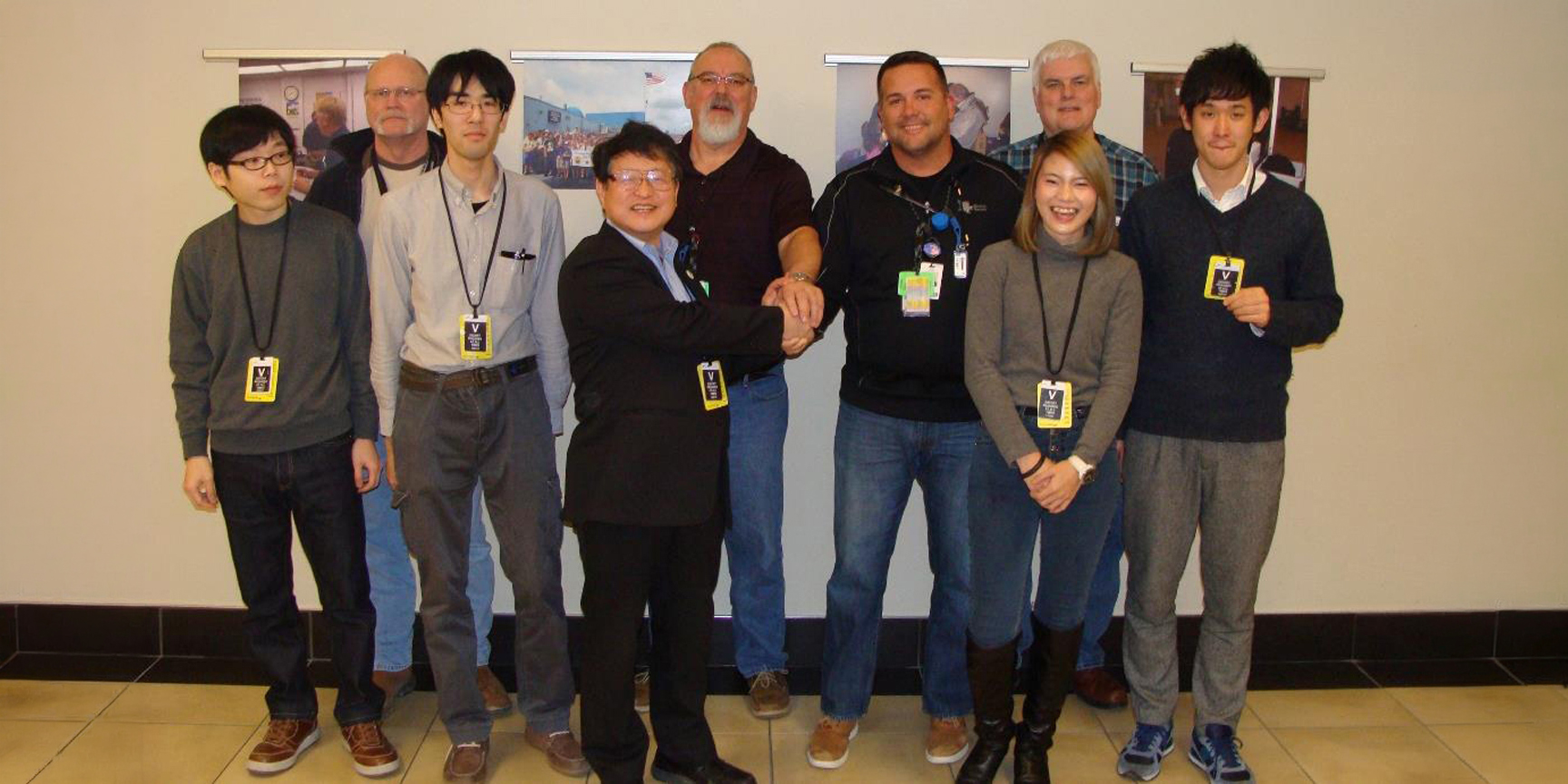
May 27, 2026, 12:26PMUpdated May 27, 2026, 12:23PMNuclear News Super Engineer Project founder and leader Tadashi Narabayashi (fourth from left) and his Super Engineers tour Clinton nuclear power plant in 2017. (Photo: Thanataon Pornphatdetaudom)
Before the Fukushima Daiichi accident in March 2011, nuclear power from 54 reactors provided about 30 percent of Japan’s electricity. In the wake of the disaster, Japan shut down every one of its reactors.
Recently, the country has been restarting its nuclear power plants. Among its current fleet of 33 operable reactors, fewer than half have been restarted. Nuclear power is currently providing about 8.5 percent of Japan’s electricity (with natural gas and coal accounting for more than 60 percent).
The Japanese government’s present energy plan, announced last year, calls for nuclear power to meet 20 percent of the country’s electricity needs by 2040. While the government views nuclear as a crucial asset toward meeting its goal of net zero emissions by 2050, public support for nuclear energy also continues to increase. A 2012 Pew Research poll—conducted one year after the Fukushima Daiichi disaster—indicated that 70 percent of the public opposed nuclear power. However, a 2022 poll by Nikkei Business Publications suggests that now, more than 50 percent of the public supports nuclear power—if safety can be ensured.
Contributing their expertise to these restarts in recent years are young nuclear industry professionals who were trained a decade ago in a mentorship/training program involving U.S. institutions.
This “Super Engineer Project” was sponsored by Japan’s Ministry of Economy, Trade, and Industry and Hokkaido University from 2015 to 2017. METI sponsored the project to improve the Japanese nuclear safety culture by learning from the U.S. safety culture.
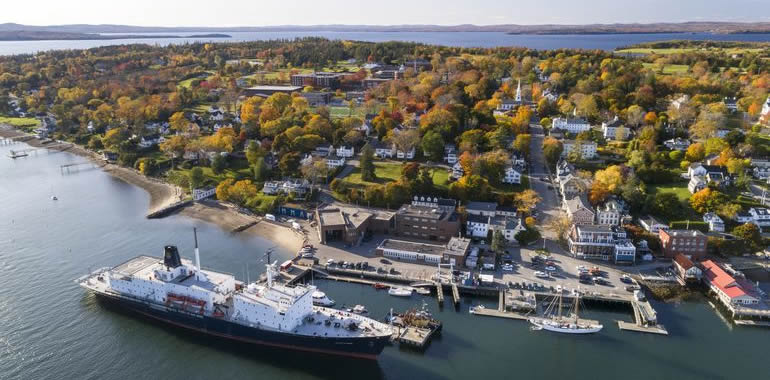
The waterfront at Maine Maritime Academy. (Photo: Maine Maritime Academy)
The Maine Maritime Academy (MMA) is set to become the first maritime academy in the United States to offer a major in nuclear engineering technology. The college characterized it as “an important step in addressing workforce needs and advancing clean energy solutions” in a LinkedIn post announcing the major.
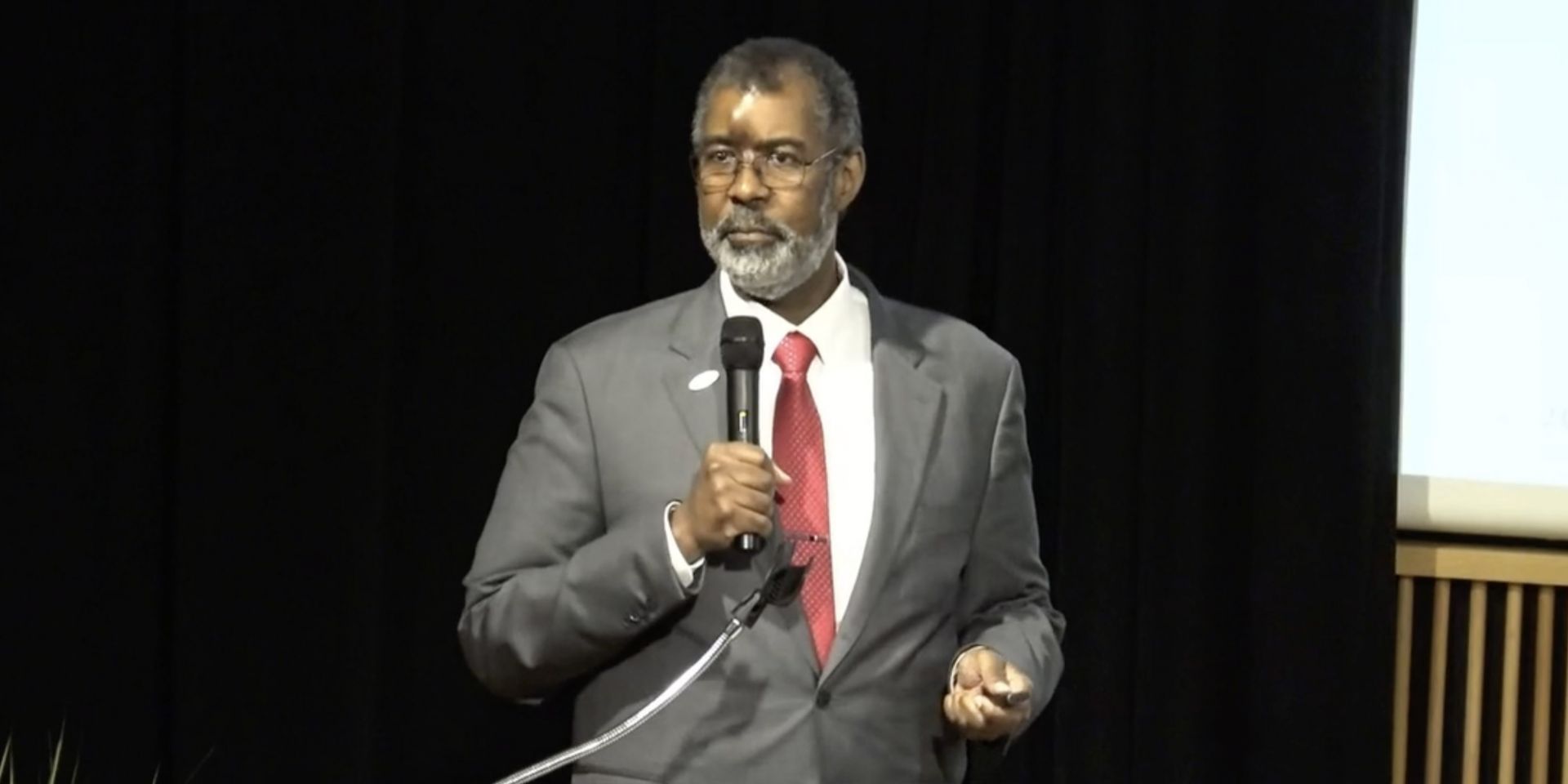
OECD NEA Director General Magwood gave a talk as part of the President's Distinguished Lecture series at University of Missouri on May 13.
The University of Missouri’s President’s Distinguished Lecture Series featured a talk by William D. Magwood IV, director general of the OECD Nuclear Energy Agency and a former NRC commissioner, on May 13 at the Columbia campus’s Bond Life Sciences Center. Magwood speech was titled “The Next Nuclear Energy Era: Opportunities and Challenges.”
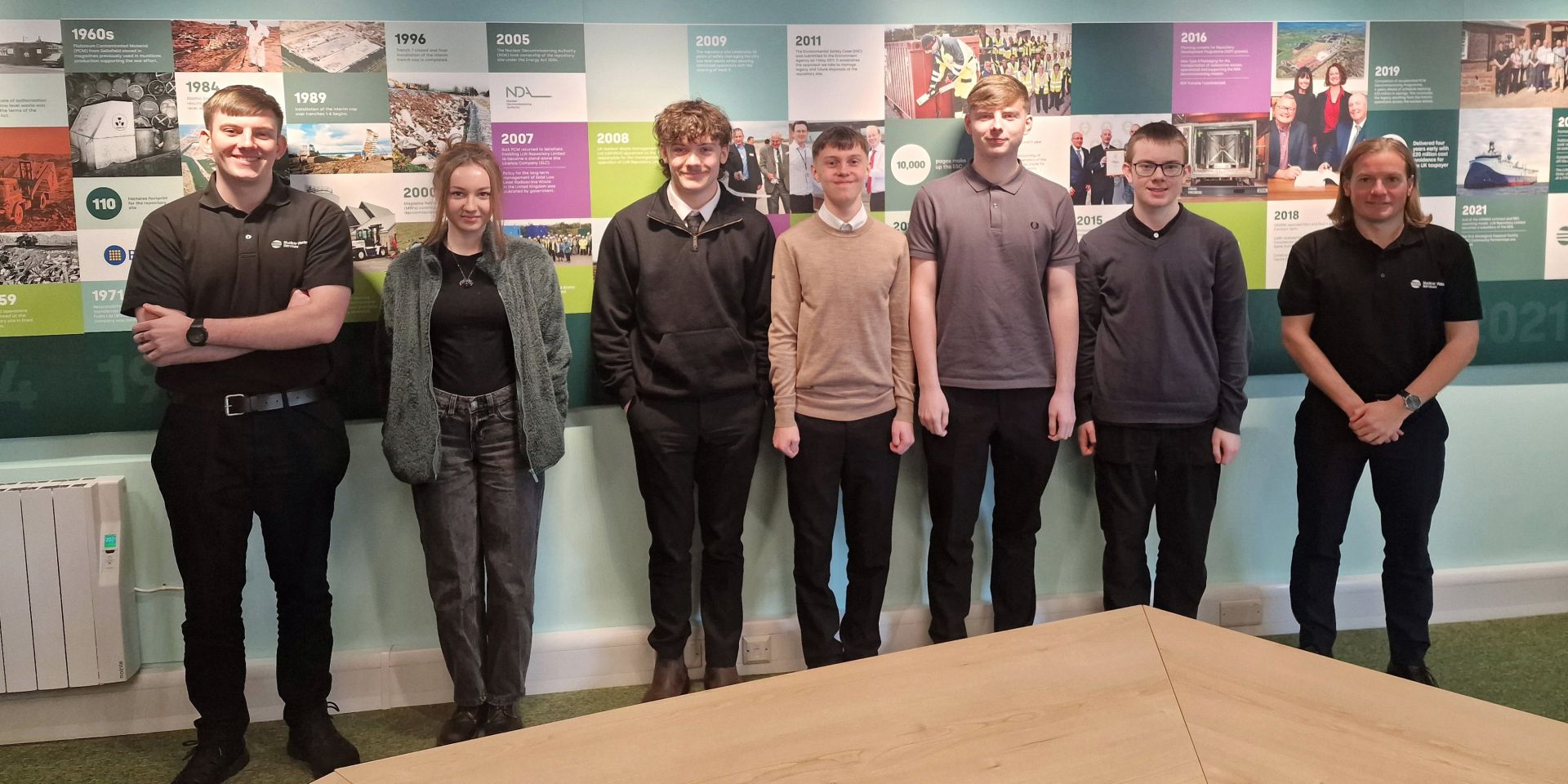
NWS scientific apprentice Teddy (left) and senior lead in customer management and expert support Howard (right) flank the five Dream Placement 2025 student participants. The students are (from left) Amelia, Elijah, Cole, Joseph, and Will. (Photo: NWS)
Earlier this year, Nuclear Waste Services, the radioactive waste management subsidiary of the U.K. Nuclear Decommissioning Authority, hosted a group of five teenagers for a week of exposure to real-world work environments at its facilities in Calderbridge, Cumbria. The students learned about career opportunities and leadership responsibilities at the company while they engaged with senior management and performed activities with several NWS teams, including employees in the environmental, waste characterization, cybersecurity, human resources, and geological disposal facility grants departments.
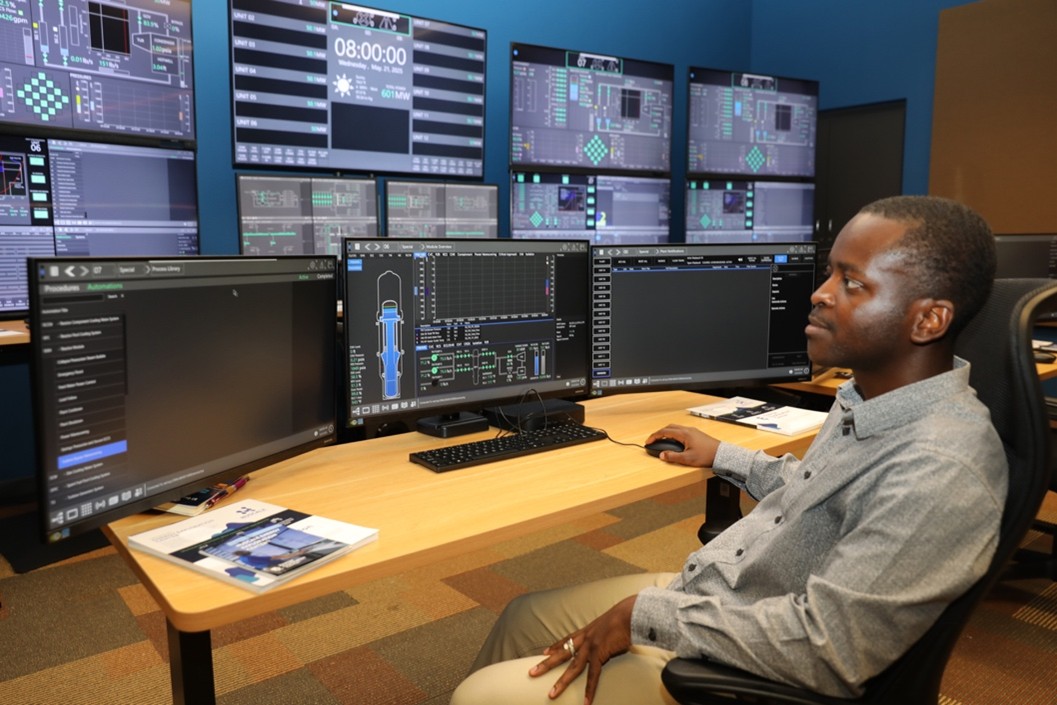
Zadok Tahsoh, an SC State senior nuclear engineering student, works with the control room simulator at the university’s Energy Exploration Center. (Photo: SC State)
NuScale Power Corporation’s latest Energy Exploration (E2) Center has opened at South Carolina State University, in Orangeburg. E2 Centers are designed to provide visitors with hands-on experiences in simulated scenarios of operations at nuclear power plants. NuScale has established 10 such centers around the world. The company officially presented the fully installed E2 Center to SC State on May 21, after a collaborative setup and training process was completed.
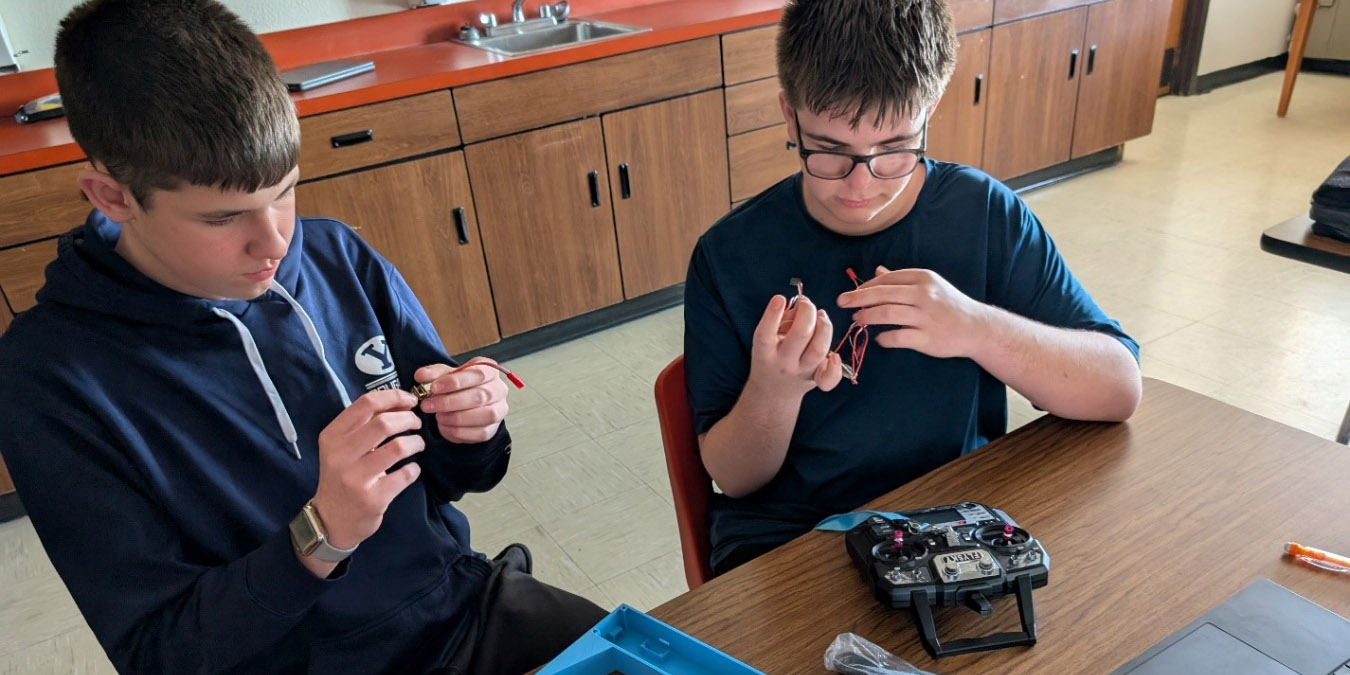
Students use materials bought with funds from the IEC’s Full STEAM Ahead in the Classroom grants to make robots. (Photo: DOE)
The Idaho Environmental Coalition (IEC) has provided funding to 15 classrooms in southeastern Idaho to support local educators and encourage the next generation of workers to pursue technical careers, the Department of Energy’s Office of Environmental Management announced. The IEC, which is led by Amentum and includes North Wind Portage as a partner, was awarded a 10-year, $6.4 billion contract in 2021 to manage cleanup operation at the Idaho National Laboratory Site.
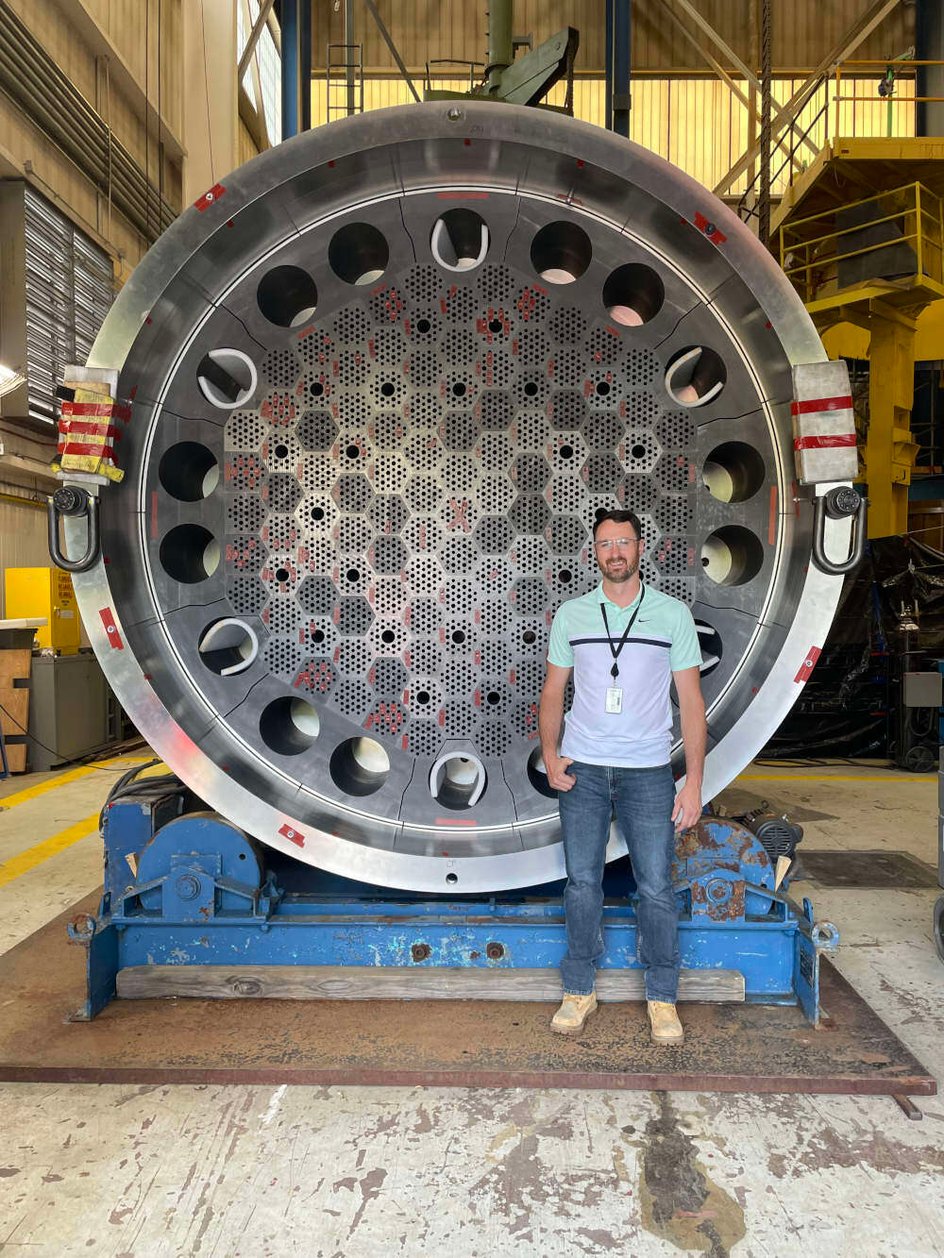
A cross-section of an eVinci microreactor at the eVinci Technology Hub in Etna, Pa. (Photo: Westinghouse)
Penn State and Westinghouse Electric Company are working together to site a new research reactor on Penn State’s University Park, Pa., campus: Westinghouse’s eVinci, a HALEU TRISO-fueled sodium heat-pipe reactor. Penn State has announced that it submitted a letter of intent to host and operate an eVinci reactor to the Nuclear Regulatory Commission on February 28 and plans to engage with the NRC on specific siting decisions. Penn State already boasts the Breazeale reactor, which began operating in 1955 as the first licensed research reactor at a university in the United States. At 70, the Breazeale reactor is still in operation.


_Page_06_Image_0001 copy 2x1.jpg)
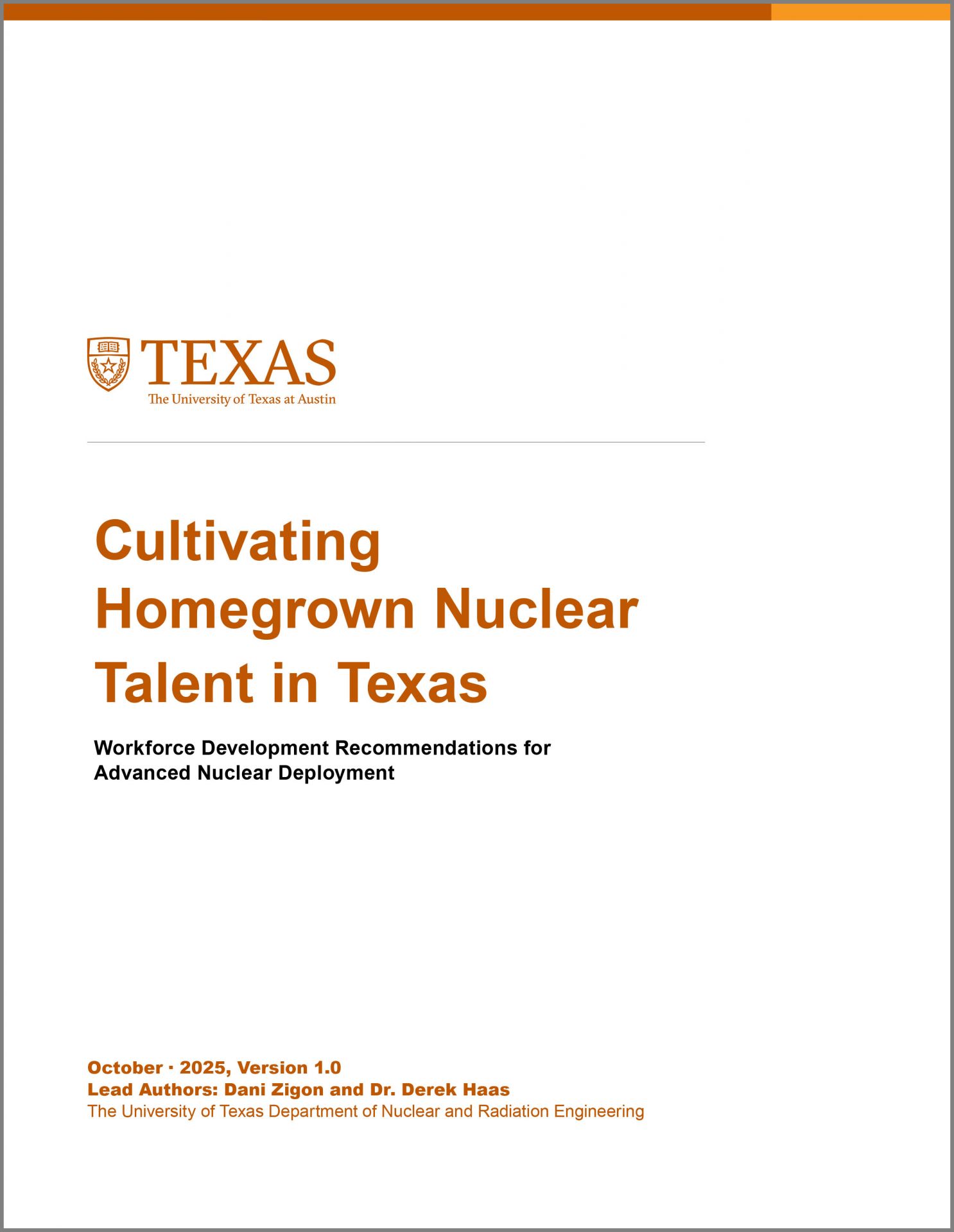 The University of Texas–Austin has released a report,