Washington, D.C. — The American Nuclear Society issued the following statement:
Washington, D.C. — The American Nuclear Society (ANS) issued the following statement:
"The American Nuclear Society condemns today's drone attack on the outer perimeter of the Barakah Nuclear Power Plant in the United Arab Emirates. The IAEA has confirmed that radiation levels are normal and no injuries have been reported. The safety systems performed as designed, a demonstration of the layered protections built into robust modern nuclear facilities. Incidents like this reinforce the importance of the IAEA's calls for maximum military restraint around nuclear power reactors, and of full adherence by all combatants to the IAEA's seven pillars for nuclear safety and security during armed conflict."
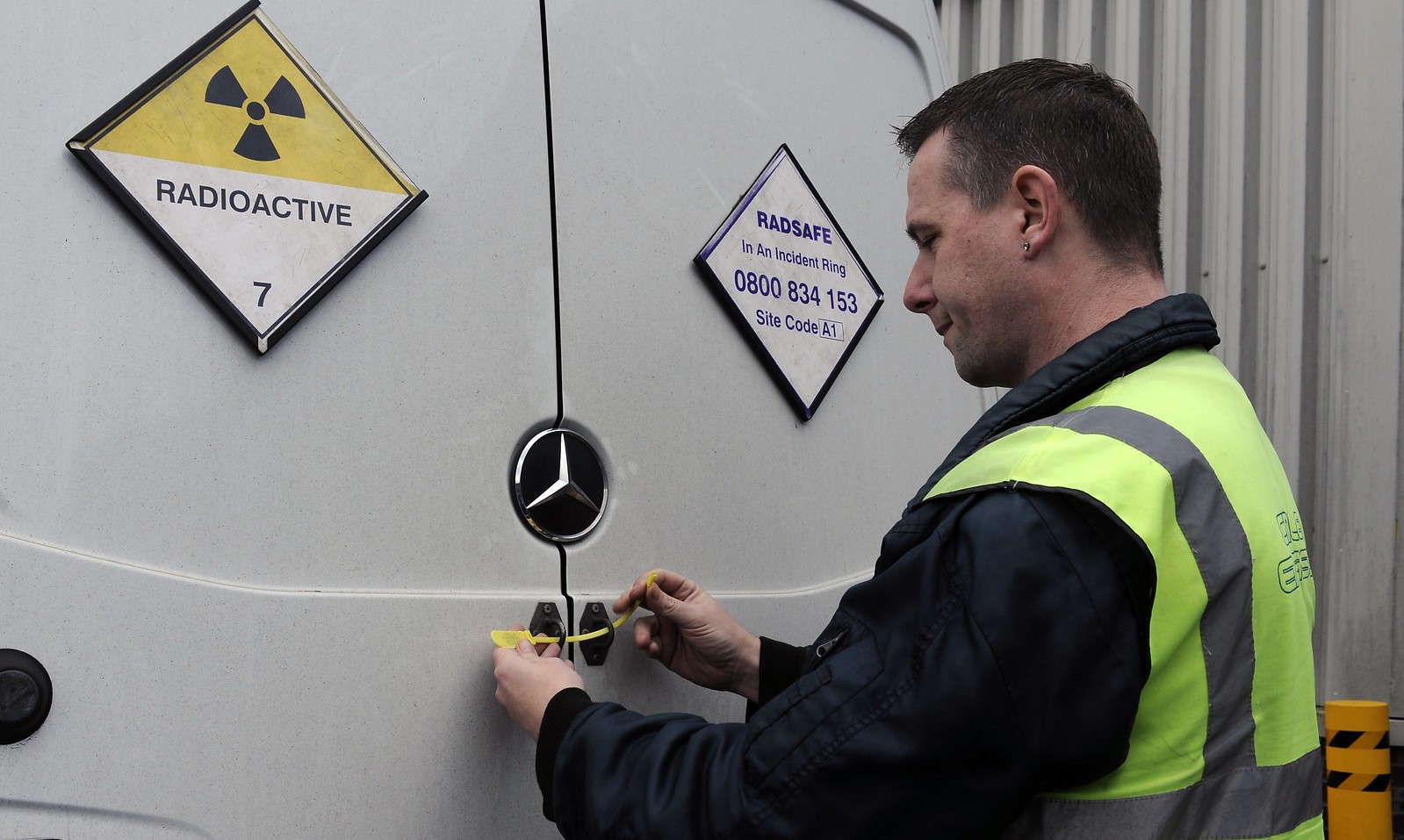
After inspection, a vehicle is sealed to prevent tampering or unauthorized alterations in this IAEA photo from 2011. (Photo: Dean Calma/IAEA)
The International Atomic Energy Agency has said that more than half of all thefts of nuclear and other radioactive material reported to the agency’s Incident and Trafficking Database (ITDB) since 1993 occurred during authorized transport, with the share rising to nearly 70 percent in the past decade. The ITDB covers incidents involving nuclear material, radioisotopes, and radioactively contaminated material.
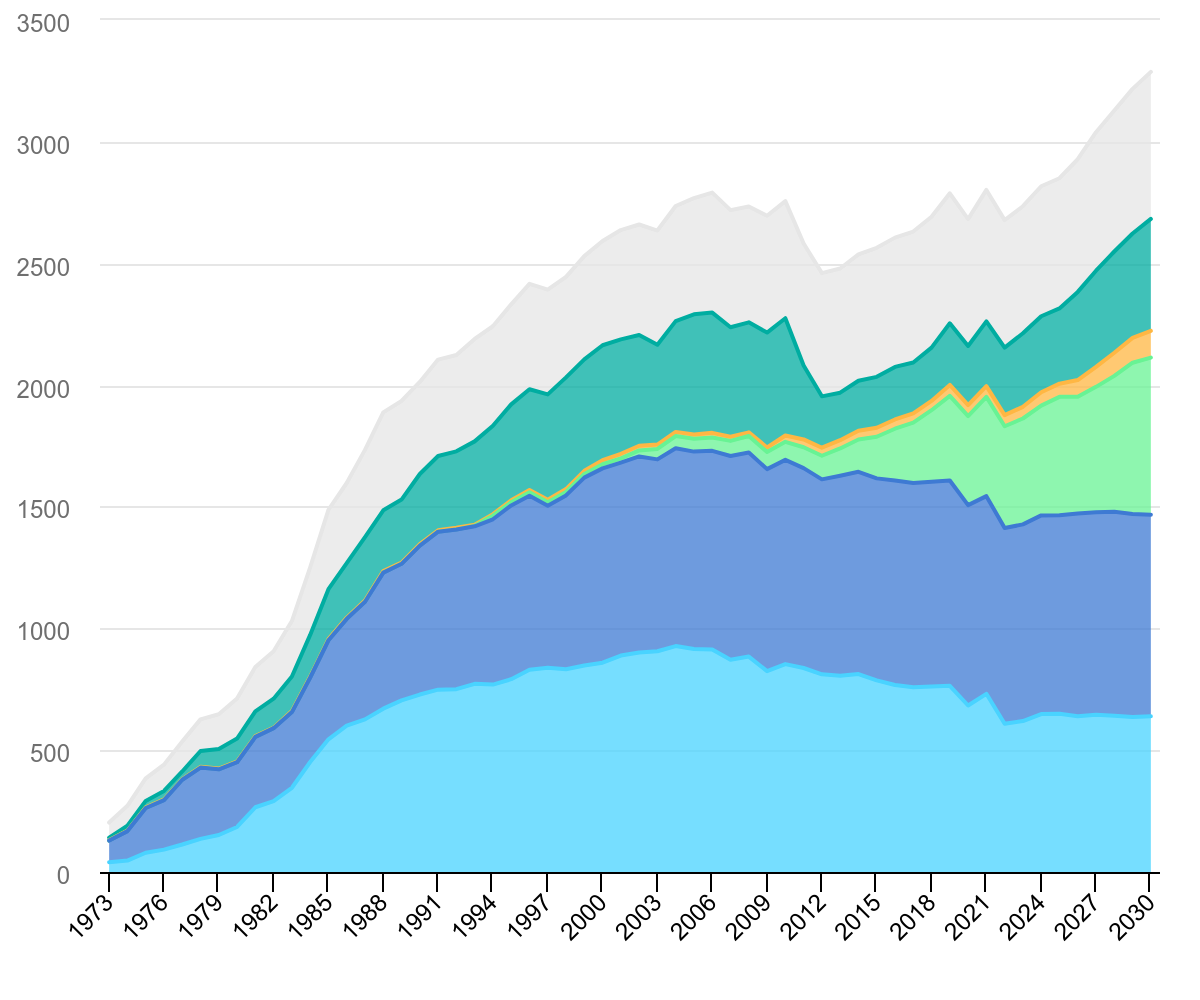
Global nuclear generation by countries and regions, 1973–2030, shown in terawatt-hours. Light blue represents the European Union; dark blue, the United States; light green, China; orange, India; dark green, other Asian countries; and gray, other countries. (Credit: International Energy Agency)
The Paris-based International Energy Agency released its annual report on global electricity systems and markets on February 6, showing the output of nuclear energy at record levels in 2025. According to Electricity 2026, nuclear energy together with renewable energy sources (mainly solar) will generate about half of all global electricity by 2030, up from 42 percent today.
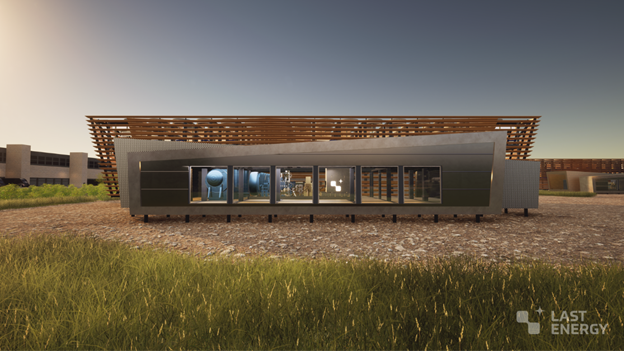
Concept art of Last Energy’s balance-of-plant. (Image: Last Energy)
Last Energy, a Washington, D.C.-based microreactor developer, announced last week a partnership with the NATO Energy Security Centre of Excellence (ENSEC) to jointly research military applications for microreactor power and explore opportunities for future microreactor deployments on NATO military installations.
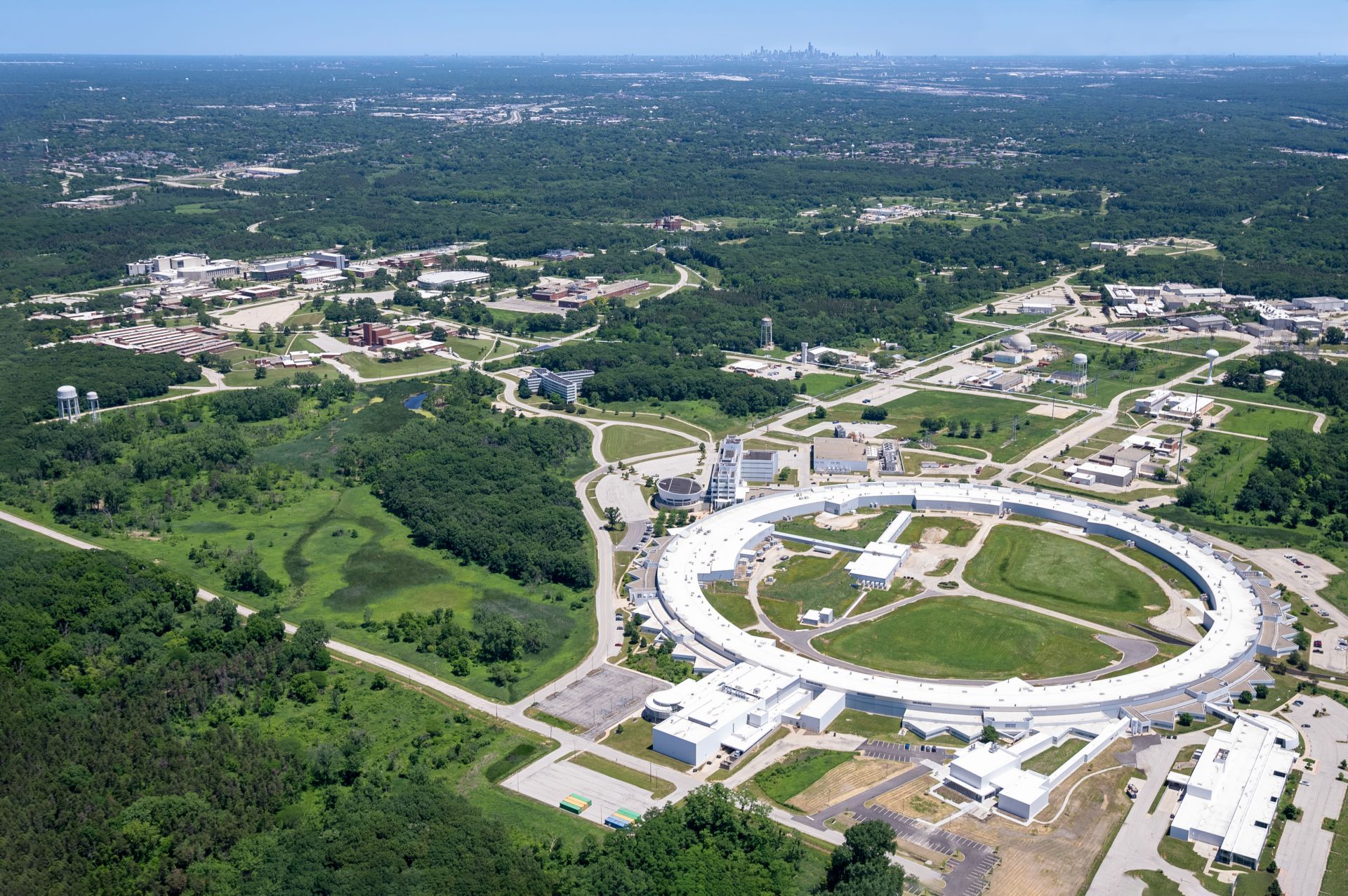
The DOE’s Argonne National Laboratory in Lemont, Ill. (Photo: DOE)
Researchers at the Department of Energy’s Argonne National Laboratory are developing and deploying ARG-US (from the Greek Argus, meaning “Watchful Guardian”) remote monitoring systems technologies to enhance the safety, security, and safeguards (3S) of packages of nuclear and other radioactive material during storage, transportation, and disposal.
From left: Piercy, Hart, Iyengar, Tobey
The latest virtual event produced by the American Nuclear Society brought together experts from the forefront of the global nuclear industry to discuss strategies for ensuring a safe, secure, and healthy expansion in the face of a rapidly changing energy and geopolitical landscape.
The webinar, moderated by ANS Executive Director/CEO Craig Piercy, featured J’Tia Hart, chief science officer for the National and Homeland Security Directorate at Idaho National Laboratory; Anagha Iyengar, deputy program director for analytics and innovation at the National Nuclear Security Administration’s Office of International Nuclear Security; and William Tobey, former NNSA deputy administrator for defense nuclear nonproliferation.
K-9 officer Dee and her partner, Patrol Officer Manny Rodriguez, during a training exercise. (Photo: DOE )
The Department of Energy’s Hanford Site has introduced its newest team members, Dee and Freda, two highly skilled explosive-detecting K-9 officers. The police dogs will work with Richland Operations Office contractor Hanford Mission Integration Solutions to help ensure the safety and security of the legacy nuclear reservation near Richland, Wash.