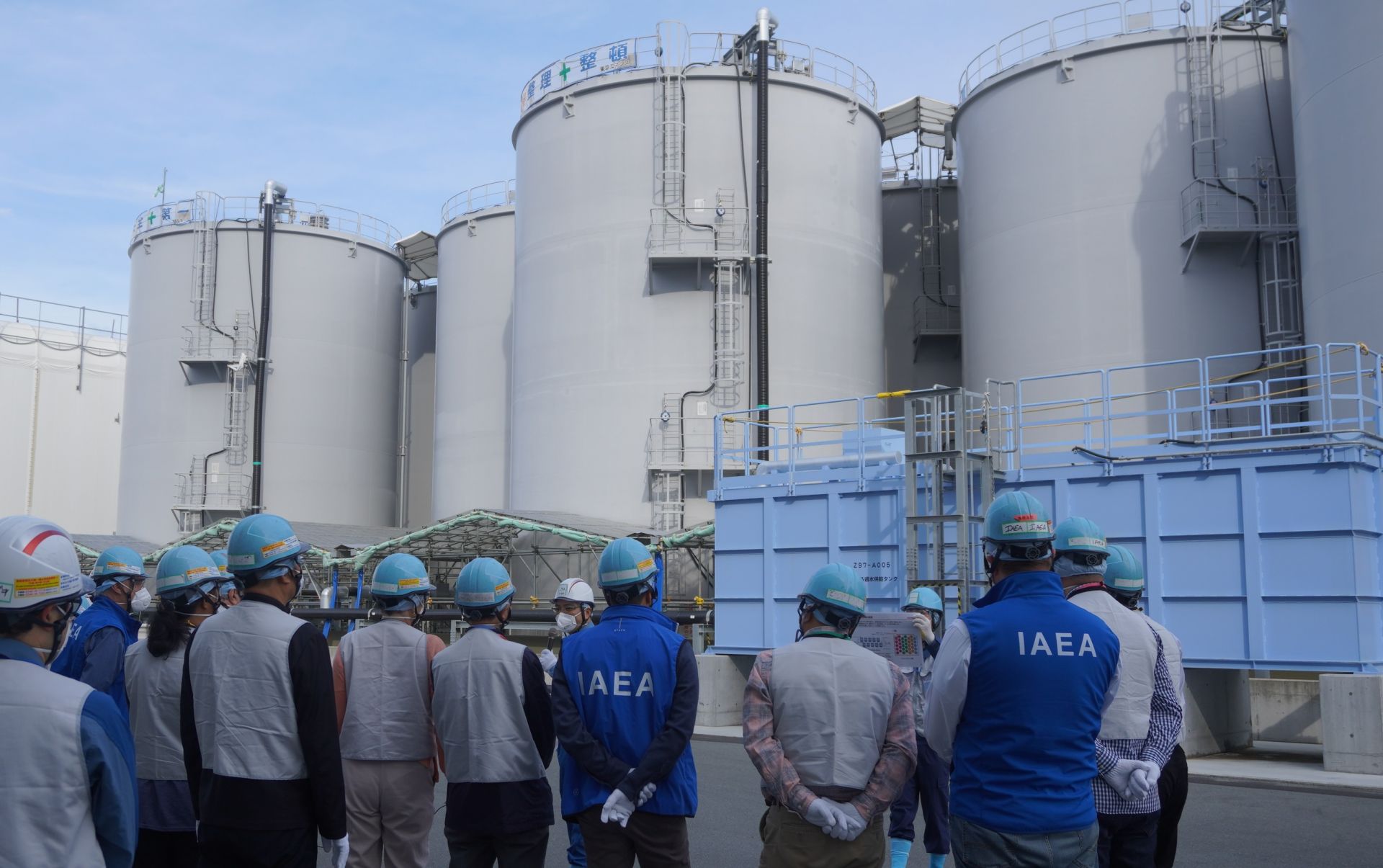
An IAEA task force visited Fukushima in October 2023 to review the safety of TEPCO’s discharge of ALPS-treated water. (Photo: TEPCO)
International Atomic Energy Agency experts have confirmed that the tritium concentration in the fourth batch of treated water released from Japan’s Fukushima Daiichi nuclear power plant is far below the country’s operational limit.
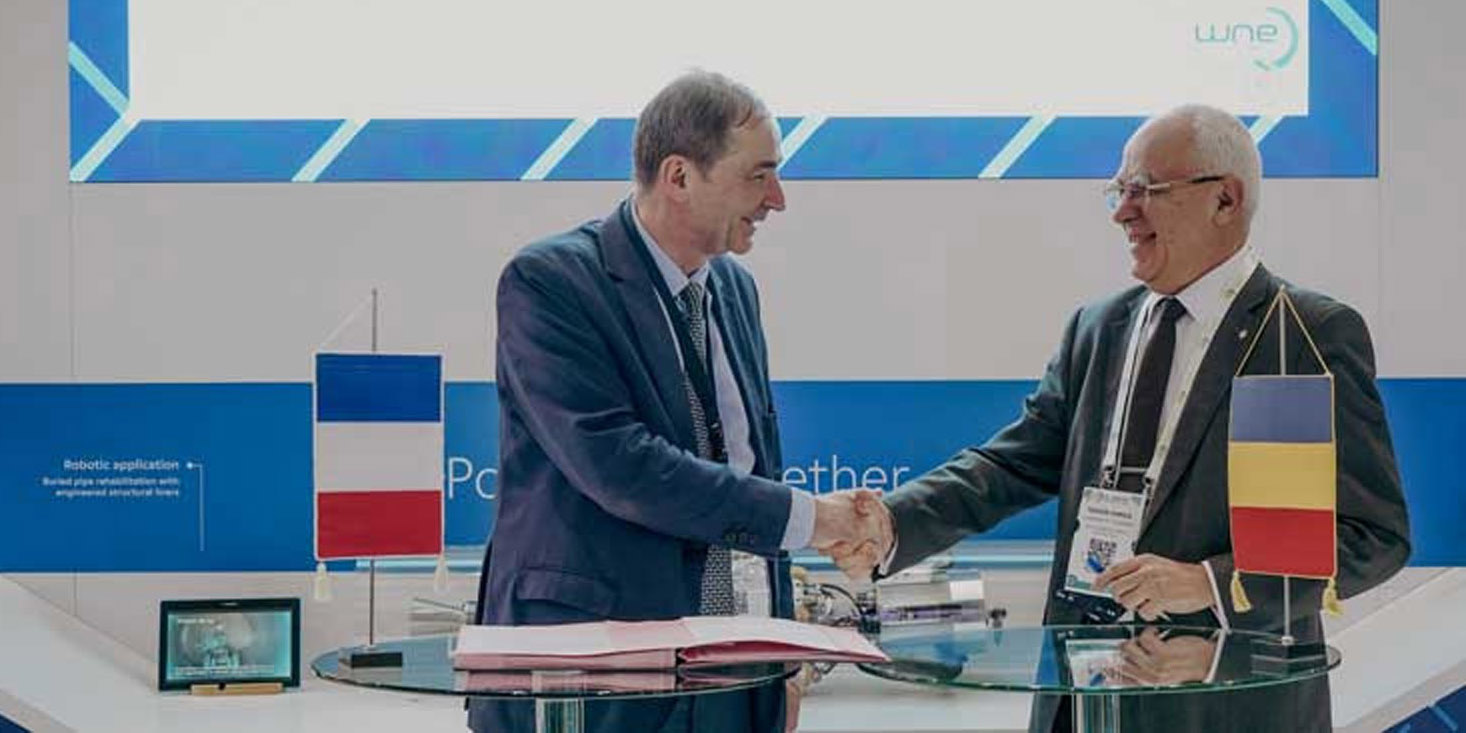
Framatome CEO Bernard Fontana (left) and Teodor Chirica, Nuclearelectrica board president, shake hands following the signing of the Lu-177 MOU in Paris. (Photo: Framatome)
Framatome and Nuclearelectrica, operator of Romania’s Cernavoda nuclear power plant, announced the signing of a memorandum of understanding to explore the possibility of producing the medical isotope lutetium-177. The cooperative agreement was signed during the World Nuclear Exhibition 2023, held November 28–30 in Paris.
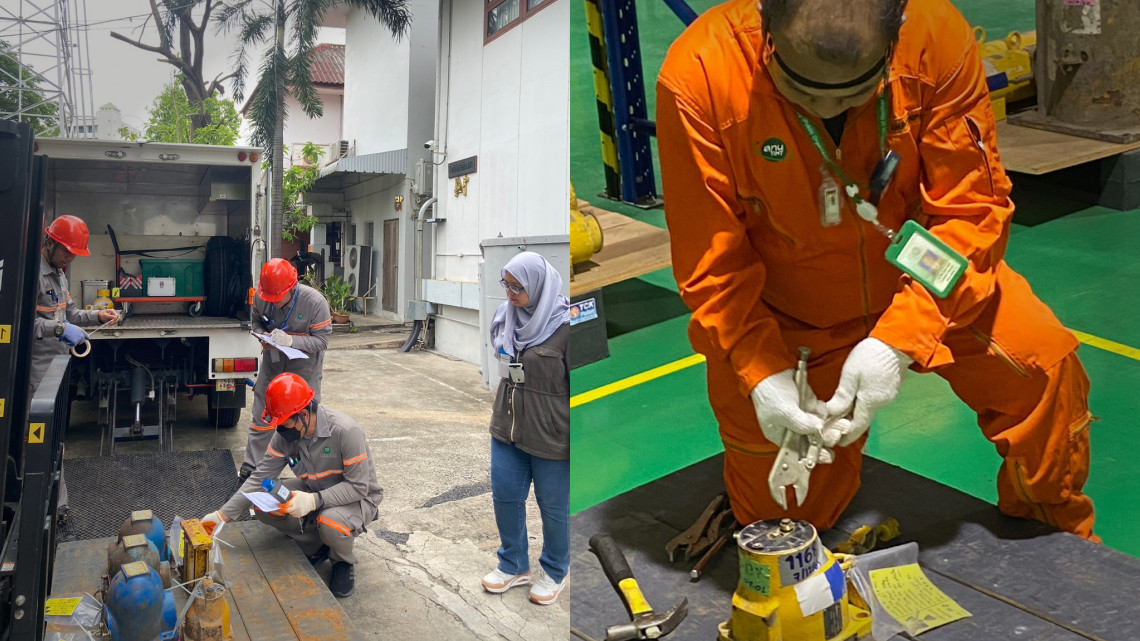
A new IAEA peer review service demonstrates the proper management of disused sealed radioactive sources. (Photos: IAEA [left] and TINT [right])
The International Atomic Energy Agency has carried out the first mission of its Disused Sealed Radioactive Sources Technical Centre peer review service, or DSRS TeC, at the Thailand Institute of Nuclear Technology (TINT) in Bangkok. Held July 18–21, the inaugural mission was supported by funds from the United States.
The Monticello nuclear power plant. (Photo: NRC)
An Xcel Energy news release issued last week regarding the leak of some 400,000 gallons of tritium-containing water at Minnesota’s Monticello nuclear power plant in 2022 has sparked a flood of news stories over the past few days—in large part because the general public had previously been unaware of the leak. (A low-level beta emitter, tritium is a common byproduct of nuclear reactor operation.)
Nicholas Spivey, left, an SRNL mechanical engineer, and Kurt Gerdes, director of EM’s Office of Technology Development, use virtual reality simulation of an EM worksite during meetings held at the IHMC in Pensacola, Fla. (Photo: DOE)
For the first time since forming in 2020, more than 40 members of a Department of Energy team met in person to evaluate technologies, including exoskeletons and wearable robotic devices, that could be adapted to the cleanup mission of department’s Office of Environmental Management (EM), helping improve the safety and well-being of its workers.
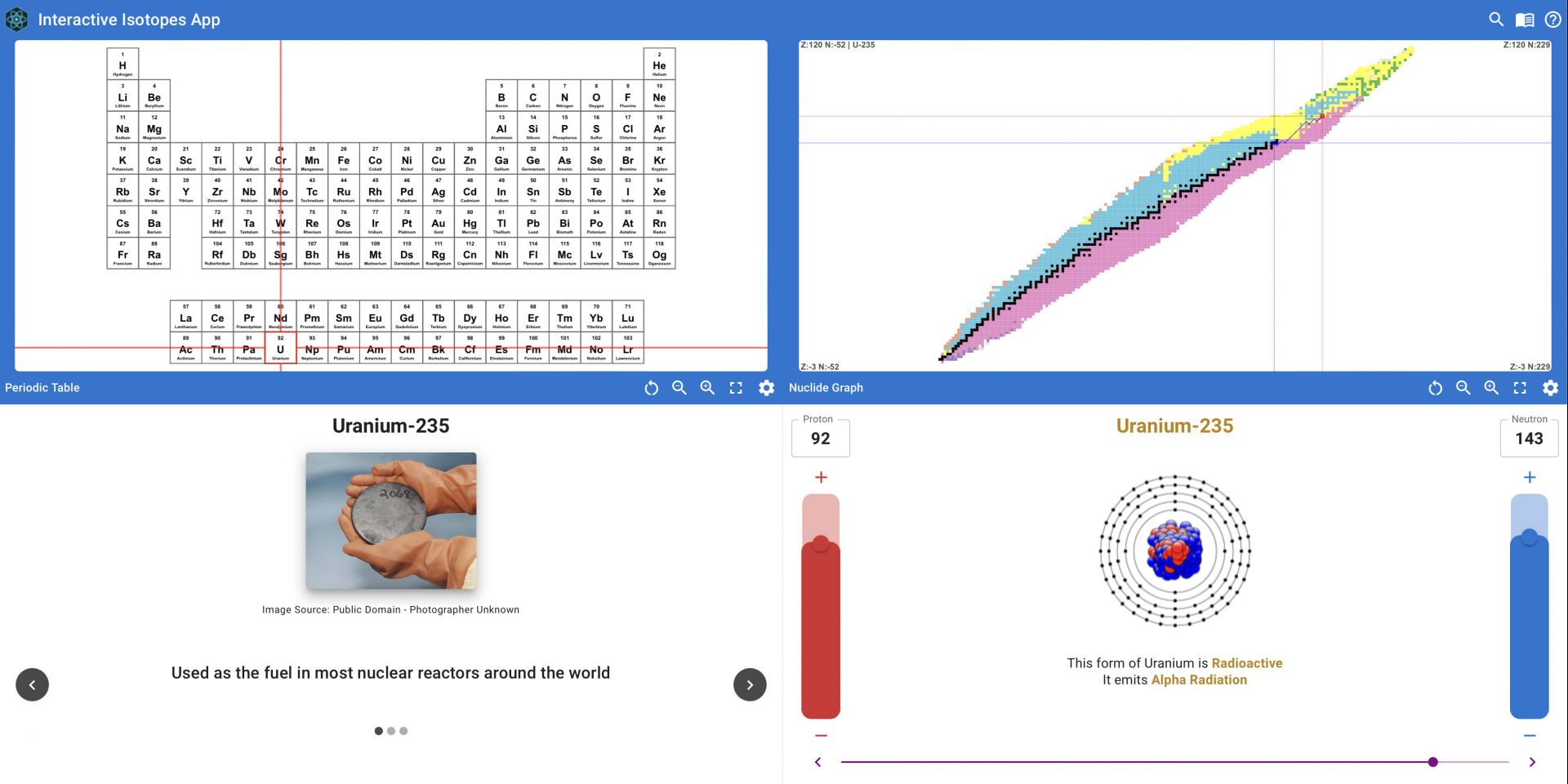
A screenshot of the Interactive Isotopes App from the ANS website depicting U-235 and its decay chain. (Graphic: ANS)
In the summer of 2019, three students from the University of South Carolina–Aiken (USCA) had an idea to digitize the isotope. Wei Zheng, Drake Jones, and Joseph Taylor set out to design an app that would be an interactive one-stop shop for information about any isotope—number of protons and neutrons, whether it is stable or radioactive, its natural abundance on earth, and even its uses. From these ideas, the Interactive Isotopes App began to take shape.
The app’s launch was disrupted by the COVID-19 pandemic; although it was complete after three years of work and development, the creators sat on it. On October 12, the app at long last went live on the ANS website.




 After more than a decade of global efforts led by the Department of Energy’s National Nuclear Security Administration, all four major medical producers of the radioisotope molybdenum-99 for the U.S. market are now using low-enriched uranium (LEU) in their production processes instead of high-enriched uranium (HEU), the latter of which presents risks of nuclear weapons proliferation.
.jpg)