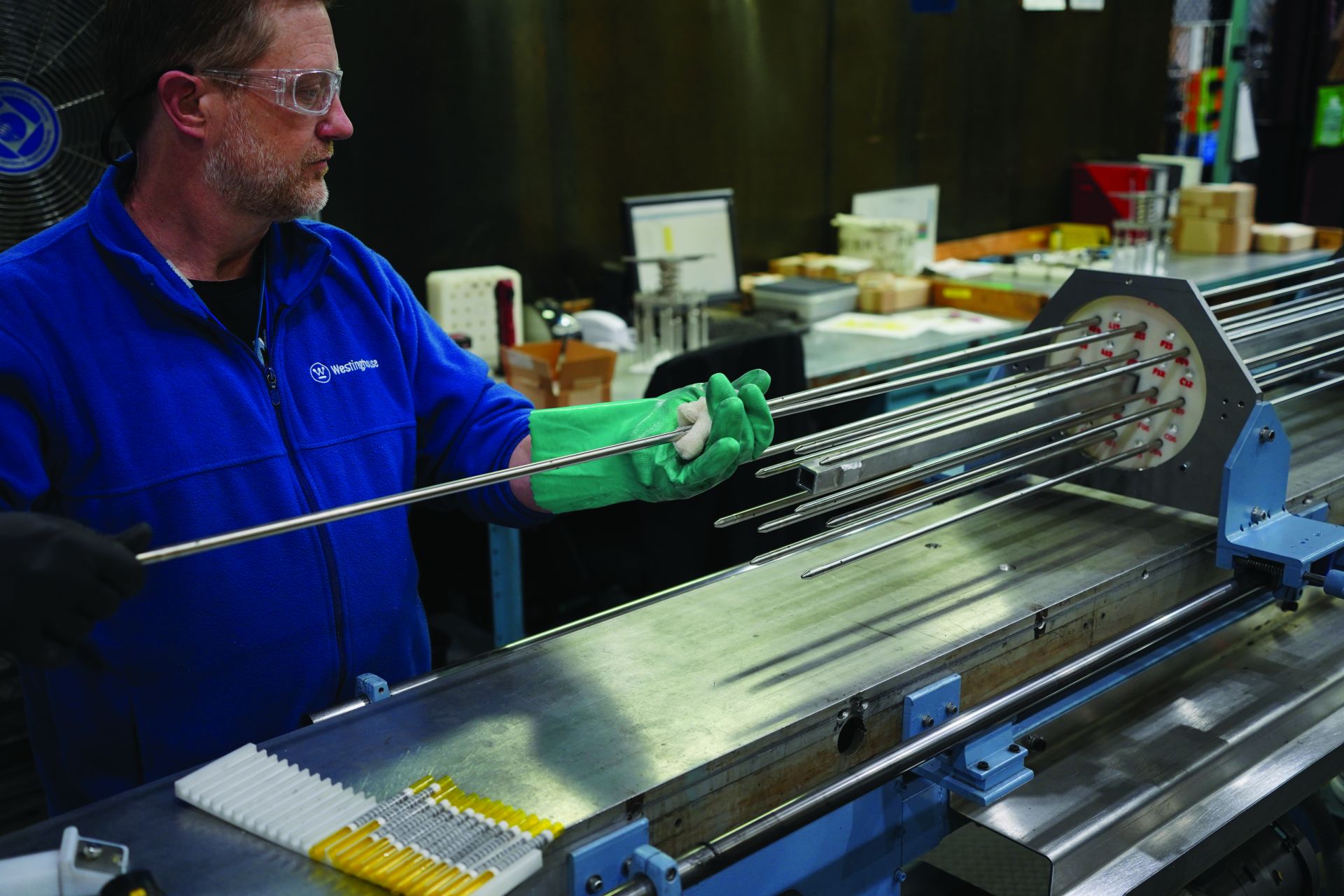
September 4, 2026, 3:05PMNuclear NewsDanielle Mercurio, Richard Wiens, Kristofor Paserba, and James Stavely Westinghouse personnel assemble cobalt target rodlets during manufacturing of a COBA assembly for Co-60 production in commercial nuclear reactors. (Photo: Westinghouse)
This past January, Westinghouse Electric Company, Nordion, and PSEG Nuclear formalized agreements to implement newly developed cobalt-60 production technology at Units 1 and 2 of PSEG’s Salem nuclear power plant in New Jersey, with the Co-60 to be supplied to Nordion. Through an ongoing joint initiative, the companies aim to harness U.S. pressurized water reactors to produce a key medical isotope and build the first commercial-scale Co-60 production platform in the United States.
Uranium hexafluoride, produced without elemental fluorine, collected as a white solid at Raven-Flint’s Idaho Falls radiochemistry laboratory, August 2026. (Photo: Raven-Flint Nuclear Corp.)
Raven-Flint Nuclear Corp., which had a project selected by the Department of Energy for the Nuclear Energy Launch Pad, announced that its license application was docketed by the Nuclear Regulatory Commission. The company also announced that it has conducted successful tests of its processing method as it works toward developing a uranium conversion pilot plant.
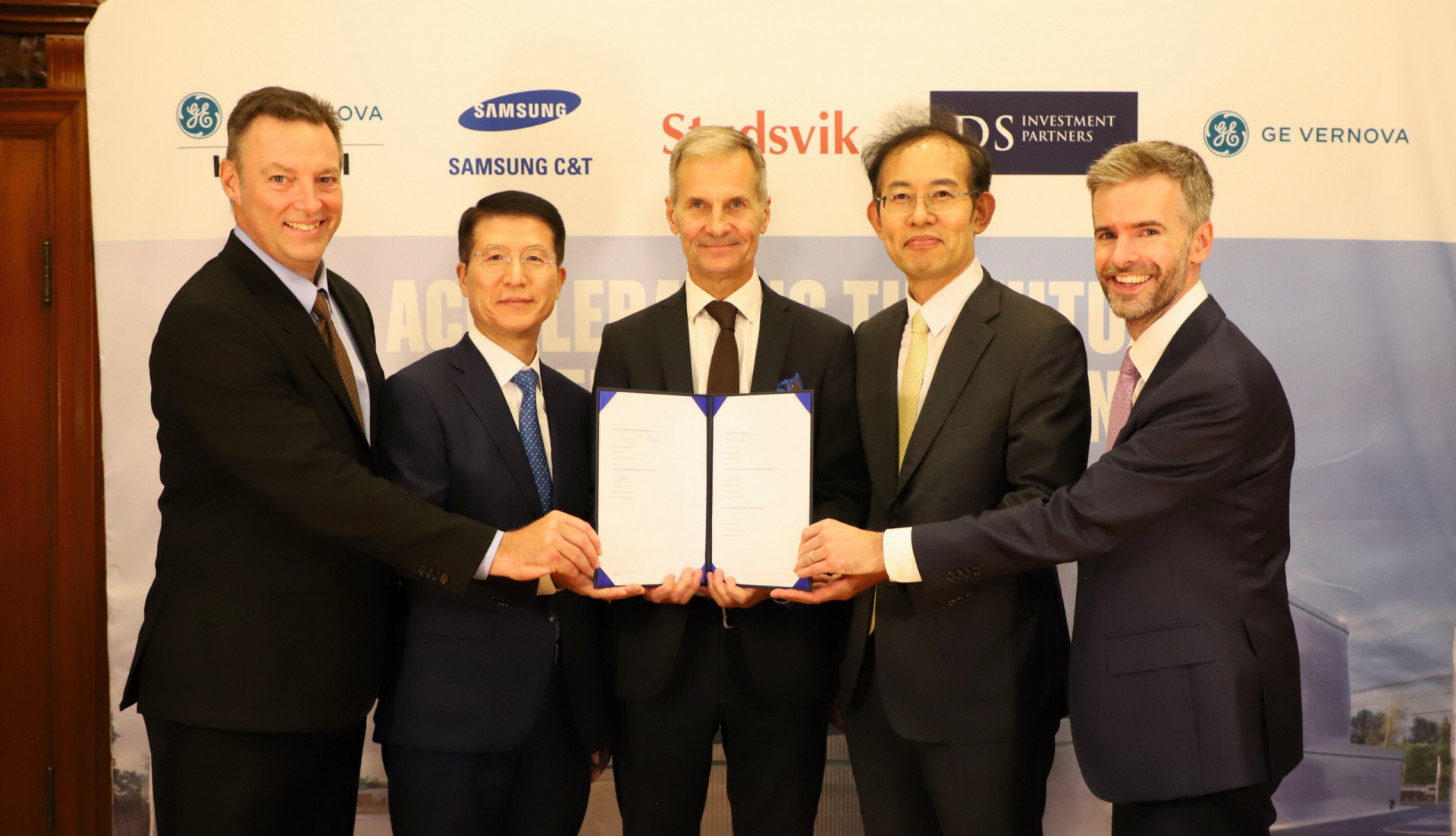
Representatives from the ReFirm program gather for the announcement of their partnership. (Photo: Studsvik)
Swedish engineering services firm Studsvik and its partners have teamed up on a four-unit BWRX-300 new build project in southern Sweden. On Thursday, Studsvik entered into a joint development agreement with GE Vernova Hitachi Nuclear Energy, GE Vernova Financial Services, DS Investment Partners, and Samsung C&T to advance the 1.2-GW ReFirm program, with the expectation the first unit will commence operations in the mid-2030s.
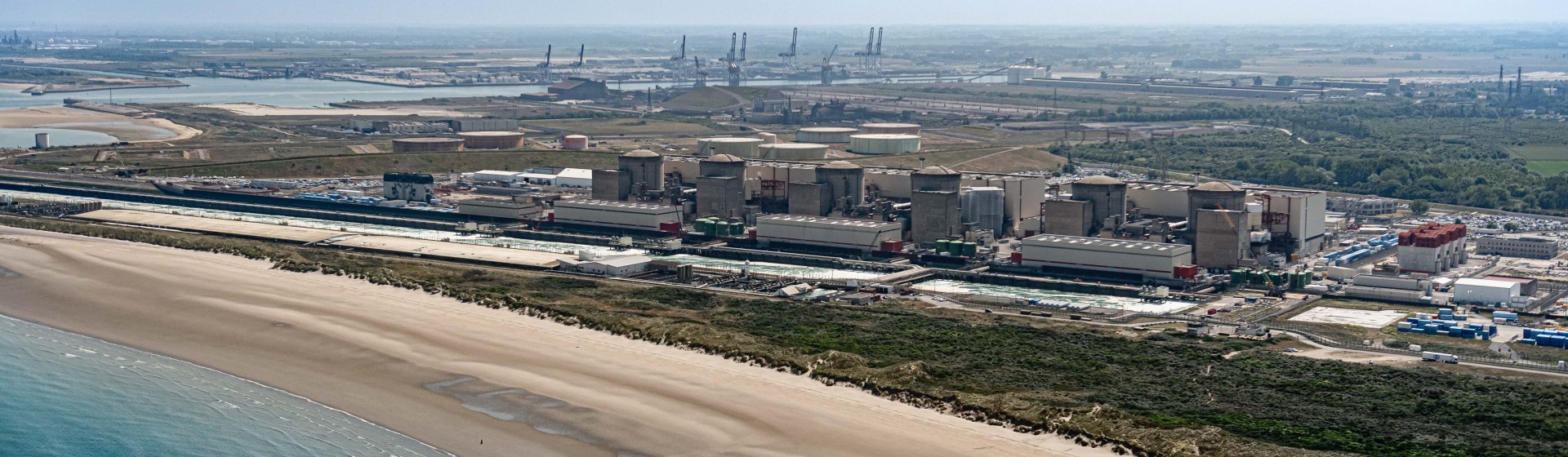
Gravelines nuclear power plant in France. (Photo: EDF)
With August in the rearview mirror, here is a roundup of some international news out of Europe and Africa you may have missed toward the end of last month.
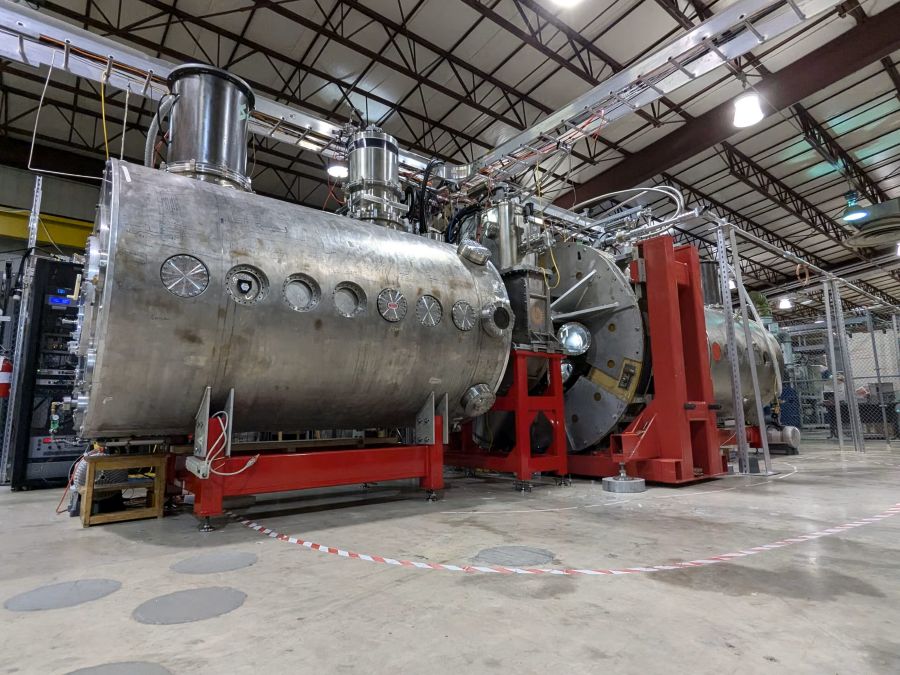
The Wisconsin HTS Axisymmetric Mirror (WHAM) prototype plasma fusion device being used in experiments by Realta Fusion and the University of Wisconsin–Madison. (Photo: Realta Fusion)
Realta Fusion and Madison Gas and Electric (MGE) are collaborating to bring fusion power to Wisconsin. As reported by Wisconsin Public Radio and other news outlets, as well as MGE, the Madison-headquartered startup company and utility are exploring the development, siting, permitting, and financing of a 200-MWe-minimum fusion facility that would be capable of generating enough electricity for approximately 150,000 homes.
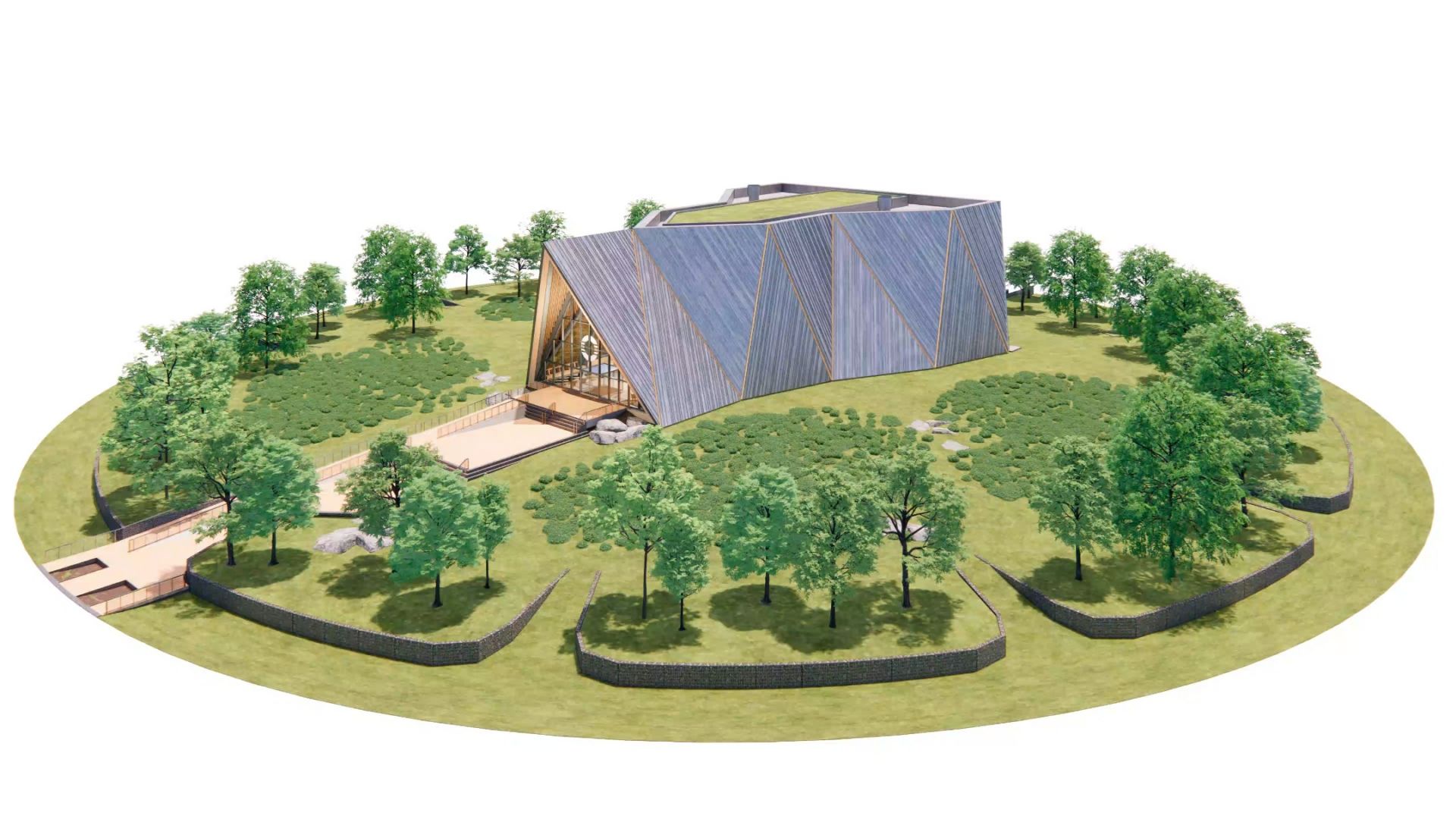
A rendering of Oklo’s Aurora powerhouse design. (Image: Oklo)
Last Friday, Oklo filed an emergency request with the Federal Energy Regulatory Commission claiming that one of its potential generation projects has been “unjustifiably withdrawn” from the PJM Interconnection queue. Through that request, Oklo has asked FERC to direct PJM to reinstate its application with its original queue position.
In an interesting twist, the project at issue in this interconnection dispute was, until now, unknown to the public.
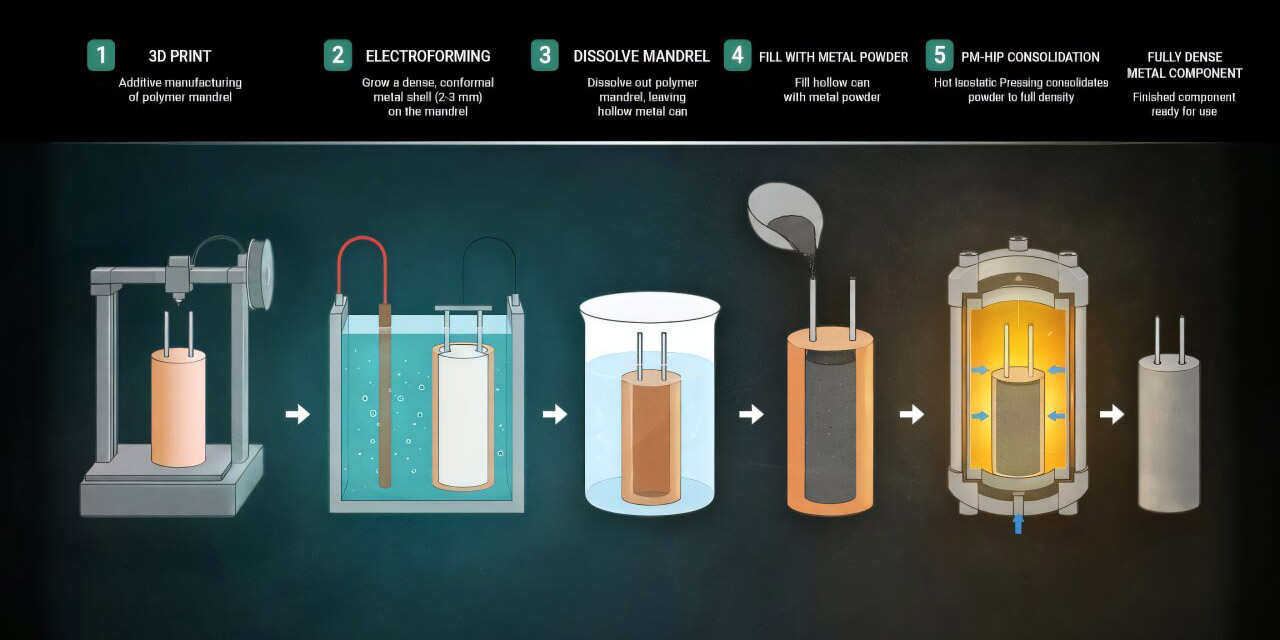
A hybrid manufacturing process combines 3D printing, electroforming, and hot isostatic pressing to produce critical components for advanced nuclear reactors and other energy and defense applications. (Image: Morgan Manning, Brett Hopwood/ORNL)
Oak Ridge National Laboratory scientists have collaborated with A.J. Tuck Company to develop a new manufacturing approach for use with the hot isostatic pressing (HIP) technique. The hybrid approach combines 3D printing and electroforming to produce so-called HIP cans used to form metal parts from powder materials, aiming to simplify the production of critical reactor components.
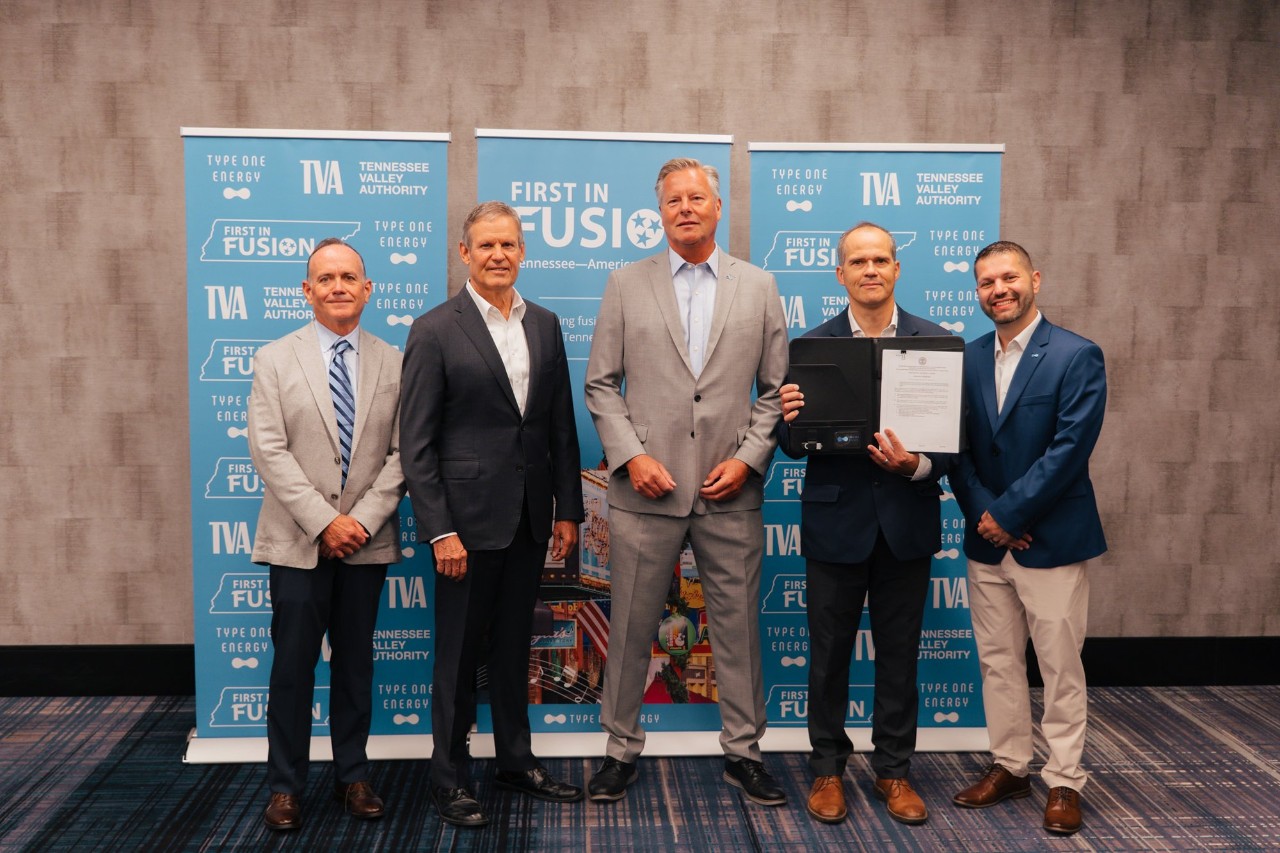
Participating in the August 31 announcement of the issuance of the Tennessee Department of Environment and Conservation’s byproduct material license to Type One were (from left) TVA Interim President and CEO Mike Skaggs, Tennessee Gov. Bill Lee, Type One CEO Chris Mowry, Type One Vice President of Regulatory Affairs and Licensing Pascal Dumont, and Type One Radiation Officer Larry Harisis. (Photo: TDEC)
The Tennessee Department of Environment and Conservation (TDEC) has issued Type One Energy the first license to operate a commercial fusion machine in the state. The state license is also the first to be issued after the Nuclear Regulatory Commission issued a proposed rule on an augmented byproduct material framework earlier this year. The NRC proposed in February that the framework be expanded “to accommodate the wide variety of anticipated fusion machine designs across the National Materials Program.”
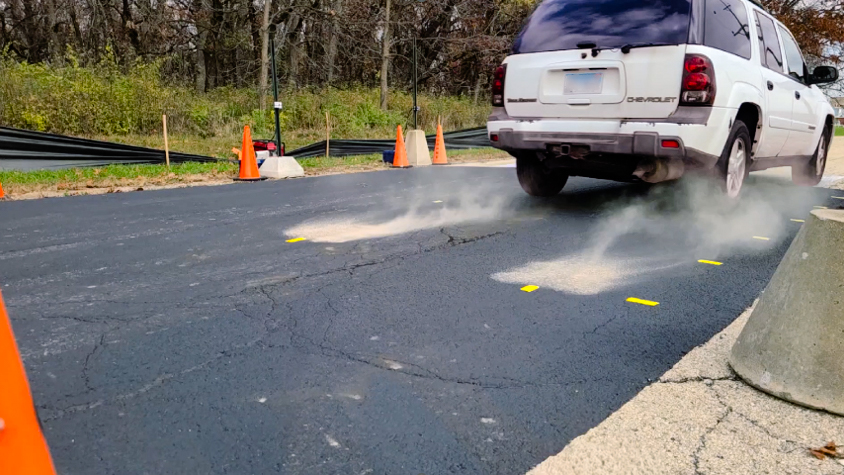
An emergency vehicle test to measure the amount of dust resuspended from the ground. (Photo: Argonne National Laboratory)
Researchers at Argonne National Laboratory have conducted experimental tests on how particles from paved surfaces become suspended from activities such as walking, driving, and vacuuming, aiming to improve modeling of radiological and other contamination scenarios where emergency operations may kick up hazardous dust.
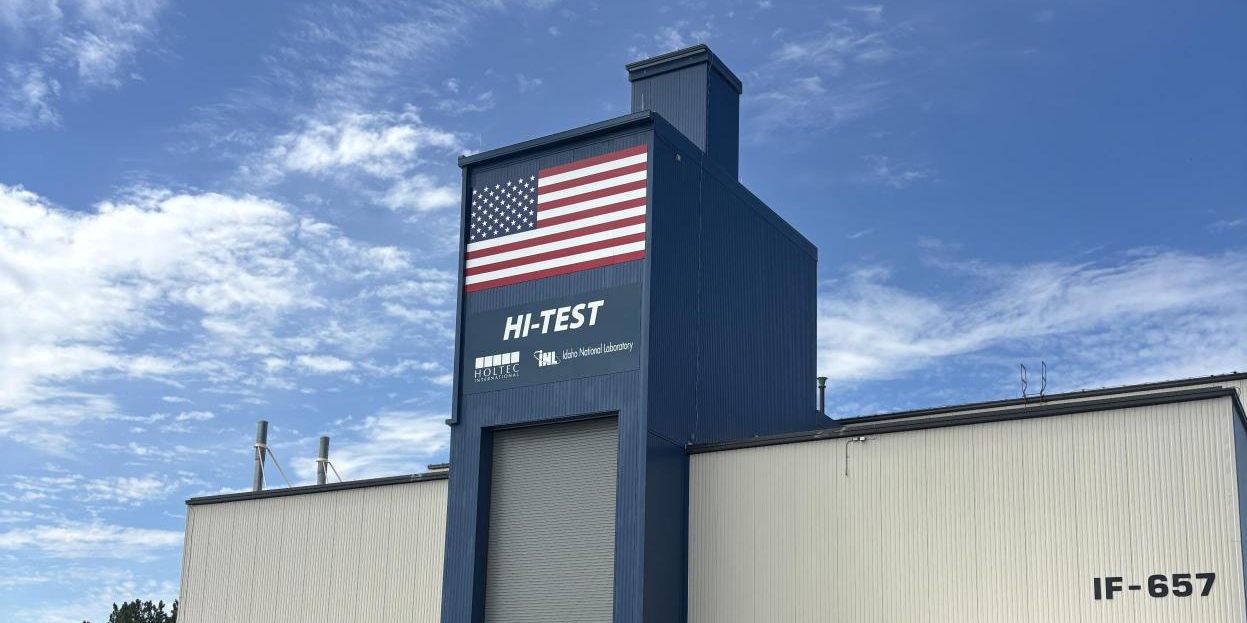
The HI-TEST facility at Idaho National Laboratory. (Photo: Holtec)
Holtec has announced it is advancing with component fabrication for a testing facility at Idaho National Laboratory that it will use to quantify performance margins of its SMR-300 pressurized water reactor. The facility, dubbed HI-TEST, will use test loops to replicate accident scenarios and steam generator behavior, aiming also to support future power uprating for SMR-300 units.
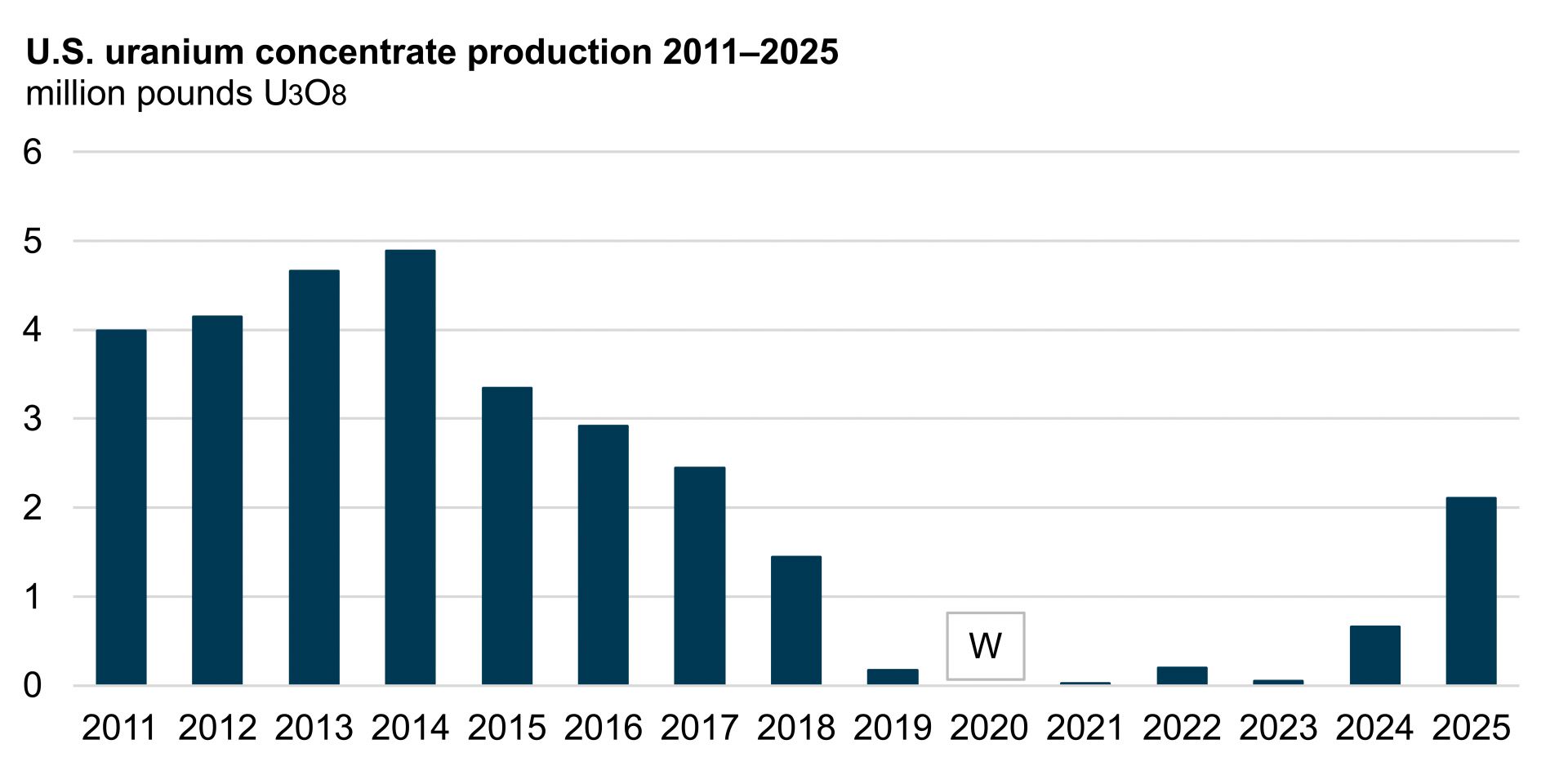
U.S. U3O8 production more than tripled from 2024 to 2025. (Image: Energy Information Administration)
Data source: U.S. Energy Information Administration, Monthly Energy Review, and Domestic Uranium Production Report
Note: W=Data withheld to avoid disclosure of individual company data.
According to the Energy Information Administration (EIA), the amount of uranium concentrate produced in the United States in 2025 was more than three times greater than that produced the year before, and amounted to about 2.1 million pounds of U3O8, compared with the 657,000 pounds generated in 2024. It’s the largest amount produced in the United States since 2017.
The future of nuclear depends not only on new technology, but on preserving the knowledge behind decades of safe operation.
The nuclear industry is entering a new chapter.
Existing plants are extending operating lives beyond their original design expectations. New reactor technologies are moving from concept to construction. Investment in domestic manufacturing and fuel production is accelerating, and utilities are strengthening supply chains to support decades of future operation.
At the same time, another transition is taking place.
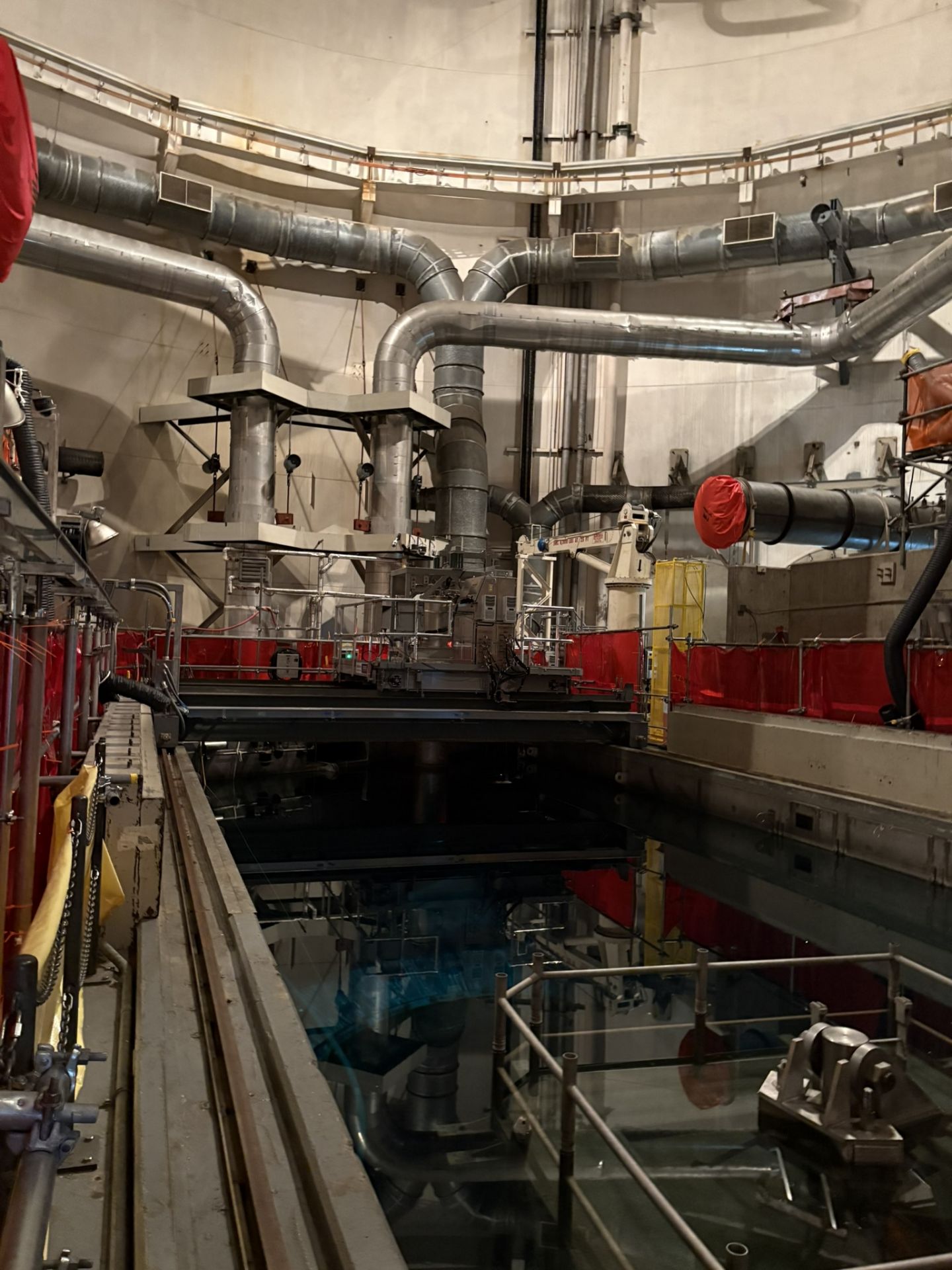
The Palisades reactor cavity and fuel-handling machine. (Photo: Holtec)
The Palisades nuclear power plant has drawn closer to restart, as plant staff began the process of loading fuel into the reactor vessel on Sunday morning.
The commencement of fuel loading places the Covert, Mich., facility in Mode 6—or the refueling stage—under the plant’s technical specifications, plant owner and operator Holtec International said in a news release. The Palisades reactor core consists of 204 fuel assemblies that include new fuel and partially used fuel from the plant’s most recent operating cycles. According to Holtec, the fuel loading is being conducted in accordance with plant procedures and technical specifications.
IAEA Director General Rafael Mariano Grossi (left) and DOE Secretary Chris Wright. (Photo: IAEA)
Just days after the Department of Transportation’s Maritime Administration (MARAD) and the Port of Corpus Christi announced a partnership to explore the development of small modular reactors in the U.S. seaport, multiple other maritime nuclear announcements were unveiled to the public, including another MARAD partnership.
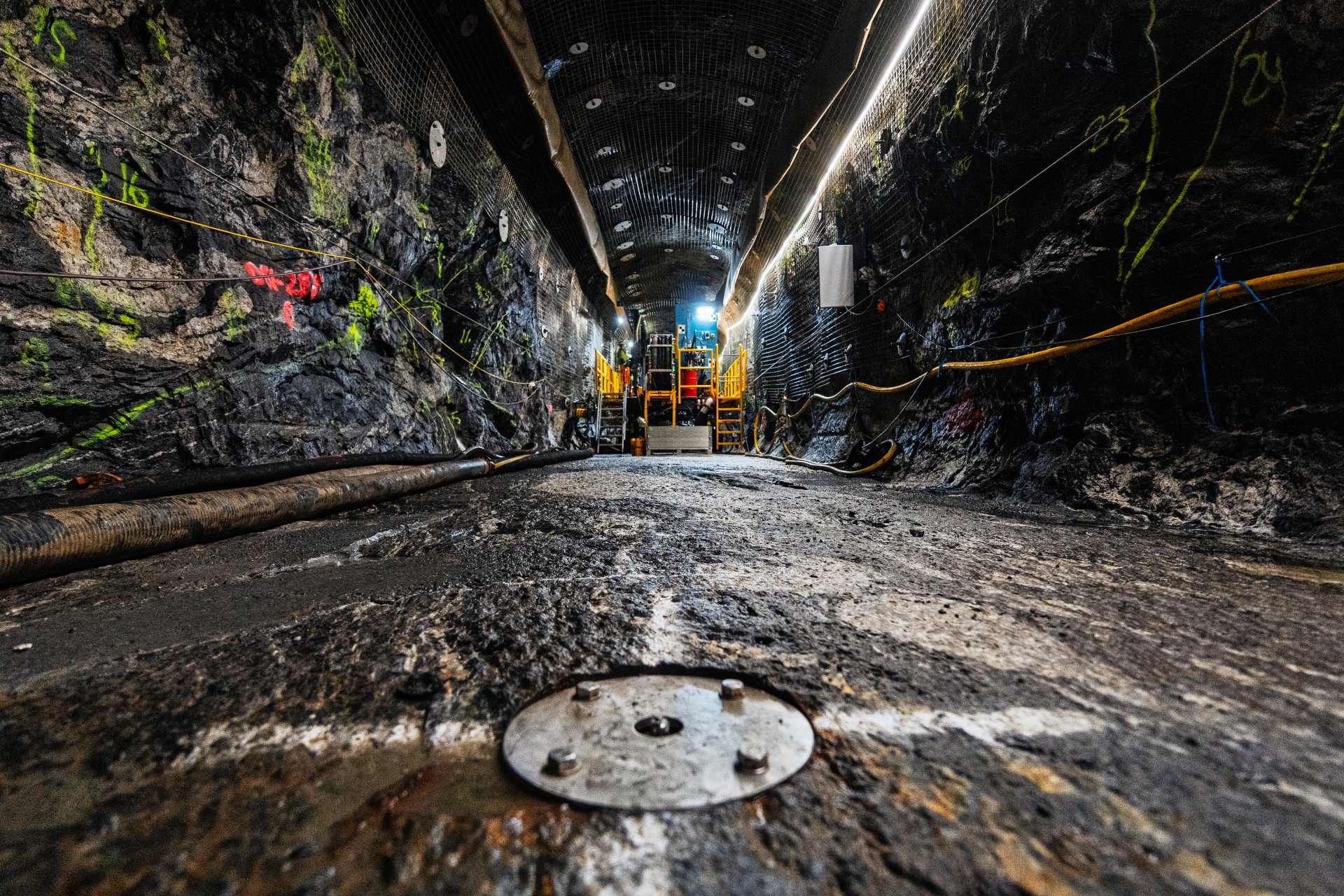
The disposal tunnel where the drilling of holes for nuclear waste has begun at Posiva’s Onkalo deep geological repository in Finland. (Photo: Posiva)
Last week the Finnish nuclear waste management company Posiva began drilling holes for final disposal at the Onkalo deep geological repository, near the Olkiluoto nuclear power plant in western Finland. The company’s German-made Deposition Hole Boring Machine (DHBM) took about 10 hours to drill the first hole, with a depth of 8.4 meters and a diameter of 1.75 meters, into the 1.9-billion-year-old bedrock. This is the first deposition hole intended for an iron-copper canister containing spent nuclear fuel—though test holes have been drilled at the site since 2022.
The Onkalo repository received a favorable safety assessment from the Radiation and Nuclear Safety Authority of Finland earlier in August.