From left, ANS CEO Craig Piercy moderates the second plenary of the Annual Conference, with panelists Seth Grae of Lightbridge, Jean-Luc Palayer of Orano USA, Sarah Riedel of Urenco, and Amir Vexler of Centrus.
Nuclear power currently appears to have the wind at its back, with growing demand for clean, reliable energy from industry (think data centers) and strong political support for new projects. But getting there still will require a lot of pieces to yet fall into place. It is, as American Nuclear Society CEO Craig Piercy said, a “chicken and egg” problem: Which comes first, the fuel to supply new reactors or the reactors that will create a demand for new fuel?
Concept art showing the Aurora Powerhouse. (Image: Oklo)
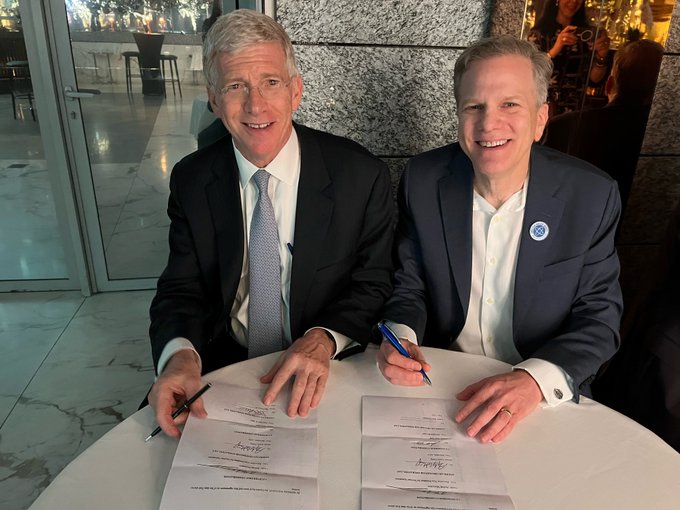
A strategic collaboration has been launched by Lightbridge Corporation and Oklo Inc. to explore locating Lightbridge’s fuel fabrication facility within Oklo’s planned advanced fuel manufacturing facility. The collaboration aims to “accelerate the commercialization of advanced nuclear fuels through joint fuel fabrication and research and development, including manufacturing fuel using repurposed plutonium from legacy materials,” according to the companies.
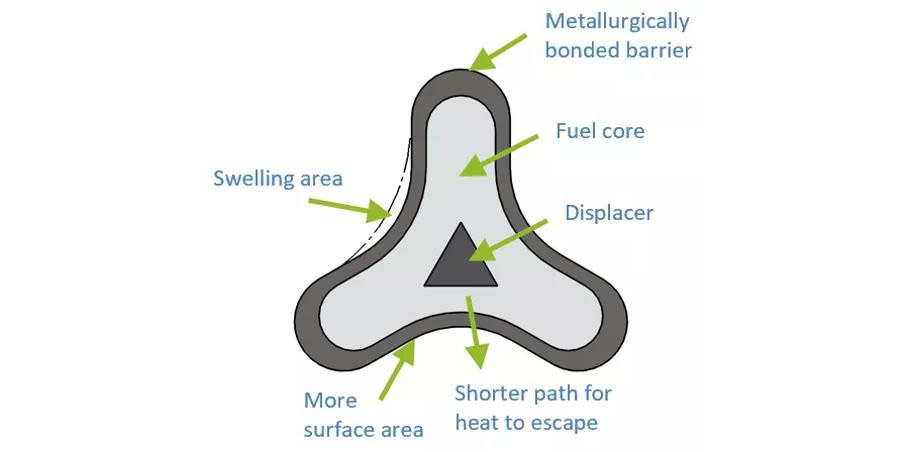
Diagram showing the structure of Lightbridge Fuel. (Image: Lightbridge)
Lightbridge Corporation has fabricated samples of nuclear fuel materials made of an enriched uranium-zirconium alloy, matching the composition of the alloy that the company intends to use for its future commercial Lightbridge Fuel product. The fuel is designed to improve the performance, safety, and proliferation resistance of nuclear reactors, according to the company. The enriched coupon samples will now be placed into capsules for irradiation testing in Idaho National Laboratory’s Advanced Test Reactor.
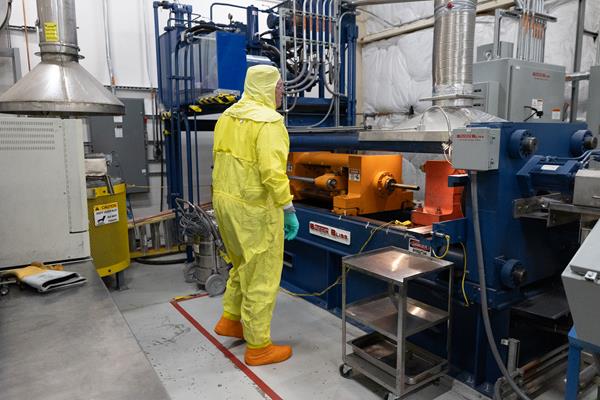
The extrusion in progress. (Photo: INL/Lightbridge)
Lightbridge Corporation announced today that it has reached “a critical milestone” in the development of its extruded solid fuel technology. Coupon samples using an alloy of zirconium and depleted uranium—not the high-assay low-enriched uranium (HALEU) that Lightbridge plans to use to manufacture its fuel for the commercial market—were extruded at Idaho National Laboratory’s Materials and Fuels Complex.
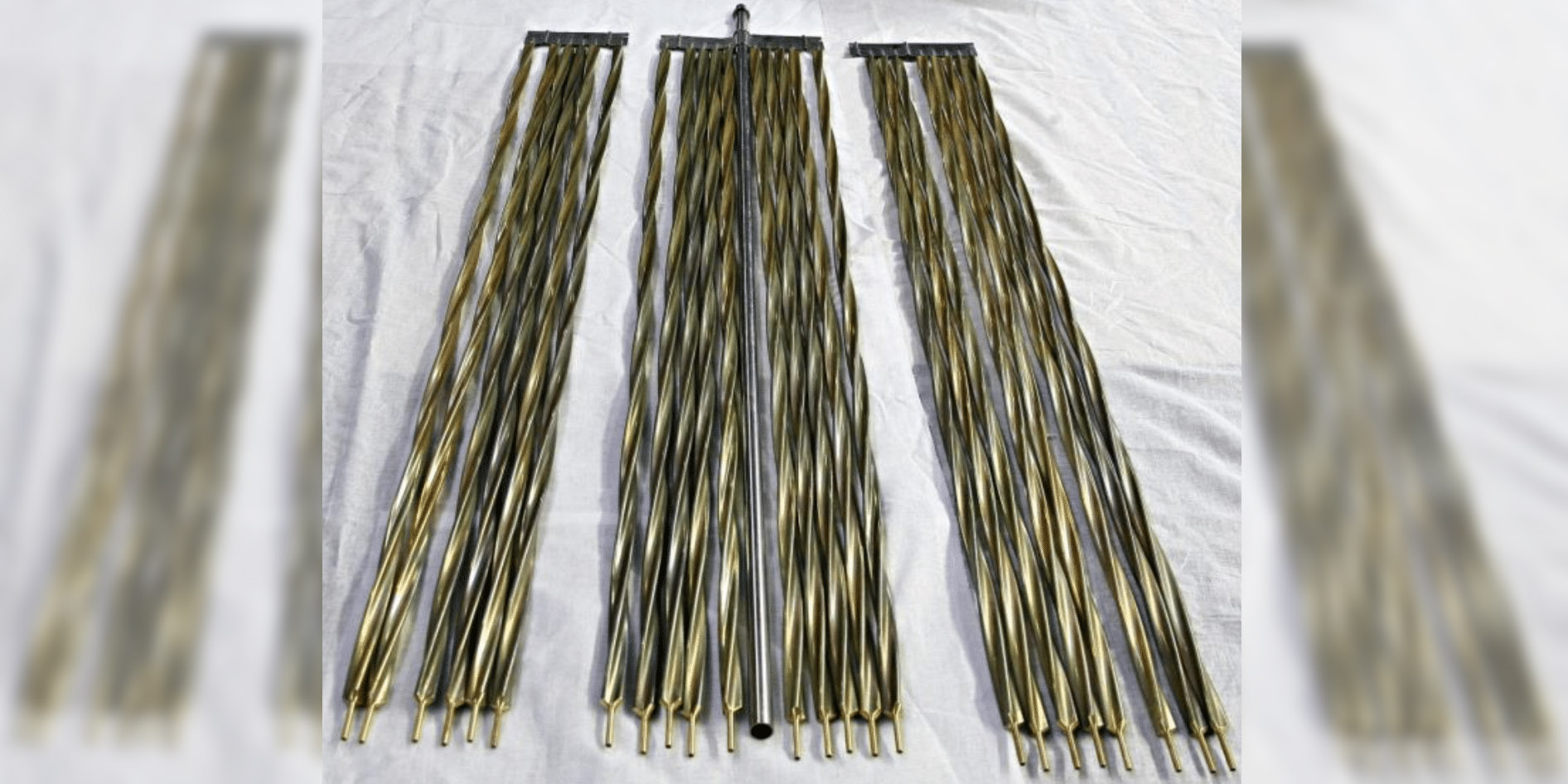
Mock-up of four-lobed helical fuel rods. (Photo: Lightbridge)
Lightbridge Corporation, which is continuing to work closely with national laboratories on the manufacture and testing of its metallic fuel rod designs for light water reactors, just announced the results of an investigation on the casting process for molten uranium and zirconium with Pacific Northwest National Laboratory under the Department of Energy’s Gateway for Accelerated Innovation in Nuclear (GAIN) program.
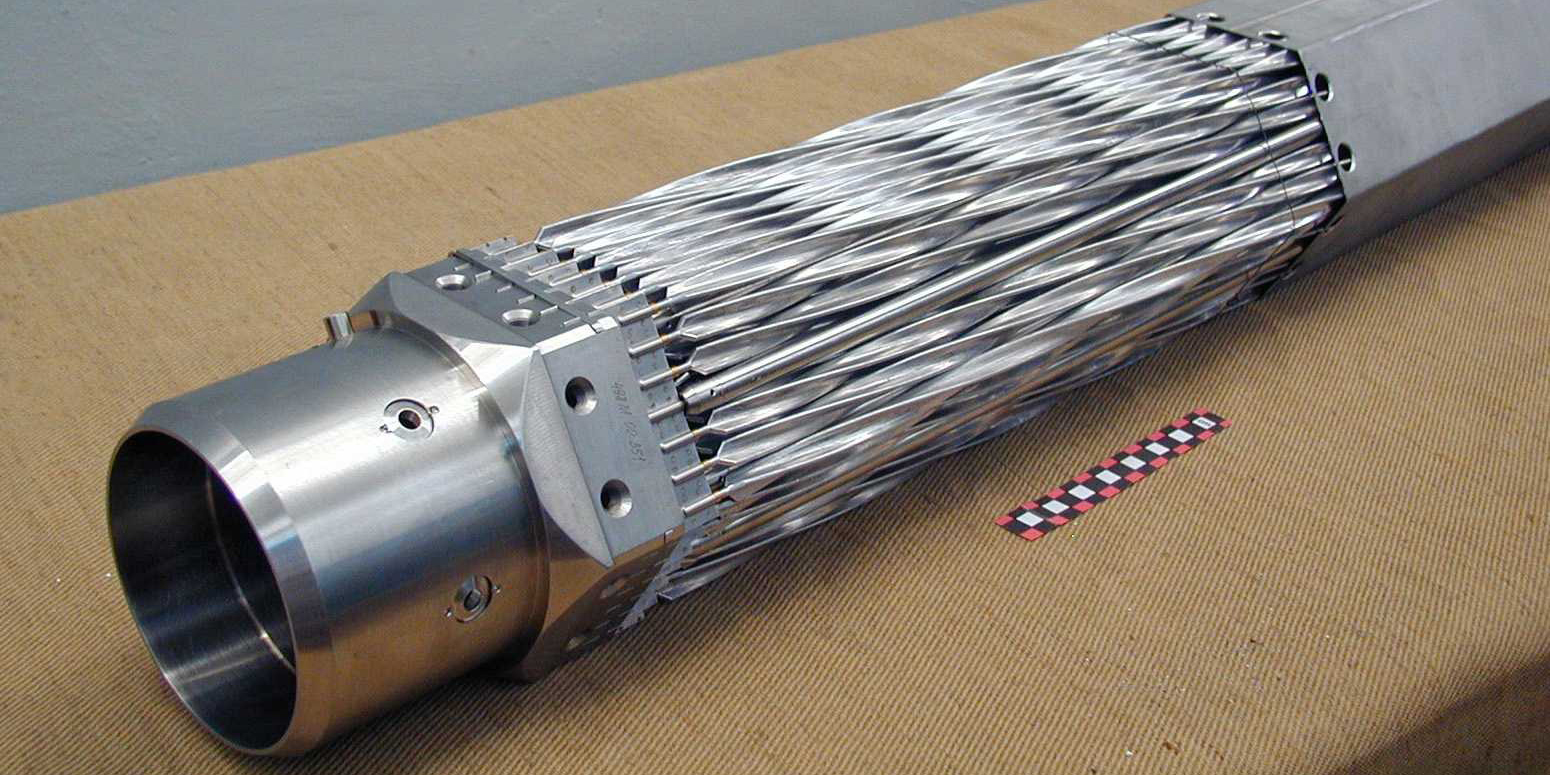
A photo of a prototype Lightbridge fuel assembly. (Photo: Lightbridge)
Operators at the Advanced Test Reactor at Idaho National Laboratory have begun a nine-month outage to perform a core internals changeout. When the ATR is restarted in early 2022, the top head closure plate of the pressurized water test reactor will have new access points that could permit the irradiation of more fuel and material samples in the reactor’s high-flux neutron conditions.







 The Gateway for Accelerated Innovation in Nuclear (GAIN) announced that three nuclear technology companies—Radiant, Oklo, and Lightbridge—will receive GAIN nuclear energy vouchers to accelerate the innovation and application of advanced nuclear technologies.