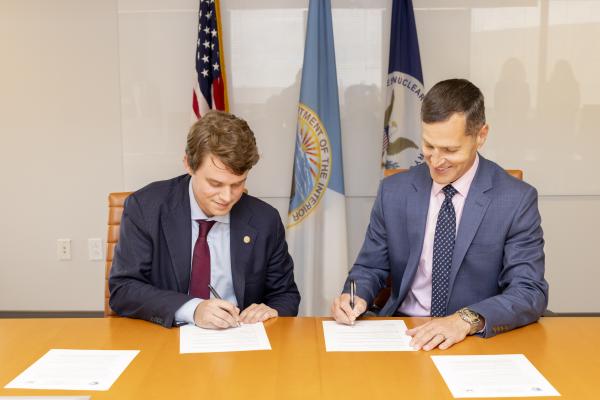
Matt Giacona (left), MMA acting director, and Jeremy Bowen, NRC Office of Advanced Reactors director, sign an MOU on July 21. (Photo: Bureau of Ocean Energy Management)
Within the past month, the Nuclear Regulatory Commission has signed memorandums of understanding to increase its cooperation with two U.S. maritime organizations. In late June, the NRC signed an MOU with the U.S. Coast Guard to strengthen coordination on civilian maritime nuclear projects, including floating nuclear power plants and civilian nuclear propulsion. On July 21, the NRC signed an MOU with the newly formed Marine Minerals Administration (MMA) to improve cooperation regarding potential future nuclear projects on the Outer Continental Shelf.
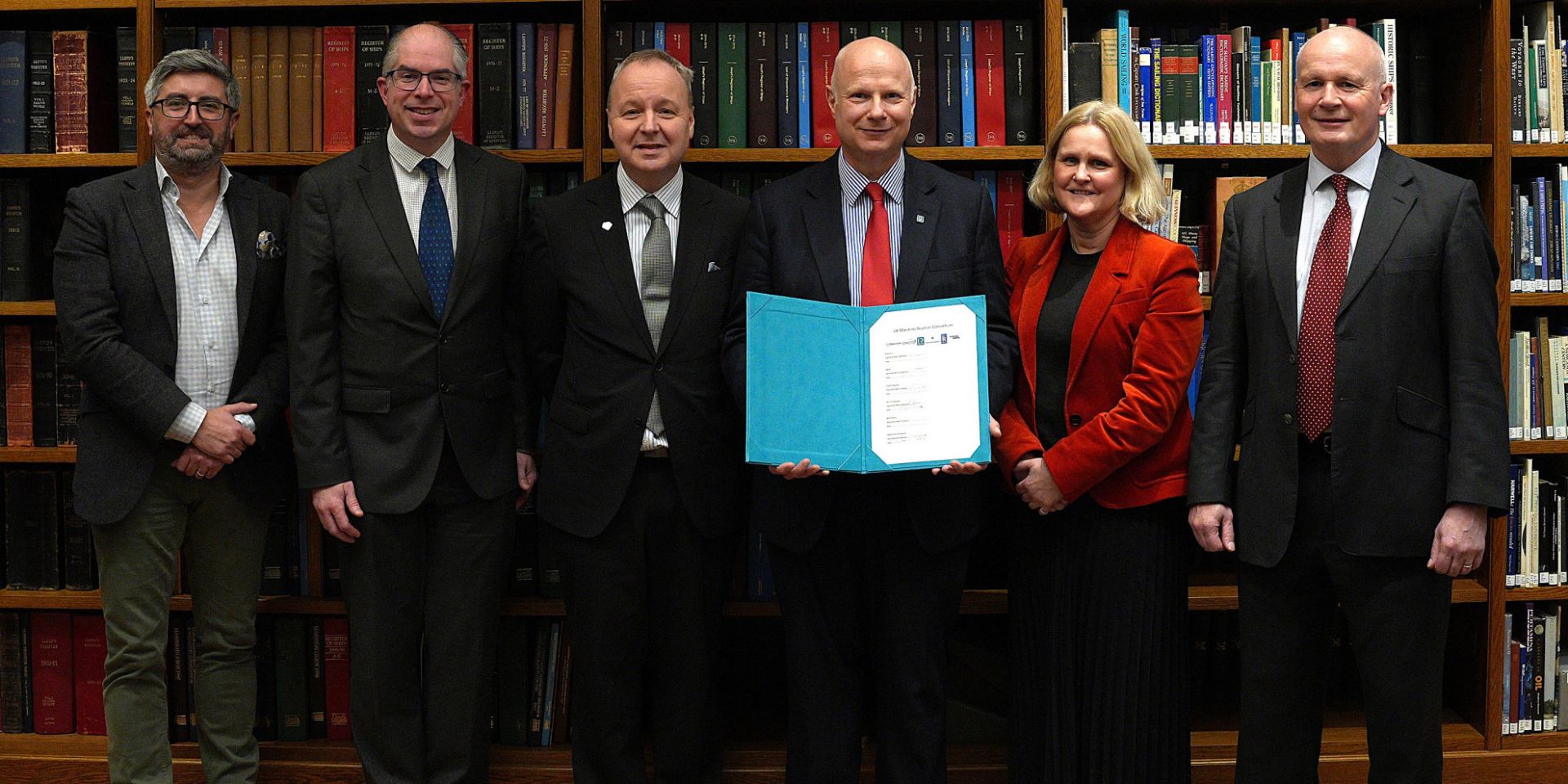
Representatives of the founding members of the Maritime Nuclear Consortium. From left, Nick Tomkinson, Global Nuclear Security Partners; Simon Williams, Rolls-Royce; Blair Jamieson, Babcock International Group; Mark Tipping, Lloyd’s Register; Kirsti Massie, Stephenson Harwood; and Mike Salthouse, NorthStandard. (Photo: Lloyd’s Register)
London-based professional services organization and maritime classification society Lloyd’s Register has brought together a group of experts from the U.K. nuclear, maritime, insurance, and regulatory sectors with the primary goal of establishing international standards “for safe, secure, and commercially viable nuclear-powered ships.”
This Maritime Nuclear Consortium includes Lloyd’s Register as the group’s lead, safety administrator, and secretariat; Rolls-Royce, specializing in advanced reactor design; Babcock International Group (ship design, construction, and support); Global Nuclear Security Partners (security and safeguards); Stephenson Harwood (legal and regulatory issues); and NorthStandard (insurance).
Rendering of MCRE. (Image: INL)
Idaho National Laboratory has announced the creation of the first batch of enriched uranium chloride fuel salt for the Molten Chloride Reactor Experiment (MCRE). INL said that its fuel production team delivered the first fuel salt batch at the end of September, and it intends to produce four additional batches by March 2026. MCRE will require a total of 72–75 batches of fuel salt for the reactor to go critical.



 The Boston-based