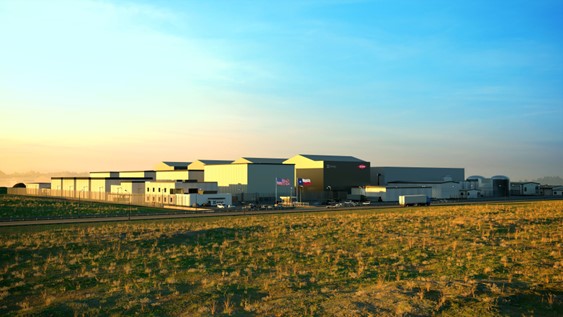
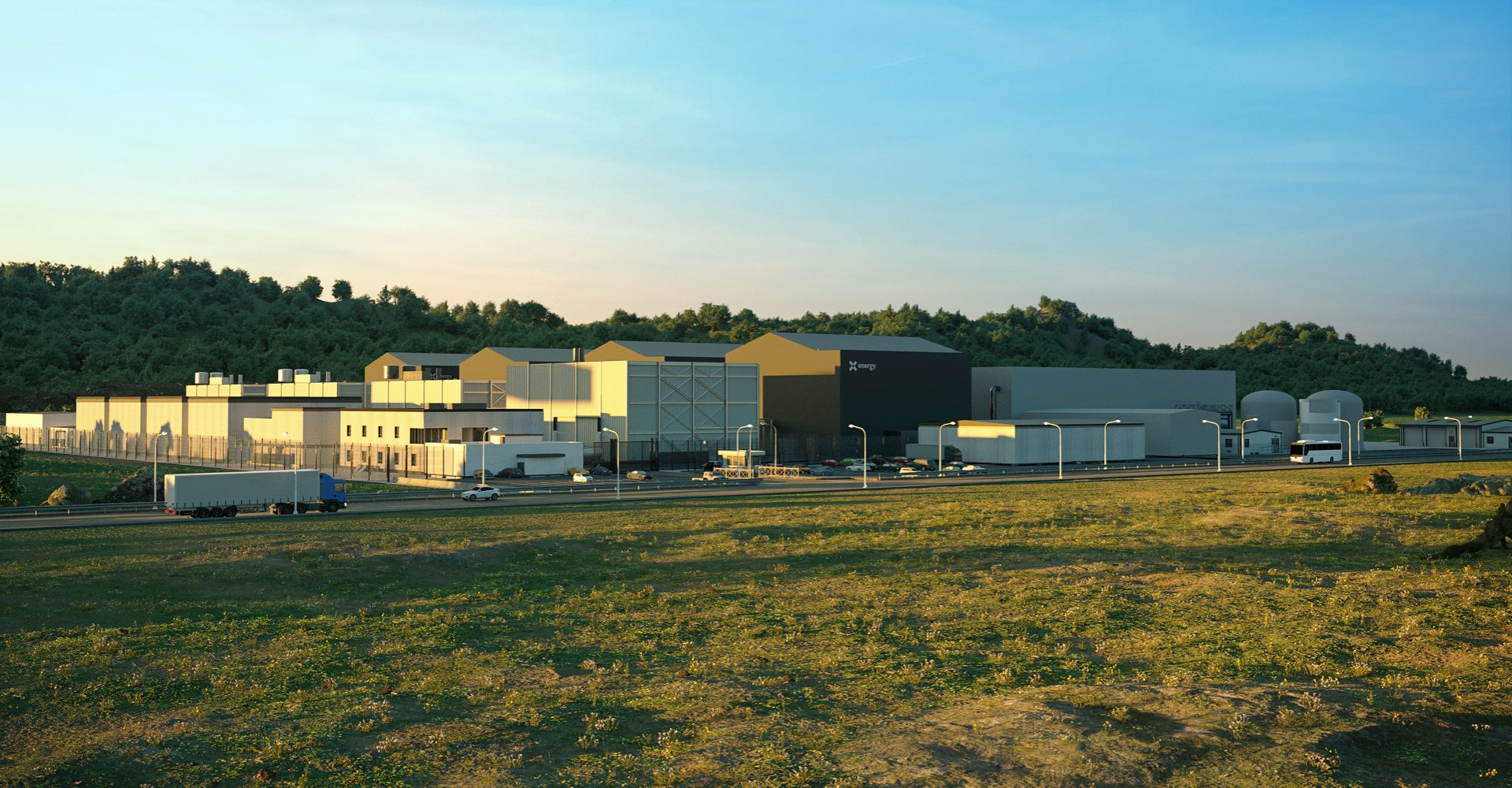
A digital rendering of the Dow/X-energy Xe-100 plant in Texas. (Image: X-energy)
Dow and X-energy have announced the location of their Xe-100 small modular reactor deployment project: Dow’s UCC Seadrift Operations manufacturing site in Texas. According to a May 11 joint news release, the SMR plant will provide the Seadrift site with power and heat as the site’s existing energy and steam assets near the end of their operational lives.
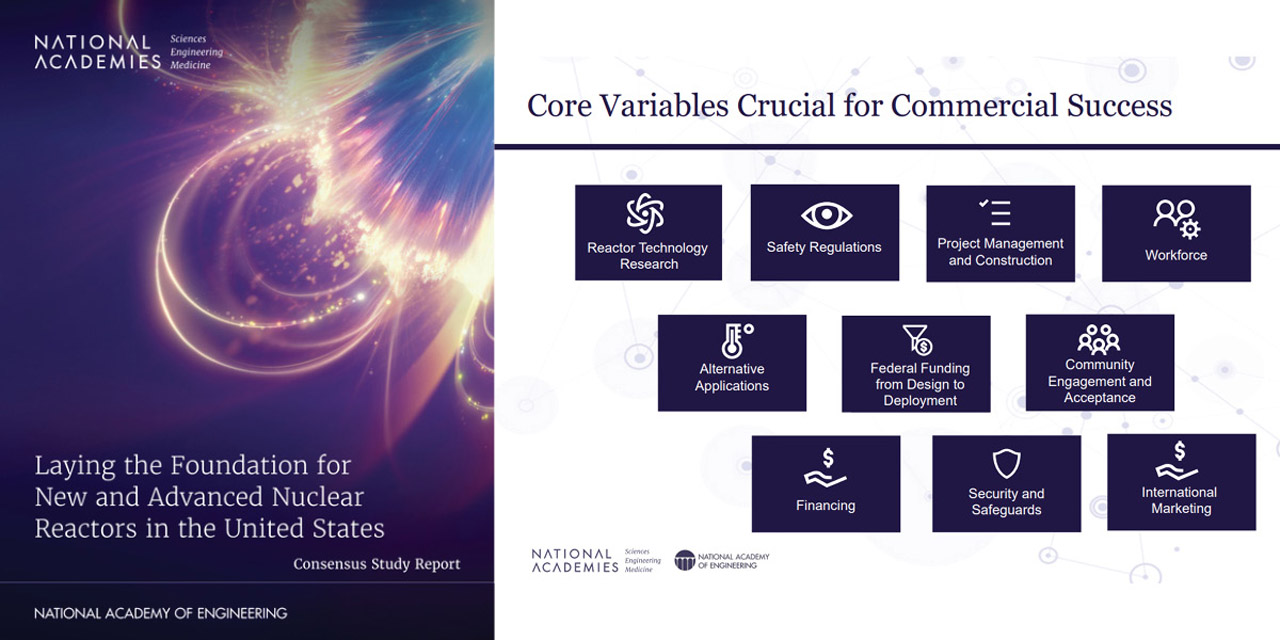
This slide on the right from the consensus committee’s public briefing identifies 10 core variables that are important to the success of advanced reactor deployments. (Image: NASEM, Laying the Foundation for New and Advanced Nuclear Reactors in the United States)
Artist’s rendering of an Xe-100 plant. (Image: X-energy)
Dow and X-energy announced today that they have signed a joint development agreement (JDA) to demonstrate the first grid-scale advanced nuclear reactor at an industrial site in North America within a decade. As part of the agreement, Dow is now a subawardee under X-energy’s Advanced Reactor Demonstration Program (ARDP) Cooperative Agreement with the Department of Energy.
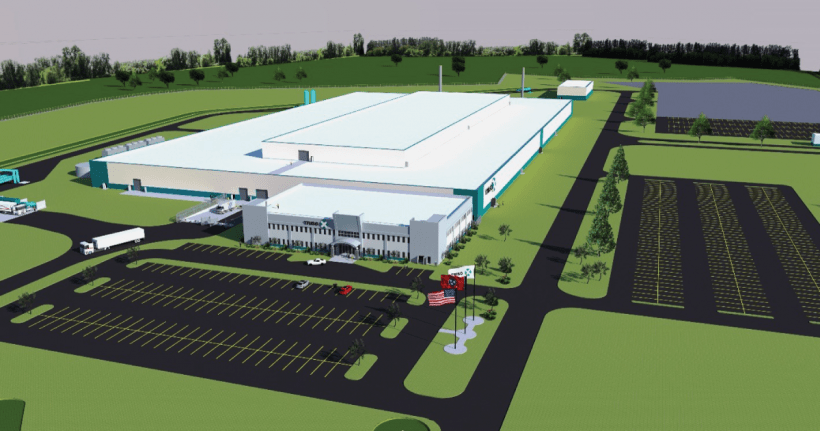
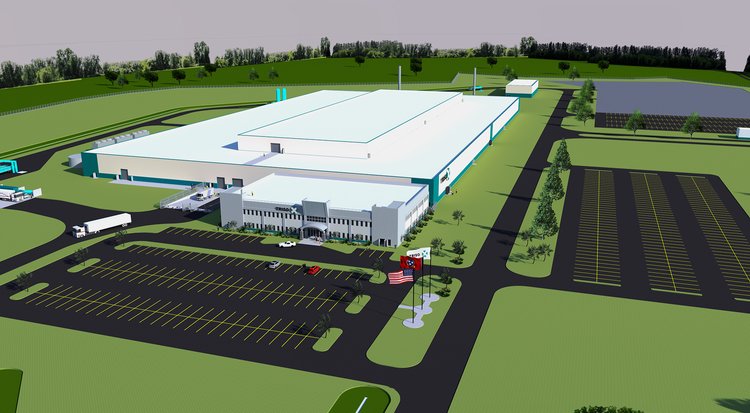
A rendering of the TRISO-X fuel fabrication facility. (Image: DOE)
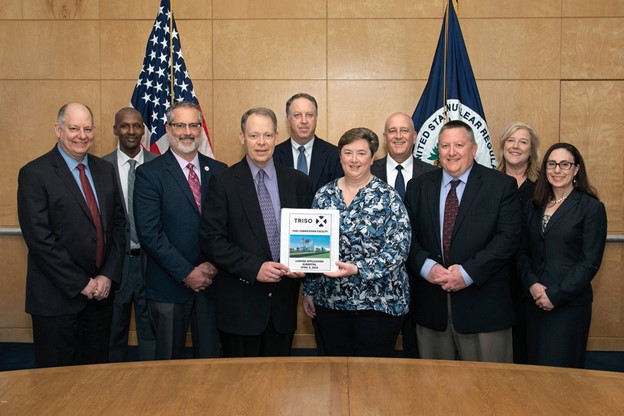
The Nuclear Regulatory Commission recently presented its proposed 30-month licensing review timeline of TRISO-X’s planned fuel fabrication facility at the project’s first-ever public meeting in Oak Ridge, Tenn.
TRISO-X, a subsidiary of X-energy, has requested a 40-year license to possess and use special nuclear material to manufacture advanced fuel. The facility would be the first-ever commercial-scale fuel fabrication plant focused on using high-assay low-enriched uranium (HALEU).
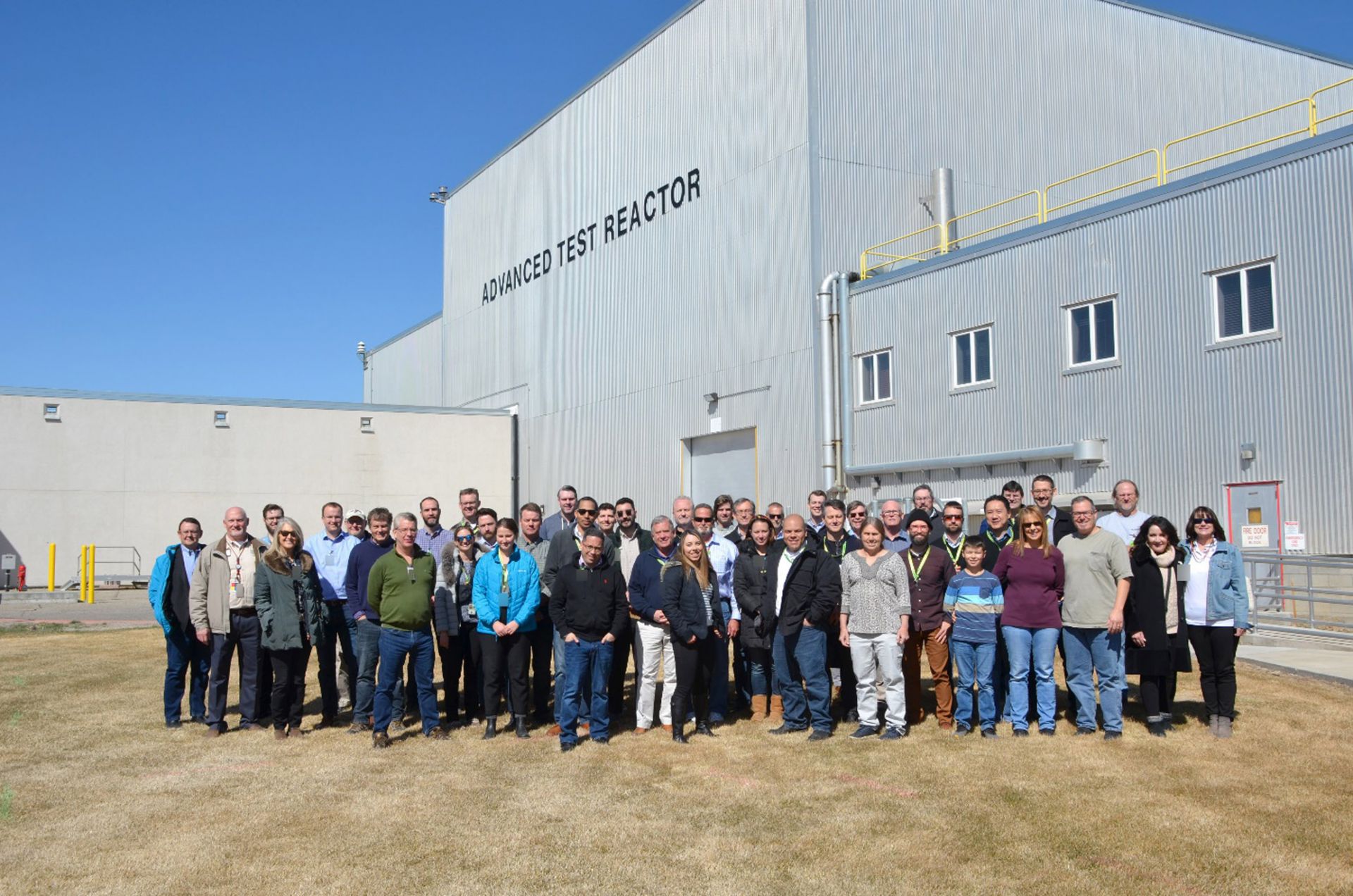
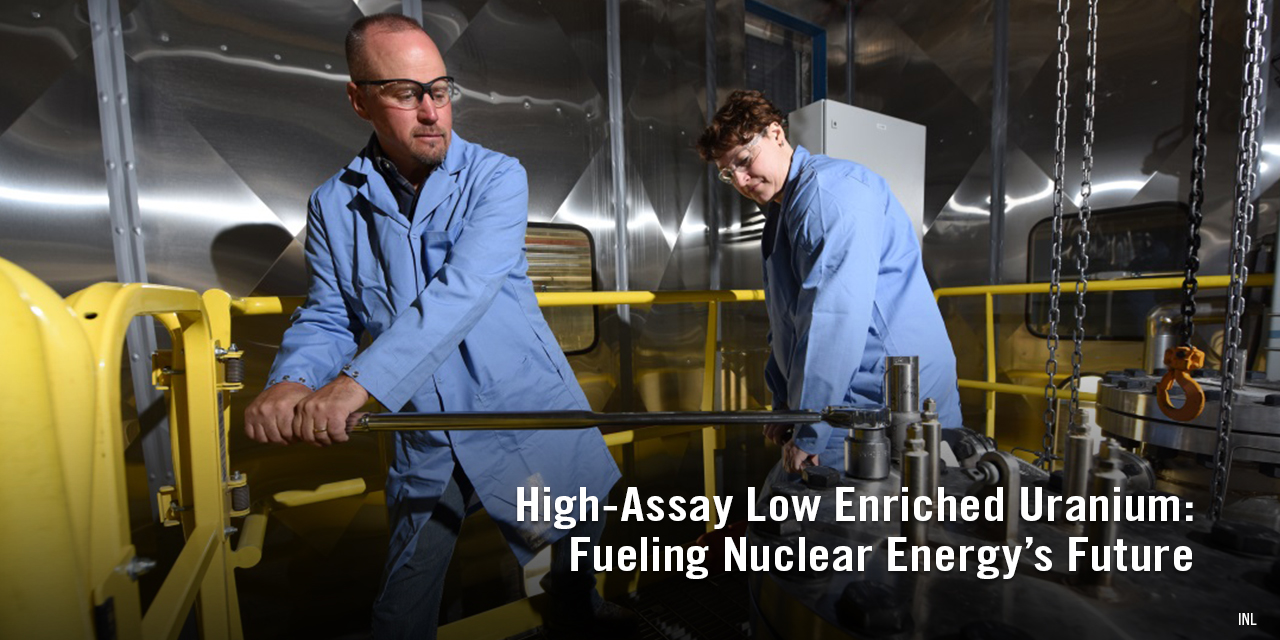
Industry professionals visit INL as part of a U.S. Nuclear Industry Council Conference. (Photo: INL)
The Department of Energy’s commitment to breaking down market barriers with initiatives, programs, and access to facilities is making it simpler and more efficient than ever for industry to partner with national laboratories. It is especially timely, as the country continues to face evolving security, economic, and clean energy challenges. Partnering opportunities via the DOE’s Cooperative Research and Development Agreements (CRADAs) and Strategic Partnership Projects (SPPs) are particularly prevalent in the commercial nuclear community and have seen a tremendous amount of funding and support dedicated to advancing the development, demonstration, and deployment of new reactor technologies.
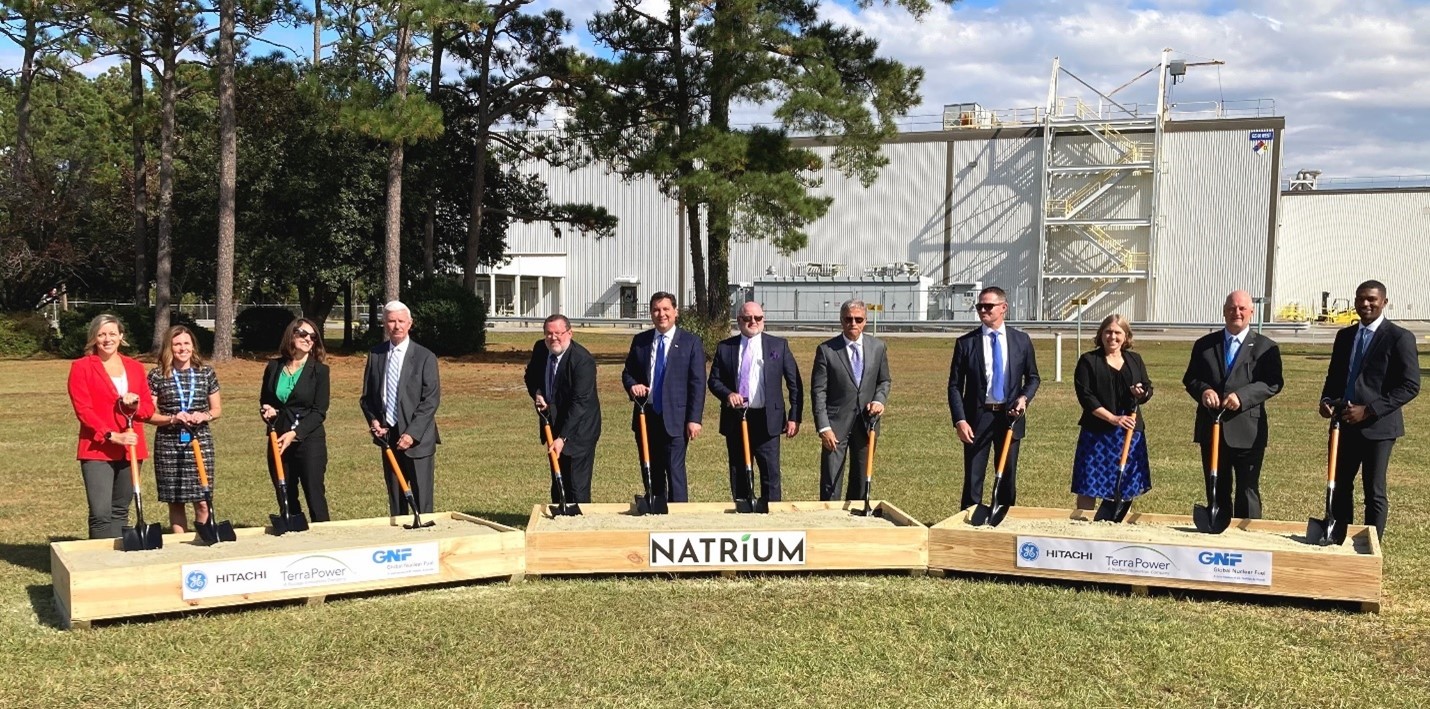
Natrium Fuel Facility groundbreaking. (Photo: GNF-A)
Global Nuclear Fuel–Americas (GNF-A) and TerraPower announced their plans to build a Natrium fuel fabrication facility next to GNF-A’s existing fuel plant near Wilmington, N.C, on October 21. While more than 50 years of fuel fabrication at the site have supported the boiling water reactor designs of GE (GNF-A’s majority owner) and GE Hitachi Nuclear Energy (GEH), the Natrium Fuel Facility will produce metallic high-assay low-enriched uranium (HALEU) fuel for the sodium fast reactor—Natrium—that TerraPower is developing with GEH.
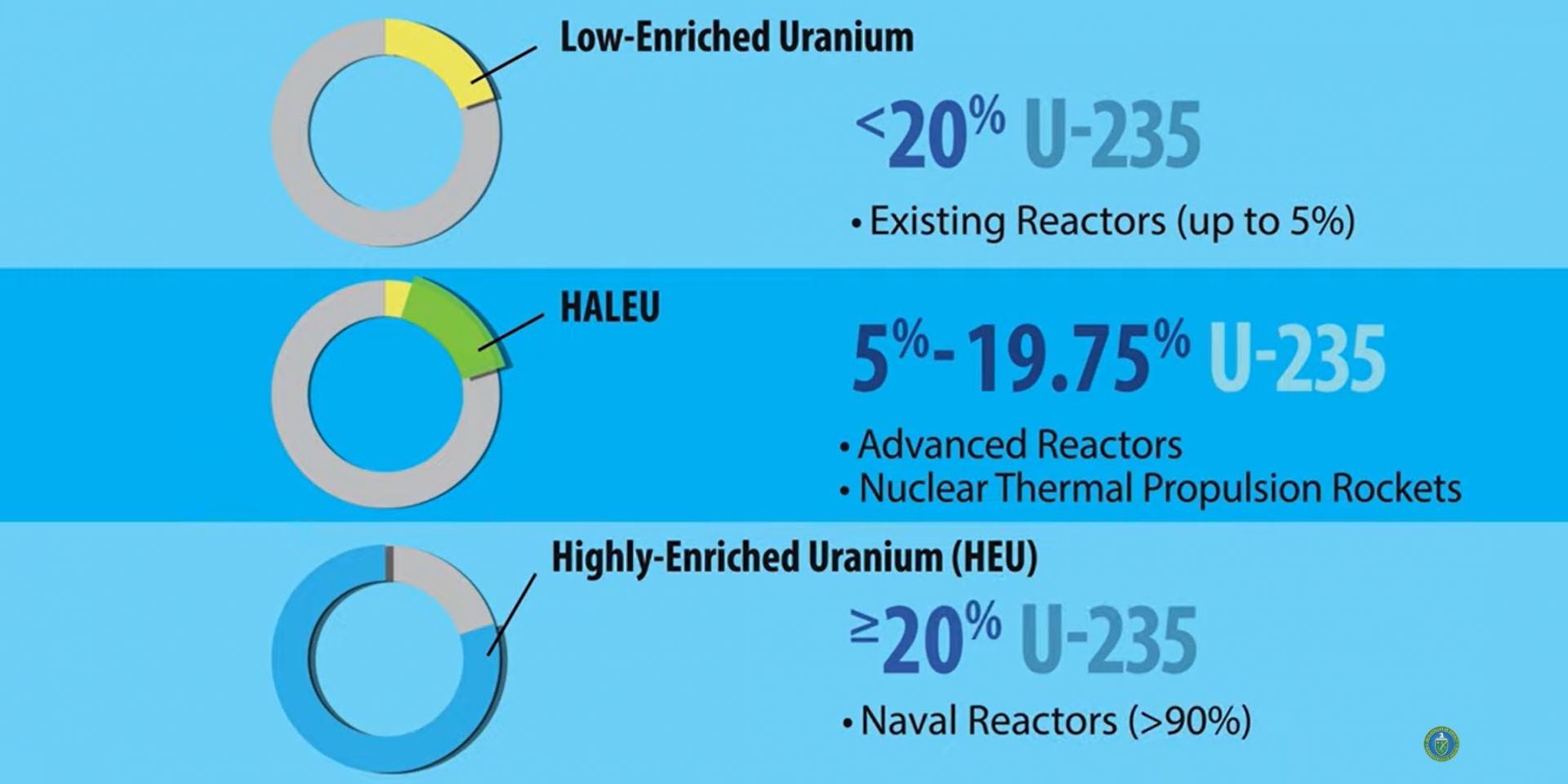
An image from the video “What is High-Assay Low-Enriched Uranium (HALEU)?” released by the DOE in April 2020. (Source: DOE)
Another piece of the plan for meeting the urgent need for high-assay low-enriched uranium (HALEU) to fuel advanced reactor deployments fell into place when the Department of Energy held an Industry Day on October 14. Attendees were asked how soon they could deliver 25 metric tons per year of HALEU enriched in the United States from newly mined uranium. Offtake contracts for six or more years of HALEU production at that rate could be used to stock a DOE-owned HALEU bank to “support [HALEU] availability for civilian domestic research, development, demonstration, and commercial use.”
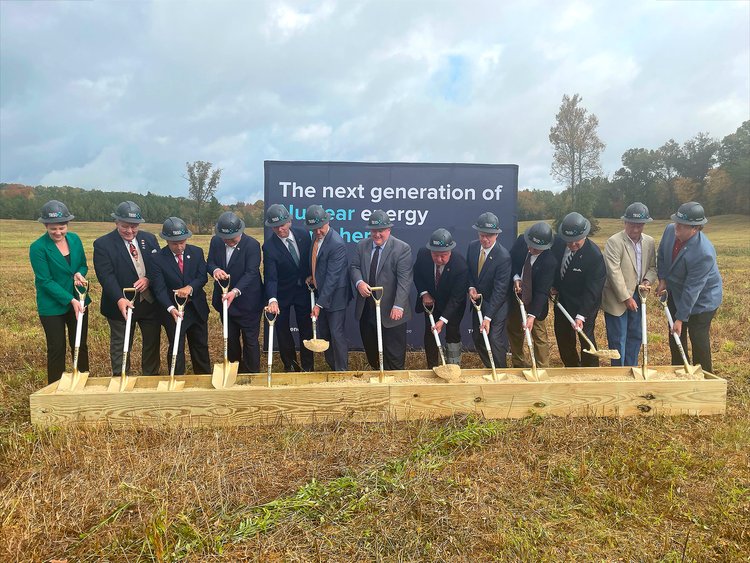
Government officials and representatives of X-energy and its TRISO-X subsidiary at the October 13 groundbreaking. (Photo: X-energy)
Leaders of X-energy and its TRISO-X subsidiary gathered on October 13 to break ground at the site of what X-energy bills as “North America’s first commercial-scale advanced nuclear fuel facility” in Oak Ridge, Tenn. X-energy expects the TRISO-X Fuel Fabrication Facility (TF3) to create more than 400 jobs and to be commissioned and operational by 2025.
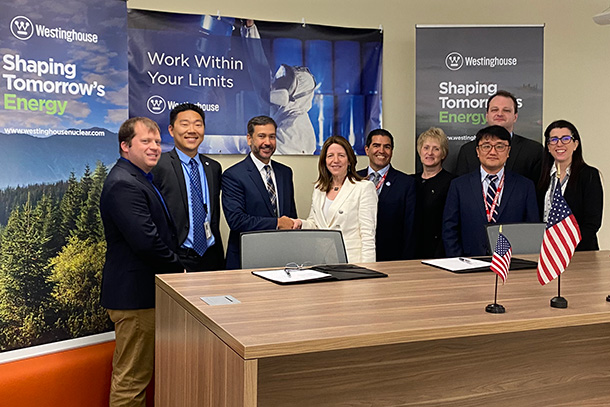
Representatives from Westinghouse and Penn State met at Westinghouse headquarters to sign a memorandum of understanding and enter a partnership focused on researching and developing microreactors. From left: Jason Beebe, director of the global transformation office at Westinghouse; Michael Valore, senior director of advance reactor commercialization, Westinghouse; Mike Shaqqo, senior vice president of advanced reactors, Westinghouse; Lora Weiss, senior vice president for research at Penn State; Jean Paul Allain, head of the Ken and Mary Alice Lindquist Department of Nuclear Engineering at Penn State; Geanie Umberger, associate vice president for research and director of industry research collaborations at Penn State; Saya Lee, assistant professor of nuclear engineering; Elia Merzari (back), associate professor of nuclear engineering; and Hilary Ruby, director of transformation for the Americas Operating Plant Services Business Unit at Westinghouse. (Photo: Westinghouse)
Pictured from left to right: John Tappert, NRC; Jonathan Rowley, NRC; Jacob Zimmerman, NRC; Matthew Bartlett, NRC; Tim Beville, DOE; Jennifer Wheeler, TRISO-X; John Lubinski, NRC; Pete Pappano, TRISO-X; Jill Caverly, NRC; and Shana Helton, NRC. (Photo: X-energy)
Artist's rendering of the proposed TRISO-X Fuel Fabrication Facility (TF3) at the Horizon Center Industrial Park, in Oak Ridge, Tenn. (Image: X-energy)
X-energy has announced that its wholly owned subsidiary, TRISO-X, plans to build the TRISO-X Fuel Fabrication Facility, dubbed TF3, at the Horizon Center Industrial Park in Oak Ridge, Tenn. X-energy has produced kilogram quantities of fuel at its pilot plant at Oak Ridge National Laboratory through a public-private partnership.
The commercial plant will use high-assay low-enriched uranium (HALEU) to produce TRISO particles, which are fabricated into fuel forms, including the spherical graphite “pebbles” needed to fuel the company’s Xe-100 high-temperature gas reactor. Site preparation and construction are expected to get underway in 2022, and commissioning and start-up are scheduled for as early as 2025, according to X-energy.

-3 2x1.jpg)