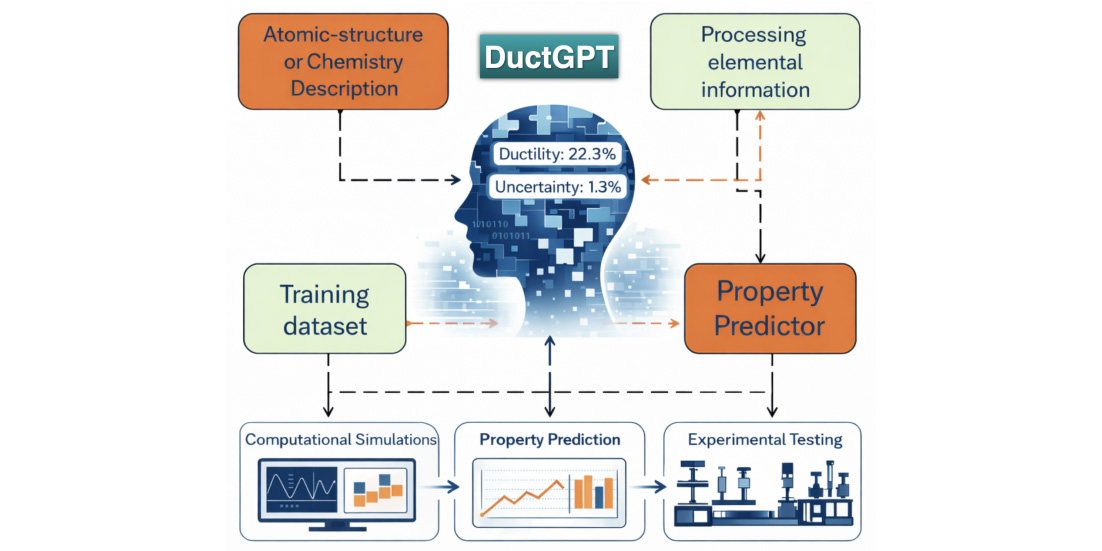
AI-powered workflow for predicting tensile ductility in refractory alloys. (Image: Ames National Laboratory)
Ames National Laboratory has announced a new tool that combines artificial intelligence and physics-based modeling to identify materials that can be used in fusion systems, where materials must withstand intense heat, radiation, and mechanical stress.
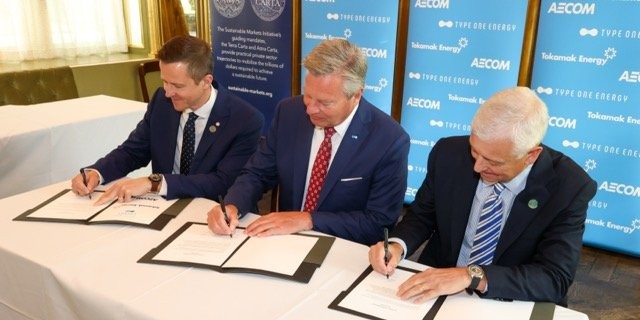
Representatives of Tokamak Energy, Type One Energy, and AECOM sign an agreement establishing the U.K. Infinity Fusion Consortium. (Photo: Type One Energy)
Three companies have come together to form the U.K. Infinity Fusion Consortium with the objective of developing the first private sector–led fusion power plant in the United Kingdom using existing “commercially credible” technologies.
The consortium is expected to benefit from the combination of the three partners’ expertise. Tennessee-based fusion start-up Type One Energy brings its 400-MWe Infinity Two stellarator fusion power plant design. British fusion technology company Tokamak Energy has its HTS magnet technology and manufacturing background. Texas-based consulting firm AECOM has international engineering and infrastructure capabilities.
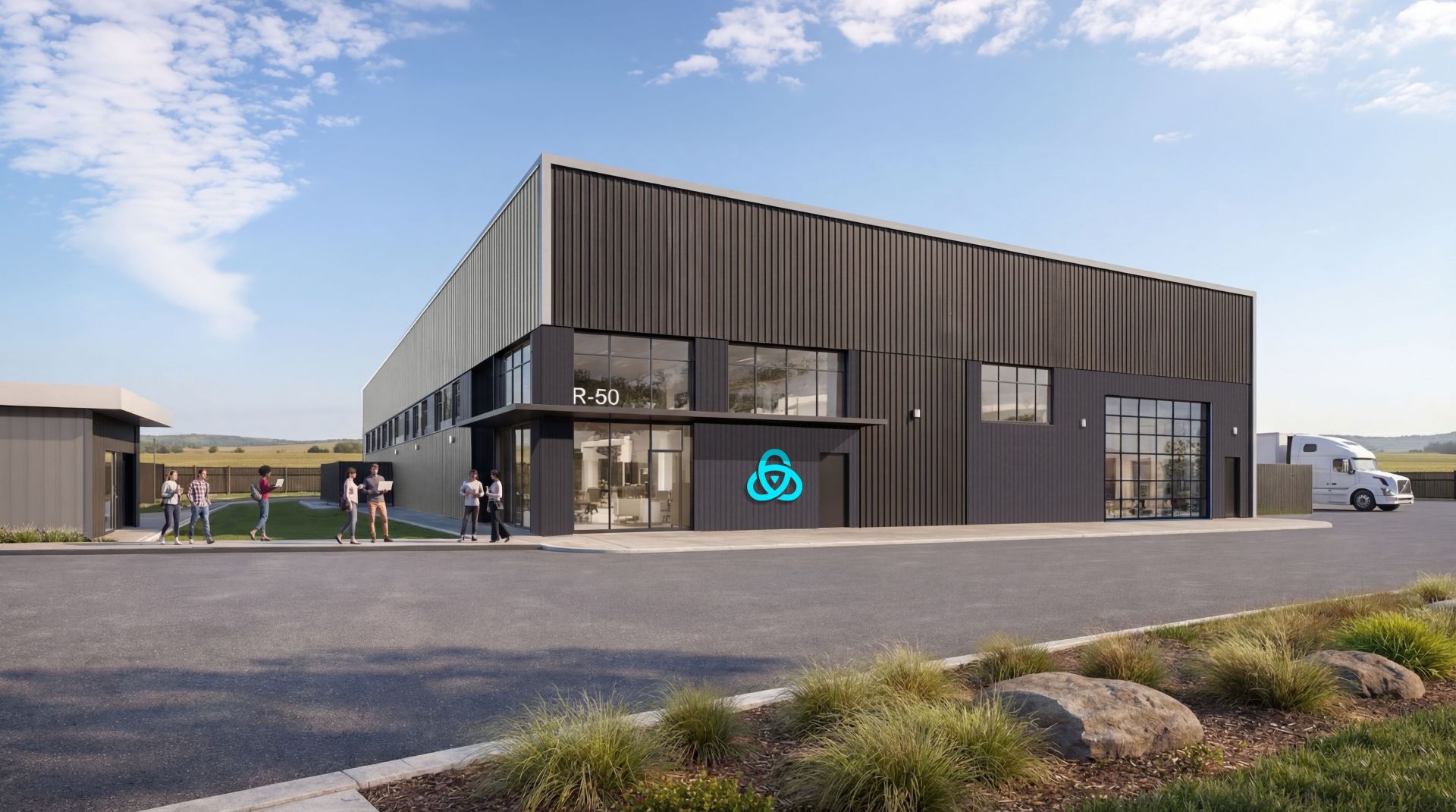
Artist’s concept of Radiant’s R-50 facility in Oak Ridge, Tenn. (Image: Radiant)
The Nuclear Regulatory Commission has accepted Radiant Industries’ 10 CFR Part 70 license application for its R-50 microreactor production facility in Oak Ridge, Tenn., and will launch an expedited review that it is aiming to complete within eight months.
According to NRC documents, the agency expects to complete its review of the license application by December 18, 2026. The timeline is described as “accelerated” in the NRC announcement—about 55 percent faster than the typical 18 months for Part 70 application reviews.
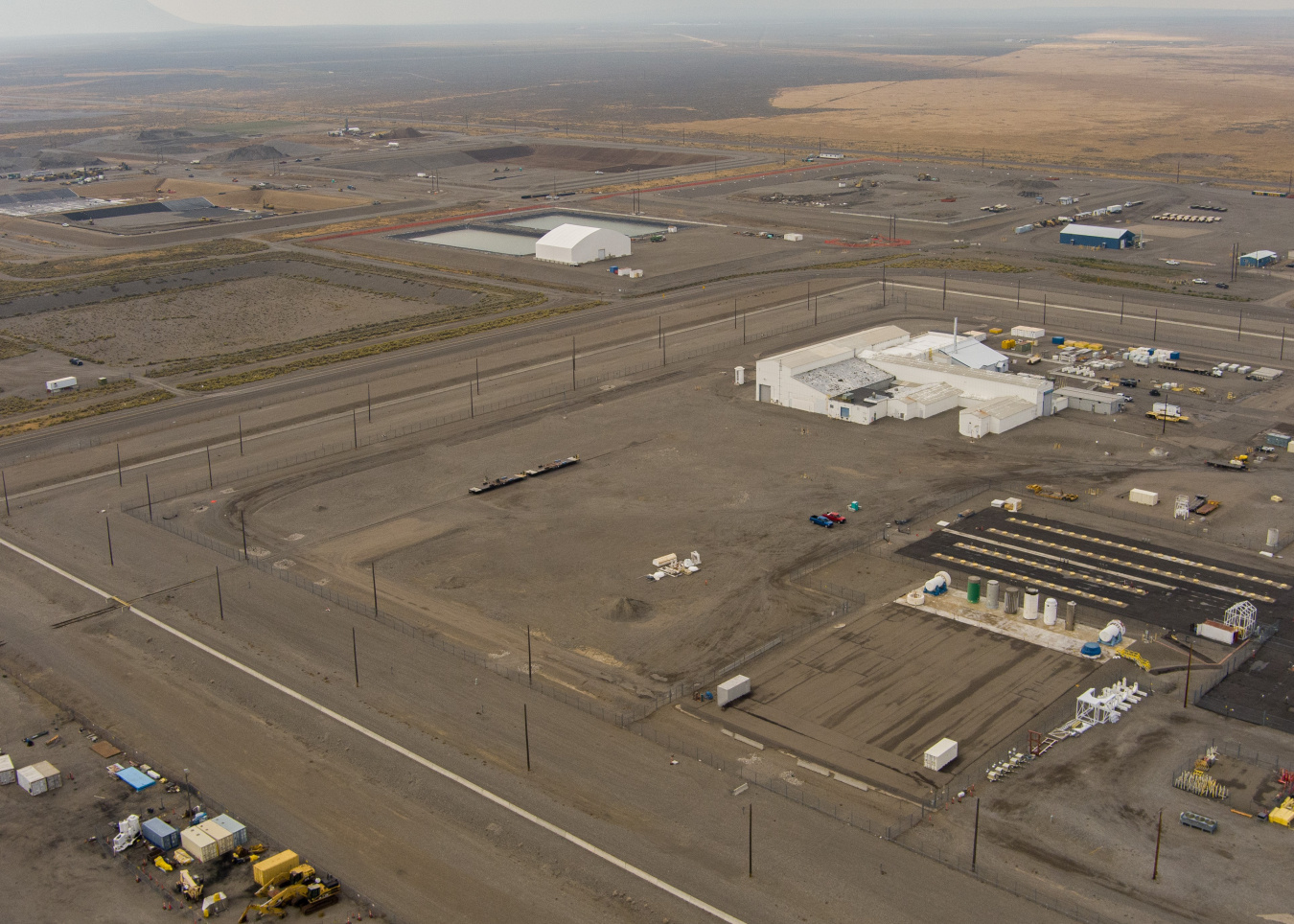
The Idaho Cleanup Project is scheduled to construct an estimated 15,000-square-foot staging facility at INTEC, shown above, to store overpacked spent fuel. (Photo: DOE)
The Department of Energy’s Office of Environmental Management has announced that its Idaho Cleanup Project (ICP) recently received department approval for the conceptual design for a spent nuclear fuel staging facility project at Idaho National Laboratory.
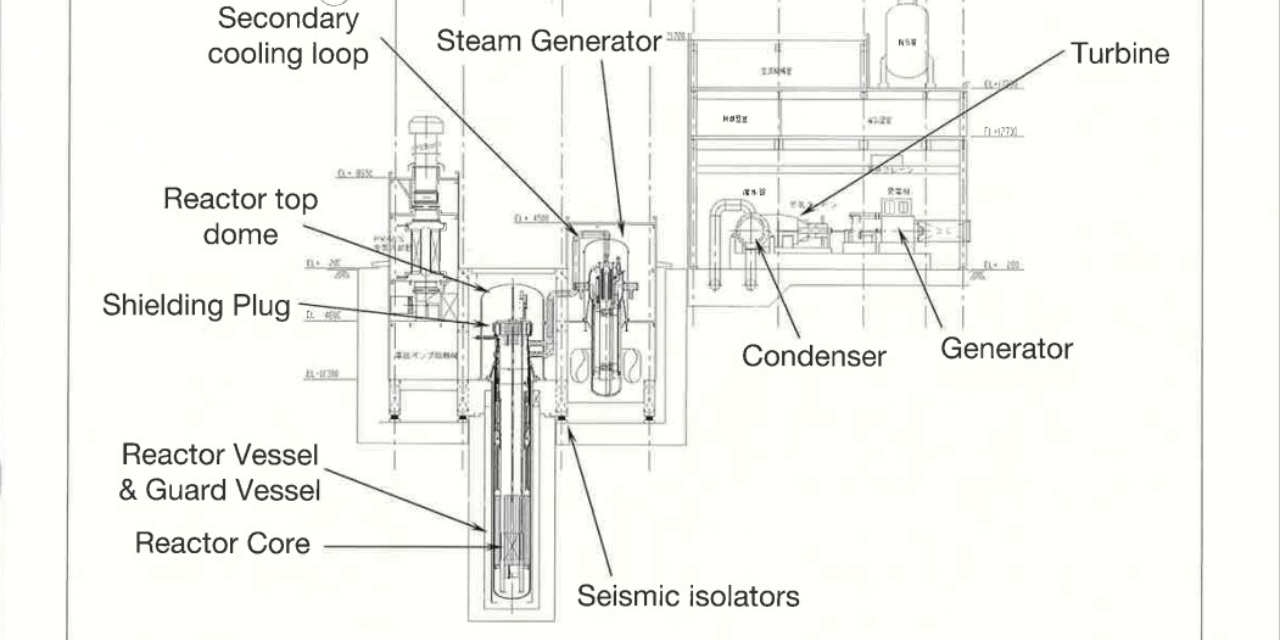
A diagram of Toshiba’s 4S sodium-cooled reactor, as published in Nuclear News in 2005. (Source: NN, Aug. 2005, p. 51)
Today, commercial microreactors are common in the marketplace of nuclear ideas. Dozens of companies are vying for their designs to reach scaled deployment to meet surging energy demand.
However, the term “microreactor” didn’t appear in Nuclear News until 2019, when the Department of Defense popularized it (in a nuclear context) in the early days of what would become Project Pele. Even before then, however, all the way back in 2005, Toshiba was developing the 4S (Super-Safe, Small, and Simple), a 30-MWt, pool-type reactor designed for remote locations with small grids. Once sealed and delivered, the reactor would run for 30 years with no refueling. If the word “microreactor” had been in use then, the 4S would certainly have been categorized as such.
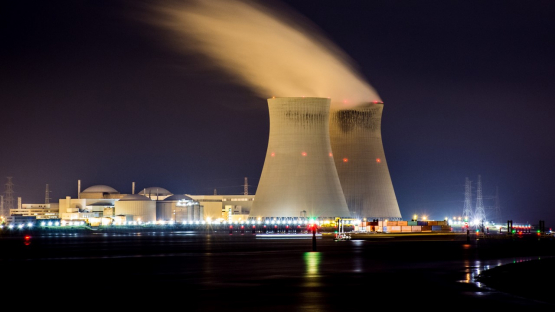
Belgium's Doel nuclear power plant. (Photo: N. Hippert/IAEA)
The Belgian government is looking to take control of all seven nuclear reactors in the country in an effort to revitalize a domestic nuclear energy sector that once looked ready to disappear.
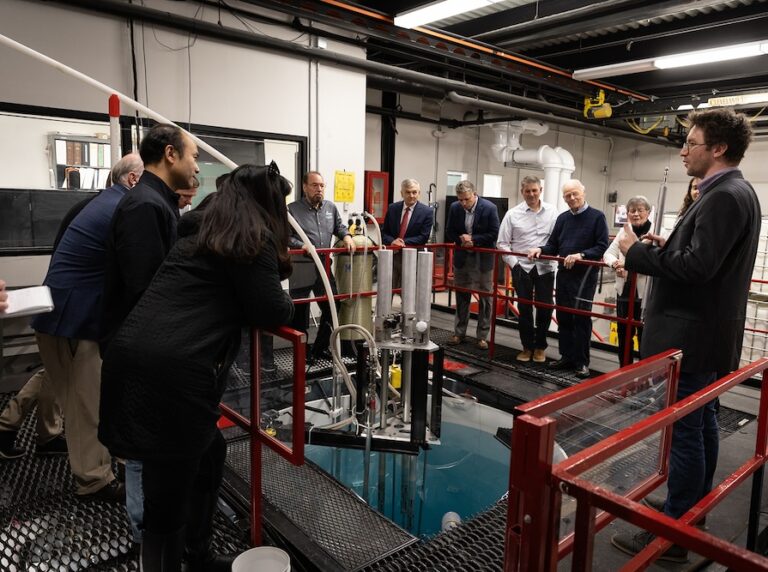
Reactor manager Ted Goodell, right, gives a tour of the University of Utah’s TRIGA reactor. (Photo: University of Utah)
The University of Utah announced that it will be producing electricity with its TRIGA reactor for the first time this summer. The project is in collaboration with Elemental Nuclear Energy, and the electricity will be used to power a “mini AI data center.”
In nuclear facilities, obsolescence is inevitable. What varies is how organizations respond.
System modifications are often treated as the default solution. But in many cases, the problem can be addressed more directly, avoiding unnecessary engineering effort, extended timelines, and significant cost.
Researchers at PNNL test different chemical compositions to develop AI-driven models that help design glass with the highest waste content possible. (Photo: Andrea Starr/PNNL)
Researchers at Pacific Northwest National Laboratory are exploring methods of using artificial intelligence and machine learning to better optimize formulas for stabilizing low-activity radioactive waste in glass through the vitrification process.
The work is helping inform waste vitrification activities at the Department of Energy’s Hanford Site in Washington state. The DOE is currently commissioning the Low Activity Waste Facility at Hanford’s Waste Treatment and Immobilization Plant (WTP), which will be used to vitrify portions of the site’s nearly 56 million gallons of radioactive and chemical waste.
An illustration depicting computer graphics of the plasma vessel (shown in pink) and superconducting magnet coils of the Wendelstein 7-X fusion device. (Image: IPP)
The Department of Energy announced a 10-year project agreement with the Max Planck Institute for Plasma Physics (IPP) to advance research on the Wendelstein 7-X stellarator.
“This agreement reflects our deep commitment to international partnerships that accelerate progress in fusion energy,” said Jean Paul Allain, director of the Office of Fusion at the DOE. “The collaboration between the United States and IPP on W7-X has been extraordinarily productive for more than 20 years already, and this agreement pushes us forward into the next decade and beyond.”
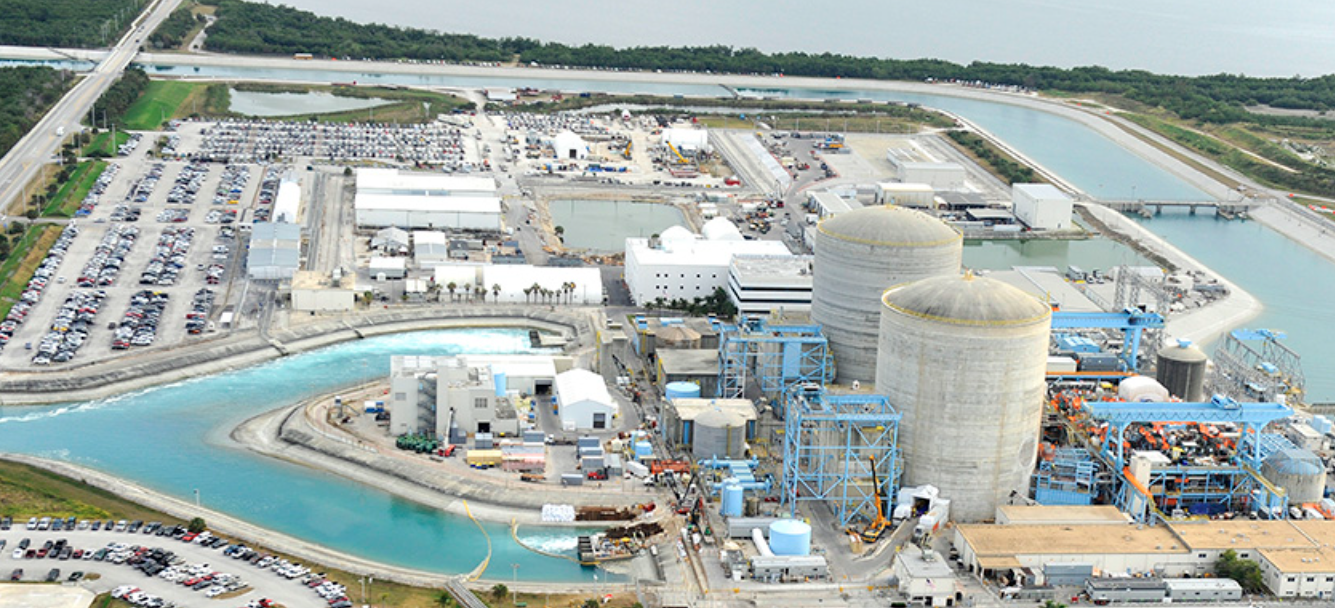
St. Lucie nuclear power plant. (Photo: FPL)
The Nuclear Regulatory Commission has approved subsequent license renewals for St. Lucie Units 1 and 2, extending the operating licenses for the pressurized water reactors by another 20 years.
Tuesday’s approval means that the 1,062-MWe Unit 1 and 1,074-MWe Unit 2 can now operate until March 1, 2056, and April 6, 2063, respectively. Unit 1 commenced operations in 1976 and Unit 2 in 1983. With the original 40-year operating licenses and first 20-year renewals, these second 20-year renewals bring the reactors’ lifespan to 80 years.
Oklo Aurora Powerhouse. (Image: Oklo)
Oklo announced a new partnership with Los Alamos National Laboratory and Nvidia to perform AI-enabled research on nuclear infrastructure and fuel.
The partnership is focused on exploring plutonium-bearing fuels, including the development of science-based AI models to support fuel validation and materials science and fabrication research and development. The team will also be exploring the development of nuclear-powered AI computing centers at LANL.


 Here is a recap of recent industry happenings: