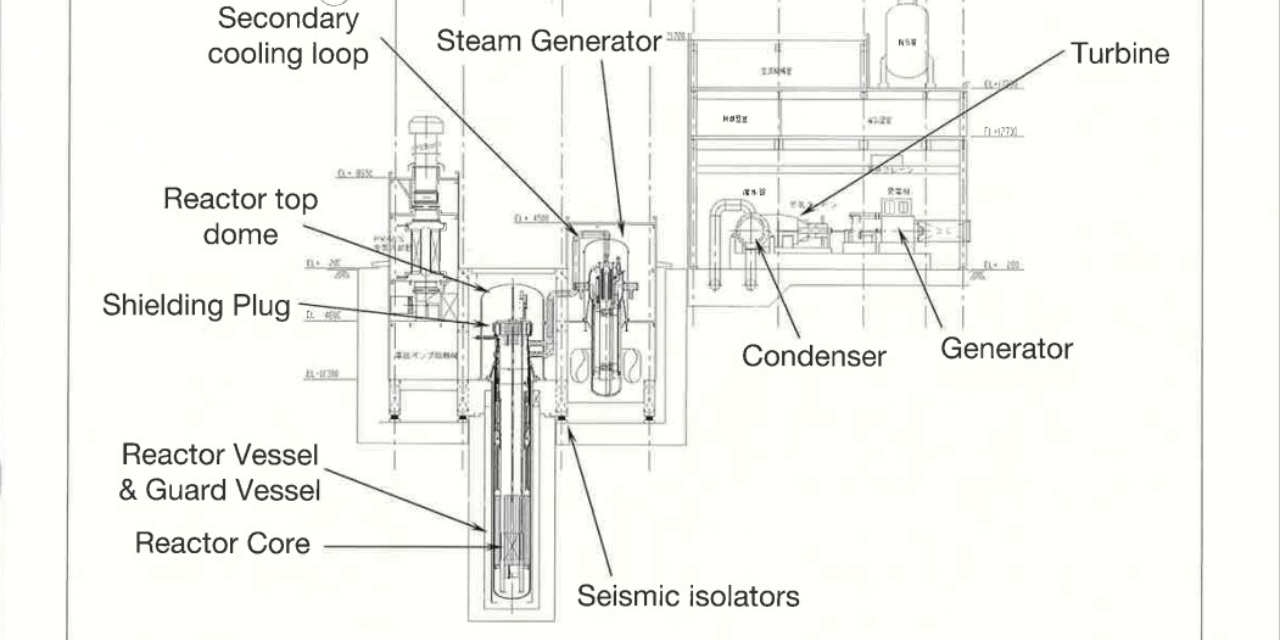
A diagram of Toshiba’s 4S sodium-cooled reactor, as published in Nuclear News in 2005. (Source: NN, Aug. 2005, p. 51)
Today, commercial microreactors are common in the marketplace of nuclear ideas. Dozens of companies are vying for their designs to reach scaled deployment to meet surging energy demand.
However, the term “microreactor” didn’t appear in Nuclear News until 2019, when the Department of Defense popularized it (in a nuclear context) in the early days of what would become Project Pele. Even before then, however, all the way back in 2005, Toshiba was developing the 4S (Super-Safe, Small, and Simple), a 30-MWt, pool-type reactor designed for remote locations with small grids. Once sealed and delivered, the reactor would run for 30 years with no refueling. If the word “microreactor” had been in use then, the 4S would certainly have been categorized as such.
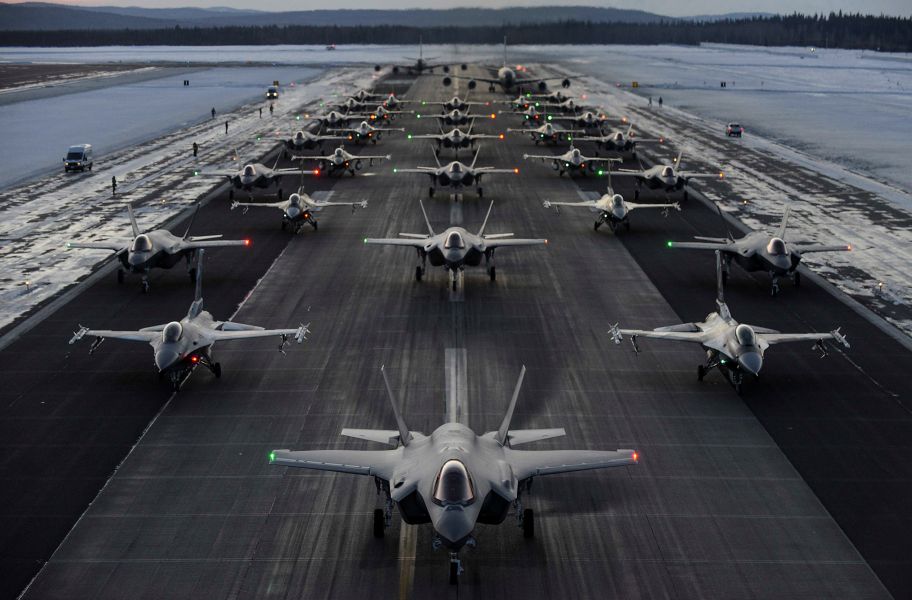
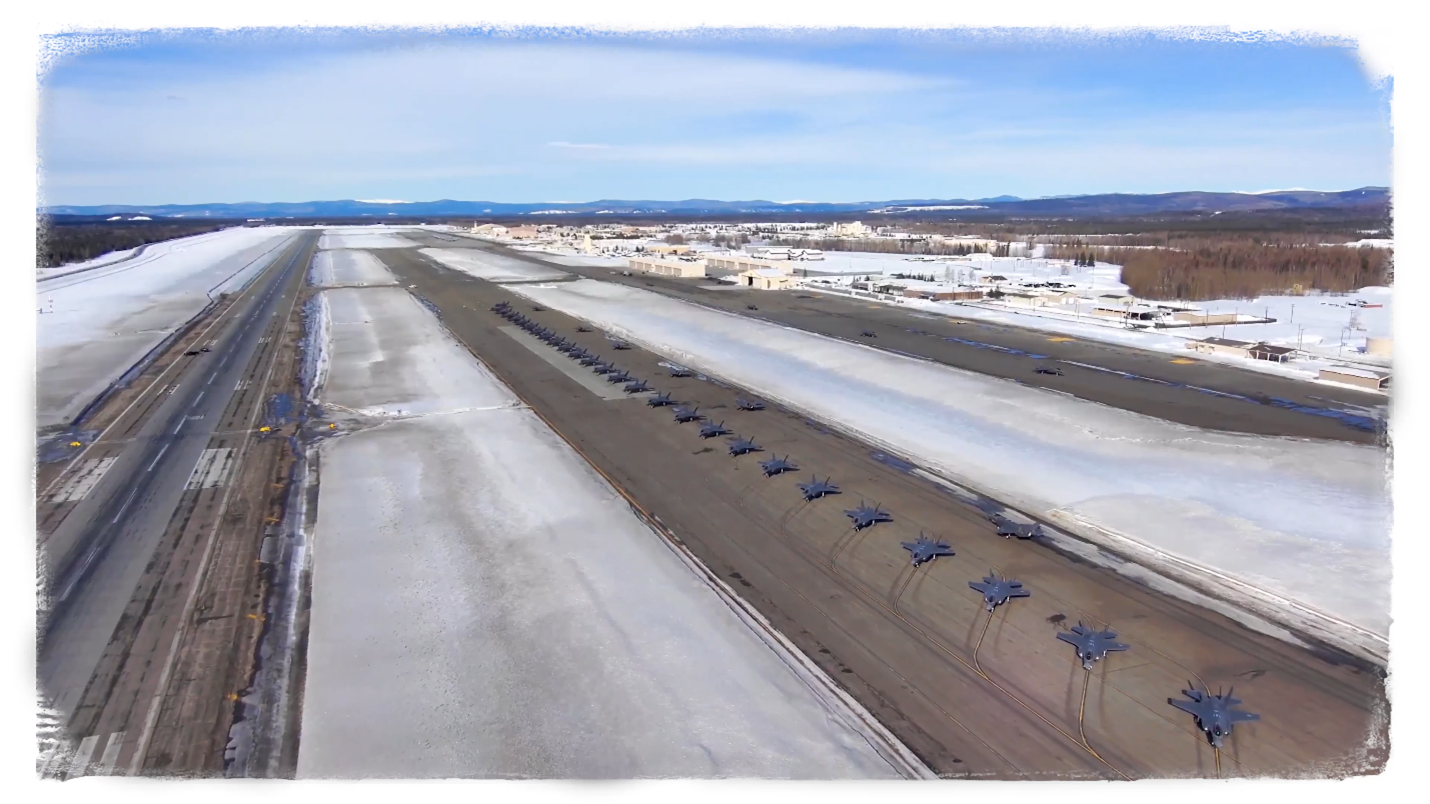
More than 30 aircraft perform an “elephant walk” at Eielson Air Force Base in Alaska. (Photo: Eielson Air Force Base)
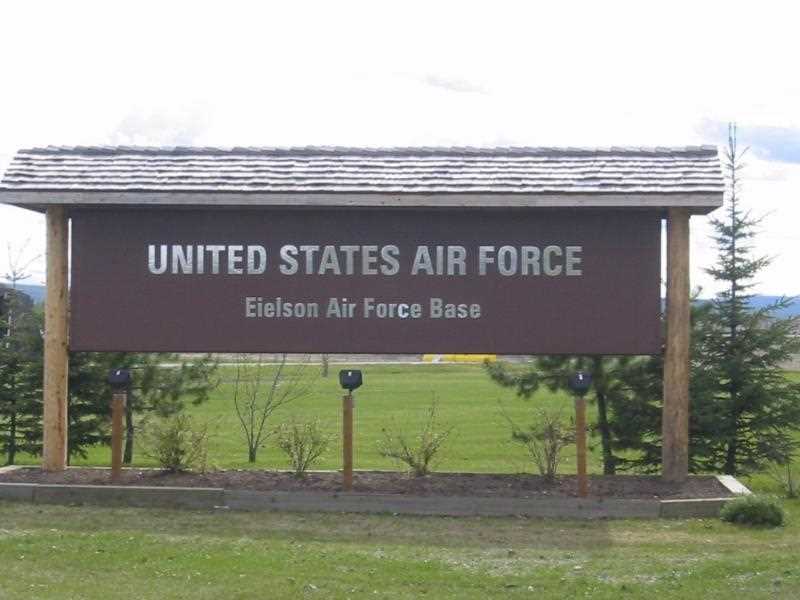
The U.S. Air Force wants to hear from companies that could be interested in deploying small nuclear reactors at its bases.
The request for information posted Wednesday intends to assist the federal government in identifying potential developers and “understanding the company’s capability to design, license, fuel, construct, and deploy Small, Micro, or Modular Reactor (SMR) technologies in compliance with applicable regulatory, safety, environmental, and security requirements.”
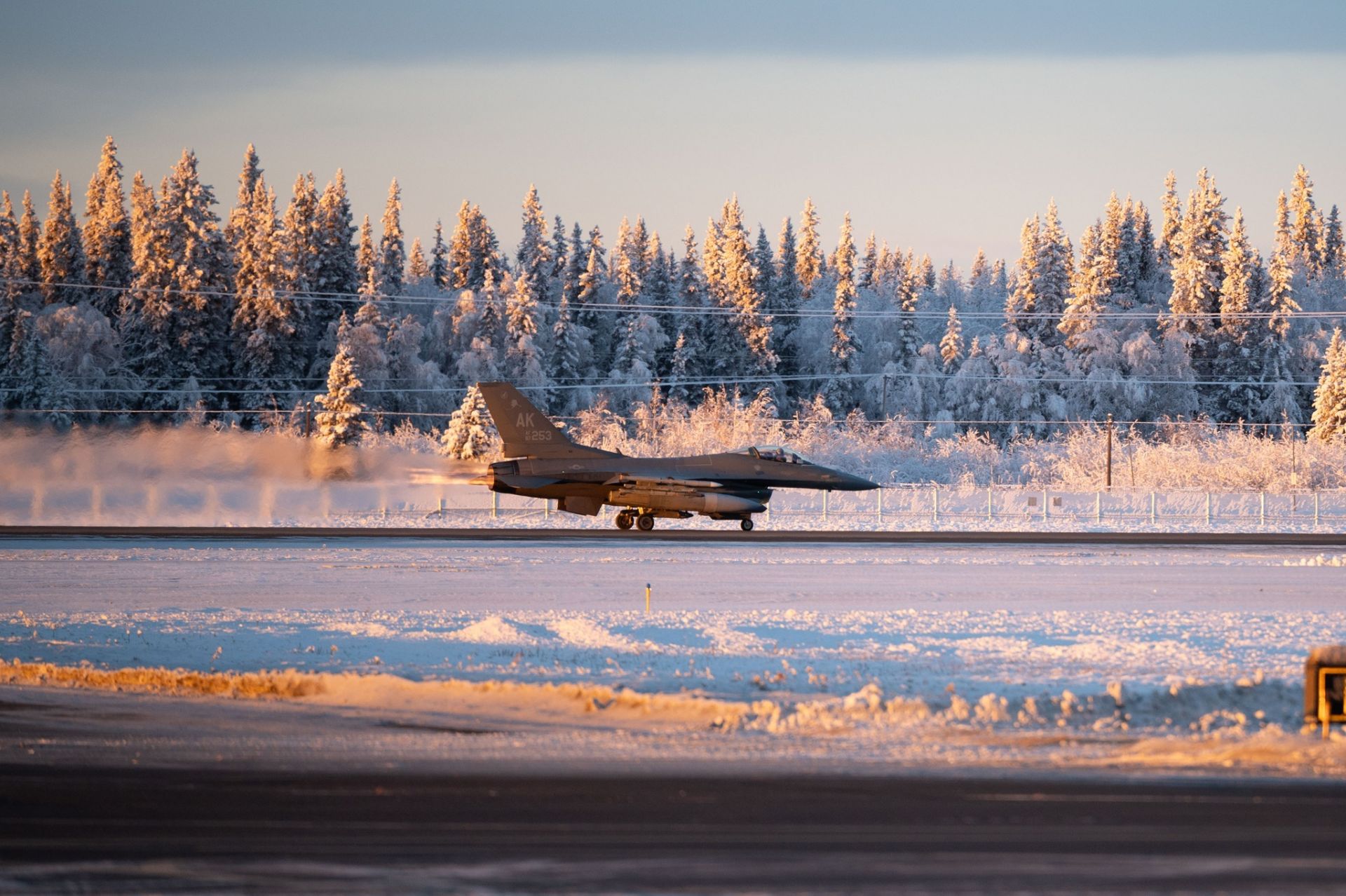
A fighter jet at Eielson Air Force Base. (Photo: Eielson Air Force Base)
Discussions and actions on nuclear energy have penetrated several state capitol buildings, congressional hearings, and industry gatherings across the United States this month, including in Alaska, Connecticut, Louisiana, Massachusetts, Minnesota, and New York.
Eielson Air Force Base is shown in this screen grab from a video hosted on the base’s website. (Image: DOD)
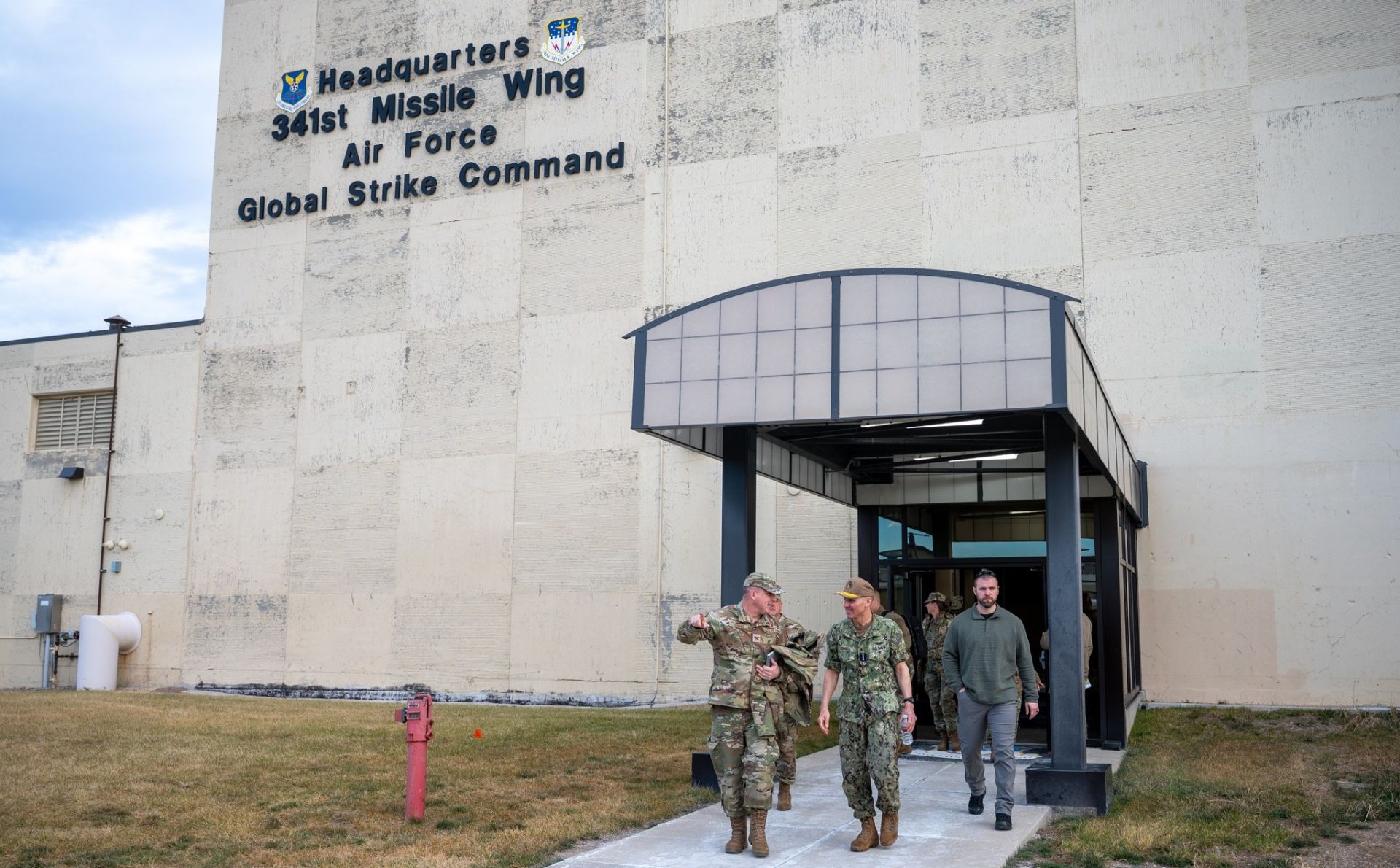
Eielson Air Force Base in central Alaska has been the preferred location to demonstrate the benefits of microreactors to the U.S. Air Force—and by extension the Defense Department—since 2018. Now, a protracted solicitation process is nearing an end, and the Air Force and the Defense Logistics Agency Energy (DLA Energy) expect to announce a final procurement decision by the end of the summer—or about one year after Oklo Inc. announced that it had been tentatively selected to supply a microreactor under a 30-year power purchase agreement.
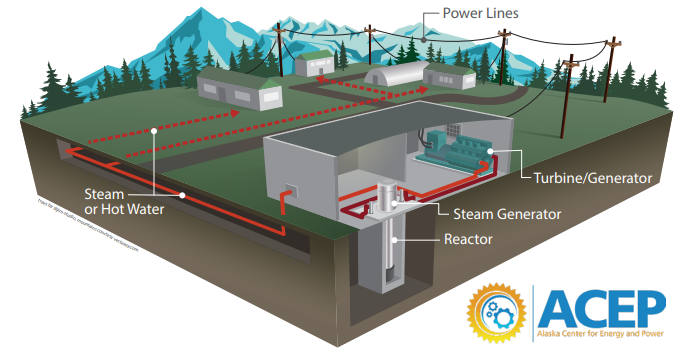
This image is described by the Alaska Center for Energy and Power as a conceptual layout of a generic small modular reactor or microreactor. (Image: ACEP)
Alaska Gov. Mike Dunleavy (R.) introduced “An act relating to microreactors” (SB 177) in the Alaska state legislature on February 1 that would modify existing state law on nuclear energy by specifying that microreactors are not subject to certain nuclear reactor siting and permitting regulations in Alaska. The bill defines a microreactor as an advanced nuclear fission reactor that would be capable of generating no more than 50 MWe.