Human risk factors
Human factors engineering and risk analysis are part of every instrumentation and control upgrade and new reactor plan—from design and licensing to implementation and operation—and applications continue to evolve.

A message from Westinghouse Electric Company Parts Business
Future-Ready Motor Generator Set Control Power Cabinets
Human factors engineering and risk analysis are part of every instrumentation and control upgrade and new reactor plan—from design and licensing to implementation and operation—and applications continue to evolve.

Deploying new reactors on the scale required to meet U.S. and international zero-carbon goals by 2050 will require rapid growth in the nuclear workforce, as American Nuclear Society executive director/chief executive officer Craig Piercy emphasized during his opening plenary address at the ANS Annual Meeting on June 12. Piercy pointed to the Department of Energy’s Pathways to Commercial Liftoff: Advanced Nuclear, which estimates that an additional 375,000 people will be required to construct and operate 200 GW of advanced nuclear reactors by 2050—a dramatic increase from about 100,000 today. Where will those engineers, constructors, and operators be found? The 38 nations of the Organisation for Economic Co-operation and Development agreed last week to a new recommendation from the OECD’s Nuclear Energy Agency (NEA) that points to one way to increase the nuclear workforce: increase the number of women participating in the workforce.

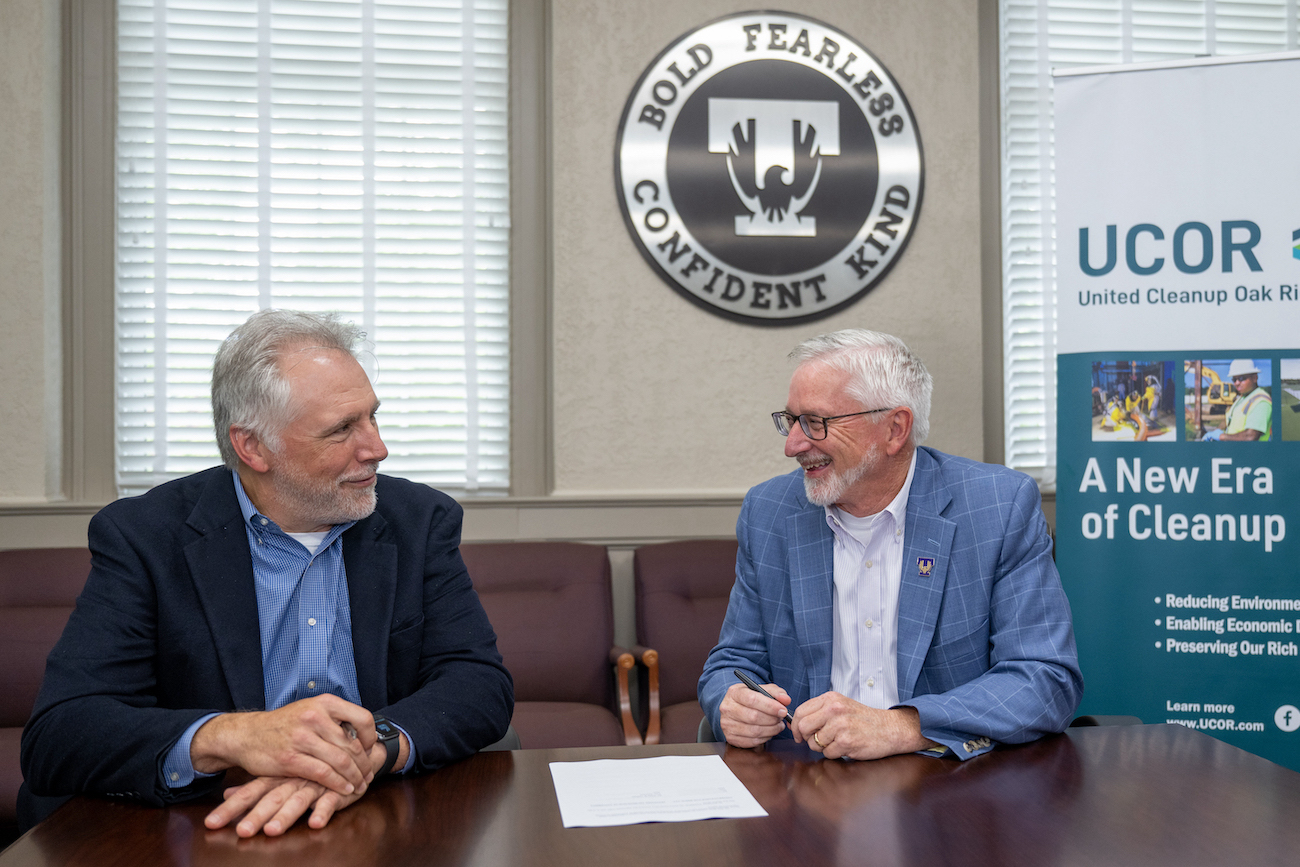
United Cleanup Oak Ridge (UCOR), the Department of Energy’s lead environmental cleanup contractor at the Oak Ridge Reservation in Tennessee, has formed a new partnership with Tennessee Tech University focused on building a pipeline of highly skilled workers for cleanup work at the site. Working with UCOR, the university’s College of Engineering is to launch a new nuclear engineering degree program beginning in fall 2024.
For two decades, J. J. Keller & Associates has been honoring safety professionals in North America. Once again, the Wisconsin-based regulatory, safety, and compliance solutions company is accepting applications and nominations for its annual Safety Professional of the Year (SPOTY) Awards. These awards recognize environmental health and safety professionals who “go above and beyond their daily duties to build a culture and vision for safety and achieve excellence in safety for their companies,” according to the company.
Applications and nominations can be submitted through July 31 at 5:00 p.m. (CST). Safety professionals who are legal residents of the United States or Canada may apply for themselves, or they may be nominated by other individuals. All official rules for participation are available on the J. J. Keller website.

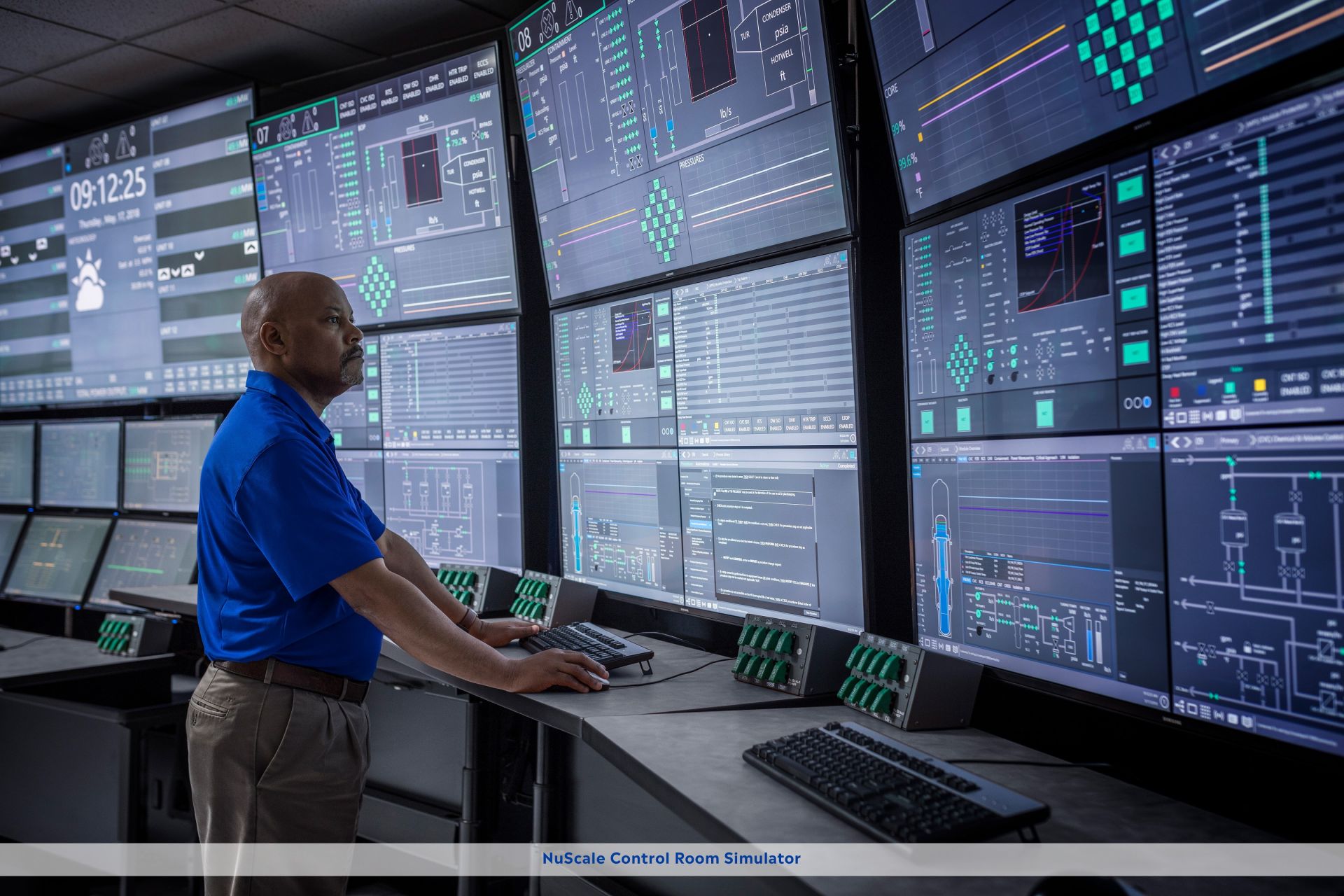
NuScale Power has signed an agreement with training and consulting firm Accelerant Solutions for the development and implementation of a reactor operator training program, the Portland, Ore.–based small modular reactor developer announced on June 7.
The Department of Energy’s Office of Environmental Management has launched the EM Career Acquisition Program (ECAP) to build a pipeline of trained, experienced acquisition professionals to oversee the procurement and management of cleanup contracts.

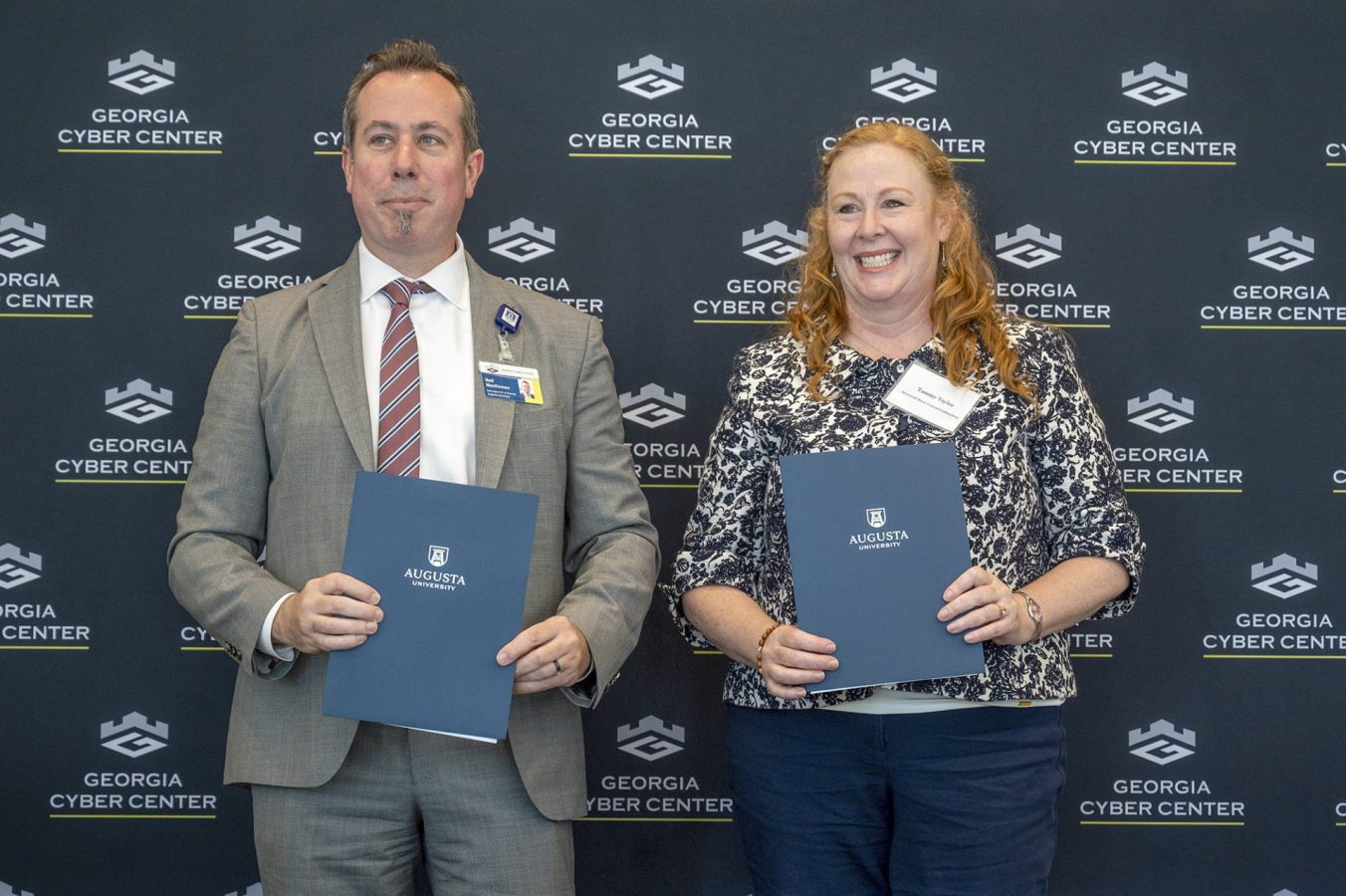
Savannah River National Laboratory and Augusta University have announced a new agreement that formalizes a long-standing partnership and expands on a shared mission to address global security issues.

Westinghouse Electric Company has signed an agreement with engineering firm Tecnatom and training/consulting services provider Accelerant Solutions to launch a nuclear training program for utilities in the United States and Canada. (Westinghouse completed a 50 percent acquisition of Spain-based Tecnatom in March of last year.)
The program—the Nuclear Excellence Academy (NEXA)—will combine Westinghouse and Accelerant Solutions’ industry expertise with Tecnatom’s digital products and services to provide in-person, digital, and on-demand training for nuclear personnel, according to an April 18 Westinghouse announcement.

Savannah River Nuclear Solutions, the managing and operating contractor at the Department of Energy’s Savannah River Site near Aiken, S.C., was recognized by the American Heart Association for its commitments to employee health and well-being. The company received a gold level, as measured by the association’s 2022 Workforce Well-being Scorecard.

More than 300 employees from the Department of Energy's Office of Environmental Management (EM) have recently retired, resulting in a large amount of job vacancies across the cleanup program, according to the DOE.
EM’s Workforce Management Office is implementing recruitment efforts to fill the vacancies with college graduates, early career professionals, mid-career candidates, and seasoned veterans.
According to the DOE, "The open positions offer opportunities across many different disciplines, including engineering, science, business, management, safety and information technology."

Two Department of Energy sites recently announced training partnerships with local technical and community colleges designed to offer students hands-on work experience while building a workforce pipeline to waste management jobs.

Jasmina Vujic
Nuclear energy is uniquely poised to create reliable, carbon-free, domestically produced baseload electricity to meet our rising energy demands. It must be a central part of our energy mix in order to have sustainable development, competitiveness, and independence as global energy demand continues to grow. There is also a growing need to address national security challenges like nuclear proliferation resistance and nuclear threat reduction. The fastest and most efficient way to realize the full potential of nuclear power and address nuclear security challenges is to draw on the strengths of our universities, national laboratories, and industry.
U.S. universities are well equipped to be the preeminent providers of nuclear science and engineering education at the undergraduate, graduate, and postgraduate levels and to perform world-class research across all nuclear science and engineering disciplines, utilizing the resources available across the higher education network and through unique national laboratory partnerships.

Nick Touran
I got into nuclear engineering when I realized I could apply my passion for computers to the critical human challenge of energy. After training, I spent the past 13-plus years building automated and integrated engineering analysis tools for the efficient design/licensing of advanced nuclear reactors. Given what I’ve seen, I expect that modern high-level programming languages and data systems will continue to enable new efficiencies in analysis, configuration management, work planning, procurement, training, compliance, and execution in operations. The magnitude of potential impact laid out, for example, in Information Technology for Nuclear Power Plant Configuration Management (IAEA-TECDOC-1651) is well within reach. These impacts are identical to those promised by digital twins. Achieving these goals will require more information workers in the offices of nuclear vendors and operators to develop sophisticated skills in software engineering, database administration, statistics, and business analytics. Additionally, decision makers must be better trained to best understand and choose specialized IT systems and software.
The United States is supporting a junior professional officer (JPO) position in the International Atomic Energy Association to work on spent nuclear fuel management. The role is for an associate project officer-spent fuel management, who will be based in Vienna, Austria, and work under the direct supervision of the technical leader of the spent fuel management team in the Division of Nuclear Fuel Cycle and Waste Technology.

The United Kingdom’s nuclear industry is expanding, with the U.K. government committed to supporting the build of more civil nuclear power plants (deployments up to 24 GW by 2050)1 while also undertaking large-scale decommissioning work in parallel.2 The defense sector is experiencing growth with the decommissioning, operation, and new build of submarines, plus managing the U.K.’s deterrent.3 Although the civil and defense programs are separate, they draw on the same group of skills and people.

Steven Arndt
president@ans.org
One of the duties of the ANS president is to visit with American Nuclear Society student sections. As some of you know, I have been doing this both in person and virtually. Although meeting via Zoom and other platforms is easier in terms of scheduling and travel, there is nothing like being able to interact face to face. Visiting student sections in person has been the highlight of my time as president. As I have stated on several occasions, the enthusiasm and excitement I have seen among the nuclear engineering students in the U.S. is nothing short of exhilarating!
When we think of workforce planning, those of us who have had long associations with universities naturally think first of undergraduate and graduate nuclear engineering programs at our universities, but this is of course only a part of the overall solution. The first—and in many ways the most important—part of workforce development is getting our nation’s youth excited about nuclear science and technology.

Craig Piercy
cpiercy@ans.org
This month’s Nuclear News focuses on the challenges of building and maintaining a strong, productive nuclear technology workforce. While my sense is that U.S. nuclear is in significant growth mode, I’ve made a habit of asking our Utility Working Conference and Winter Meeting exhibitors, “What is the most significant challenge you face today?” The answer is almost always some form of “finding good talent.” Conversely, ask any nuclear engineering student about their career prospects, and you will likely get a confident response, so it seems that multiple offers are becoming the norm in the nuclear tech employment market.
Of course, empirical data is harder to come by. A 2019 study by the National Association of State Energy Officials and the Energy Futures Initiative found 60,916 workers employed in U.S. nuclear power generation, with another 9,406 employed in the nuclear fuels sector. But we still lack good, publicly available numbers for national labs, universities, and suppliers, as well as any job focused on nonnuclear applications of nuclear technology.
A Nuclear News interview with Kostas Dovas and Darren Stiles
The nuclear community is undergoing a moment of unprecedented interest and growth not seen in decades. The passage of the bipartisan Infrastructure Investment and Jobs Act and the Inflation Reduction Act are providing a multitude of new funding opportunities for the nuclear community, and not just the current fleet. A mix of technologies and reactor types are being evaluated and deployed, with Vogtle Units 3 and 4 coming on line later this year, the Advanced Reactor Demonstration Projects of X-energy and TerraPower, and NuScale’s work with Utah Associated Municipal Power Systems to build a first-of-a-kind small modular reactor, making this is an exciting time to join the nuclear workforce.