House, Senate bills aim to improve nuclear decommissioning and waste disposal
Two bills were introduced in the last several weeks aiming to address nuclear power at the end of life—decommissioning plants and recycling used fuel.
Nuclear projects demand precision, trust, and proven expertise. Element supports utilities, manufacturers, and engineering teams with testing and qualification services that keep systems safe, compliant, and ready to perform—delivering data-driven insight to meet regulations and extend asset life.
Two bills were introduced in the last several weeks aiming to address nuclear power at the end of life—decommissioning plants and recycling used fuel.

Craig Piercy
cpiercy@ans.org
While most big journeys begin with a clear objective, they rarely start with an exact knowledge of the route. When commissioning the Lewis and Clark expedition in 1803, President Thomas Jefferson didn’t provide specific “turn right at the big mountain” directions to the Corps of Discovery. He gave goal-oriented instructions: explore the Missouri River, find its source, search for a transcontinental water route to the Pacific, and build scientific and cultural knowledge along the way.
Jefferson left it up to Lewis and Clark to turn his broad, geopolitically motivated guidance into gritty reality.
Similarly, U.S. nuclear policy has begun a journey toward closing the U.S. nuclear fuel cycle. There is a clear signal of support for recycling from the Trump administration, along with growing bipartisan excitement in Congress. Yet the precise path remains unclear.

Massachusetts Gov. Maura Healey wants to accelerate the state’s leadership in both fission and fusion, and earlier this month asked the University of Massachusetts–Lowell to develop road maps to support research, manufacturing, and deployment of advanced nuclear and fusion energy in the state to “affordably, reliably, and sustainably” meet growing electricity demand in New England.
Russia’s lower house of Parliament, the State Duma, approved a measure to withdraw from a 25-year-old agreement with the United States to cut back on the leftover plutonium from Cold War–era nuclear weapons.
During a Senate Environment and Public Works Committee hearing today, Ho Nieh, President Donald Trump’s nominee to serve as a commissioner at the Nuclear Regulatory Commission, was urged to maintain the agency’s independence regardless of political pressure from the Trump administration.

Hash Hashemian
president@ans.org
The theme of this year’s Winter Conference—already less than two months away—is “Building the Nuclear Century.” This focus reflects one of my chief goals during my presidency: streamlining the deployment of new power plants. However, I want to emphasize that this call to build extends far beyond a sole focus on new commercial reactors. As an industry, it’s critical that we keep momentum going across every area that supports the nuclear community.
So, while new reactor announcements are undeniably exciting and a logical benchmark to see the positive progress we’re making, we must continue to ensure that there is space to elevate, focus on, and celebrate crucial work in the fields of isotope production, waste management, public outreach, workforce training, and beyond. The call to build is a call to innovate and collaborate in every sector. It’s a call we need to follow.
The Department of Energy and the Nuclear Regulatory Commission will furlough thousands of employees and operate at reduced capacity under a government shutdown that started after midnight on October 1 following a failed congressional vote on a short-term funding bill.
Connecticut has become the 40th state in the union to sign an agreement with the Nuclear Regulatory Commission that gives the state regulatory authority to manage certain radioactive materials within its borders.
Former Vice President Al Gore has a global reputation as a champion of environmental protection. He has also been known as an opponent of nuclear energy. However, his opinion on nuclear seems to be changing, as highlighted in the recent Axios article, “How AI is Helping Al Gore Warm Up to Nuclear Power.”

Last week saw a wave of U.S. and U.K. nuclear companies and organizations forging new transatlantic ties, with even the American Nuclear Society and the U.K.’s Nuclear Institute reaching a new agreement.

Williams

Garrish
Theodore “Ted” Garrish is the Department of Energy’s assistant secretary for nuclear energy and Brandon Williams is the DOE’s undersecretary for nuclear security and administrator of the National Nuclear Security Administration following their confirmations yesterday by the U.S. Senate.
While awaiting confirmation, Garrish has been serving since January as senior advisor to Energy Secretary Chris Wright. He assumes the duties of NE-1 that Michael Goff has held as interim assistant secretary since Kathryn Huff stepped down from the NE-1 role in May 2024. The post of acting NNSA administrator has been held by Teresa Robbins since January 20; Jill Hruby held the post from 2021 to 2025.
Senate confirms Ted Garrish as Assistant Secretary of Energy at the U.S. Department of Energy’s Office of Nuclear Energy.
Washington, D.C. — The American Nuclear Society (ANS) applauds the U.S. Senate's confirmation of Theodore “Ted” Garrish as Assistant Secretary for Nuclear Energy at the U.S. Department of Energy (DOE).
“On behalf of over 11,000 professionals in the fields of nuclear science and technology, the American Nuclear Society congratulates Mr. Garrish on being confirmed by the Senate to once again lead the DOE Office of Nuclear Energy,” said ANS President H.M. "Hash" Hashemian.

President Trump will arrive in the United Kingdom this week for a state visit that promises to include the usual pomp and ceremony alongside the signing of a landmark new agreement on U.S.-U.K. nuclear collaboration.

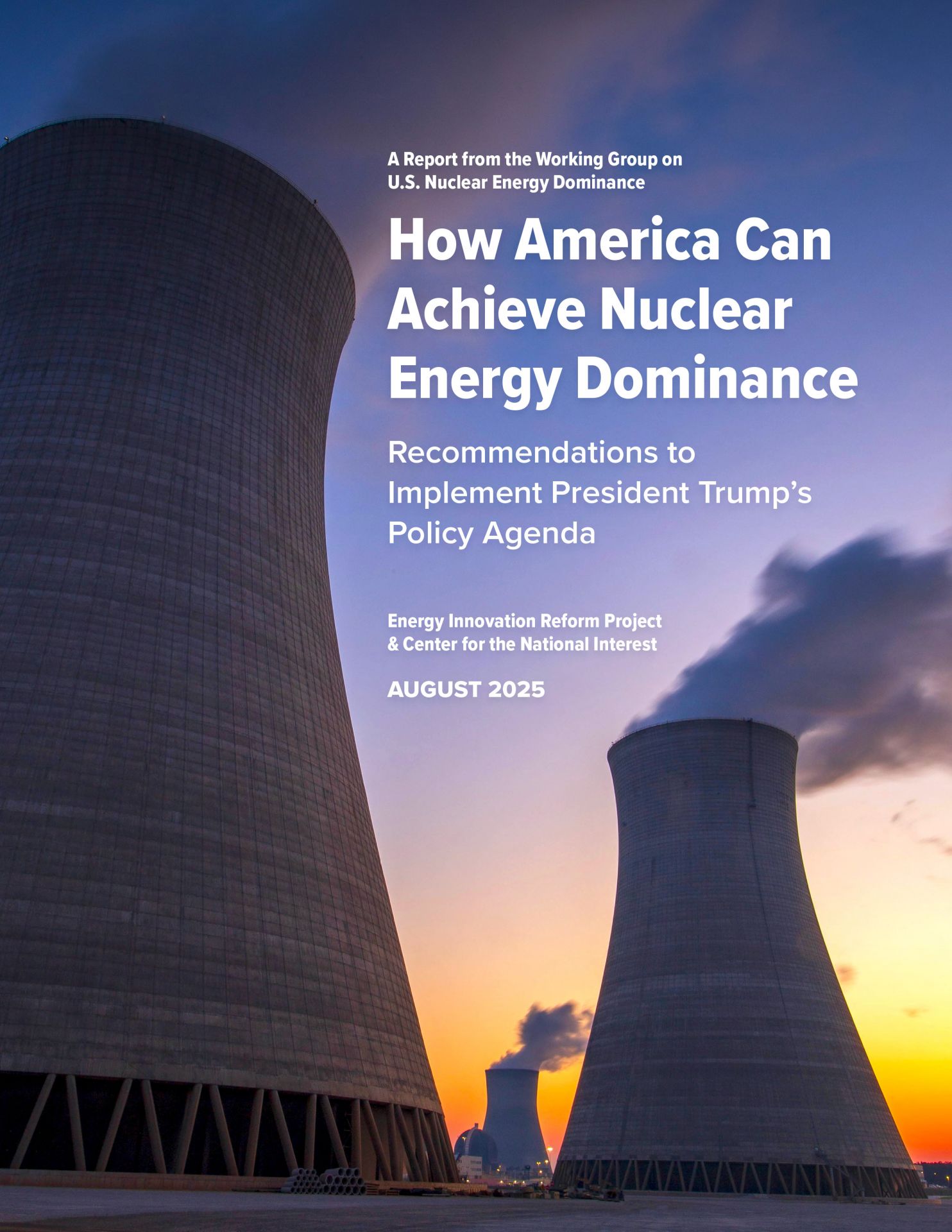
The new report “How America Can Achieve Nuclear Energy Dominance,” from the Working Group on U.S. Nuclear Energy Dominance, outlines a plan of action for the Trump administration that includes deploying new nuclear reactors, developing domestic supply chains, promoting nuclear exports, reforming regulations, and developing the workforce.
Working group chair Todd Abrajano said, “We welcome the Trump administration’s bold moves to kick-start the U.S. nuclear energy sector, but we recognize that President Trump’s executive orders alone can’t achieve our goals.”
Despite being home to just one nuclear power plant, the 1,756-MWe Calvert Cliffs, Maryland is among the top producers of nuclear power in the country relative to its total generated power.
This is an energy strategy that Maryland Gov. Wes Moore recently said he plans to expand on, in part through his recent signing of the state’s Next Generation Energy Act, H.B. 1035.
As work progresses on the Department of Energy’s Nuclear Reactor Pilot Program, which will progress through DOE authorization rather than Nuclear Regulatory Commission licensing, three members of the House Committee on Energy and Commerce have sent a critical letter to Energy Secretary Chris Wright.
The letter demands “information about the DOE and its employees’ dealings with the NRC and its staff” and expresses concern that DOE staff has “broken the firewall” between the departments.
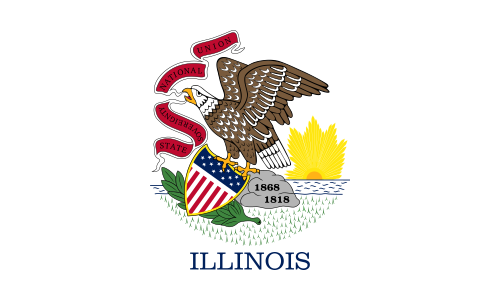
About two years ago, on August 11, 2023, Illinois Gov. J.B. Pritzker vetoed S.B. 76, a bill that would have lifted the state’s moratorium on new nuclear power plant construction. It was a reversal on his decidedly pronuclear stance; in 2021, he signed S.B. 2408, which supported Braidwood, Byron, and Dresden nuclear power plants with $694 million in state funding.

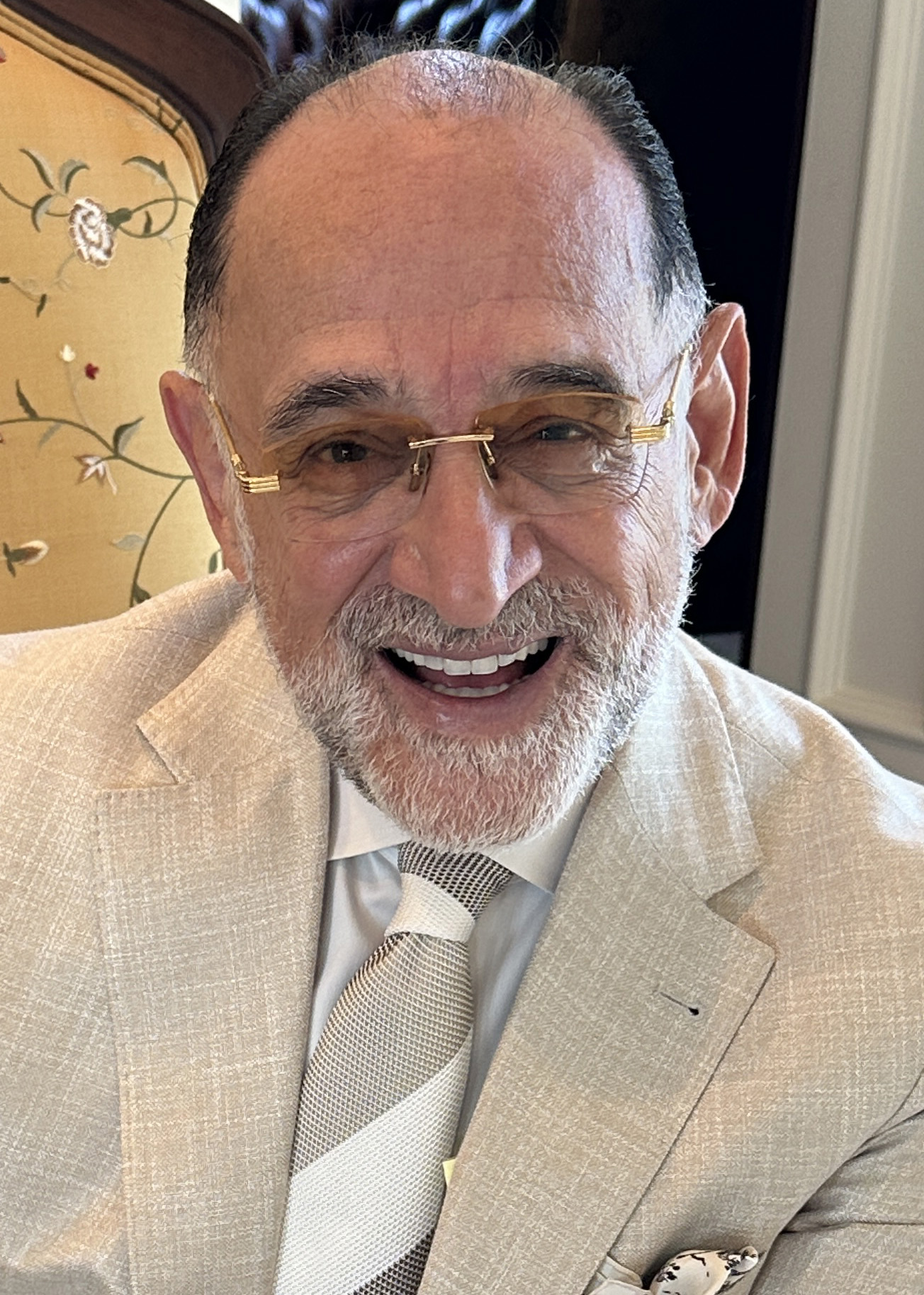
Hash Hashemian
president@ans.org
The 2025 ANS Annual Conference in Chicago was a powerful springboard to begin my term as president. With over 1,400 attendees, it was one of our most dynamic gatherings in recent memory—full of energy, ideas, and a shared commitment to advancing nuclear science and technology.
As we move forward, my focus is clear: to elevate the role of nuclear in environmental protection, national security, energy diversity, and grid stability. These priorities are not just strategic—they are essential to a cleaner, more resilient future.
The goals I laid out at the conclusion of the Board of Directors meeting in June are simple, but I am sure they will be effective in engaging our community.
One simple change to start is the move away from the term meetings—the American Nuclear Society now uses the term conferences to describe its two yearly flagship gatherings, to more appropriately reflect the more than 1,000 attendees that these events bring together.
The dust has settled: It’s been one month since President Trump signed H.R.1, the One Big Beautiful Bill Act, after a lengthy and contentious reconciliation process. As drafts of the bill evolved through committees, the House, and the Senate, the fate of federal support for nuclear energy projects was often obfuscated.

Caputo
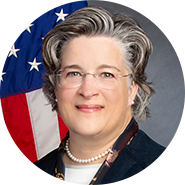
Commissioner Annie Caputo is resigning from the Nuclear Regulatory Commission, according to a statement sent out to staff on Tuesday morning. Her resignation comes one day after the U.S. Senate voted to reconfirm chair David Wright to the commission.
“The time has come for me to more fully focus on my family,” Caputo said in her statement, provided by NRC spokesperson Scott Burnell. “I believe the [Trump] administration’s recent executive orders and the bipartisan ADVANCE Act have given the agency a platform for change.”