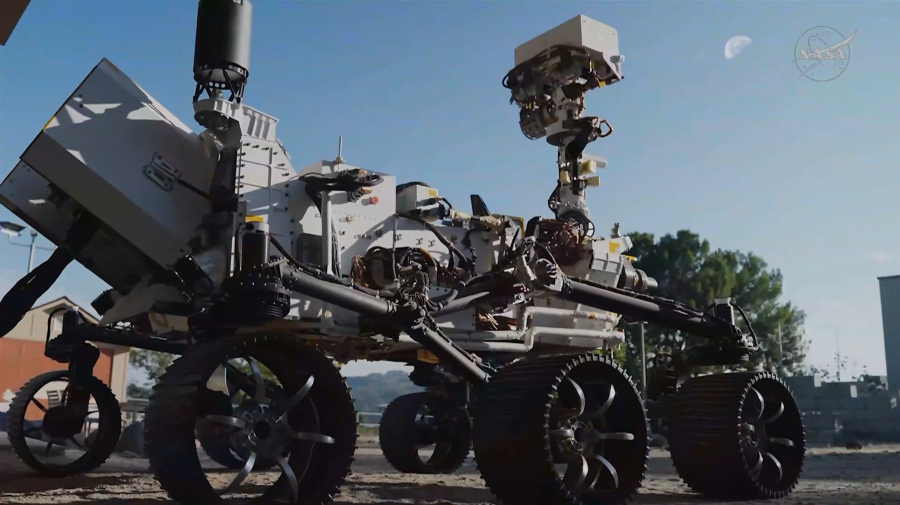
A still from a NASA video of the PROMISE rover. (Image: "NASA Moon Base Update"/NASA)
NASA has announced that it will release a solicitation related to lunar surface power this month and that it is considering sending a rover powered by a radioisotope thermoelectric generator (RTG) to the moon.
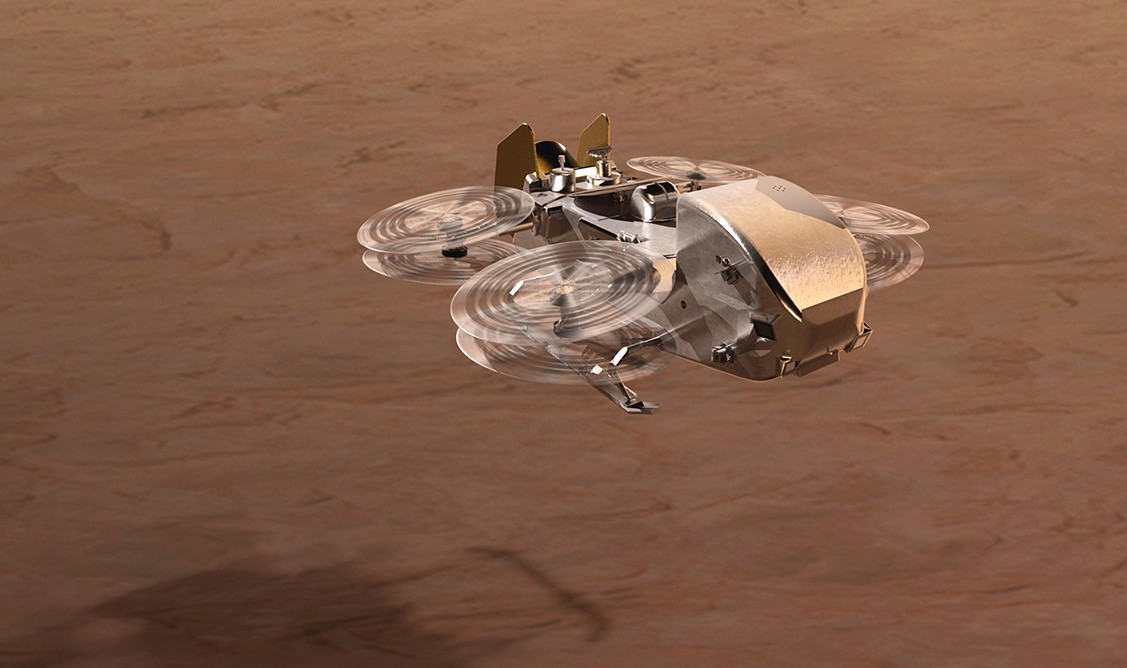
Artist’s impression of NASA’s Dragonfly approaching a landing site on Saturn’s moon Titan. Essentially a flying chemistry lab, along with cameras and other science instrumentation, Dragonfly will travel between dozens of landing sites on Titan’s surface to investigate the chemical origins of life. (Image: NASA/Johns Hopkins APL/Steve Gribben)
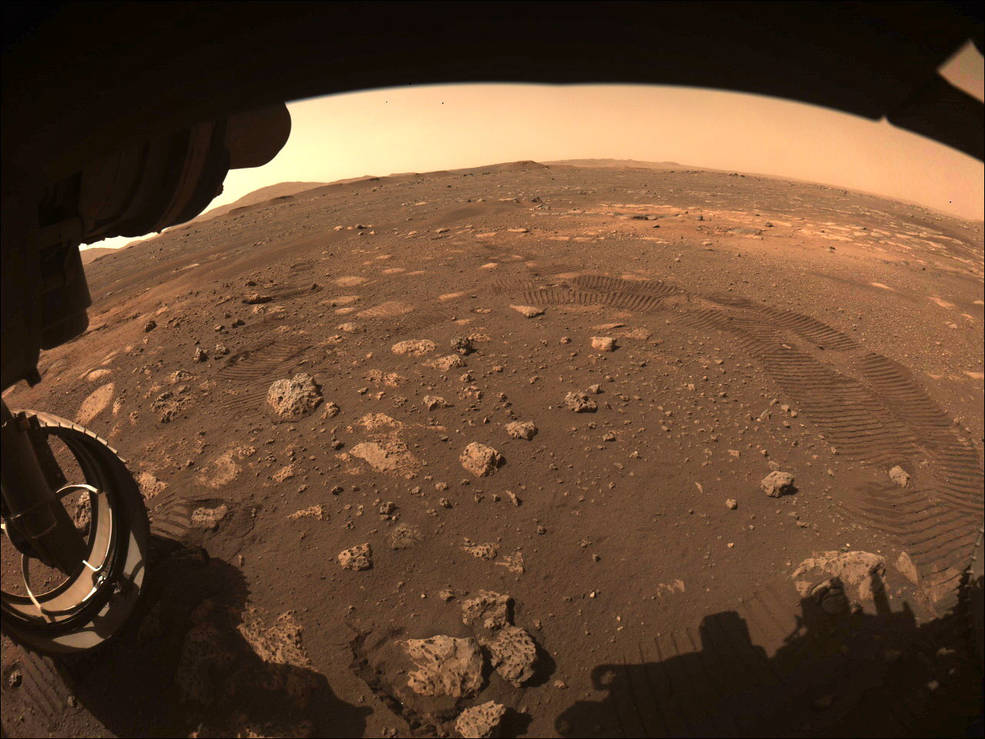
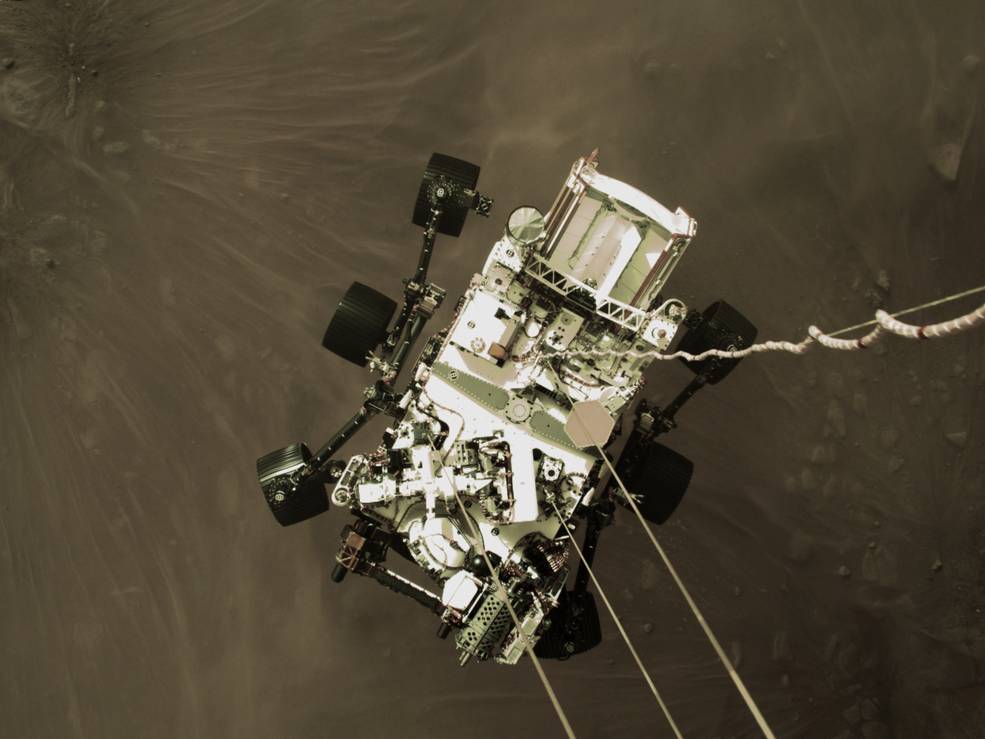
Curiosity landed on Mars sporting a radioisotope thermoelectric generator (RTG) in 2012, and a second NASA rover, Perseverance, landed in 2021. Both are still rolling across the red planet in the name of science. Another exploratory craft with a similar plutonium-238–fueled RTG but a very different mission—to fly between multiple test sites on Titan, Saturn’s largest moon—recently got one step closer to deployment.
On April 25, NASA and the Johns Hopkins University Applied Physics Laboratory (APL) announced that the Dragonfly mission to Saturn’s icy moon passed its critical design review. “Passing this mission milestone means that Dragonfly’s mission design, fabrication, integration, and test plans are all approved, and the mission can now turn its attention to the construction of the spacecraft itself,” according to NASA.
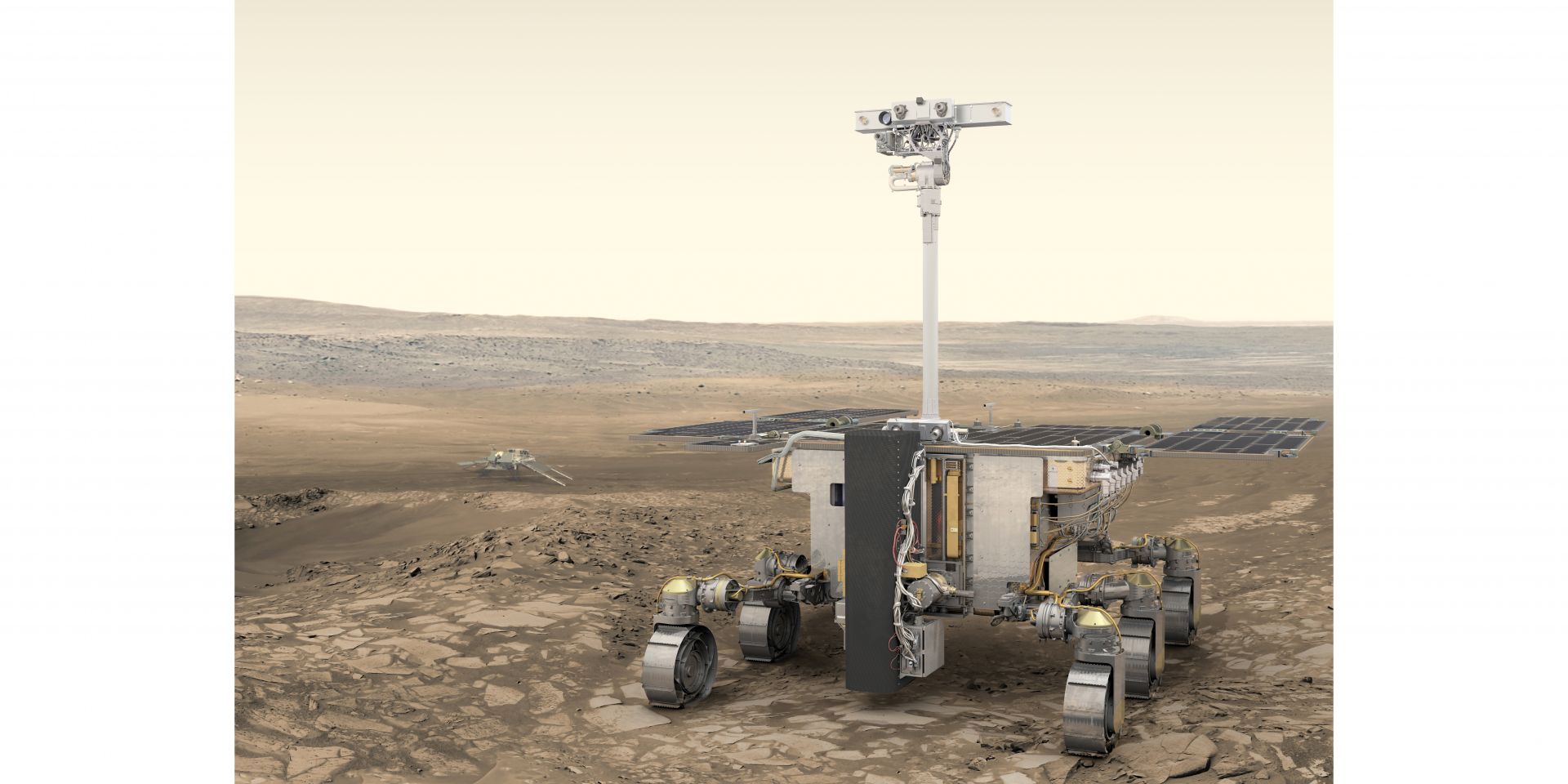
Concept art of ESA’s Rosalind Franklin rover. (Image: ESA/ATG medialab)
Europe’s first Mars rover—named Rosalind Franklin—was months away from a planned September launch when the European Space Agency (ESA) convened a meeting a few weeks after Russia’s February 2022 invasion of Ukraine. The ESA Council unanimously agreed on “the present impossibility” of working with Roscosmos as its launch partner and later decided to reboot its ExoMars mission with a new lander, new partners, and a new launch date.

 Cassini-Huygens is a Flagship-class NASA-ESA-ASI robotic spacecraft sent to the Saturn system. It has studied the planet and its many natural satellites since its arrival there in 2004, as well as observing Jupiter and the Heliosphere, and testing the theory of relativity. Launched in 1997 after nearly two decades of gestation, it includes a Saturn orbiter Cassini and an atmospheric probe/lander Huygens that landed in 2005 on the moon Titan. Cassini is the fourth space probe to visit Saturn and the first to enter orbit, and its mission is ongoing as of 2013. It is powered by a plutonium power source, and has facilitated many landmark scientific discoveries in its mission to the stars.