
Deep Space: The new frontier of radiation controls
July 11, 2025, 3:00PMNuclear News
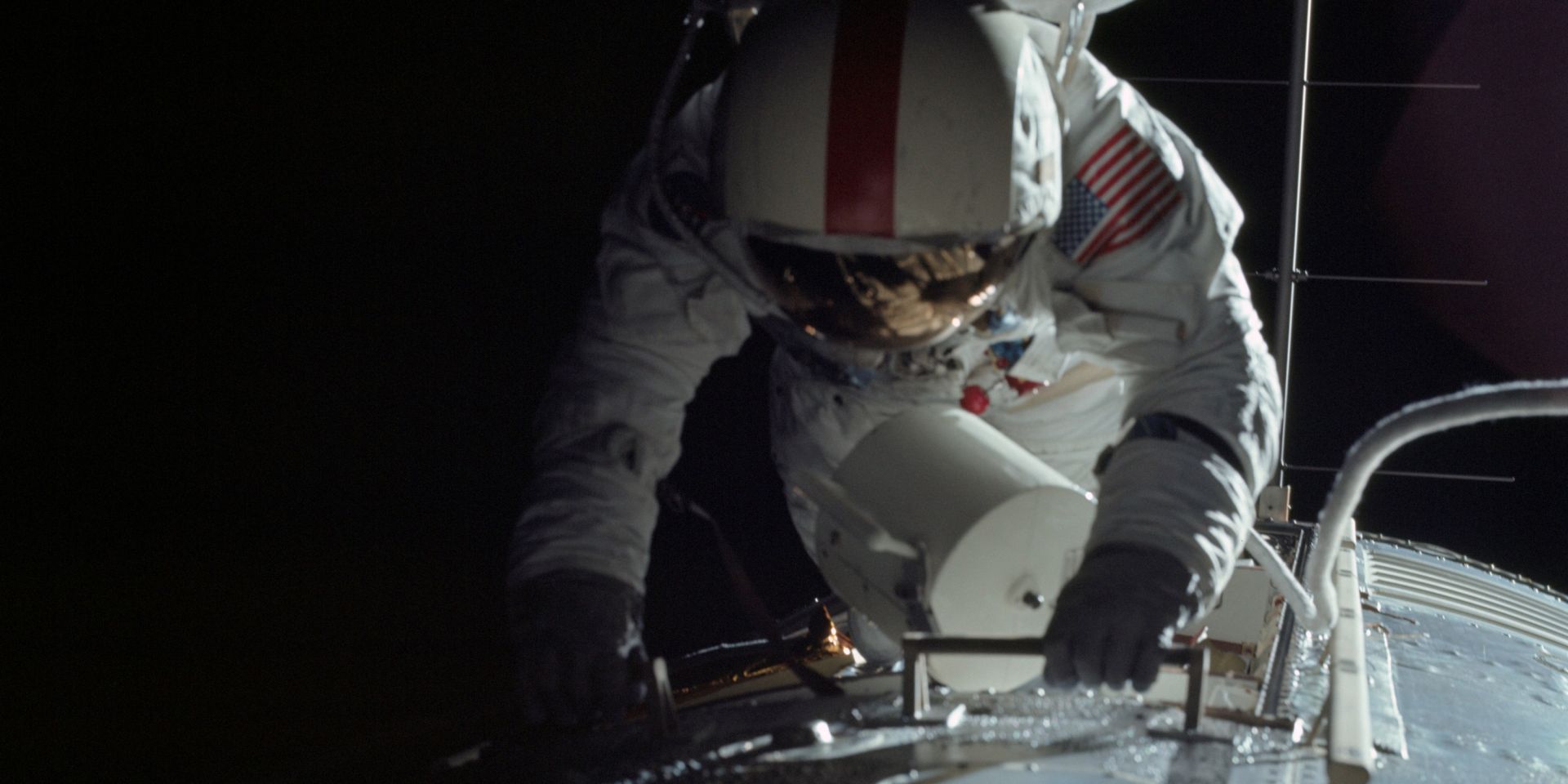
Ronald E. Evans, the command module pilot for Apollo 17, performed a deep-space extravehicular activity (EVA) to retrieve a film canister during the mission’s return to Earth. At about 160,000 miles from Earth, it was the most distant spacewalk ever conducted in deep space under full-spectrum GCR. (Photo: NASA)
In commercial nuclear power, there has always been a deliberate tension between the regulator and the utility owner. The regulator fundamentally exists to protect the worker, and the utility, to make a profit. It is a win-win balance.
From the U.S. nuclear industry has emerged a brilliantly successful occupational nuclear safety record—largely the result of an ALARA (as low as reasonably achievable) process that has driven exposure rates down to what only a decade ago would have been considered unthinkable. In the U.S. nuclear industry, the system has accomplished an excellent, nearly seamless process that succeeds to the benefit of both employee and utility owner.
To continue reading, log in or create a free account!