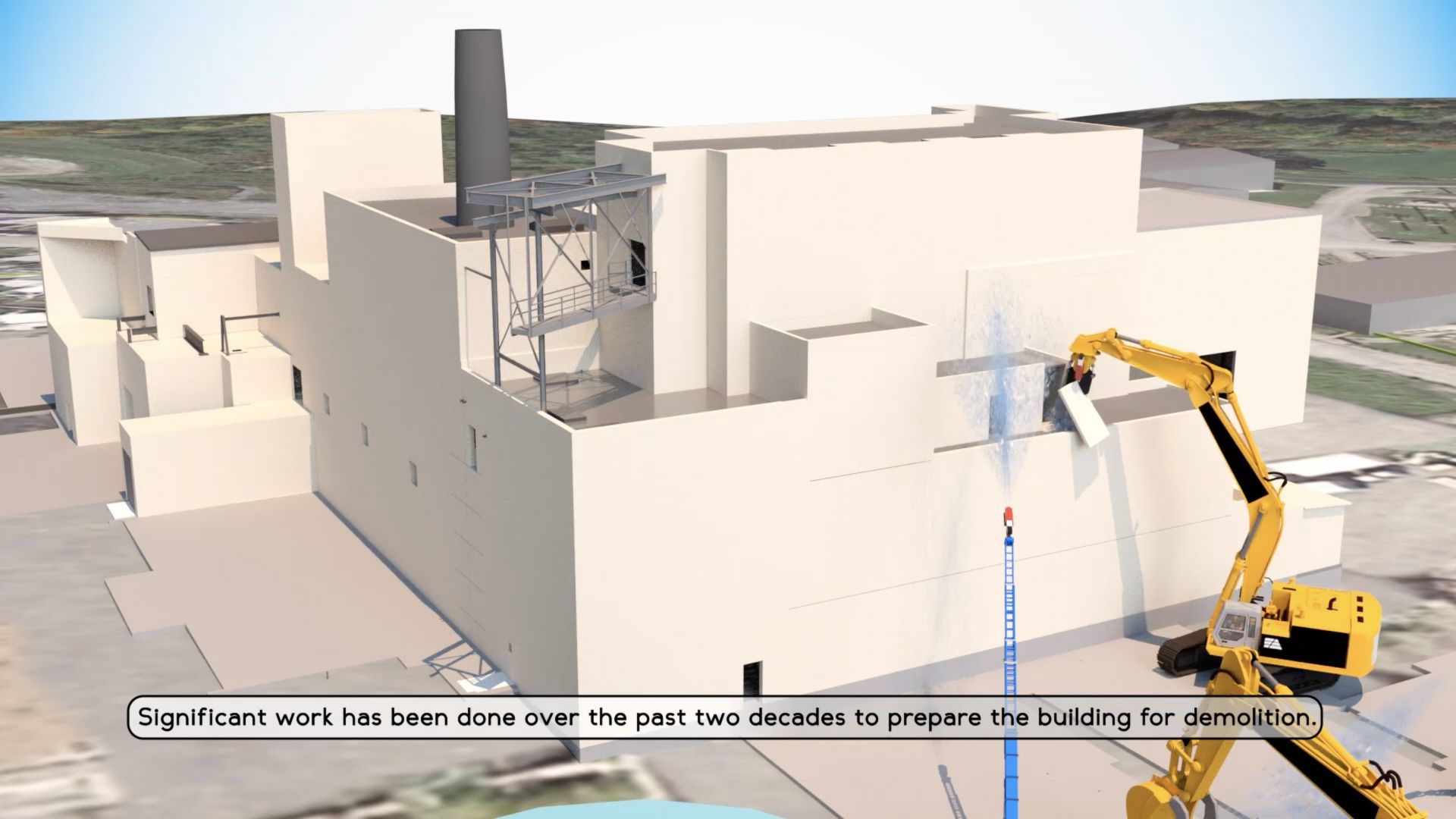
A screen capture from the DOE's West Valley video. (Image: DOE)
A new animated video from the Department of Energy's Office of Environmental Management (EM) shows how cleanup contractor CH2M HILL BWXT West Valley (CHBWV) will take down the main plant process building at the West Valley Demonstration Project (WVDP).
The EM team at West Valley wanted to convey the project to the public, and they believe the animation accomplishes that goal, according to Stephen Bousquet, EM WVDP federal project director for the Main Plant Deconstruction Project.
Click here to watch the video.
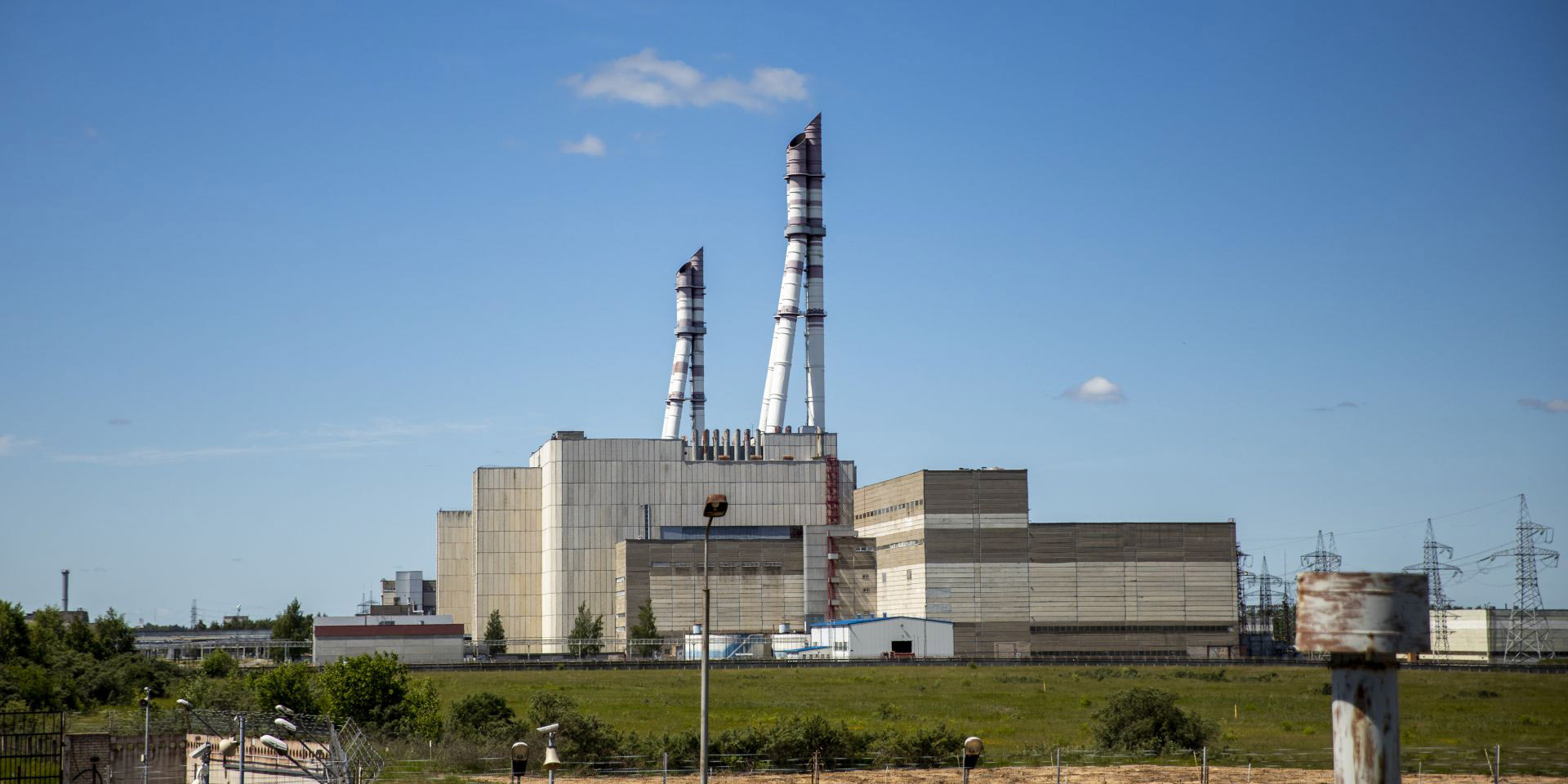
The Ignalina nuclear power plant. (Photo: INPP)
A consortium comprising Westinghouse Electric Spain, Jacobs, and the Lithuanian Energy Institute has been selected to plan dismantling and waste management at the long closed two-unit Ignalina nuclear power plant in Lithuania.
The Integrated Waste Treatment Unit at the Idaho National Laboratory Site. (Photo: DOE)
The Department of Energy’s Office of Environmental Management (EM) said that the Integrated Waste Treatment Unit (IWTU), the radioactive liquid waste treatment facility at the Idaho National Laboratory Site, began its final heat-up in December prior to initiating radiological operations, planned for early this year.
IWTU crews were to follow a prescribed incremental process as the facility transitions from simulant to sodium-bearing waste (SBW), according to EM.
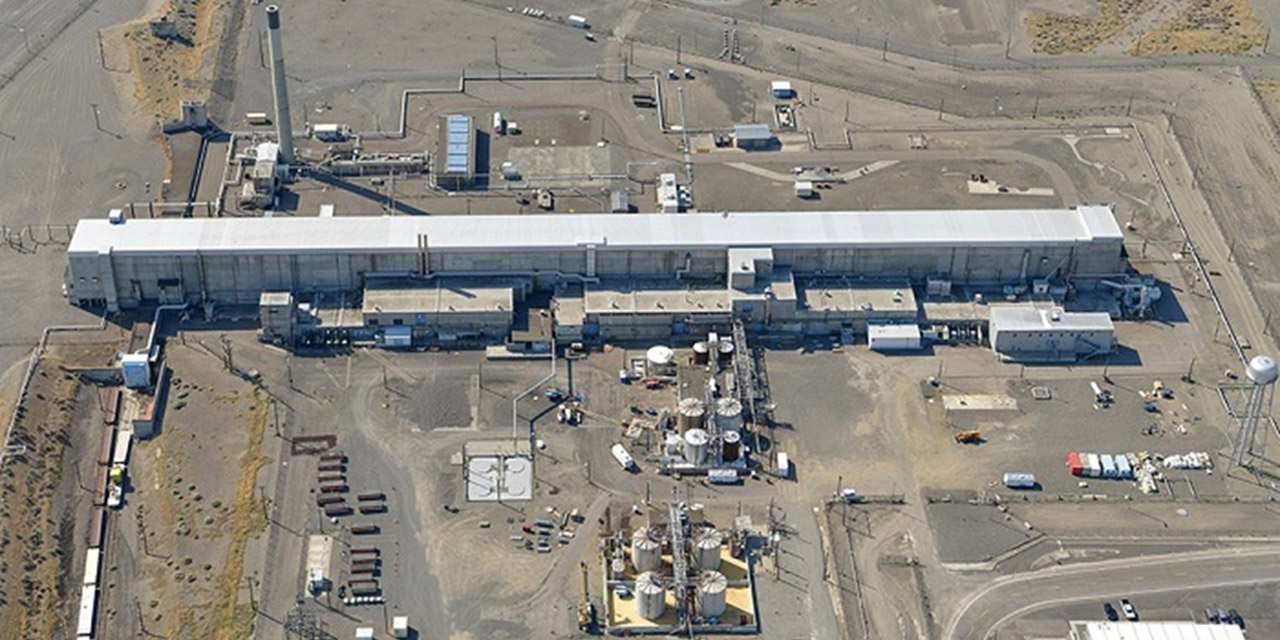
An aerial view of Hanford’s Plutonium Uranium Extraction plant, showing the main facility (at center), the 211-A chemical storage area, and (in foreground) the 203-A acid storage area. (Photo: DOE)
Work crews at the Department of Energy’s Hanford Site in Washington state are performing risk-reduction activities at the Plutonium Uranium Extraction (PUREX) plant to prepare it for eventual disposition.
“It will be a yearslong effort to get this large facility ready for disposition, and I’m encouraged by the progress to safely and efficiently advance this work,” said Andy Wiborg, the DOE’s Projects and Facilities Division team lead for Hanford’s Central Plateau cleanup project.
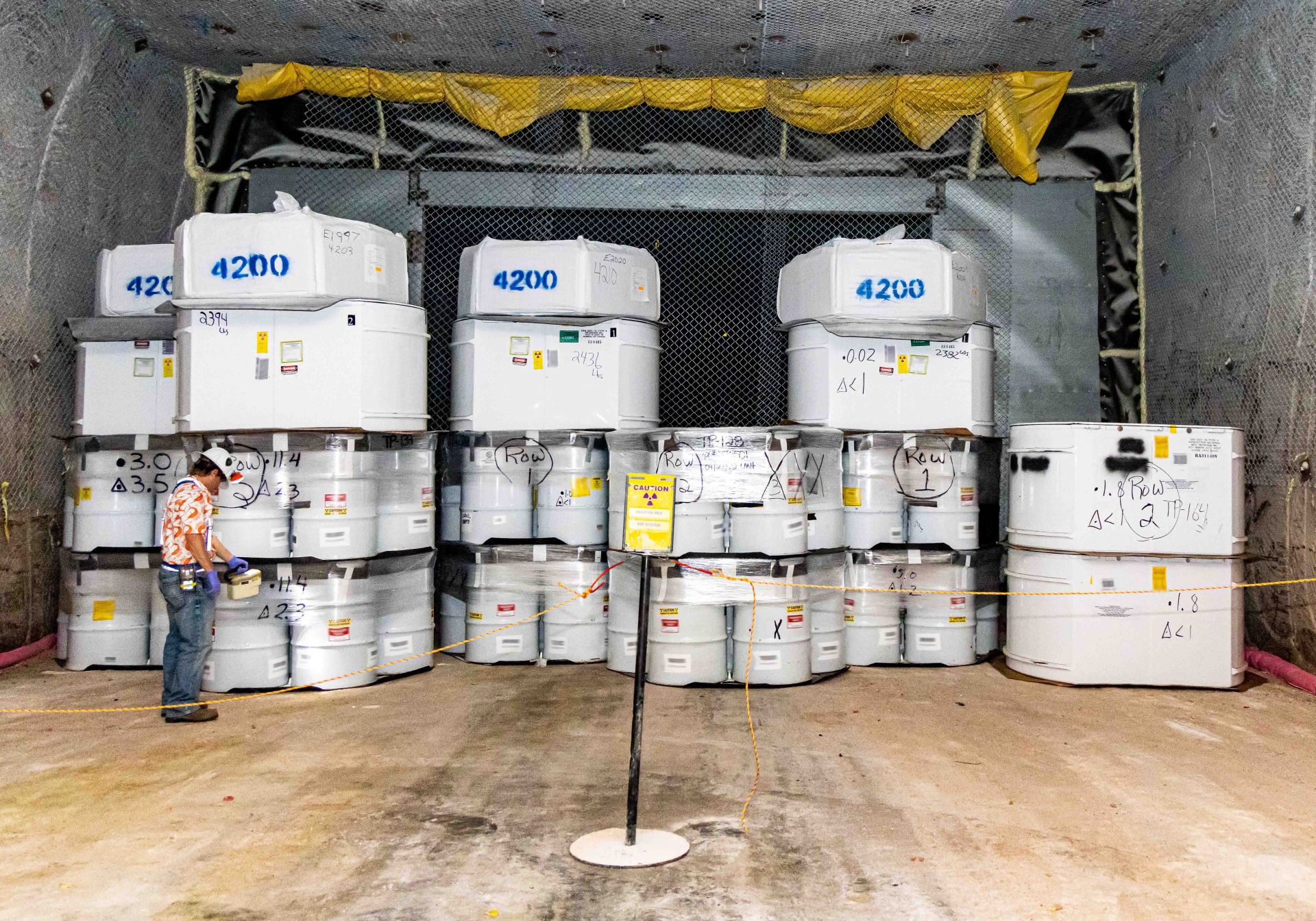
A radiological control technician checks radiation readings on waste containers at WIPP. (Photo: WIPP)
The New Mexico Environment Department (NMED) is adding several conditions to the operating permit for the Department of Energy’s Waste Isolation Pilot Plant (WIPP) near Carlsbad, N.M. The permit changes, which would prioritize the disposal of transuranic (TRU) waste generated in the state and limit the repository’s capacity, are contained in a fact sheet the NMED.
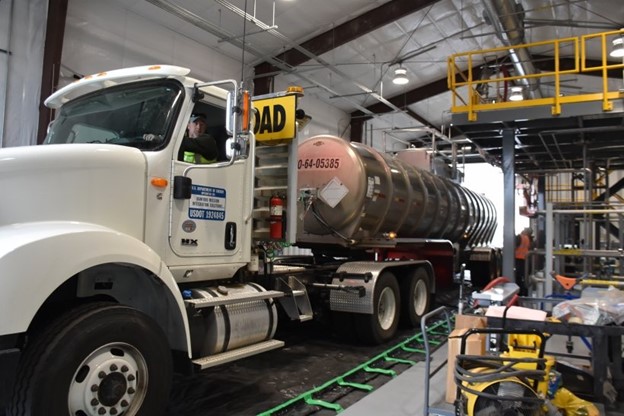
A tanker holding 6200 gallons of leachate unloads at a backup load-in station at the Hanford Site’s ETF. (Photo: DOE)
Construction of a backup load-in station has been completed at the Hanford Site’s Effluent Treatment Facility (ETF) in Washington state.
“We broke ground on the backup facility about a year ago,” said Rob Wood, project manager for Washington River Protection Solutions, the Department of Energy’s tank operations contractor at the site. “I am proud of the team for completing this portion of the load-in expansion project and doing it safely. In phase two, expansion of the main load-in station will prepare us for 24/7 operations on the Hanford Site.”
Watch a time-lapse video of the backup load-in station construction here.
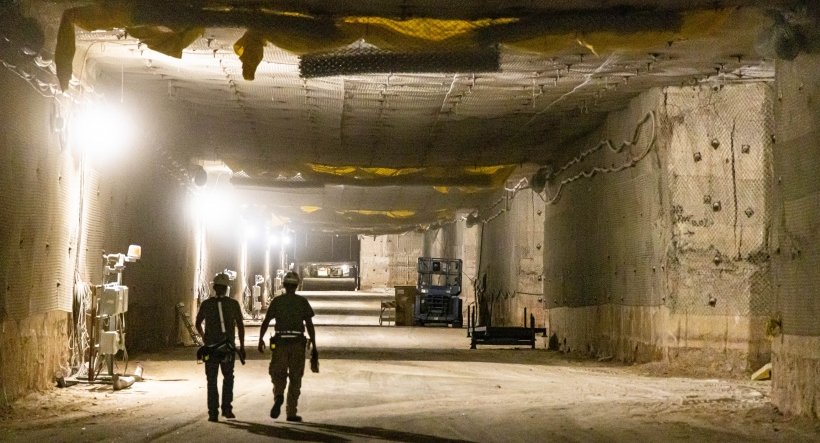
Workers walk down a passageway in Panel 8 at the Waste Isolation Pilot Plant in November. (Photo: DOE)
Employees have begun emplacing defense-related transuranic (TRU) waste in Panel 8 of the Waste Isolation Pilot Plant (WIPP) in New Mexico, the Department of Energy’s Office of Environmental Management (EM) announced in November. TRU waste is permanently disposed of at WIPP in rooms mined in a Permian salt bed 2,150 feet below the surface.
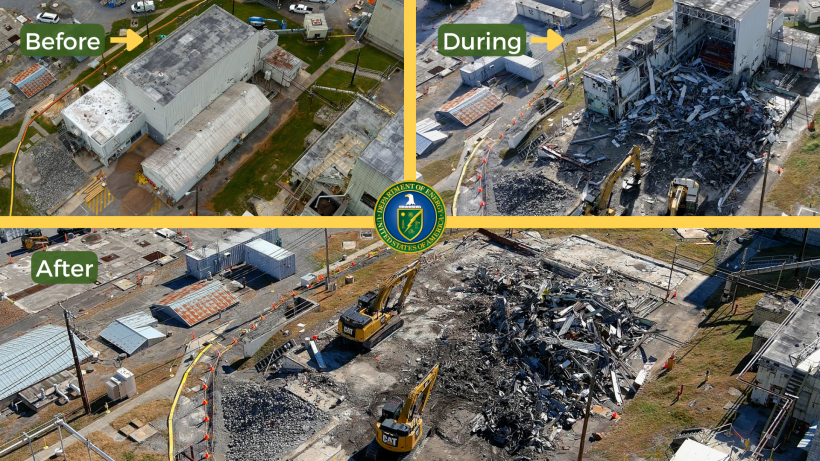
Crews completed the teardown of Oak Ridge’s Bulk Shielding Reactor (Building 3010), once used for research as part of the federal Aircraft Nuclear Propulsion Program. (Photos: DOE)
The Department of Energy’s Office of Environmental Management (EM) said its cleanup contractor UCOR recently completed the first-ever demolition of a reactor in the central campus area at the Oak Ridge National Laboratory in Tennessee.
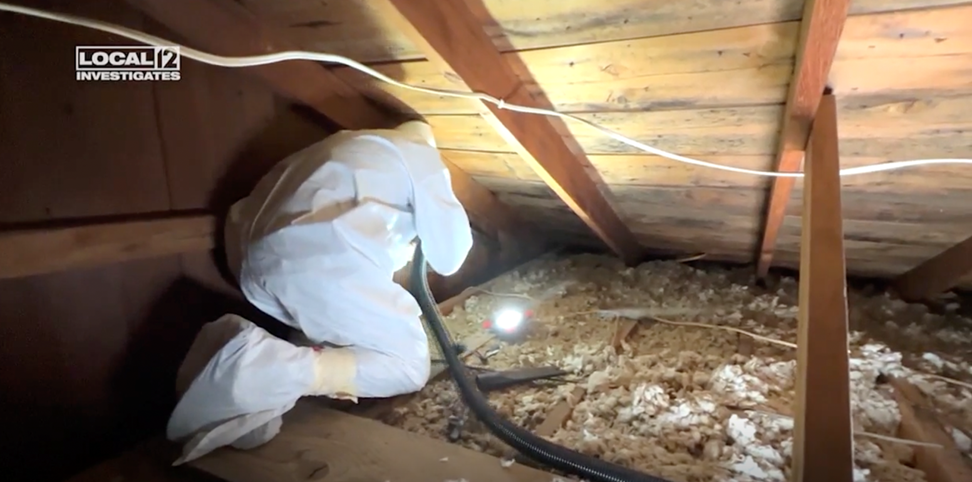
A screenshot from the Local 12 report. (Image: WKRC/Sinclair)
In May 2019, Zahn’s Corner Middle School in Pike County, Ohio, located within four miles of the former Portsmouth Gaseous Diffusion Plant (PORTS), was closed after local officials reported enriched uranium and transuranic radionuclides were detected inside the school and at outside air monitors.
Now, Cincinnati’s WKRC Local 12, a news affiliate of Sinclair Broadcast Group, is reporting that a private house in Lucasville, Ohio, 10 miles from the PORTS site, has been contaminated with enriched uranium.
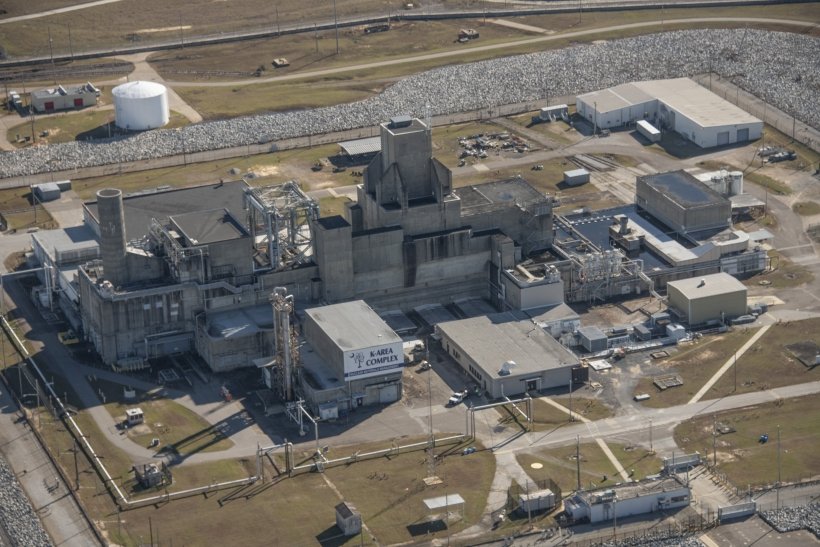
A view of Savannah River’s K Area, where employees began downblending plutonium in 2016. (Photo: DOE)
Contractor employees at the Department of Energy’s Savannah River Site in South Carolina recently exceeded their plutonium downblending goal for 2022 ahead of schedule as part of the ongoing activities to remove Pu from the state, the DOE’s Office of Environmental Management (EM) announced.
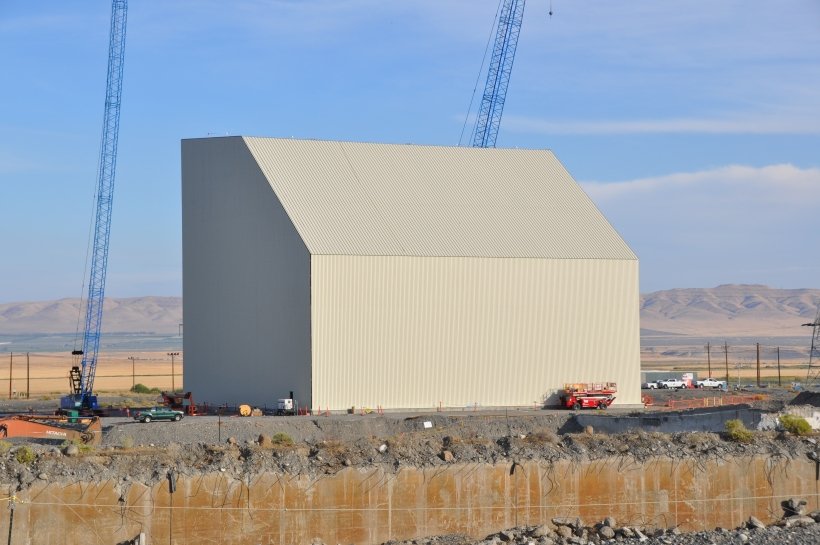
DOE contractor CPCCo recently completed construction of a protective cocoon over the former K East Reactor building at Hanford. (Photo: DOE)
The Department of Energy’s Office of Environmental Management (EM) announced that construction of Hanford’s K East Reactor cocoon has been completed ahead of schedule and under budget. Cocooning of K East—enclosing it in a protective steel structure while the reactor’s radioactivity naturally decays—was one of EM’s key construction priorities for 2022.
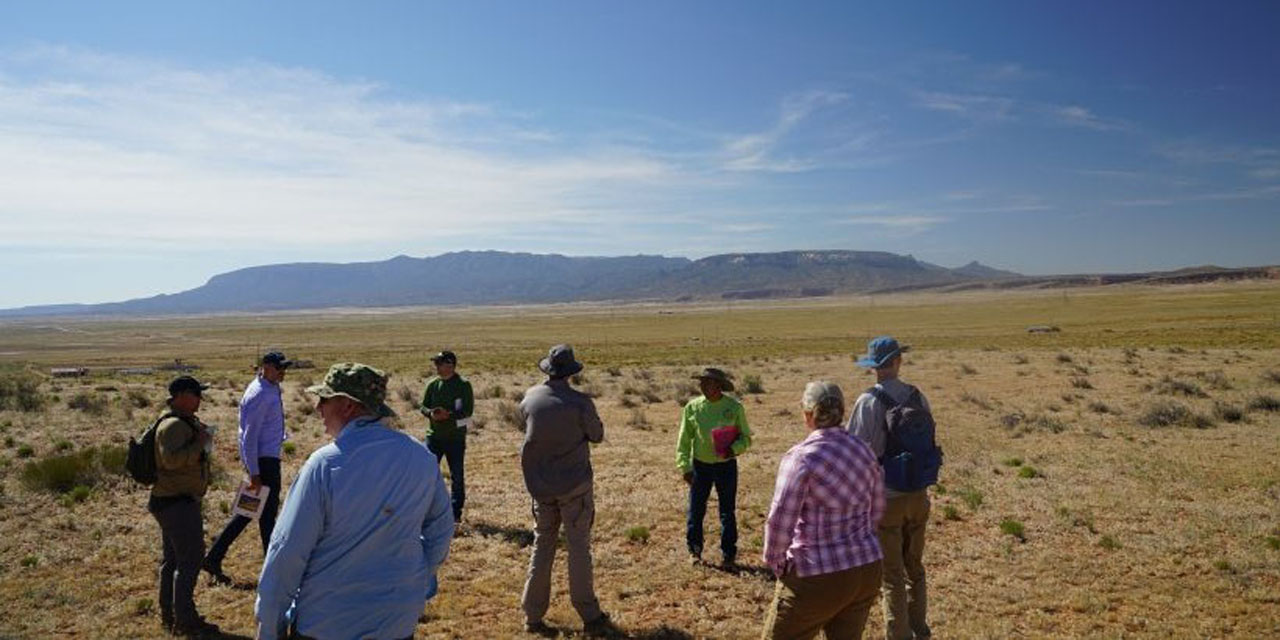
DRUM program members and others visit mine sites in the Navajo Nation during the spring of 2022. (Photo: DOE-LM)
The Department of Energy’ Office of Legacy Management (LM) will be conducting verification and validation work at abandoned uranium mines in the Navajo Nation of northeastern Arizona during the fall field season, which runs from mid-October to mid-December.
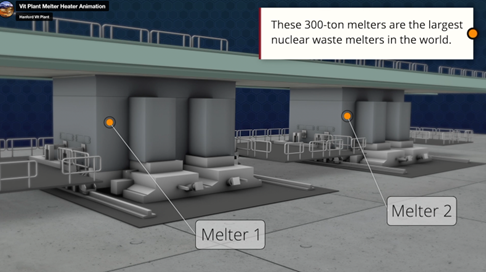
A screenshot from a 3D animation showing the heat-up of Hanford’s melters. (Image: DOE)
Crews at the Department of Energy’s Hanford Site, near Richland, Wash., have begun heating up the first of two 300-ton melters that will be used to vitrify mixed low-level radioactive and chemical tank waste. According to the DOE’s Office of Environmental Management (EM), initiating and completing the heating of the melter is a critical step to commissioning Hanford’s Waste Treatment and Immobilization Plant (WTP), which will treat and stabilize the site’s 56 million gallons of tank waste by immobilizing it in glass through the vitrification process.
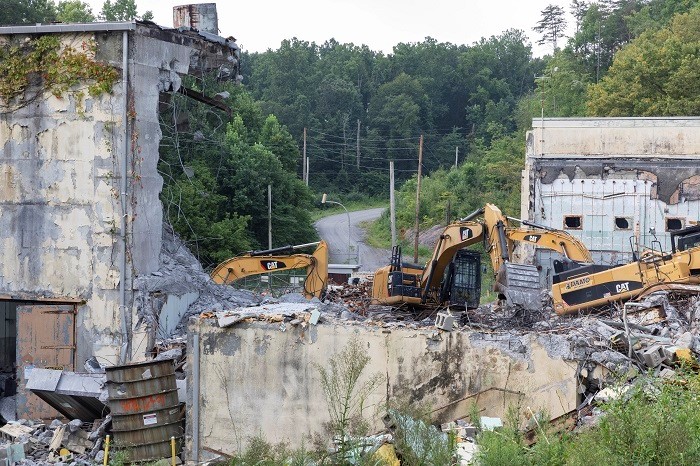
Crews make progress tearing down the former Criticality Experiment Laboratory. The teardown began this past summer after months of deactivation activities. (Photo: DOE)
Work crews at the Department of Energy’s Oak Ridge Site in Tennessee have successfully completed the demolition of the former Criticality Experiment Laboratory. Crews worked this past summer to bring down the dilapidated 1940s-era facility, also known as Building 9213.
The Savannah River Site (Photo: DOE)
The Department of Energy has extended Savannah River Nuclear Solutions’ (SRNS) management and operating contract at the Savannah River Site (SRS) in South Carolina for up to an additional five years. The announcement was made recently 29 by engineering company Fluor, which leads the SRNS joint venture, along with Newport News Nuclear and Honeywell.
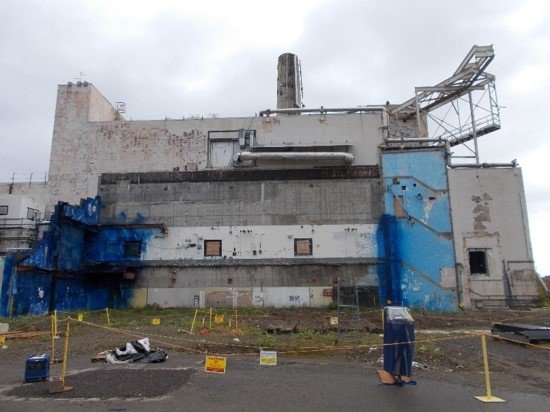
Demolition of the MPPB, one of the last remaining major facilities at WVDP, is expected to be completed in about 30 months. (Photo: DOE)
The Department of Energy’s Office of Environmental Management (EM) said it has met one of its cleanup priorities for 2022 by beginning demolition of the Main Plant Process Building (MPPB) at the West Valley Demonstration Project (WVDP) in New York. Located 35 miles south of Buffalo, the 150-acre WVDP site is home to the only commercial spent nuclear fuel reprocessing facility to operate in the United States.

-3 2x1.jpg)
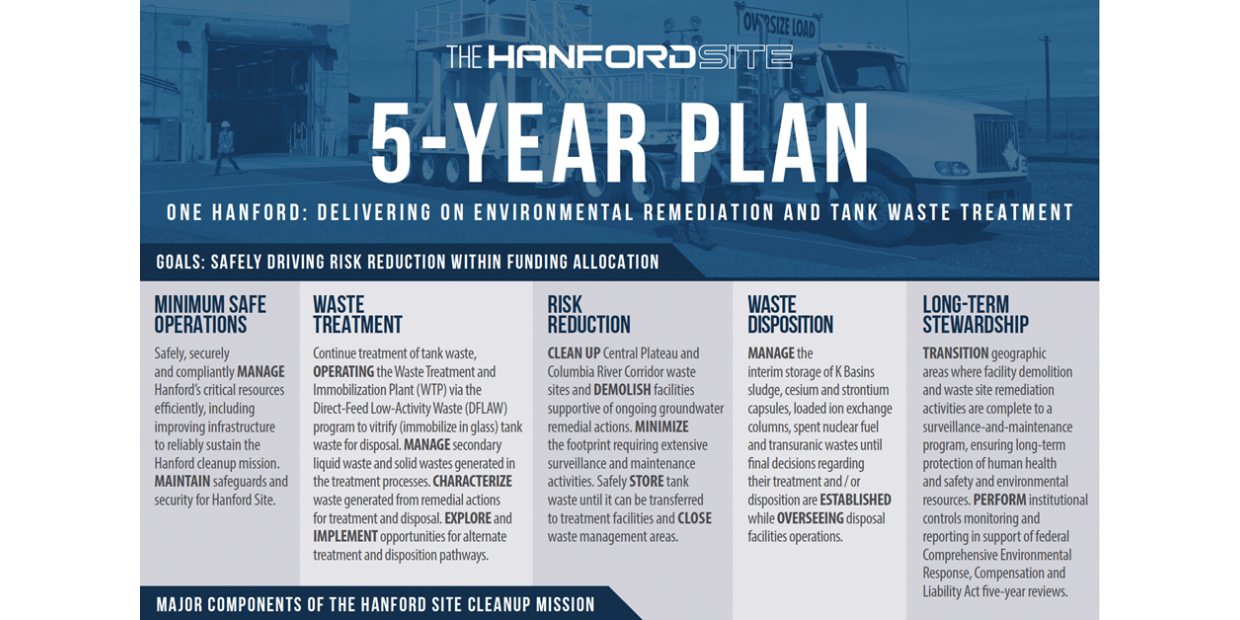
 The Department of Energy’s Office of Environmental Management (EM) released its