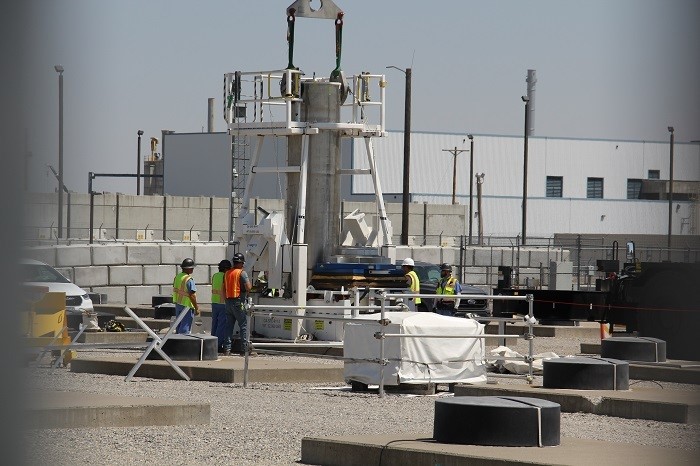
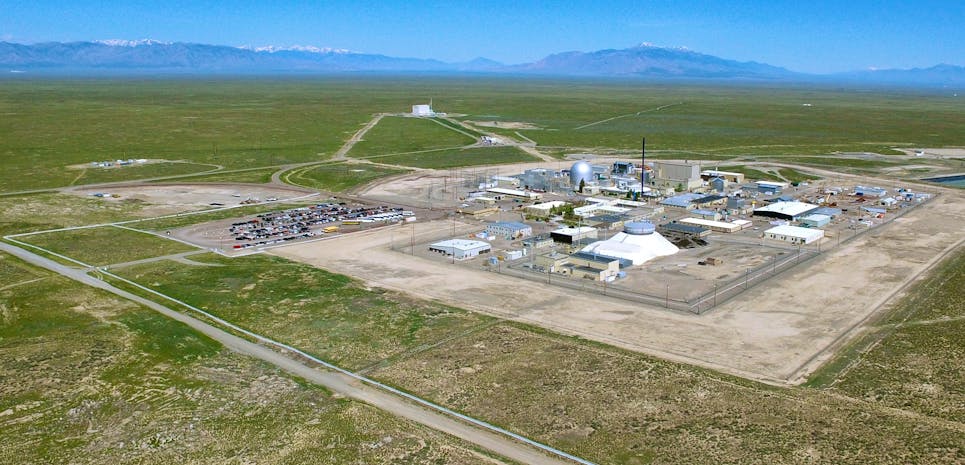
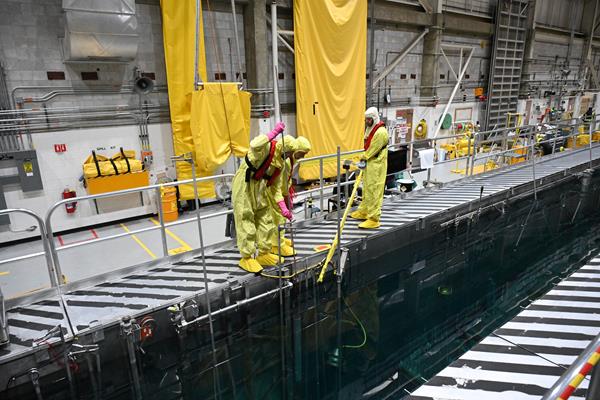
Work crews at the INL Site prepare to move Peach Bottom fuel from a transfer cask to a storage vault. (Photo: DOE)
Crews at the Department of Energy’s Idaho National Laboratory Site recently completed work to transfer baskets of spent nuclear fuel ahead of a September 30 deadline.
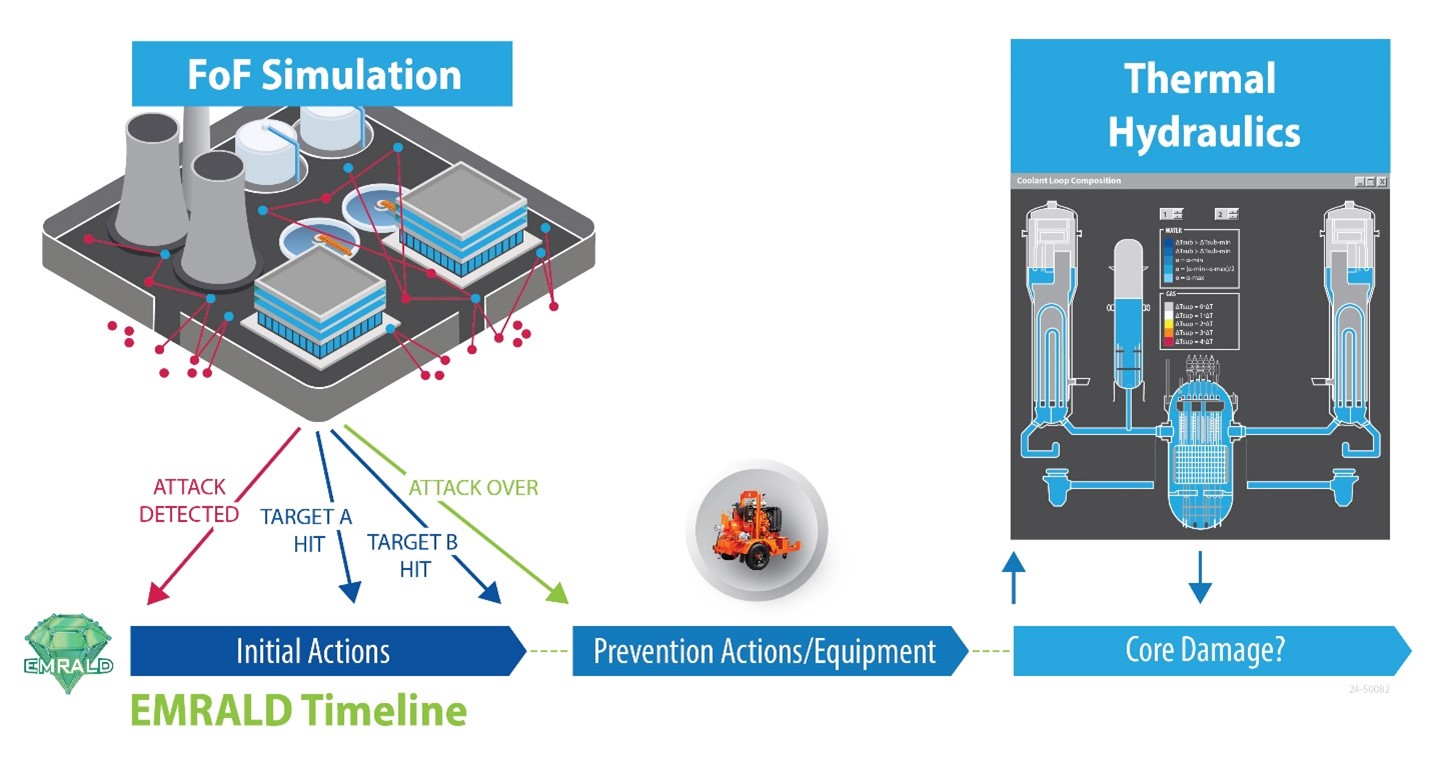
The MASS-DEF framework with prevention actions and timelines modeled in EMRALD software interacting with force-on-force (FoF) simulation and thermal hydraulics models. The risk-informed modeling in the MASS-DEF framework integrates physical security effectiveness analysis with safety measures, such as time to core damage. (Graphic: INL)
Today’s nuclear power plants are the nation’s largest source of carbon-free energy, but they come with high operating and maintenance costs.
Competition from other sources, especially natural gas, coupled with low electricity prices, has resulted in the closure of some plants in the last decade due to economic reasons.
One way to alleviate these economic pressures is to reduce the cost of operating nuclear power plants, including the costs associated with physical security.
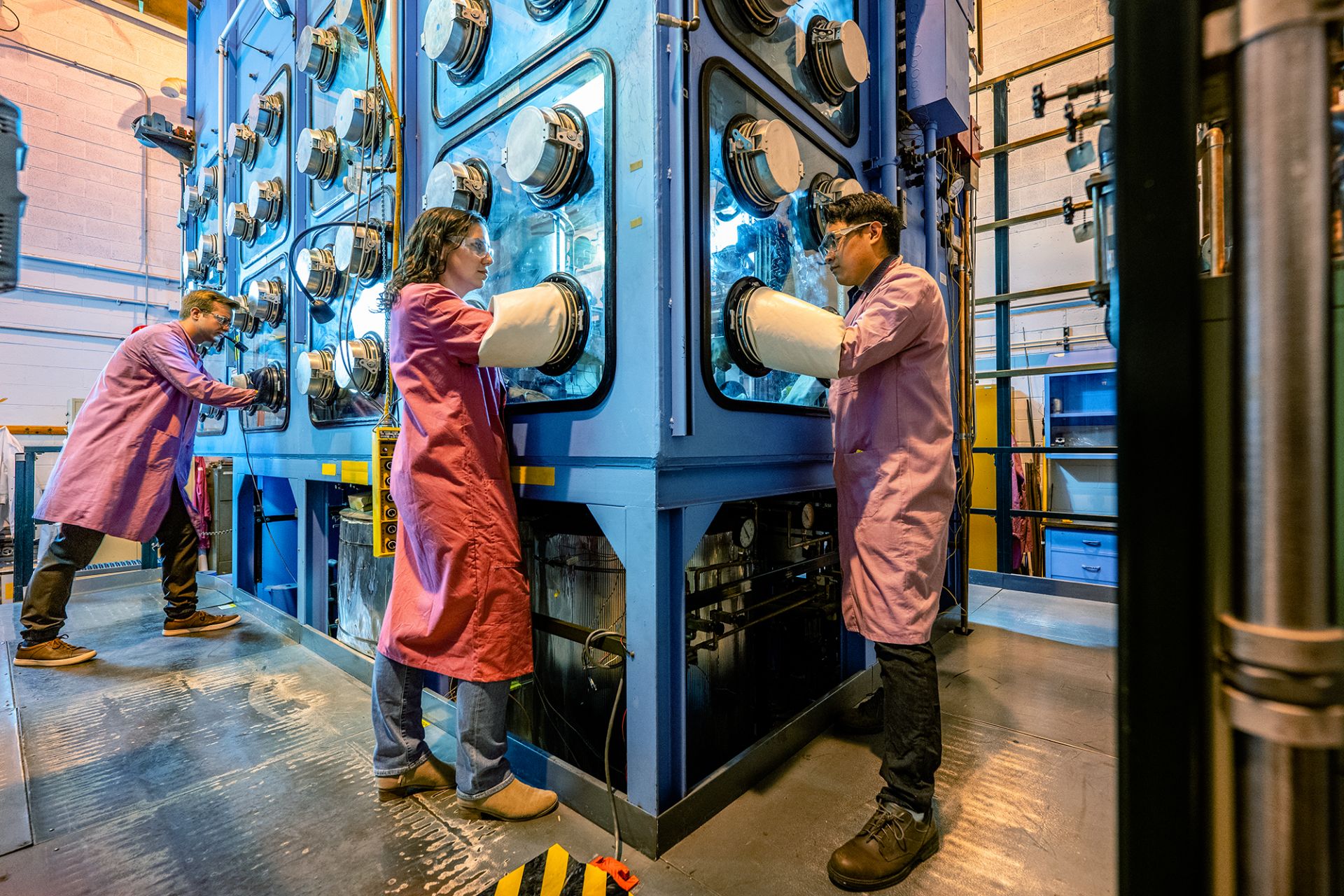
Engineers in Argonne’s Chemical and Fuel Cycle Technologies Division. (Photo: Argonne National Laboratory)
Oklo Inc. announced that it has completed the first end-to-end demonstration of its advanced fuel recycling process as part of an ongoing $5 million project in collaboration with Argonne and Idaho National Laboratories. Oklo’s goal: scaling up its fuel recycling capabilities to deploy a commercial-scale recycling facility that would increase advanced reactor fuel supplies and enhance fuel cost effectiveness for its planned sodium fast reactors.
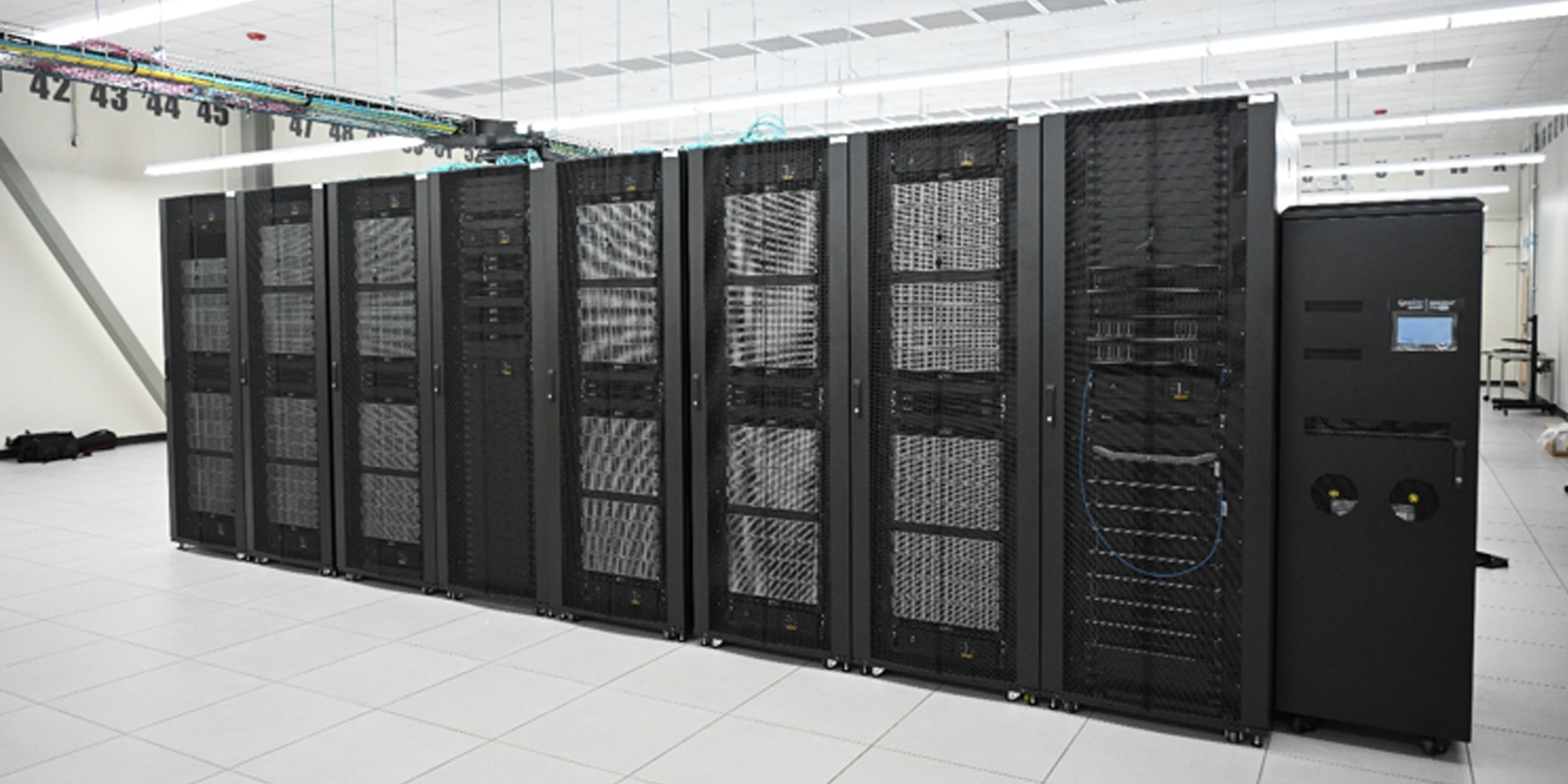
INL’s new Bitterroot supercomputer installed in the Collaborative Computing Center. (Photo: INL)
A new supercomputer named Bitterroot started operating in June at Idaho National Laboratory’s Collaborative Computing Center (C3) and is speeding up nuclear energy research by improving access to modeling and simulation tools. Bitterroot arrived at INL in March, and the announced July 15 that the supercomputer was open to users on June 18 after installation and an extensive program of testing.
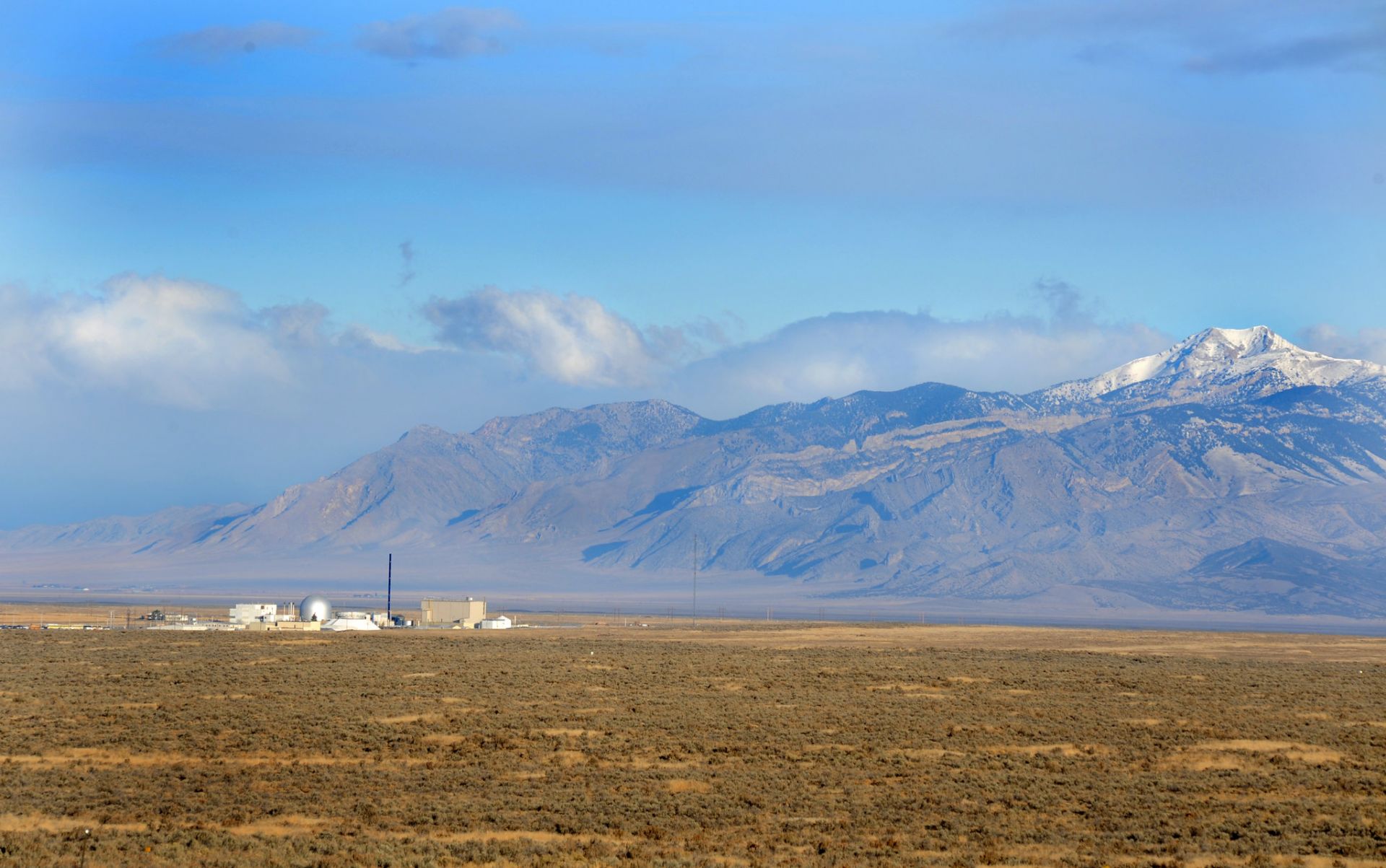
A view of INL’s desert site. (Photo: INL)
Aalo reported last week that it has submitted a regulatory engagement plan to the Nuclear Regulatory Commission in “a huge step forward in getting regulatory approval for our Aalo-1 reactor.”
Entergy’s River Bend in St. Francisville, La., a boiling water reactor and one of five Entergy nuclear power reactors. (Photo: Entergy)
The Department of Energy’s Gateway for Accelerated Innovation in Nuclear (GAIN) announced June 20 that two companies—one power plant operator and one advanced reactor developer—are getting vouchers to access the extensive nuclear research capabilities and expertise available across the DOE national laboratories in the third round of GAIN vouchers awarded for fiscal year 2024.
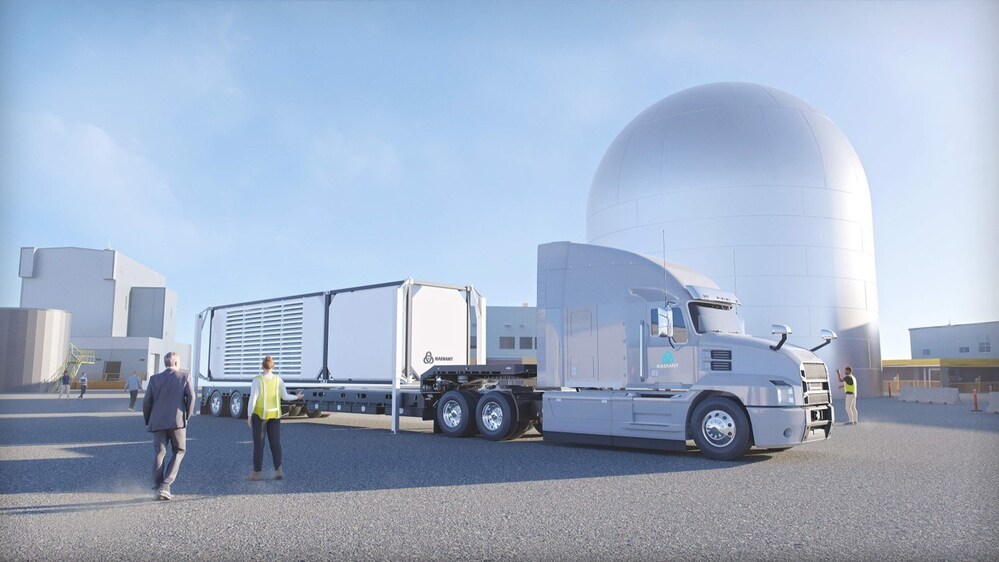
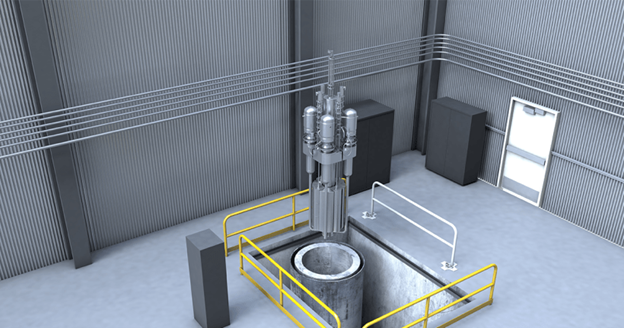
Concept art showing the delivery of Radiant’s Kaleidos to the DOME test bed. (Image: Radiant Industries/Ryan Seper)
Radiant Industries announced on June 4 that the safety design strategy (SDS) for a test of its Kaleidos microreactor in the National Reactor Innovation Center’s DOME test bed at Idaho National Laboratory now has approval from the Department of Energy. Radiant hopes to test Kaleidos—a 1-MW high-temperature, gas-cooled reactor—by 2026 and then market portable commercial reactors to power remote locations and provide backup or primary power for critical applications in hospitals or for disaster relief.
The Materials and Fuels Complex at INL. (Photo: INL)
The Department of Energy will enter into lease negotiations with two solar energy developers for 400 megawatts of solar electricity generation within the Idaho National Laboratory site. Announced on June 5, the projects are the first proposed projects selected under the department’s Cleanup to Clean Energy initiative, an effort to repurpose parts of DOE-owned lands—portions of which were previously used in the nation’s nuclear weapons program—into sites of clean-energy generation, including for solar, geothermal, wind, and nuclear.
ANEEL fuel experiment capsules being staged at the ATR. (Photo: Clean Core)
Clean Core Thorium Energy (Clean Core) has announced that its ANEEL fuel is ready to begin irradiation testing and qualification at Idaho National Laboratory. The fuel, made of thorium and HALEU, was developed by Clean Core for use in pressurized heavy water reactors, including CANDU (Canadian deuterium-uranium) reactors. Irradiation of the fuel samples in INL’s Advanced Test Reactor (ATR) is set to begin this month.
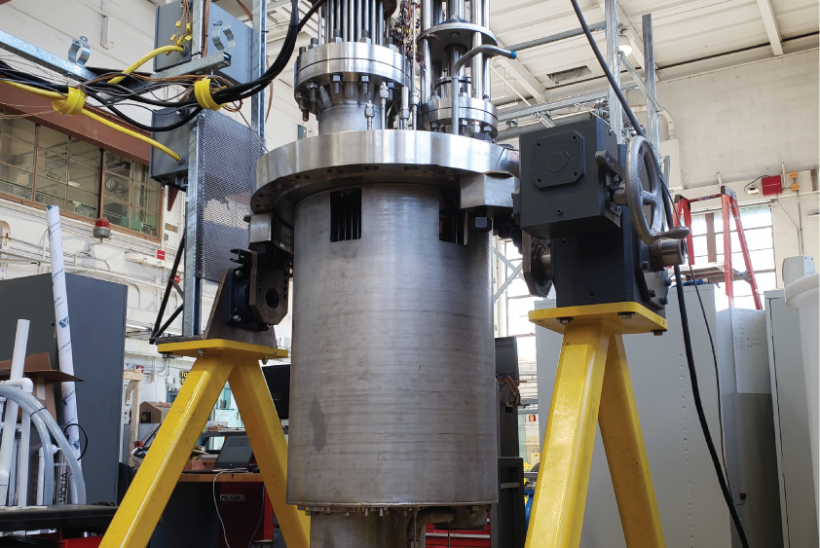
The primary system of THETA at Argonne’s Mechanisms Engineering Test Loop Facility, where Oklo is conducting sodium thermal-hydraulic testing with support from a GAIN award announced in 2021. (Image: Argonne National Laboratory)
The Department of Energy and the Gateway for Accelerated Innovation in Nuclear (GAIN) on March 19 announced the second round of fiscal year 2024 voucher awards to three companies: Element Factory, Kanata America, and Oklo.
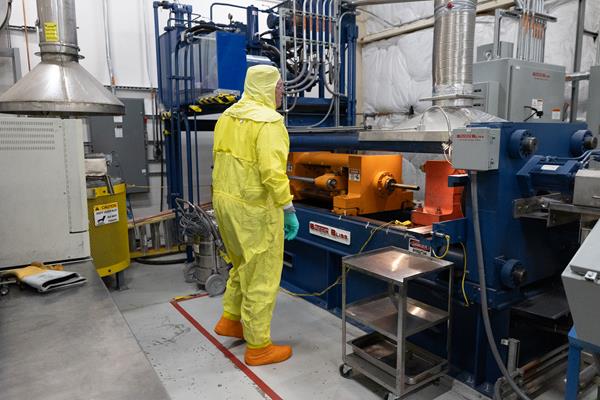
The extrusion in progress. (Photo: INL/Lightbridge)
Lightbridge Corporation announced today that it has reached “a critical milestone” in the development of its extruded solid fuel technology. Coupon samples using an alloy of zirconium and depleted uranium—not the high-assay low-enriched uranium (HALEU) that Lightbridge plans to use to manufacture its fuel for the commercial market—were extruded at Idaho National Laboratory’s Materials and Fuels Complex.
From left: Piercy, Hart, Iyengar, Tobey
The latest virtual event produced by the American Nuclear Society brought together experts from the forefront of the global nuclear industry to discuss strategies for ensuring a safe, secure, and healthy expansion in the face of a rapidly changing energy and geopolitical landscape.
The webinar, moderated by ANS Executive Director/CEO Craig Piercy, featured J’Tia Hart, chief science officer for the National and Homeland Security Directorate at Idaho National Laboratory; Anagha Iyengar, deputy program director for analytics and innovation at the National Nuclear Security Administration’s Office of International Nuclear Security; and William Tobey, former NNSA deputy administrator for defense nuclear nonproliferation.
Concept art of the MARVEL microreactor (Image: INL)
The Department of Energy announced February 7 that fuel for the MARVEL microreactor, which Idaho National Laboratory plans to host inside the Transient Reactor Test (TREAT) facility, is now being fabricated by TRIGA International, with the first fuel delivery expected in spring 2025. MARVEL operation was expected “by the end of 2024” as recently as May 2023, but that timeline had shifted by October, when the DOE said MARVEL “is expected to be completed in early 2025.” Now, according to the DOE’s latest announcement, “Fuel loading for MARVEL is anticipated to occur in 2026, with the microreactor expected to be on line by 2027.”

-3 2x1.jpg)