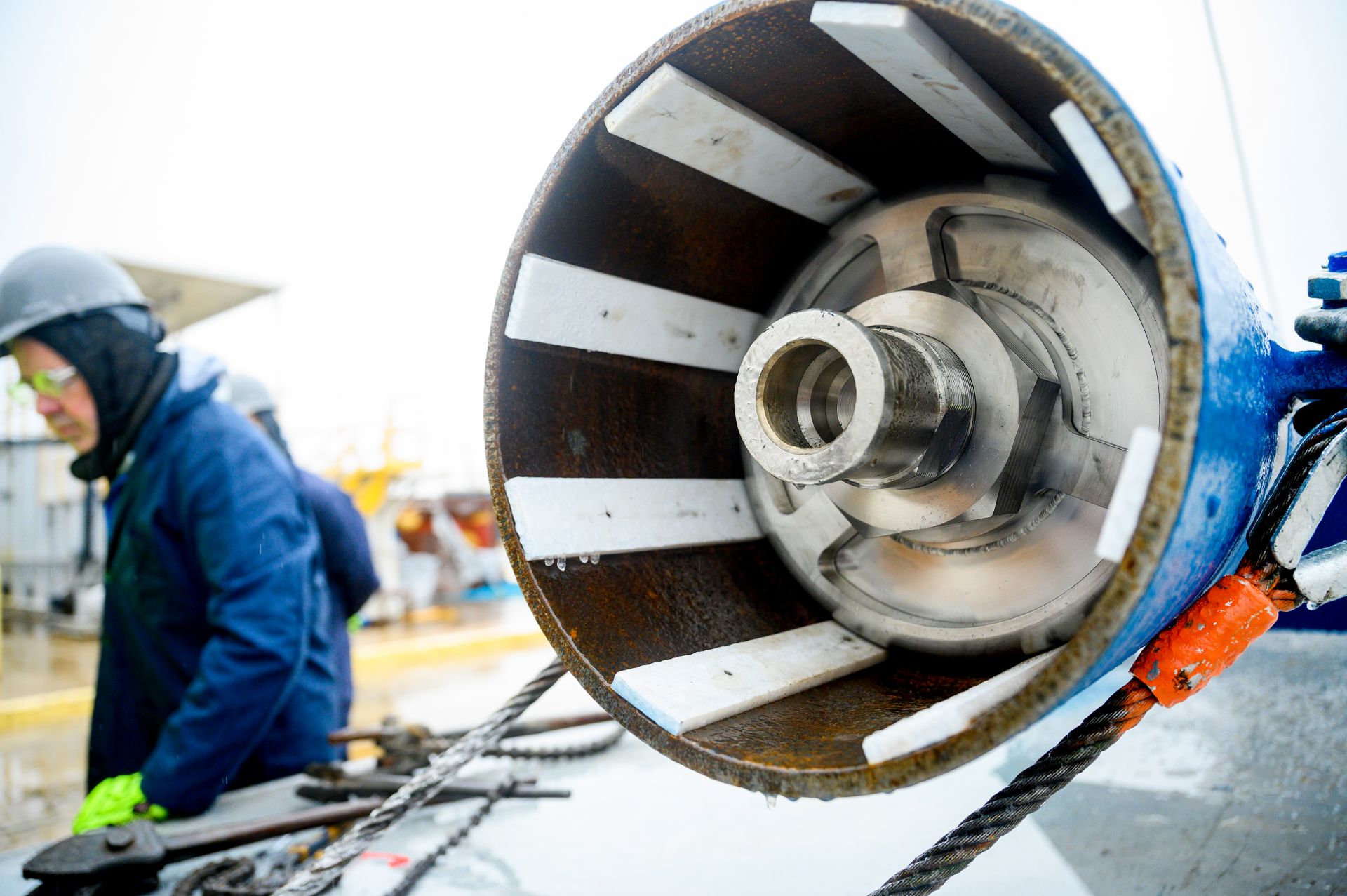
A prototype nuclear waste canister (not the UPWARDS UCS) sits in a drillhole receptacle during equipment field tests in 2023. (Photos courtesy of Deep Isolation)
When the Department of Energy’s Advanced Research Projects Agency–Energy launched the Optimizing Nuclear Waste and Advanced Reactor Disposal Systems (ONWARDS) program in 2022, it posed a challenge that the nuclear industry had never seriously confronted before: how to design waste management solutions that anticipate the coming shift to advanced reactors and not merely retrofit existing systems built for an older generation of technology. The program’s objectives were ambitious—reduce disposal footprint, enable scalable pathways for unfamiliar waste streams, and build the technical foundations for future disposal—yet also tightly grounded in the realities of emerging nuclear fuel cycles. For the nuclear community, this was a timely call. Advanced reactors were accelerating toward deployment, but the waste management systems needed to support them had not kept pace.
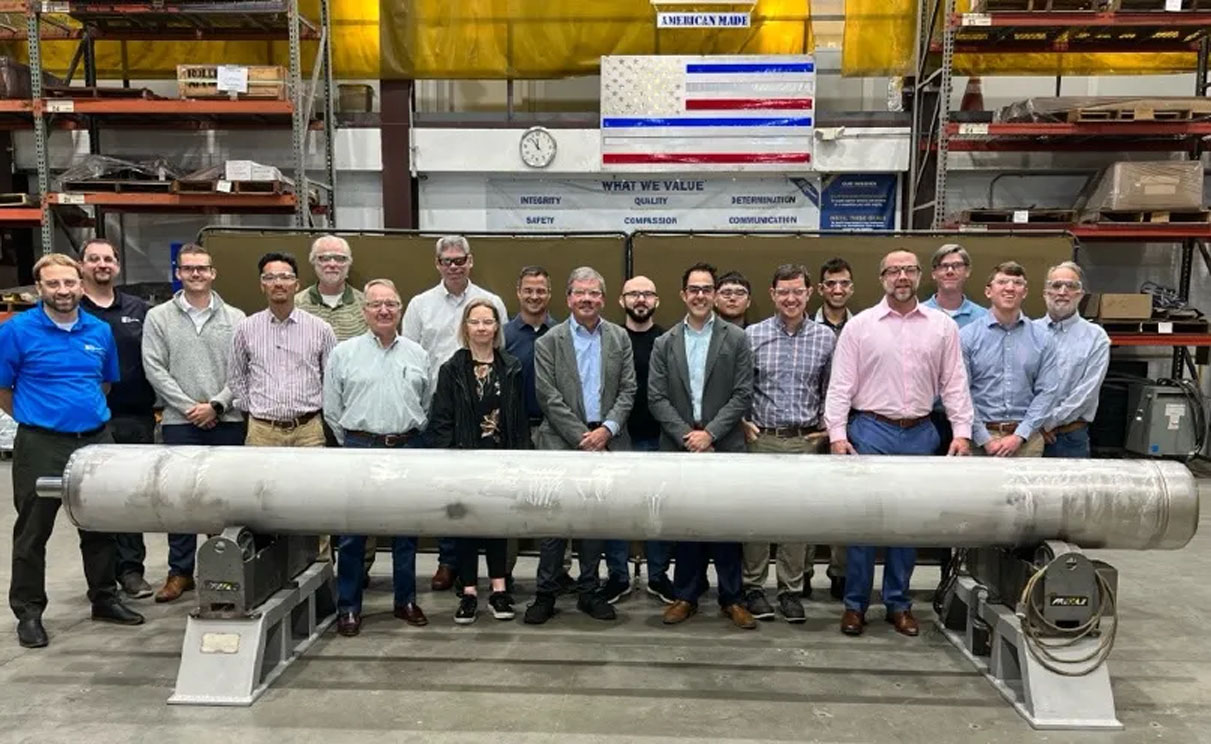
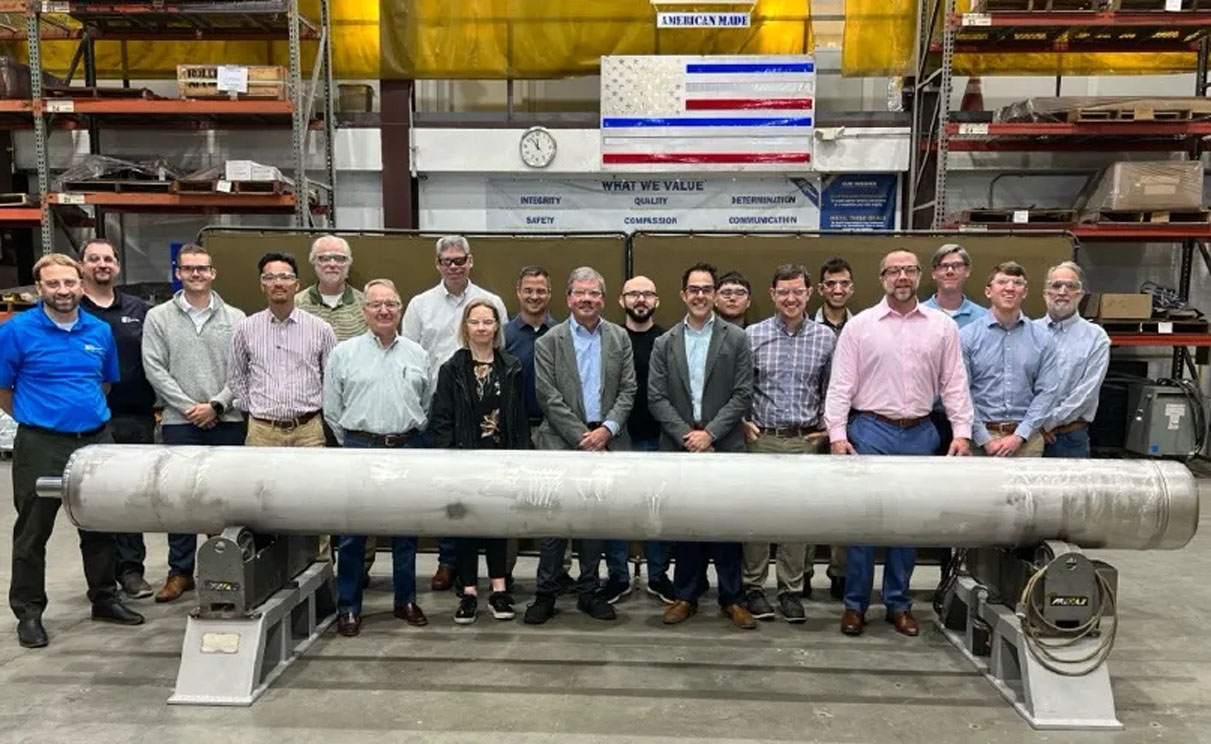
Members of the UPWARDS technical advisory committee stand in front of a prototype universal canister system in 2024. (Photo: Deep Isolation)
Nuclear waste disposal technology company Deep Isolation Nuclear has announced the completion of a three-year project to manufacture, physically test, and validate a disposal-ready universal canister system (UCS) for spent nuclear fuel and high-level radioactive waste from advanced reactors.
Members of the UPWARDS technical advisory committee stand in front of a prototype universal canister system. (Photo: Deep Isolation)
Deep Isolation announced that it hosted its third technical workshop for the UPWARDS project, a Department of Energy Advanced Research Projects Agency-Energy (ARPA-E) initiative aimed at developing a universal canister system (UCS) for the disposal of radioactive waste streams from advanced reactors. The workshop, held at R-V Industries in Honey Brook, Pa., focused on the large-scale manufacturing and commercialization of the UCS.
At INL's Fuel Conditioning Facility, spent nuclear fuel material is being recycled into fuel for Oklo's commercial Aurora Powerhouse deployment at INL. (Photo: INL)
Oklo Inc. announced yesterday that a safety design report for the Aurora fuel fabrication facility the company plans to build at Idaho National Laboratory has the approval of the Department of Energy. At the facility, Oklo plans to use high-assay low-enriched uranium (HALEU) that has been recovered from used Experimental Breeder Reactor-II fuel to produce fuel for its first planned microreactor—dubbed Aurora—which is also set for deployment at INL.
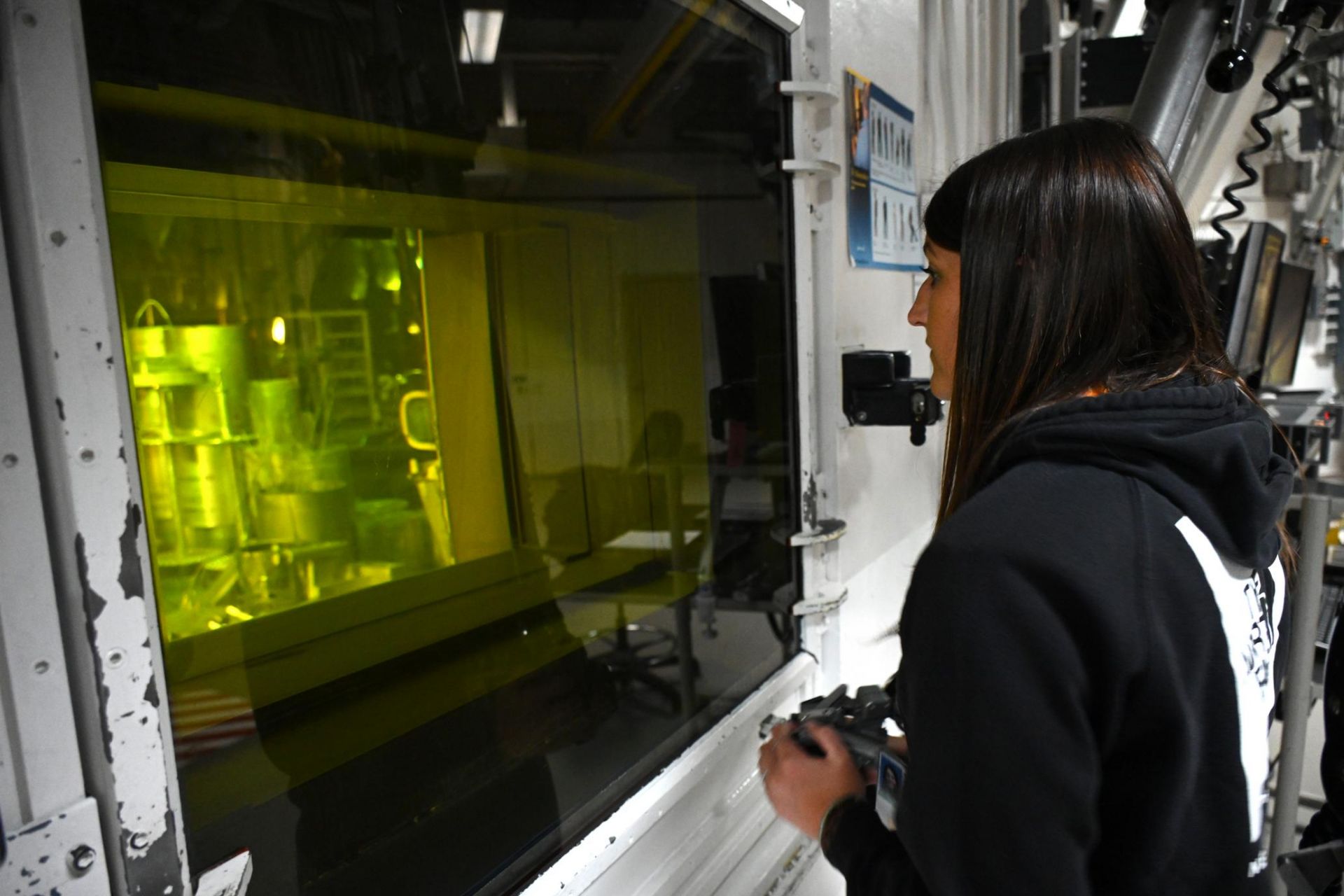
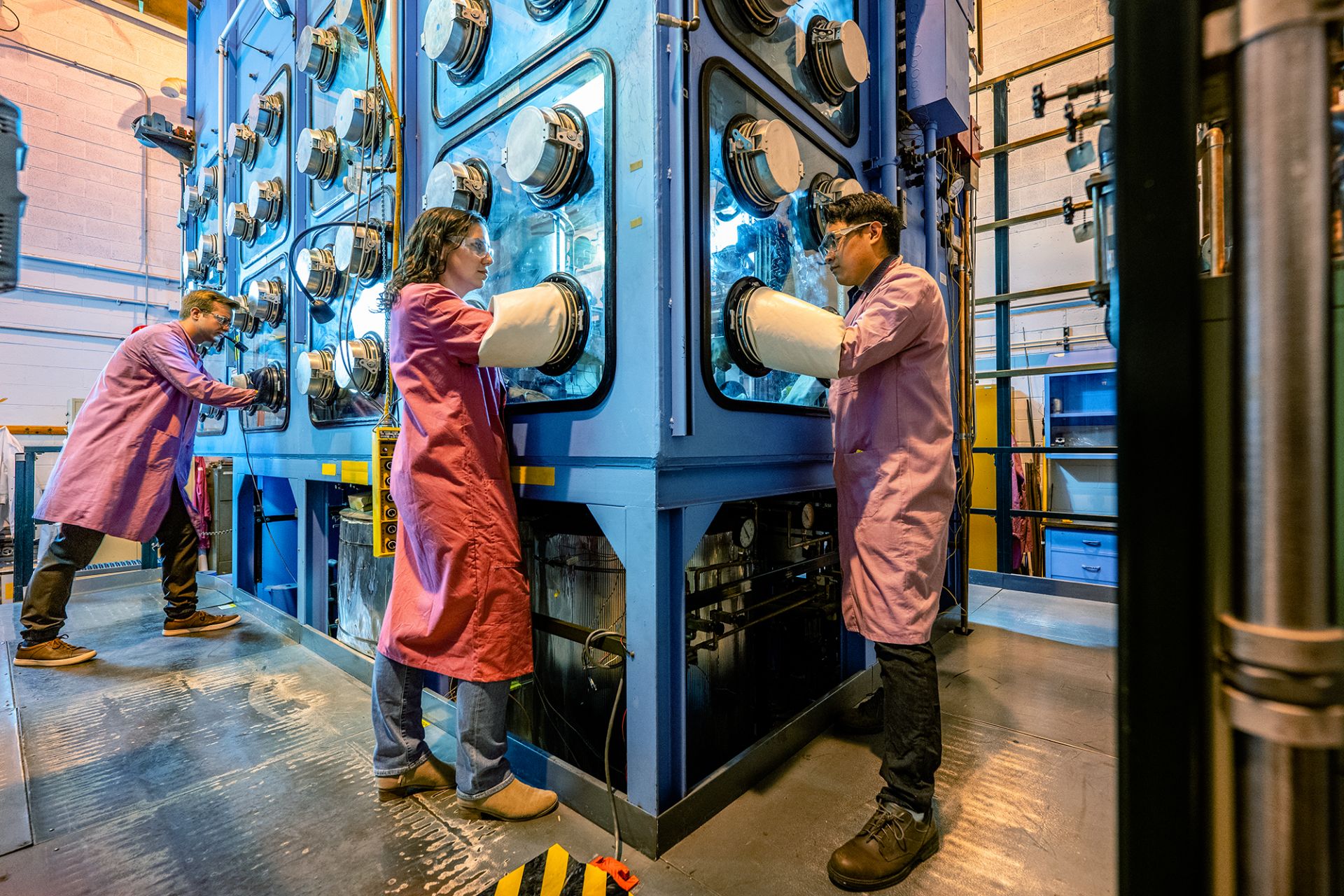
Engineers in Argonne’s Chemical and Fuel Cycle Technologies Division. (Photo: Argonne National Laboratory)
Oklo Inc. announced that it has completed the first end-to-end demonstration of its advanced fuel recycling process as part of an ongoing $5 million project in collaboration with Argonne and Idaho National Laboratories. Oklo’s goal: scaling up its fuel recycling capabilities to deploy a commercial-scale recycling facility that would increase advanced reactor fuel supplies and enhance fuel cost effectiveness for its planned sodium fast reactors.