On track to be the first SMR constructed in North America
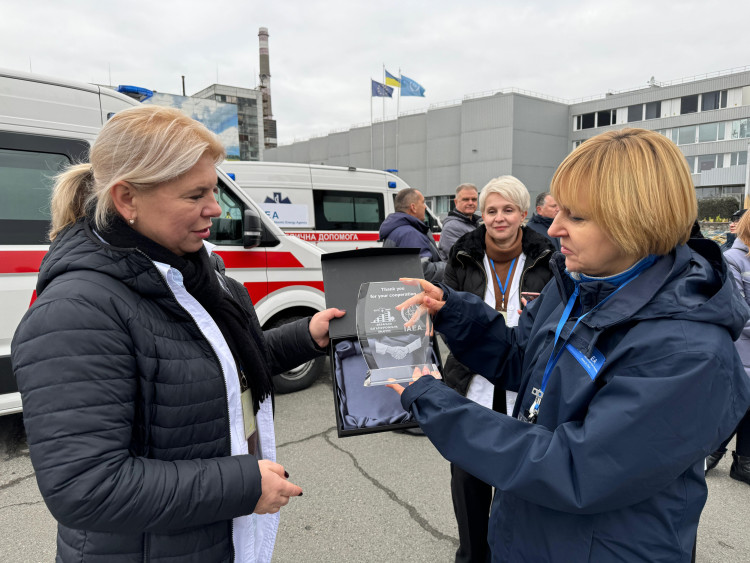
During a November 2024 mission, the IAEA delivered two new ambulances to Ukraine at the Chernobyl site. Varash Hospital director Tetiana Latyshenko is at left, with Liliana Salaru, IAEA senior medical officer, at right. (Photo: IAEA)
The United Nations' nuclear watchdog delivered emergency medical supplies to Ukraine last week as part of ongoing aid to the country since its conflict with Russia began in 2022.
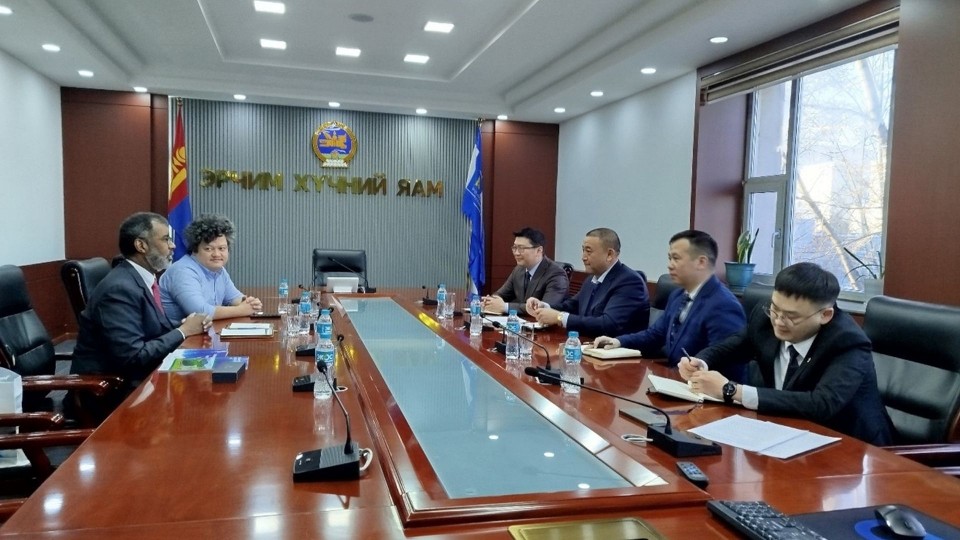
William D. Magwood IV (left) meets with government officials during a visit to Mongolia. (Photo: NEA)
Nuclear Energy Agency Director General William D. Magwood IV visited Mongolia recently for a series of meetings with government representatives and to participate in discussions on nuclear energy development in the country.
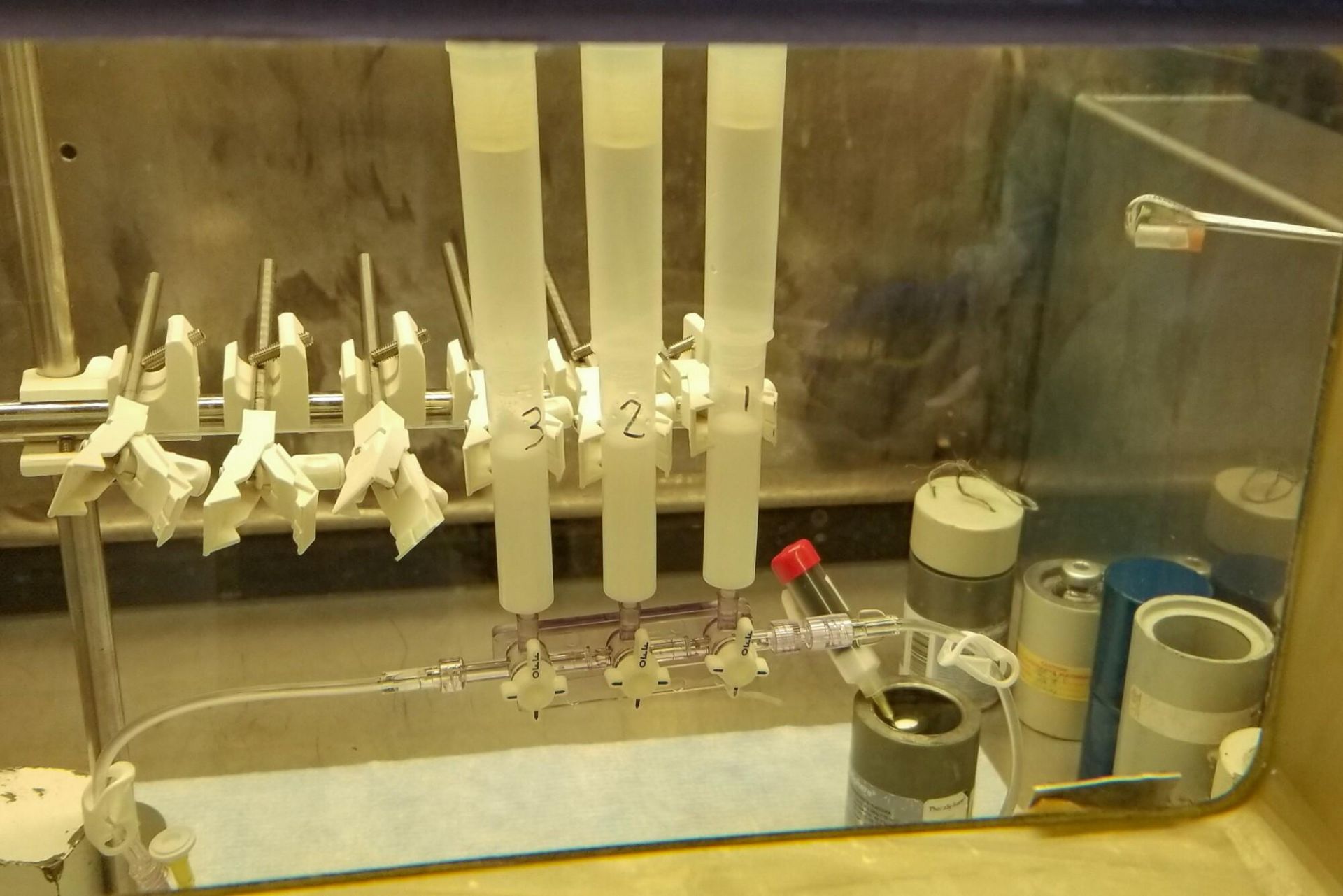
At-211 undergoes purification and a series of quality checks. (Photo: Don Hamlin/University of Washington)
The Department of Energy’s National Isotope Development Center (NIDC) on March 31 announced the successful long-distance shipment in the United States of a biologically active compound labeled with the medical radioisotope astatine-211 (At-211). Because previous shipments have included only the “bare” isotope, the NIDC has described the development as “unleashing medical innovation.”
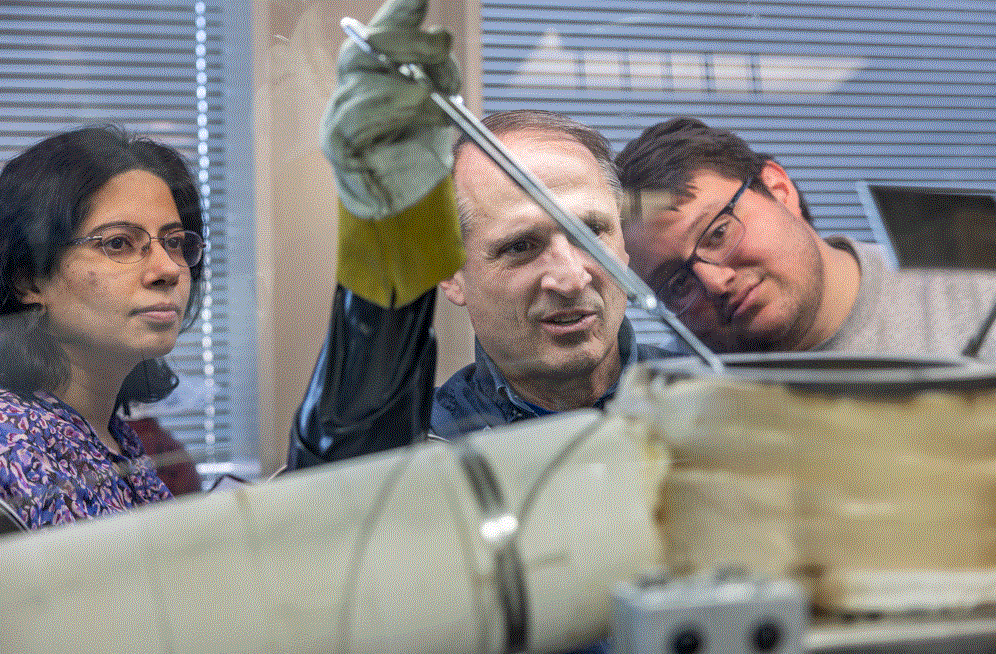
Principal investigator Ruchi Gakhar (left), technician Dean Burt (center), and intern Diego Macias, shown loading salt into the loop. (Photo: INL)
The Department of Energy announced March 31 that a new Molten Salt Flow Loop Test Bed at Idaho National Laboratory recently went through its inaugural test run. The closed-loop test system will allow for continuous monitoring and analysis of chloride-based molten salt reactor technology and instruments before the construction of the Southern Company/TerraPower Molten Chloride Reactor Experiment. MCRE—an experimental fast-spectrum molten salt research reactor—will be built at INL’s repurposed Zero Power Physics Reactor, which has been renamed LOTUS (Laboratory for Operation and Testing in the United States).
A Disa HPSA test unit used in a study in the Navajo Nation. (Photo: Disa Technologies)
The Nuclear Regulatory Commission has received a license application from Disa Technologies to use high-pressure slurry ablation (HPSA) technology for remediating abandoned uranium mine waste at inactive mining sites. Disa’s headquarters in are Casper, Wyo.
Duke Energy's Oconee nuclear power plant. (Photo: Duke Energy)
All three units at the Duke Energy’s Oconee nuclear power plant in South Carolina are now licensed to operate for an additional 20 years.
Southern Nuclear and Westinghouse C-suite executives John Williams, Dan Lipman, and Margaret Cosentino spoke during the Congressional AP1000 Fly-In in Washington D.C. (Source: Westinghouse)
Dozens of Westinghouse employees and supply chain partners descended on Washington, D.C., last week to build legislative support for new nuclear projects.
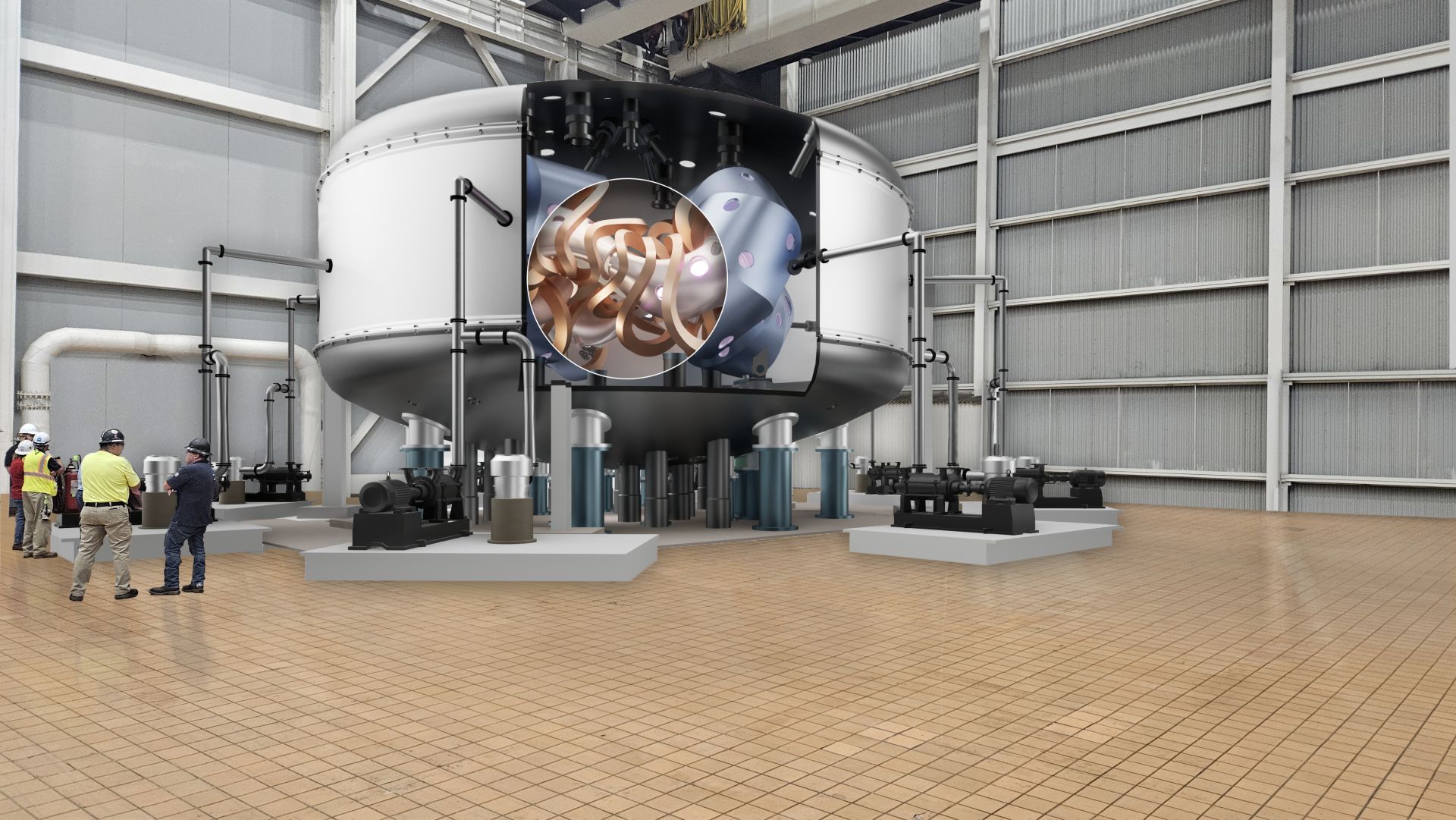
Concept art showing Type One Energy’s Infinity One prototype stellarator inside TVA’s Bull Run fossil plant. (Photo/Image: Business Wire)
Fusion startup Type One Energy has announced the publication of a baseline physics design basis for its proposed Infinity Two stellarator fusion pilot power plant. The design basis was published in a series of seven papers in a special issue of the Journal of Plasma Physics. According to the company, the design basis realistically considers for the first time the relationship between competing requirements for plasma performance, power plant startup, construction logistics, reliability, and economics utilizing actual power plant operating experience.
Xe-100 Dow Seadrift concept art. (Image: X-energy)
Dow and X-energy announced today that they have submitted a construction permit application to the Nuclear Regulatory Commission for a proposed advanced nuclear project in Seadrift, Texas. The project could begin construction later this decade, but only if Dow confirms “the ability to deliver the project while achieving its financial return targets.”
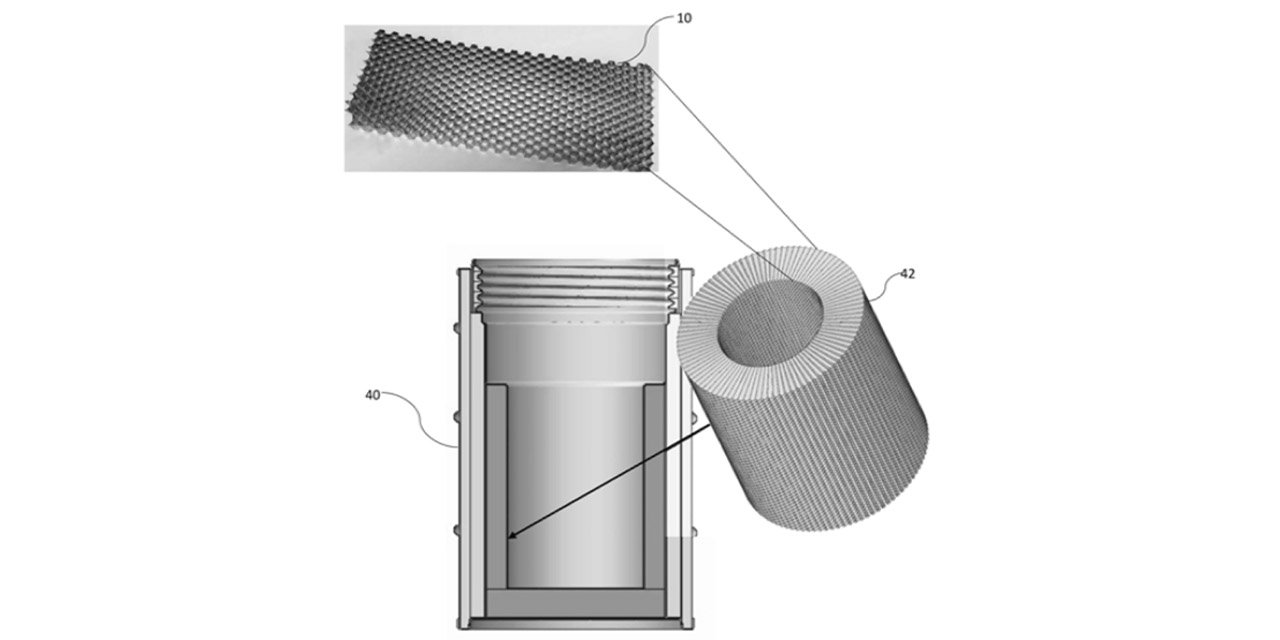
Illustration showing how radially oriented honeycomb structures can be used within a container to provide strength, sound insulation, or thermal insulation. The structure includes multiple radially aligned layers of a shaped strip. (Image: SRNL)
Savannah River National Laboratory said it has received a patent for its radially oriented honeycomb structures. The technology offers a solution to the deformation of cylindrical honeycomb structures when they are formed from flat panels, providing a way to create structures with greater wall thickness than traditional methods.
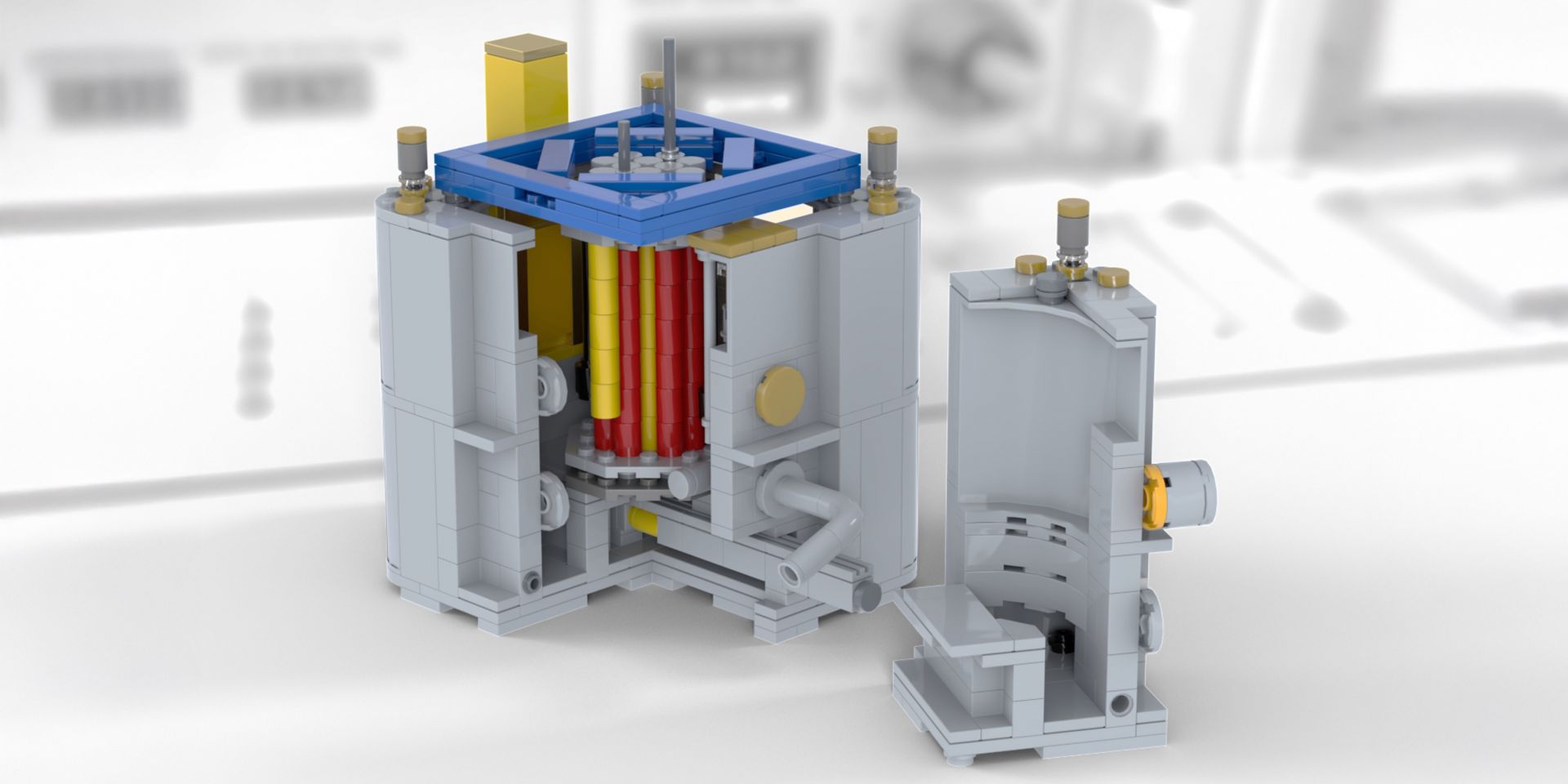
Detailed view of the Lego CROCUS reactor (as seen with Lego Studio software), with the vessel open to reveal the core structure. (Image: Vincent Lamirand)
For many of us, the height of our accomplishments with Lego blocks might have been constructing little square houses as children. For others, these versatile building blocks are a medium for creating complex models of sophisticated machinery—models that have practical and educational applications. One such individual is ANS member Vincent Lamirand, a reactor physicist at the École Polytechnique Fédérale de Lausanne (EPFL) Laboratory for Reactor Physics and Systems Behavior (LRS) in Switzerland.

.svg.png)
 Here is a recap of industry happenings from the recent past: