ANS offers the technical expertise of nuclear professionals to support the state, Tribes, local communities, and the public
WASHINGTON, D.C. — The U.S. Department of Energy (DOE) today announced the selection of five finalist states to host a Nuclear Lifecycle Innovation Campus (NLIC), to be formalized through a memorandum of understanding between DOE and the state.
ANS President Mark Peters congratulated each of the NLIC finalist states: Idaho, Louisiana, Oklahoma, Tennessee, and Utah.
"Hosting a Nuclear Lifecycle Innovation Campus will mean multigenerational job creation, sustained economic growth, and new investment in education and workforce development, all while capturing the full value of nuclear energy," said Peters.
"This is an important step in evaluating how the United States can strengthen its nuclear fuel cycle and expand domestic nuclear capabilities," continued Peters. "ANS and its members stand ready to help state leaders and local communities address the technical questions ahead."
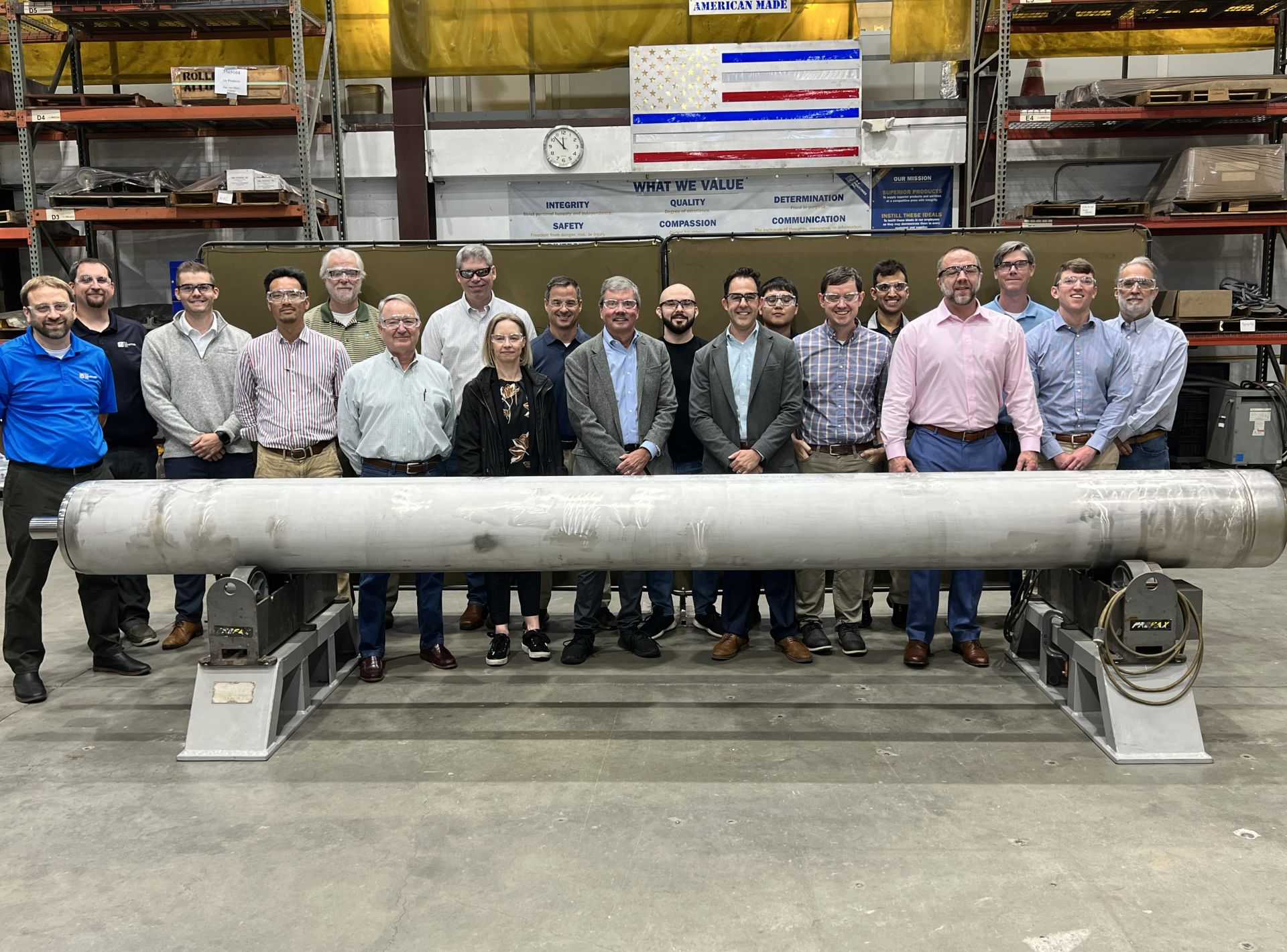
Technical advisory committee members in front of a full-scale universal nuclear waste canister prototype developed through ARPA-E’s UPWARDS program. (Photos: Deep Isolation)
At COP28, held in Dubai in 2023, a clear consensus emerged: Nuclear energy must be a cornerstone of the global clean energy transition. With electricity demand projected to soar as we decarbonize not just power but also industry, transport, and heat, the case for new nuclear is compelling. More than 20 countries committed to tripling global nuclear capacity by 2050. In the United States alone, the Department of Energy forecasts that the country’s current nuclear capacity could more than triple, adding 200 GW of new nuclear to the existing 95 GW by mid-century.
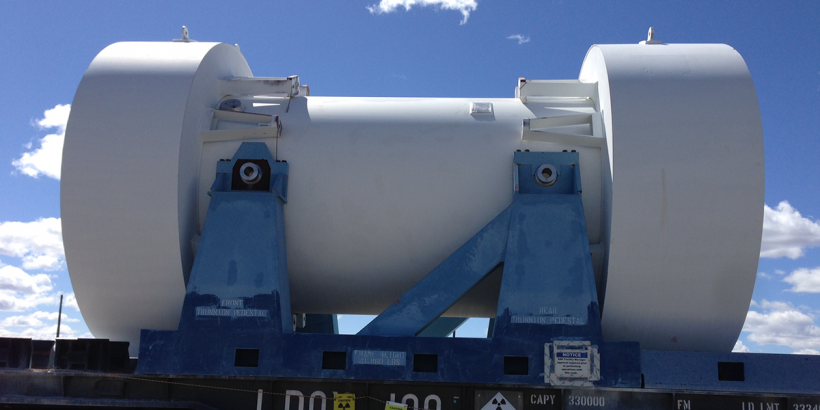
A spent nuclear fuel transportation container. (Photo: DOE)
Fusion systems company SHINE Technologies has notified the Nuclear Regulatory Commission that it intends to submit a license application to build and operate a pilot used nuclear fuel recycling facility.
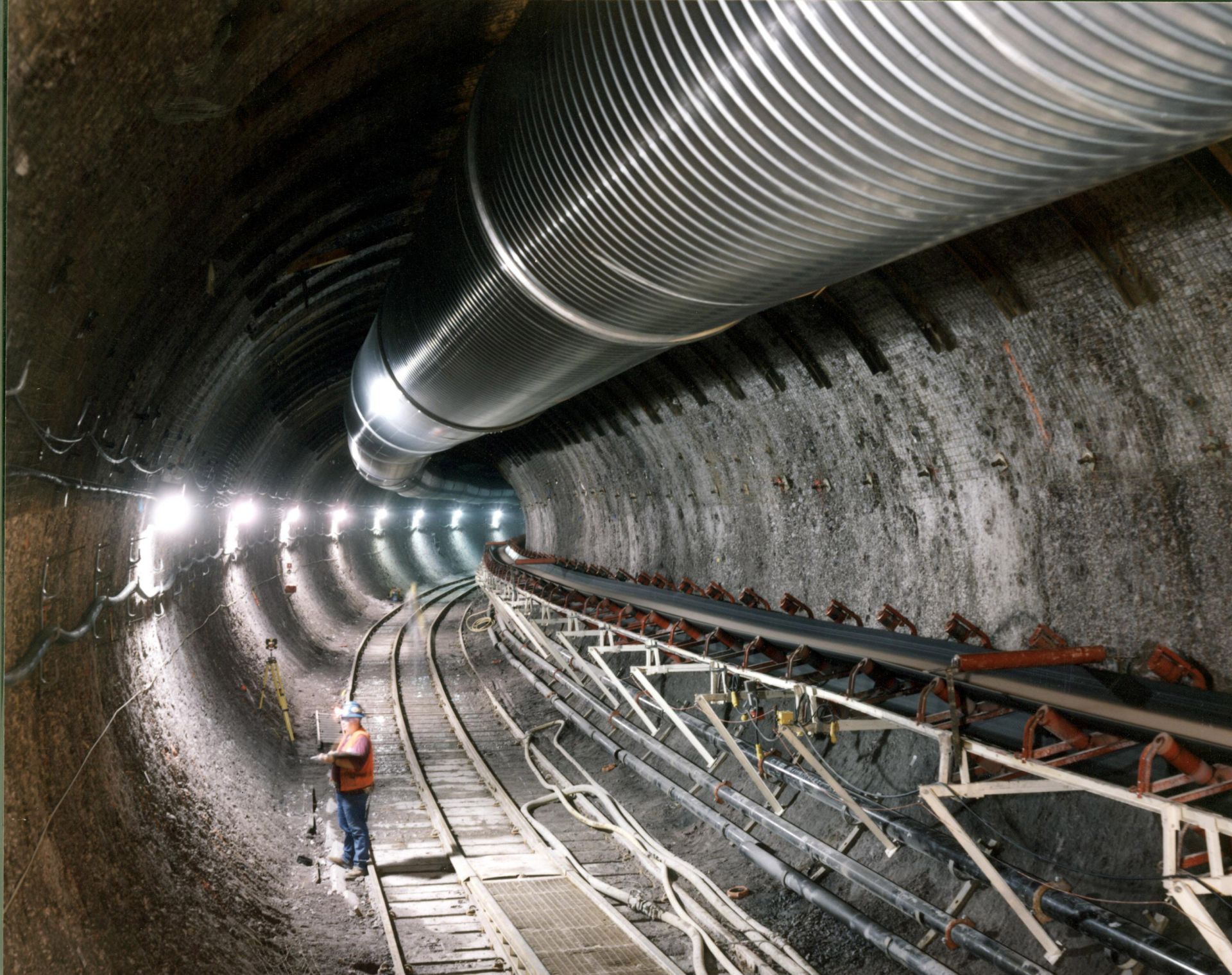
The underground Exploratory Studies Facility at Yucca Mountain in Nevada built by the Department of Energy to determine whether the location was suitable as a deep geological nuclear waste repository. Courtesy of the Department of Energy.
It is no secret that the U.S. government’s program to manage and dispose of used nuclear fuel and high-level radioactive waste is in a deep ditch. Private companies continue to safely store used fuel at U.S. nuclear reactor sites, some of which ceased power operations decades ago. Other countries, such as Finland, Sweden, France, Canada, Switzerland, Russia, and China, are moving forward on permanent disposal, while for the past 11 years, the U.S. government has done nothing constructive to discharge its HLW disposal responsibilities. Rather than taking action, successive Congresses and administrations have sat on their collective hands.

 rotated.jpg)