INL’s HFEF celebrates landmark status with plaque unveiling
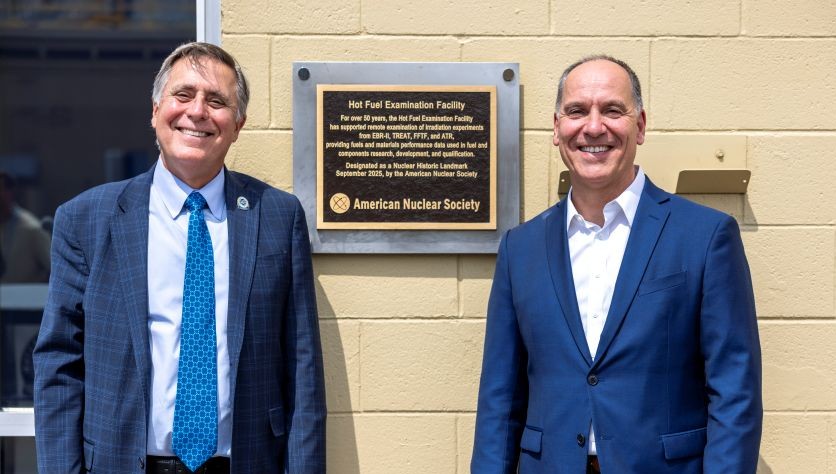
American Nuclear Society President Mark Peters visited Idaho National Laboratory on August 12 to unveil the plaque that officially designates the Hot Fuel Examination Facility (HFEF) a Nuclear Historic Landmark.
Landmark status was conferred on HFEF last October. It is INL’s 10th landmark on the list and one of 101 the Society has honored since 1985. ANS’s Nuclear Historic Landmark Award memorializes sites and facilities where outstanding physical accomplishments that advanced the peaceful uses of nuclear energy have taken place. The award recognizes facilities that were in service at least 20 years ago.
Also on hand for the ceremony were John Wagner, INL director; Jess Gehin, associate lab director for nuclear science
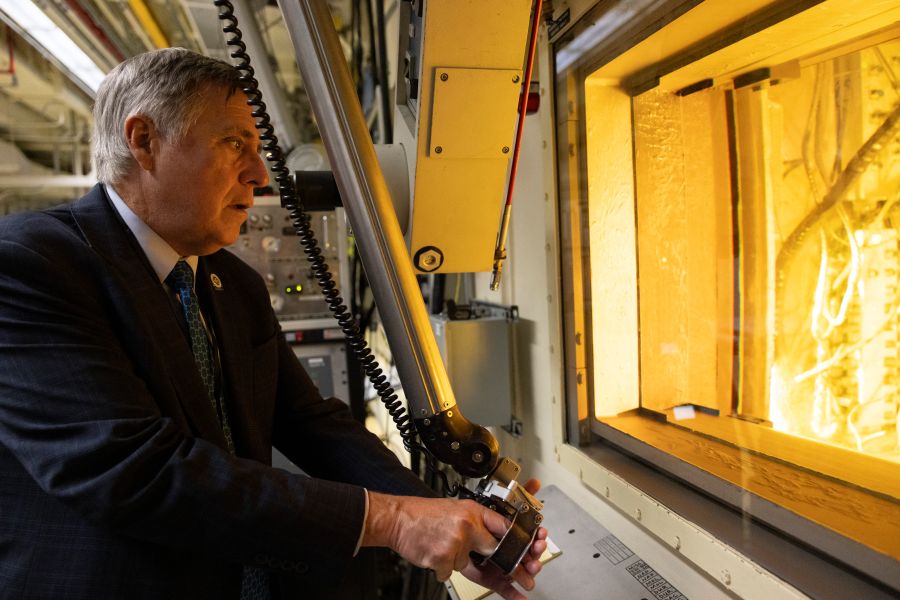
ANS President Mark Peters at HFEF’s hot cell. (Photo: INL)
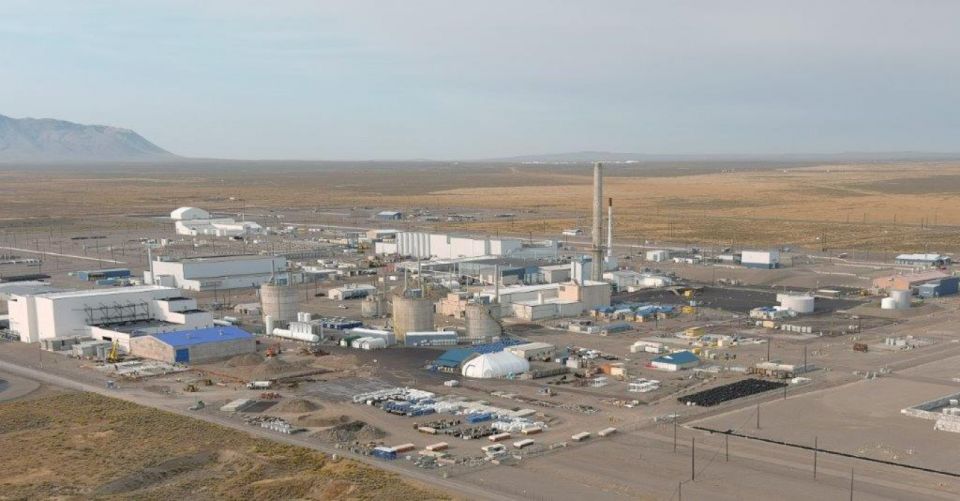
and technology; Fabiola Cappia, fuels postirradiation examinations division director; Eric Papaionnou, environment, safety, health & quality executive director; and other INL leadership and staff. The crowd gathered outside of HFEF, which is located in INL’s Materials and Fuels Complex, to hear remarks and celebrate the achievement. After speeches and the unveiling of the plaque, Peters and a small group toured HFEF to learn more about the current work being done in the facility.
Quotable: Social media posts captured the pride of the moment, which was decades in the making. Peters shared on LinkedIn that the day was particularly meaningful for him, as a past director of INL, because the lab played such an important role in his professional journey. “HFEF is more than a remarkable facility—it represents generations of scientists, engineers, operators, technicians, and support teams who have built and sustained a capability that has served the nation for more than half a century,” he said.
Wagner shared similar sentiments, saying, “HFEF was built by people who had the foresight to design not only for the mission in front of them, but for missions they couldn't yet imagine. . . . Today, we're living that future mission. My predecessor and current ANS president said it best: ‘It takes generations of work to get to a summer like this.’”
Some background: In his remarks at the celebration, Wagner highlighted the decades of researchers, engineers, technicians, and operators who have worked at HFEF and moved its mission forward, and how the facility is playing an important role in America’s nuclear resurgence.
Established in 1975, HFEF houses the largest inert atmosphere hot cell in the United States for the postirradiation examination of nuclear fuels and materials. It is also home to the Neutron Radiography Reactor (NRAD), a TRIGA reactor in operation since 1977 that produces detailed radiographic images of irradiated fuels and materials. Most recently, NRAD was used to perform zero-power criticality testing of Deployable Energy’s Unity demonstration reactor to validate its core physics.
According to Douglas Crawford, chief reactors technologist at the Materials and Fuels Complex, “In its second half-century, HFEF’s workload is as heavy as it’s ever been. HFEF’s flexibility and continued adaptation to changing needs over 50 years is remarkable.”


.jpg)