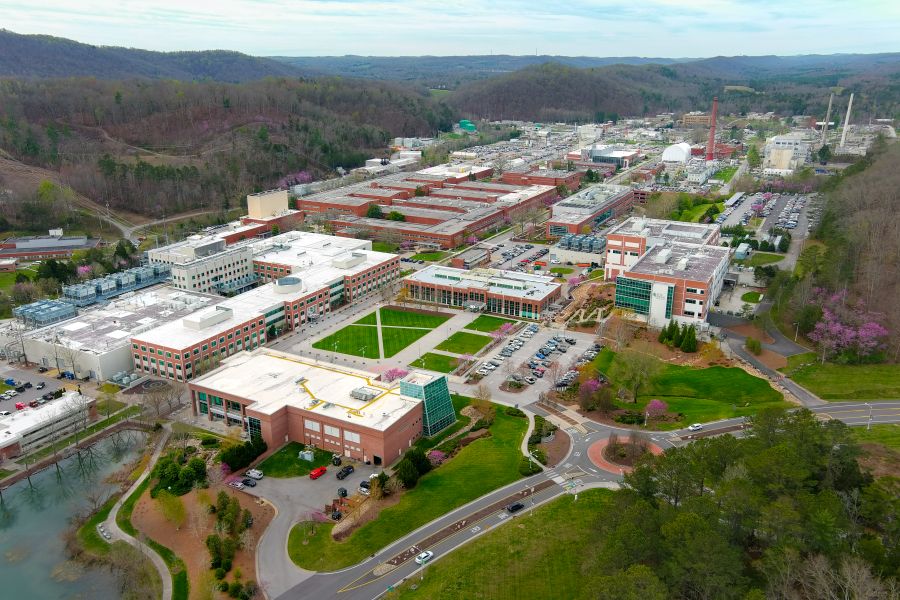
An aerial view of ORNL's East and Central Campus. The Oak Ridge, Tenn., area could host Nuclear Lifecycle Innovation Campus functions. (Photo: ORNL)
In January, the Department of Energy announced its new Nuclear Lifecycle Innovation Campus (NLIC) program, inviting states via a request for information to express their interest in hosting a facility supporting work from the front to the back end of the nuclear fuel cycle.
By April, 26 states had expressed interest in hosting such a facility. At the end of July, the DOE signed memorandums of understanding with five states—Idaho, Louisiana, Oklahoma, Tennessee, and Utah—to more closely explore the possibilities of state-federal partnerships. These MOUs are not firm commitments from either the federal or state governments. Time will tell which—if any—of the five states develop projects through the program. In the meantime, today, we are taking a close look at what Utah, Idaho, Tennessee can offer in terms of a preexisting nuclear sector that could support new fuel cycle developments.
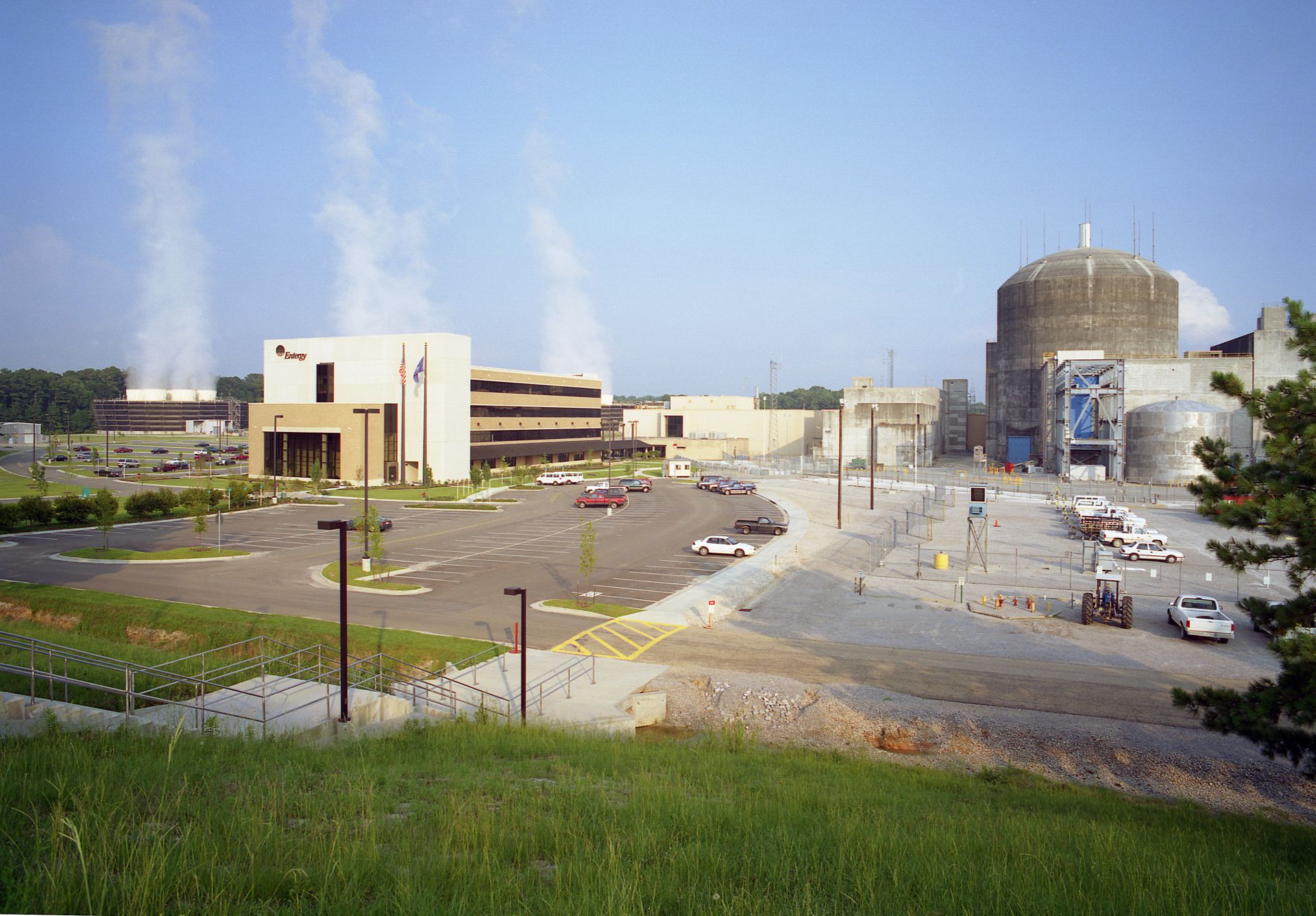
The River Bend nuclear power plant in St. Francisville, La. (Photo: NRC)
In January, the Department of Energy announced a new Nuclear Lifecycle Innovation Campus (NLIC) program, inviting states via a request for information to express their interest in hosting a facility supporting work from the front to the back end of the fuel life cycle.
By April, 26 states had expressed their interest in hosting such a facility. At the end of July, the DOE signed memorandums of understanding with five states (Idaho, Louisiana, Oklahoma, Tennessee, and Utah) to more closely explore the possibilities of state-federal partnerships. These MOUs are not firm commitments from either the federal or state governments. Time will tell which—if any—of the five states develop projects through the program. In the meantime, today, we are taking a close look at what Oklahoma and Louisiana can offer in terms of a preexisting nuclear sector that could support new fuel cycle developments.
ANS offers the technical expertise of nuclear professionals to support the state, Tribes, local communities, and the public
WASHINGTON, D.C. — The U.S. Department of Energy (DOE) today announced the selection of five finalist states to host a Nuclear Lifecycle Innovation Campus (NLIC), to be formalized through a memorandum of understanding between DOE and the state.
ANS President Mark Peters congratulated each of the NLIC finalist states: Idaho, Louisiana, Oklahoma, Tennessee, and Utah.
"Hosting a Nuclear Lifecycle Innovation Campus will mean multigenerational job creation, sustained economic growth, and new investment in education and workforce development, all while capturing the full value of nuclear energy," said Peters.
"This is an important step in evaluating how the United States can strengthen its nuclear fuel cycle and expand domestic nuclear capabilities," continued Peters. "ANS and its members stand ready to help state leaders and local communities address the technical questions ahead."