Attend its official launch online March 20
A new report from the Atlantic Council Global Energy Center follows up on its 2024 workshops with recommendations for deploying advanced nuclear energy in the Appalachian area to spur economic development.
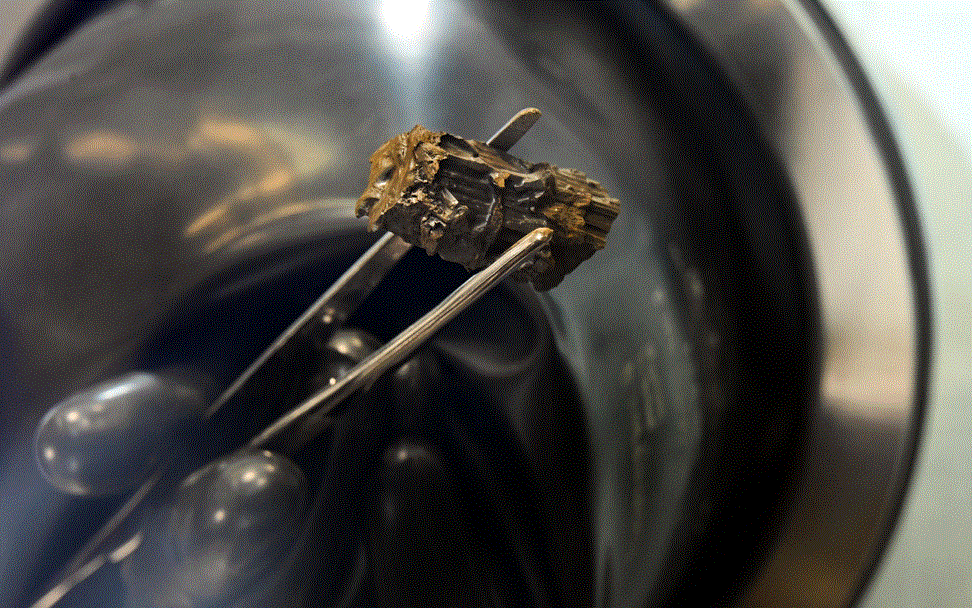
Uranium chloride fuel salt. (Photo: INL)
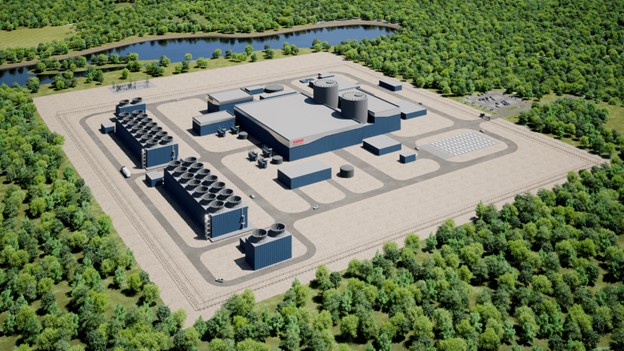
Scientists at Idaho National Laboratory continue to make progress on the Molten Chloride Reactor Experiment (MCRE), which entails research and development for the first operational advanced nuclear reactor to use a mixture of molten chloride salt and uranium as fuel and coolant. The experiment is evaluating the safety and physics of the molten chloride fast reactor that Southern Company and TerraPower are planning to build.
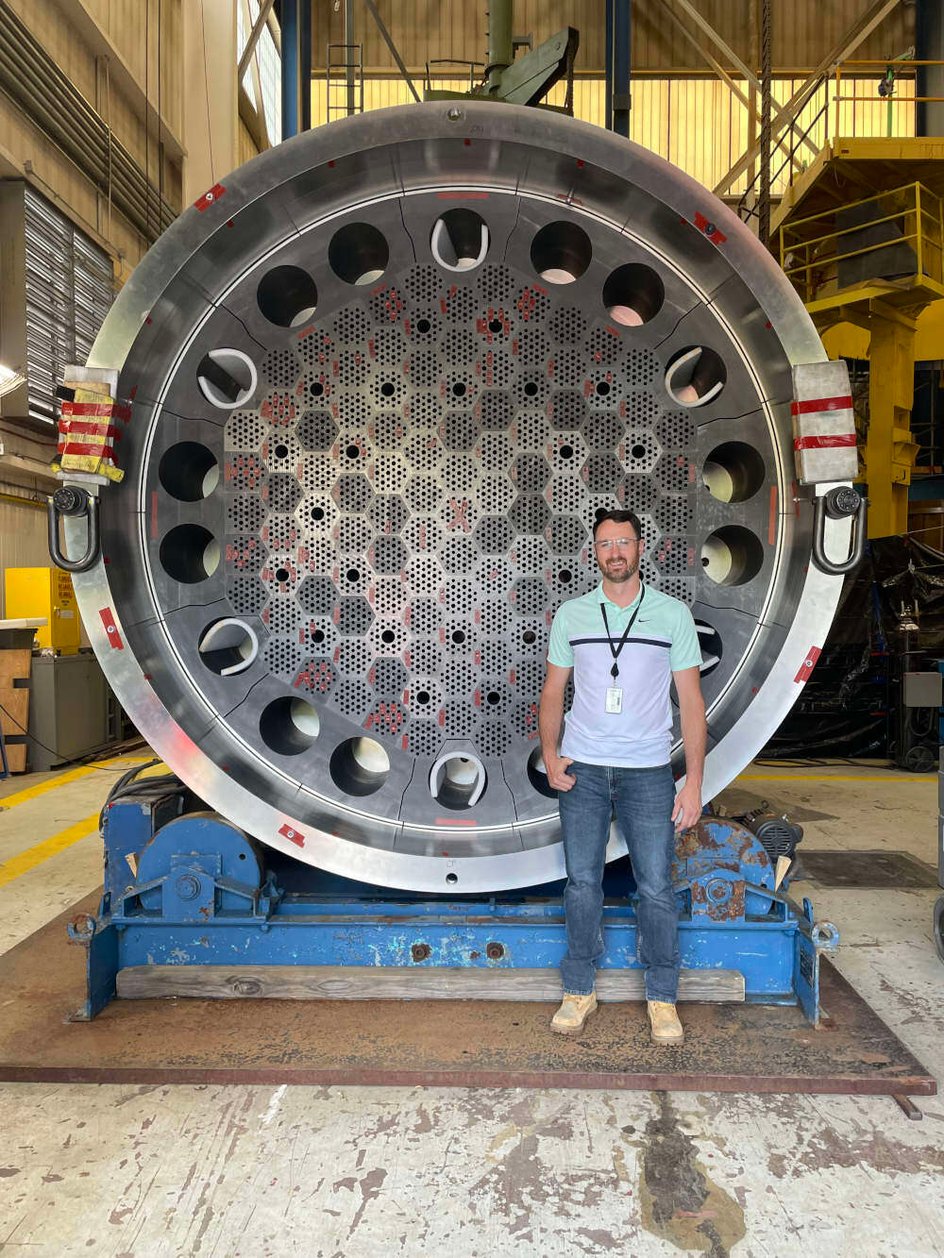
A cross-section of an eVinci microreactor at the eVinci Technology Hub in Etna, Pa. (Photo: Westinghouse)
Penn State and Westinghouse Electric Company are working together to site a new research reactor on Penn State’s University Park, Pa., campus: Westinghouse’s eVinci, a HALEU TRISO-fueled sodium heat-pipe reactor. Penn State has announced that it submitted a letter of intent to host and operate an eVinci reactor to the Nuclear Regulatory Commission on February 28 and plans to engage with the NRC on specific siting decisions. Penn State already boasts the Breazeale reactor, which began operating in 1955 as the first licensed research reactor at a university in the United States. At 70, the Breazeale reactor is still in operation.
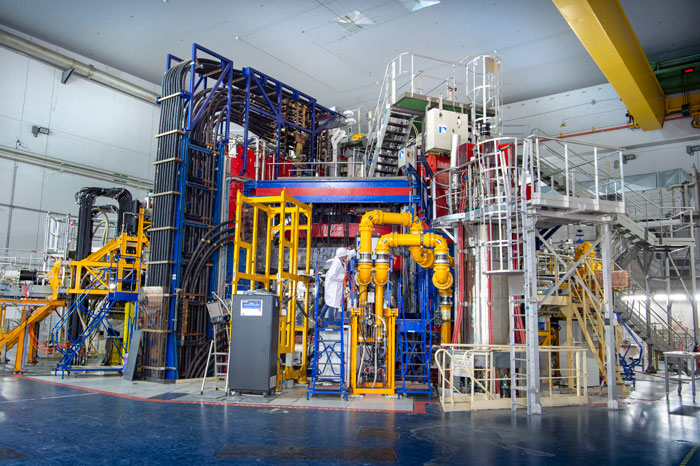
The WEST tokamak. (Photo: L. Godart/CEA)
The French magnetic confinement fusion tokamak known as WEST maintained a plasma in February for more than 22 minutes—1,337 seconds, to be precise—and “smashed” the previous record plasma duration for a tokamak with a 25 percent improvement, according to the CEA, which operates the machine. The previous 1,006-second record was set by China’s EAST just a few weeks prior. Records are made to be broken, but this rapid progress illustrates a collective, global increase in plasma confinement expertise, aided by tungsten in key components.
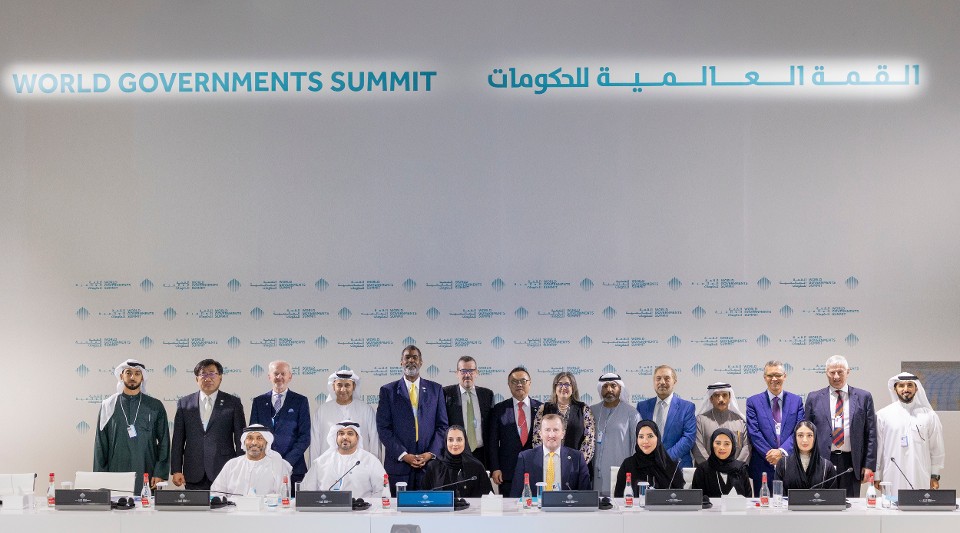
Participants of the roundtable on the potential of artificial intelligence to accelerate SMRs, organized during the World Governments Summit in collaboration with the OECD NEA. (Photo: OECD NEA)
A panel on the potential of artificial intelligence to accelerate small modular reactors was held at the World Governments Summit (WGS) in February in Dubai, United Arab Emirates. The OECD Nuclear Energy Agency cohosted the event, which attracted leaders from developers, IT companies, regulators, and other experts.
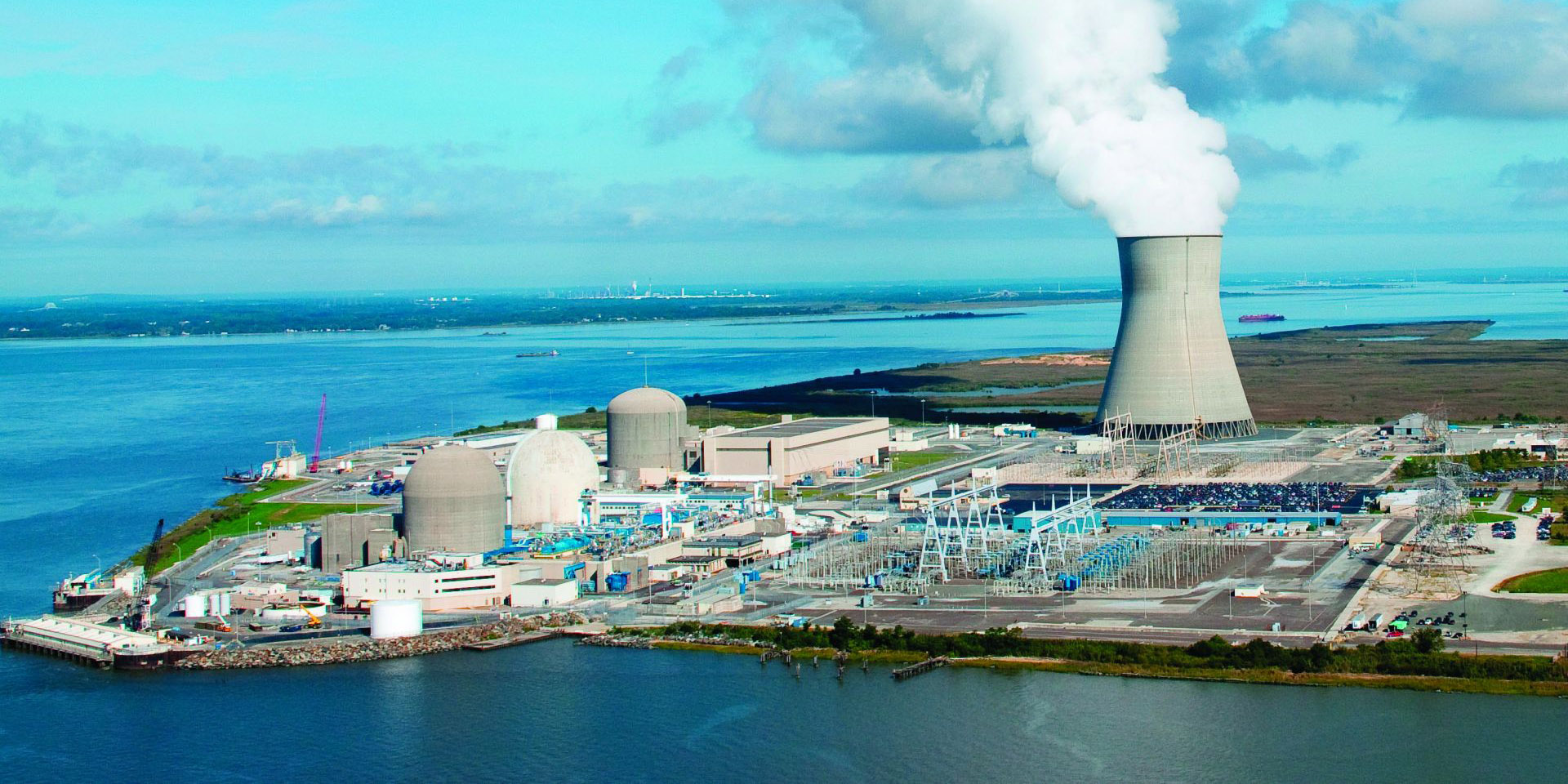
The Hope Creek and Salem nuclear power plants. (Photo: PSE&G)
The Nuclear Regulatory Commission is conducting a special inspection at Hope Creek nuclear plant in New Jersey to investigate the cause of repeated inoperability of one of the plant’s emergency diesel generators, the agency announced in a February 25 news release.
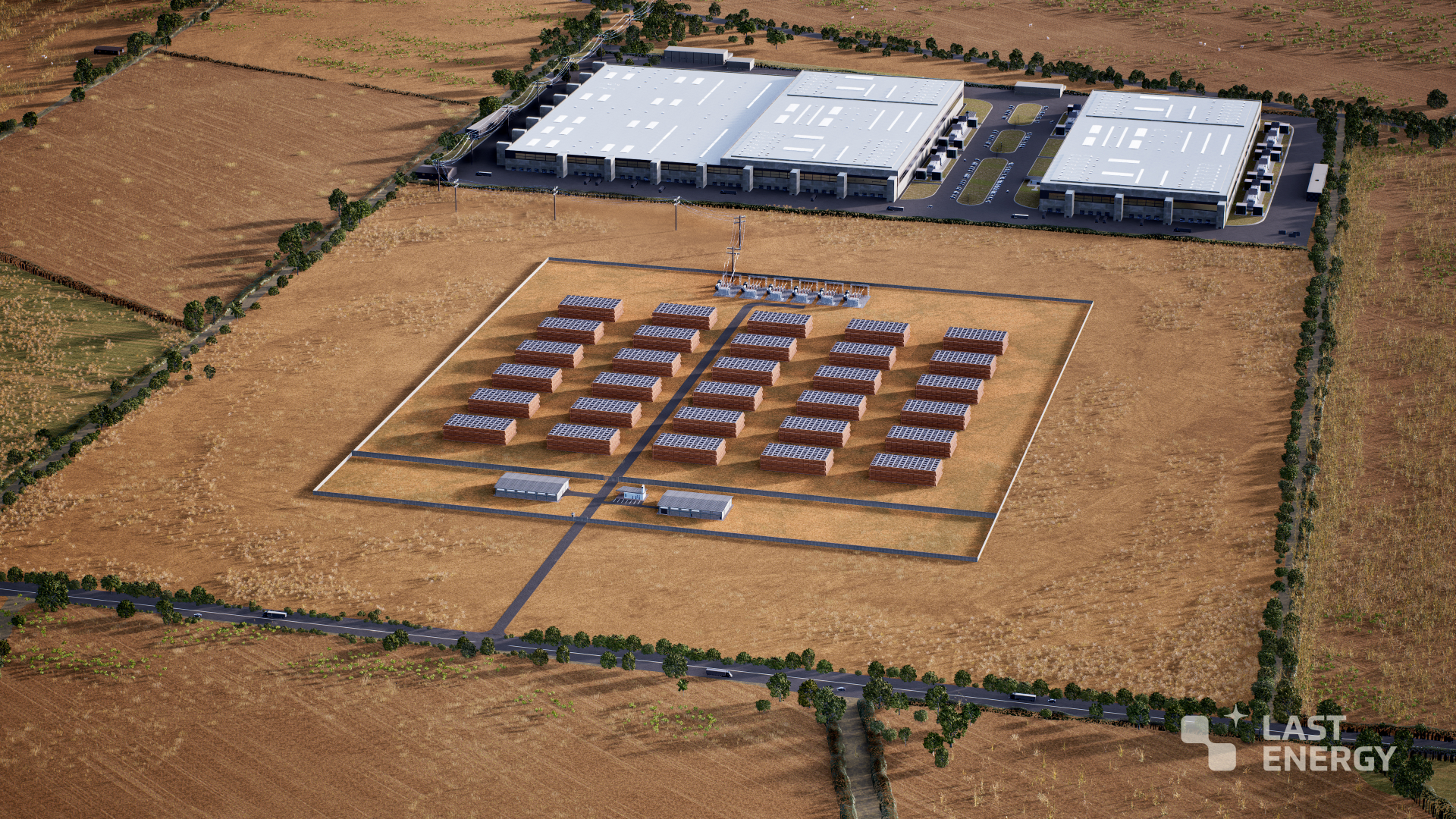
A rendering of Last Energy’s plan to site 30 microreactors in northwestern Texas to power data centers. (Image: Last Energy)
February has been big for nuclear in the state of Texas. On February 2, Governor Greg Abbott declared “It’s time for Texas to lead a nuclear power renaissance in the United States.” Two days later, Texas A&M University invited four advanced reactor developers—Aalo Atomics, Kairos Power, Natura Resources, and Terrestrial Energy—to build nuclear capacity on its RELLIS campus. On February 18 Natura announced plans for two 100-MWe molten salt reactors—one at TAMU RELLIS and the other in the Permian Basin—through a partnership with the Texas Produced Water Consortium and Texas Tech University. And today, Last Energy announced plans to site 30 microreactors—20-MWe pressurized water reactors—at a 200-acre site in northwestern Texas to power data centers.
Abdussami poses with UMich NERS professor Aditi Verma at the ANS Winter Conference in 2023. (Photo: Muhammad Rafiul Abdussami)
Muhammad Rafiul Abdussami is hoping to “shape a brighter future” through innovative approaches to nuclear engineering. The young native of Bangladesh, who is known to friends and colleagues as Rafiul, is a doctoral student in his third year in the University of Michigan’s Department of Nuclear Engineering and Radiological Sciences (UMich NERS). He expects to graduate in December 2026. He is also enrolled in the Science, Technology, and Public Policy (STPP) graduate certificate program in the UMich Ford School of Public Policy.
February 26, 2025, 9:30AMUpdated February 26, 2025, 9:30AMNuclear NewsEd Warman Ed Warman in 1990 (left), when he was named an ANS Fellow, and in 2019 (right) with a great-granddaughter, who is wearing a Soviet hat that was bought from a Russian soldier the day before the Red Army evacuated Prague in 1991.
We welcome ANS members with long careers in the community to submit their own stories so that the personal history of nuclear power can be capured. For information on submitting your stories, contact nucnews@ans.org.
When I graduated from Scranton University in 1956 with a B.S. in physics, I was in awe of the nuclear era and determined to be part of a nuclear future. Fortunately, I landed a position with Pratt & Whitney Aircraft as part of the Aircraft Nuclear Propulsion program. The position included a one-year assignment as a visiting staff member at Oak Ridge National Laboratory.
The nuclear fuel reprocessing plant product store at Sellafield. (Photo: NDA)
The United Kingdom’s Nuclear Decommissioning Authority has announced that it will establish a Plutonium Ceramics Academic Hub with the Universities of Manchester and Sheffield. The announcement follows a decision by the U.K. government in January to immobilize the country’s inventory of civil separated plutonium at the Sellafield nuclear site, mitigating the material’s long-term safety and security risks.
A rendering of Holtec’s dual-unit SMR-300. (Image: Holtec)
Leaders from Holtec International and Hyundai Engineering & Construction gathered at the Palisades site in western Michigan today to announce an “expanded cooperation agreement” to build a 10-GW fleet of Holtec-designed SMR-300s in North America. That fleet’s first builds would be at Palisades, where Holtec is now focused on restarting the site’s shuttered 777-MWe pressurized water reactor by the end of this year. Under the “Mission 2030” plan launched today, Holtec would then build a pair of SMR-300 PWRs at the Palisades site—targeting operation in 2030.



.png)

 The Nuclear Regulatory Commission has published its 2024–2025