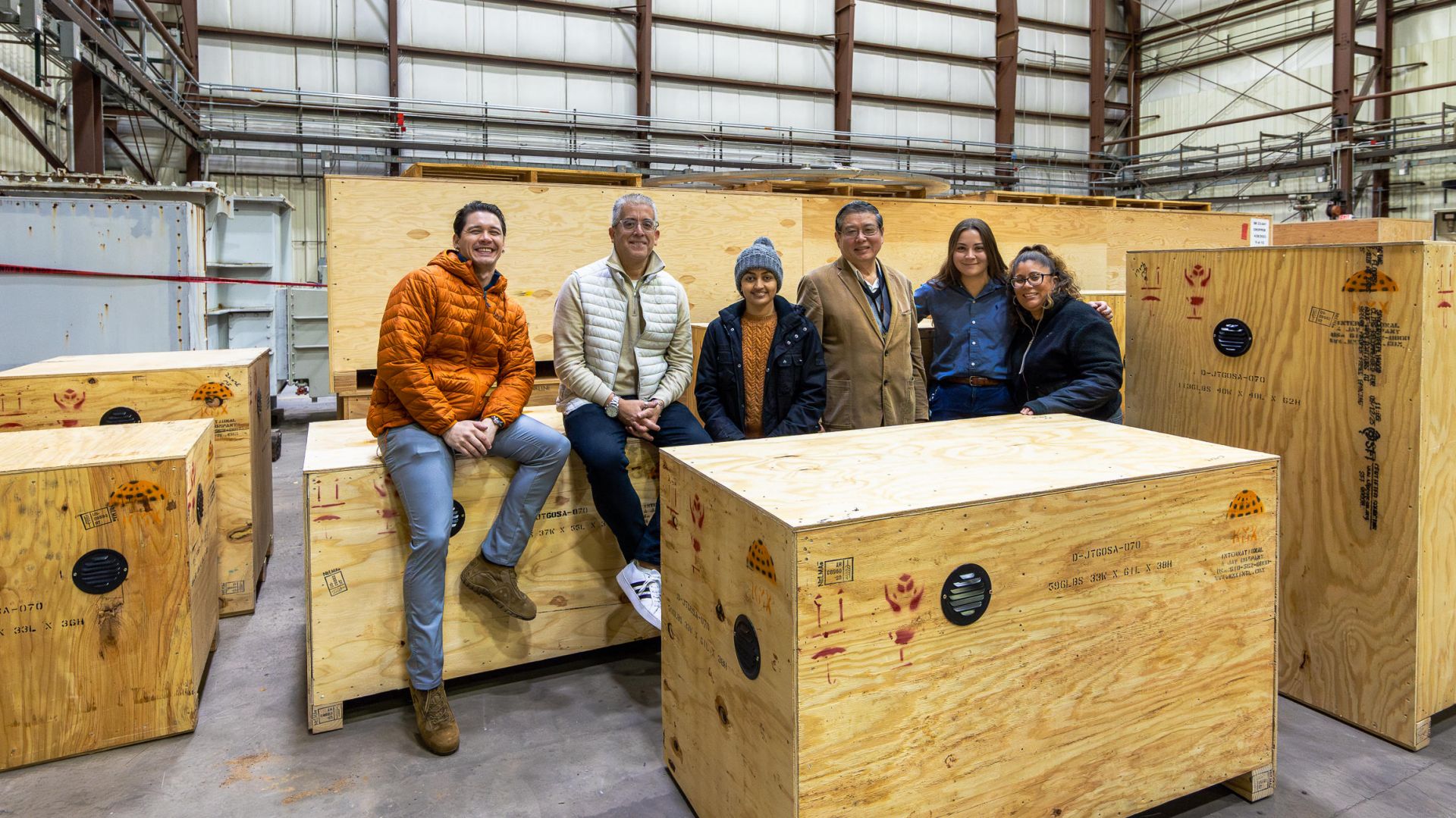
PPPL staff pose with the shipping crates containing an XCIS system ready to be shipped to Japan. (Photo: PPPL)
As researchers continue to seek ways to better understand the plasma inside fusion machines to fully harness fusion energy, Princeton Plasma Physics Laboratory is leading a project to provide new X-ray imaging systems to two international tokamak projects: WEST, in southern France, and JT-60SA, in Japan—both of which are designed to support the development of ITER.
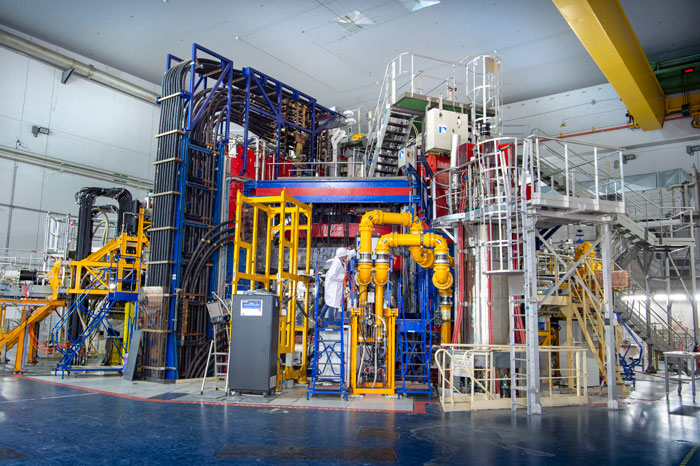
The WEST tokamak. (Photo: L. Godart/CEA)
The French magnetic confinement fusion tokamak known as WEST maintained a plasma in February for more than 22 minutes—1,337 seconds, to be precise—and “smashed” the previous record plasma duration for a tokamak with a 25 percent improvement, according to the CEA, which operates the machine. The previous 1,006-second record was set by China’s EAST just a few weeks prior. Records are made to be broken, but this rapid progress illustrates a collective, global increase in plasma confinement expertise, aided by tungsten in key components.
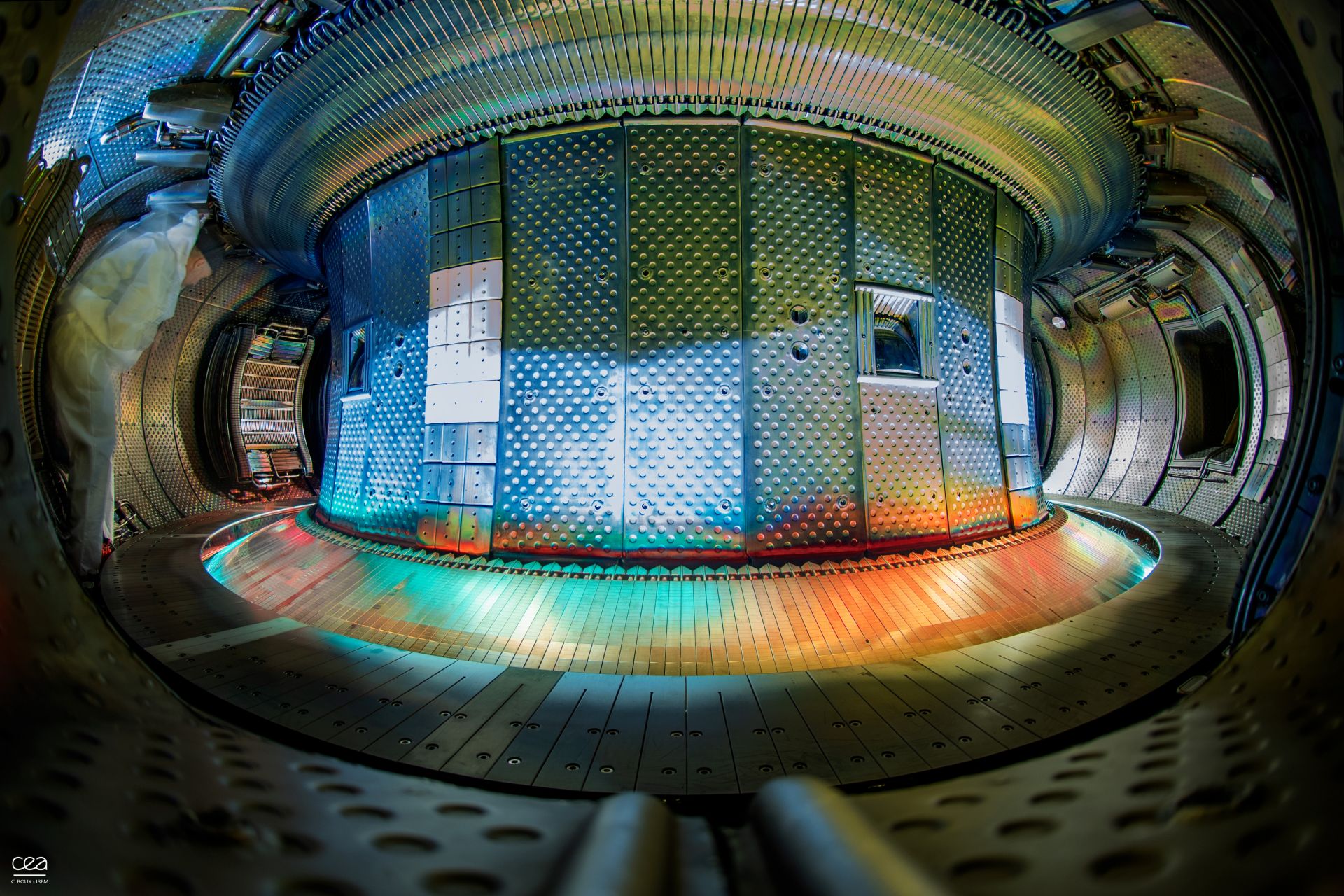
The vacuum vessel of the WEST. (Photo: CEA)
Research by scientists at the Department of Energy’s Princeton Plasma Physics Laboratory (PPPL) and collaborating institutions has the potential to improve plasma performance in tokamak nuclear fusion reactors, according to a recent paper in Nuclear Fusion. The research focused on the use of a PPPL-developed dropper to apply coatings of boron powder to the tungsten components inside a tokamak, thereby helping protect the tungsten against the intensely hot plasma. According to lead author Grant Bodner, this process offers “a way to deposit boron coatings without turning off the tokamaks’ magnetic field.”