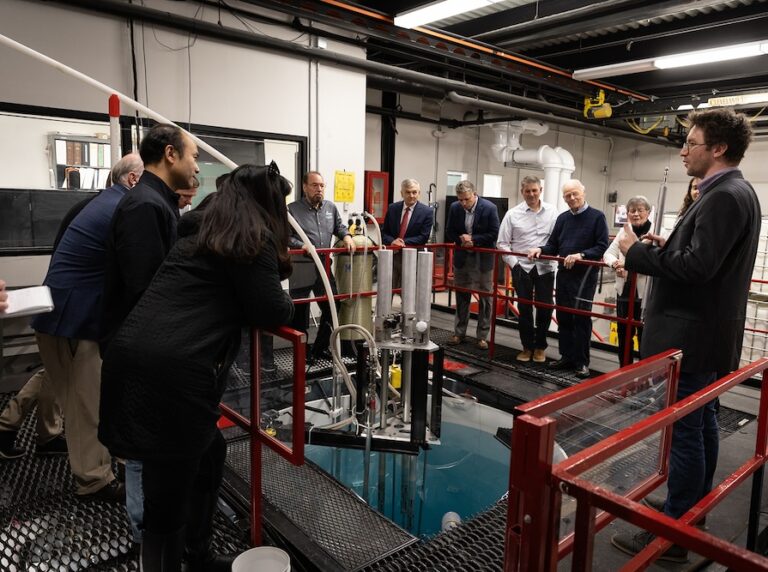
Reactor manager Ted Goodell, right, gives a tour of the University of Utah’s TRIGA reactor. (Photo: University of Utah)
The University of Utah announced that it will be producing electricity with its TRIGA reactor for the first time this summer. The project is in collaboration with Elemental Nuclear Energy, and the electricity will be used to power a “mini AI data center.”
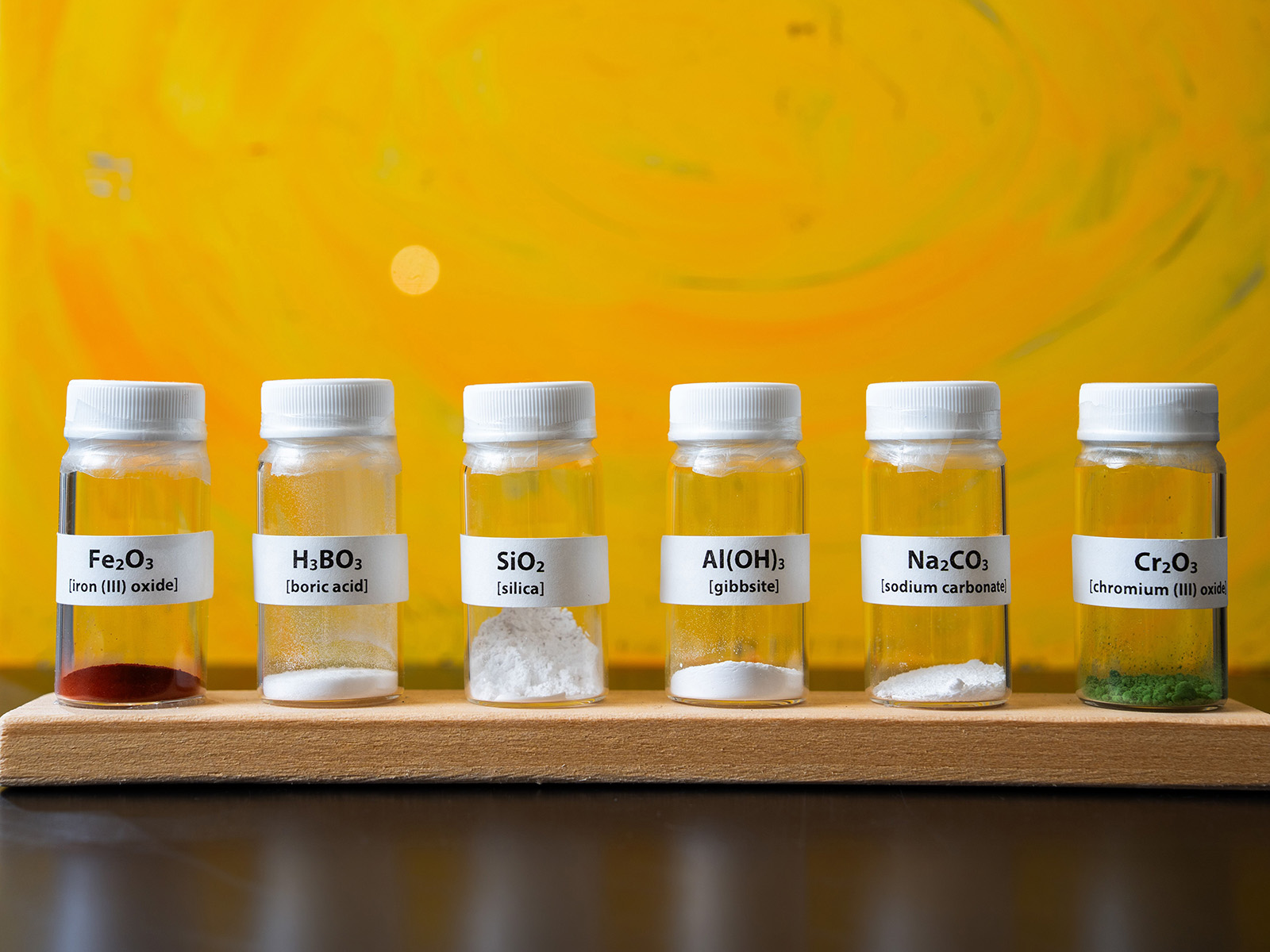
Researchers at PNNL test different chemical compositions to develop AI-driven models that help design glass with the highest waste content possible. (Photo: Andrea Starr/PNNL)
Researchers at Pacific Northwest National Laboratory are exploring methods of using artificial intelligence and machine learning to better optimize formulas for stabilizing low-activity radioactive waste in glass through the vitrification process.
The work is helping inform waste vitrification activities at the Department of Energy’s Hanford Site in Washington state. The DOE is currently commissioning the Low Activity Waste Facility at Hanford’s Waste Treatment and Immobilization Plant (WTP), which will be used to vitrify portions of the site’s nearly 56 million gallons of radioactive and chemical waste.
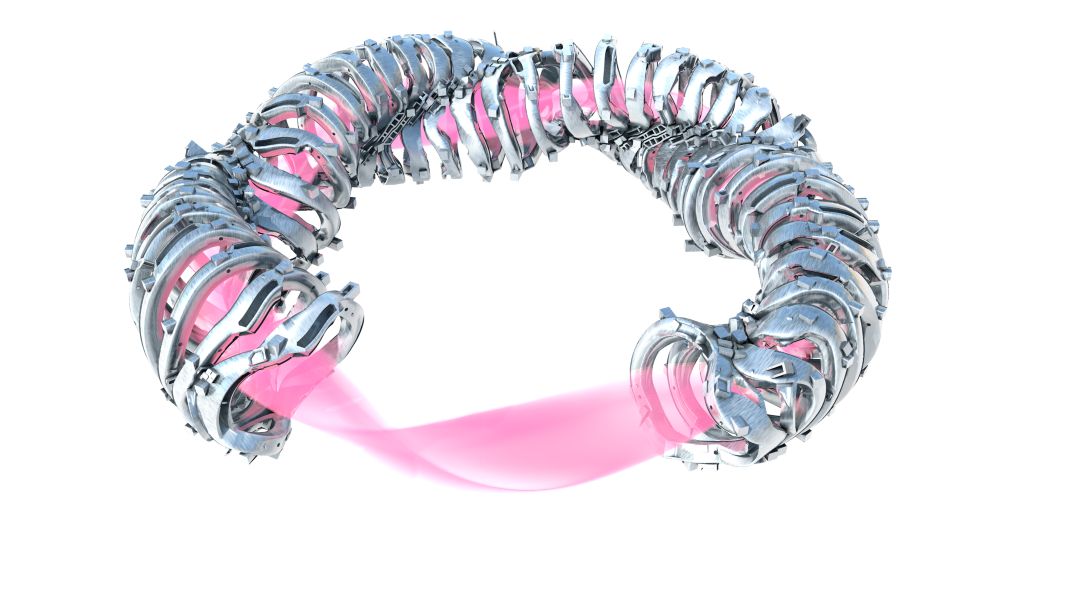
An illustration depicting computer graphics of the plasma vessel (shown in pink) and superconducting magnet coils of the Wendelstein 7-X fusion device. (Image: IPP)
The Department of Energy announced a 10-year project agreement with the Max Planck Institute for Plasma Physics (IPP) to advance research on the Wendelstein 7-X stellarator.
“This agreement reflects our deep commitment to international partnerships that accelerate progress in fusion energy,” said Jean Paul Allain, director of the Office of Fusion at the DOE. “The collaboration between the United States and IPP on W7-X has been extraordinarily productive for more than 20 years already, and this agreement pushes us forward into the next decade and beyond.”
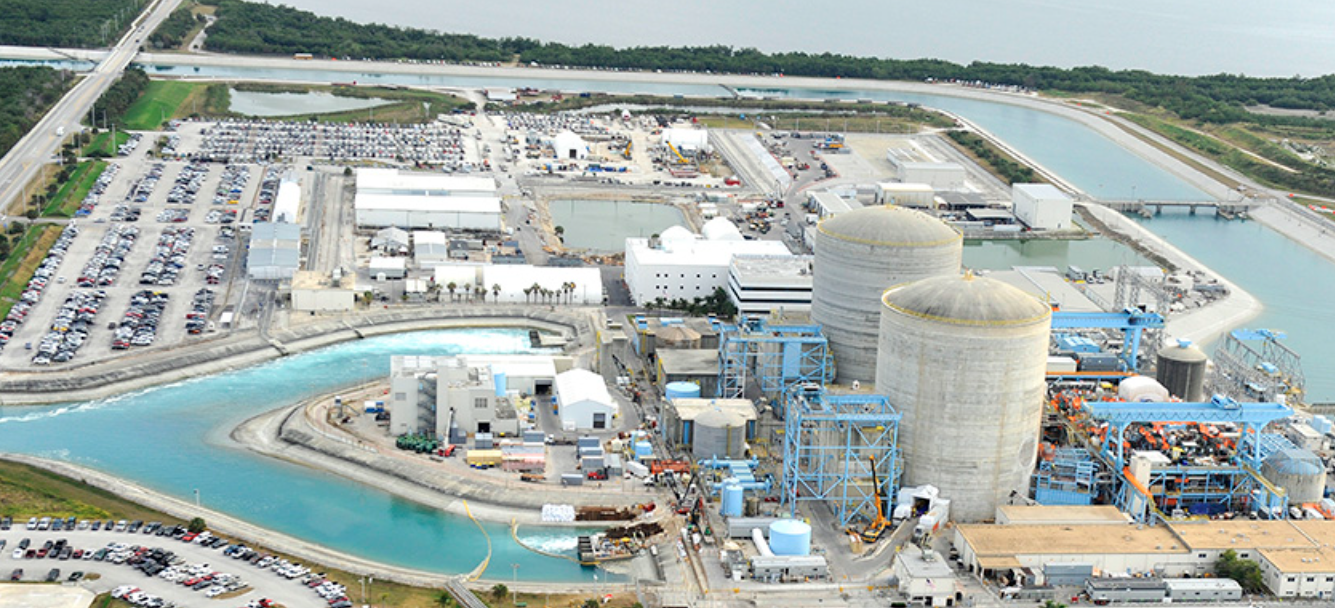
St. Lucie nuclear power plant. (Photo: FPL)
The Nuclear Regulatory Commission has approved subsequent license renewals for St. Lucie Units 1 and 2, extending the operating licenses for the pressurized water reactors by another 20 years.
Tuesday’s approval means that the 1,062-MWe Unit 1 and 1,074-MWe Unit 2 can now operate until March 1, 2056, and April 6, 2063, respectively. Unit 1 commenced operations in 1976 and Unit 2 in 1983. With the original 40-year operating licenses and first 20-year renewals, these second 20-year renewals bring the reactors’ lifespan to 80 years.
Oklo Aurora Powerhouse. (Image: Oklo)
Oklo announced a new partnership with Los Alamos National Laboratory and Nvidia to perform AI-enabled research on nuclear infrastructure and fuel.
The partnership is focused on exploring plutonium-bearing fuels, including the development of science-based AI models to support fuel validation and materials science and fabrication research and development. The team will also be exploring the development of nuclear-powered AI computing centers at LANL.
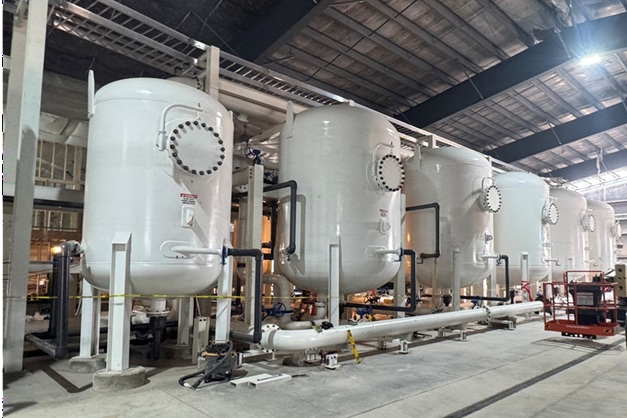
Ion exchange columns at Ur-Energy’s Shirley Basin ISR project plant. (Photo: Ur-Energy)
Ur-Energy Inc. announced last week that it has begun in situ recovery (ISR) operations at its Shirley Basin uranium mining site in central Wyoming.
The company, which also operates the Lost Creek ISR project in south-central Wyoming, decided to begin construction at Shirley Basin after making a “go” decision in March 2024. It has said that the combined total annual licensed production and toll processing capacity of Lost Creek and Shirley Basin is 4.2 million pounds U₃O₈.
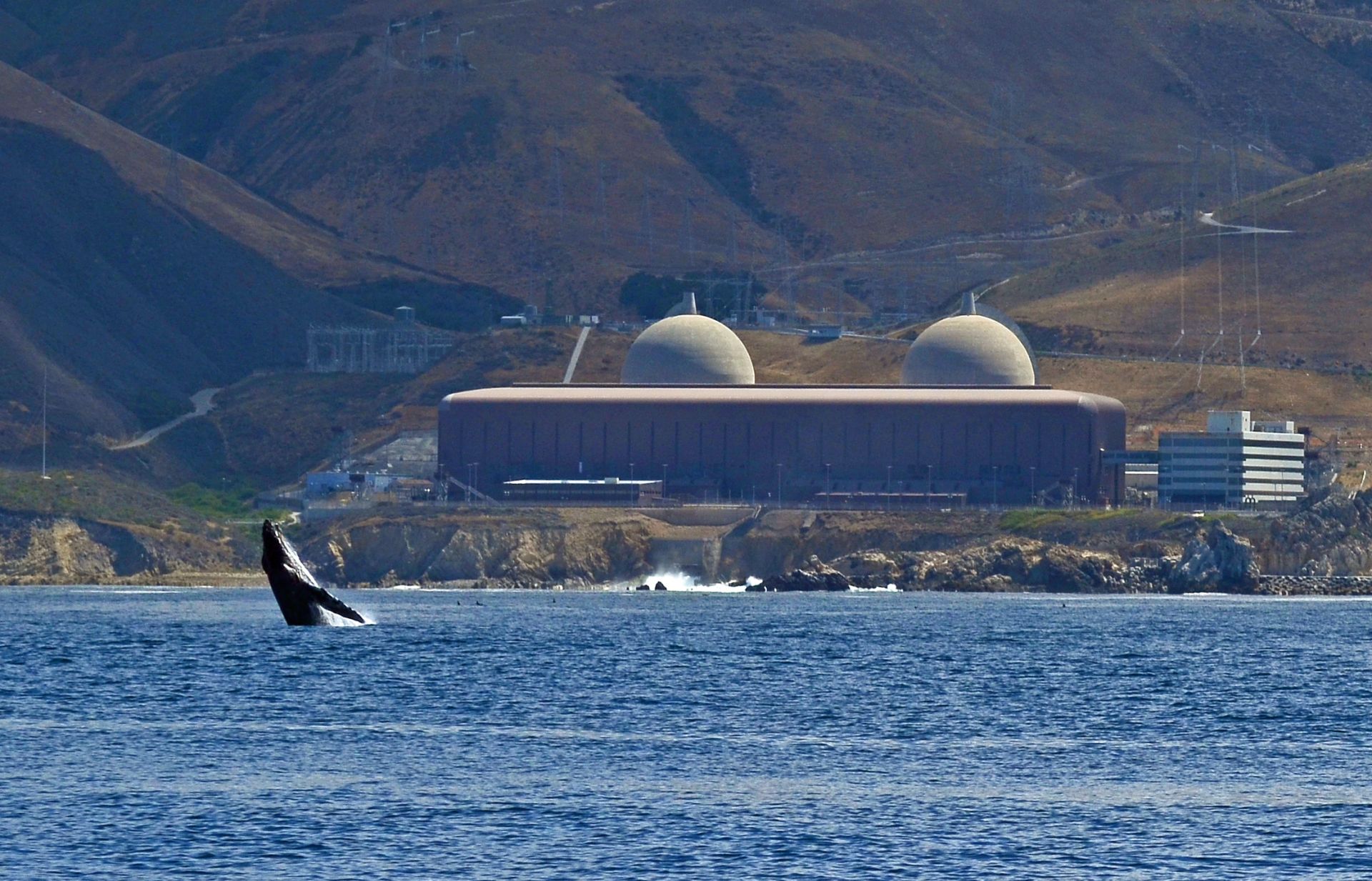
A whale swims off the coast by Diablo Canyon nuclear power plant. (Image: PG&E)
Pending, passed, and coveted legislation involving nuclear energy made their way across multiple state capitol buildings in the month of April. Here are a few notable updates from California, Iowa, Kentucky, and Missouri.
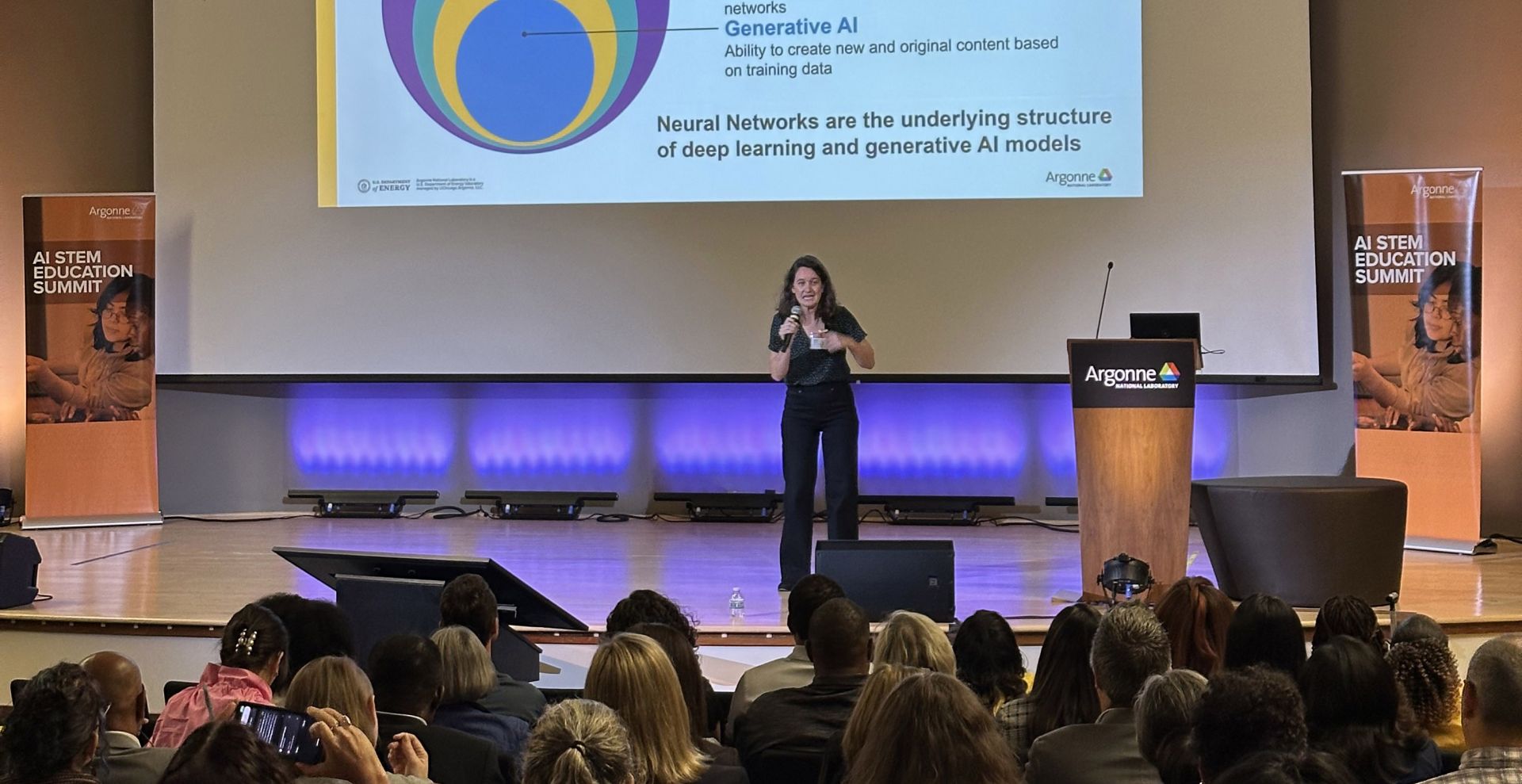
Argonne’s Paige Kingsley presents “Inside the Neural Network: An Interactive AI Experience” at the AI STEM Education Summit. (Photo: Argonne)
Last September, in the Chicago suburb of Lemont, Ill., Argonne National Laboratory hosted its first AI STEM Education Summit. More than 180 educators from high schools, community colleges, and universities; STEM administrators; and experts in various disciplines convened at “One Ecosystem, Many Pathways–Building an AI-Ready STEM Workforce” to discuss how artificial intelligence is reshaping STEM-related industries, including the implications for the nuclear engineering classroom and workforce.
A farmer in Central African Republic transports cassava tubers after harvest. (Photo: IAEA)
The International Atomic Energy Agency has launched a five-year coordinated research project (CRP) to strengthen plant health preparedness using nuclear and related technologies.
Wheat blast, potato late blight, potato bacterial wilt, and cassava witches broom disease can spread quickly across large areas of land, leading to severe yield losses in key crops for food security. Global trade and climate change have increased the likelihood of rapid, transboundary spread.
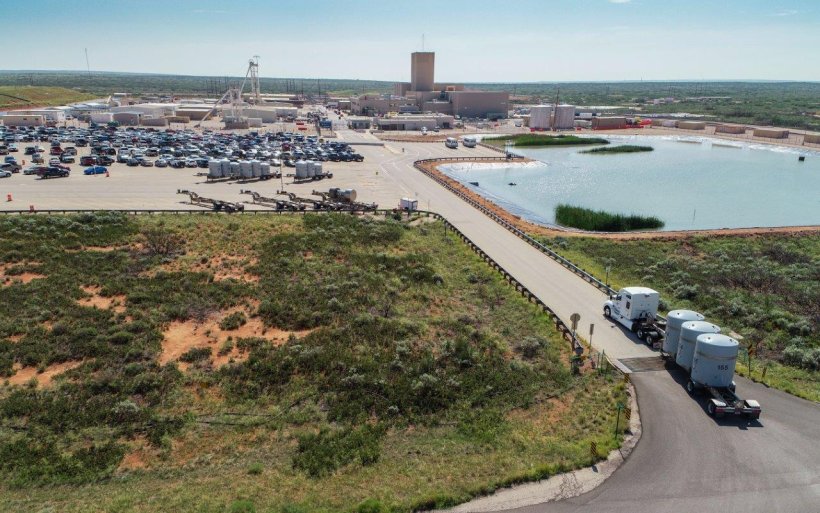
A view of the Waste Isolation Pilot Plant in New Mexico. (Photo: DOE)
Claiming the Department of Energy is backing away from commitments made in a 2023 settlement agreement with the state, the New Mexico Environment Department (NMED) is proposing revisions to the Waste Isolation Pilot Plant operating permit. The revisions would prioritize the disposal of waste generated in New Mexico at WIPP, including legacy radioactive waste from Los Alamos National Laboratory.
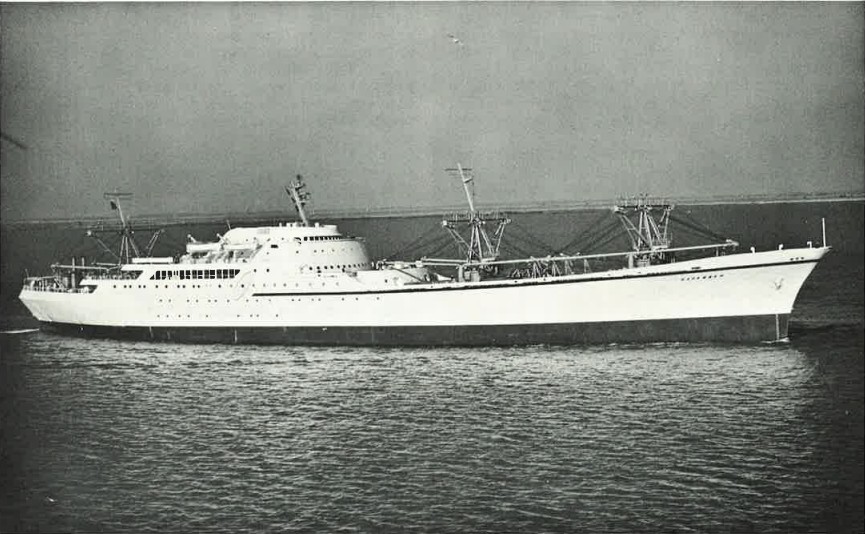
The NS Savannah, the world’s first nuclear cargo-passenger ship, en route to sea trials in Yorktown, Va. (Photo: Nuclear News, May 1962, p. 39)
On Sunday, May 17, in Baltimore, Md., there will be an open house on the NS Savannah to commemorate National Maritime Day. The Savannah acted as a passenger and cargo ship from 1962 to 1970, serving as a floating ambassador for President Eisenhower’s Atoms for Peace program and, more broadly, for the safe and peaceful uses of nuclear power.
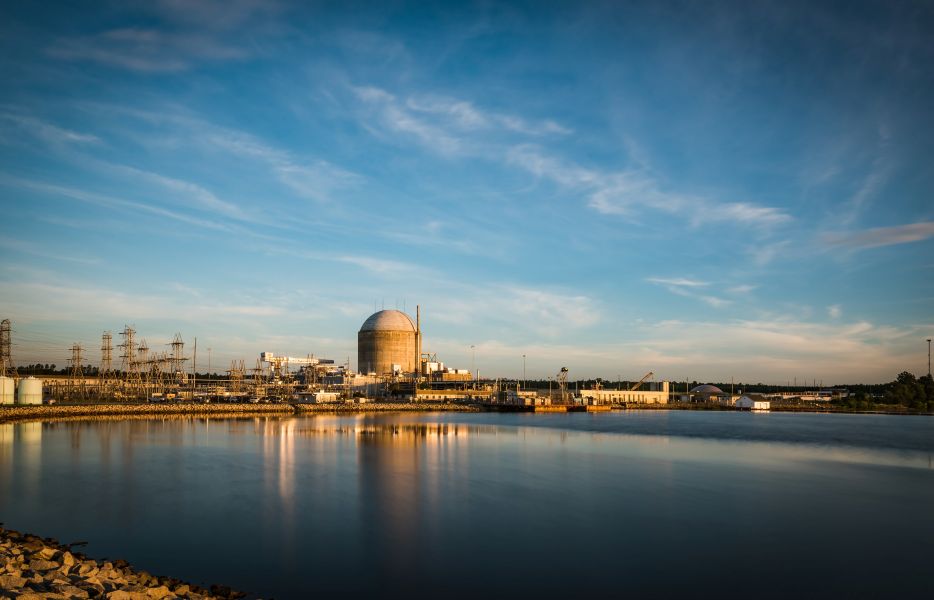
Robinson nuclear power plant in Hartsville, S.C. (Photo: Duke Energy)
The Nuclear Regulatory Commission has renewed the Robinson nuclear power plant’s operating license in record time, the agency announced last week.
The subsequent license renewal process for the Hartsville, S.C., facility was completed within 12 months, according to the NRC. The process has typically taken 18 months. This was the first license renewal review conducted under the directive of Executive Order 14300 to streamline processes like renewing operating licenses.

 Here is a recap of recent industry happenings: