U.S.-Japan collaboration turns out “Super Engineers”
_Page_06_Image_0001 copy 2x1.jpg)
Before the Fukushima Daiichi accident in March 2011, nuclear power from 54 reactors provided about 30 percent of Japan’s electricity. In the wake of the disaster, Japan shut down every one of its reactors.
Recently, the country has been restarting its nuclear power plants. Among its current fleet of 33 operable reactors, fewer than half have been restarted. Nuclear power is currently providing about 8.5 percent of Japan’s electricity (with natural gas and coal accounting for more than 60 percent).
The Japanese government’s present energy plan, announced last year, calls for nuclear power to meet 20 percent of the country’s electricity needs by 2040. While the government views nuclear as a crucial asset toward meeting its goal of net zero emissions by 2050, public support for nuclear energy also continues to increase. A 2012 Pew Research poll—conducted one year after the Fukushima Daiichi disaster—indicated that 70 percent of the public opposed nuclear power. However, a 2022 poll by Nikkei Business Publications suggests that now, more than 50 percent of the public supports nuclear power—if safety can be ensured.
Contributing their expertise to these restarts in recent years are young nuclear industry professionals who were trained a decade ago in a mentorship/training program involving U.S. institutions.
This “Super Engineer Project” was sponsored by Japan’s Ministry of Economy, Trade, and Industry and Hokkaido University from 2015 to 2017. METI sponsored the project to improve the Japanese nuclear safety culture by learning from the U.S. safety culture.
The project involved Japanese universities and energy companies; U.S. energy companies and nuclear power plants; the University of Illinois–Urbana-Champaign’s North American Technical Center in the Department of Nuclear, Plasma, and Radiological Engineering (NATC/NPRE); and the U.S. branch of the Information System on Occupational Exposure (ISOE), an international organization of radiation professionals.
The primary objective was to use the resources and expertise of NPRE and other U.S. institutions to assist in the development of Japanese students’ skills in radiation protection and nuclear engineering—skills essential for supporting both the ongoing reactor restarts and the continued decommissioning and clean-up process at Fukushima Daiichi.
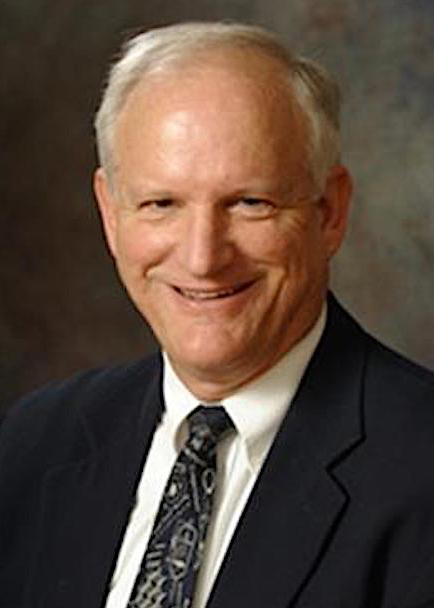
Miller
Narabayashi
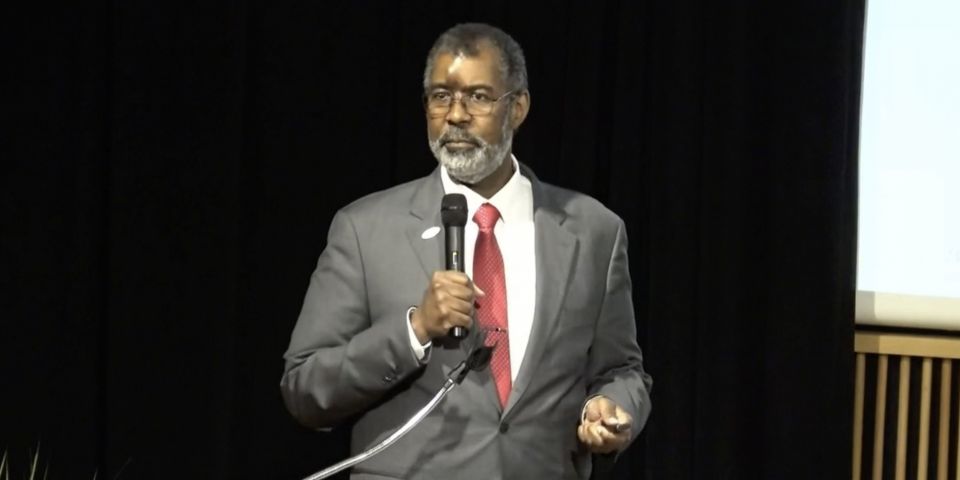
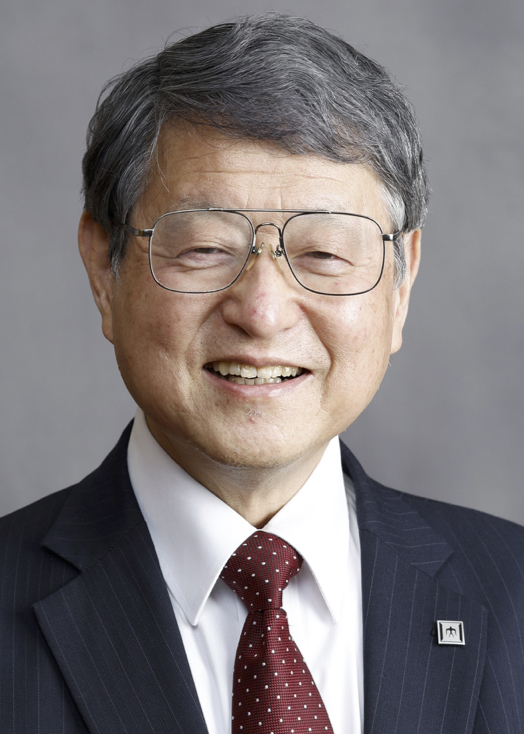
The Super Engineer Project was founded and led by Tadashi Narabayashi, who retired in March from his positions as a specially appointed professor at the Institute of Science Tokyo (formerly the Tokyo Institute of Technology) and professor emeritus at Hokkaido University. During the program, he collaborated with David W. Miller, an adjunct assistant professor and the regional director at NATC/NPRE who served as the training leader for the program in the United States.
Narabayashi and Miller arranged for groups of Japan’s best and brightest engineering students—the “Super Engineers”—to visit the United States, where they would participate in annual NATC/NPRE educational activities and lectures at UIUC, visit several U.S. nuclear power plants and meet with radiation protection managers, visit a Nuclear Regulatory Commission regional center, and attend the annual ISOE ALARA Symposium and Technology Exhibition. (ALARA is an acronym for “as low as reasonably achievable,” a guiding principle of radiation safety.)
After the METI-sponsored Super Engineer Project ended in 2017, Narabayashi continued his training work with a similar mentorship/human-resource-development program under the auspices of Tokyo Tech and Japan’s Ministry of Education, Culture, Sports, Science, and Technology (MEXT). Between the two programs and other training activities Narabayashi has been involved with, hundreds of Japanese engineering students have benefitted from his safety-focused efforts.
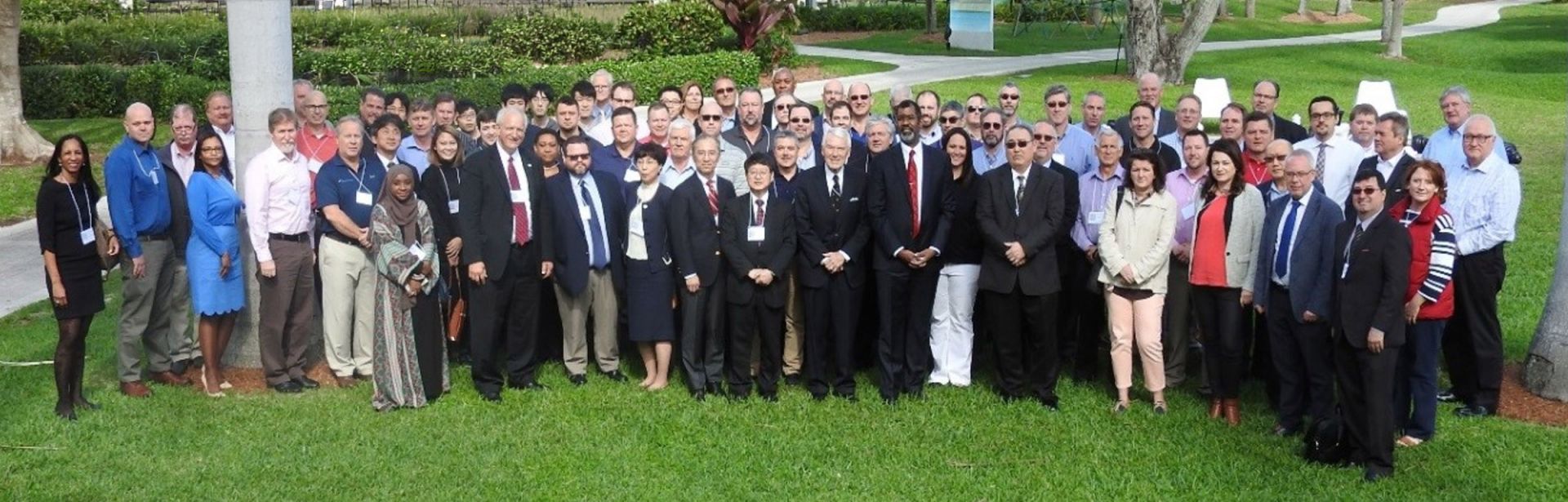
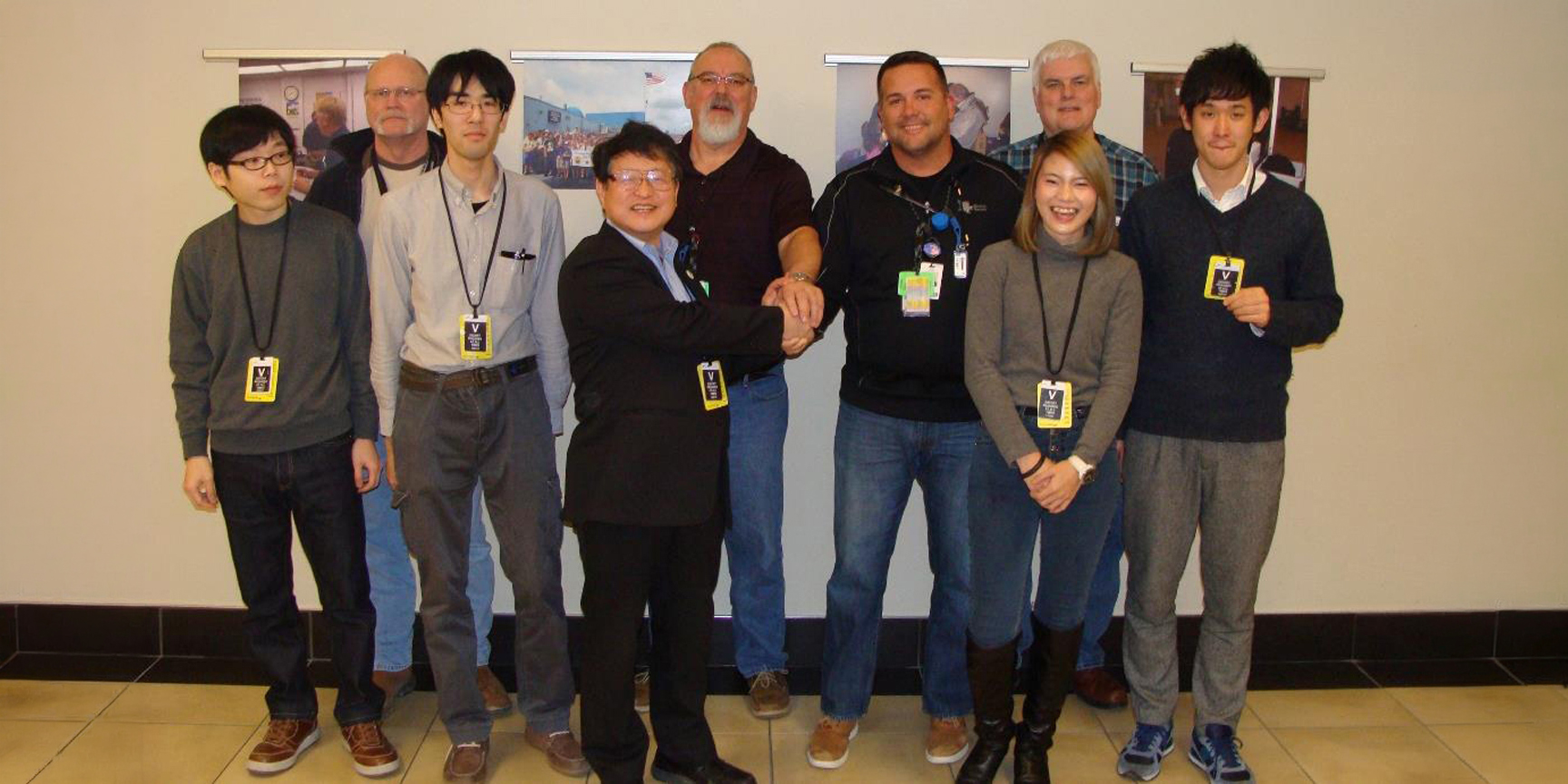
Attendees at the 2017 ISOE Symposium in Fort Lauderdale, Fla. (Photo: Thanataon Pornphatdetaudom)
Engineer, professor, mentor
Narabayashi earned a doctorate in nuclear engineering from Tokyo Tech in 1978 and worked as a specialist in reactor components and two-phase flow at Toshiba Corporation for 27 years before becoming a professor at Hokkaido University in 2005. While there, he was named director of the Atomic Energy Society of Japan.
He moved his research and educational expertise to Tokyo Tech in 2018—the year he was honored with the Outstanding Professor of the Year Award by the ISOE, which is jointly operated by the International Atomic Energy Agency and the OECD Nuclear Energy Agency.
In 2022, Narabayashi founded and became president of a Tokyo Tech venture called GX Energy Ltd. This venture is developing filter vent technology to enhance the safety of nuclear power plants.
Last year, Narabayashi began serving as a mentor for students through the American Nuclear Society’s Mentor Match program, which is designed to offer personalized matching and year-round mentoring for students. He chose to become a mentor “because this type of human resource development is effective, and now, with nuclear power becoming the only stable power source that does not emit carbon dioxide, the United States is increasing its nuclear power generation fourfold, and the world is increasing it threefold. I want to contribute to this,” he said.
Super Engineer Project
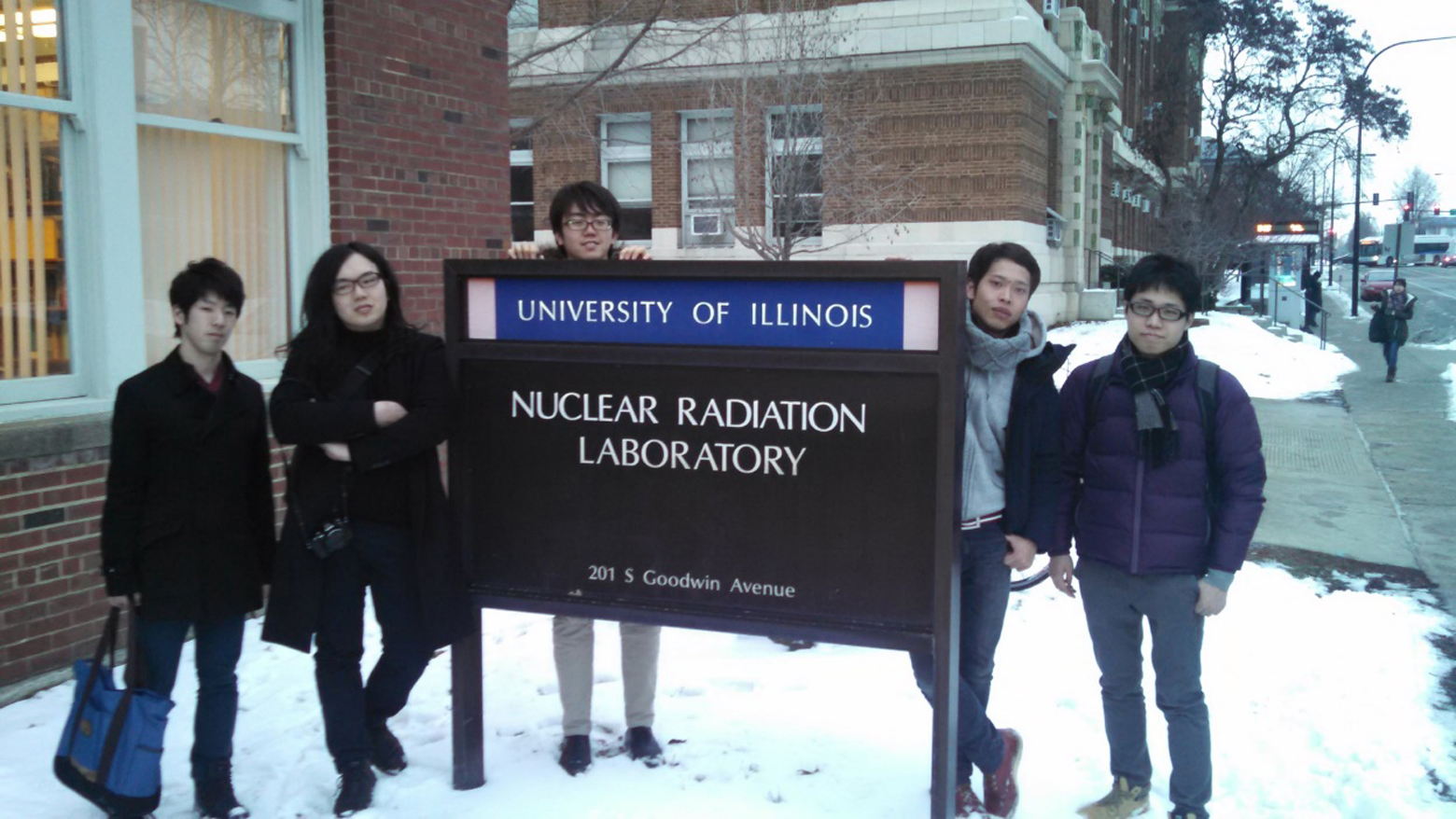
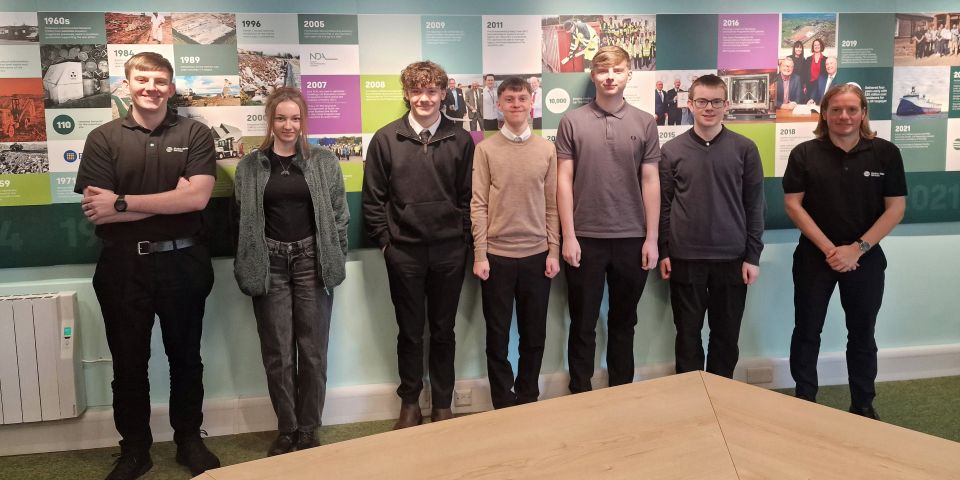
The 2016 Super Engineer participants on campus at UIUC, where they attended radiological engineering classes. (Photo: David Miller)
When Narabayashi proposed the Super Engineer Project to METI in 2015, Japan was gearing up to bring some of its reactors back on line.
Safety was always at the core of Narabayashi’s training and mentorship work with his students. Of the project, he said that it “aimed to help students learn about the causes and countermeasures of nuclear power plant accidents, how they could have been avoided, and how the United States prevents nuclear power plant accidents and occupational radiation exposure, and it introduced the students to the experience of the vibrant American nuclear industry.”
Undergraduate and graduate students from Hokkaido University and other Japanese universities were considered for the program. “We graded the students based on their lecture comprehension tests and reports and selected five students each year from approximately 350 applicants,” Narabayashi said. “Since we selected from only the top 1.3 percent of students, we named it the Super Engineer Project.”
The project defined its ideal participant as “an aggressive engineer with a broad perspective who has learned the lessons of the Fukushima Daiichi Nuclear Power Plant accident and has the drive and ability to achieve the world’s highest standards of safety,” Narabayashi said.
With Narabayashi and Miller at the helm leading the students, the Super Engineer Project worked with 19 Japanese universities, the Japan Atomic Energy Agency (JAEA), and such Japanese companies as Hokkaido Electric Power Company, Hokuriku Electric Power Company, Toshiba, Hitachi, and Mitsubishi. The schools and companies provided training and mentoring for the students—as did participating U.S. institutions—in areas like instrumentation and control systems, filter venting, water level gauges, disaster prevention robots, radioactive material transport, occupational exposure reduction, global environmental issues, and nuclear technology ethics.
Nuclear Power Dojo
After the Super Engineer Project, Narabayashi became involved in a MEXT-sponsored training program at Tokyo Tech. Now known as Nuclear Power Dojo, the program includes students from all over Japan and Southeast Asia, as well as universities in the United States and Europe, other nuclear-affiliated institutions, and the IAEA. After Narabayashi retired, Yoshinao Kobayashi of Tokyo Tech took over directorship of the program, in which approximately 20 Japanese universities now participate.
“While the Super Engineer Project trained only the top 15 students over three years, we have trained over 900 students [in the METI- and MEXT-sponsored training programs together] through domestic training and university lectures,” Narabayashi said.
International contributions
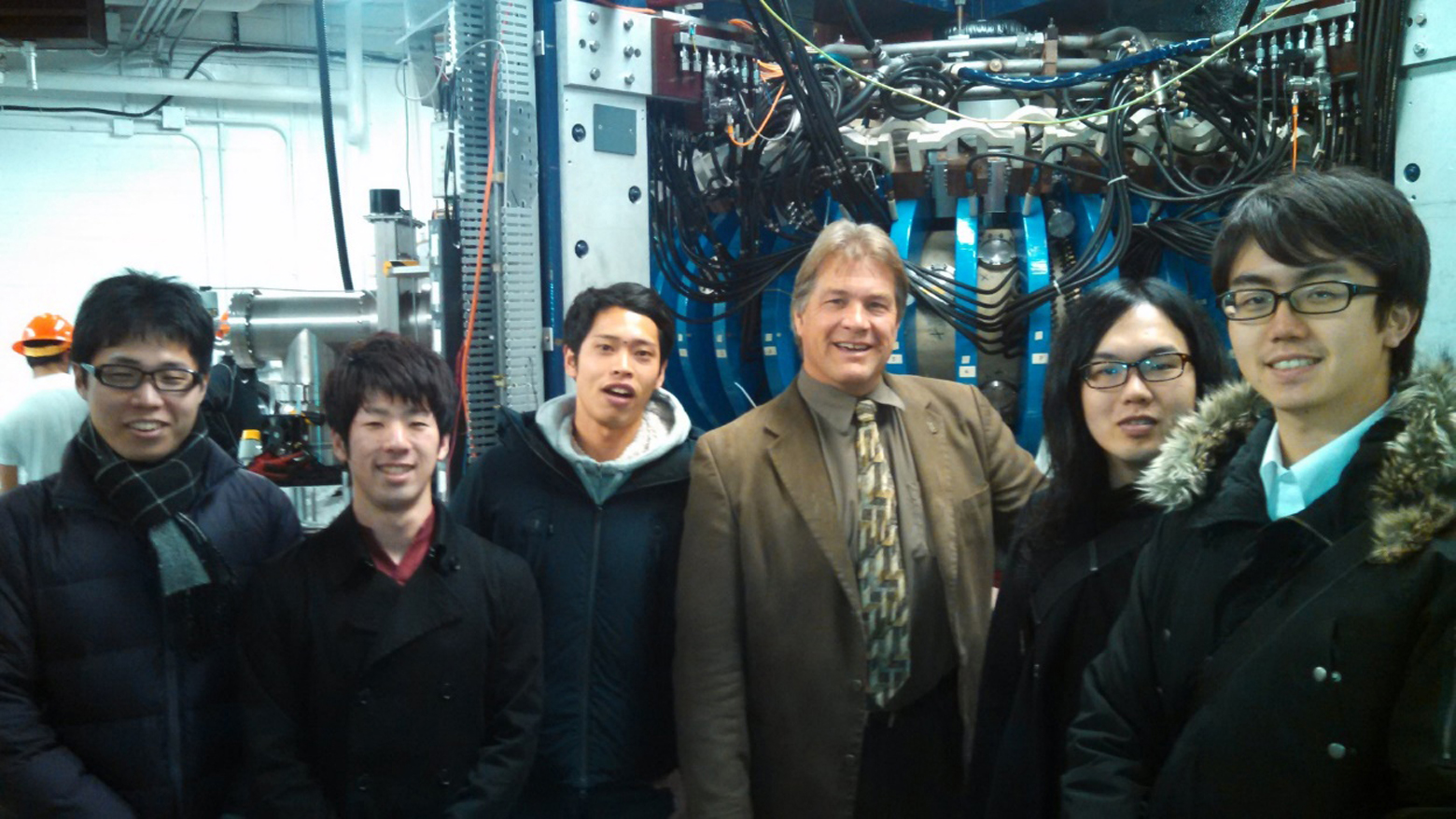
The 2016 Super Engineers touring NPRE facilities at UIUC with Professor David Ruzic. (Photo: David Miller)
Narabayashi is considered an authority on the restarting of and safety measures for Japanese nuclear power plants. “I developed the filtered containment venting system that is currently being used in Japanese nuclear power plants, through projects supported by METI’s Nuclear Infrastructure Strengthening Subsidy Program. This venting system can filter and vent radioactive materials in the event of an accident because of improved performance of silver zeolites, which adsorb organic iodine and xenon. I am also currently continuing to hold dialogues with the NRA as the chair of the Safety Regulation Review Committee in the Japan Society of Maintenology,” he explained.
He regularly reports the latest status on Japan’s nuclear fleet at the annual ISOE ALARA Symposium, which is always held in January in Florida. This year, he also spoke about the careers of his Super Engineers. “I reported that the students who participated in the training have found employment in various companies, grown as engineers, and are active as engineers at Japanese companies in the restart of Japanese nuclear power plants and the development of small modular reactors in the United States,” he said.
Last fall, he met a handful of his former students at the International Congress on Advances in Nuclear Power Plants in Antibes, France. Now professionals in their own right, eight former participants were at the conference to discuss their companies’ SMRs and new technologies.
With pride, Narabayashi said, “They came over to greet me with smiles on their faces during lunch. One former student even presented his research results at the JAEA. Another student has gone on to become an instructor at the BWR Operator Training Center near Kashiwazaki-Kariwa nuclear power plant, where he trains hundreds of engineers to become operators who can avoid severe accidents.”
Safety-related training activities are expanding in the Japanese nuclear sector as the country’s reactor restarts progress, Narabayashi said, observing that a decade after the Super Engineer Project began, “the students have grown into true Super Engineers and are making great contributions to the nuclear industry.”
Narabayashi’s former students have gone on to contribute their knowledge and skills to Japan’s renewed nuclear industry, as well as to U.S., Canadian, and European nuclear projects. For example, some have helped develop the JAEA’s high-temperature engineering test reactor (which is to be exported to the United Kingdom), GE Vernova Hitachi Nuclear Energy’s BWRX-300 SMR, and the SMRs of other companies.
Others have performed research-and-development work with the JAEA and the Japan Society of Mechanical Engineers. “As part of a JSME delegation to the United States, arranged by Professor Miller,” Narabayashi said, “the Super Engineers continued their efforts to investigate advanced occupational radiation exposure prevention and the state of nuclear power plant maintenance in the U.S., as well as to exchange opinions with Nuclear Regulatory Commission inspectors.”
Reflecting on the accomplishments of the program and the professionals it produced, Narabayashi commented on regaining lost ground. “Before the 2011 Fukushima Daiichi accident, three Japanese nuclear manufacturers were collaborating with two U.S. companies and France’s EDF to export nuclear power plants worldwide. After the accident, Japan lost that position. The Super Engineer Project is contributing to reviving that position.”