ANS open letter to Science magazine challenging claims about HALEU
September 3, 2024
Dr. Holden Thorp
Editor-in-Chief, Science
Subject: Science magazine Policy Forum article “The weapons potential of high-assay low-enriched uranium” published June 2024
Dear Dr. Thorp:
The American Nuclear Society—a professional nuclear science and technology society representing more than 10,000 members worldwide—writes this open letter to address concerns regarding Science magazine’s June 2024 Policy Forum article, entitled “The weapons potential of high-assay low-enriched uranium” by R. Scott Kemp, Edwin S. Lyman, Mark R. Deinert, Richard L. Garwin, and Frank N. von Hippel.
The article describes the potential misuse of high-assay low-enriched uranium (HALEU)1. We acknowledge the importance of this discussion and the necessity of continually evaluating the proliferation risks associated with nuclear materials. However, after extensive technical review of the article by members and officers of the ANS Fuel Cycle and Waste Management Division and the ANS Nuclear Nonproliferation Policy Division, we remain unconvinced of the positions advocated by the authors.
ANS open letter scrutinizes hyperbolic unscientific claims about HALEU
Washington, D.C. — In an open letter to Science magazine, the American Nuclear Society (ANS), a professional nuclear science and technology society representing over 10,000 members worldwide, expressed its membership’s skepticism toward claims made in a recent article that advocated high-assay low-enriched uranium (HALEU) fuel should be reclassified by the United States and restricted from commercial use in powering advanced reactor designs. The ANS emphasized the importance of a balanced, science-based discussion, and scrutinized the unscientific and hyperbolic nature of the arguments presented in the article.
“We acknowledge the importance of this discussion and the necessity of continually evaluating the proliferation risks associated with nuclear materials,” wrote ANS President Lisa Marshall in the letter. “However, after extensive technical review of the article by members and officers of the ANS Fuel Cycle and Waste Management Division and the ANS Nuclear Nonproliferation Policy Division, we remain unconvinced of the positions advocated by the authors.”
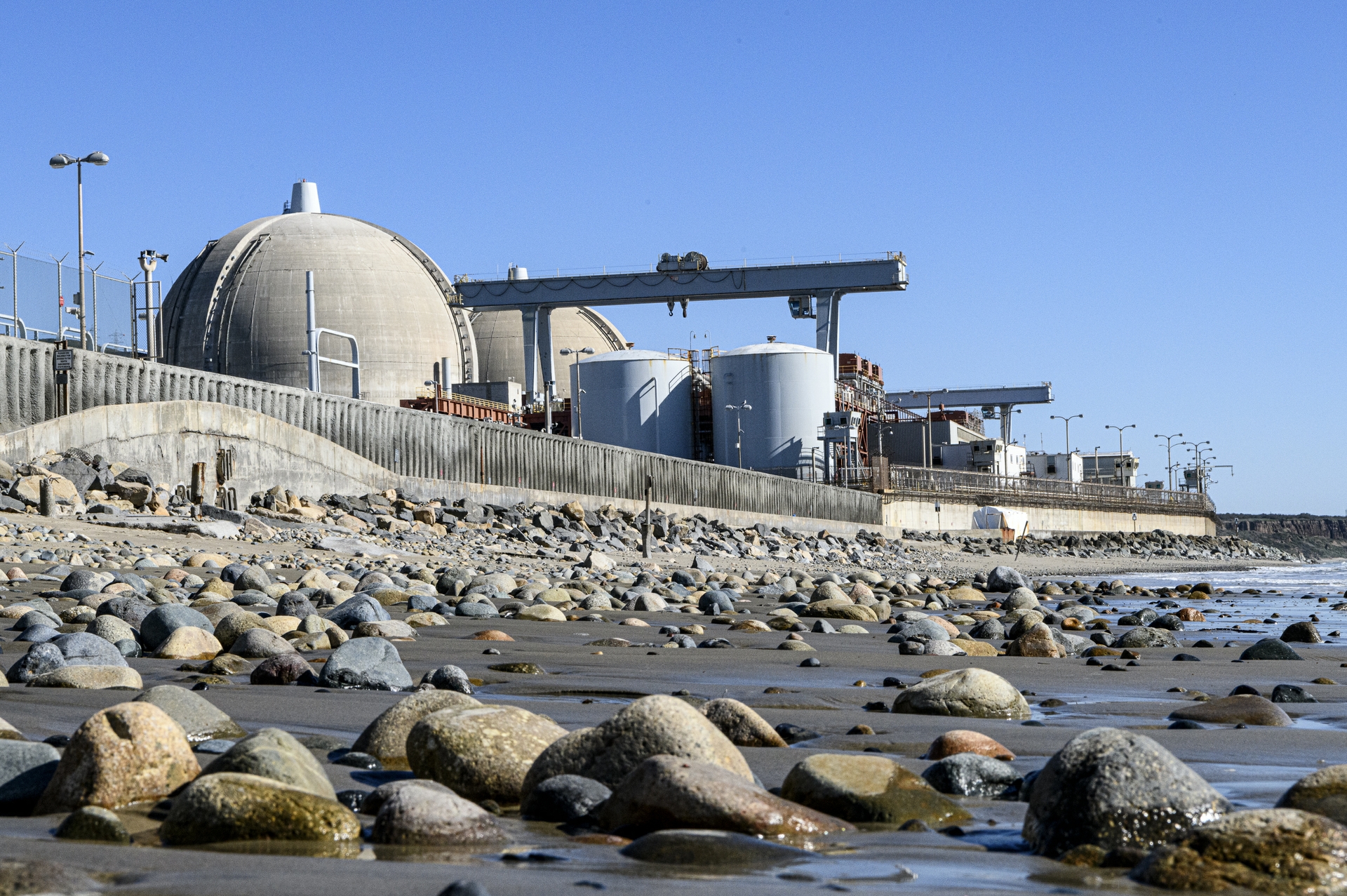
The San Onofre Nuclear Generating Station. (Photo: SCE)
The Nuclear Regulatory Commission noted two low-level regulatory violations during a recent inspection of the San Onofre Nuclear Generating Station, which is currently undergoing decommissioning in Southern California. The violations involved the shipment of two reactor pressurizers from San Onofre to EnergySolutions’ disposal facility in Clive, Utah.
Statement from ANS on Biden nomination of Matthew Marzano to NRC

Marzano
Washington, D.C. — Craig Piercy, CEO of the American Nuclear Society (ANS), issued the following statement:
“The American Nuclear Society commends President Biden for nominating Matthew Marzano to the U.S. Nuclear Regulatory Commission (NRC).
Mr. Marzano is a nuclear engineer and licensed Senior Reactor Operator with a long record in nuclear safety and public service. He has experience operating and building nuclear power plants, training U.S. Navy personnel as nuclear plant operators on submarines and aircraft carriers, and advising on policy matters relating to clean air, climate, and energy. With his extensive experience, Mr. Marzano is well qualified to join the NRC and would be a welcome addition.
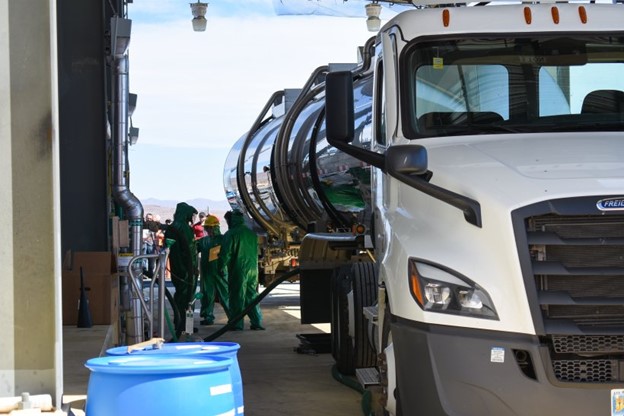
Workers at the Hanford Site’s WTP unload a tanker truck carrying sodium hydroxide. (Photo: DOE)
Workers at the Department of Energy’s Hanford Site in Washington state recently unloaded a shipment of more than 10,000 gallons of sodium hydroxide delivered to the site’s Waste Treatment and Immobilization Plant (WTP). The liquid sodium hydroxide will be the first chemical fed into the plant’s melters to simulate Hanford’s radioactive and chemical tank waste.
Twelve orgs call on Congress to fund updates to EPA standards for permanent storage of spent nuclear fuel.
Washington, D.C. –- The American Nuclear Society (ANS) joined 11 other energy and environmental organizations in calling on Congress to fund work by the Environmental Protection Agency (EPA) to develop a new, technology-neutral, generic environmental standard for the permanent disposal of spent nuclear fuel (SNF) and high-level radioactive waste (HLW) in the United States.
Statement from the American Nuclear Society on the G7 communiqué.
June 20, 2024, 1:19PMEdited June 20, 2024, 1:31PMUpdated June 20, 2024, 1:29PMPress Releases Las Vegas, Nev. — The American Nuclear Society (ANS) issued the following statement during the 2024 ANS Annual Conference in Las Vegas:
“The American Nuclear Society applauds the Group of Seven (G7) leaders’ Apulia communiqué in its call for continued international cooperation in strengthening, expanding, and diversifying civil nuclear supply chains as the world deploys advanced reactors.
ANS welcomes passage of the Accelerating Deployment of Versatile, Advanced Nuclear for Clean Energy (ADVANCE) Act.
From left to right, John Wagner, Secretary Granholm, Jeff Lyash, Chris Womack, have a discussion during the opening plenary of the ANS Annual Conference.
The 2024 American Nuclear Society Annual Conference opened with a bang yesterday as 1,200 attendees gathered in Las Vegas to network, collaborate, and socialize. Honors and awards were presented to several recipients, and ANS welcomed twelve new Fellows.
The plenary opened with an address from ANS Executive Director/Chief Executive Officer Craig Piercy that brought this year’s theme to the fore straight away: The time is now to deploy new nuclear projects—and not acting at this moment is simply not an option.
Media Statement from ANS CEO Craig Piercy
Washington, D.C. — The American Nuclear Society (ANS) CEO and Executive Director Craig Piercy issued the following statement:
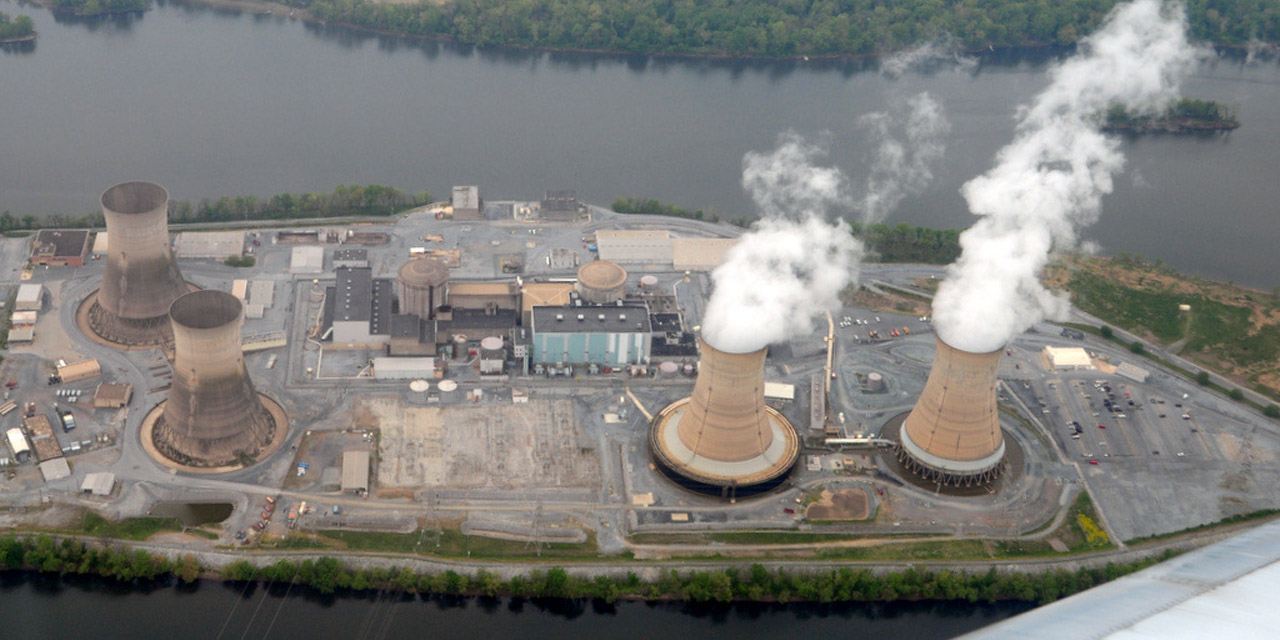
An aerial photo of the three mile island nuclear power station. (Photo: Constellation)
On the company’s earnings call this month, Constellation CEO Joe Dominguez was asked if there is a possibility of restarting the shuttered Three Mile Island plant—as is being proposed for the Palisades nuclear plant in Michigan.
“We’re not unaware that opportunity exists for us,” Dominguez said. “We’re obviously seen what’s happened with Palisades and I think that was brilliant. Brilliant for the nation. … We are doing a good bit of thinking about a number of different opportunities, and that would probably certainly be one of those that we would think about.”
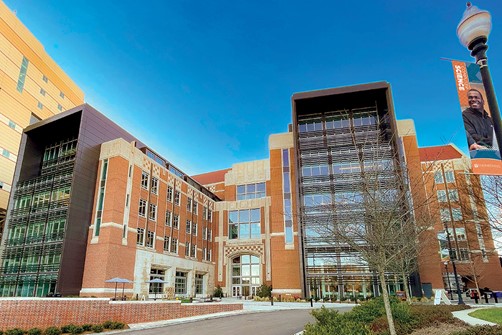
The Zeanah Engineering Complex at the University of Tennessee–Knoxville. (Photo: UT–Knoxville)
Last week Tennessee Gov. Bill Lee and Stuart McWhorter, commissioner of the state’s Department of Economic and Community Development, announced that the University of Tennessee–Knoxville and Roane State Community College will receive funding from Tennessee’s Nuclear Energy Fund to support existing nuclear programs as well as develop and implement new nuclear education curriculum.
Using its portion of the $50 million Nuclear Energy Fund, the University of Tennessee will establish a new program for non-nuclear engineers to obtain a minor in nuclear engineering at its Knoxville campus. Separate funding for Roane State Community College will allow purchase of laboratory equipment for that school’s inaugural nuclear technology program, which launches in the fall of 2024.