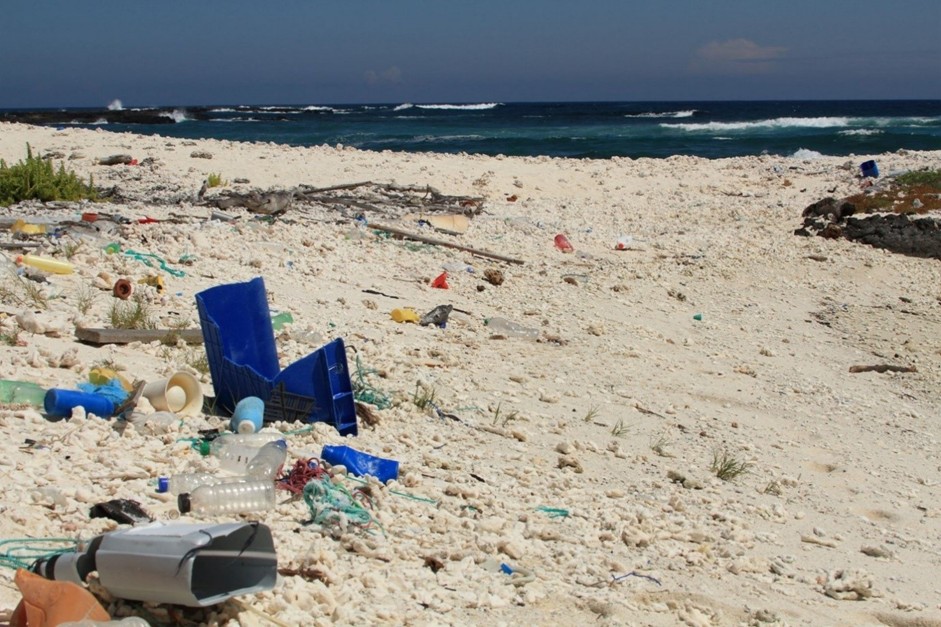
Plastic pollution from overseas washes up on San Cristobal Island, part of the Galapagos Islands archipelago, in 2019. (Photo: F. Oberhaensli/IAEA)
The International Atomic Energy Agency announced that its Nuclear Technology for Controlling Plastic Pollution (NUTEC Plastics) initiative has partnered with Ecuador’s Oceanographic Institute of the Navy (INOCAR) and Polytechnic School of the Coast (ESPOL) to build microplastic monitoring and analytical capacity to address the growing threat of marine microplastic pollution in the Galapagos Islands.
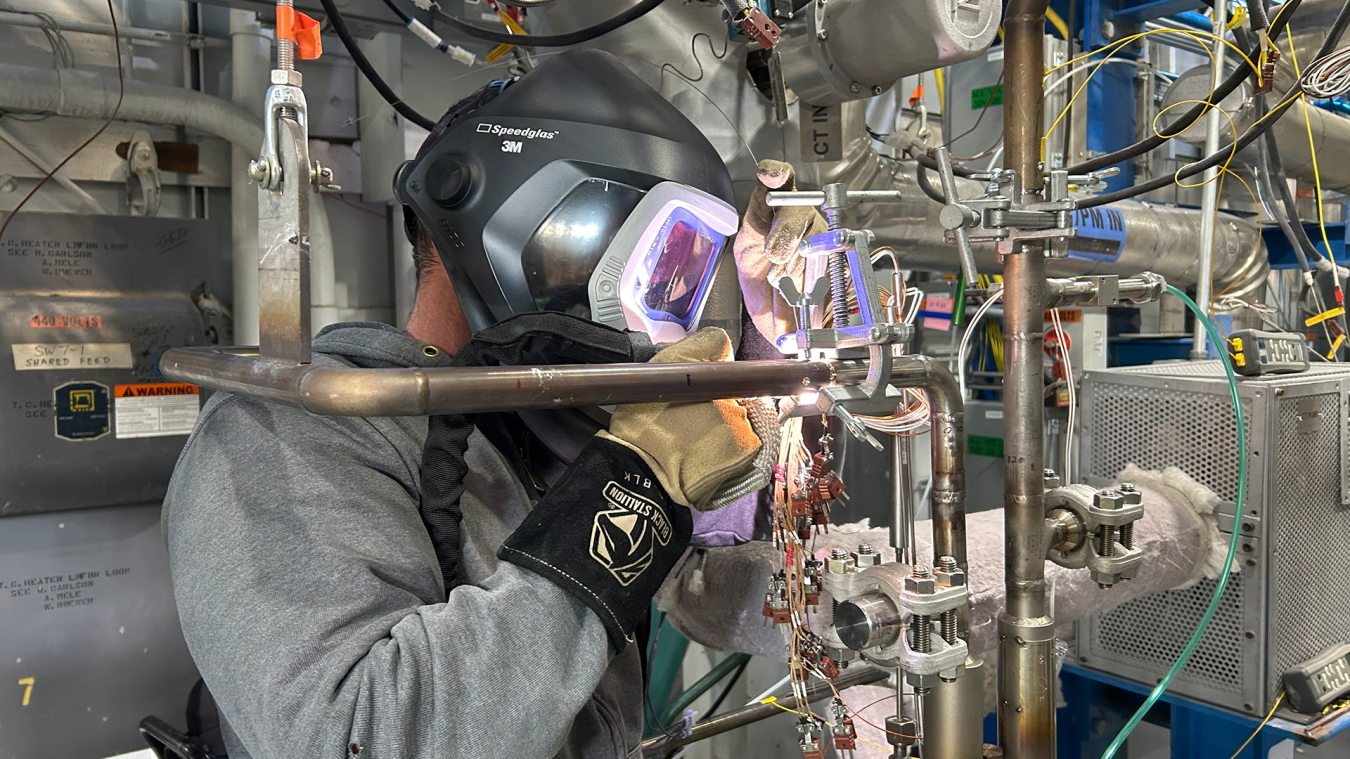
Work on Argonne's METL sodium test loop. (Photo: Argonne National Laboratory)
Argonne National Laboratory has successfully swapped out an aging cold trap in the sodium test loop called METL (Mechanisms Engineering Test Loop), the Department of Energy announced April 23. The upgrade is the first of its kind in the United States in more than 30 years, according to the DOE, and will help test components and operations for the sodium-cooled fast reactors being developed now.
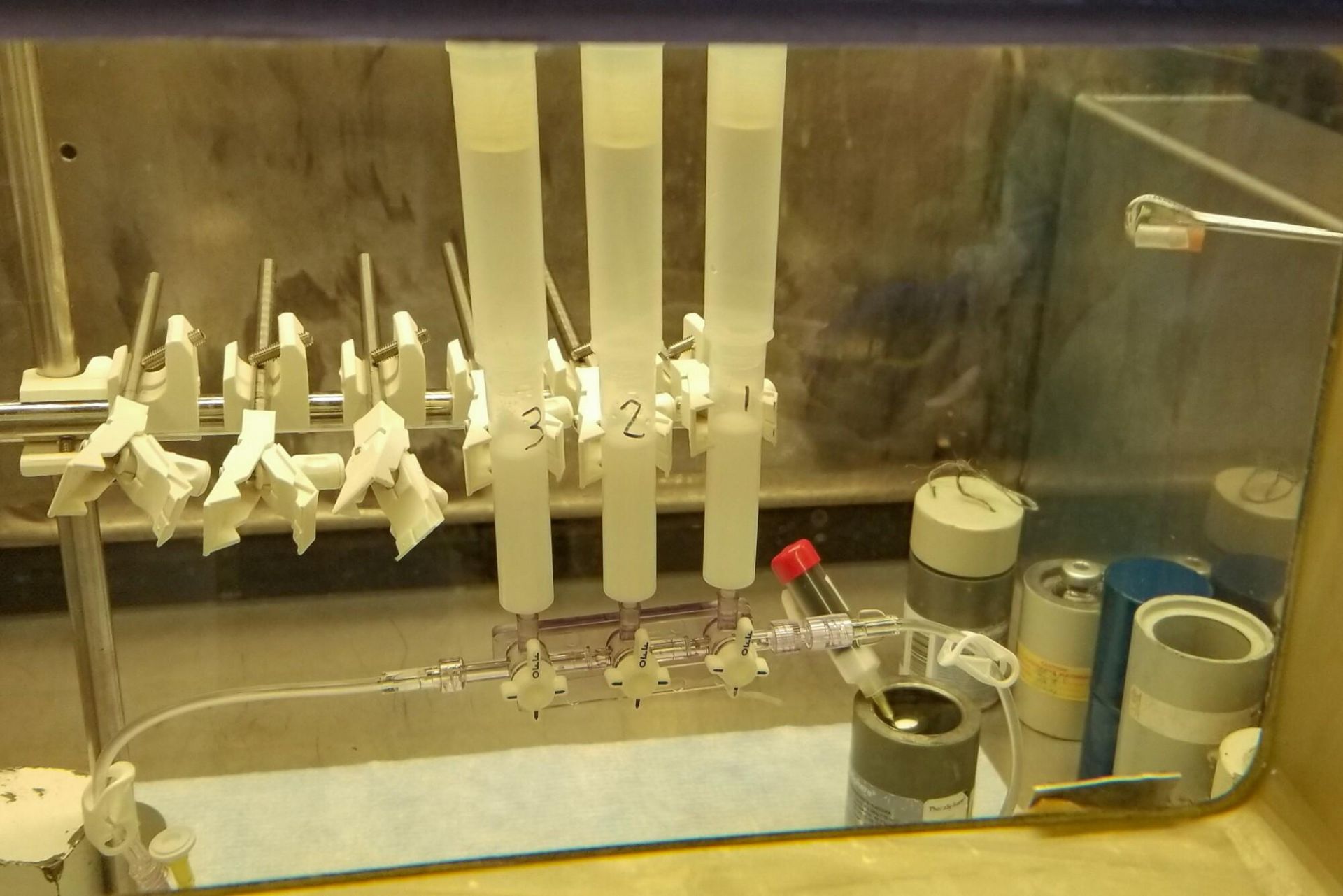
At-211 undergoes purification and a series of quality checks. (Photo: Don Hamlin/University of Washington)
The Department of Energy’s National Isotope Development Center (NIDC) on March 31 announced the successful long-distance shipment in the United States of a biologically active compound labeled with the medical radioisotope astatine-211 (At-211). Because previous shipments have included only the “bare” isotope, the NIDC has described the development as “unleashing medical innovation.”
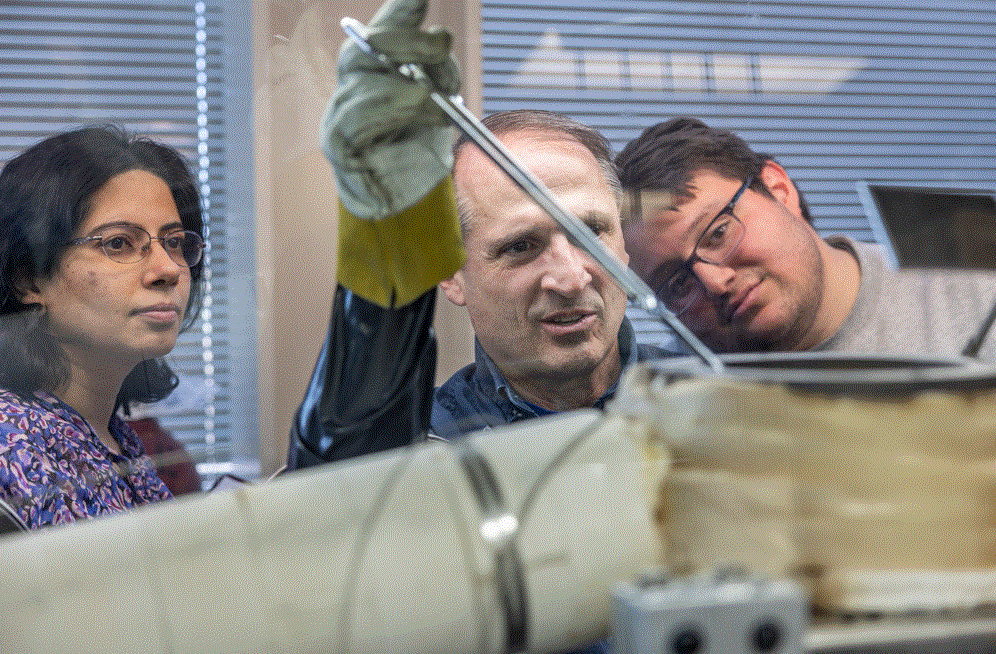
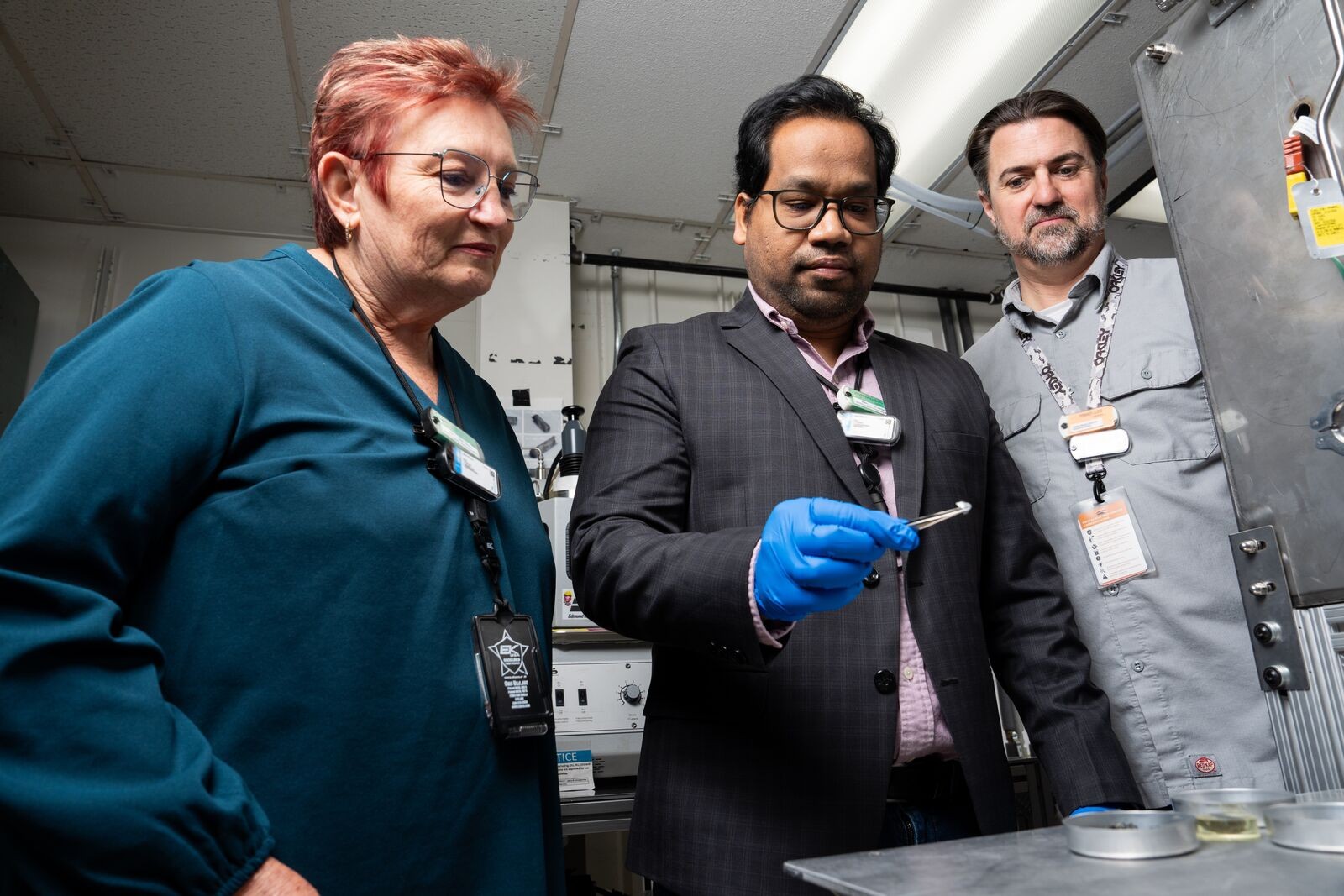
Principal investigator Ruchi Gakhar (left), technician Dean Burt (center), and intern Diego Macias, shown loading salt into the loop. (Photo: INL)
The Department of Energy announced March 31 that a new Molten Salt Flow Loop Test Bed at Idaho National Laboratory recently went through its inaugural test run. The closed-loop test system will allow for continuous monitoring and analysis of chloride-based molten salt reactor technology and instruments before the construction of the Southern Company/TerraPower Molten Chloride Reactor Experiment. MCRE—an experimental fast-spectrum molten salt research reactor—will be built at INL’s repurposed Zero Power Physics Reactor, which has been renamed LOTUS (Laboratory for Operation and Testing in the United States).
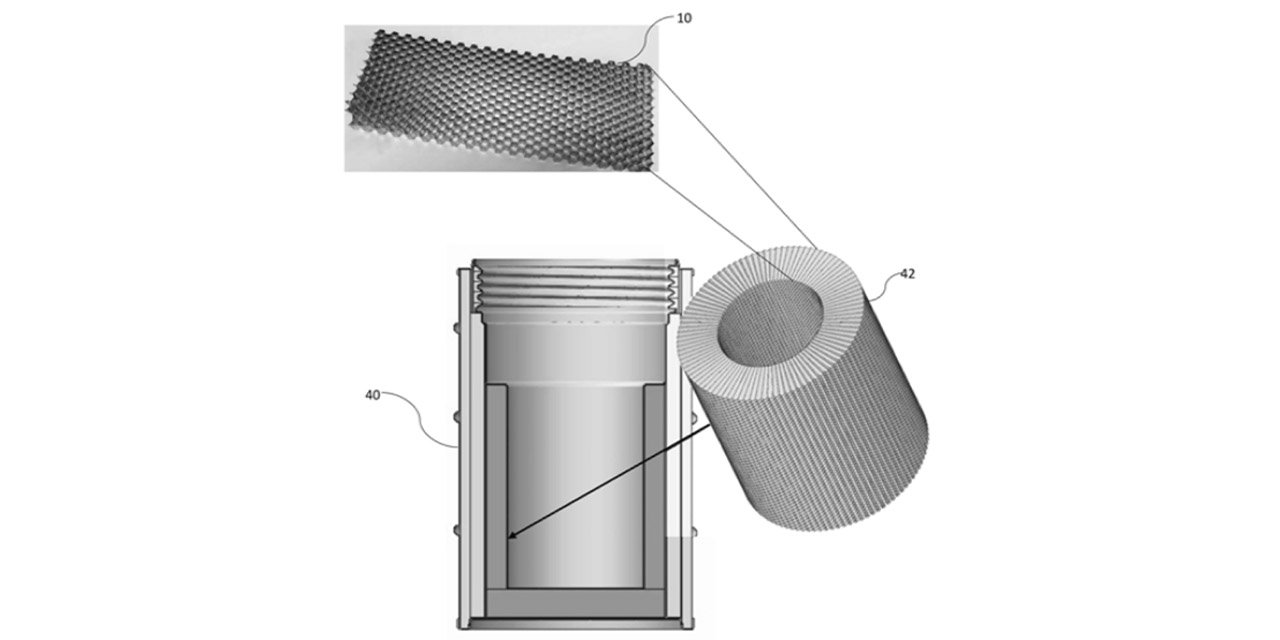
Illustration showing how radially oriented honeycomb structures can be used within a container to provide strength, sound insulation, or thermal insulation. The structure includes multiple radially aligned layers of a shaped strip. (Image: SRNL)
Savannah River National Laboratory said it has received a patent for its radially oriented honeycomb structures. The technology offers a solution to the deformation of cylindrical honeycomb structures when they are formed from flat panels, providing a way to create structures with greater wall thickness than traditional methods.
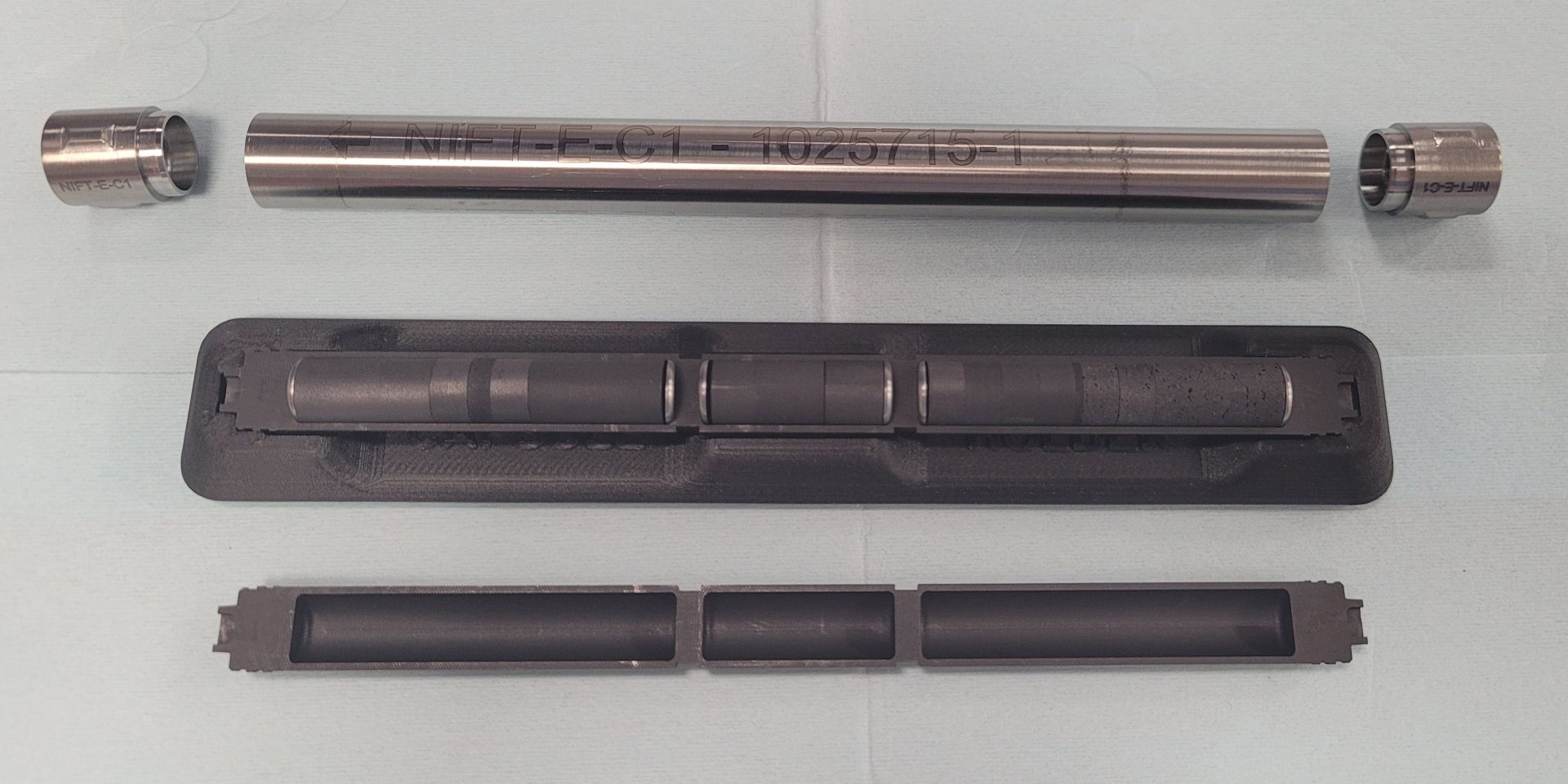
A NIFT-E testing capsule loaded with graphite samples.
As nations look to nuclear energy as a source of reliable electricity and heat, researchers and industry are developing a new generation of nuclear reactors to fill the need. These advanced nuclear reactors will provide safe, efficient, and economical power that go beyond what the current large light water reactors can do.
But before large-scale deployment of advanced reactors, researchers need to understand and test the safety and performance of the technologies—especially the coolants and materials—that make them possible.
Now, the United States and the United Kingdom have teamed up to test hundreds of advanced nuclear materials.
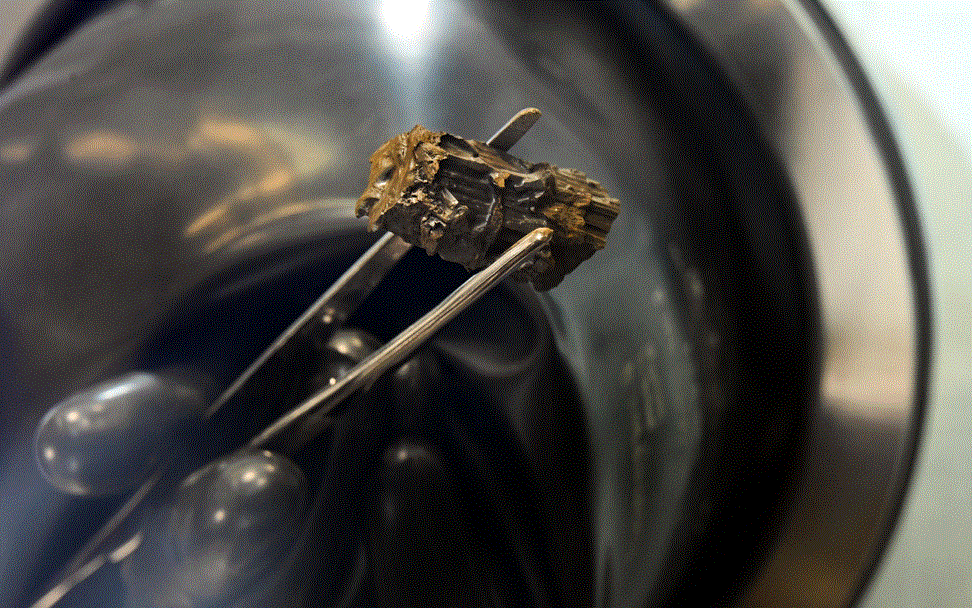
Uranium chloride fuel salt. (Photo: INL)
Scientists at Idaho National Laboratory continue to make progress on the Molten Chloride Reactor Experiment (MCRE), which entails research and development for the first operational advanced nuclear reactor to use a mixture of molten chloride salt and uranium as fuel and coolant. The experiment is evaluating the safety and physics of the molten chloride fast reactor that Southern Company and TerraPower are planning to build.
PNNL researchers (from left) Isabella van Rooyen, Subhashish Meher, and Steven Livers are part of the team that developed a durable new nickel-based “super alloy” by replacing cobalt with manganese. (Photo: Andrea Starr/PNNL)
Pacific Northwest National Laboratory has reported that researchers there have created a tough new alloy that has potential use in advanced nuclear reactors and that is not dependent on a difficult-to-get element. The research team, which included materials scientists Isabella van Rooyen, Subhashish Meher, and Steven Livers, started its experiments with the highly durable nickel-chromium-cobalt-molybdenum “super alloy” known as Inconel 617 (IN617).
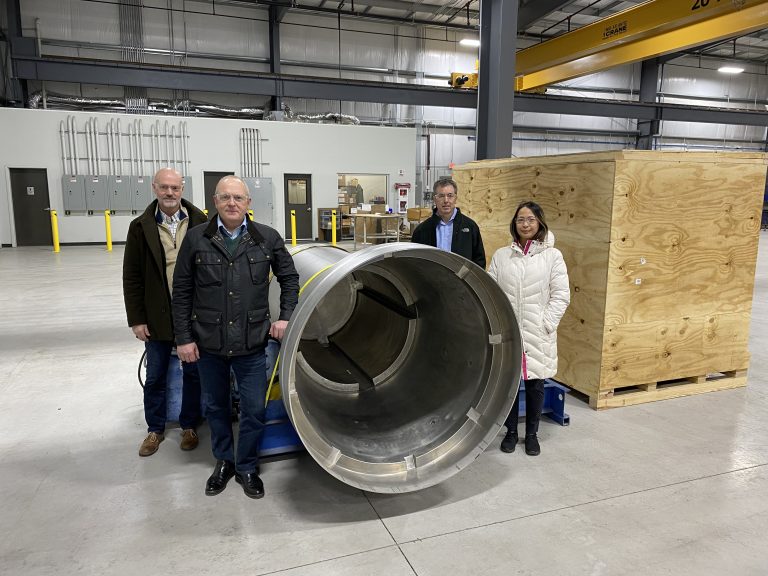
From left, INL’s Mark Nefzger, Raymond Clark, and John Jackson and DOE-NE’s and Diana Li pose with a MARVEL component.. (Photo: DOE-NE)
A team from Idaho National Laboratory and the Department of Energy’s Office of Nuclear Energy recently visited Carolina Fabricators Inc. (CFI) in West Columbia, S.C., to launch the fabrication process for the primary coolant system of the MARVEL microreactor. Battelle Energy Alliance, which manages INL, awarded the CFI contract in January.
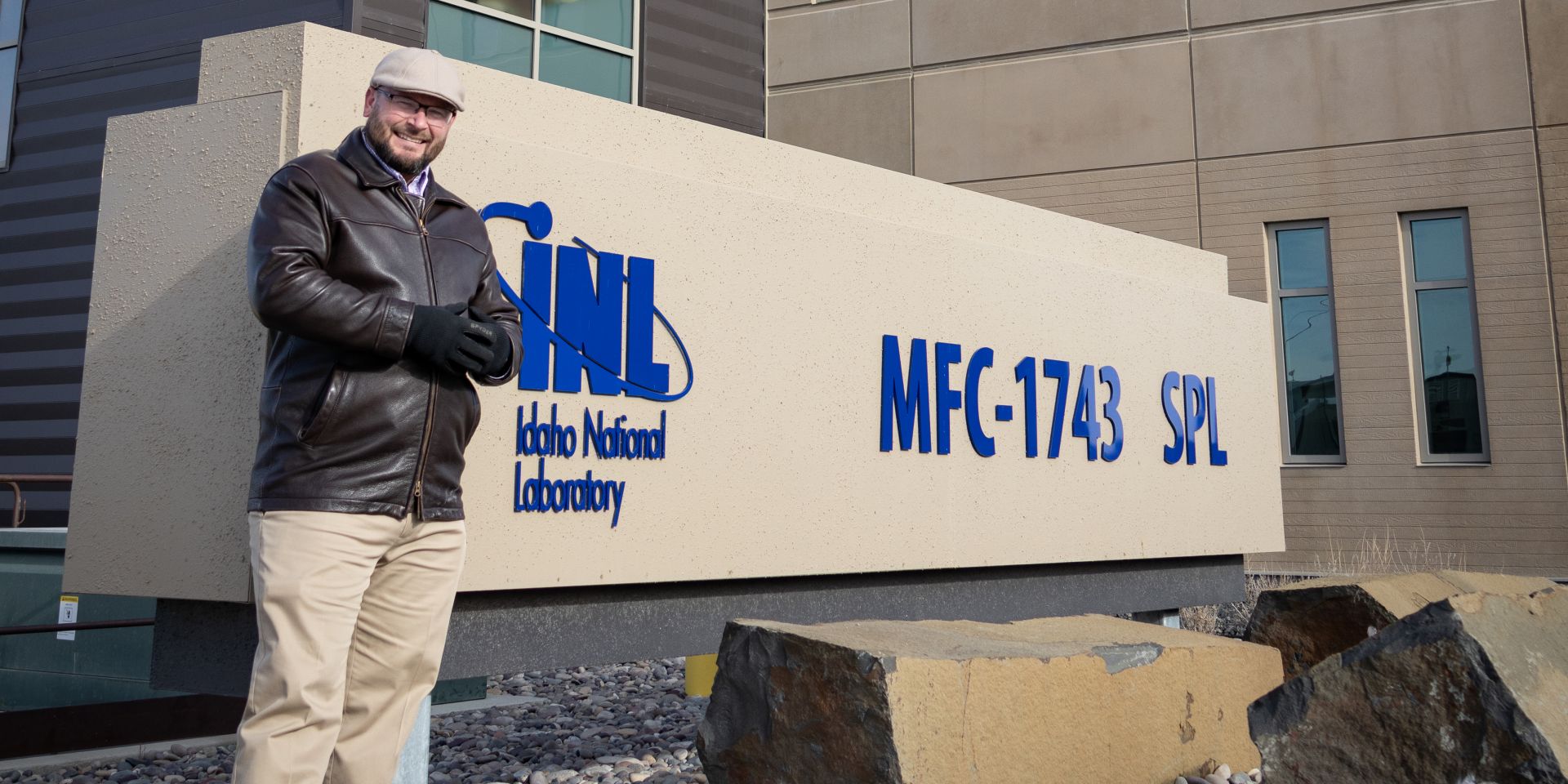
Judge stands outside INL’s new Sample Preparation Laboratory.
(Photo: INL)
Idaho National Laboratory’s newest facility—the Sample Preparation Laboratory (SPL)—sits across the road from the Hot Fuel Examination Facility (HFEF), which started operating in 1975. SPL will host the first new hot cells at INL’s Materials and Fuels Complex (MFC) in 50 years, giving INL researchers and partners new flexibility to test the structural properties of irradiated materials fresh from the Advanced Test Reactor (ATR) or from a partner’s facility.
Materials meant to withstand extreme conditions in fission or fusion power plants must be tested under similar conditions and pushed past their breaking points so performance and limitations can be understood and improved. Once irradiated, materials samples can be cut down to size in SPL and packaged for testing in other facilities at INL or other national laboratories, commercial labs, or universities. But they can also be subjected to extreme thermal or corrosive conditions and mechanical testing right in SPL, explains Colin Judge, who, as INL’s division director for nuclear materials performance, oversees SPL and other facilities at the MFC.
SPL won’t go “hot” until January 2026, but Judge spoke with NN staff writer Susan Gallier about its capabilities as his team was moving instruments into the new facility.
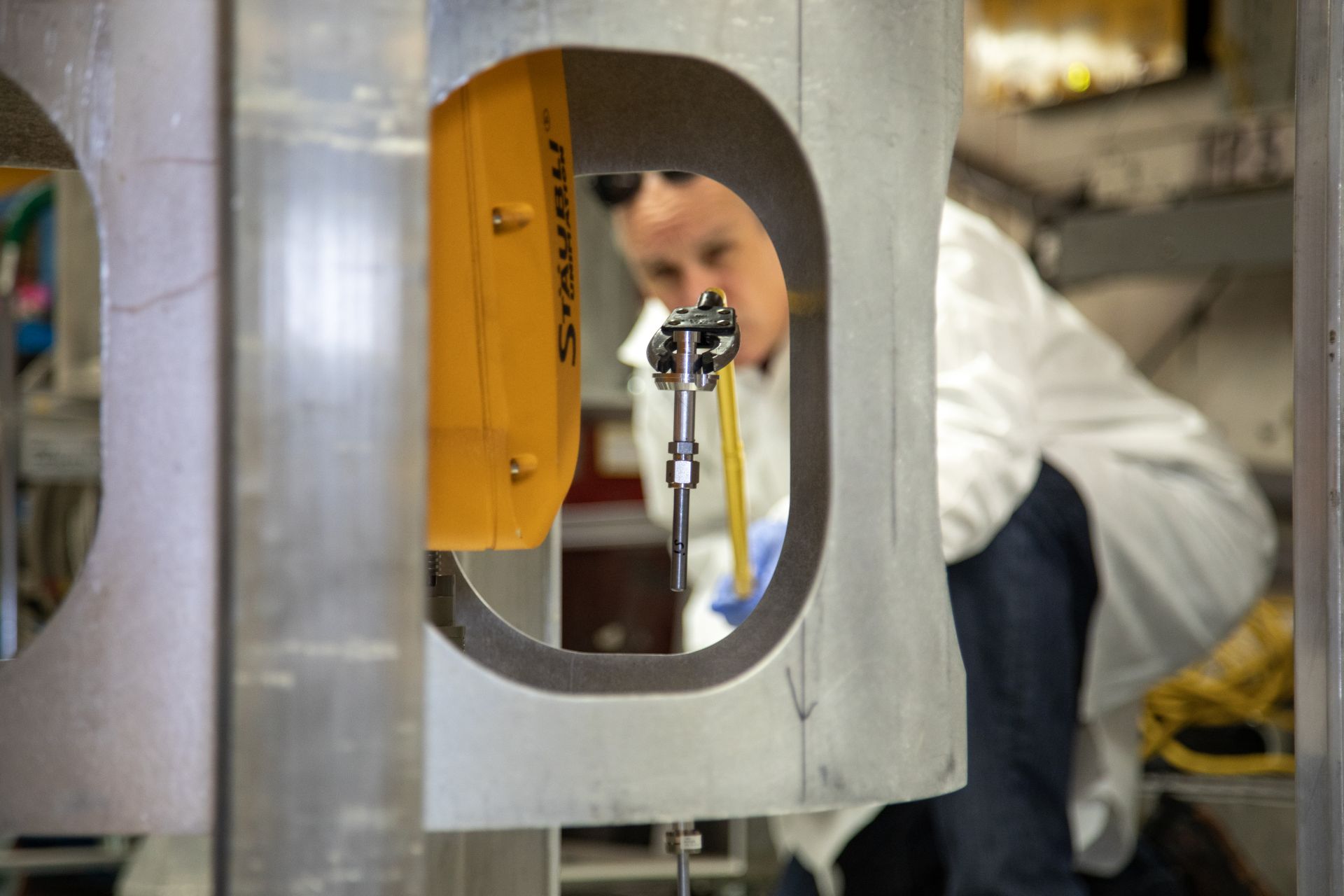
February 14, 2025, 2:58PMNuclear NewsAlexander Long and Sven Vogel Beamline scientist Sven Vogel installs a highly radioactive post-irradiated nuclear fuel sample into the sample chamber on Flight Path 4 (HIPPO) at the Lujan Center. The sample chamber is equipped with a robotic arm capable of precisely positioning and orienting samples within the pulsed thermal neutron beam originating from the spallation target. This advanced setup enables simultaneous neutron diffraction and Bragg-edge imaging, allowing researchers to analyze the structural and microstructural properties of irradiated nuclear fuels under controlled conditions. (Photo: LANL)
In materials science, understanding the unseen—how materials behave internally under real-world conditions—has always been key to developing new materials and accelerating innovative technologies to market. Moreover, the tools that allow us to see into this invisible world of materials have often been game-changers. Among these, neutron imaging stands out as a uniquely powerful method for investigating the internal structure and behavior of materials without having to alter or destroy the sample. By harnessing the unique properties of neutrons, researchers can uncover the hidden behavior of materials, providing insights essential for advancing nuclear materials and technologies.
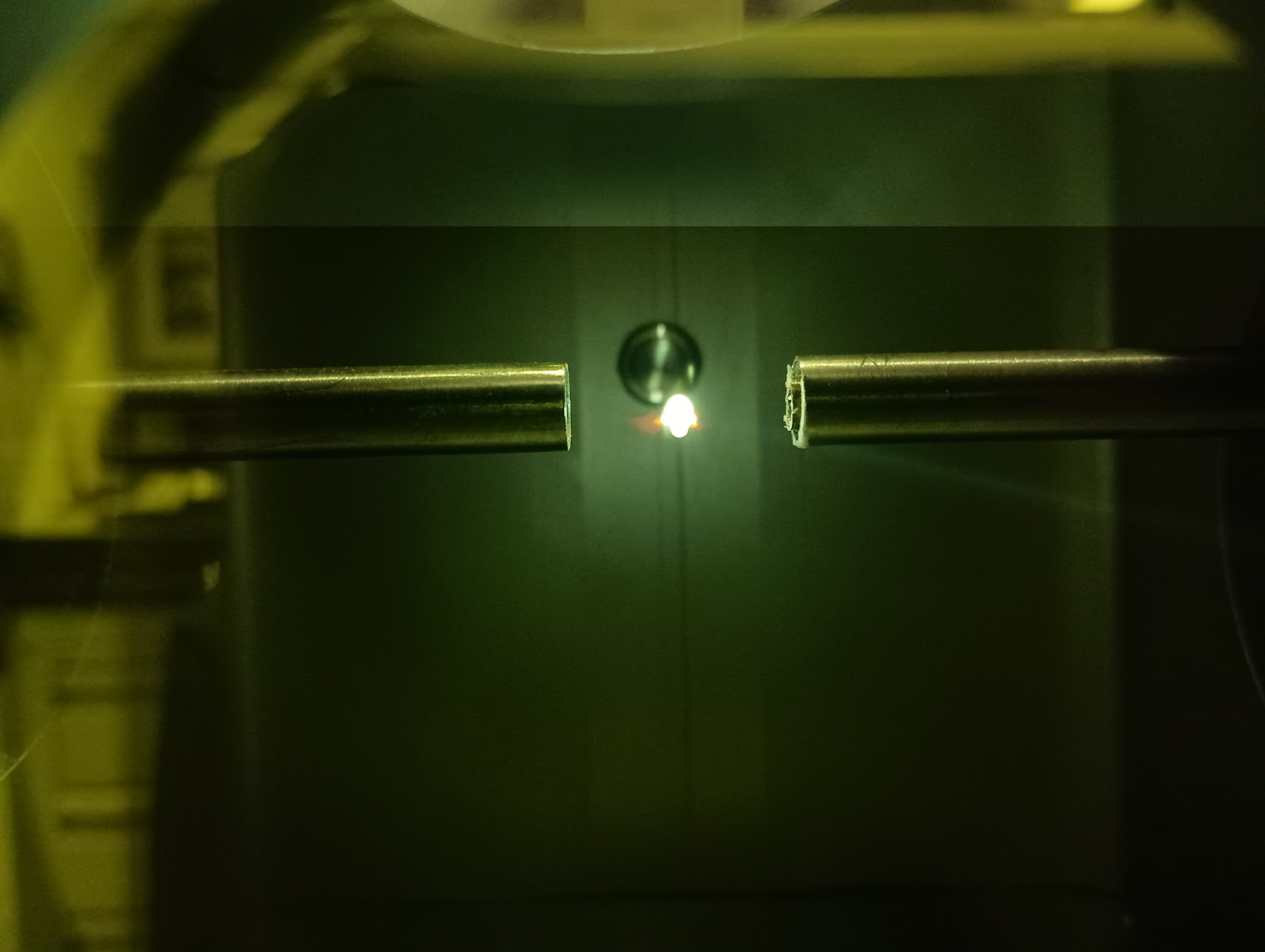
Weak radio luminescence captured by a low light intensity camera from a synthetic diamond carbon film made from beta-emitting carbon-14 atoms. (Image: University of Bristol)
The world’s first carbon-14 diamond battery became a reality in a United Kingdom laboratory this past December when it was created by scientists from University of Bristol and the U.K. Atomic Energy Authority.
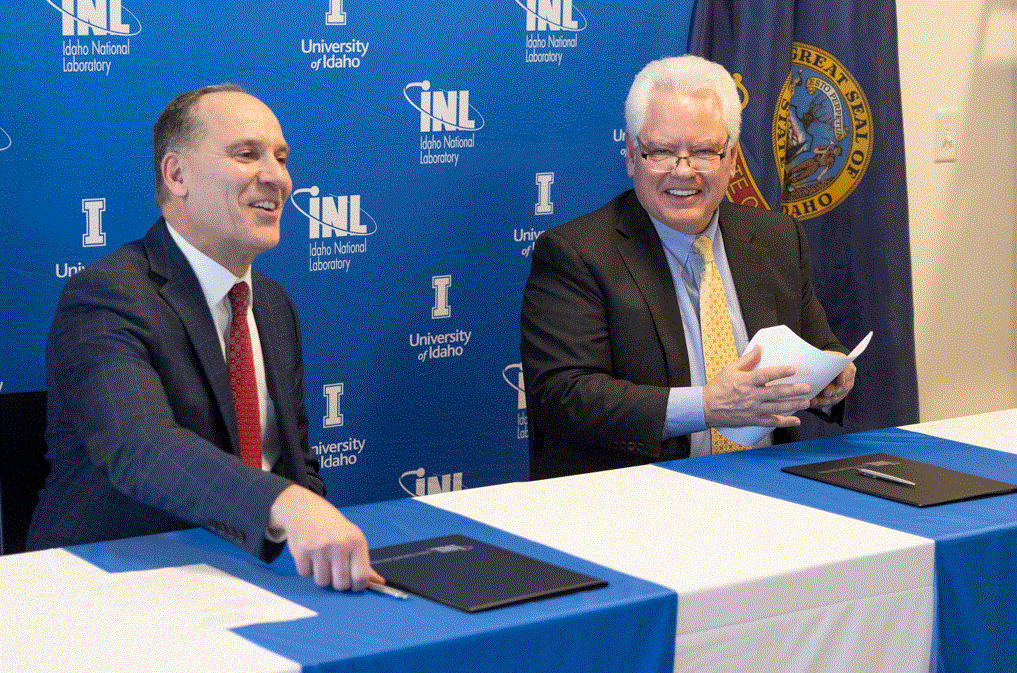
INL director John Wagner and University of Idaho president C. Scott Green at the SUPER agreement signing. (Photo: INL)
New Strategic Understanding for Premier Education and Research (SUPER) agreements signed by Idaho National Laboratory, Boise State University, and University of Idaho will foster collaboration among the institutions in advanced energy and cybersecurity projects. The five-year agreements are designed to open doors for research and development opportunities, while advancing existing research and development initiatives, including projects in nuclear energy and high-performance computing.
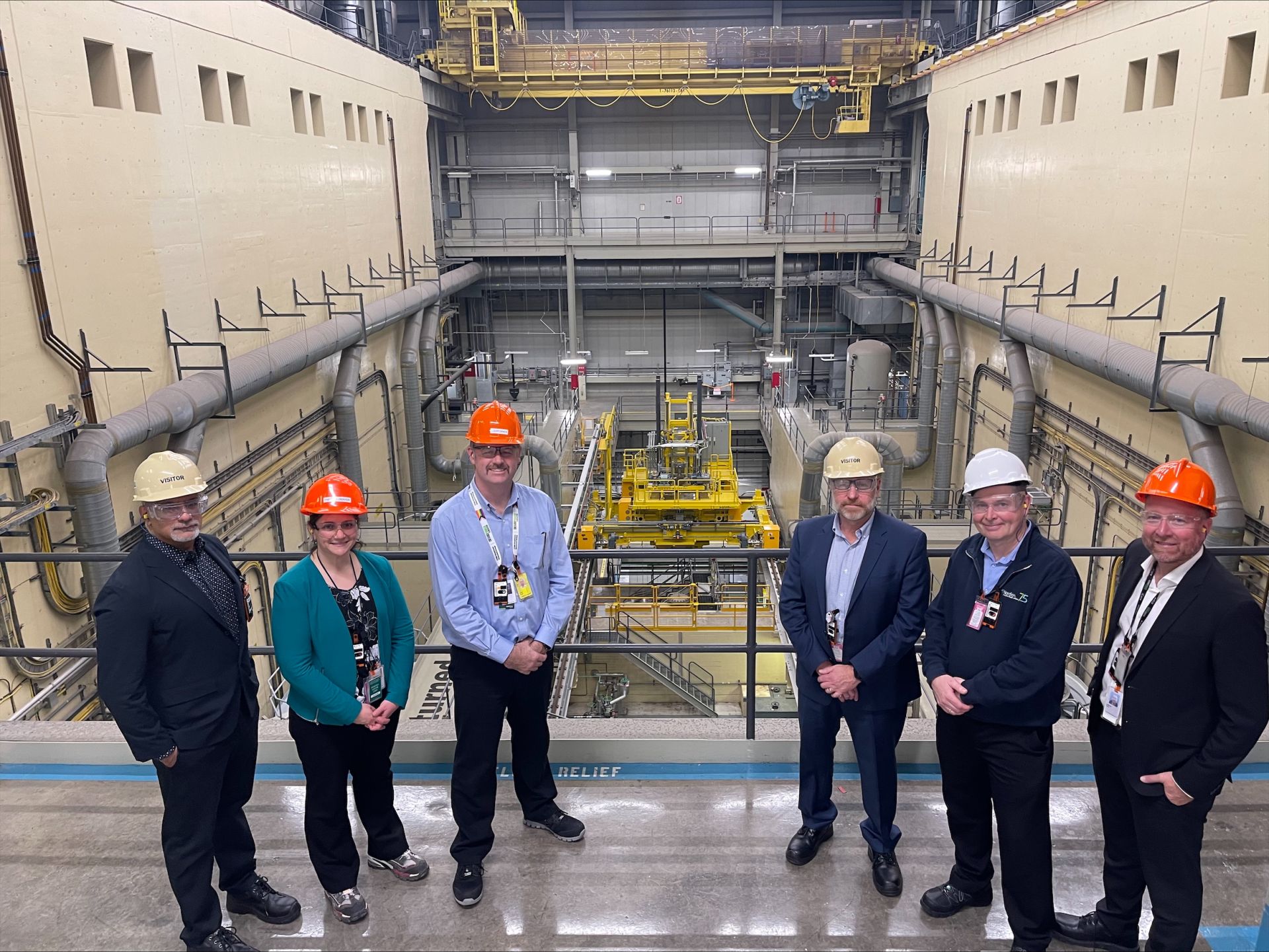
OPG and Nordion employees at Darlington’s recently refurbished Unit 1, which has been modified to produce cobalt-60 isotopes. (Photo: OPG)
Ontario Power Generation in Canada announced that Unit 1 of its Darlington nuclear power plant, which has returned to service from refurbishment, is now producing the medical isotope cobalt-60. During refurbishment activities, OPG made modifications to the unit to allow it to produce Co-60, which is used to sterilize 30 percent of the world’s single-use medical devices, such as syringes, gloves, and implants.