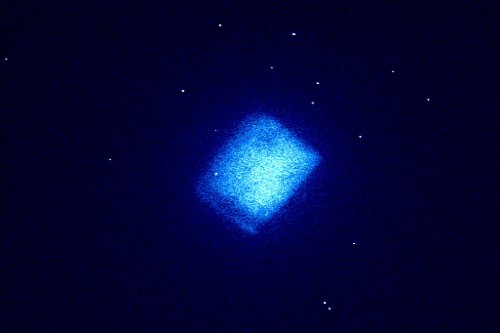
Weak radio luminescence captured by a low light intensity camera from a synthetic diamond carbon film made from beta-emitting carbon-14 atoms. (Image: University of Bristol)
The world’s first carbon-14 diamond battery became a reality in a United Kingdom laboratory this past December when it was created by scientists from University of Bristol and the U.K. Atomic Energy Authority.
Radioisotopes target cancer, improve imaging, and have myriad other medical uses
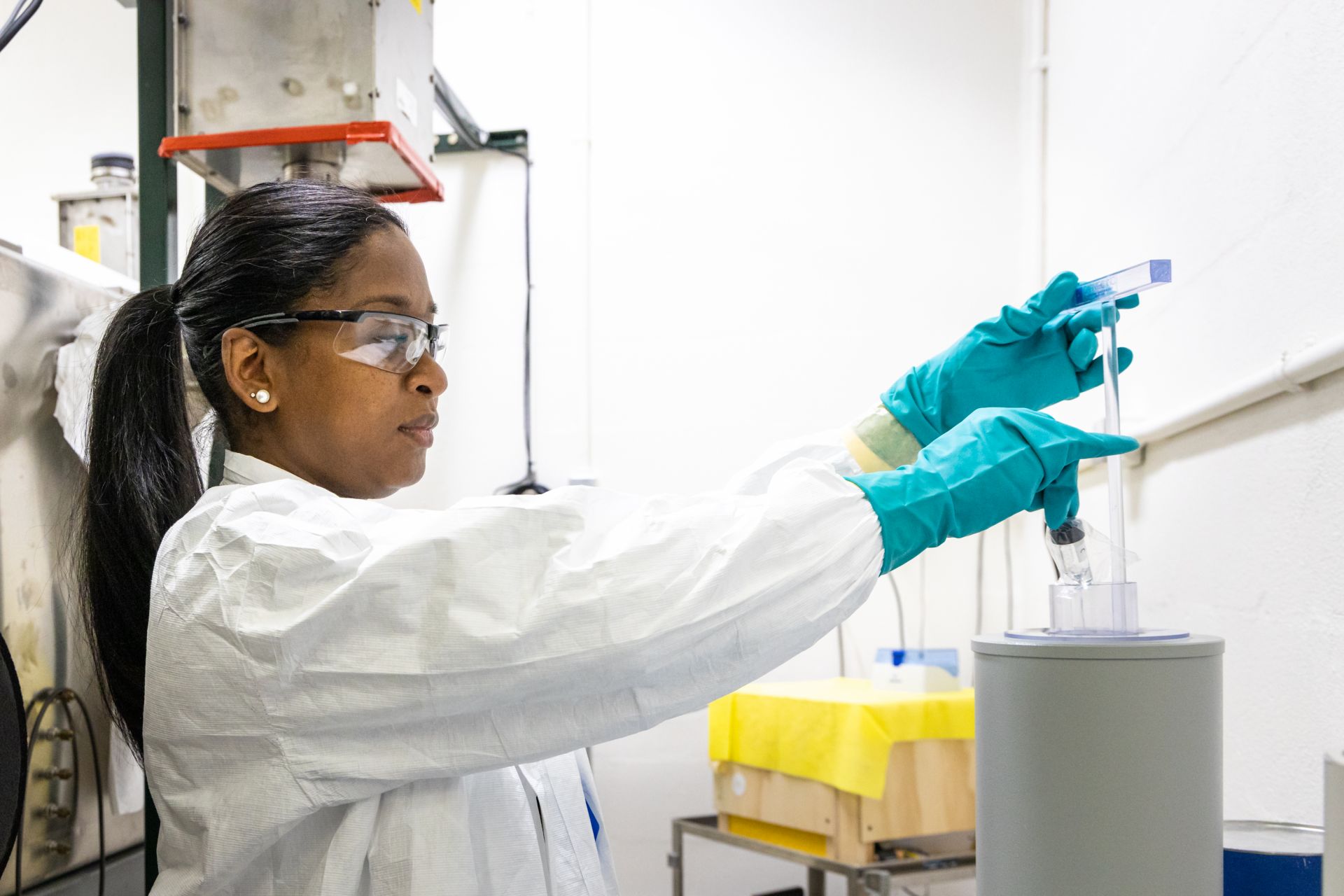
ORNL radioisotope manufacturing coordinator Jillene Sennon-Greene places a shipment vial of actinium-225 inside the dose calibrator to confirm its activity is within customer specifications. (Photo: Carlos Jones/ORNL, DOE)
On August 2, 1946, 1 millicurie of the isotope carbon-14 left Oak Ridge National Laboratory, bound for the Barnard Free Skin and Cancer Hospital in St. Louis, Mo.
That tiny amount of the radioisotope was purchased by the hospital for use in cancer studies. And it heralded a new peacetime mission for ORNL, built just a few years earlier for the production of plutonium from uranium for the Manhattan Project.