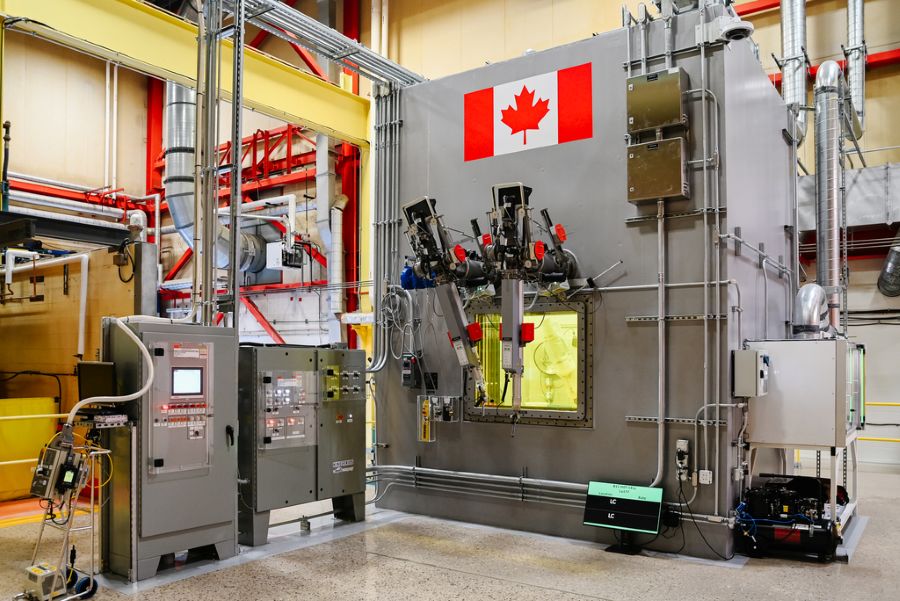
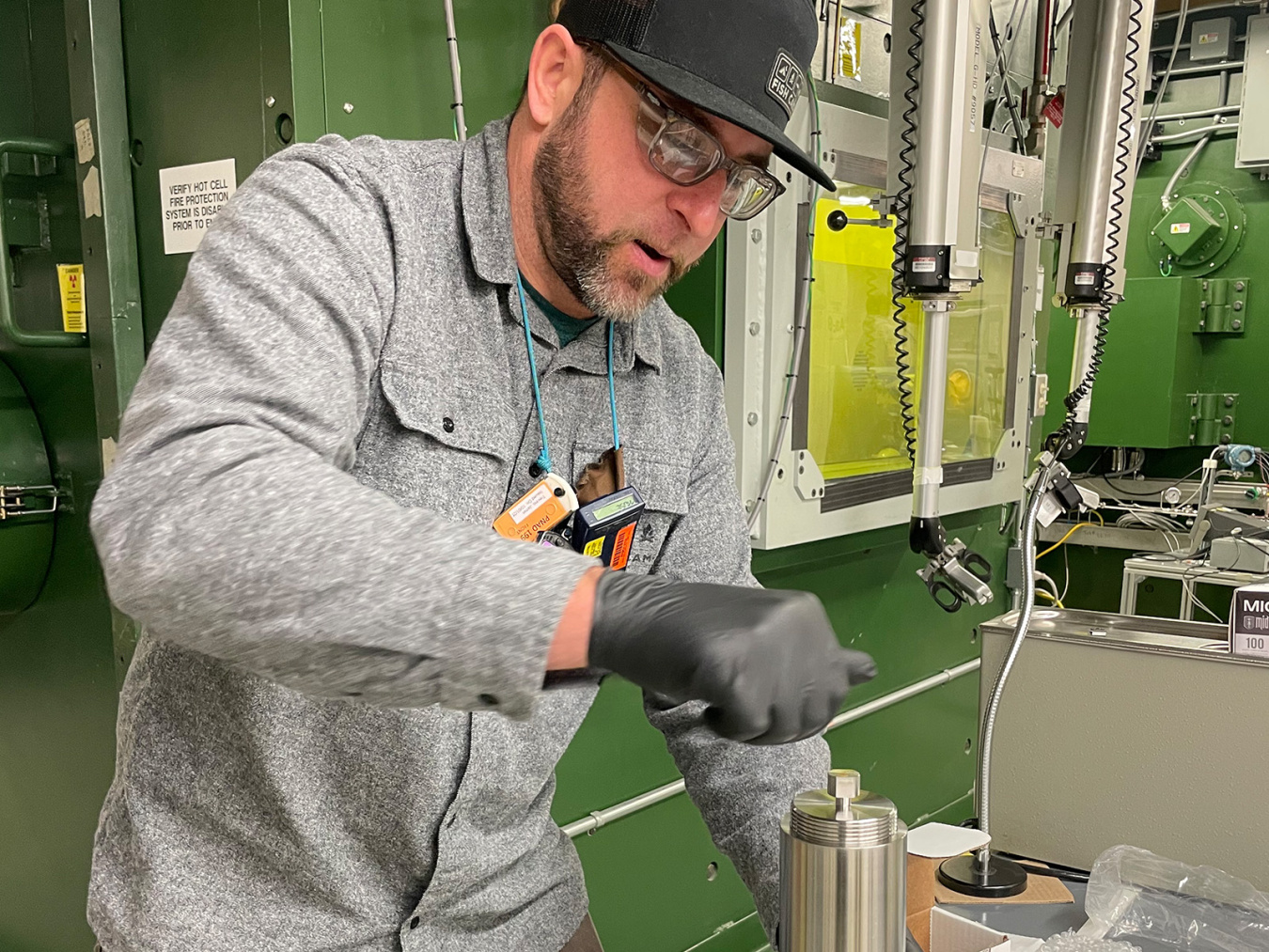
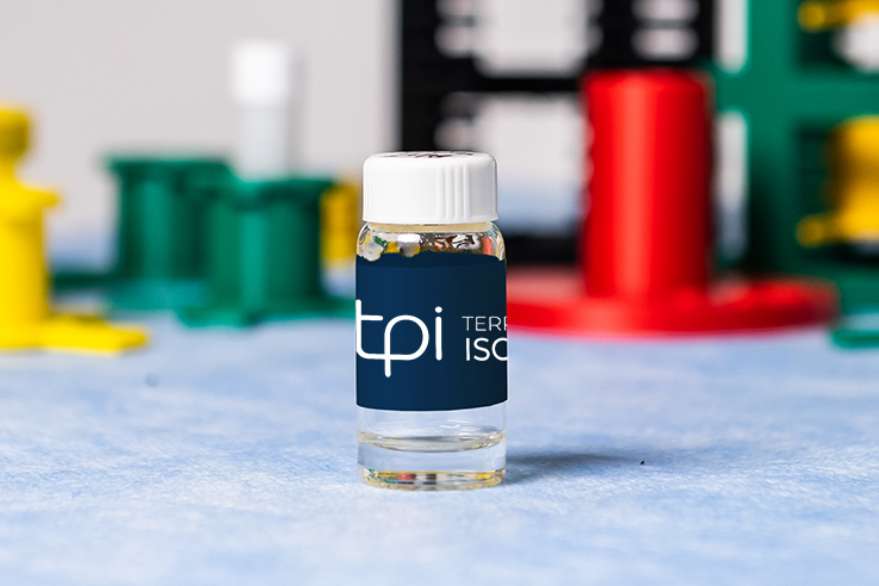
Bruce Power’s hot cell for the TCR step of lutetium-177 production, in Tiverton, Ontario. (Photo: Bruce Power)
The Canadian Nuclear Safety Commission has given Bruce Power approval to operate the company’s hot cell facility in Tiverton, Ontario, for medical radioisotope processing. This approval allows the facility to conduct Target Carrier Removal (TCR), a key step in the production of lutetium-177, an isotope used to treat prostate and gastric cancers.
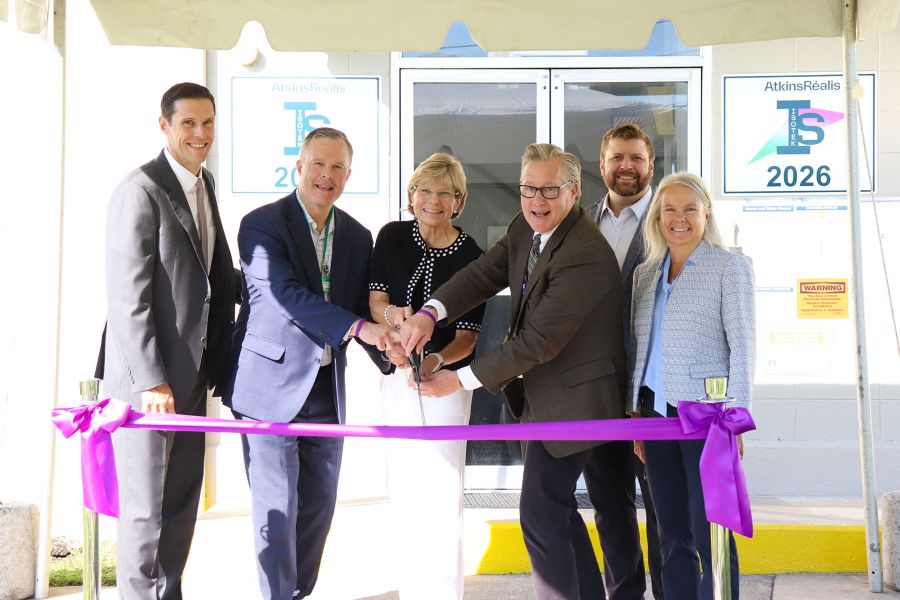
The ribbon is cut for the new analytical lab in ORNL’s Building 2026 by, from left, AtkinsRéalis’s Jeff Kendall, TerraPower Isotopes’ Scott Claunch, Isotek Systems’ Sarah Schaefer, OREM’s Erik Olds, TerraPower Isotopes’ Ben Goodrich, and OREM’s Teresa Robbins. (Photo: DOE Oak Ridge Office of Environmental Management)
A new analytical laboratory at Oak Ridge National Laboratory has been officially opened by the Department of Energy’s Oak Ridge Office of Environmental Management and its contractor Isotek Systems. The state-of-the-art lab, located in Building 2026, is being used to speed up the high-priority cleanup of ORNL’s uranium-233 inventory and accelerate the delivery of actinium-225 to facilities that use the radioisotope in research and for potential treatment of patients with cancer.
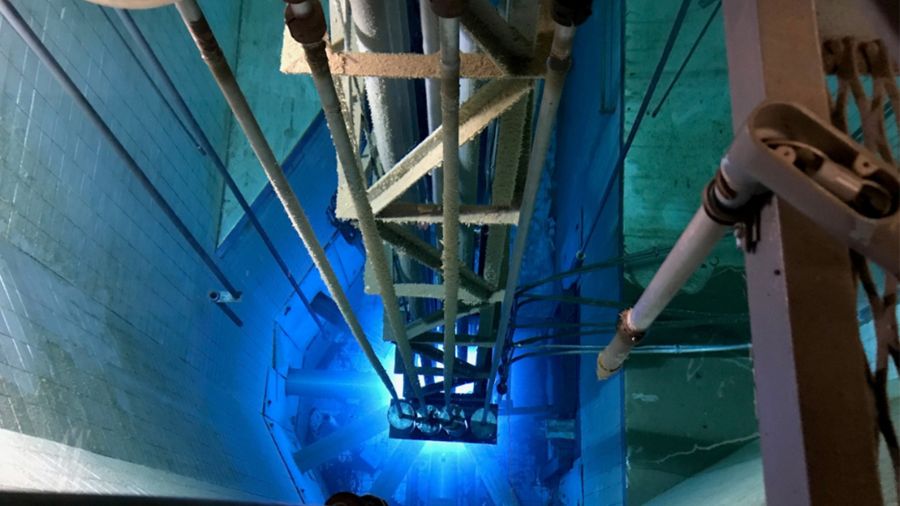
The core of the McMaster Nuclear Reactor. (Photo: McMaster University)
With a new investment of C$4.6 million (approximately $3.3 million) from the government of Ontario, Canada, operations of the McMaster Nuclear Reactor (MNR) at McMaster University are being expanded to 24 hours a day, seven days a week, in order to boost the production of medical radioisotopes.
(Image: McMaster University)
The Canadian Medical Isotope Ecosystem, which is backed by the Canadian federal government’s Strategic Innovation Fund, has announced funding for a collaboration between Promation, Astral Systems, and McMaster University to establish a proof-of-concept approach for a fusion reaction–based copper-67 production process with automated postirradiation isotope separation and purification.
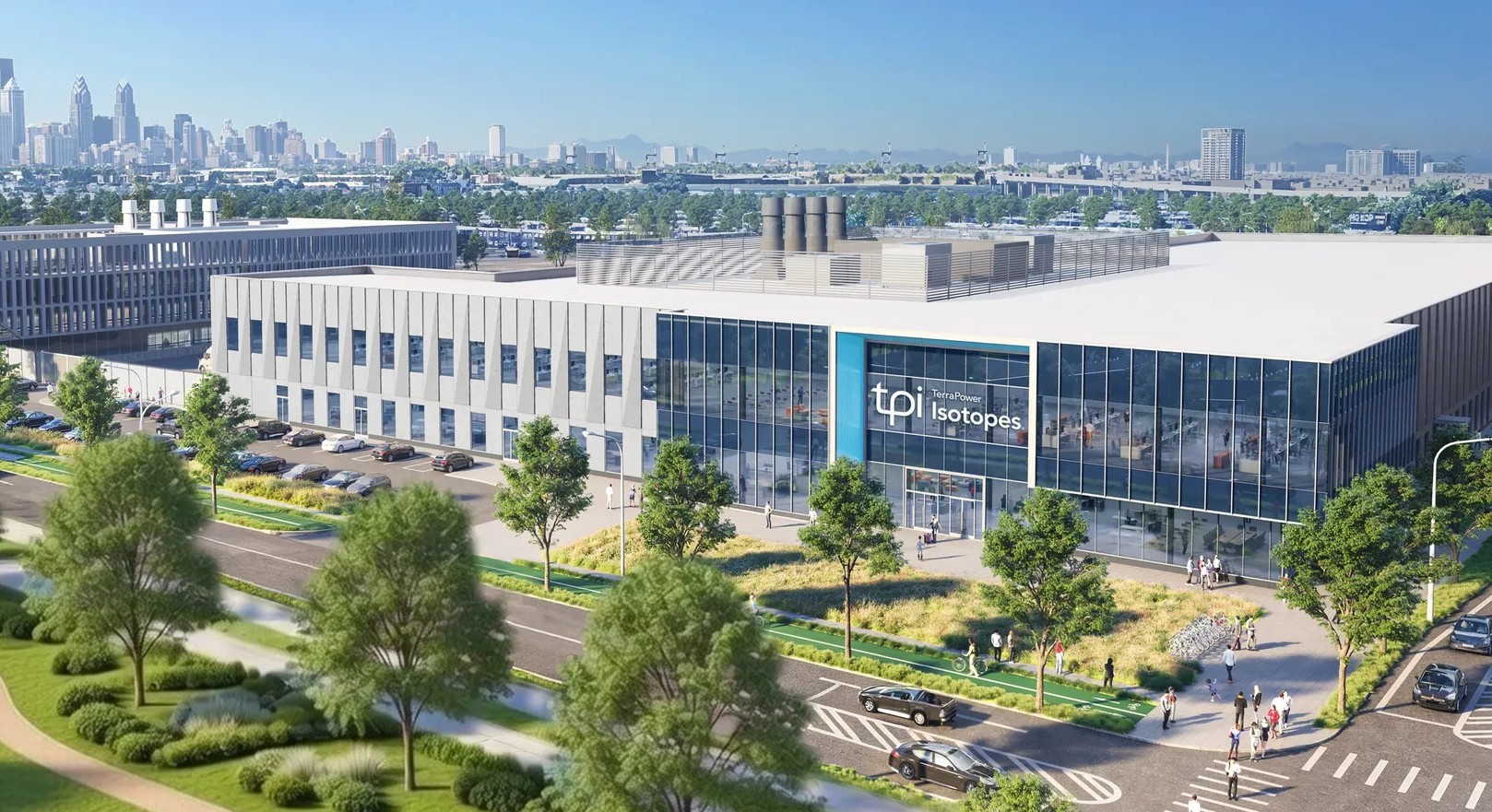
Concept art of TerraPower Isotopes’s newly planned facility in the Bellwether District of South Philadelphia. (Image: TerraPower Isotopes)
TerraPower Isotopes, a TerraPower subsidiary, plans to increase its actinium-225 production 20-fold by opening a new manufacturing facility in Philadelphia, Pa., and by expanding the capacity of its Everett, Wash., facility. On March 17, TerraPower Isotopes said it expects the new facility to begin producing the medical radioisotope for targeted alpha therapy in 2029.
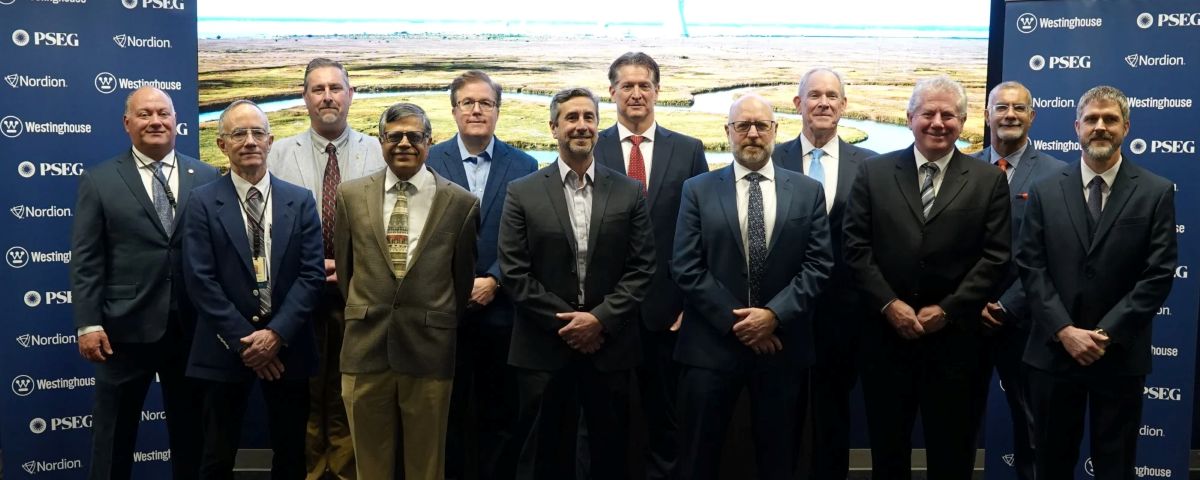
Senior leaders from Nordion, PSEG, and Westinghouse attended the signing ceremony. (Photo: Westinghouse)
Westinghouse Electric Company, Nordion, and PSEG Nuclear announced on Tuesday the signing of long-term agreements to establish the first commercial-scale production of cobalt-60 in a U.S. nuclear reactor. Under the agreements, the companies are to apply newly developed production technology for pressurized water reactors to produce Co-60 at PSEG’s Salem nuclear power plant in New Jersey.
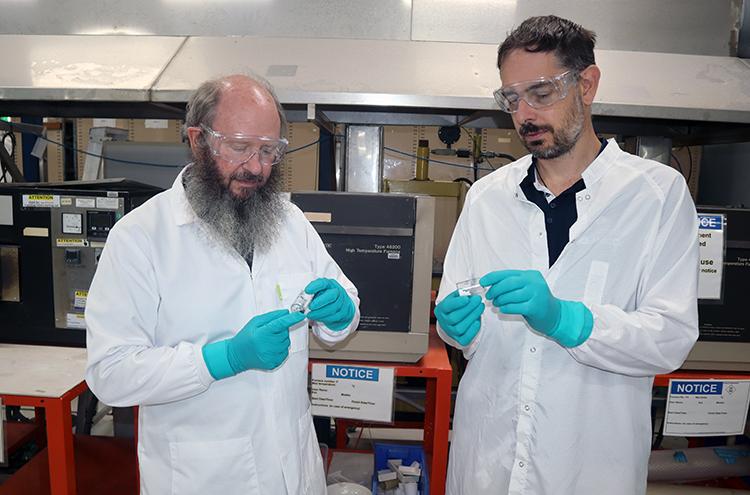
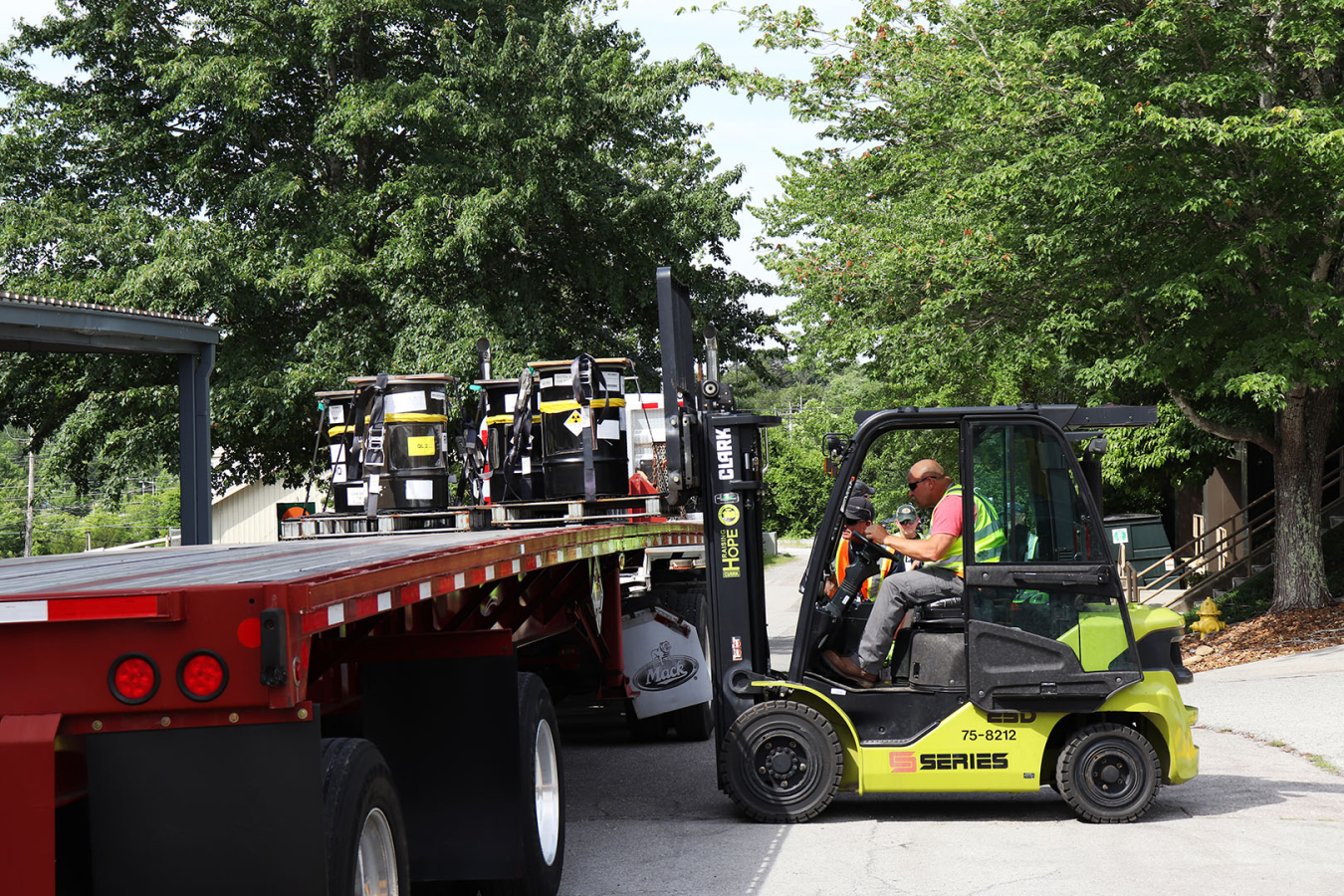
Isotek employees load canisters of Th-229 that will go to TerraPower to support cancer treatment research. (Photo: DOE)
Workers with Oak Ridge Office of Environmental Management contractor Isotek have surpassed a significant milestone in the supply of medical radioisotopes, extracting more than 15 grams of rare thorium-229 through the Department of Energy’s Thorium Express Project.
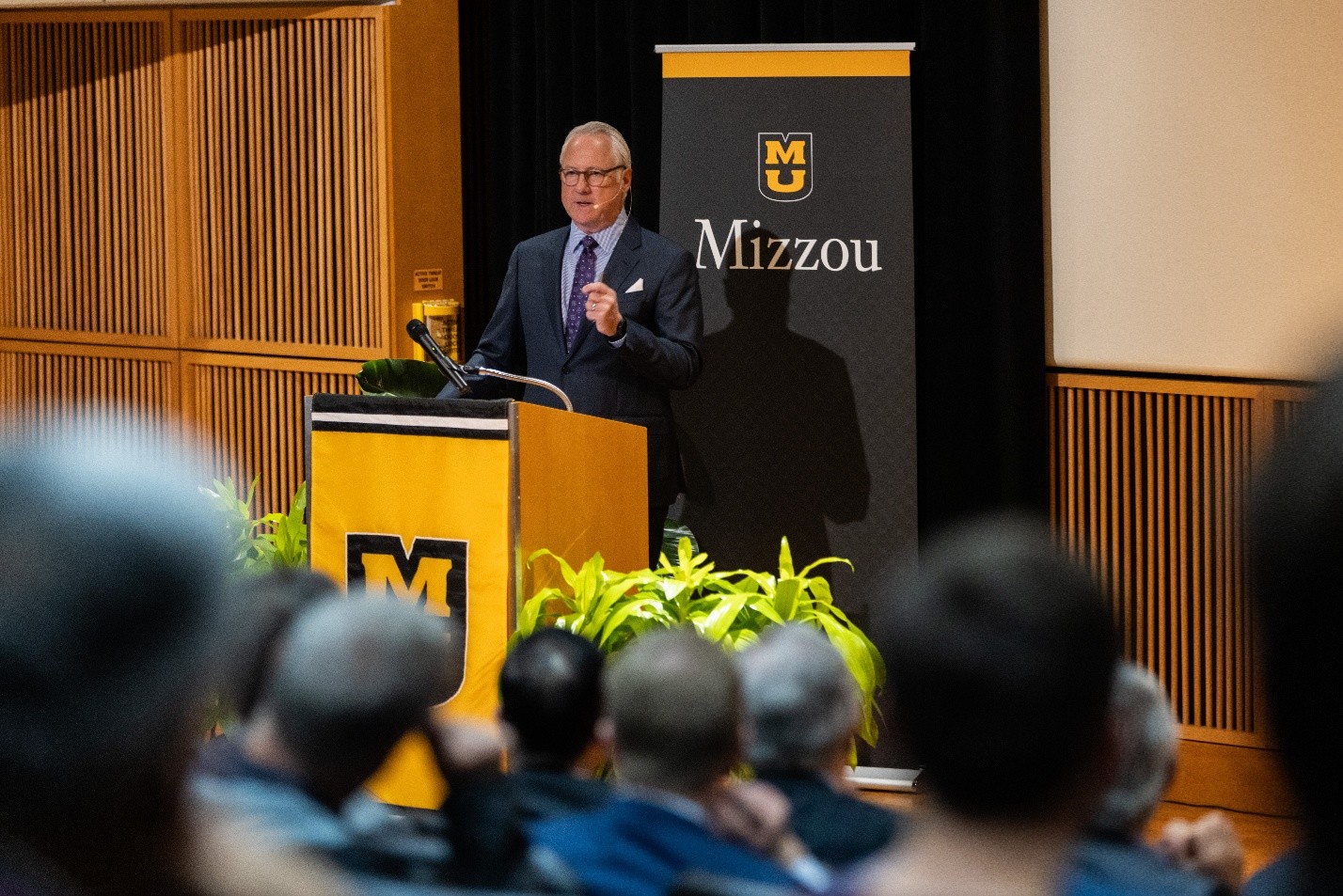
Craig Piercy delivers remarks at the Monsanto Auditorium at the University of Missouri. (Source: Abbie Nell Lankitus/University of Missouri)
ANS Executive Director/CEO Craig Piercy recently spoke on nuclear power’s potential for answering today’s energy demands as part of the Distinguished Lecture Series at the University of Missouri. He also took part in the ribbon cutting for a large addition to the University of Missouri Research Reactor (MURR).
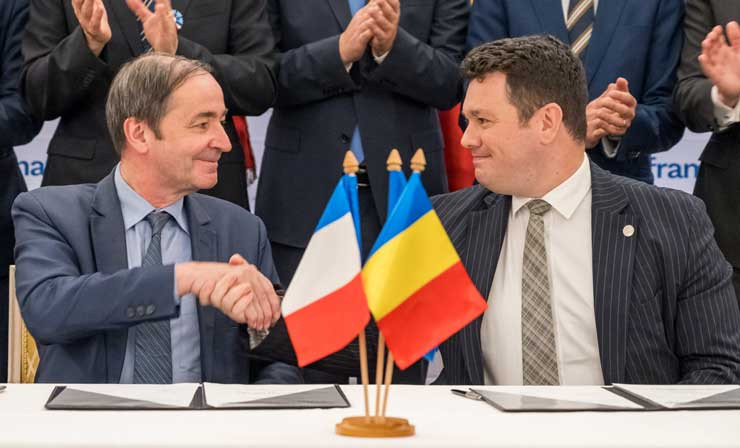
Bernard Fontana (left) of Framatome and Cosmin Ghiță of Nuclearelectrica. (Photo: Framatome)
Framatome and SN Nuclearelectrica, a partially state-owned Romanian nuclear energy company, have entered into a long-term cooperation agreement to produce the medical isotope lutetium-177 at Cernavoda nuclear power plant in Romania. Lu-177 is a beta-emitting radioisotope used in targeted radionuclide therapy for the treatment of neuroendocrine tumors and prostate cancer.