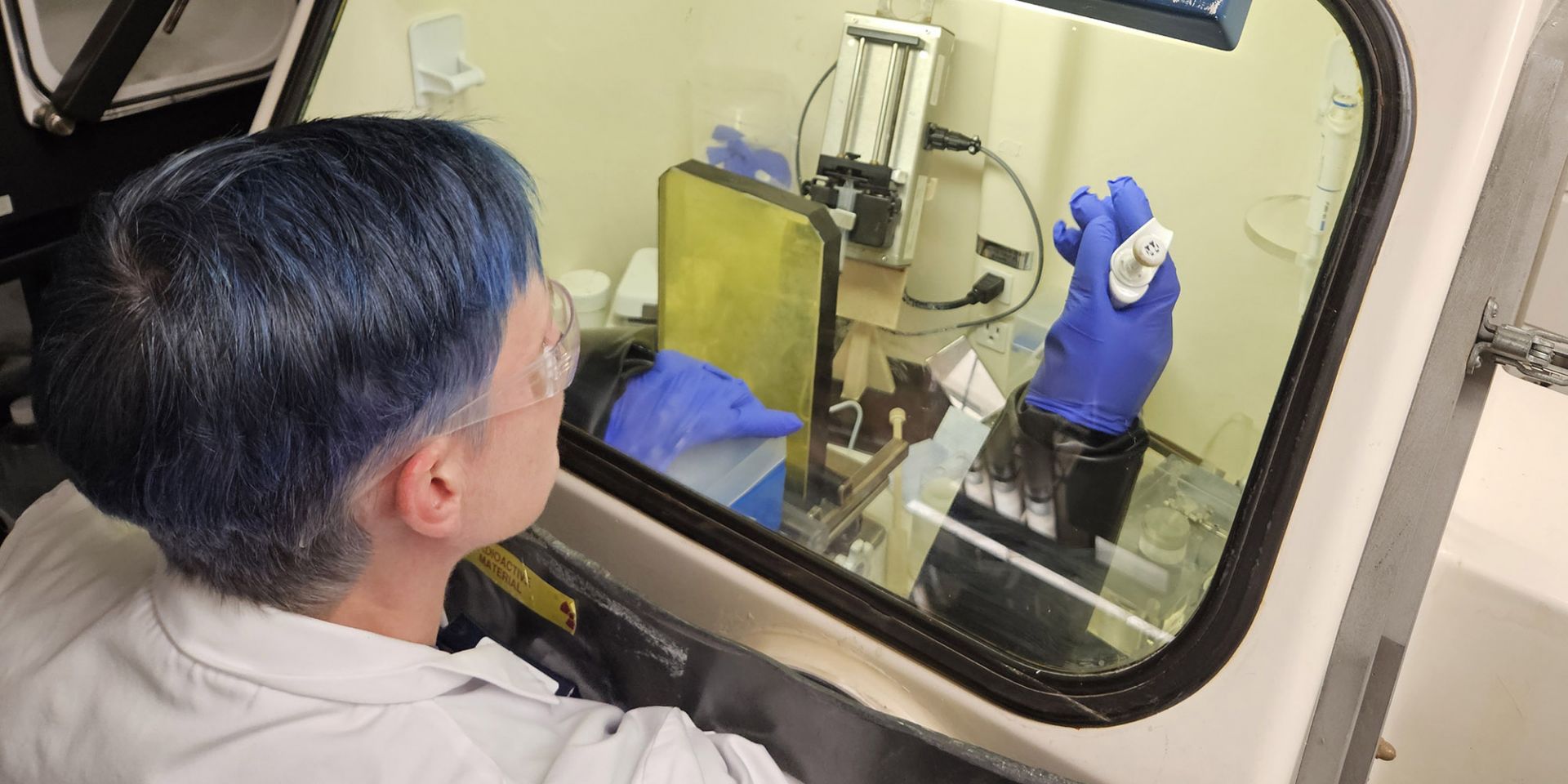
A nuclear scientist at MURR prepares gadolinium-153 for use in calibrating SPECT diagnostic imaging machines. (Photo: Curators of the University of Missouri)
The University of Missouri Research Reactor (MURR) has commenced production of gadolinium-153, a radioisotope used in medical imaging applications, as announced by the Department of Energy’s Office of Isotope R&D Production (IRP) and the university earlier this week. That makes MURR the only domestic supplier of Gd-153 and one of two suppliers in the world.
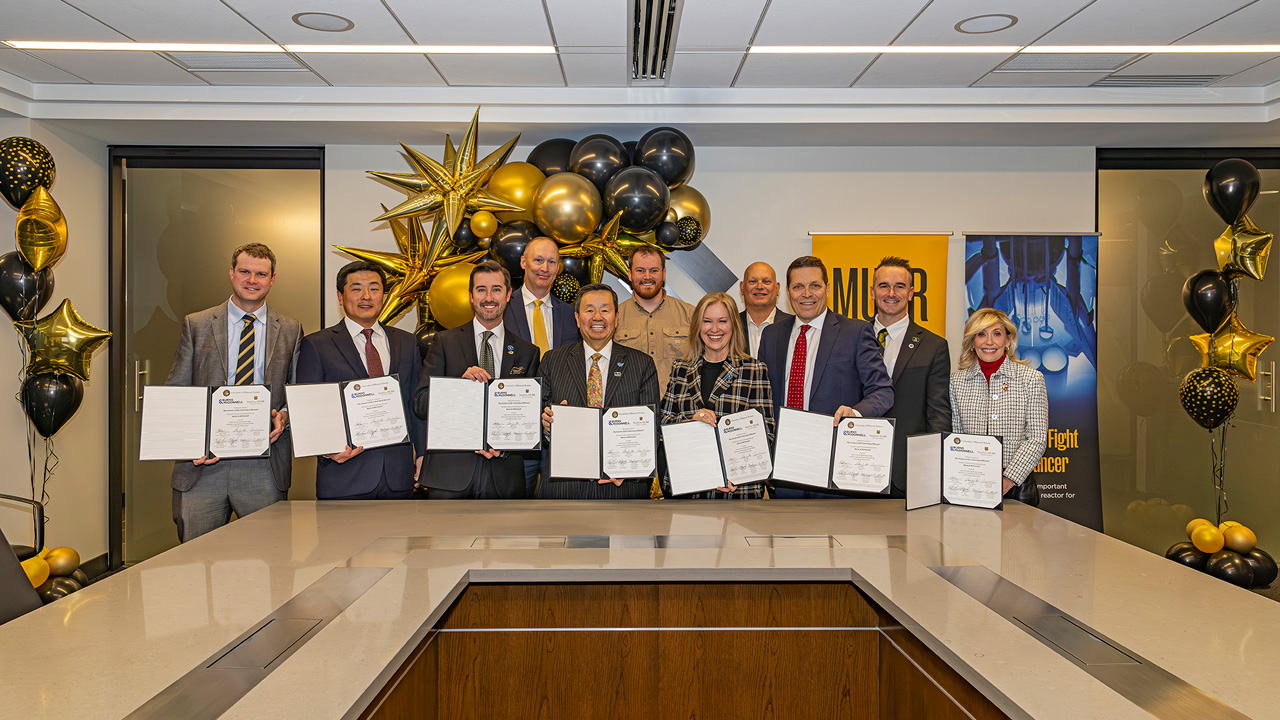
Leaders from the University of Missouri, Burns & McDonnell, and the state of Missouri celebrate the signing of a major consulting agreement between the University of Missouri and Burns & McDonnell for NextGen MURR. (Photo: University of Missouri)
The University of Missouri has entered a consulting agreement with construction firm Burns & McDonnell to develop NextGen MURR, a new 20-MW light water research reactor that will produce medical isotopes for cancer treatments and theranostics and will be used to conduct neutron science research.
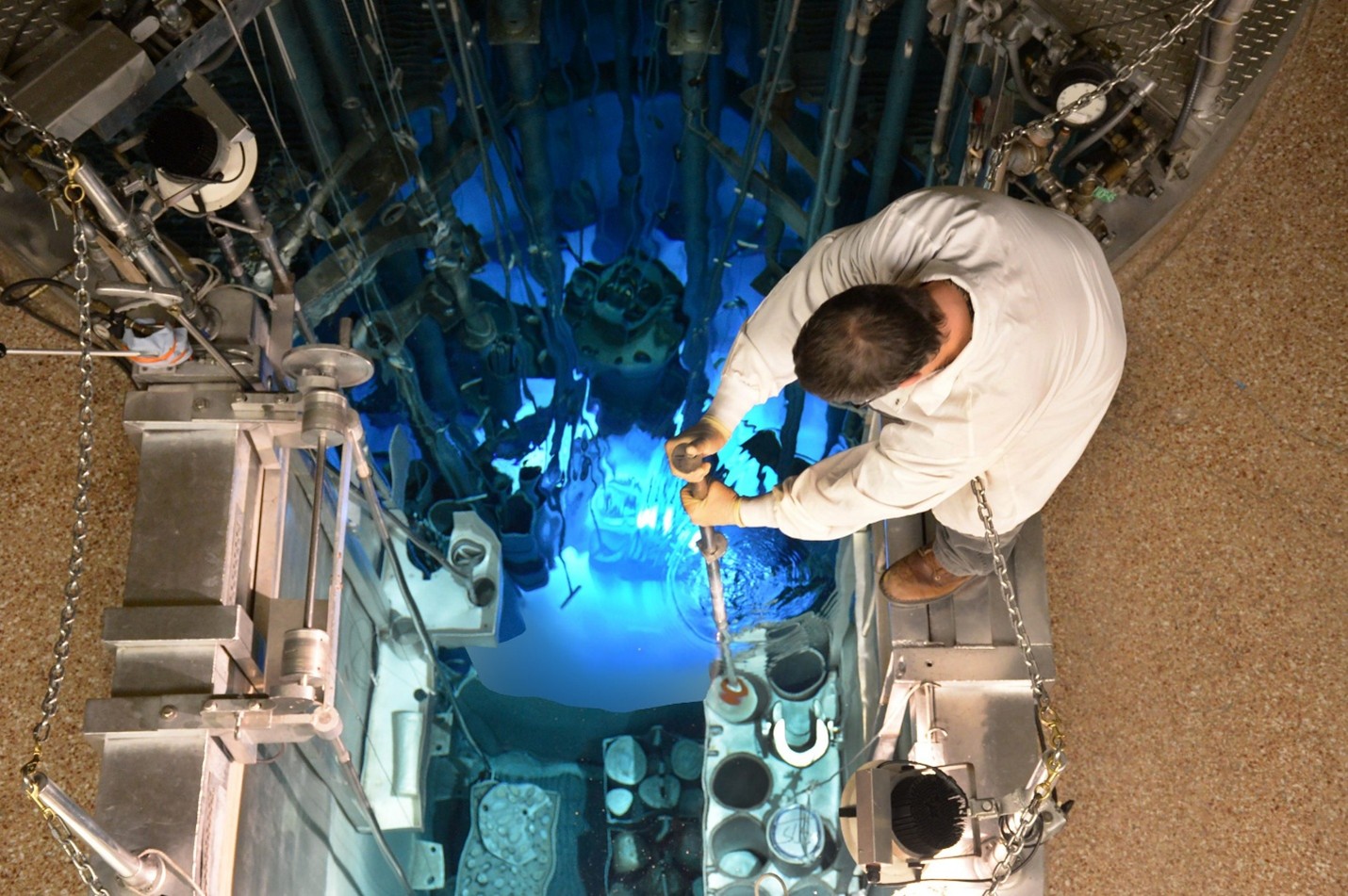
A reactor operator retrieves a sample can from the MURR, as seen from above. (Photo: University of Missouri)
The University of Missouri announced today that it has signed a $10 million contract for the initial design phase of the $1 billion-plus state-of-the-art NextGen MURR research reactor project.
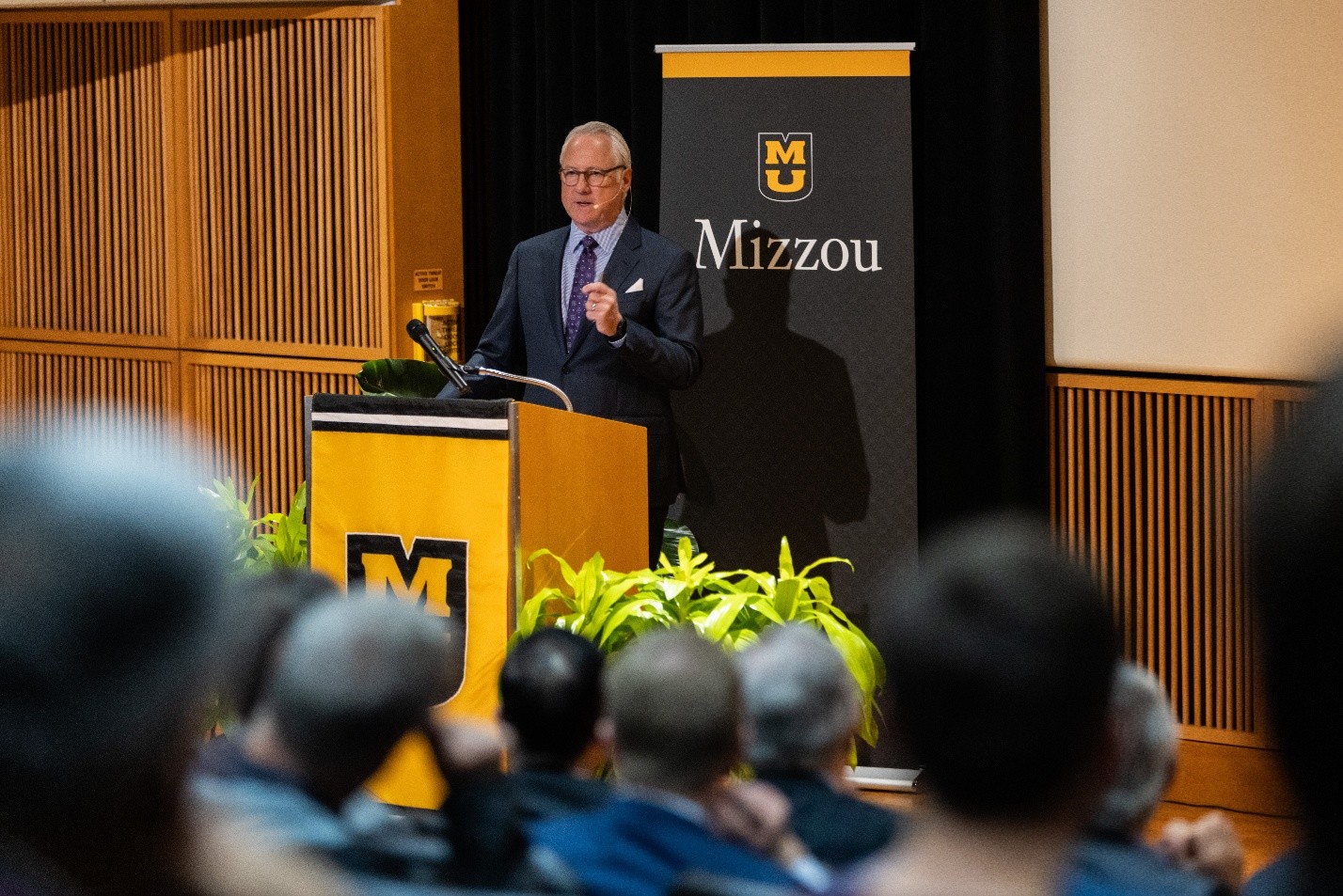
Craig Piercy delivers remarks at the Monsanto Auditorium at the University of Missouri. (Source: Abbie Nell Lankitus/University of Missouri)
ANS Executive Director/CEO Craig Piercy recently spoke on nuclear power’s potential for answering today’s energy demands as part of the Distinguished Lecture Series at the University of Missouri. He also took part in the ribbon cutting for a large addition to the University of Missouri Research Reactor (MURR).
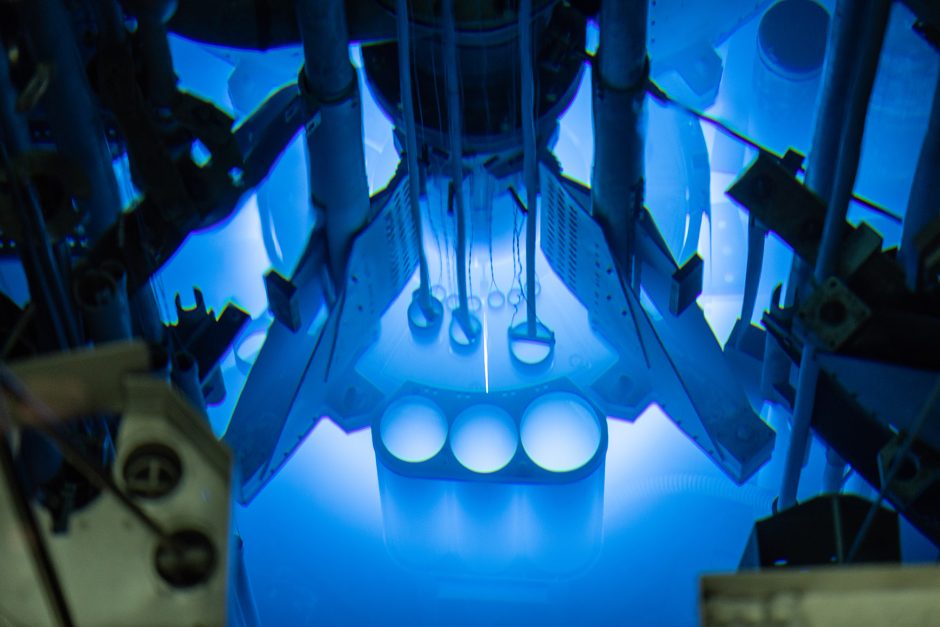
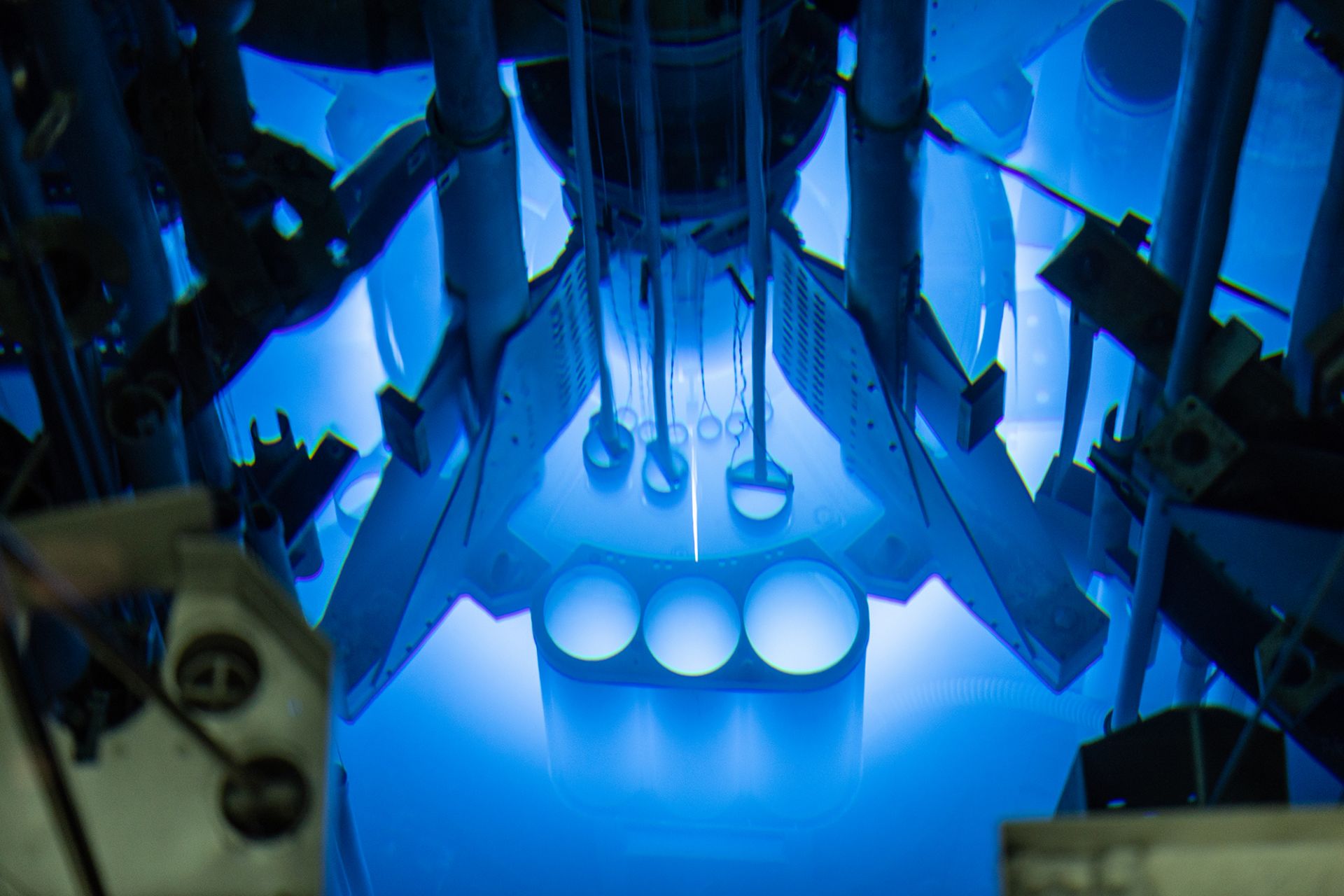
The 10 MW core of MURR contributes to the global supply of radioisotopes for medical radiopharmaceuticals and research. (Photo: MURR)
The University of Missouri Research Reactor (MURR) is the latest member of Nuclear Medicine Europe, an industry association for the radiopharmaceutical and molecular imaging industry in Europe, the University of Missouri announced July 17.
Situated in a 30-foot-deep pool, the 10 MW core of MURR is used to irradiate samples and produce isotopes for medical radiopharmaceuticals and research. (Photo: University of Missouri)
The University of Missouri intends to build a new, larger research reactor to produce medical radioisotopes, announcing that it intends to issue a request for qualification/request for proposal (RFQ/RFP) in April to solicit interest from qualified parties to provide preliminary designs and industry partnerships for the new reactor project, called NextGen MURR.

 2x1.jpg)