
-3 2x1.jpg)
Isotopes hold clue to travel plans of migrating butterflies
April 14, 2021, 12:00PMNuclear News
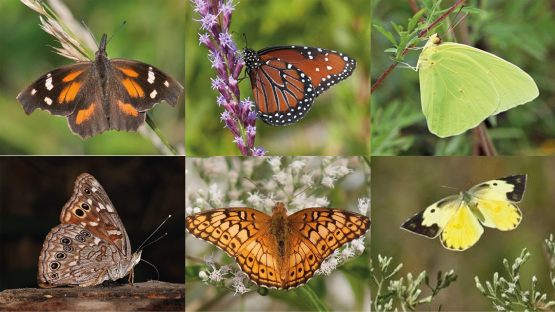
Scientists studied the migration of six butterflies (from top left to bottom right): American Snout butterfly, Queen butterfly, Cloudless Sulphur butterfly, Empress Leilia butterfly, Variegated Fritillary butterfly, and Southern Dogface butterfly. (Composite photo: IAEA; photo credits: S. Bright, V. Charny, J. Gallagher, J. Green)
While scientists can tag migrating birds, mammals, and other animals to track their movements, the precise migration patterns of butterflies and other insects too small for tagging evaded scientists’ scrutiny for decades. That changed in 1996, when Leonard Wassenaar and Keith Hobson, working at the time as isotope scientists for Environment Canada, demonstrated that isotopic techniques could be used to determine the origin of individual monarch butterflies and deduce the species’ annual migration routes. Now, the same technique is being used to study other butterfly species.
To continue reading, log in or create a free account!
Tags:
Share:





 A recent article from

 Adequate uranium resources exist to support the long-term, sustainable use of nuclear energy for low-carbon electricity generation, as well as for other applications, including hydrogen production. That assessment is contained in the latest (28th) edition of
 The International Atomic Energy Agency has awarded
 The National Nuclear Security Administration has launched