Columbia University report sets out nuclear waste policy options
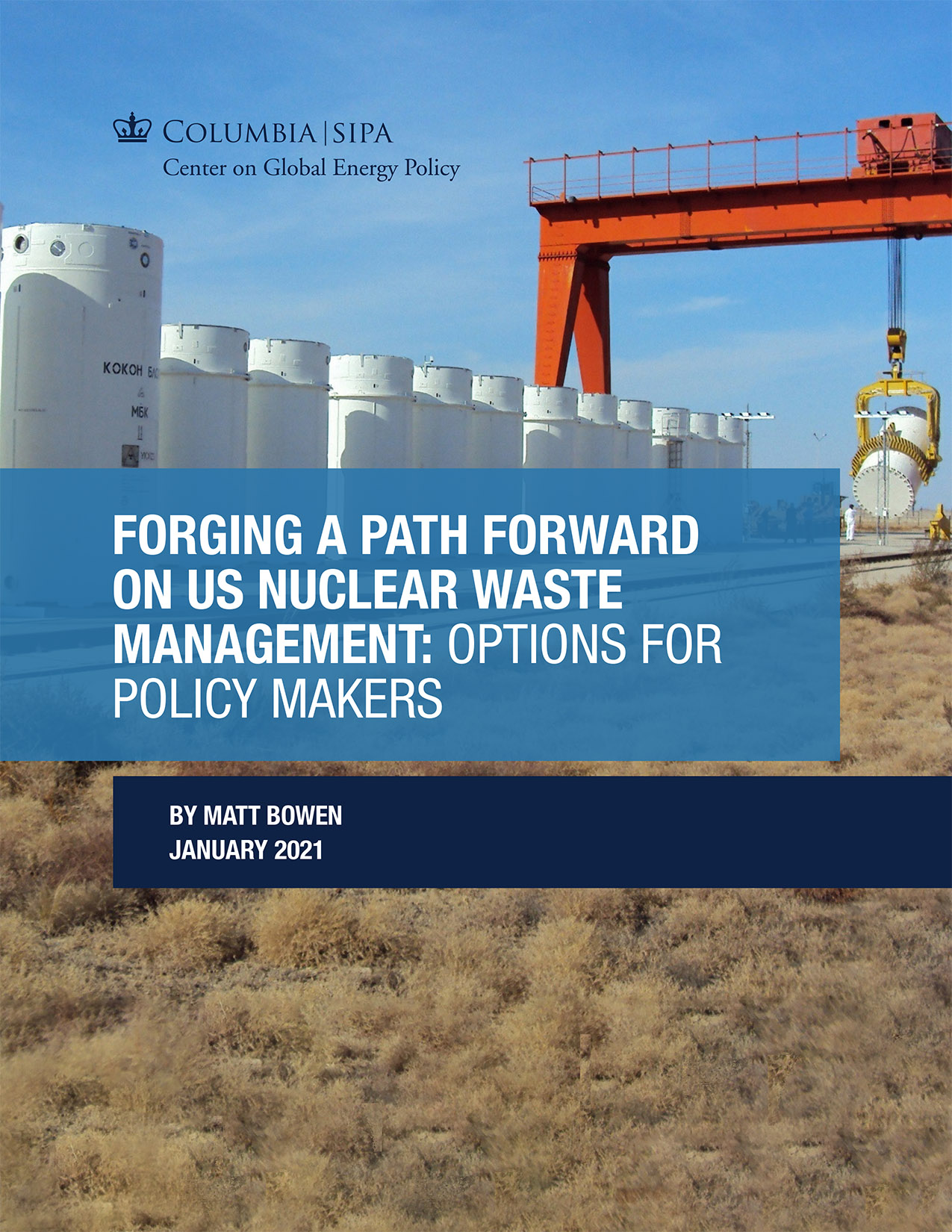 A new report out of Columbia University’s Center on Global Energy Policy (CGEP) offers a number of recommendations for improving the management of spent nuclear fuel and high-level radioactive waste in the United States.
The report, Forging a Path Forward on U.S. Nuclear Waste Management: Options for Policy Makers, explains how the United States reached its current stalemate over nuclear waste disposal. It then examines productive approaches in other countries, and a few domestic ones, that could guide policymakers through options for improving the prospects for finding a disposal path for U.S. spent fuel and HLW.
Part of the center’s wider work on nuclear energy, the report echoes previous recommendations for U.S. spent fuel and HLW management, such as the use of a consent-based siting process and the formation of an independent waste management organization, both of which were recommended in the Blue Ribbon Commission’s 2012 report to the Secretary of Energy and Stanford University’s 2018 report, Reset of U.S. Nuclear Waste Management Strategy and Policy.





 The U.S. House of Representatives Committee on Science, Space, and Technology is leading a one-day social media campaign today to highlight the importance of leading with science and scientific solutions as the committee works to provide support for science and the scientific community. The “tweetstorm” will run from noon to 5 p.m. (EST) and will involve a variety of science-related organizations, including the American Nuclear Society.