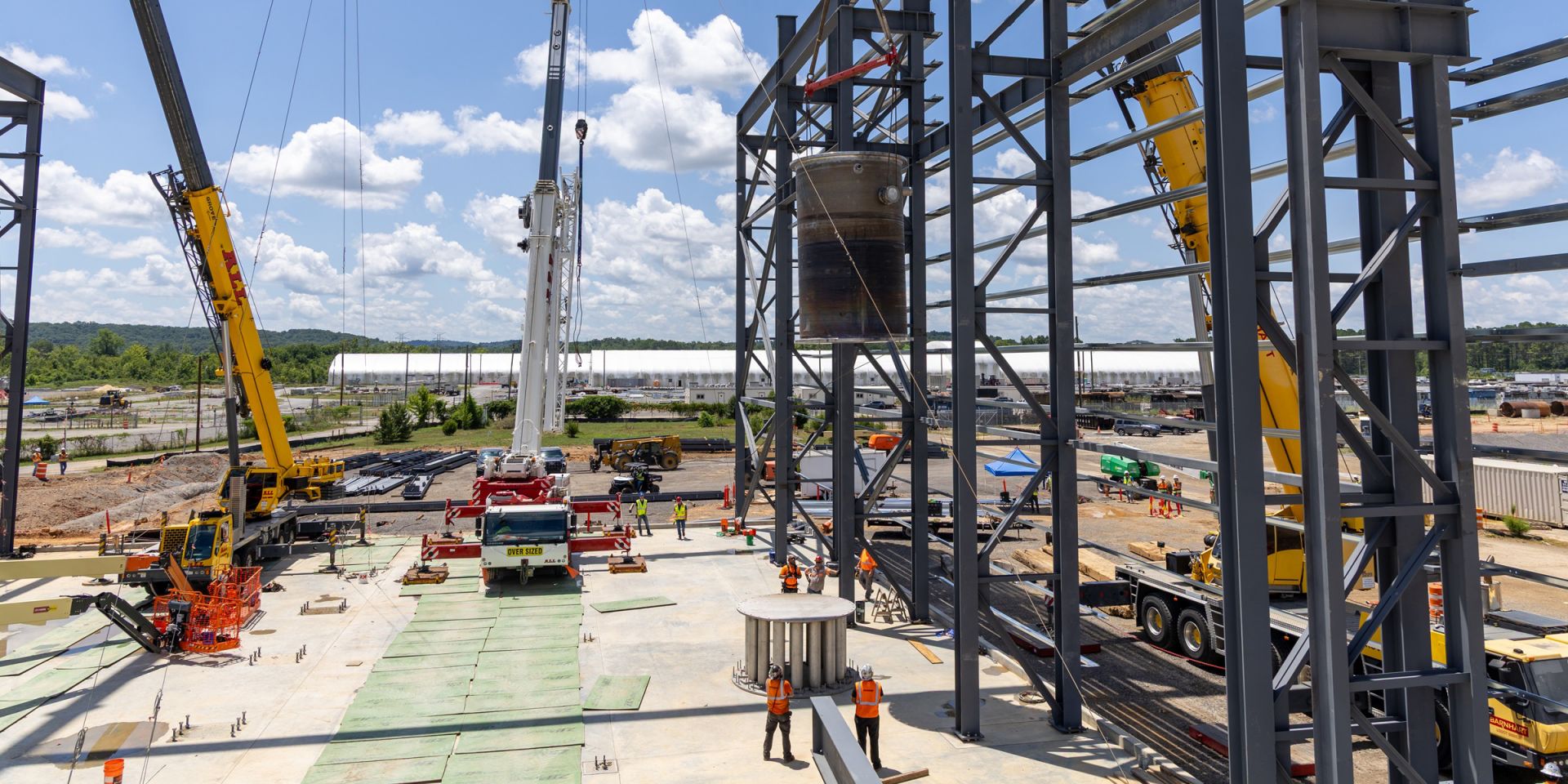
The ETU 3.0 reactor vessel was lowered into position using construction cranes and mounted on a support structure attached to the building’s foundation. (Photo: Kairos Power)
A reactor vessel has been installed by Kairos Power for its third Engineering Test Unit (ETU 3.0) at the company’s campus in Oak Ridge, Tenn.
(Photo: Idaho National Laboratory)
Following the signing of a new agreement, Kiewit Nuclear Solutions, a subsidiary of Kiewit Corporation, is officially the lead constructor for Oklo’s first commercial Aurora powerhouse, which will be built at Idaho National Laboratory.
The president and government officials at the meeting. (Photo: EPA)
Representatives across all levels of Pennsylvania government convened at Carnegie Mellon University on July 15 with investors and key leaders in the energy community at the behest of Sen. Dave McCormick (R., Pa.).
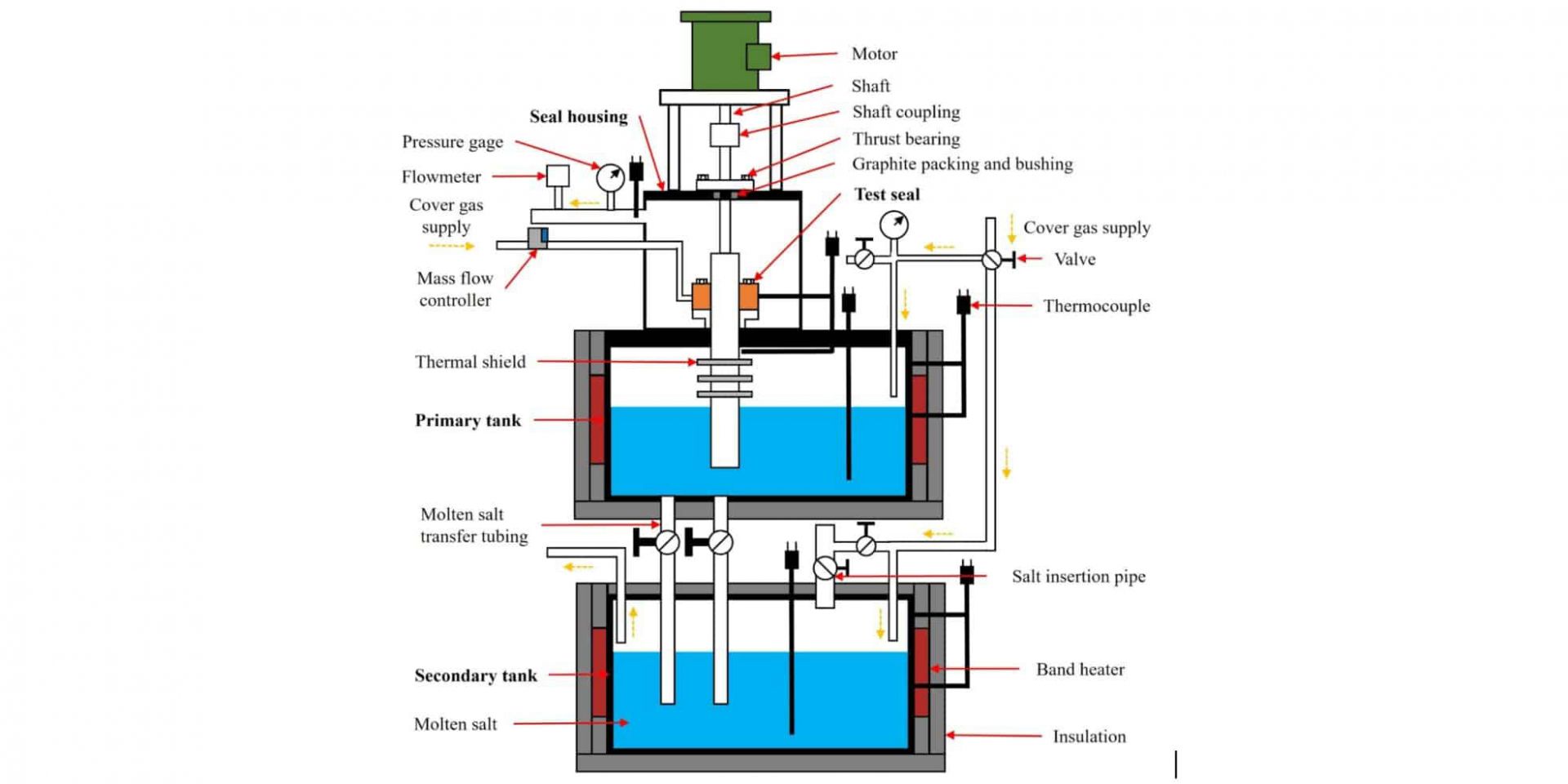
A schematic diagram of the Shaft Seal Test Facility. (Image: NERS)
For 2,300 hours, the molten salt pump Shaft Seal Test Facility (SSTF) operated at the University of Michigan’s Thermal Hydraulics Laboratory, according to an article from UM. The large-scale experiment was designed to evaluate shaft seal performance in high-temperature pump systems. Fewer than 10 facilities worldwide have successfully operated fluoride or chloride salts for more than 100 hours using over 10 kilograms of material.
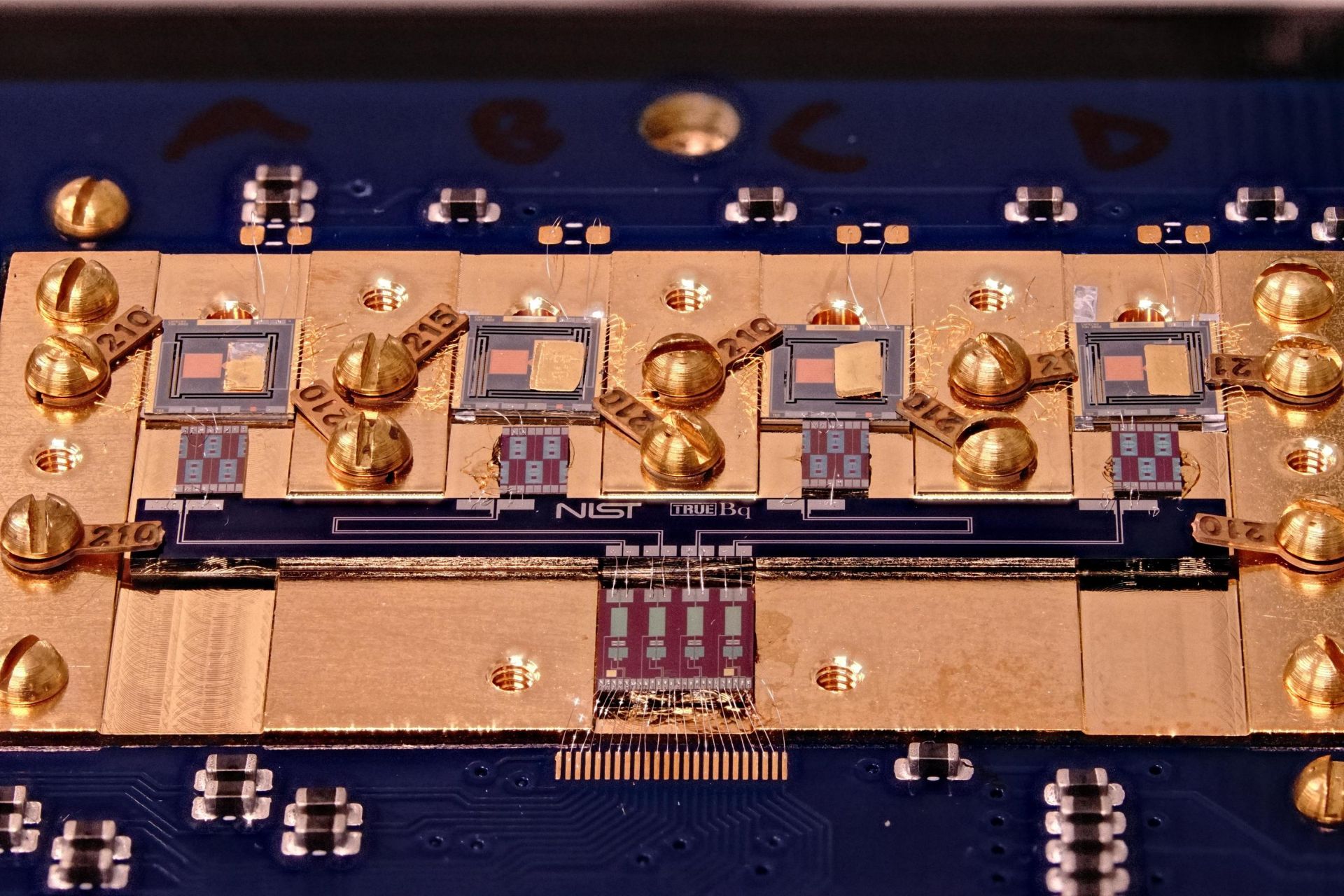
Close-up of a superconducting sensor board containing multiple transition-edge sensors (top row of squares), which detect energy released by individual radioactive decay events. (Photo: M. Carlson/NIST)
Researchers at the National Institute of Standards and Technology have developed a technique called cryogenic decay energy spectrometry capable of detecting single radioactive decay events from tiny material samples and simultaneously identifying the atoms involved. In time, the technology could replace characterization tasks that have taken months and could support rapid, accurate radiopharmaceutical development and used nuclear fuel recycling, according to an article published on July 8 by NIST.
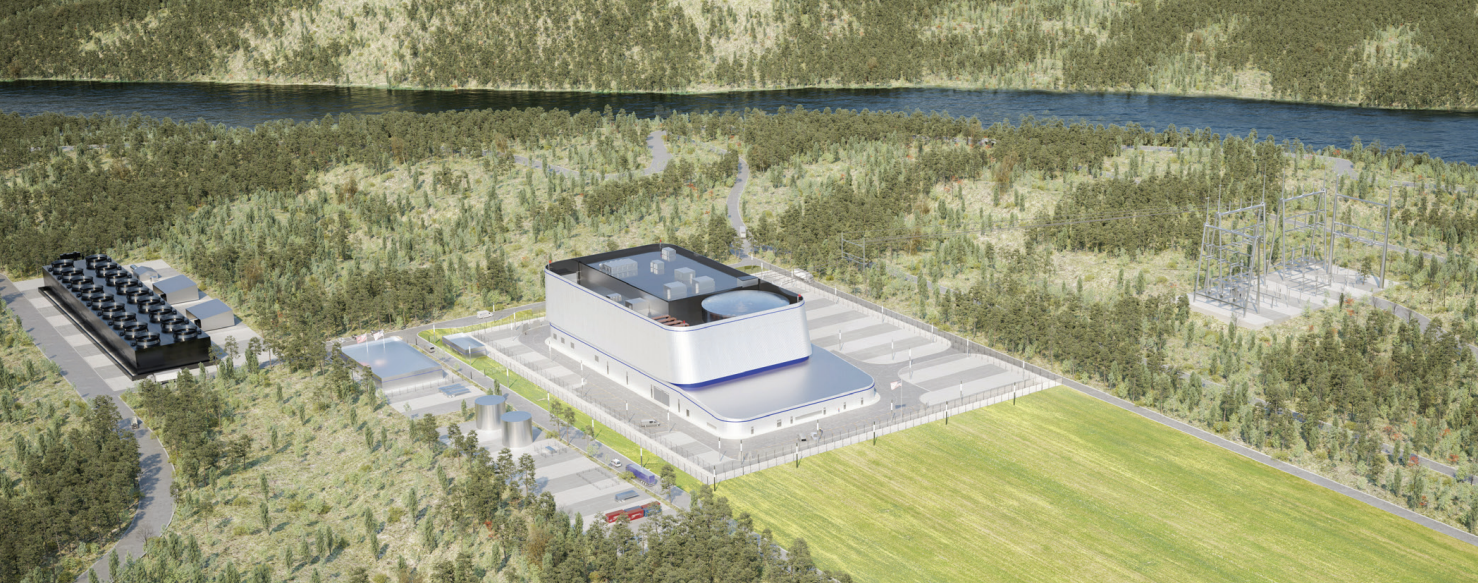
A rendering of the Clinch River SMR. (Image: TVA)
The Nuclear Regulatory Commission has accepted for review the Tennessee Valley Authority’s construction permit application for a BWRX-300 small modular reactor at its Clinch River site in Tennessee. The NRC expects to complete its review by December 2026.
Concept art of the central cross-section of the Helix Katana stellarator. (Image: Helical Fusion)
Helical Fusion, a private fusion start-up based in Japan, announced it has closed its first round of venture capital financing, securing ¥2.3 billion ($15.6 million) in funding. According to Helical Fusion, this brings the company’s total capital investment—including grants and loans—to ¥5.2 billion ($35.3 million).




 The Boston-based