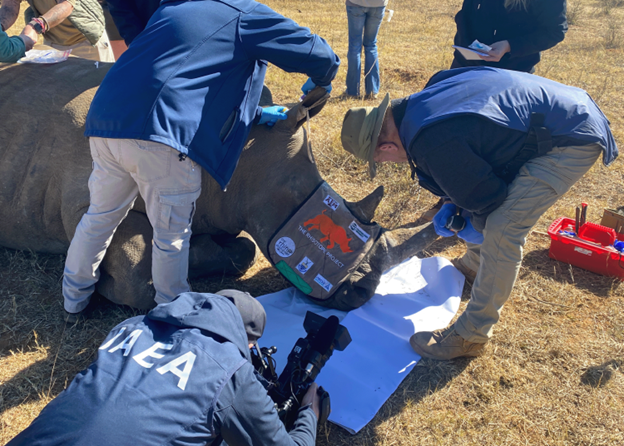
The Rhisotope Project team inserts radioactive isotopes into a rhino’s horn. (Source: Martin Klinenboeck/IAEA)
After two years of testing, the International Atomic Energy Agency and the University of the Witwatersrand in Johannesburg, South Africa, have begun officially implementing the Rhisotope Project, an innovative effort to combat rhino poaching and trafficking by leveraging nuclear technology.
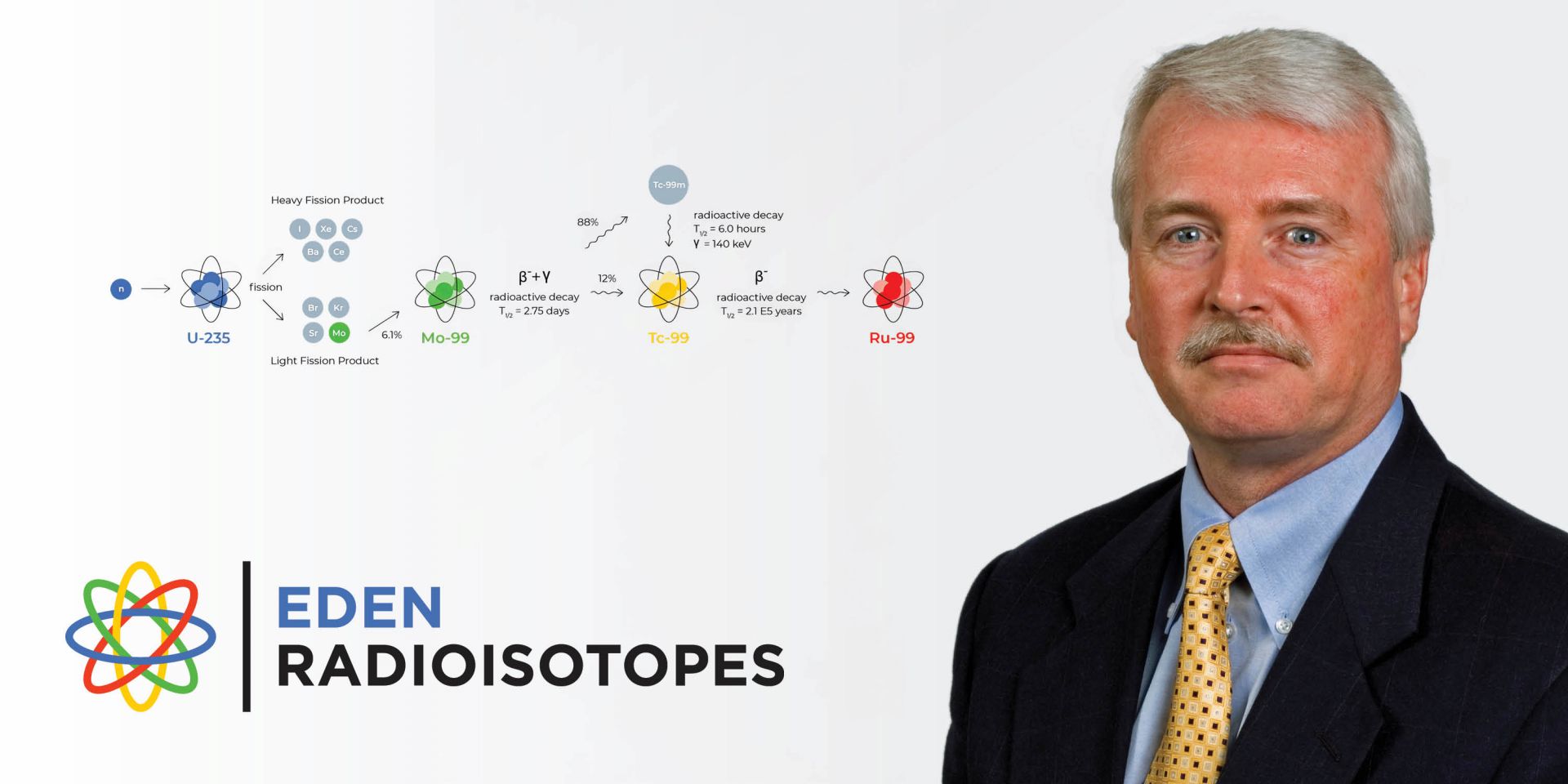
Chris Wagner, chief executive officer of Eden Radioisotopes.
Inset: Fission Mo-99 process. (Images: Eden)
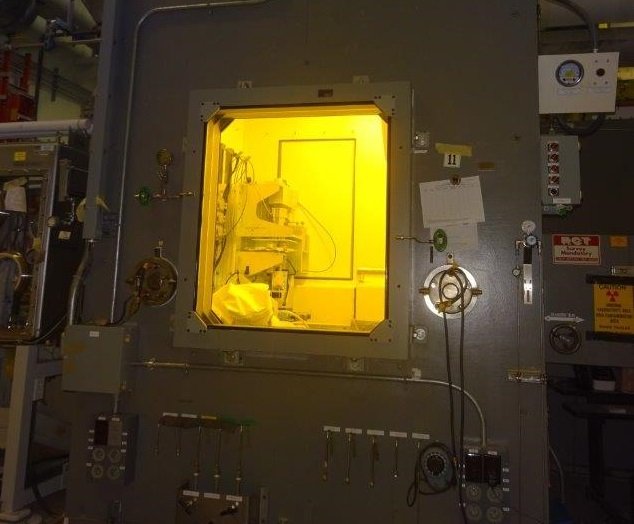
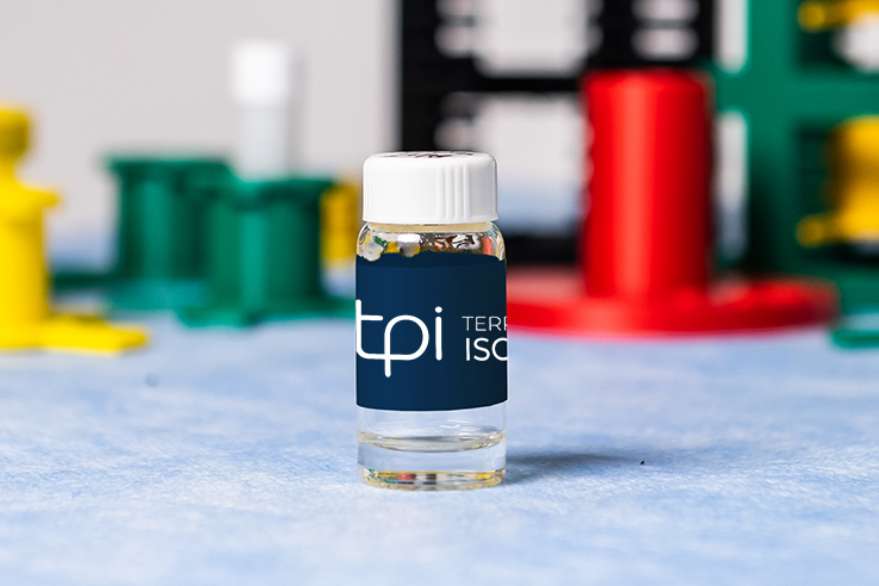
Chris Wagner has more than 40 years of experience in nuclear medicine, beginning as a clinical practitioner before moving into leadership roles at companies like Mallinckrodt (now Curium) and Nordion. His knowledge of both the clinical and the manufacturing sides of nuclear medicine laid the groundwork for helping to found Eden Radioisotopes, a start-up venture that intends to make diagnostic and therapeutic raw material medical isotopes like molybdenum-99 and lutetium-177.
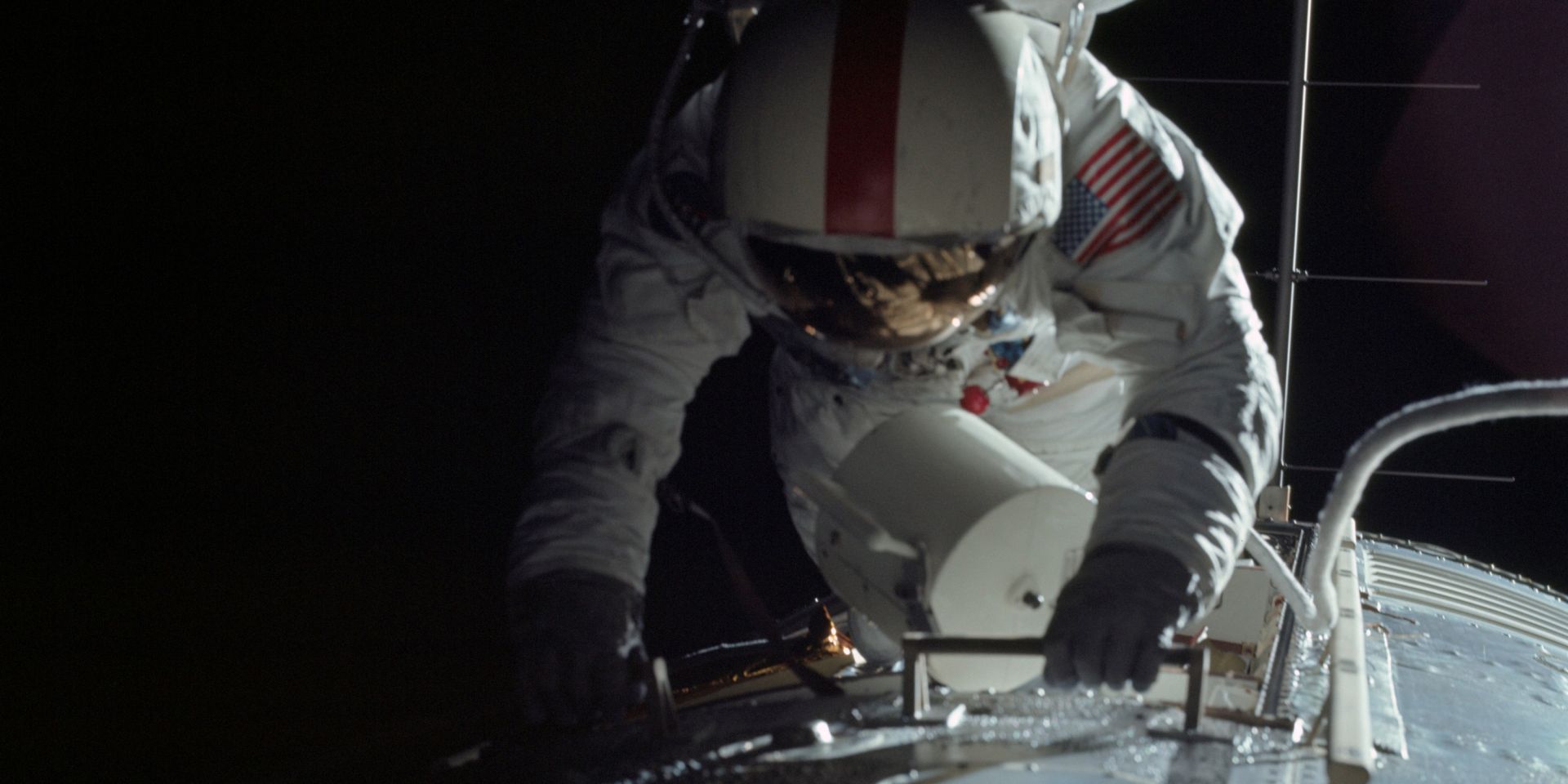
Ronald E. Evans, the command module pilot for Apollo 17, performed a deep-space extravehicular activity (EVA) to retrieve a film canister during the mission’s return to Earth. At about 160,000 miles from Earth, it was the most distant spacewalk ever conducted in deep space under full-spectrum GCR. (Photo: NASA)
In commercial nuclear power, there has always been a deliberate tension between the regulator and the utility owner. The regulator fundamentally exists to protect the worker, and the utility, to make a profit. It is a win-win balance.
From the U.S. nuclear industry has emerged a brilliantly successful occupational nuclear safety record—largely the result of an ALARA (as low as reasonably achievable) process that has driven exposure rates down to what only a decade ago would have been considered unthinkable. In the U.S. nuclear industry, the system has accomplished an excellent, nearly seamless process that succeeds to the benefit of both employee and utility owner.
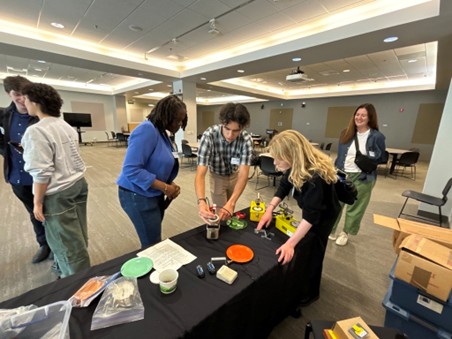
ANS immediate past president Lisa Marshall (blue sweater) tests the radioactivity of various materials at this year’s Radfest with Rex Reidel and Lillian Merrill, two chairs of the ANS Accelerators. (Photo: ANS)
The day before the 2025 ANS Annual Conference officially began in Chicago, the air was abuzz with the crackle of Geiger counters at Argonne National Laboratory in neighboring Lemont, Ill., where about 100 visitors from across the country attended an outreach and education event hosted by the American Nuclear Society.
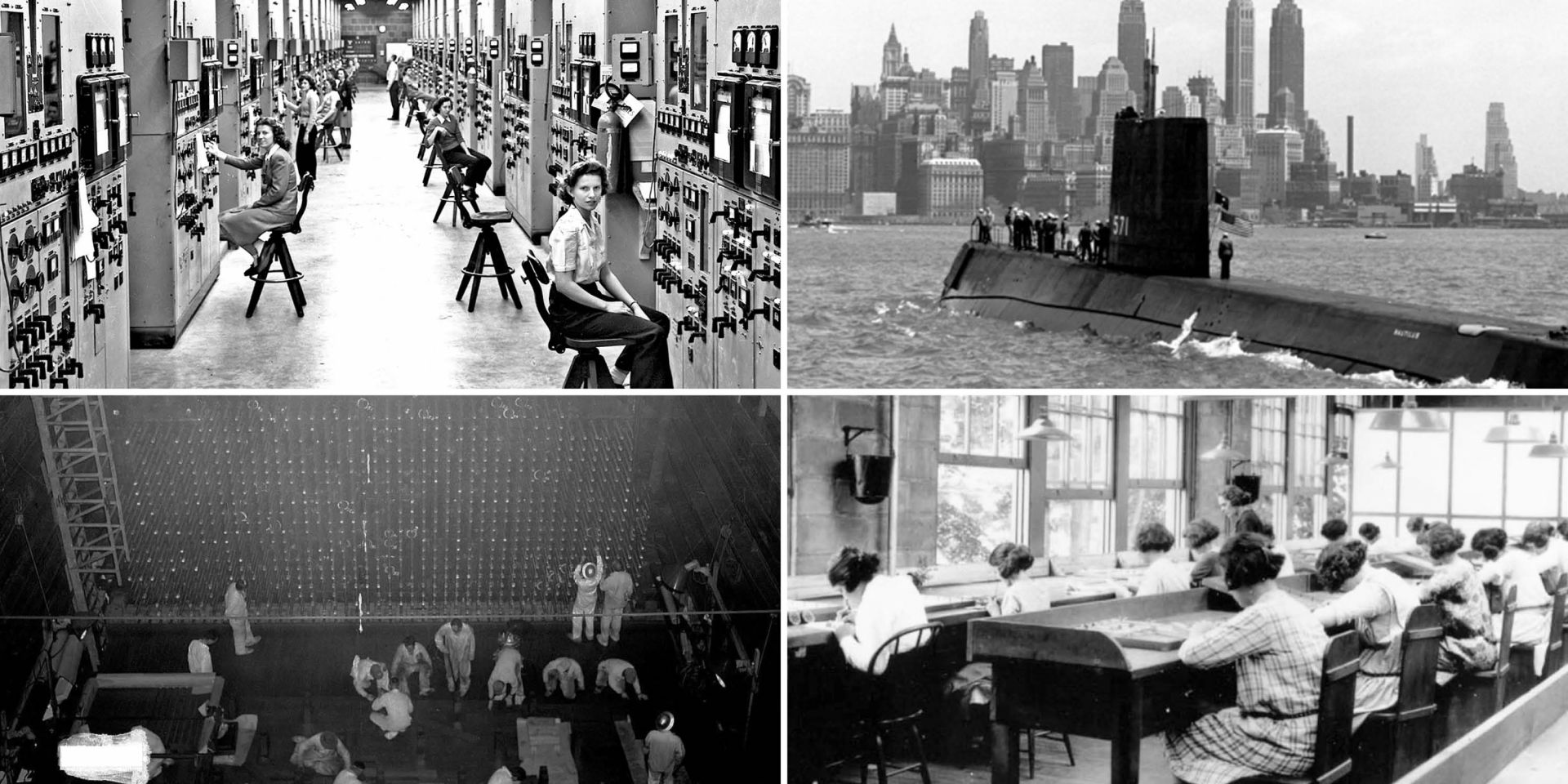
Clockwise from top left: Calutron operators at their panels in the Y-12 plant at Oak Ridge, Tenn., the USS Nautilus SSN571, women working in a factory of the United States Radium Corporation, and the front face of the B Reactor at the Hanford site.
There is a critical knowledge gap regarding the health consequences of exposure to radiation received gradually over time. While there is a plethora of studies on the risks of adverse outcomes from both acute and high-dose exposures, including the landmark study of atomic bomb survivors, these are not characteristic of the chronic exposure to low-dose radiation encountered in occupational and public settings. In addition, smaller cohorts have limited numbers leading to reduced statistical power.
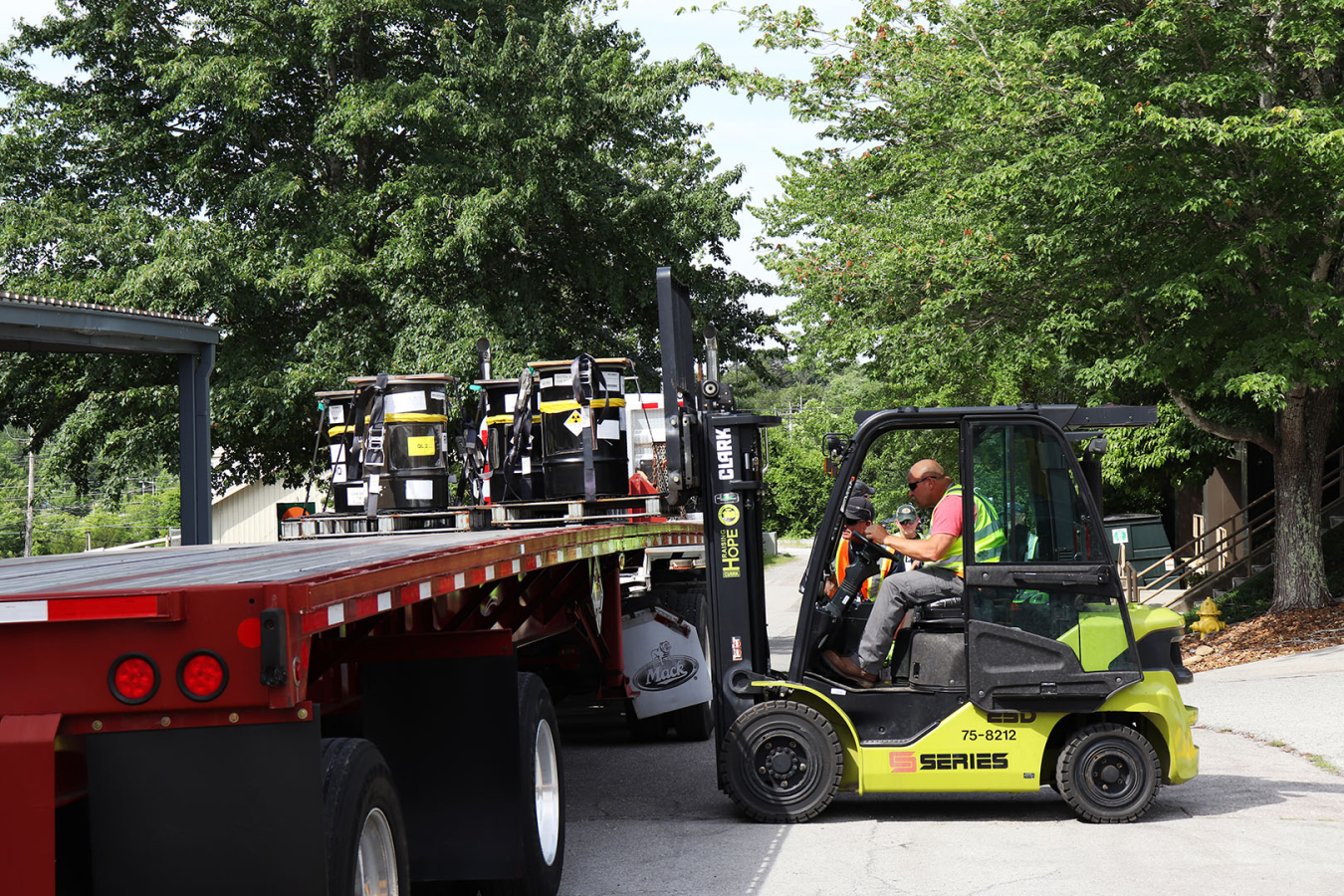
Isotek employees load canisters of Th-229 that will go to TerraPower to support cancer treatment research. (Photo: DOE)
Workers with Oak Ridge Office of Environmental Management contractor Isotek have surpassed a significant milestone in the supply of medical radioisotopes, extracting more than 15 grams of rare thorium-229 through the Department of Energy’s Thorium Express Project.
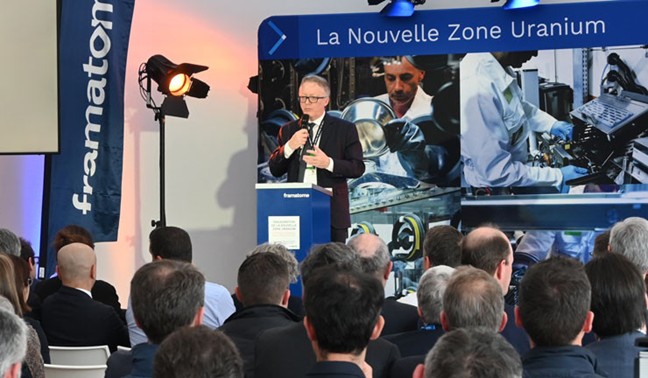
Framatome’s Lionel Gaiffe during the inauguration ceremony of the new CERCA workshop in France. (Photo: Framatome)
Framatome announced that it has inaugurated a new workshop dedicated to the fabrication of fuel for research reactors and targets for medical isotopes at the company’s Romans-sur-Isère site in France. The workshops are part of Framatome’s CERCA division, which manufactures fuel and irradiation targets for research reactors.
Radiation is essential in medical diagnosis, cancer therapy, food irradiation, CT scans, security checks and detection, and many consumer products. It is ubiquitous and enormously beneficial to all forms of life on Earth.
January 31, 2025, 3:18PMNuclear NewsJong H. Kim, Gyuseong Cho, Kun-Woo Cho, Tae Soon Park & Keon W. Kang Despite its significant benefits, the public perception of radiation is generally negative due to its inherent nature: it is ubiquitous yet cannot be seen, heard, smelled, or touched—as if it were a ghost roaming around uncensored. The public is frightened of this seemingly creepy phantom they cannot detect with their senses. This unfounded fear has hampered the progress of the nuclear industry and radiation professions.
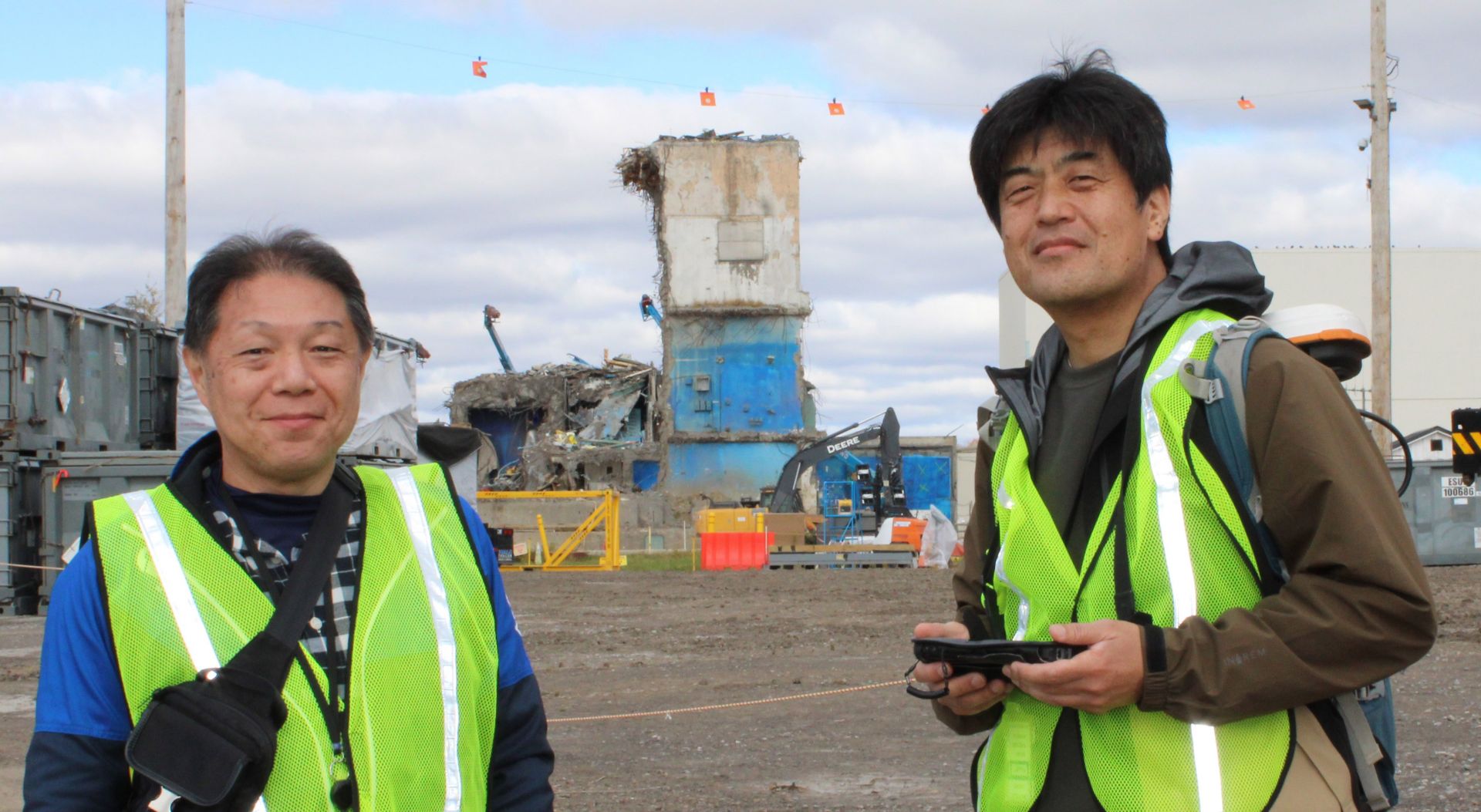
Japanese research scientists Sadao Momota (left) and Minoru Tanigaki conducted surveys at the West Valley Demonstration Project to test their radiation detectors. West Valley’s Main Plant Process Building, which is undergoing deconstruction, is shown in the background. (Photo: DOE)
Two research scientists from Japan’s Kyoto University and Kochi University of Technology visited the West Valley Demonstration Project in western New York state earlier this fall to test their novel radiation detectors, the Department of Energy’s Office of Environmental Management announced on November 19.
Atomic Alchemy's radioisotope production facility (Image: Hillside Architecture)
Oklo Inc. has that it has signed a letter of intent to acquire Atomic Alchemy Inc., a U.S.-based radioisotope production company. The two companies announced a strategic partnership earlier this year.