China launches fusion consortium to build “artificial sun”
January 9, 2024, 9:30AMNuclear News
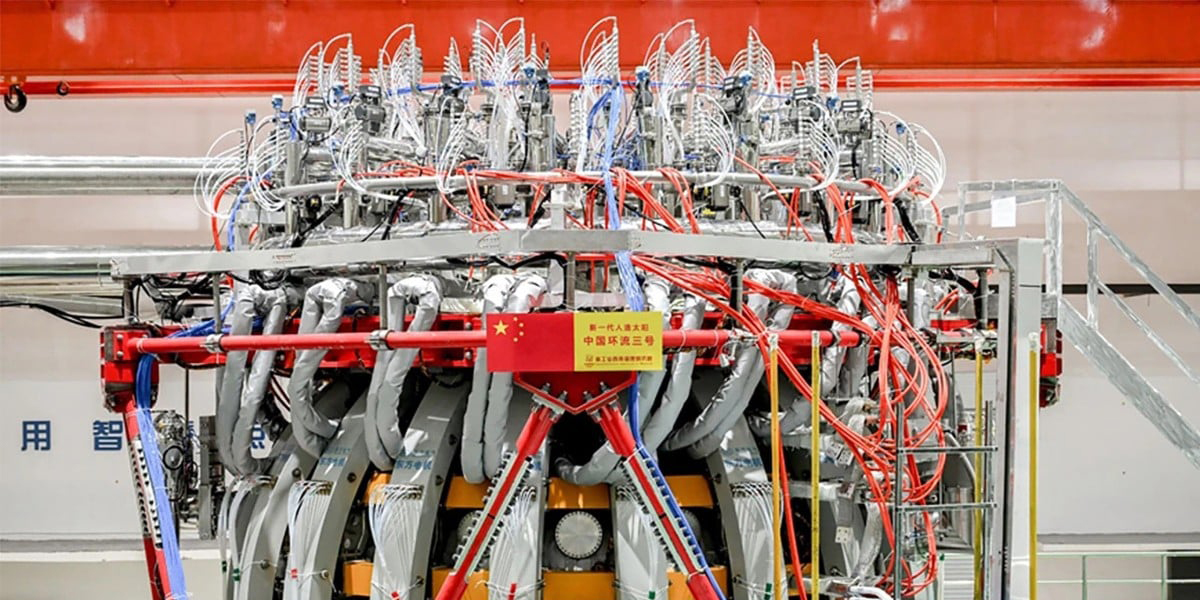
The HL-2M tokamak reactor, developed by the CNNC’s Southwestern Institute of Physics. (Photo: CNNC)

Nuclear projects demand precision, trust, and proven expertise. Element supports utilities, manufacturers, and engineering teams with testing and qualification services that keep systems safe, compliant, and ready to perform—delivering data-driven insight to meet regulations and extend asset life.
One year ago today, researchers at Lawrence Livermore National Laboratory achieved a record shot at the National Ignition Facility (NIF) that set the world talking about the potential of fusion energy. And the buzz hasn’t stopped. Fusion energy is getting its most significant attention yet on the world stage at COP28 in Dubai, UAE, where John Kerry, U.S. special presidential envoy for climate, delivered a keynote address today titled “An inclusive fusion energy future,” followed by a panel discussion.
Commonwealth Fusion Systems (CFS) and Tokamak Energy Inc. are the two magnetic confinement tokamak fusion developers to receive a portion of the $46 million in funding announced by the Department of Energy in late May for the first 18 months of a public-private Milestone-Based Fusion Development Program aimed at developing fusion pilot plant designs and resolving related scientific and technological challenges within five to 10 years.
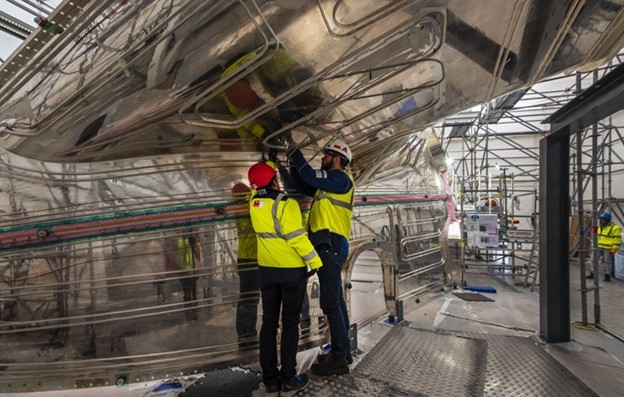
ITER’s machine assembly phase began about two and a half years ago. Now, staff are reversing some of that assembly work to make needed repairs. According to a news article published by the ITER Organization on January 9, ITER is “facing challenges common to every industrial venture involving first-of-a-kind components.” Over one year after problems were first detected and less than two months after they were made public in late November, tests and analysis are producing a clearer picture of necessary repairs to the tokamak’s thermal shield panels and vacuum vessel sectors.
“There is no scandal here,” said ITER director general Pietro Barabaschi. “Such things happen. I've seen many issues of the kind, and much worse.”
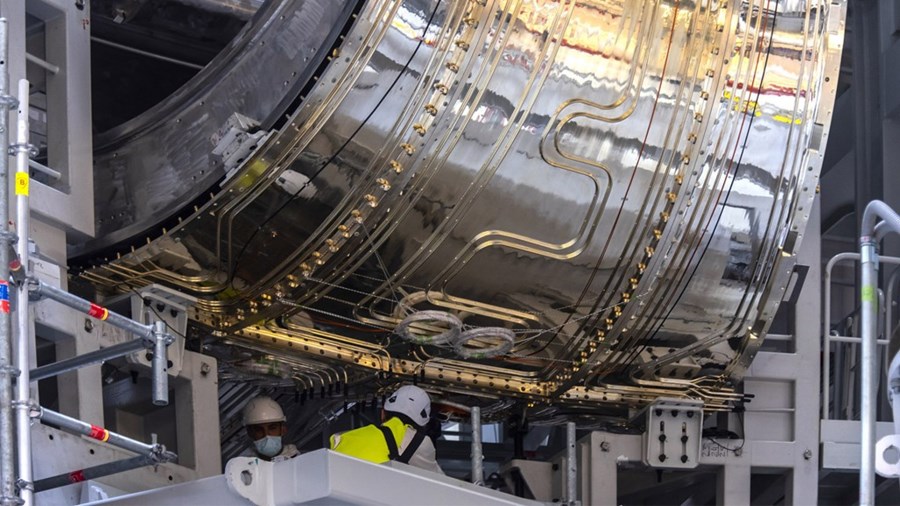
The ITER Organization is working on a new baseline schedule for the magnetic confinement fusion experiment launched in 1985 and now under construction in southern France. First plasma was scheduled for December 2025 and deuterium-tritium operations for 2035 under a schedule approved in November 2016 that will soon be shelved. In addition to impacts from COVID-19 delays and uncertainty resulting from Russia’s war in Ukraine, ITER leaders must now factor in repair time for “component challenges.”
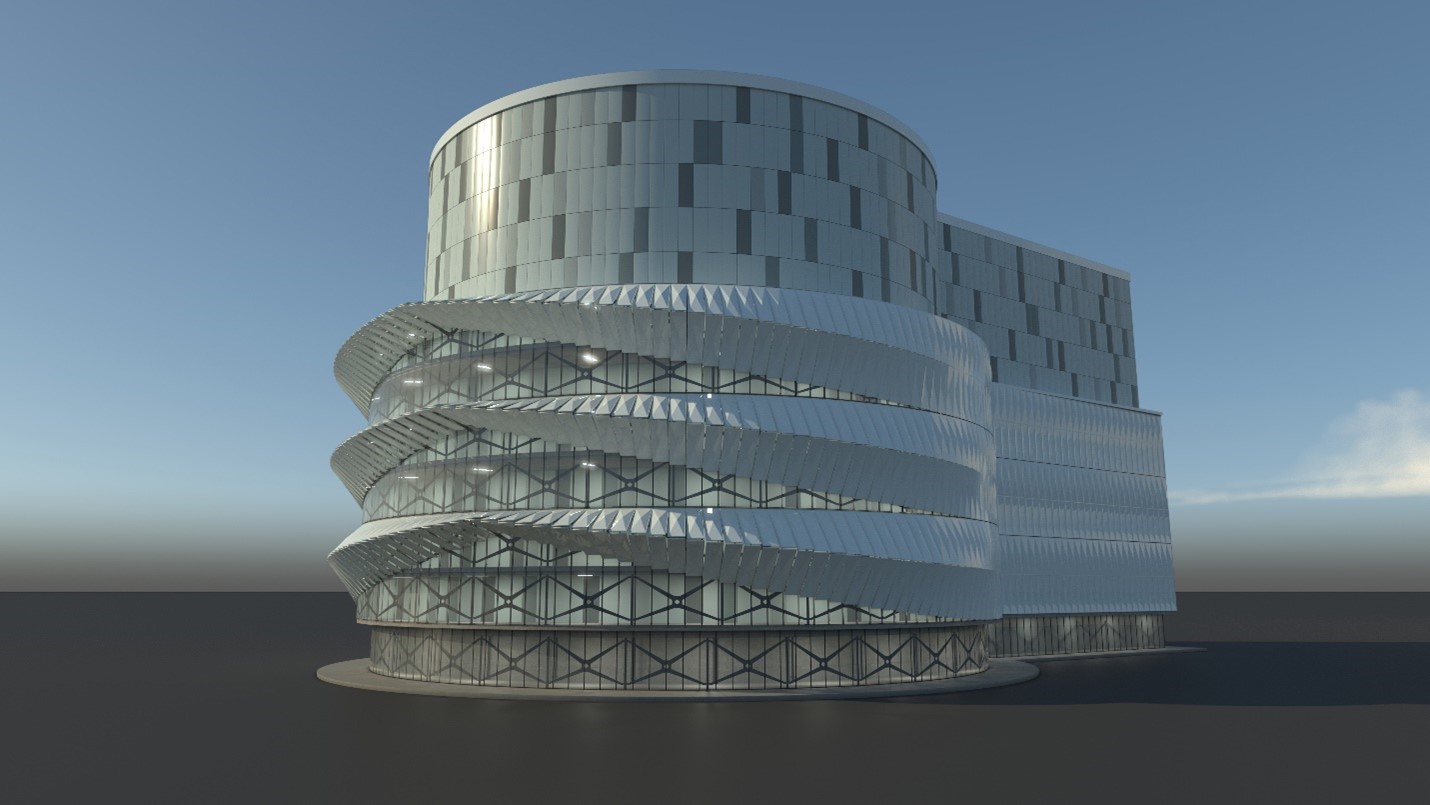
The U.K. Atomic Energy Authority (UKAEA) and Tokamak Energy announced on October 10 that they signed a framework agreement to collaborate on developing spherical tokamaks for power production. This news is a complement to last week’s announcement from the U.K. government that the West Burton A coal-fired power plant site in Nottinghamshire has been selected as the future home of STEP (Spherical Tokamak for Energy Production), the U.K.’s planned prototype fusion energy plant. The government is providing £220 million (about $250 million) of funding for the first phase of STEP, which will see the UKAEA produce a concept design by 2024.

Barabaschi
Capping a session in Paris, the ITER Council has unanimously selected Pietro Barabaschi as the new director-general of the ITER Organization. The Italian-born Barabaschi, who has been involved in nuclear fusion research for some 30 years, was chosen to lead the massive international fusion project following an intensive recruitment effort necessitated by the death of Bernard Bigot, the previous director general, in May. Since Bigot’s death, Eisuke Tada has been serving in the role in an interim capacity. Barabaschi will take office in October.
F4E leader: Barabaschi has been the head of the Broader Approach Programme and Delivery with Fusion for Energy (F4E) since 2008. F4E is the EU organization responsible for Europe’s contribution to ITER. In this position, he has been managing the department that oversees three projects stemming from the Broader Approach agreement between the European Atomic Energy Community (Euratom) and the government of Japan: the JT-60SA tokamak, the International Fusion Materials Irradiation Facility/Engineering Validation and Engineering Design Activities linear accelerator, and the International Fusion Energy Research Centre . Barabaschi has also been acting director of F4E.
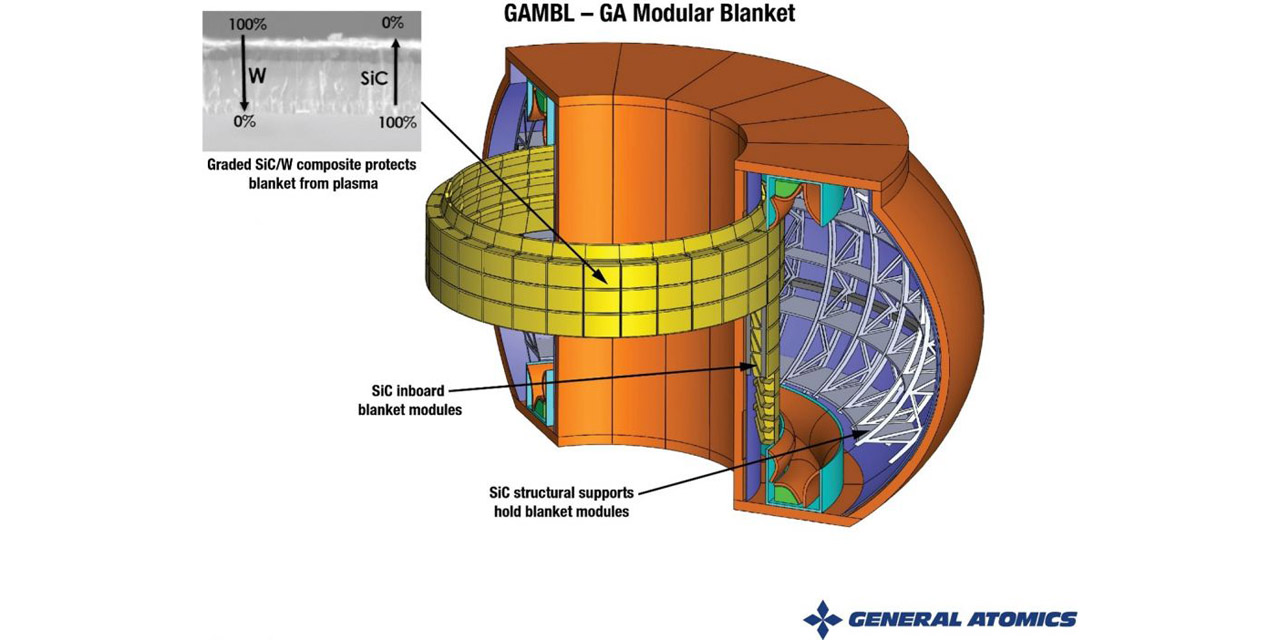
Researchers at General Atomics (GA) are proposing a breeding blanket made of modular silicon carbide–based components to withstand the intense conditions in a high-power fusion power plant. The GA modular blanket (GAMBL) concept is described in an article published this month in the journal Fusion Engineering and Design, and was introduced by GA in a July 13 press release.
Government policies and innovative technologies are the key to fusion energy economics
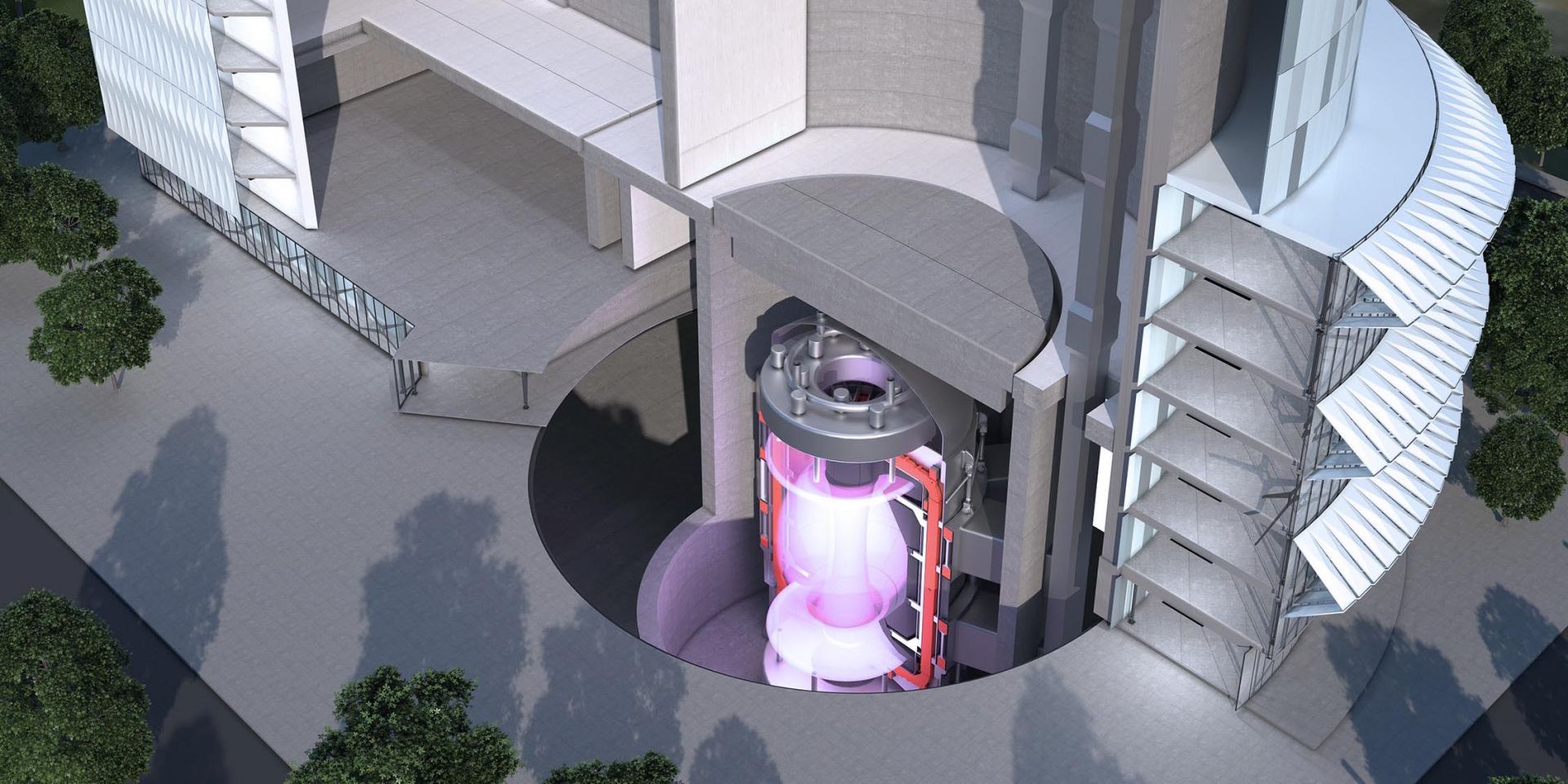
Fusion energy is attracting significant interest from governments and private capital markets. The deployment of fusion energy on a timeline that will affect climate change and offer another tool for energy security will require support from stakeholders, regulators, and policymakers around the world. Without broad support, fusion may fail to reach its potential as a “game-changing” technology to make a meaningful difference in addressing the twin challenges of climate change and geopolitical energy security.
The process of developing the necessary policy and regulatory support is already underway around the world. Leaders in the United States, the United Kingdom, the European Union, China, and elsewhere are engaging with the key issues and will lead the way in setting the foundation for a global fusion industry.
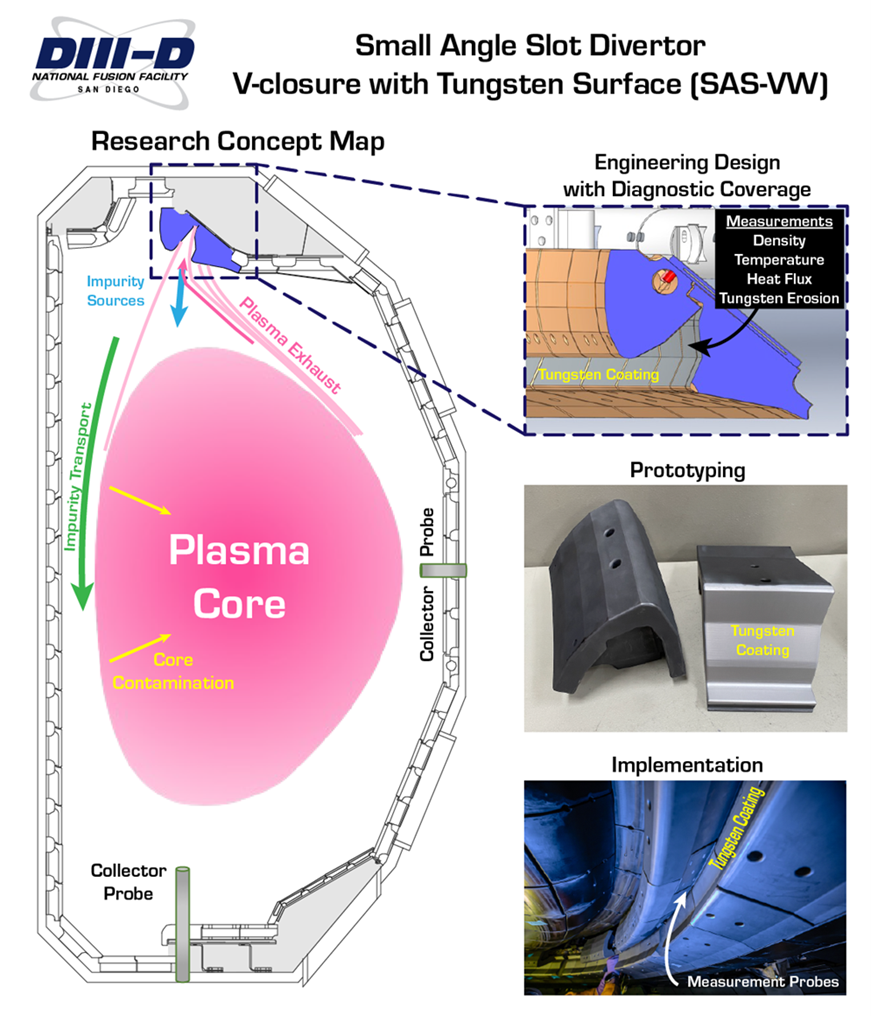
Researchers at the DIII-D National Fusion Facility (DIII-D) are preparing to test a new method that could enable future fusion power plants to withstand the heat and particle flow created by the fusion reaction, General Atomics reported this week.
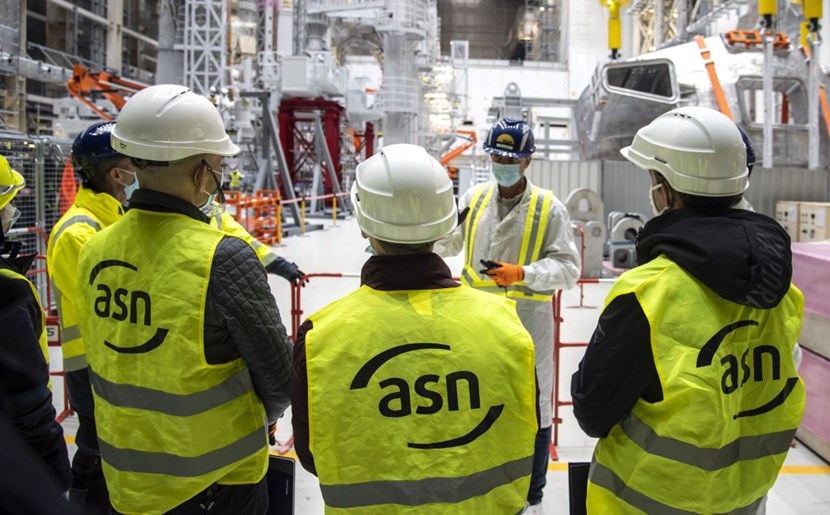
In a February 28 article posted on the ITER Organization website, Gilles Perrier, head of ITER’s Safety and Quality Department, addressed the decision by French nuclear safety regulator ASN (Autorité de sûreté nucléaire) to delay the anticipated February 1 release of a preset tokamak assembly “hold point.”
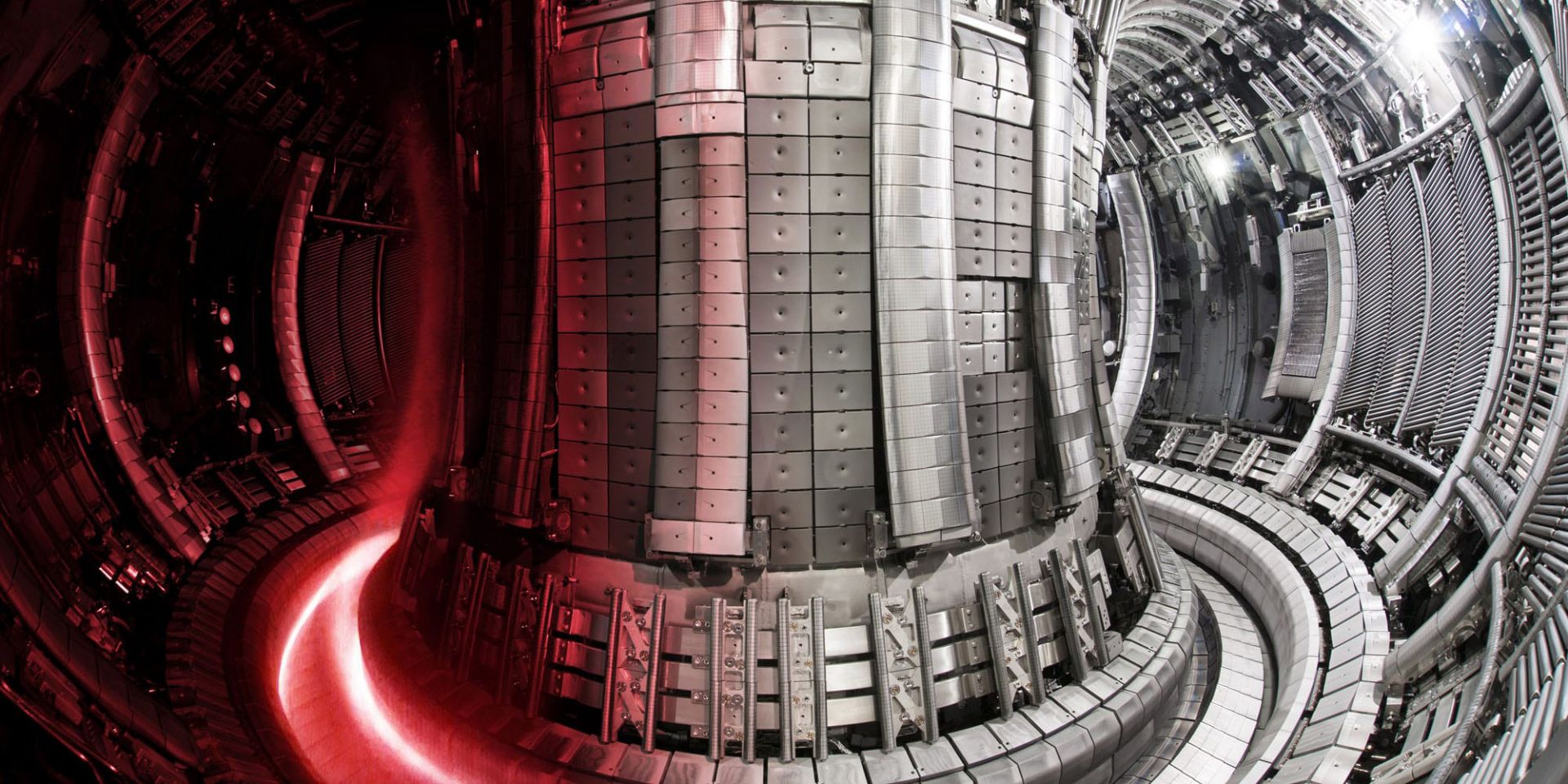
A new record has been set by the world’s largest operating tokamak, the Joint European Torus (JET). According to the EUROfusion scientists and engineers who work on JET at the U.K. Atomic Energy Authority’s Culham Centre for Fusion Energy, the landmark experiment, announced on February 9, which produced 59 megajoules of fusion energy over five seconds, is powerful proof of fusion’s potential as a clean energy source.
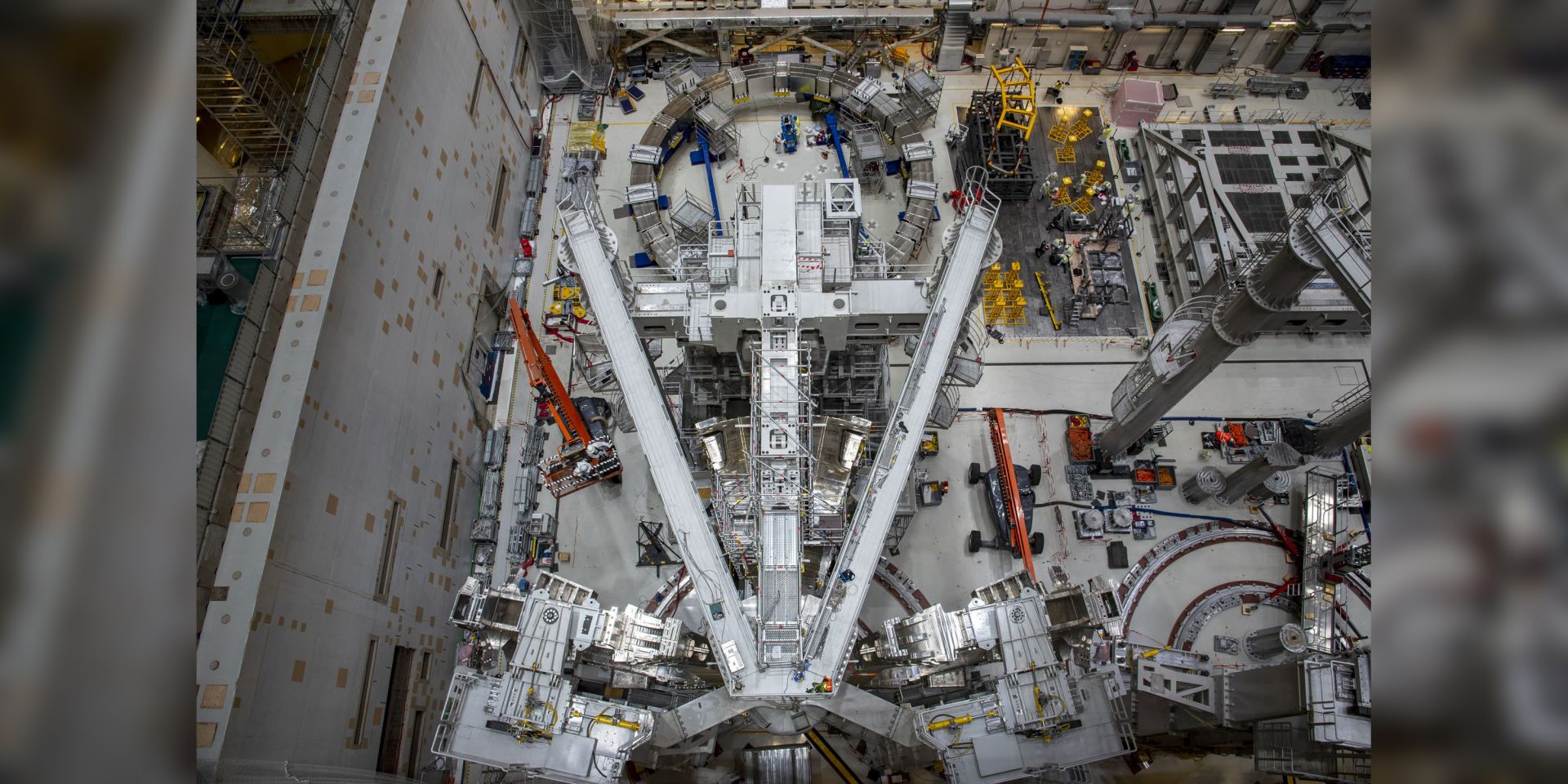
Inside the ITER Assembly Hall, aided by a 20-meter-tall sector subassembly tool known as SSAT-2, the first of nine 40-degree wedge-shaped subassemblies that will make up the device’s tokamak is taking shape. On August 30, the ITER Organization announced that all the components of the first subassembly were in place on the SSAT-2. After the wings of the subassembly tool slowly close, locking two vertical coils in place around the outside of a vacuum vessel section that is already wrapped in thermal shielding, the completed subassembly will be ready for positioning in the ITER assembly pit in late October.
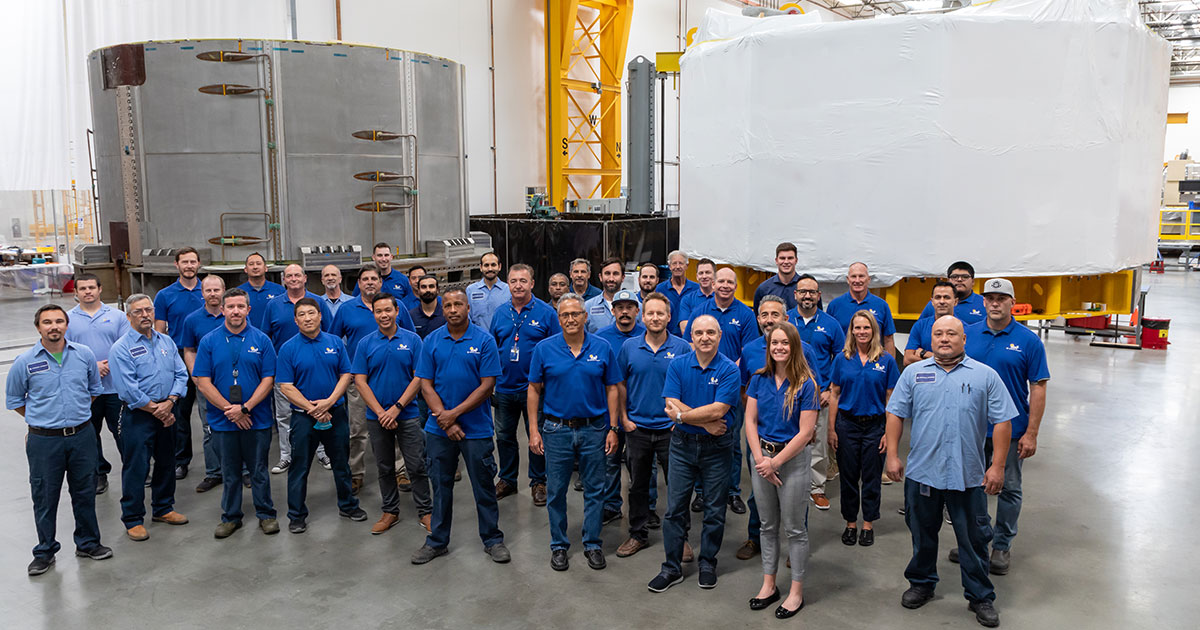
After a decade of design and fabrication, General Atomics (GA) is preparing to ship the first module of the central solenoid—the largest of ITER’s magnets—to the site in southern France where 35 partner countries are collaborating to build the world’s largest tokamak and the first fusion device to produce net energy.
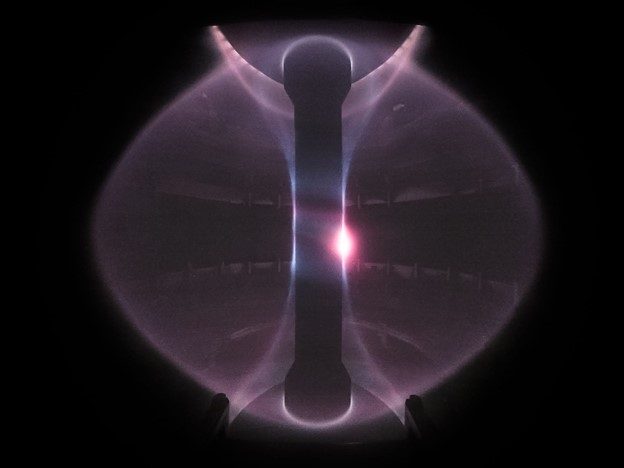
As governments around the world cooperate on the ITER tokamak and, in parallel, race each other and private companies to develop commercial fusion power concepts, it seems that “game-changing” developments are proclaimed almost weekly. Recently, the United Kingdom and China announced new fusion program results.
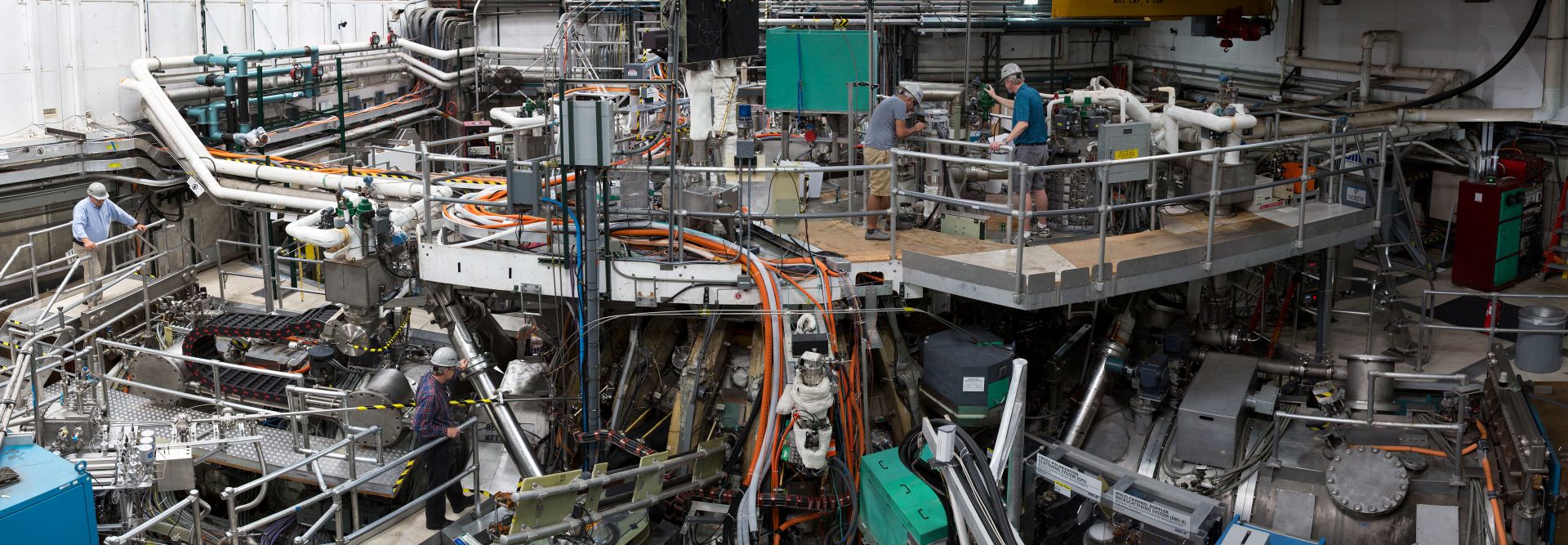
Scientists at the DIII-D National Fusion Facility have published research on a compact fusion reactor design they say could be used to develop a pilot-scale fusion power plant. According to General Atomics (GA), which operates DIII-D as a national user facility for the Department of Energy’s Office of Science, the Compact Advanced Tokamak (CAT) concept uses a self-sustaining configuration that can hold energy more efficiently than in typical pulsed configurations, allowing the plant to be built at a reduced scale and cost.
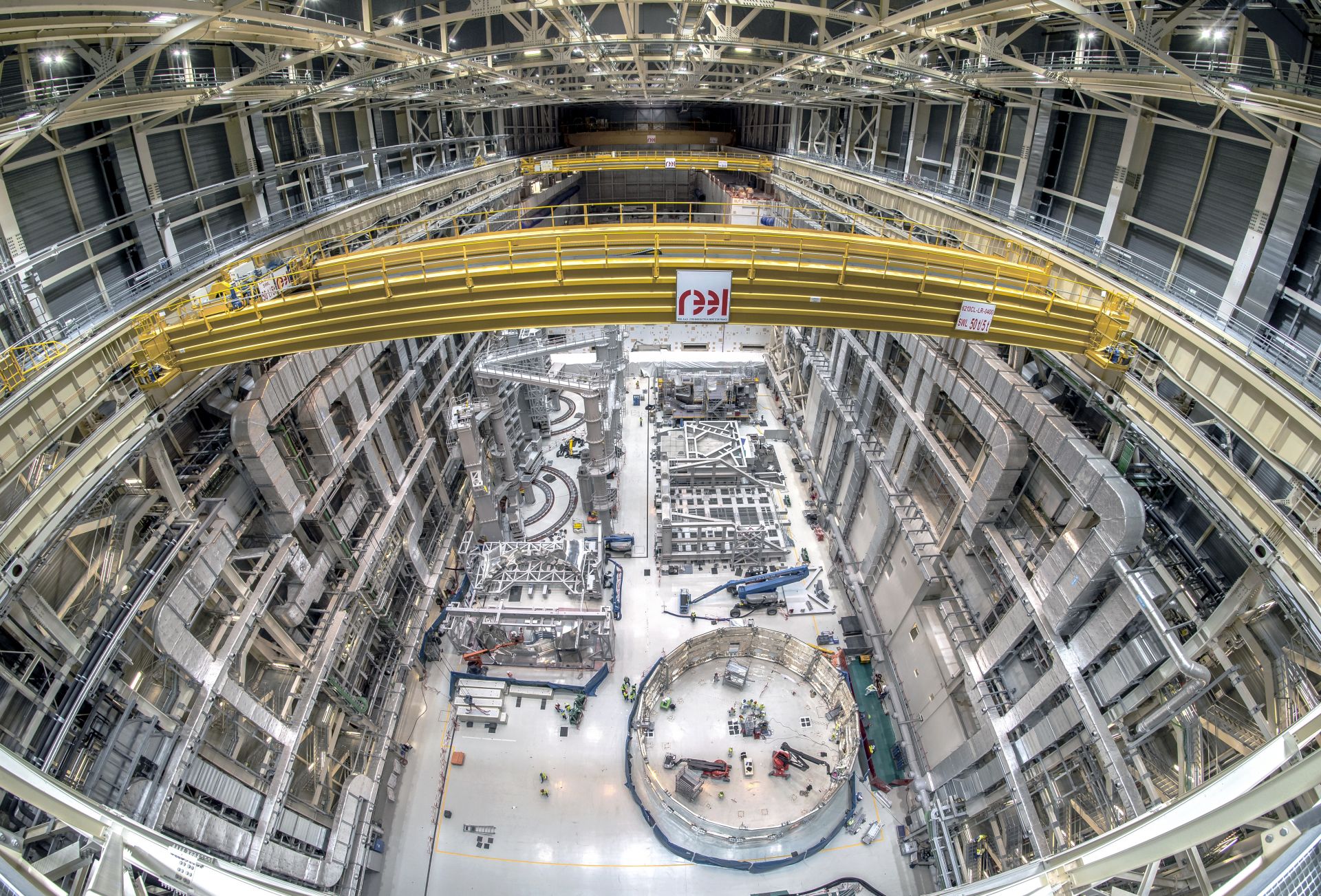
(photo: ITER Project gangway assembly)
The promise of hydrogen fusion as a safe, environmentally friendly, and virtually unlimited source of energy has motivated scientists and engineers for decades. For the general public, the pace of fusion research and development may at times appear to be slow. But for those on the inside, who understand both the technological challenges involved and the transformative impact that fusion can bring to human society in terms of the security of the long-term world energy supply, the extended investment is well worth it.
Failure is not an option.
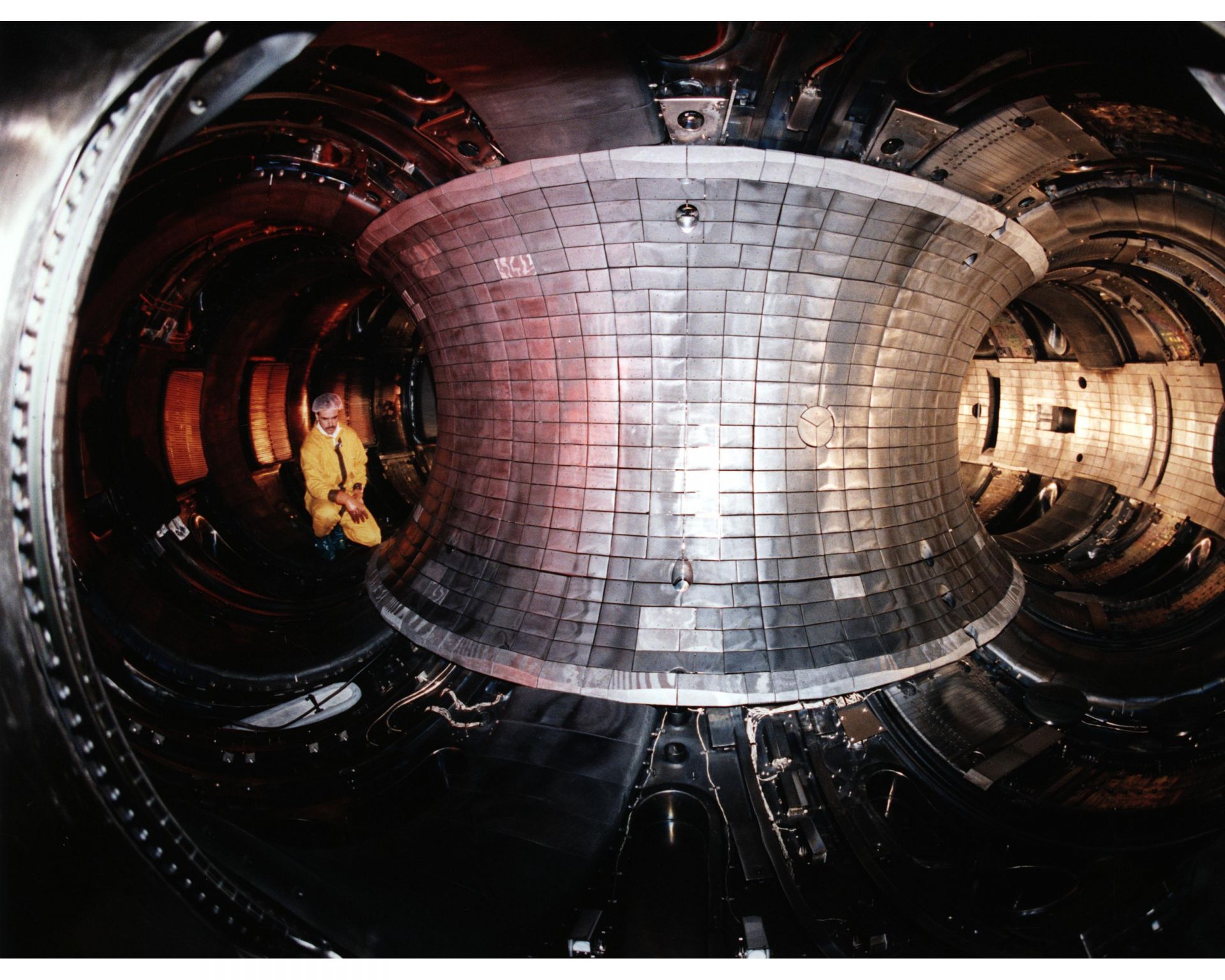
A look inside the TFTR plasma vessel. Photo: DOE
The Tokamak Fusion Test Reactor (TFTR) at Princeton University and the Fuel Cycle Facility (FCF) (now known as the Fuel Conditioning Facility) at Idaho National Laboratory have been designated as ANS Nuclear Historic Landmarks. The official awarding of the honors will occur during the 2020 ANS Virtual Winter Meeting, which begins November 16.
The TFTR received the award for demonstrating significant fusion energy production and tritium technologies for future nuclear fusion power plants and for the first detailed exploration of magnetically confined deuterium-tritium (D-T) fusion plasmas.
INL’s FCF and its Experimental Breeder Reactor II (EBR-II) were honored for demonstrating on-site recycling of used nuclear fuel back into a nuclear reactor.
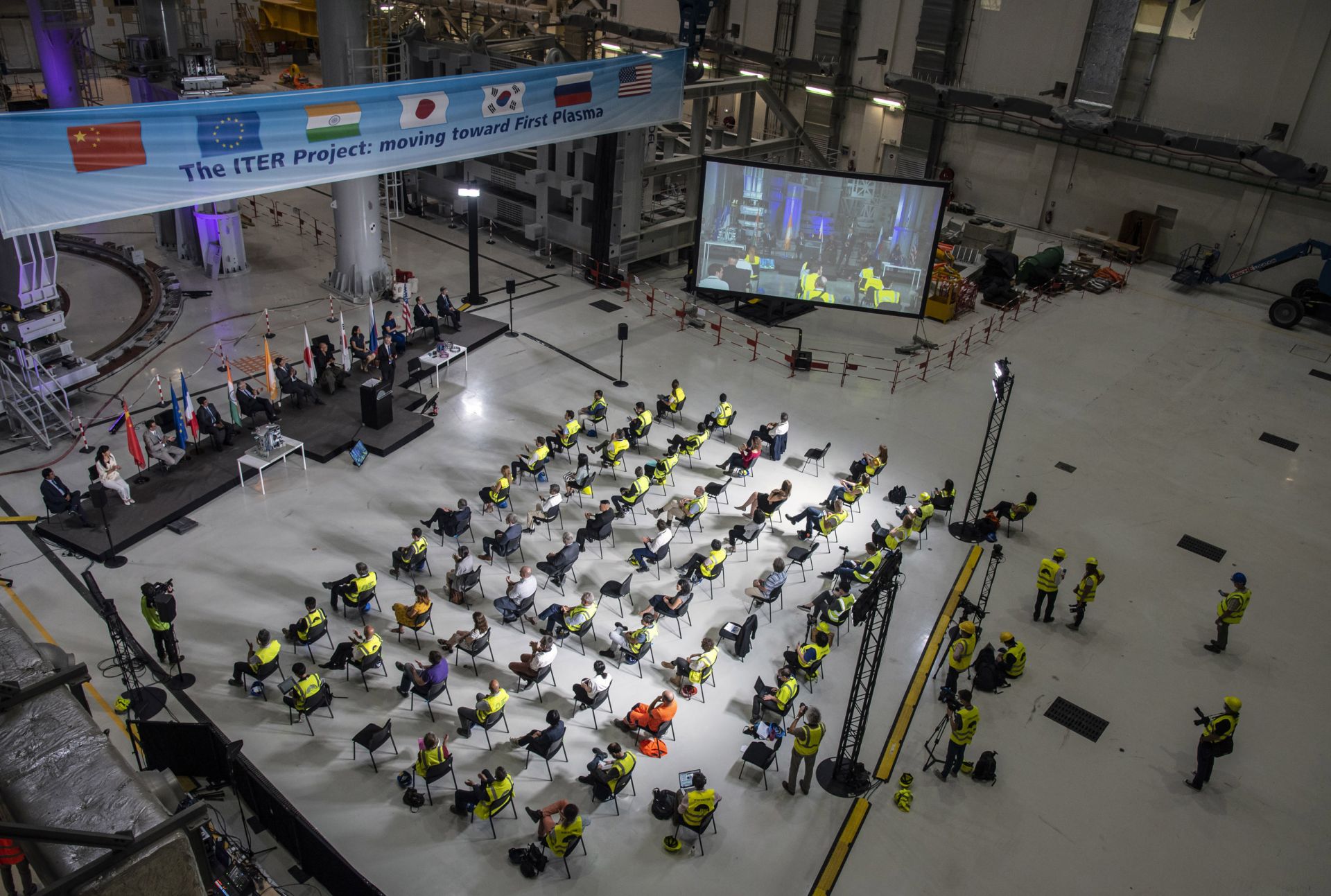
Those attending the livestreamed July 28 celebration in person (shown here from above) followed recommended social distancing measures.
First-of-a-kind components have been arriving in recent months at the ITER construction site in Cadarache, France, from some of the 35 ITER member countries around the world. The arrival on July 21 of the first sector of the ITER vacuum vessel from South Korea marks the beginning of a four-and-a-half year machine assembly process for the world’s largest tokamak, a magnetic fusion device designed to prove the feasibility of fusion as an energy source.
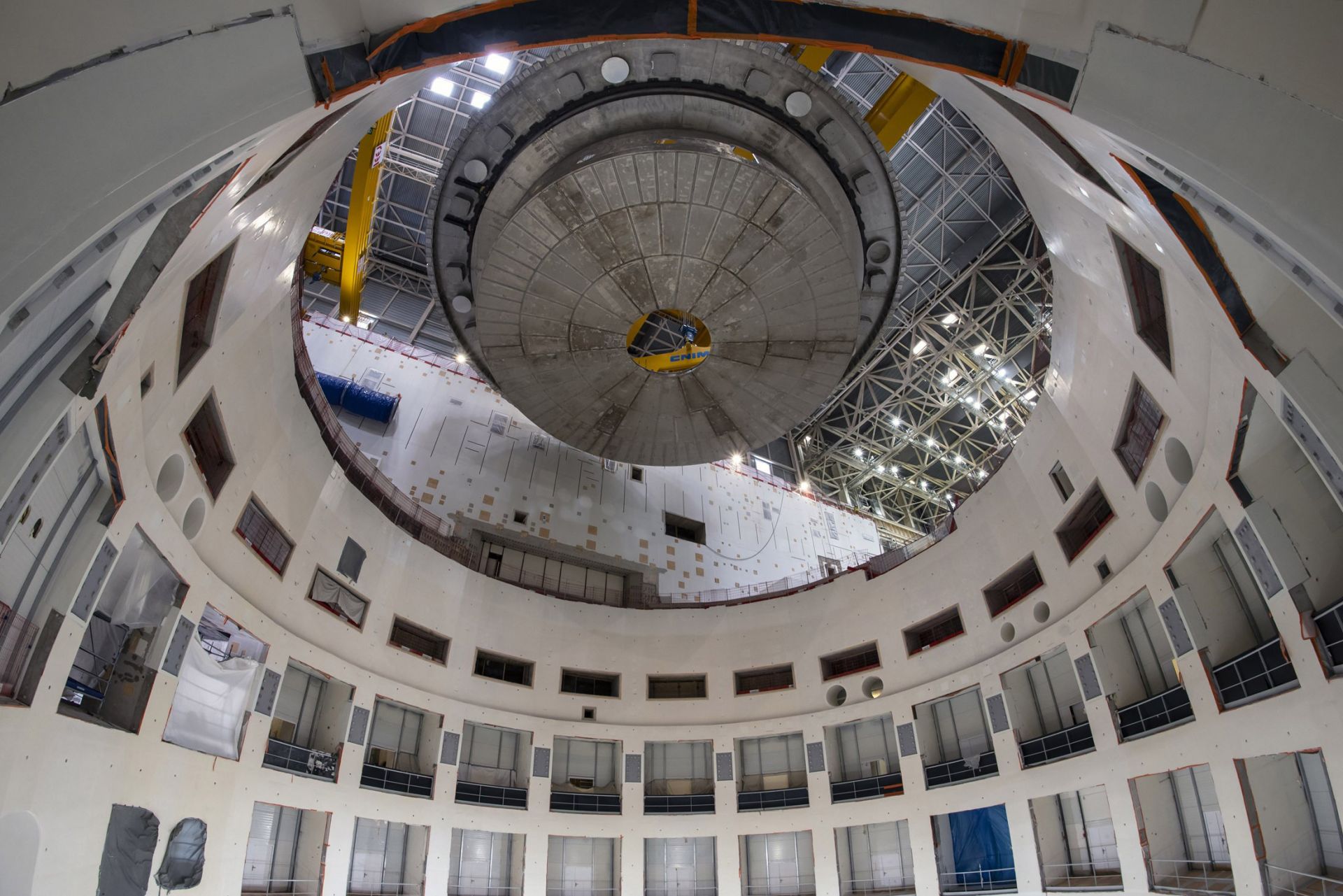
The 1,250-ton cryostat base is positioned over the ITER tokamak pit for installation. The base is the heaviest lift of the tokamak assembly. Photo: ITER
ITER, the world’s largest international scientific collaboration, is beginning the assembly of the fusion reactor tokamak that will include 12 essential hardware systems provided by US ITER, which is managed by Oak Ridge National Laboratory. The first major machine element to be installed is the 1,250-ton base of the cryostat, which was placed into the tokamak assembly pit on May 26. ITER is located in southeastern France.