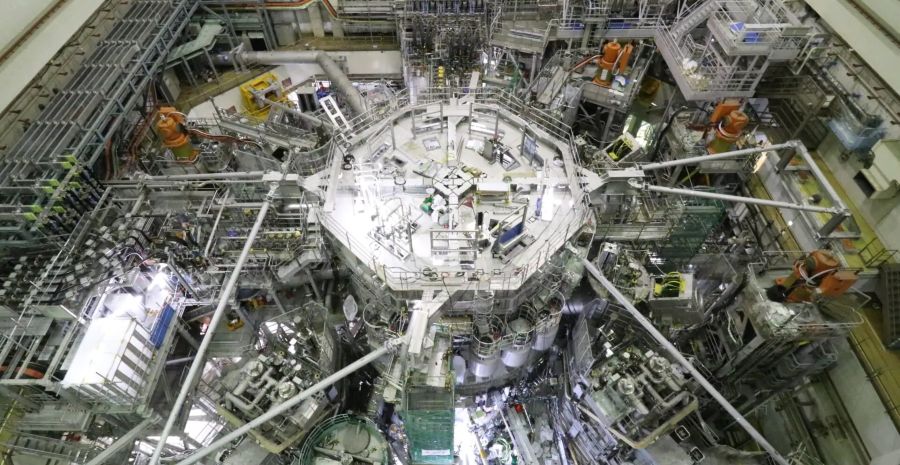
View from above of the JT-60SA tokamak in March 2026. (Photo: QST)
The project team for the world’s largest operational tokamak, JT-60SA, has announced that it is getting ready to resume operations. The machine has been undergoing upgrades since 2024, with testing of newly installed equipment occurring since February 27.
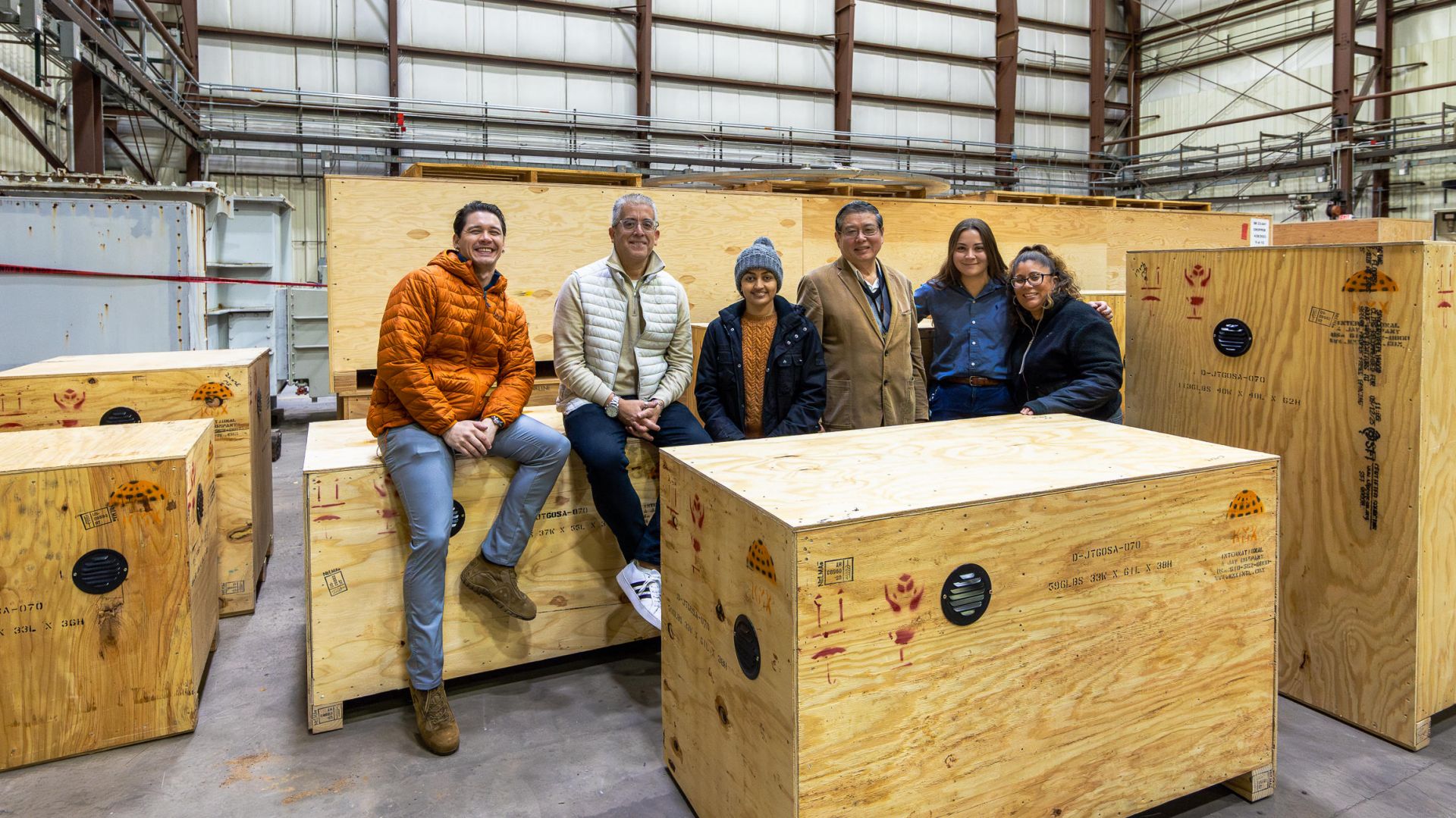
PPPL staff pose with the shipping crates containing an XCIS system ready to be shipped to Japan. (Photo: PPPL)
As researchers continue to seek ways to better understand the plasma inside fusion machines to fully harness fusion energy, Princeton Plasma Physics Laboratory is leading a project to provide new X-ray imaging systems to two international tokamak projects: WEST, in southern France, and JT-60SA, in Japan—both of which are designed to support the development of ITER.
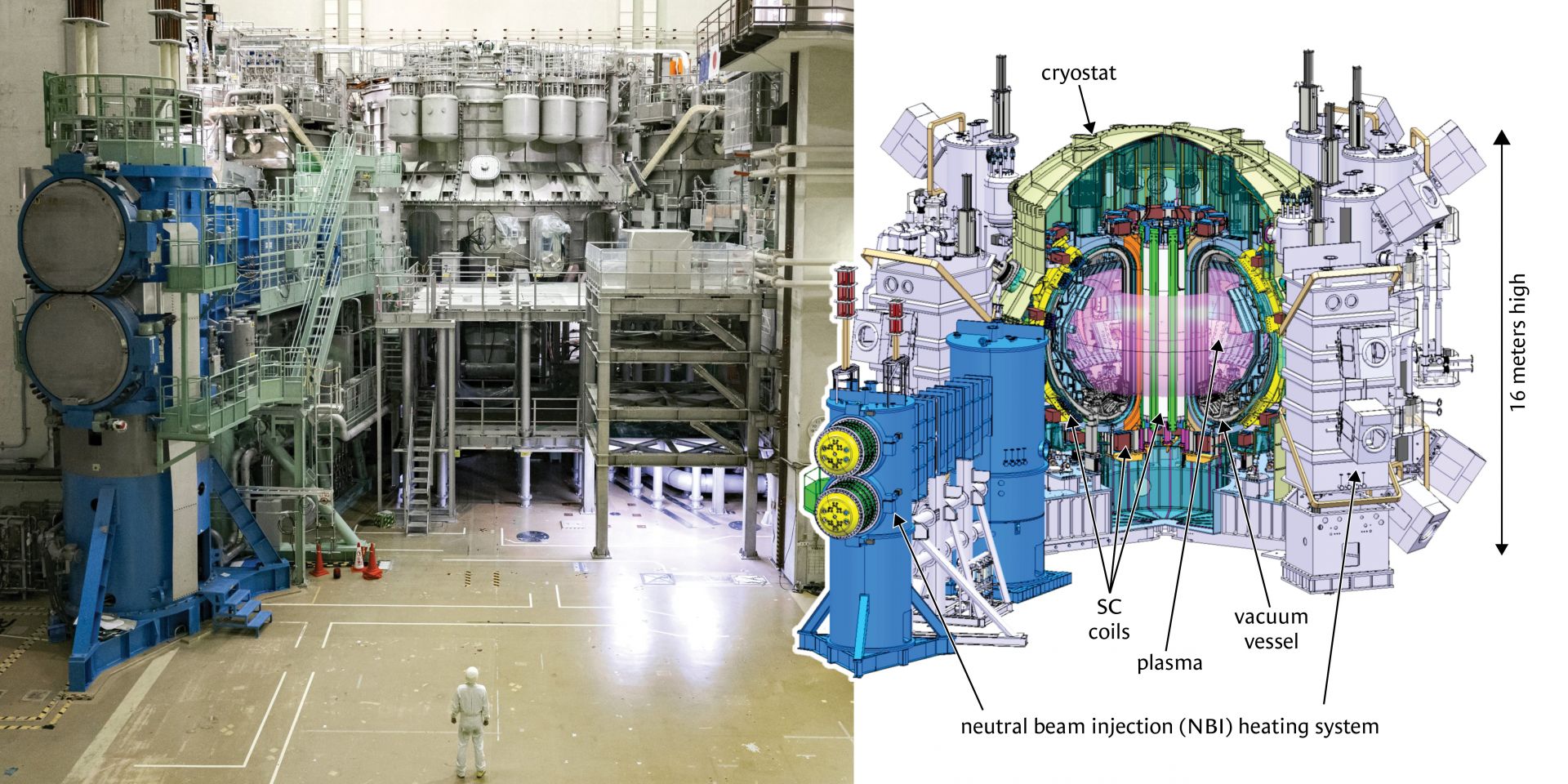
Fig. 1. A photograph (left) and schematic figure (right) of JT-60SA.
(Source: Naka Institute)
JT-60SA (Japan Torus-60 Super Advanced) is the world’s largest superconducting tokamak device. Its goal is the earlier realization of fusion energy (see Fig. 1). Fusion is the energy that powers the Sun, and just 1 gram of deuterium-tritium (D-T) fuel produces enormous energy—the equivalent of 8 tons of crude oil.
Last fall, the JT-60SA project announced an important milestone: the achievement of the tokamak’s first plasma. This article describes the objectives of the JT-60SA project, achievements in the operation campaign for the first plasma, and next steps.