Generative model explores tungsten microstructure under fusion conditions

April 20, 2026, 7:19AMNuclear News

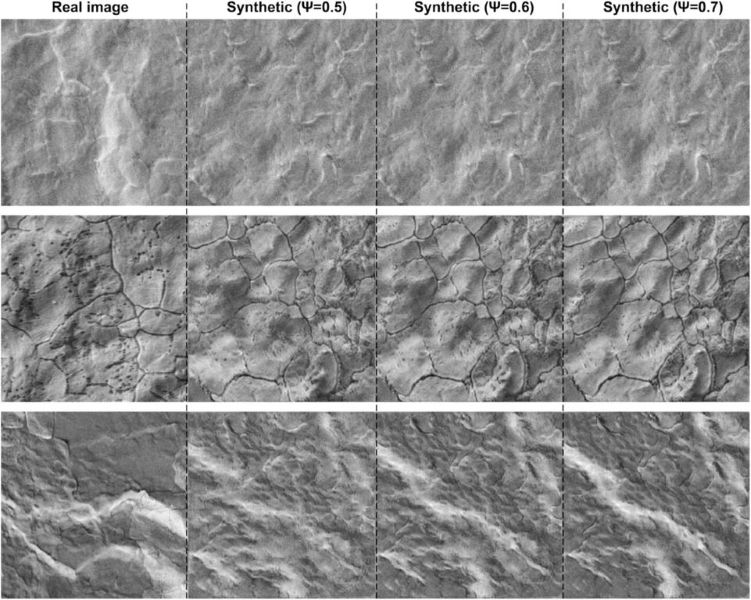
A comparison of real SEM tungsten microstructures (left column) with machine learning–generated synthetic microstructures (right) for different values of the model setting parameters. Adjusting the model setting controls how diverse or sharp the synthetic microstructures appear. (Image: ORNL, DOE)

Researchers have developed a model to generate images that serve as synthetic data close-ups of tungsten surfaces under fusion reactor conditions.

Tungsten is a top-choice material for plasma-facing components (PFCs) in fusion machines, so understanding tungsten’s performance is critical to the safety and longevity of component designs.

General Atomics looks to silicon carbide for modular tokamak breeding blanket

July 15, 2022, 12:00PMNuclear News
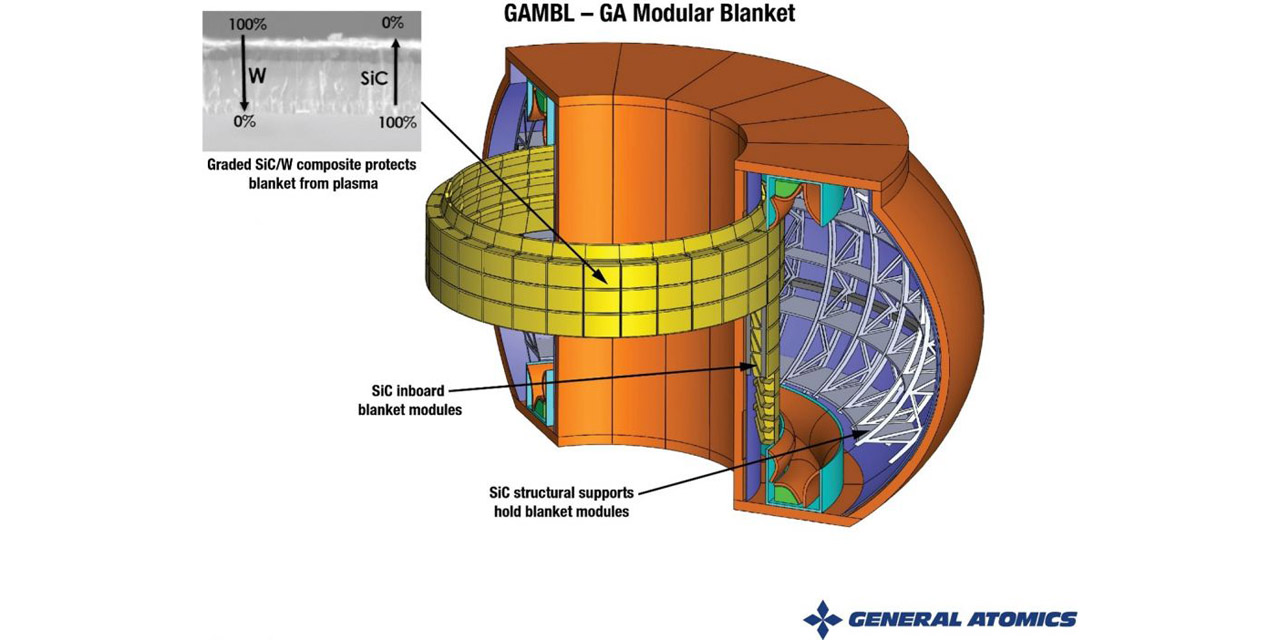
This fusion tokamak cutaway illustrates how the GAMBL concept would be incorporated into a fusion pilot plant. The SiC-tungsten composite wall provides superior heat-removal capabilities and durability, and a modular approach enables fabrication using existing technologies. (Image: GA)

Researchers at General Atomics (GA) are proposing a breeding blanket made of modular silicon carbide–based components to withstand the intense conditions in a high-power fusion power plant. The GA modular blanket (GAMBL) concept is described in an article published this month in the journal Fusion Engineering and Design, and was introduced by GA in a July 13 press release.

DIII-D divertor to test tungsten tiles

April 29, 2022, 7:04AMNuclear News
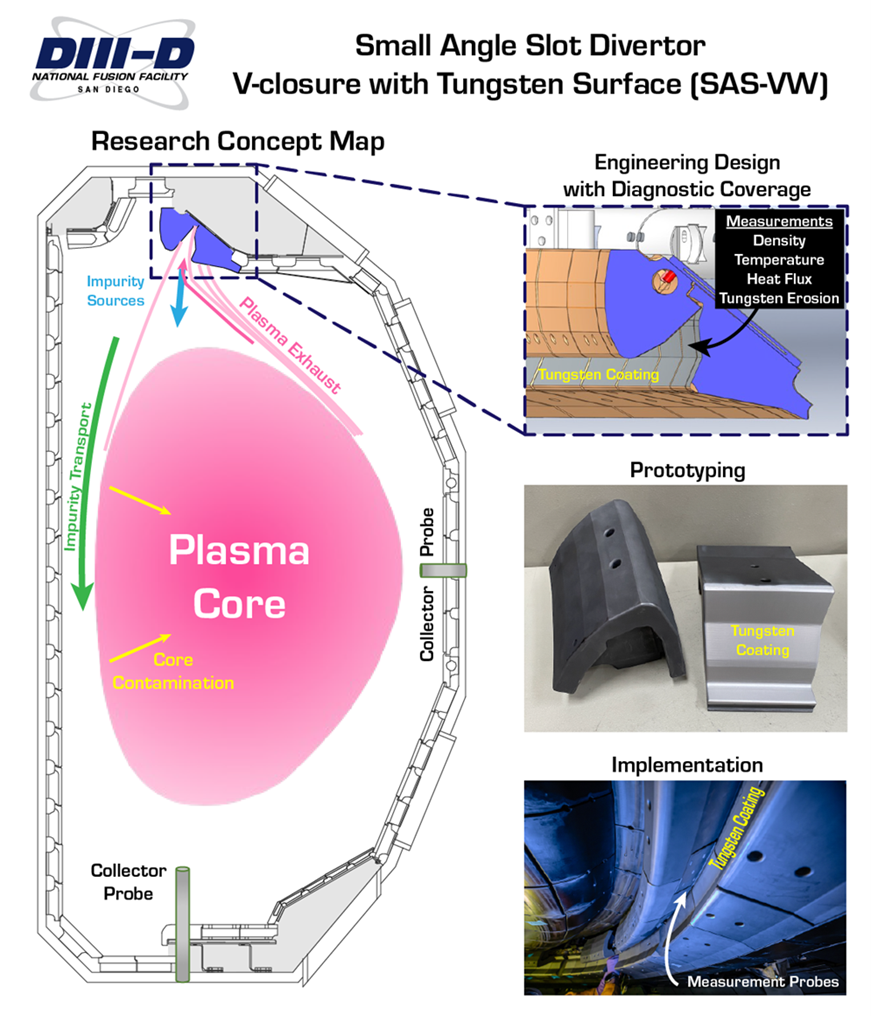
[CLICK to see entire image] Overview of the SAS-VW program at DIII-D. A research concept map illustrates how intense plasma exhaust power entering the divertor leads to the emergence of impurities that can migrate into the plasma core. After identifying the research requirements for the SAS-VW, a process of engineering design, prototyping, and implementation is performed. (Image: General Atomics)

Researchers at the DIII-D National Fusion Facility (DIII-D) are preparing to test a new method that could enable future fusion power plants to withstand the heat and particle flow created by the fusion reaction, General Atomics reported this week.