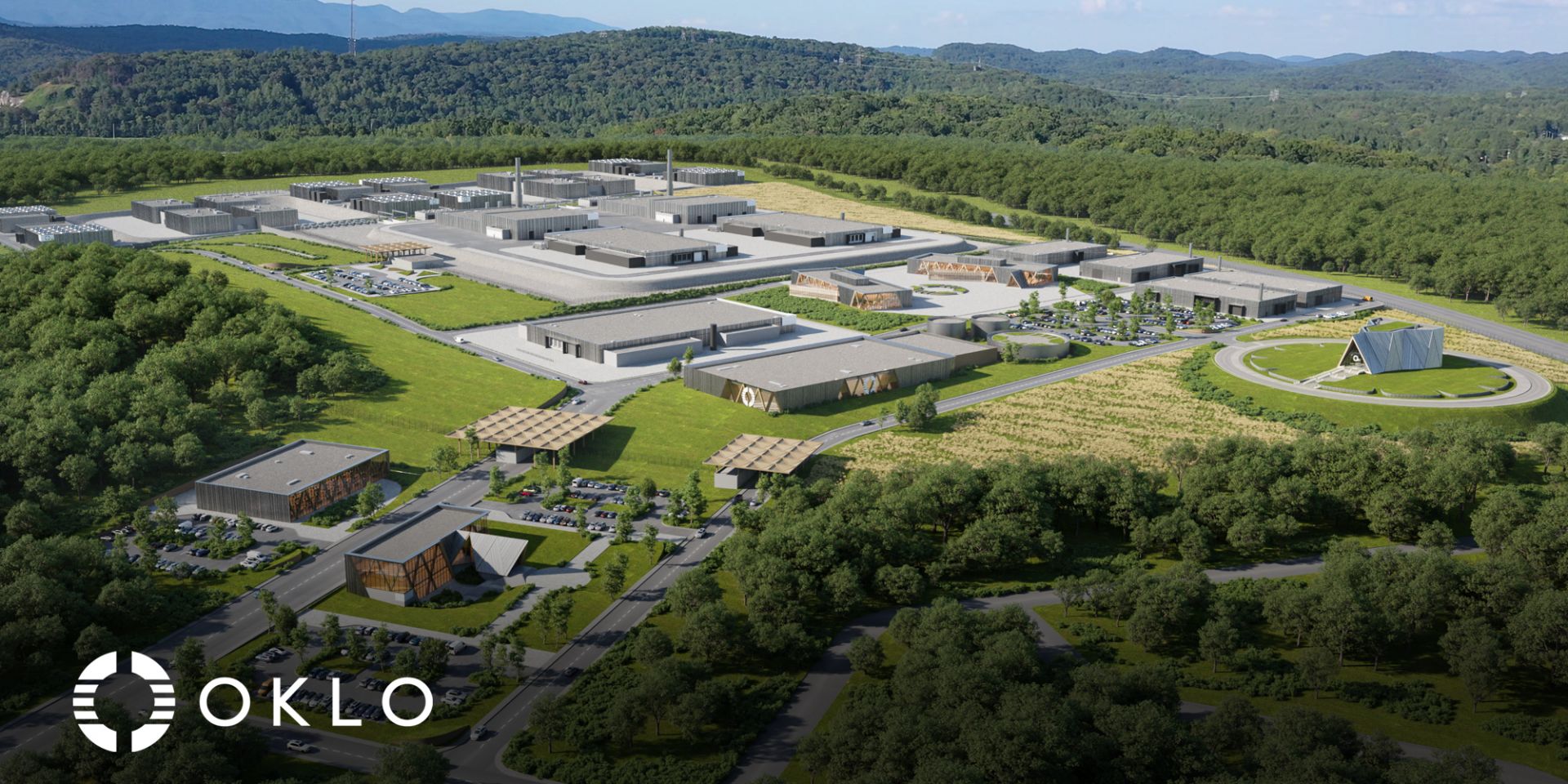
Oklo’s proposed Advanced Fuel Center in Tennessee. (Image: Oklo)
Late last week saw two announcements from companies working to recycle used nuclear fuel on a commercial scale, providing welcome news to anyone hoping to see the United States move to unlock the hidden potential of the more than 94,000 metric tons of spent fuel stored at power plant sites around the country.
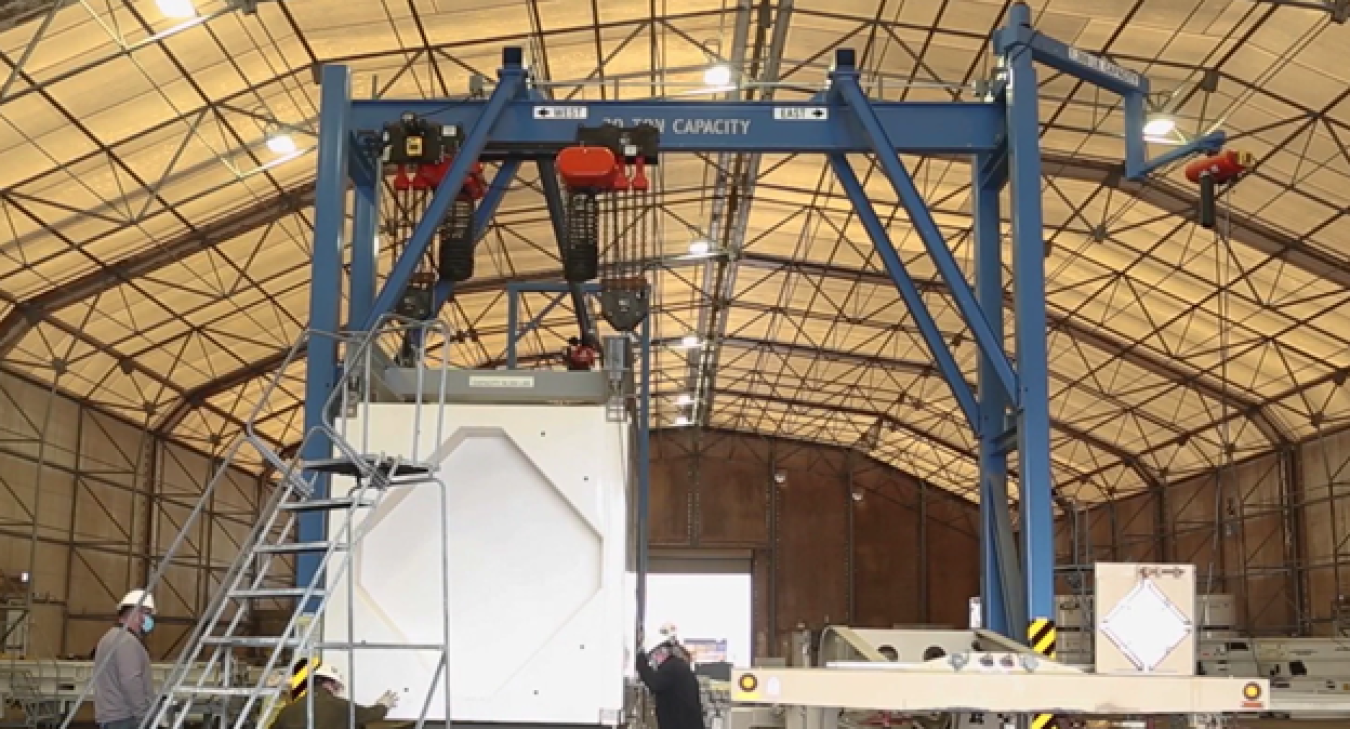
Specialized loading equipment for TRUPACT-IIIs is sent from SRS to the Idaho Cleanup Project for reuse. (Photo: DOE)
Demonstrating the beneficial reuse of equipment among Department of Energy cleanup sites, the DOE’s Office of Environmental Management transferred TRUPACT-III shipping equipment from its Savannah River Site in South Carolina to the Idaho Cleanup Project at the Idaho National Laboratory Site. This collaboration shows how DOE-EM drives efficiency, focusing on priorities and reining in costs without sacrificing safety or effectiveness, the DOE said.
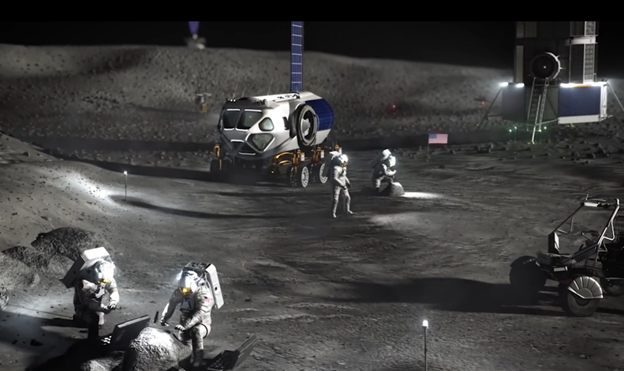
A still image from a NASA video illustrating power needs on the lunar surface. (Image: NASA)
After the Trump administration’s new push to get a nuclear reactor on the moon by 2030 was first reported by Politico last month, media played up the shock value for people new to the concept. Few focused on the technical details of the new plan for lunar fission surface power (FSP), which halts and replaces a program that began under the first Trump administration with an early hope of getting a reactor on the moon by the end of 2026. Now, the focus is on streamlining NASA’s internal processes to support commercial space companies that can build a reactor with more than twice the power and mass and have it ready for launch by 2030.
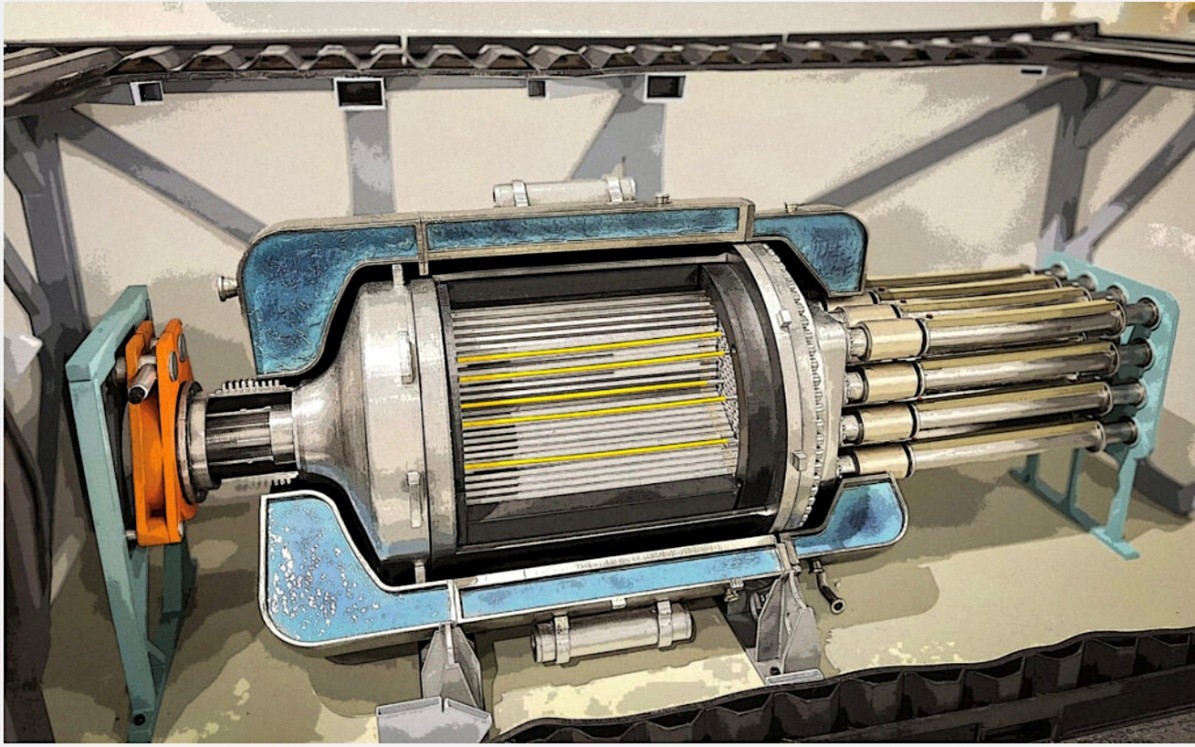
Scale model of the Pele transportable microreactor. (Image: BWXT)
Fabrication of the reactor core for the 1.5-MW Project Pele demonstration microreactor has begun, according to BWX Technologies. Pele is being developed at the BWXT Innovation Campus in Lynchburg, Va., for the U.S. Department of Defense’s Strategic Capabilities Office.
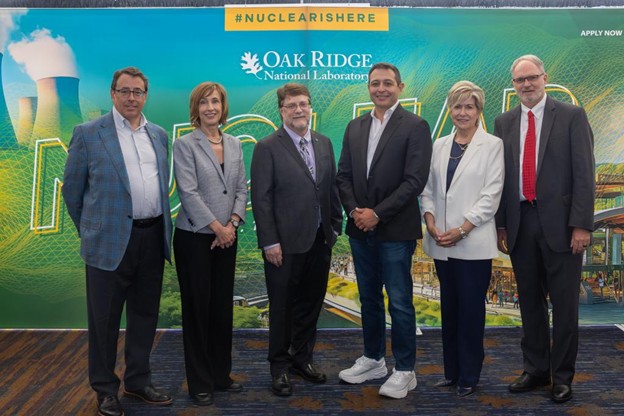
ORNL leadership gathered at the Nuclear Opportunities Workshop in Knoxville, with Trey Lauderdale, CEO of Atomic Canyon. From left: Joe Hoagland, Director of Special Initiatives; Susan Hubbard, Deputy for Science and Technology; Stephen Streiffer, ORNL Director; Lauderdale; Gina Tourassi, Associate Laboratory Director for Computing and Computational Sciences; and Mickey Wade, Associate Laboratory Director for Fusion and Fission Energy and Science. (Photo: Carlos Jones/ORNL)
The United States has tight new deadlines—18 months, max—for licensing commercial reactor designs. The Department of Energy is marshaling the nuclear expertise and high-performance computing assets of its national laboratories, in partnership with private tech companies, to develop generative AI tools and large-scale simulations that could help get nuclear reactor designs through the Nuclear Regulatory Commission’s licensing process—or the DOE’s own reactor pilot program. “Accelerate” and “streamline” are the verbs of choice in recent announcements from Oak Ridge National Laboratory and Idaho National Laboratory, as they describe plans with Atomic Canyon, Microsoft, and Amazon.
Vertiv and Oklo plan to collaborate on modular, energy-efficient power and cooling systems and designs developed to support data centers driven by nuclear power. (Image: Oklo)
In back-to-back press releases, Oklo recently announced two new partnerships that seek to advance the deployment of its commercial power reactors in the data center market.
These partnerships, one with Ohio-based Vertiv Holdings and one with Colorado-based Liberty Energy, continue Oklo’s trend in working to position their Aurora powerhouse as a key part of the energy solution for powering the AI boom.
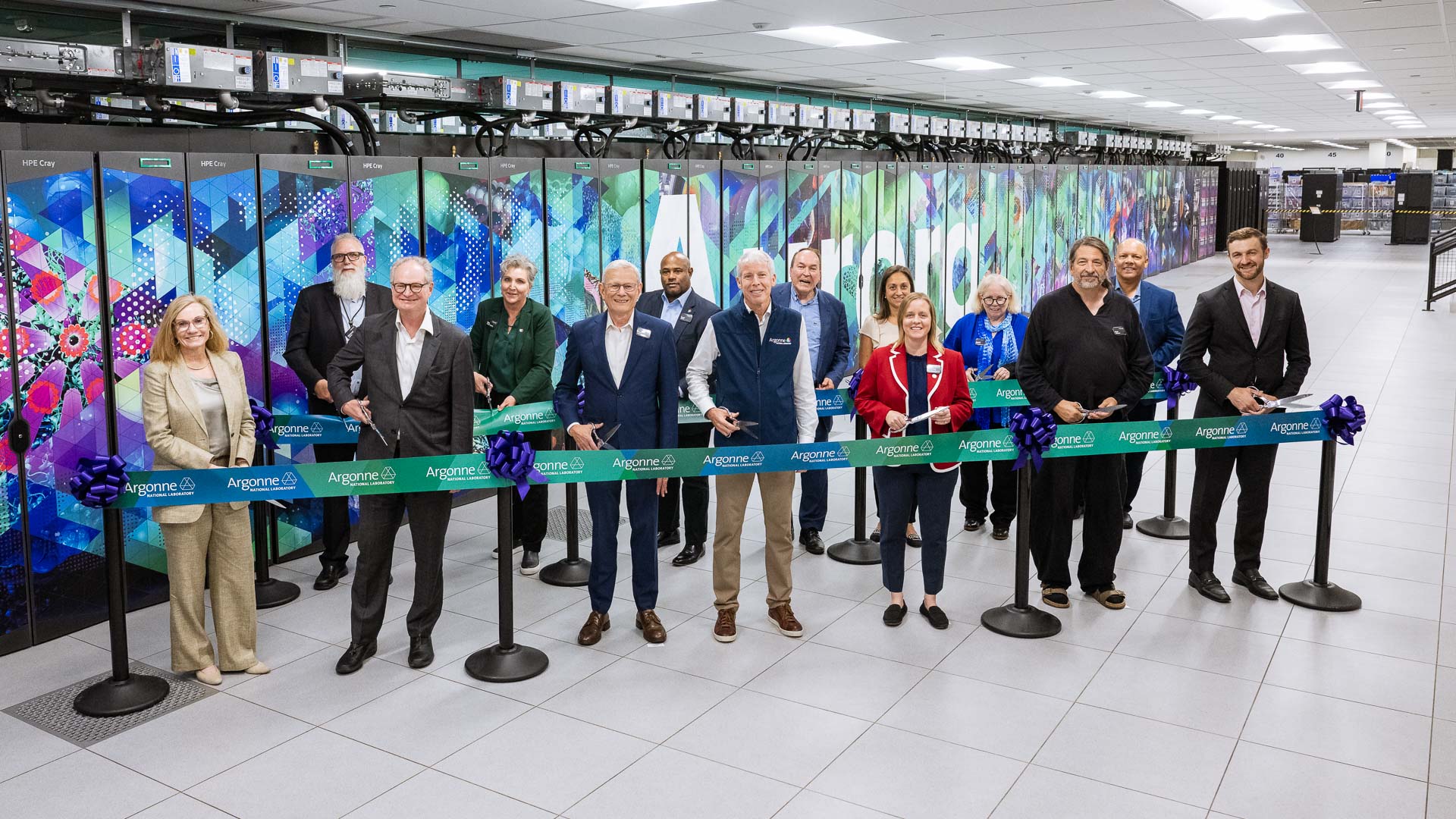
Energy Secretary Chris Wright (center) and leaders from Argonne, Intel, and Hewlett Packard Enterprise cut the ribbon to celebrate the Aurora exascale supercomputer. (Photo: Argonne)
Leaders from private companies, government, and national laboratories gathered at Argonne National Laboratory on July 17 and 18 for an exclusive AI x Nuclear Energy Executive Summit that the Department of Energy called a first-of-its-kind forum to “align next-generation nuclear systems with the needs of digital infrastructure.”
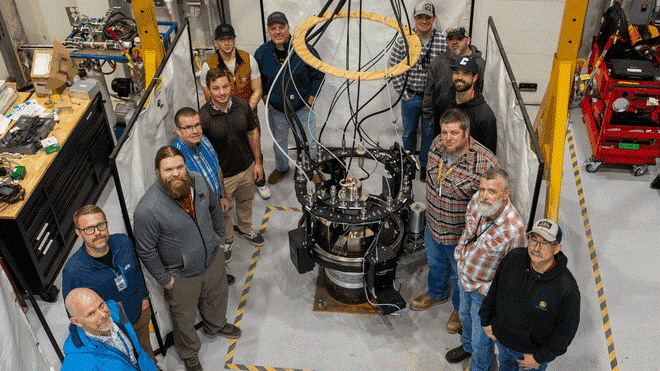
Team members and the new closure welding system that seals canisters containing spent fuel. (Photo: DOE)
Teams from the Department of Energy’s Offices of Environmental Management and Nuclear Energy recently collaborated on the Road Ready Demonstration Project by testing new equipment to seal spent nuclear fuel into a safe and transportable system for future shipments out of Idaho.
(Photo: Idaho National Laboratory)
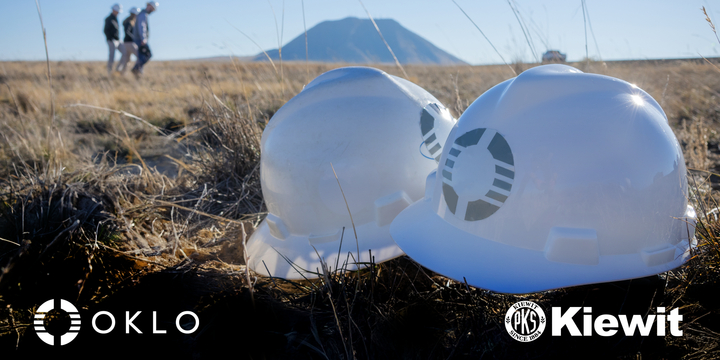
Following the signing of a new agreement, Kiewit Nuclear Solutions, a subsidiary of Kiewit Corporation, is officially the lead constructor for Oklo’s first commercial Aurora powerhouse, which will be built at Idaho National Laboratory.
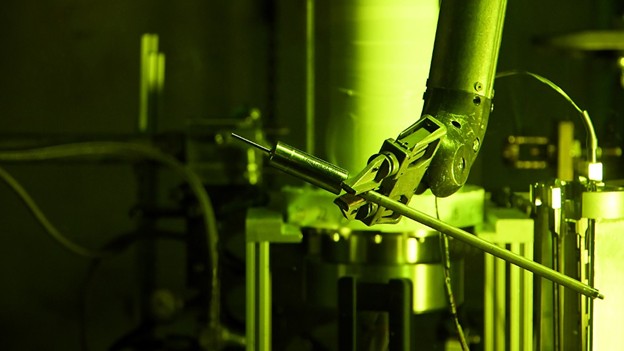
A commercially irradiated, refabricated test rod in an INL hot cell. (Photo: INL)
An article in the OECD Nuclear Energy Agency’s July news bulletin noted that a first test has been completed for the High Burnup Experiments in Reactivity Initiated Accident (HERA) project. The project aim is to understand the performance of light water reactor fuel at high burnup under reactivity-initiated accidents (RIA).
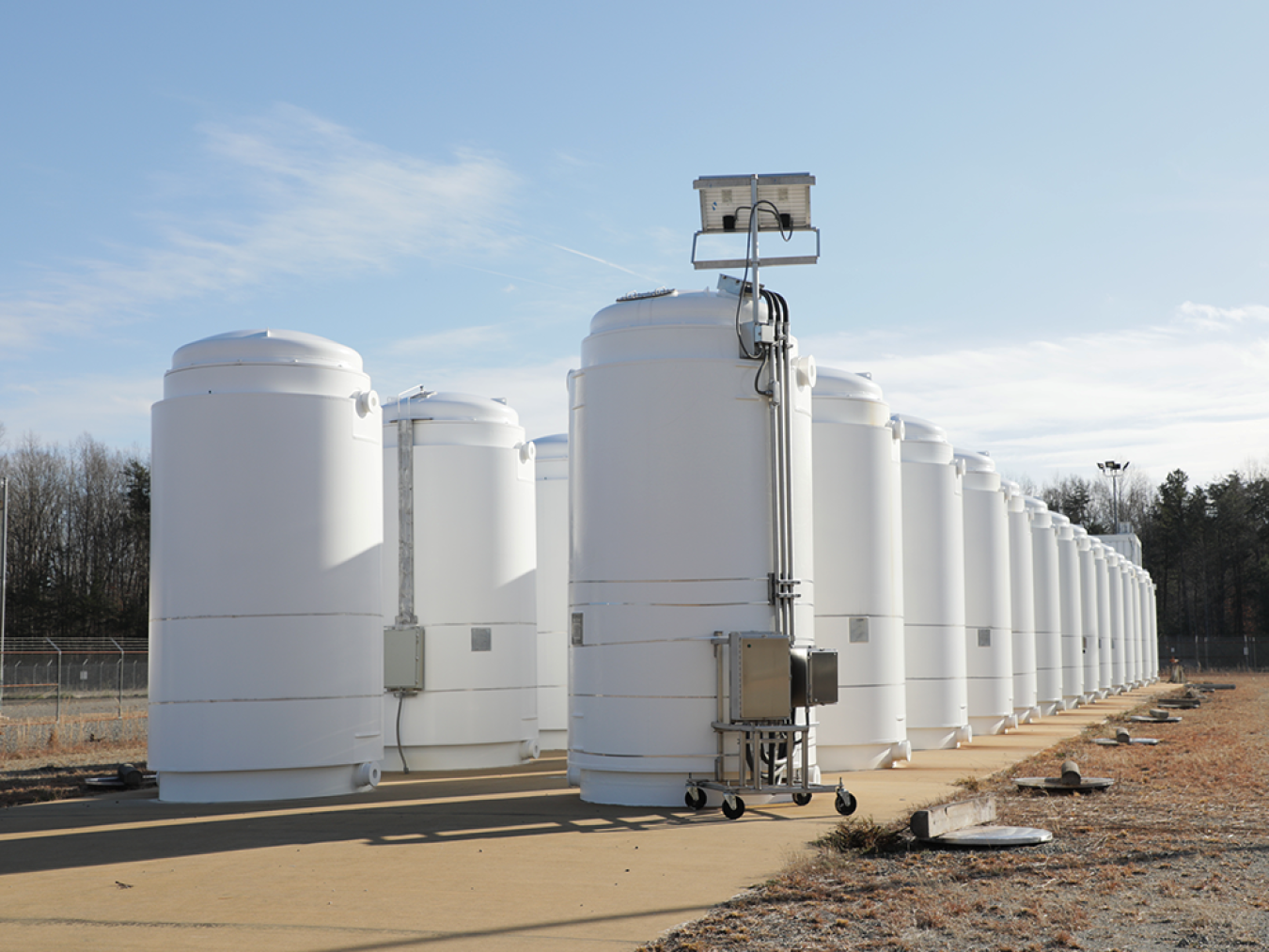
The high-burnup research cask (center) stands with other spent nuclear fuel dry storage casks at the North Anna ISFSI in Virginia. (Photo: Dominion Energy)
The Department of Energy said it anticipated delivering a research cask of high-burnup spent nuclear fuel from Dominion Energy’s North Anna nuclear power plant in Virginia to Idaho National Laboratory by fall 2027. The planned shipment is part of the High Burnup Dry Storage Research Project being conducted by the DOE with the Electric Power Research Institute.
As preparations continue, the DOE said it is working closely with federal agencies as well as tribal and state governments along potential transportation routes to ensure safety, transparency, and readiness every step of the way.
Watch the DOE’s latest video outlining the project here.
A representation of the NRIC DOME microreactor test bed. (Image: NRIC)
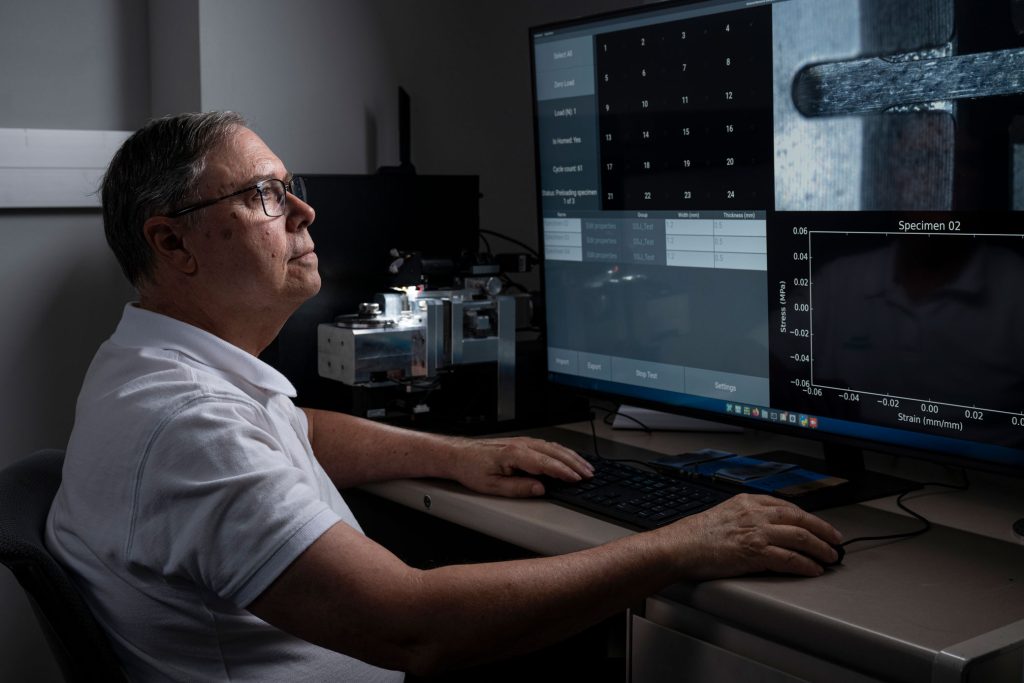
Professor Joseph Newkirk operates a testing device in Missouri S&T’s Toomey Hall. (Photo: Blaine Falkena/Missouri S&T)



 A
A