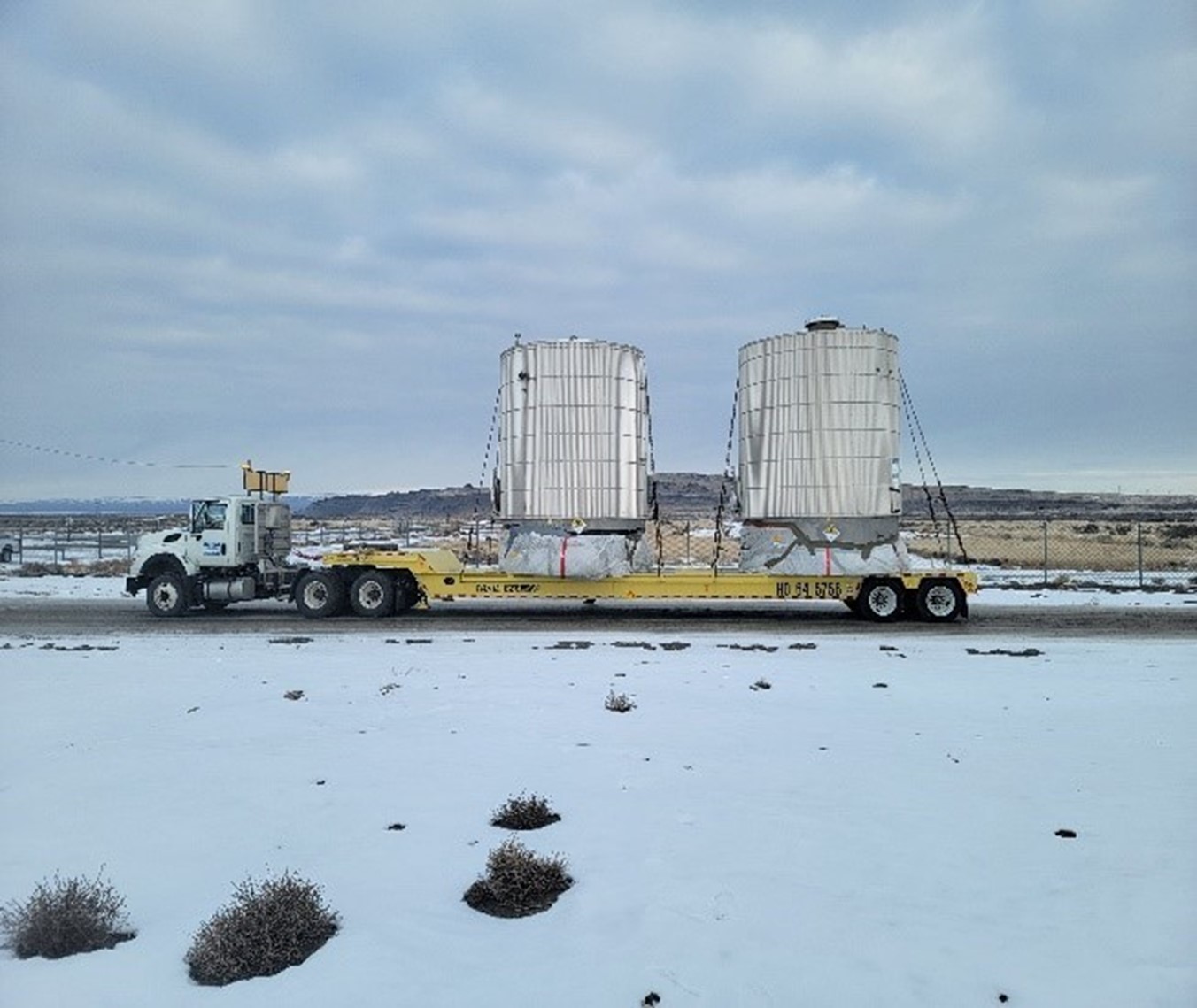
Two empty waste tanks weighing more than five tons each were transported from outside the Hanford Site’s Effluent Treatment Facility to an on-site landfill. (Photo: DOE)
Two large tanks near the Effluent Treatment Facility (ETF) at the Department of Energy’s Hanford Site in Washington state were removed recently to make way for future wastewater treatment activities at the ETF.
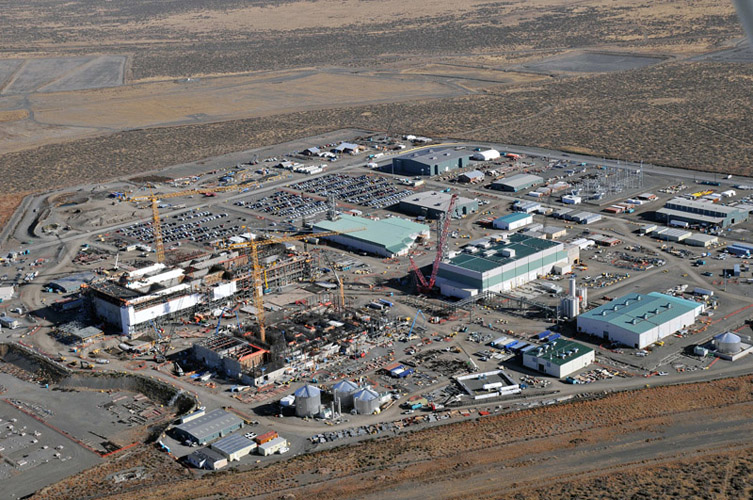
Hanford’s Waste Treatment and Immobilization Plant. (Photo: DOE)
The Department of Energy is asking for feedback on a new report analyzing potential options for preparing high-level radioactive waste for vitrification at the department’s Hanford Site near Richland, Wash. Vitrification is the process of treating radioactive waste by immobilizing it in glass.
The report, Waste Treatment and Immobilization Plant High-Level Waste Treatment: Analysis of Alternatives, was commissioned in response to a 2018 determination by the U.S. Army Corps of Engineers that it was unlikely the DOE would meet its mandated deadlines for treating Hanford’s tank waste.
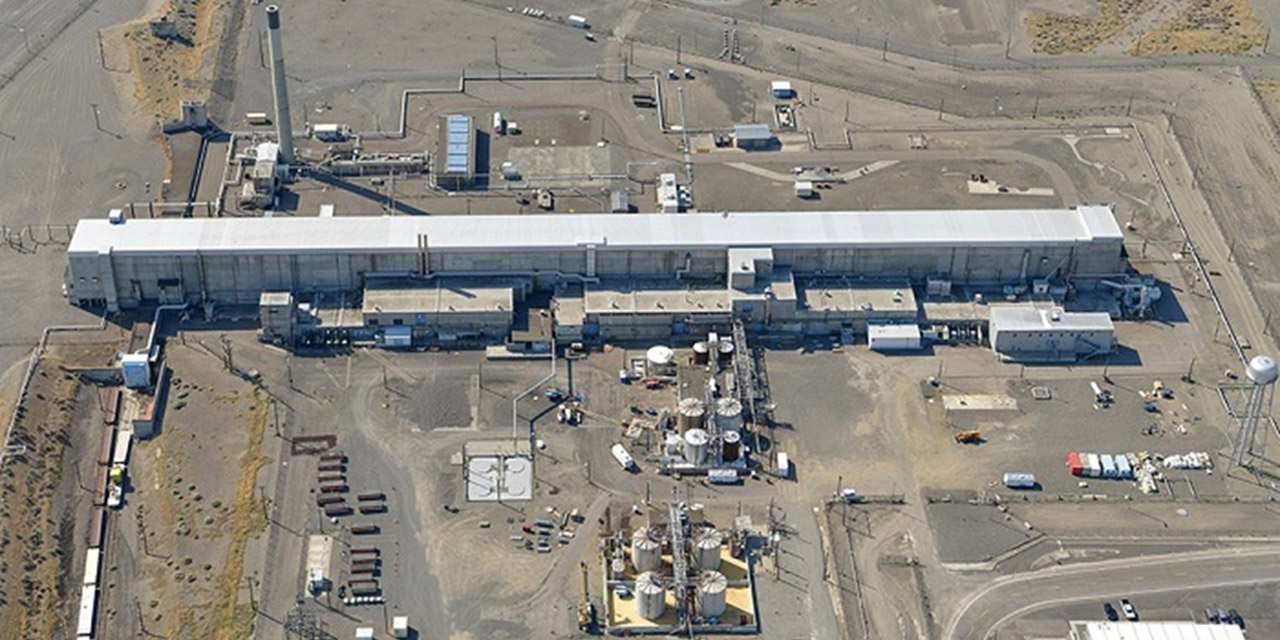
An aerial view of Hanford’s Plutonium Uranium Extraction plant, showing the main facility (at center), the 211-A chemical storage area, and (in foreground) the 203-A acid storage area. (Photo: DOE)
Work crews at the Department of Energy’s Hanford Site in Washington state are performing risk-reduction activities at the Plutonium Uranium Extraction (PUREX) plant to prepare it for eventual disposition.
“It will be a yearslong effort to get this large facility ready for disposition, and I’m encouraged by the progress to safely and efficiently advance this work,” said Andy Wiborg, the DOE’s Projects and Facilities Division team lead for Hanford’s Central Plateau cleanup project.
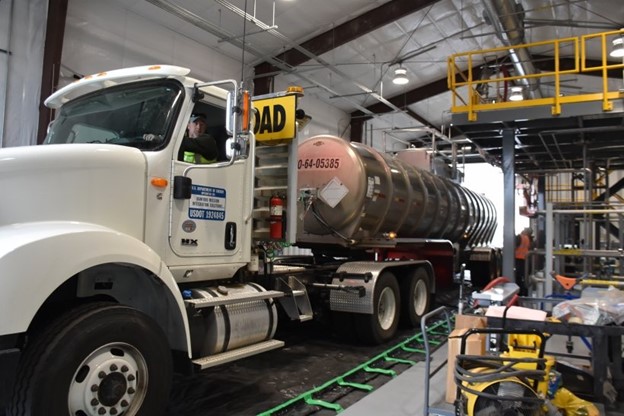
A tanker holding 6200 gallons of leachate unloads at a backup load-in station at the Hanford Site’s ETF. (Photo: DOE)
Construction of a backup load-in station has been completed at the Hanford Site’s Effluent Treatment Facility (ETF) in Washington state.
“We broke ground on the backup facility about a year ago,” said Rob Wood, project manager for Washington River Protection Solutions, the Department of Energy’s tank operations contractor at the site. “I am proud of the team for completing this portion of the load-in expansion project and doing it safely. In phase two, expansion of the main load-in station will prepare us for 24/7 operations on the Hanford Site.”
Watch a time-lapse video of the backup load-in station construction here.
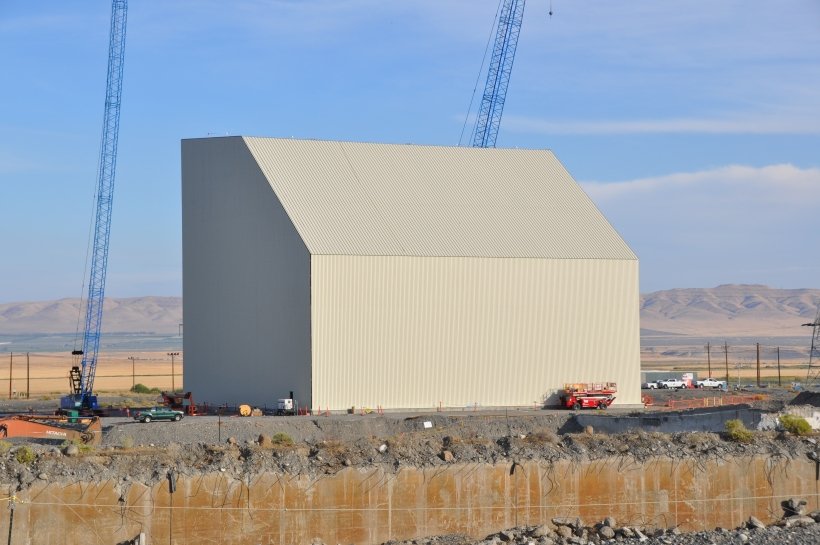
DOE contractor CPCCo recently completed construction of a protective cocoon over the former K East Reactor building at Hanford. (Photo: DOE)
The Department of Energy’s Office of Environmental Management (EM) announced that construction of Hanford’s K East Reactor cocoon has been completed ahead of schedule and under budget. Cocooning of K East—enclosing it in a protective steel structure while the reactor’s radioactivity naturally decays—was one of EM’s key construction priorities for 2022.
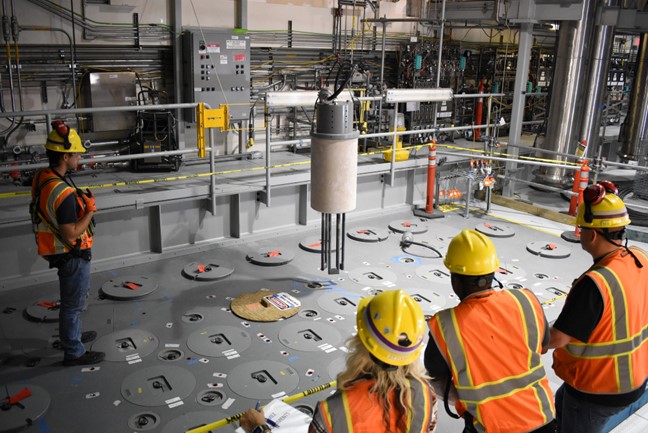
Workers install one of 18 startup heaters into Melter 1 of Hanford’s Low-Activity Waste Facility. (Photo: Bechtel National)
Heating of the first waste vitrification melter at the Department of Energy’s Hanford Site was paused after operators identified an “abnormal condition with the startup heater power supplies,” the DOE’s Office of River Protection (ORP) said. Heat-up of the 300-ton melter, which will be used to vitrify Hanford’s low-level radioactive tank waste, was initiated on October 8.
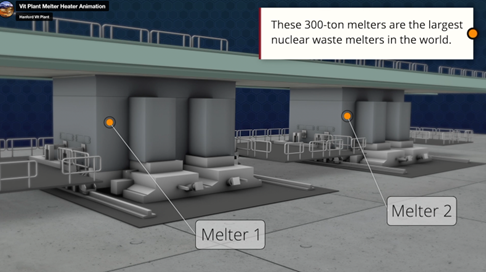
A screenshot from a 3D animation showing the heat-up of Hanford’s melters. (Image: DOE)
Crews at the Department of Energy’s Hanford Site, near Richland, Wash., have begun heating up the first of two 300-ton melters that will be used to vitrify mixed low-level radioactive and chemical tank waste. According to the DOE’s Office of Environmental Management (EM), initiating and completing the heating of the melter is a critical step to commissioning Hanford’s Waste Treatment and Immobilization Plant (WTP), which will treat and stabilize the site’s 56 million gallons of tank waste by immobilizing it in glass through the vitrification process.
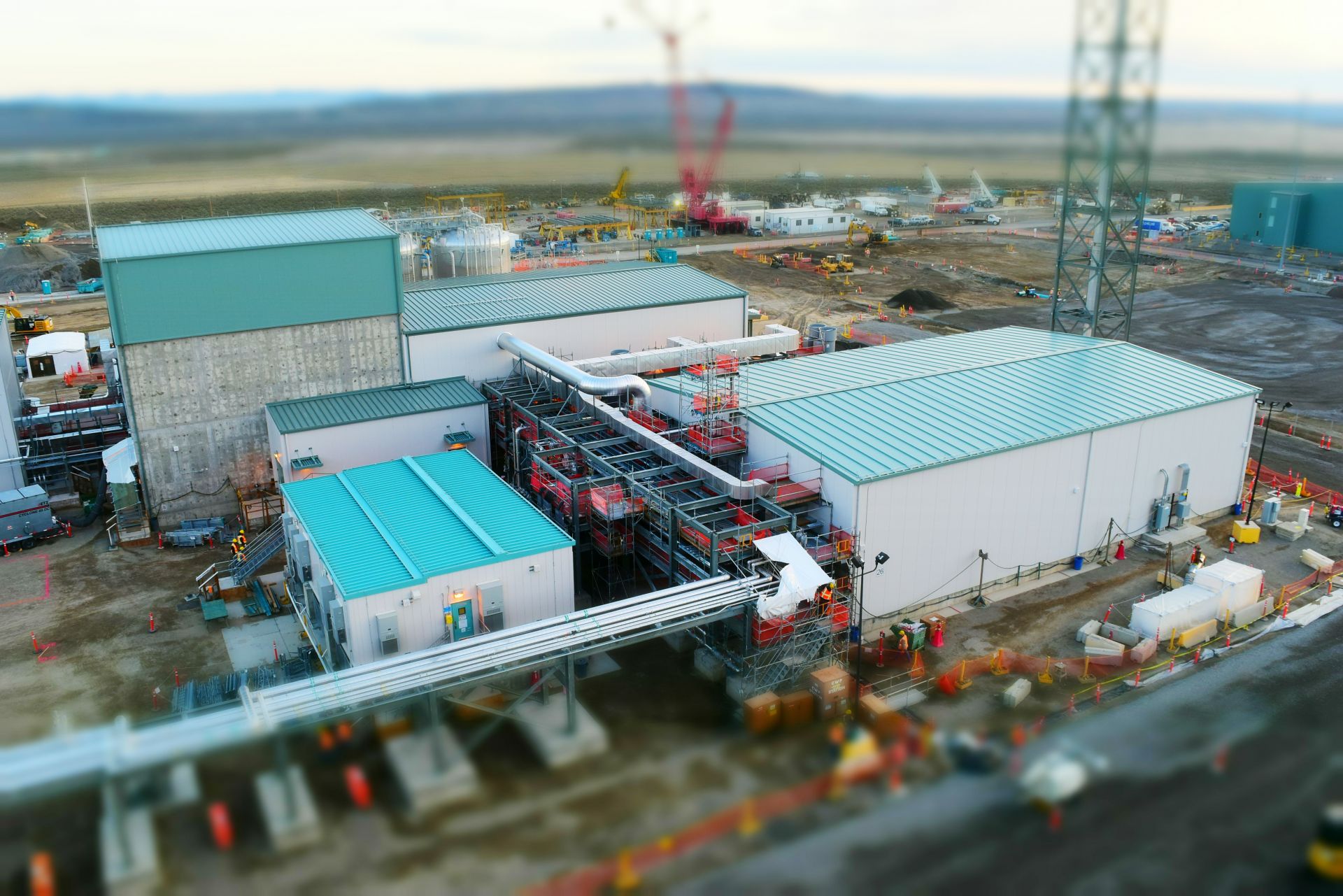
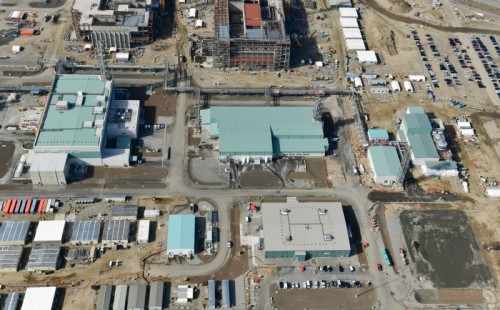
The Effluent Management Facility, part of the Waste Treatment and Immobilization Plant at the Hanford Site. (Photo: Bechtel National)
This spring, the U.S. Government Accountability Office (GAO) released an insightful report reviewing and summarizing the status and performance of the largest projects and operations within the Department of Energy’s Office of Environmental Management (EM), which is responsible for the cleanup of hazardous and radioactive waste at sites and facilities that have been contaminated from decades of nuclear weapons production and nuclear energy research.
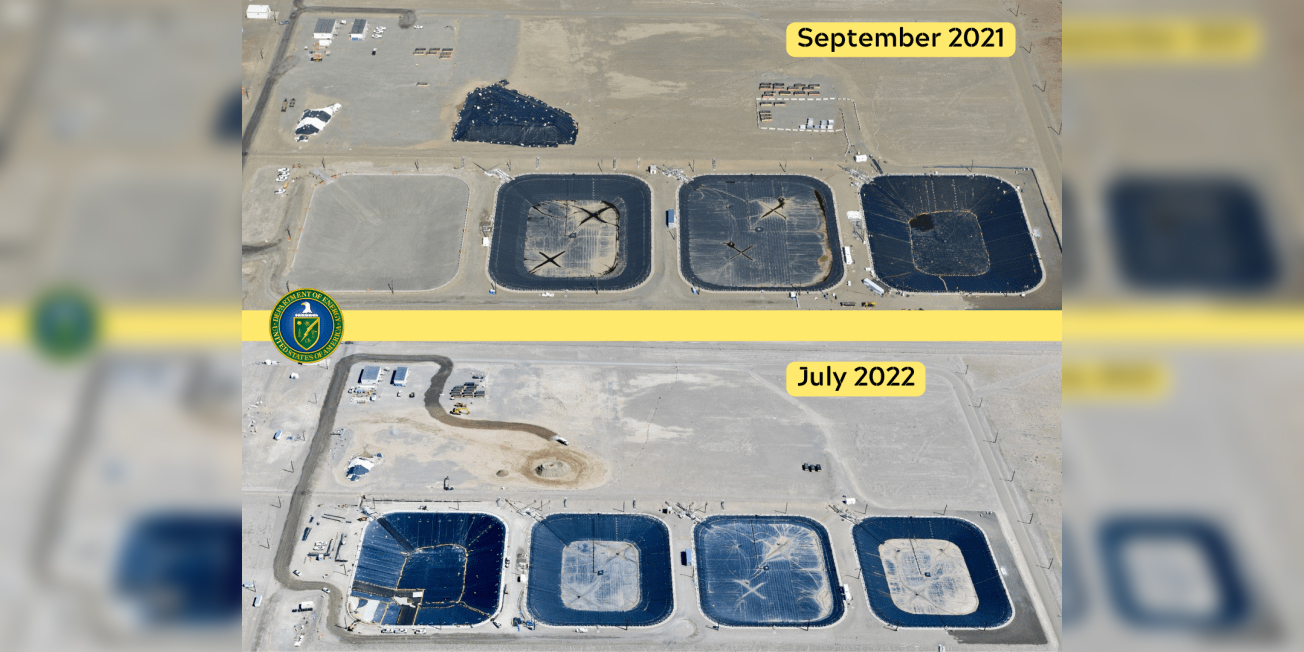
Retention basins at the Liquid Effluent Retention Facility on the Hanford Site, as seen in September 2021, at top, and recently with the nearly completed Basin 41 on the far left. (Photo: DOE)
Work is nearing completion on a fourth basin needed to ensure adequate storage for wastewater during tank waste treatment on the Department of Energy’s Hanford Site, in Washington state.
According to the DOE, its operations contractor Washington River Protection Solutions (WRPS) has made significant progress on Basin 41 at the Liquid Effluent Retention Facility (LERF) since concrete was first poured for the perimeter one year ago.
Video: Watch this time-lapse video of the LERF Basin 41 construction.
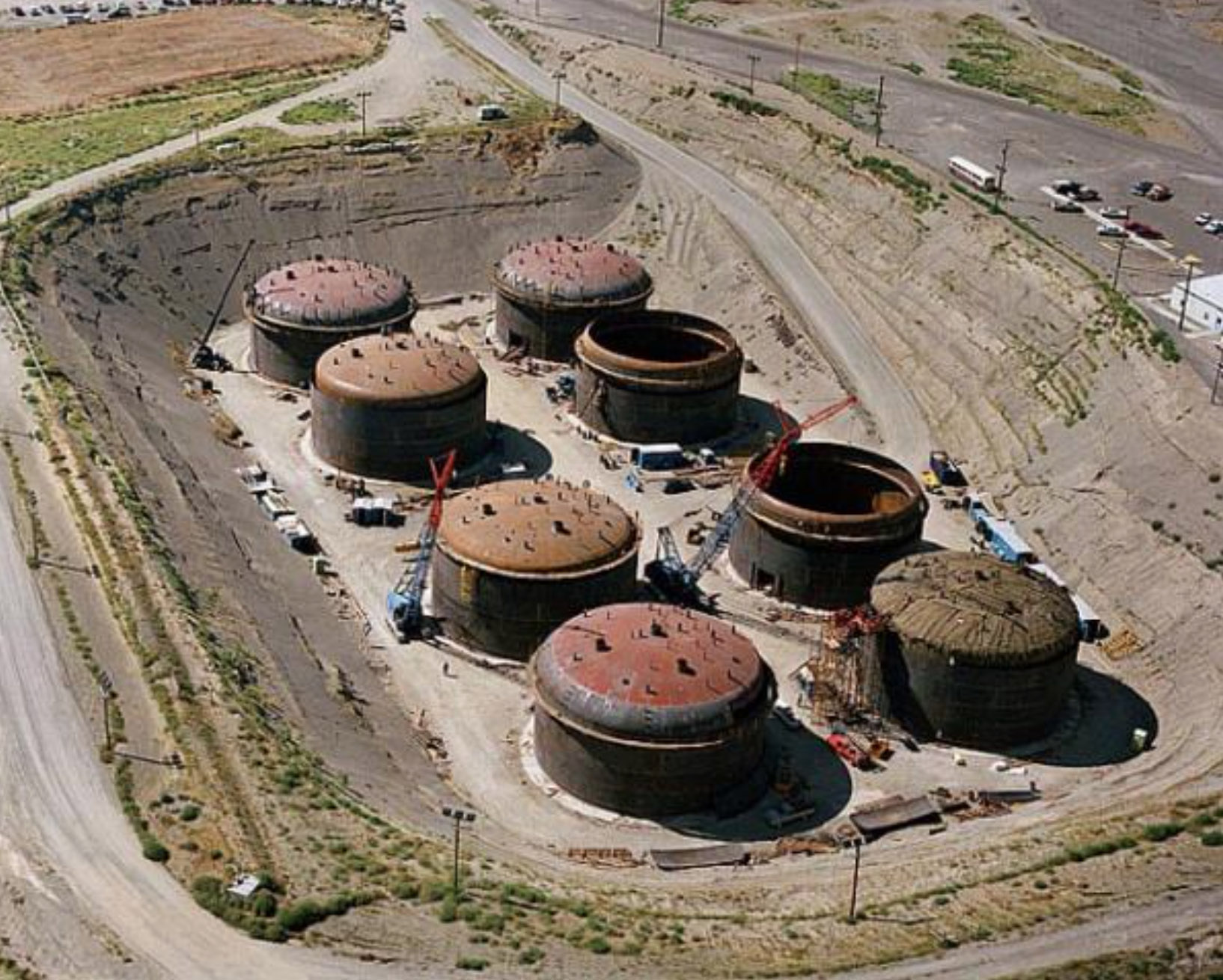
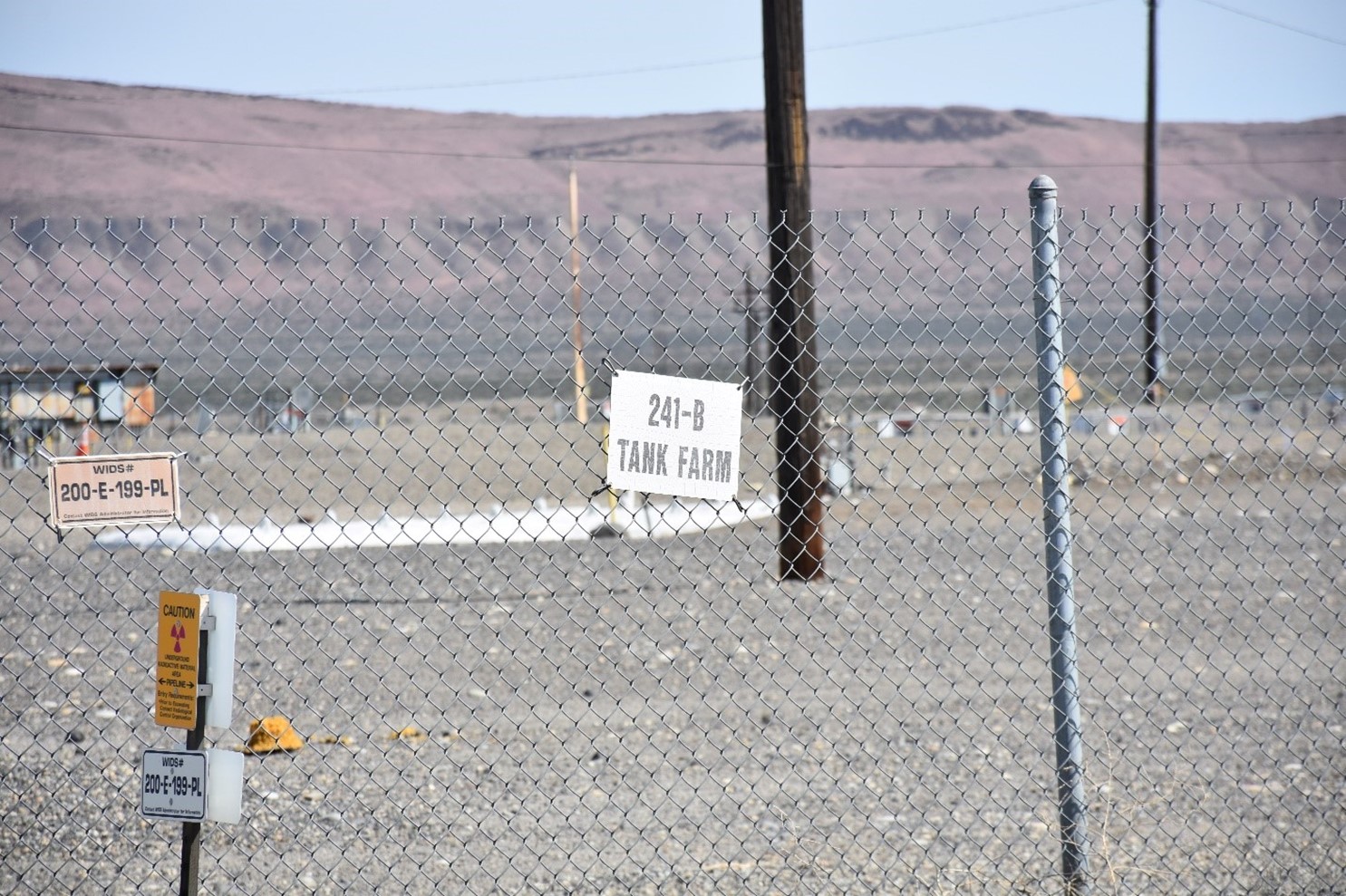
The B Farm underground waste tank area at Hanford. (Photo: DOE)
Washington state’s Department of Ecology and the U.S. Department of Energy have agreed on a plan for how to respond to two underground tanks that are leaking radioactive waste, as well as any future tank leaks, at the Hanford Site near Richland, Wash.
In April 2021, following a year-long leak assessment, the DOE announced that Hanford’s Tank B-109 is leaking waste into the surrounding soil. Tank T-111 was discovered to be leaking in 2013. Currently, Tank B-109 is leaking about 1.5 gallons of waste per day, and Tank T-111 is leaking less than a gallon a day, according to the DOE.
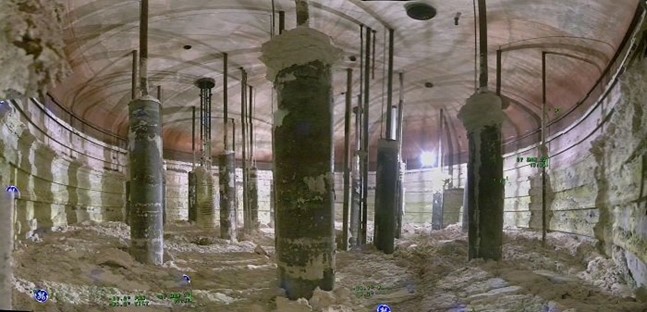
Hanford workers will soon begin retrieving about 373,000 gallons of waste from Tank AX-101, shown here in an image from an inspection video shot. (Photo: DOE)
Washington River Protection Solutions (WRPS) is preparing to retrieve waste from Tank AX-101 at the Department of Energy’s Hanford Site near Richland, Wash. WRPS is the tank operations contractor at Hanford.
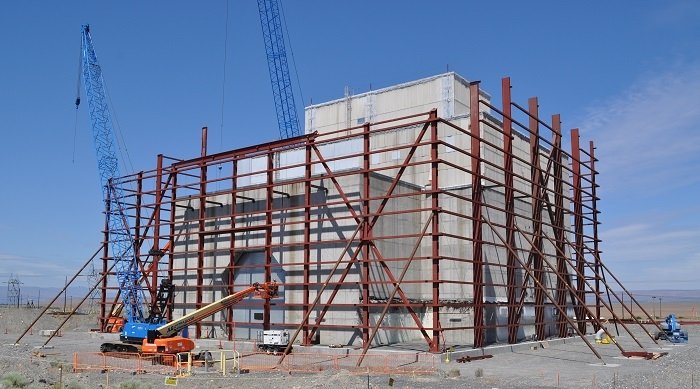
The first steel columns, each weighing up to 28 tons, were placed for a cocoon over the former K East Reactor building at the Hanford Site. (Photo: DOE-EM)
The Department of Energy’s Office of Environmental Management (EM) said that construction is well underway on a protective enclosure, or cocoon, for the K East Reactor building at the Hanford Site near Richland, Wash.
EM reports that is has achieved one of its key construction priorities for 2022 by beginning construction of the enclosure, which is designed to protect the reactor building while the radioactivity in the deactivated reactor core decays over the next several decades, making it safer and easier to decommission.
A time-lapse video showing the construction of the cocoon’s massive 120-foot steel frame can be seen here.
An aerial view of Hanford’s Waste Treatment and Immobilization Plant in 2021. (Photo: Bechtel National)
The U.S. Supreme Court on June 21 struck down a Washington state workers’ compensation law that was designed to make it easier for workers at the Department of Energy’s Hanford Site to receive compensation benefits. The court, by unanimous decision, found that the law violates the U.S. Supremacy Clause and discriminates against the federal government and its contractors.
Located near Richland, Wash., the Hanford Site produced plutonium for the U.S. weapons program for more than 40 years and is currently undergoing a massive radiological cleanup mission involving around 10,000 workers.
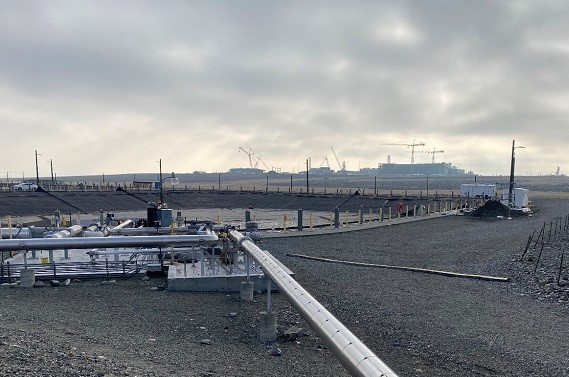
During the Hanford Site's Direct-Feed Low-Activity Waste Program treatment operations, the Waste Treatment and Immobilization Plant, background, will feed liquid waste to the Liquid Effluent Retention Facility, foreground, through a primary transfer line pictured here. (Photo: DOE)
Work crews at the Department of Energy's Hanford Site recently completed the first transfer of test water from the Waste Treatment and Immobilization Plant's Effluent Management Facility to the nearby Liquid Effluent Retention Facility (LERF). The transfer of 6,000 gallons was the first simulation of the process that will be used to treat secondary liquid waste from the plant’s Low-Activity Waste Facility during operations to treat tank waste.
“This is a tremendous accomplishment that culminates years of work by our team and alumni toward being ready for hot commissioning,” said Valerie McCain, project director and senior vice president for Bechtel National, Inc. “It’s an important step for the entire Hanford team and our collective mission of protecting the Columbia River and its shoreline communities.”
Bechtel National is a contractor of the DOE's Office of Environmental Management's Office of River Protection.

-3 2x1.jpg)