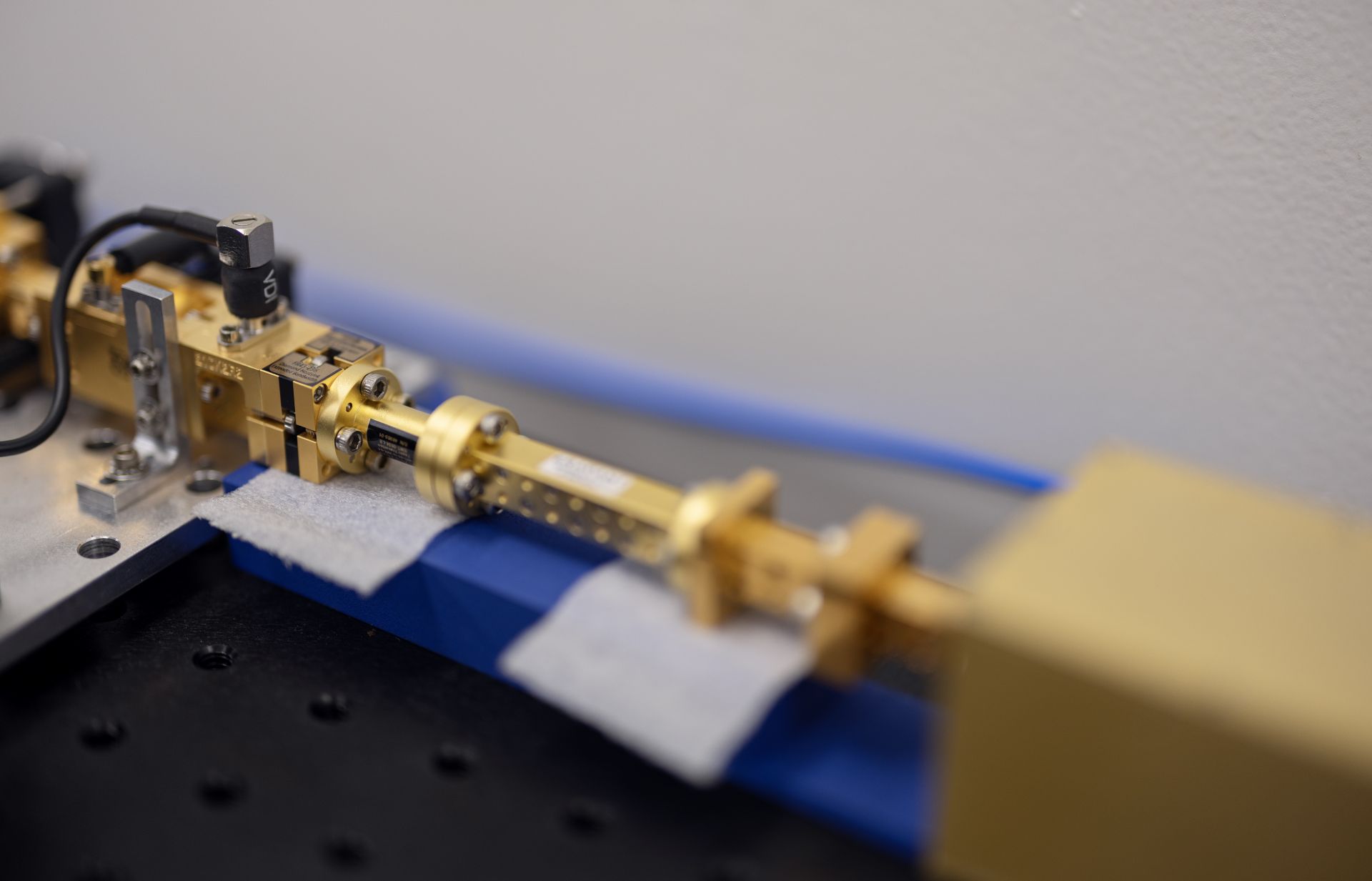
A waveguide helps carry radiofrequency waves created by the microwave generator to the lithium-deuteride pellets that will be used in the spin-polarized fusion project. (Photo: Aileen Devlin/Jefferson Lab)
Three research groups are reporting fusion-related developments, including ongoing work toward spin-polarized fusion, a new plasma diagnostic tool heading to the National Ignition Facility, and a materials science project that could impact the design of inertial confinement fusion fuel targets.
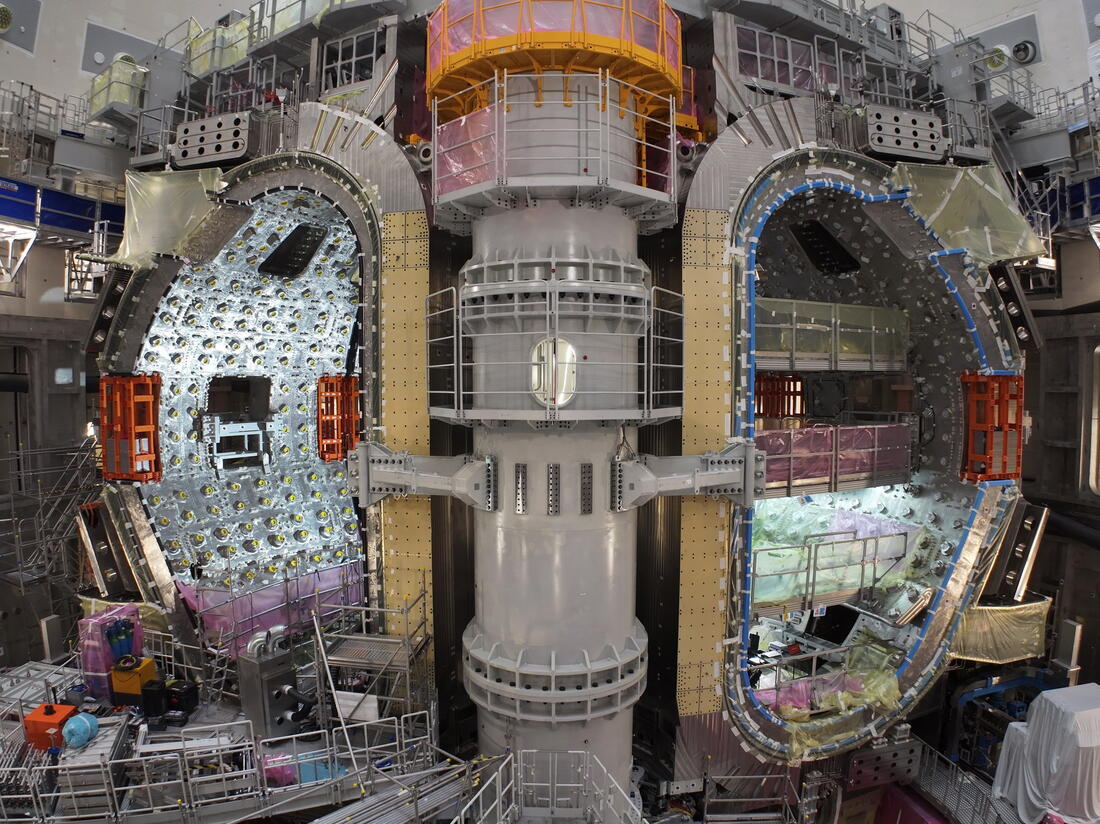
A view of the ITER vacuum vessel sectors as the tokamak is being assembled. (Photo: ITER)
The French Authority for Nuclear Safety and Radiation Protection (ASNR) has published a decision on how it will be regulating ITER, opting to approve the organization’s request to exclude its vacuum vessel from French and European pressure equipment rules.
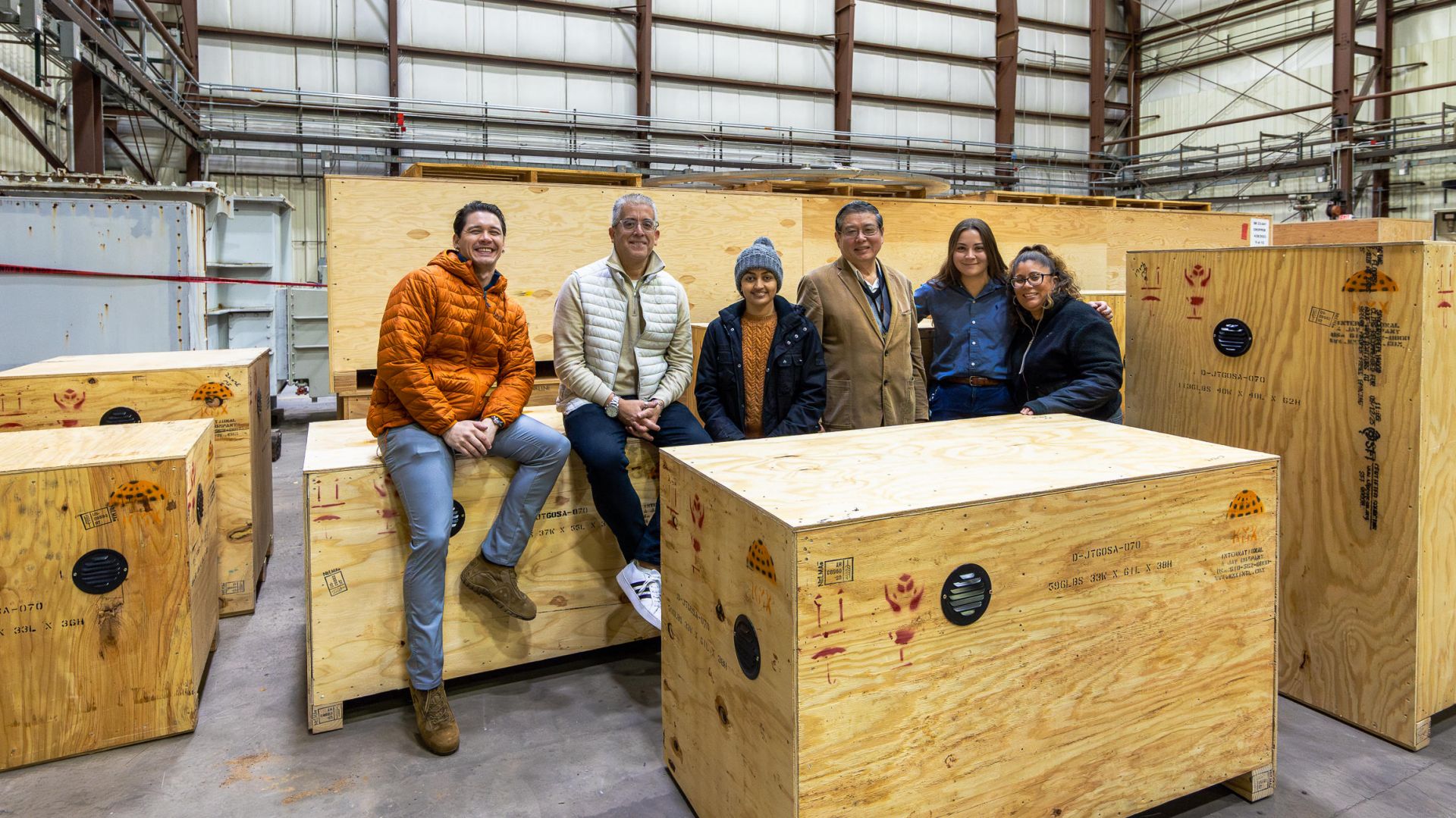
PPPL staff pose with the shipping crates containing an XCIS system ready to be shipped to Japan. (Photo: PPPL)
As researchers continue to seek ways to better understand the plasma inside fusion machines to fully harness fusion energy, Princeton Plasma Physics Laboratory is leading a project to provide new X-ray imaging systems to two international tokamak projects: WEST, in southern France, and JT-60SA, in Japan—both of which are designed to support the development of ITER.
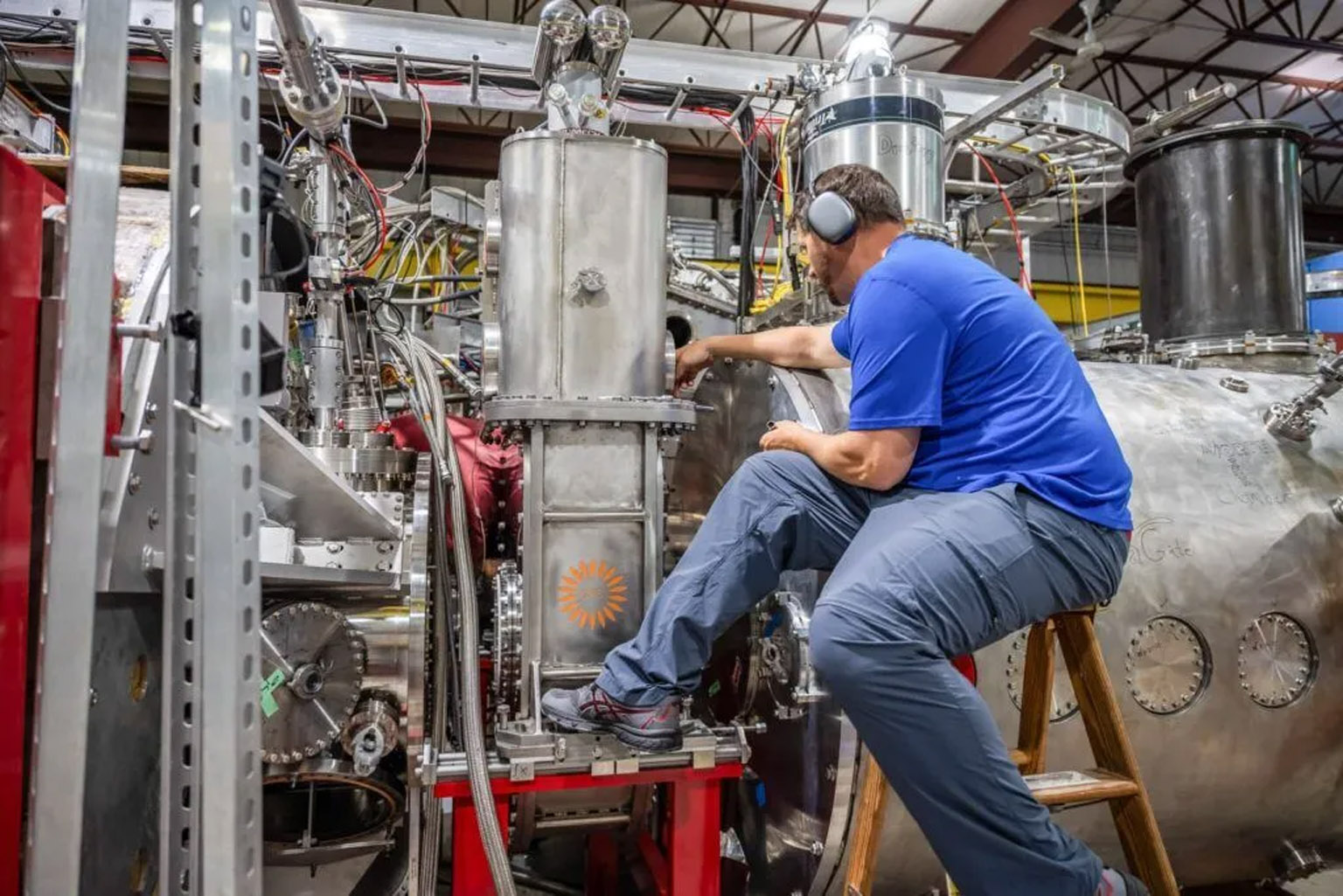
A technician works on the WHAM magnetic mirror fusion machine that uses magnets supplied by CFS. (Photo: Commonwealth Fusion Systems)
Last Thursday, Realta Fusion and Commonwealth Fusion Systems formalized a multiyear relationship with the announcement of a strategic partnership centered on CFS’s high-temperature superconducting (HTS) magnets.
Artistic rendering of the future site of Proxima’s commercial stellarator fusion power plant Stellaris, in Gundremmingen, Germany. (Image: Proxima Fusion)
Proxima Fusion has signed a memorandum of understanding with the Free State of Bavaria, German electric company RWE, and Max Planck Institute for Plasma Physics (IPP) to build a commercial stellarator fusion power plant in Europe. Based in Munich, Proxima was spun out of IPP in 2023.
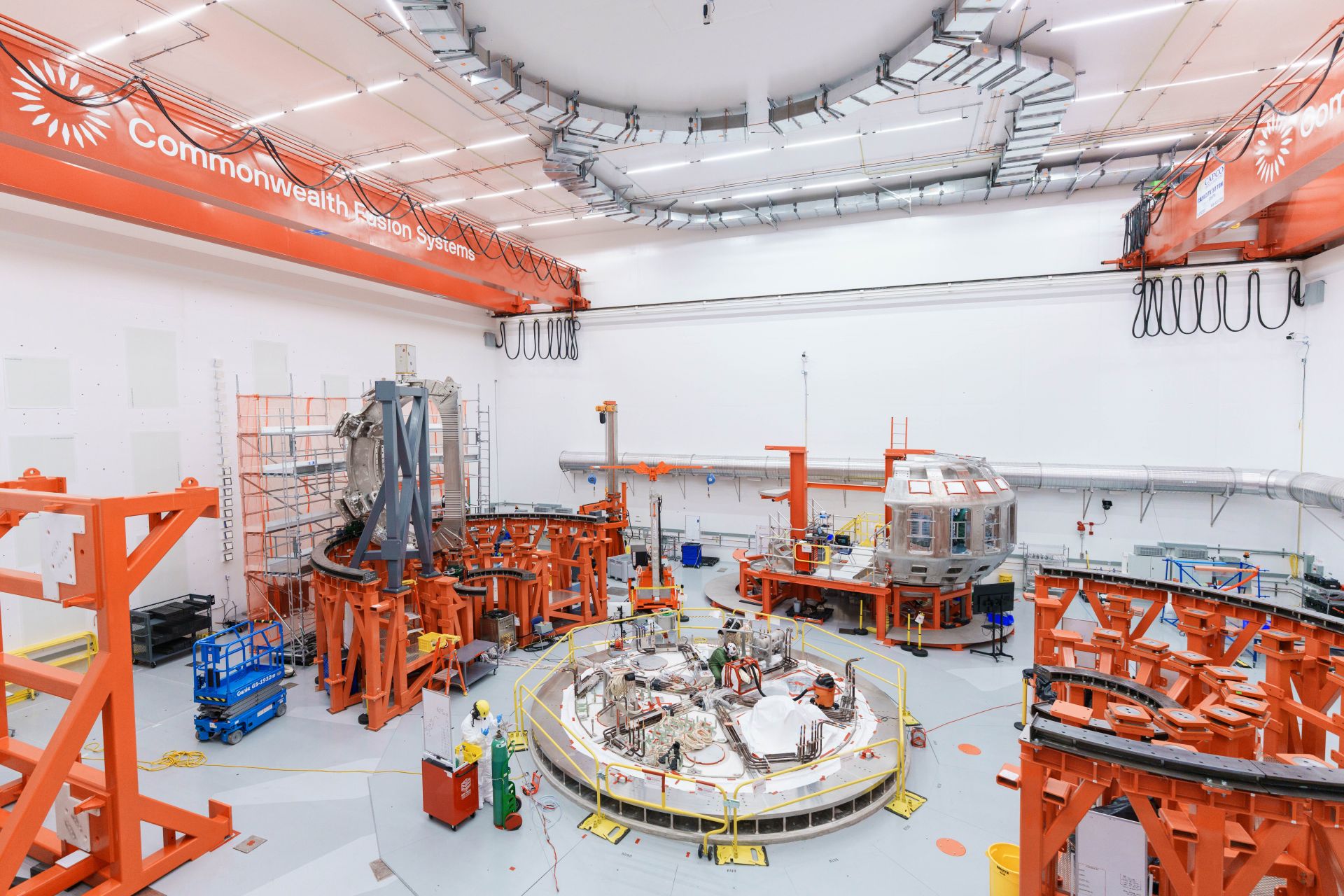
Tokamak Hall, where SPARC is being built, at CFS’s Devens, Mass., headquarters. (Photo: Commonwealth Fusion Systems)
Commonwealth Fusion Systems makes no small plans. The company wants to build a 400-MWe magnetic confinement fusion power plant called ARC near Richmond, Va., and begin operating it in the early 2030s. And the plans don’t end there. CFS wants to deploy “thousands” of fusion power plants capable of accelerating a global energy transition.
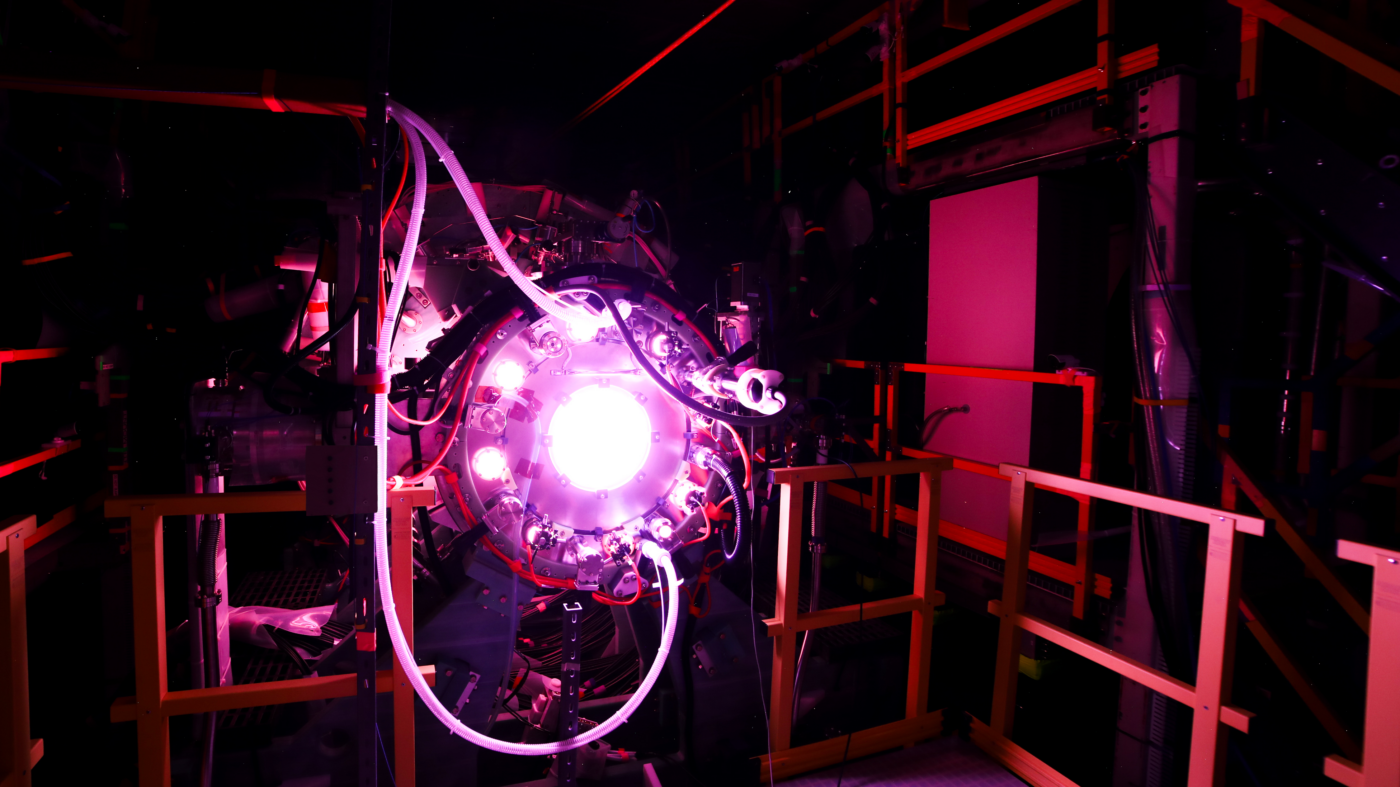
Helion Energy’s 7th-generation prototype, Polaris. (Photo: Helion Energy)
Two start-ups working to commercialize fusion energy made headlines last week. Helion Energy announced that its Polaris prototype fusion energy machine recently demonstrated measurable deuterium-tritium fusion and achieved a plasma temperature of 150 million degrees Celsius (MºC). Newcomer Inertia Enterprises announced that it has raised $450 million in its Series A fundraising round.
LIFT chief systems engineer Justin Galbraith points out a feature of LLNL's Generalized Economics Model (GEM) for Fusion Technology during the inaugural IFE-STARFIRE Winter School at UCLA. (Photo: LLNL)







 The Department of Energy’s newly published