ITER vacuum vessel exempted from fission-based regulation
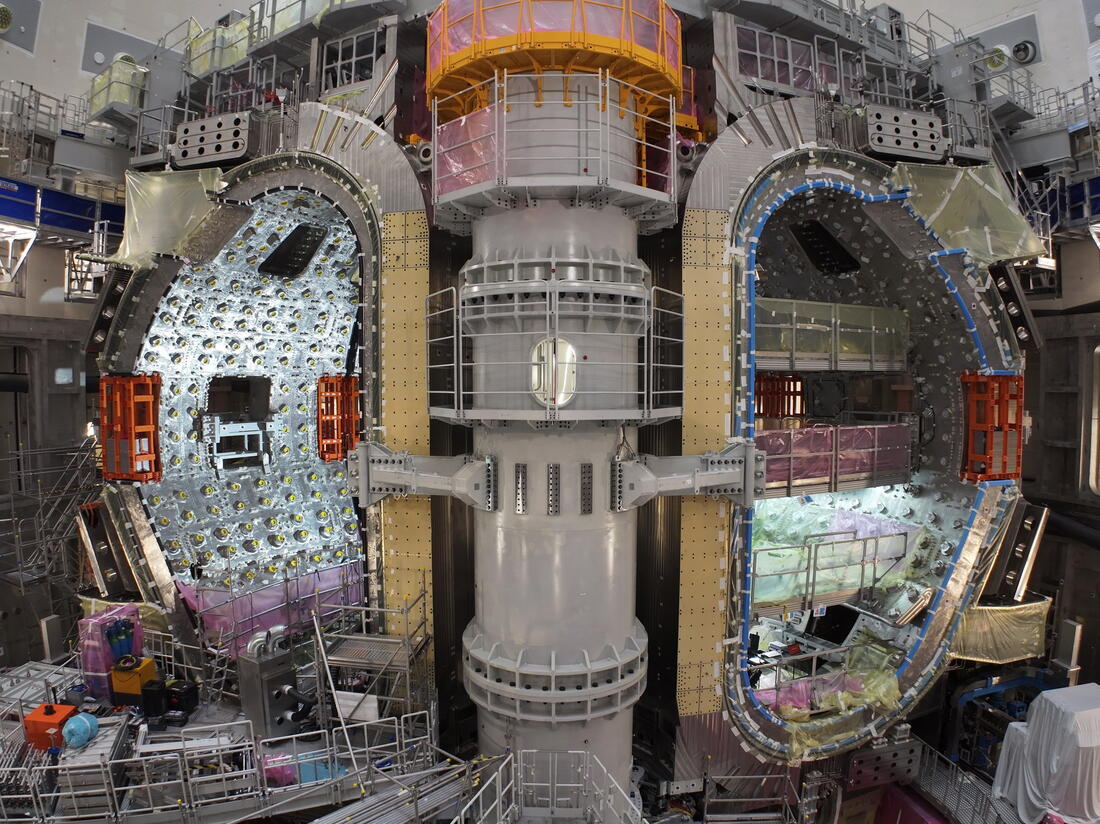
The French Authority for Nuclear Safety and Radiation Protection (ASNR) has published a decision on how it will be regulating ITER, opting to approve the organization’s request to exclude its vacuum vessel from French and European pressure equipment rules.
Until now, ITER’s vacuum vessel has been classified as nuclear pressurized equipment, a designation given to a system under pressure that contains activated elements, which was derived from fission light water reactor practice where pressure is the dominant load.
While ITER’s vacuum vessel does have some pressure load from the fluid in its double-walled structure, it is negligible compared with its electromagnetic load, which is the primary factor in determining the structural dimensions.
“This change will not only be very important for the timely progress of the ITER project but will also contribute to the consolidation of appropriate technical standards for tokamak magnetic confinement fusion devices, including guidelines for maximum allowable defect size during fabrication and welding,” said ITER Director General Pietro Barabaschi. “It ensures that requirements remain coherent and proportionate while fully supporting robust nuclear quality and safety objectives.”
The ITER vacuum vessel’s design, manufacture, and in-service surveillance remain subject to ASNR oversight, but now the associated technical requirements and quality management program will be adjusted.
“Following this very positive decision for the project, we are now organizing the transition away from manufacturing under the pressure equipment directive,” said Gilles Perrier, head of ITER’s Safety and Quality Department. “Our priority is to define and submit to ASNR updated technical criteria and monitoring arrangements for the ITER vacuum vessel.”
Race to regulate: ITER has been in progress since the 1980s. Its final design was approved in 2001, breaking new ground when it came to regulatory considerations. But now there are a multitude of fusion companies aiming to develop power plants, with significant differences in potential fusion reactor technology, and regulators are considering how to ensure safe operations.
In the United States, the Nuclear Regulatory Commission has proposed rule changes with the goal of establishing a technology-neutral regulatory framework. The comment period for the changes ends on May 27. At this year’s Regulatory Information Conference (RIC), held last month, Ed Harvey, senior health physicist in the NRC's Office of Nuclear Material Safety and Safeguards and technical lead for the NRC's fusion program, said during a panel discussion that the goal is to be ready to process fusion machine license applications when they arrive.
In the absence of this forethought, fusion machines risk getting pigeonholed into nuclear regulations that were developed with fission in mind, as was the case with ITER’s vacuum vessel.
In the United Kingdom, fusion machines are being regulated just like any other use of radioactive materials in nonnuclear sectors. In the same RIC panel, Andrew Mayall, deputy director of nuclear and radioactive substances regulation strategy at the U.K.’s Environment Agency, described this approach as proportionate to the hazards and risks.